
High Cashback Casino Bonuses for Australian Readers: Where the Law Stops the List
Anyone searching for a “best online casino with high cashback bonus” in Australia is asking for a product the country’s own regulator has spent the last decade trying to shut down. The Interactive Gambling Act 2001 prohibits the supply of online casino games, online pokies and in-play betting to anyone physically in Australia. No state or territory issues a licence for it, and no Australian-licensed operator can lawfully promote a cashback offer against house-banked games. That is not a marketing caveat to read past; it is the reason the page cannot ship a normal ranking, and the reason every offshore brand a reader meets under a banner reading “AU welcome” is operating outside Australian consumer protection, Australian dispute resolution and Australian banking recourse. This page sets out what that means in practice: how the prohibition is enforced, what the ACMA’s enforcement record actually looks like, how a cashback bonus is supposed to work in jurisdictions where it is legal, and what Australian players can lawfully access instead.

Currency data current as of 29 October 2026, verified against the ACMA’s published register and Australian Payments Plus service descriptions.
Table of Contents
- What the IGA Actually Prohibits
- Inducement and the Enforcement Record
- What a Cashback Bonus Is, in Markets Where It Is Legal
- Why a Crypto Casino Changes None of This
- The Australian Reader’s Real Alternatives
- BetStop and the Banking-Side Blocks
- What a “High Cashback” Promotion Usually Costs the Reader
- The Brands the ACMA Has Actually Warned
- What the Operator Set Tells a Reader
- The Limits of Australian Consumer Protection for an Offshore Player
- What an Australian Reader Should Do Instead
- The Market’s Own Numbers
- What a Cashback Bonus Costs in a Legal Market, Plainly
- A Closing Note on the Subject
- Frequently Asked Questions
What the IGA Actually Prohibits
The Interactive Gambling Act 2001, tightened by the Interactive Gambling Amendment Act 2017, makes it a civil offence to provide a prohibited interactive gambling service to a customer physically in Australia. The “prohibited” category covers online casino games, online pokies, in-play wagering on sport and online lotteries run by unlicensed operators. The 2017 amendments also let the ACMA issue formal warnings, direct Australian internet service providers to block sites and refer repeat offenders to the Federal Court for civil penalties of up to A$1.785 million per day, per breach. The individual player is not prosecuted — the statute aims at the supplier — but the offshore site the player is using gives no Australian consumer protection, no complaints body and no recourse when a withdrawal is refused.

What is licensable is wagering on races and sport placed before the event, lotteries and keno. In practice, online wagering is licensed by the Northern Territory Racing and Wagering Commission, which regulates 52 online bookmakers including Sportsbet, Bet365 and Ladbrokes; the commission itself has no full-time staff and meets once a month in Darwin. A bookmaker licensed in Darwin offering pre-event fixed-odds sport and racing is a different legal animal from an offshore “online casino” — even one whose homepage carries an Anjouan or Curaçao badge and the words “Australians welcome”.
So a reader searching for an “online casino with high cashback bonus” in Australia is searching for a product that cannot lawfully be supplied to them. The next sections lay out what that prohibition has actually caught.
Inducement and the Enforcement Record
The ACMA’s enforcement file reads as a list of the brands Australian-facing affiliate sites have spent the last five years promoting. Each entry is a formal warning the regulator has published against an operator offering prohibited services to Australians, and almost every brand a reader would recognise from a “best cashback casino” affiliate page shows up somewhere in that file.
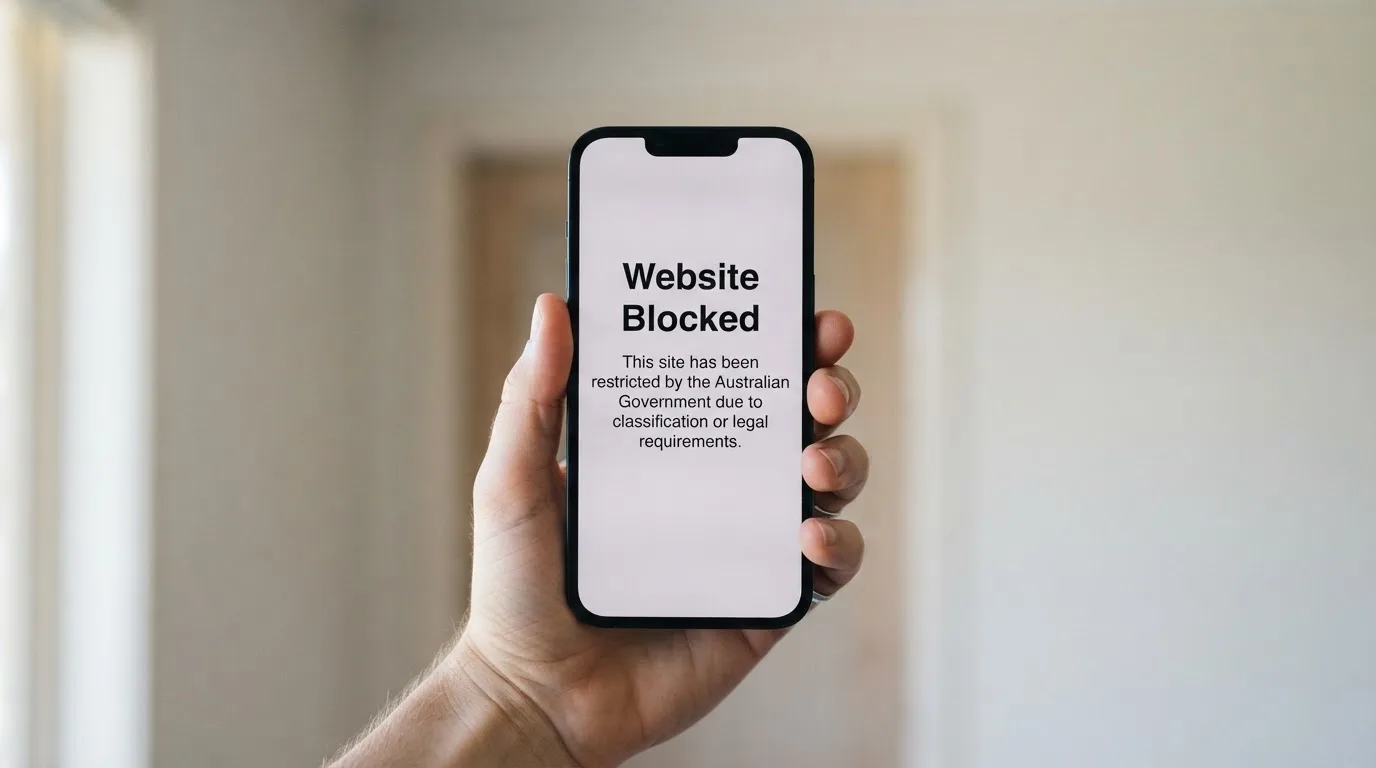
The current ACMA register, as reported in June 2026, shows a running total of 1,751 illegal gambling and affiliate marketing websites blocked since the first blocking request in November 2019. More than 230 unlicensed gambling services have left the Australian market since enforcement was strengthened in 2017. In the round reported on 26 June 2026 alone, the ACMA asked Australian ISPs to block a further twelve sites: 7Signs, ChromaBet, Donbet, Duospin, Freshbet, Slots Gem, Jacks Club, Lucky Start, Pointsbetz, Spinrise, Vinyl Casino and Wildsino. The blocking rate since the first enforcement request in November 2019 sits in a band of roughly 215 to 235 sites per year on average, accelerating since 2023 as the regulator widened the scope of blocking requests to cover affiliate marketing pages and crypto-only casino brands.
Most of the brands on the ACMA’s warning list are not one-off actions; they recur. Dama N.V. received a formal warning in May 2022 covering six brands at once: Bambet, Dazard, Level Up, Rocketplay, Wild Tornado and Cobra Casinos. Two more Dama brands, Woo Casino and Spirit Casino, drew their own warnings in March 2025 and May 2025 respectively. Consolutetish S.R.L. was warned in July 2025 over National Casino and Bizzo Casino — Bizzo having already drawn a 2022 warning to its previous operator, TechSolutions. Bamboo Media drew a warning the same month over Ignition Casino. EOD Code SRL was warned in February 2025 over Instant Casino. Ryker B.V. was warned in April 2026 over Jackbit and CasinOK. Sterplay Holding Ltd was warned in April 2025 over Casino Intense. Hollycorn N.V. drew a warning over Sky Crown and Blue Leo in September 2022.
RocketPlay sits across two of those actions: the May 2022 warning to Dama N.V., and a separate March 2026 warning to a different operator, Pulsup Ltd, over RocketPlay. The pattern is consistent — when one operator is warned off, the brand frequently reappears under a new parent company and is warned again, sometimes more than once.
See also Best Welcome Bonus Online Casino Australia 2026.
What a Cashback Bonus Is, in Markets Where It Is Legal
Where a cashback casino offer is legal — most commonly the United Kingdom, Malta, the Netherlands and some Canadian provinces — it works as follows: a percentage of a player’s net losses over a defined period is returned, usually credited as bonus funds, sometimes as withdrawable cash. The percentage is the headline number on the marketing page; the material number, for the player who actually claims it, is the rest of the terms.
The mechanism looks straightforward because the marketing is built to make it look that way. A “20% weekly cashback” line on a casino’s promotions page is a reading of what the casino expects to happen — the player loses, the player comes back, the player loses again. The figure is calibrated so the casino keeps its edge. Three terms decide whether that figure is worth reading at all:
- The wagering requirement. A “cashback” paid as bonus funds almost always carries a wagering multiplier — typically 1x to 5x the cashback amount — before it can be withdrawn. A “20% cashback” that requires 5x wagering is not the same product as a “20% cashback” paid as withdrawable cash with no rollover. The marketing copy rarely separates these.
- The calculation basis. Net losses, gross losses, losses on selected games only and losses on the player’s “real money” balance are four different bases, and the term sheet chooses one. A cashback calculated on selected games only, after bonus money, can compress to a small fraction of the headline figure on a normal losing session.
- The maximum payable. Most cashback offers cap the payable amount — sometimes per day, more often per week. A reader who loses A$5,000 in a week under a 20% uncapped cashback reads A$1,000; the same week under a “max cashback A$200” reads A$200, and the marketing copy does not surface the cap until the player opens the terms.
None of this is a trick — these terms are how the cashback product is built in any regulated market that allows it. The point is that the “high cashback” headline figure is a marketing choice designed to be the largest number on the page, and the calculation basis, the rollover and the cap are designed to be smaller.
Why a Crypto Casino Changes None of This
The same prohibitions apply whether the deposit is in Australian dollars or in bitcoin. The Interactive Gambling Act is indifferent to the payment rail; the regulator’s enforcement file includes multiple warnings to crypto-only operators, and the ACMA’s blocking rounds consistently name brands marketed primarily at crypto users.
In a legal market, a crypto cashback works on the same structure as a fiat one — a percentage of net losses returned on a defined cadence, with a wagering requirement attached — only settled in the same cryptocurrency the player deposited. The marketing surface looks different: percentages are stated to four decimal places (“20.0000% BTC”), payouts are described in “satoshis” rather than cents, and the offer sits alongside a “provably fair” seal and a token-gated loyalty programme. The economic structure is unchanged.
Three points follow for an Australian reader specifically:
- No additional consumer protection. A crypto casino licensed in Curaçao gives a player no more recourse than a fiat casino licensed in Curaçao. The crypto wrapper does not attach a regulator; the brand’s own terms attach a wallet address. If the wallet stops responding, the recourse is the same: none.
- No banking protection. Crypto deposits bypass the Australian banking system’s merchant-category gambling blocks. That is sometimes marketed as a feature. The corollary is that the player has also bypassed the bank’s dispute process, the ePayments Code and any chargeback mechanism that a Visa or Mastercard debit transaction would have offered through an Australian issuer.
- No AUSTRAC reporting backstop. AUSTRAC’s threshold-transaction-report rule, which requires reporting of transfers of A$10,000 or more, applies only to physical cash. Ordinary electronic bank transfers are not subject to that per-transaction reporting requirement, regardless of amount. A crypto transfer to an offshore casino is, again, outside that frame.
The Australian Reader’s Real Alternatives
Three categories of gambling product are lawfully available to an Australian adult, and each one has its own consumer-protection regime attached.
Licensed wagering on sport and racing. Pre-event fixed-odds betting is licensed in Australia by state and territory regulators, with the Northern Territory Racing and Wagering Commission the de facto national regulator for online bookmakers. Sportsbet, Bet365, Ladbrokes and 49 other licensed operators sit in this category. Cashback-style promotions do exist in this market — “bonus bets” credited on losses — but they are subject to Australian advertising rules and the Gambling Reform measures commencing on 1 January 2027.
Pokies venues and land-based casinos. Electronic gaming machines at licensed pubs and clubs, and table games at Crown Melbourne, Crown Perth, The Star Sydney and The Star Gold Coast. These venues are subject to state-level harm-minimisation regimes: mandatory pre-commitment in some jurisdictions, cash-only machines in others, and self-exclusion registers that bind the venue itself.
Lotteries and keno. State lottery operators and keno venues. These are not the product a “cashback casino” reader is searching for, but they are the third legal category of gambling available to an Australian adult.
What is not lawfully available is the product the search is asking about: an online casino offering cashback against house-banked games to a player physically in Australia. The next section sets out the consumer-protection mechanism the law does provide.
BetStop and the Banking-Side Blocks
BetStop, the National Self-Exclusion Register, has been live since August 2023. A player who registers with BetStop is excluded, for a chosen period, from all Australian-licensed online and phone wagering services. The exclusion is binding on the licensed operator; the operator must close the account, refund the balance and take reasonable steps to keep it closed. Crucially, BetStop binds only Australian-licensed services. An offshore casino is not connected to BetStop, has no obligation to honour a BetStop registration, and an Australian self-excluding through BetStop who then opens an account at an offshore casino has no Australian regulator to complain to when that offshore casino accepts the deposit.
Major Australian banks have built a parallel, transaction-level layer of protection:
- Westpac’s gambling block operates at the card level: it refuses authorisation of transactions registered under the merchant category code “Betting/Casino Gambling” on eligible personal credit and debit cards.
- ANZ’s gambling transaction block, activated in the ANZ app, blocks gambling transactions made through a digital wallet such as Apple Pay on an eligible card, not just the physical card. Removing the block requires a 48-hour waiting period, and ANZ warns that not all gambling transactions will be blocked and some non-gambling transactions might be blocked in error.
- Commonwealth Bank lets customers apply a gambling lock to eligible cards via the CommBank app, which automatically blocks most gambling transactions, though the bank states it cannot guarantee all gambling-related purchases will be stopped.
These card-level blocks cover the licensed Australian wagering market cleanly. They do not cover every offshore route — cryptocurrency, some prepaid products and a few non-card rails slip past them — but they cover the licensed bookmaker category the player was using in the first place.
What a “High Cashback” Promotion Usually Costs the Reader
The calculation that matters is the expected loss on the deposit that generates the cashback, not the cashback itself. Where the offer is paid in bonus funds with a wagering requirement, the player must run that bonus through the wagering multiple before withdrawing. Where the offer is paid as cash with no rollover, the cashback is a partial rebate of the deposit’s expected loss and the math reduces to that.
A worked illustration, with the inputs the law requires a page to make explicit:
- A 20% weekly cashback on net losses, paid as bonus funds with a 5x wagering requirement, capped at A$200 per week.
- A weekly deposit of A$500, played on a single slot at a 96% return to player.
- The expected loss on the deposit, before cashback, is 4% of turnover. At A$500 of turnover in the week, the expected loss is A$20. The cashback paid is 20% of net losses — capped at A$200, which is well above the realised cashback here, so the cap does not bite.
- The realised cashback is A$4, paid as bonus funds subject to 5x wagering. The player must run A$20 through the wagering before the cashback is withdrawable.
- Expected loss on the cashback wagering is 4% of A$20 = A$0.80. The total expected cost to the player is therefore A$20 + A$0.80 = A$20.80, against A$500 of turnover.
The arithmetic is the same on every offer of this structure: the cashback is a small fraction of the deposit’s expected loss, and the wagering requirement attached to the cashback adds a second, smaller layer of expected loss on top. The headline percentage is the largest number on the page because everything around it is designed to be smaller. A reader chasing “high cashback” by percentage is comparing offer A’s 20% against offer B’s 25% and missing that both are still running against a 4–6% house edge on every dollar wagered. The marketing reward is rounding error against the deposit cost.
This is also why a page advertising a “best high cashback casino” cannot honestly rank by percentage alone — a 25% cashback with a 10x wagering requirement and a A$50 cap is a worse product than a 15% cashback paid as withdrawable cash with no rollover, and the headline figure hides that. Ranking by the headline percentage is ranking by marketing copy.
High Cashback Casino Bonuses for Australian Readers — More on this topic at casino offshore hub.
The Brands the ACMA Has Actually Warned
The eleven brands below are not a ranked shortlist. Each one is named because the ACMA has issued a formal warning over it for offering prohibited interactive gambling services to Australians. The point of the table is not to compare offers — no offers are listed, because the only sources for them were affiliate marketing pages and the regulator’s own record is the relevant fact — but to show what an Australian reader is actually meeting when an affiliate site uses the words “AU welcome”.
| Brand | ACMA action and date | Operator named by the ACMA | Subject support |
|---|---|---|---|
| RocketPlay | Formal warning March 2026; earlier warning May 2022 | Pulsup Ltd (RocketPlay, March 2026); Dama N.V. (May 2022) | Affiliate listings describe a loyalty cashback scheme |
| Level Up Casino | Formal warning May 2022 | Dama N.V. | Affiliate listings describe a tiered VIP cashback structure |
| Woo Casino | Formal warning March 2025 | Dama N.V. | — |
| Spirit Casino | Formal warning May 2025 | Dama N.V. | — |
| National Casino | Formal warning July 2025 | Consolutetish S.R.L. | Affiliate listings describe weekly cashback on net losses |
| Bizzo Casino | Formal warning July 2025; earlier 2022 | Consolutetish S.R.L. (July 2025); TechSolutions (2022) | Affiliate listings describe a reload cashback programme |
| Ignition Casino | Formal warning July 2025 | Bamboo Media | — |
| Instant Casino | Formal warning February 2025 | EOD Code SRL | Affiliate listings describe a high-percentage crypto cashback |
| Jackbit | Formal warning April 2026 | Ryker B.V. | — |
| Casino Intense | Formal warning April 2025 | Sterplay Holding Ltd | Affiliate listings describe a weekend cashback offer |
| Sky Crown | Formal warning September 2022 | Hollycorn N.V. | — |
Three things follow from the table. First, every brand on it is, on the ACMA’s own published view, operating outside Australian law. Second, the warnings are not abstract: each warning is a public document the regulator has published with the operator name, the brand name and the date. Third, the affiliate listings that describe the cashback programmes are the marketing surface the regulator’s enforcement file is responding to.
What the Operator Set Tells a Reader
Eleven brands across roughly five parent operators, with two operators carrying the majority of the warnings. Dama N.V. alone accounts for eight of the listed brand warnings across two enforcement rounds; Consolutetish S.R.L. carries two. Both are Curaçao-incorporated operators whose licensing footprint does not include Australia. The repetition of operator names across brand warnings is the point — when one brand is warned off under one parent, the same operator frequently launches or acquires another and is warned again.
The 2026 actions are running ahead of the 2025 actions in volume, partly because the ACMA has widened its blocking rounds to affiliate marketing pages and crypto-only brands, partly because the underlying supply has kept moving. The running total of 1,751 blocked sites as of June 2026 sits against a baseline of zero before November 2019 — the regulator’s enforcement regime is itself younger than many of the brands it is now acting against.
The Limits of Australian Consumer Protection for an Offshore Player
An Australian who opens an account at one of the brands in the table has, in practical terms, four consumer-protection gaps and one financial gap.
- No Australian dispute resolution. The Australian Financial Complaints Authority does not have jurisdiction over an offshore operator. The operator’s own complaints process is the only one the player has.
- No Australian regulator to escalate to. The ACMA acts against the operator, not on behalf of the player. A player with a withdrawal dispute has no Australian authority to write to.
- No Australian consumer law in practice. Australian Consumer Law guarantees do not apply to services supplied from outside Australia by an offshore operator, and an offshore operator’s own terms usually specify a different governing law and a different jurisdiction.
- No BetStop coverage. As above, BetStop binds Australian-licensed services only.
- No banking chargeback. Deposits made by credit card at an unlicensed operator are not protected by the ePayments Code in the same way, and a chargeback filed against an unlicensed gambling merchant is treated as a dispute the issuer evaluates on its own terms rather than as a regulated consumer transaction.
The financial gap is the one that matters at withdrawal time. The consumer-protection gaps matter at complaint time; the financial gap matters every time the player tries to move money.
What an Australian Reader Should Do Instead
The lawful path is straightforward and worth stating without hedging.
- For online wagering on sport and racing: open an account with a Northern Territory-licensed operator. The product is licensed, the consumer protection is Australian, and the cashback-style promotions offered (where they exist) are subject to Australian advertising rules and the Gambling Reform measures commencing on 1 January 2027.
- For pokies and table games: play at a licensed Australian venue. Crown Melbourne, Crown Perth, The Star Sydney and The Star Gold Coast carry table games; licensed pubs and clubs carry pokies. State-level harm-minimisation regimes apply.
- For self-exclusion: register with BetStop for online and phone wagering, and with the state-based exclusion register for the relevant land-based venue. The two registers do not overlap; both may be relevant.
- For help with gambling-related harm: call the National Gambling Helpline on 1800 858 858 (free, 24/7) or use the chat service at Gambling Help Online. The service is confidential and operates nationally.
If a reader is comparing offers because they are looking for the highest cashback percentage, the comparison itself is the misleading step. The lawful Australian market does not have a product called “online casino with high cashback bonus” because the underlying product is prohibited. Comparing offers within the offshore market is comparing offers none of which can lawfully be supplied to an Australian player.
The Market’s Own Numbers
H2 Gambling Capital’s 2025 report estimates Australians lose about A$3.9 billion a year to illegal gambling sites, and that the share of gambling going through legal channels has fallen from 74% in 2021 to 64%. Both figures describe the same trend: more money is moving offshore, not less, despite the regulator’s enforcement record. The implication is not that the enforcement is failing — the ACMA’s blocking rate has been broadly consistent, and the rate of brand-side action has held — but that the supply side has been quick to replace what the regulator removes.
The blocking rate, in plain terms: roughly 215 to 235 sites per year on average since November 2019, accelerating since 2023 as affiliate marketing pages and crypto-only brands came into scope. The 1,751 figure as of June 2026 is the cumulative count, not the live count; sites are removed and re-added, and brands reappear under new parent companies. The published figure is the regulator’s working total of unique blocking requests it has directed, not the number of currently inaccessible sites.
What a Cashback Bonus Costs in a Legal Market, Plainly
In any legal market where the offer is paid as withdrawable cash with no rollover, the cashback is a partial rebate of the expected loss on the deposit. At a 4% house edge, a 20% cashback on net losses returns 0.8% of the deposit in expected terms — that is, the player ends up paying 4% of turnover in expected loss and receiving 0.8% of turnover back as cashback, for a net expected cost of 3.2% of turnover.
At a 10% cashback the figure is 3.6% of turnover. At a 25% cashback it is 3% of turnover. The marketing headline is calibrated to the percentage on the offer page; the player’s actual saving is calibrated to the house edge on the games being played, and the second number is what determines the cost.
This is also the reason the percentage ranking is so common in affiliate pages — the ranking is by the largest number on the marketing copy, not by the largest saving on the player’s bankroll. Two offers at 15% and 25% are almost identical in real terms; two offers at 15% and 15% where one is paid as cash with no rollover and the other as bonus with 10x wagering are not the same product at all.
A Closing Note on the Subject
This page exists because a reader searched for a product that cannot lawfully be supplied to them. The honest answer to that search is not a ranking of offshore brands — it is the answer above: that no Australian-licensed offer exists, that the offshore brands an affiliate page ranks are operating outside Australian law, and that the lawful Australian market has its own consumer-protection regime attached to its own products. The choice the page offers is between products that are illegal to supply and products that are licensed and regulated, not between a “best” and a “second-best” of the same category.
A reader who has arrived at this page looking for a recommendation has arrived at the wrong page. A reader who has arrived looking for what the law actually allows has arrived at the right one.
Frequently Asked Questions
How does a cashback bonus differ from a deposit match bonus?
A deposit match bonus pays a percentage of the deposit as a credit, usually with a wagering requirement, before any play happens; a cashback bonus pays a percentage of net losses over a defined period, usually after the play has happened. The deposit match is paid up front on the size of the deposit; the cashback is paid in arrears on the size of the loss. Both can be paid as bonus funds or as cash; both can carry a rollover; the two products are different in timing rather than in underlying structure.
Is cashback normally paid as real money or as bonus funds?
In legal markets, both structures exist, and the terms page decides which one applies. Cashback paid as withdrawable cash with no rollover is the more player-friendly structure; cashback paid as bonus funds with a wagering requirement is more common at higher headline percentages. The terms page is the only reliable source for which structure applies to a specific offer.
Is it legal for an online casino to offer cashback to players in Australia?
No. The Interactive Gambling Act 2001 prohibits the supply of online casino games to anyone in Australia, and a cashback promotion is part of the supply. No Australian state or territory licences it. An offshore operator offering cashback to an Australian player is operating outside Australian law, and an Australian player using such an offer has no Australian consumer protection if the operator refuses a withdrawal.
Can a crypto casino offer cashback in the same way as a fiat one?
Yes, in markets where it is legal. In legal markets, the cashback structure — percentage, cadence, rollover, cap — is the same in either currency; only the settlement asset changes. In Australia, the Interactive Gambling Act applies equally to crypto and fiat deposits, and the regulator’s enforcement file includes multiple warnings to crypto-only operators.
What terms typically cap how much cashback can be earned?
Three terms decide the actual value of a cashback offer. The wagering requirement attached to a cashback paid as bonus funds, typically 1x to 5x. The calculation basis, which is most often net losses but can be losses on selected games only or after bonus money. The maximum payable, which is most often per week and is the cap most often missed by a reader reading the headline percentage. Reading the terms page on these three points is the difference between reading the marketing page and reading the offer.