Best Aussie Online Casino in 2026: Why the Question Has No Local Answer
 Available in US
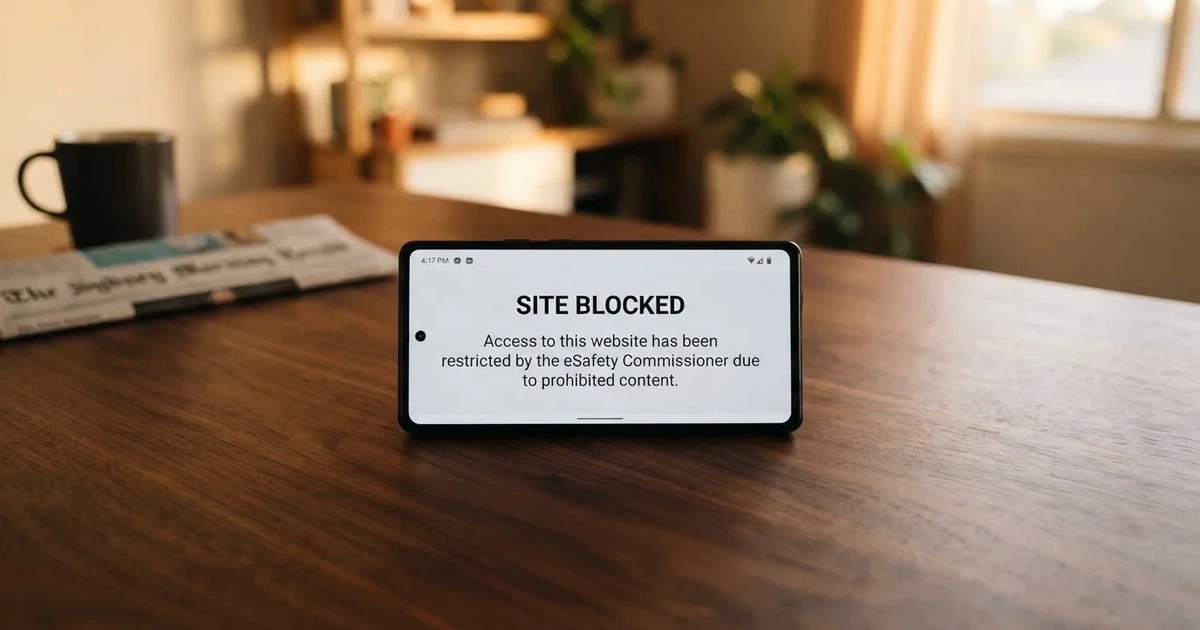
The phrase “best aussie online casino 2026” sounds like a shopping comparison. A shortlist of brands, a ranked table, a verdict. In Australia it cannot honestly be any of those things, because the product it asks about — online casino games and online pokies offered to a person physically in Australia — is prohibited under the Interactive Gambling Act 2001 and is not licensed anywhere in the country. No state or territory issues an online casino licence. The ACMA, the regulator that can act, has spent the past several years warning offshore operators and asking Australian ISPs to block their sites. “Best,” in this market, can only mean the offshore operators the regulator has most recently warned against — and that is the lens this page uses, deliberately, rather than pretending a comparison exists that the law does not allow.

Data current as of 24 September 2026, checked against the Australian Communications and Media Authority’s register of formal warnings and blocking requests.
Table of Contents
- Responsible Gaming Comes Before Any Shortlist
- Payments and Payout Speed in a Country Where the Site Is Offshore
- Bonuses and Free Spins as Background, Not as a Shortlist
- Mobile and App: The Platform Is the Same as the Browser
- New Casinos Mean New Offshore Sites, Not New Local Options
- The Ranking the Regulator Compiled: Eleven Brands the ACMA Has Warned Against
- Overview: The Landscape the Search Is Asking About
- Legality: The Single Sentence the Whole Page Sits On
- Help, Block and Self-Exclude: The Three Levers an Australian Actually Has
- Frequently Asked Questions
Responsible Gaming Comes Before Any Shortlist
Help is free, confidential and Australian
If online casino play is part of how you or someone close to you spends money and time, two Australian services exist specifically for that moment, and neither requires you to have ever placed a bet. Gambling Help Online runs a 24/7 chat and a national helpline on 1800 858 858, both free and confidential. BetStop, the National Self-Exclusion Register, has been live since August 2023 and stops Australian-licensed wagering providers from sending you marketing, opening new accounts in your name, and accepting bets from accounts you already hold. Its scope is real but narrow: it binds Australian-licensed online and phone wagering services, and an offshore casino is not connected to it. Excluding yourself from an offshore site requires asking that site directly, and BetStop cannot do it for you.

The bank-level block sits one layer down
Most Australian banks now offer a gambling transaction block that operates at card level and works even when the merchant dresses itself up. Westpac’s gambling block refuses authorisations flagged under the merchant category code for betting and casino gambling on eligible personal credit and debit cards. ANZ’s version, activated through the ANZ app, extends the same block to a digital wallet such as Apple Pay when it sits on an eligible ANZ card. Commonwealth Bank runs a comparable “gambling lock” inside the CommBank app, with the same caveat the others carry: the bank cannot guarantee every gambling transaction will be caught, and the odd non-gambling merchant may be blocked in error. ANZ adds one operational wrinkle: once you switch the block on, switching it off again takes 48 hours. That delay is a feature, not a bug — it stops an impulse from undoing the decision in the same minute.
Offshore play cuts you off from every protection listed above
This is the part no affiliate page mentions. An offshore casino is not required to honour BetStop, not bound to respond to an Australian dispute, not subject to the Banking Code of Practice, and not within reach of the Australian Financial Complaints Authority if a withdrawal is refused. The bank-level blocks listed above work because the merchant sits inside the Australian payments system. An offshore site that takes crypto or routes through an obscure acquirer can sit outside every layer of friction those blocks create. The Australian consumer protections this section describes exist for the Australian-licensed market. They thin out fast the moment the site you are on is not.
Payments and Payout Speed in a Country Where the Site Is Offshore
PayID and Osko are built for instant bank transfer — and they leak the payee’s name
Australia’s New Payments Platform went live to the public on 13 February 2018 and is owned by New Payments Platform Australia Ltd, a non-profit whose thirteen shareholders include the Reserve Bank of Australia and the major banks. Two products sit on top of it. PayID lets you address a transfer to something memorable — a mobile number, an email, an ABN — instead of a BSB and account number, and more than 25 million PayID identifiers were registered on the platform by April 2025. Osko adds the speed: a transfer between participating banks arrives in under a minute, twenty-four hours a day, including weekends. Over 100 Australian financial institutions now offer PayID-based instant transfers. The system’s resilience is contractual — participants must keep monthly platform outages to no more than two minutes — and AP+ runs it alongside BPAY and eftpos after the 2021 ACCC-authorised merger into a single holding company.

The catch on a prohibited site is the name check. Paying to a PayID shows the name on the receiving account before you send the money, and AP+ itself warns that being asked to transfer to a PayID on an illegal gambling site almost certainly means a scam. The instant transfer that makes PayID attractive for splitting a restaurant bill becomes the instant transfer that hands your money to an unverified offshore operator before you have time to think twice. AUSTRAC’s threshold-transaction reporting rule, which requires reports on transfers of A$10,000 or more, applies only to physical cash, not to electronic bank transfers — so the report does not flag a single big deposit as a transaction-report event.
Credit is off the table for licensed wagering, and that includes the wallet wrapped around it
Since 11 June 2024 the Interactive Gambling Act 2001, as amended in 2023, has banned credit cards and other credit-related products as a way to pay for any Australian-licensed online wagering service, with penalties of up to A$247,500 for operators who accept them. The provision reaches further than the card itself: it captures a digital wallet such as Apple Pay when the underlying card is a credit card. Apple does not charge consumers to use Apple Pay — any surcharge comes from the merchant’s card-processing fees, not from Apple — and Apple itself states that transaction limits and PIN requirements for Apple Pay purchases are set by the card issuer or merchant, not by Apple. By the end of 2025, Apple Pay, Google Pay and Samsung Pay together accounted for around 45% of all card payments in Australia by number. The wallet is now the dominant way Australians tap to pay, and a credit-funded wallet is closed off for licensed wagering even where the wallet screen looks identical to a debit transaction.
Crypto, Amex and the surcharge question
The Australian licensed wagering market also bans digital currency as a deposit route. An offshore casino that markets a Bitcoin or Ethereum deposit is, on that ground alone, outside the Australian rules. American Express sits in its own corner. Amex was established in 1850 as a freight-forwarding company, launched its first charge card on 1 October 1958, and still runs as a three-party scheme — issuer, acquirer and network under one roof — rather than the four-party model Visa and Mastercard use. The Reserve Bank of Australia’s July 2025 review proposes removing surcharges on eftpos, Mastercard and Visa transactions, and explicitly leaves American Express outside the scope of that proposed ban. Whether Amex surcharging survives the reform is a separate question from whether an offshore site will accept your Amex at all.
Payout speed is the comparison that does not exist here
A licensed Australian wagering service pays out through the same Australian banking rails — debit card, bank transfer, PayID/Osko, BPAY — and a withdrawal to a PayID or Osko address arrives in roughly the same under-a-minute window the deposit took. The offshore site you reach via a search for “best aussie online casino 2026” pays out by its own rules, on its own schedule, through its own payment partners. Some list a payout time. Some honour it. Some do not, and the consumer has no Australian complaints body to escalate to when they do not. The page does not name payout times for the offshore brands listed later, because no auditable Australian-jurisdiction figure backs any of them.
Bonuses and Free Spins as Background, Not as a Shortlist
What a bonus actually costs the player
Every online casino bonus is two things stapled together: a credit the site will let you play with, and a set of conditions that determine whether any of that play turns into money you can withdraw. The headline figure is the credit. The figure that matters is the wagering requirement: the multiple of the bonus you must turn over before a withdrawal unlocks. A A$100 bonus with a 40x wagering requirement means A$4,000 of bets before any winnings become withdrawable. A 50x requirement on the same bonus means A$5,000. The house edge on the games you play while clearing it is the tax on top, because every spin during the clearing period is one the player is statistically losing to the house. The promotional headline is the size of the bait; the requirement is the size of the line attached to it.
“Free spins” are a wagered product with a capped ceiling
Free spins work the same way, only smaller and harder to read. A “100 free spins” promotion credits a fixed number of spins at a fixed stake on a named slot, credits any winnings to the bonus balance, and then attaches the same kind of wagering requirement to those winnings — usually a lower multiple than the cash bonus, but with a cap on the maximum amount that can be converted into withdrawable cash. The marketing writes “free” and reads to a punter like free. The terms write “subject to 40x wagering, max cashout A$50” and read to a player like a small loan with a ceiling on what it can ever pay back. Both descriptions are true. The order in which you read them is the order in which you should weight them.
For this page, the offer matters less than the framing
A page about Australian play cannot recommend a bonus offer to claim, because the product the bonus sits on is prohibited and the operator is offshore. What it can do is name the shape of the trap: a credit whose real cost is the wagering multiple, and a “free” promotion whose real ceiling is the max-cashout cap. Both are well-understood by the industry and almost never surfaced by an affiliate page that takes a commission on the player’s first deposit. The point of describing them here is not to make a bonus easier to evaluate. It is to make a bonus harder to mistake for what it is not.
Mobile and App: The Platform Is the Same as the Browser
The screen is not the issue
The mobile casino product is, structurally, the same product as the desktop one — a browser-based client served from a web address, with the same random number generator and the same house edge. Most offshore operators run a responsive site that adapts to the phone screen, and a small number wrap the site in a downloadable app. The technical question — does the game run smoothly, does the cashier work — answers itself on the device, in the same way it answers itself on a laptop. The thing that does not transfer is the consumer protection. The browser is the same, the bank is the same, the wallet is the same, and the protections that ride on all three are not, because the operator is not.
Why this page does not name an app to install
Recommending an app to download would be recommending a prohibited product. The Australian app stores do not list the apps in question because the apps do not satisfy Australian rules. Any link an Australian reader sees to one of them came from an offshore affiliate page or a direct search, not from Apple or Google. The reason this section is short is the reason this page is long in other places: there is nothing to recommend and a great deal to warn against.
New Casinos Mean New Offshore Sites, Not New Local Options
“New” is a marketing label, not a regulatory event
Every offshore casino launched in 2026 is new to the market and outside Australian law from day one. The Australian regulator has no say over an offshore site that has not yet approached an Australian customer; the regulator’s role begins when an Australian-licensed payment path is offered, an Australian-facing marketing campaign runs, or an Australian player places a real-money bet. The launch date on a “new” offshore casino tells you nothing about whether it will be blocked next month or warned against next quarter. Some of the brands in the table below were new once. They appear there because the ACMA has since acted against them.
The “fresh option” framing is the misleading one
Affiliate pages selling new casinos frame the recency as a positive: new software, new bonuses, a fresh slate. The framing has no factual content for an Australian reader. There is no local regulator to whom the newness is reported. There is no Australian licence number the newness is attached to. There is a corporate entity in some offshore jurisdiction that registered a domain and began accepting players, and the ACMA’s enforcement record against exactly these kinds of launches runs into the hundreds. The page treats “new aussie online casino” as a category that exists in marketing copy and not in Australian law.
The Ranking the Regulator Compiled: Eleven Brands the ACMA Has Warned Against
Why this is the comparison that actually exists
The comparison an Australian reader can be given is not “which brand pays out fastest” or “which one has the best bonus.” It is “which offshore operators has the ACMA already found to be offering prohibited services to Australians,” because that is the list the regulator itself maintains. The table below is built from that list. Each brand is here because the ACMA published a formal warning over it. Each brand is presented with the date the warning was issued and the operator entity named in the warning, which may differ from the brand name on the site.
Brand-by-brand: the ACMA’s formal warnings
| Brand | ACMA action and date | Operator named by the ACMA | Subject support |
|---|---|---|---|
| RocketPlay | Formal warning, March 2026; earlier warning over Dama N.V., May 2022 | Pulsup Ltd (RocketPlay); Dama N.V. | listings-only (Gambling Insider) |
| Level Up Casino | Formal warning, May 2022 | Dama N.V. | listings-only (Westpac) |
| Woo Casino | Formal warning, March 2025 | Dama N.V. | no-data |
| Spirit Casino | Formal warning, May 2025 | Dama N.V. | no-data |
| National Casino | Formal warning, July 2025 | Consolutetish S.R.L. | listings-only (acma.gov.au, austrac.gov.au, betstop.gov.au) |
| Bizzo Casino | Formal warning, July 2025; earlier warning, 2022 | Consolutetish S.R.L.; TechSolutions | listings-only (Gambling Insider) |
| Ignition Casino | Formal warning, July 2025 | Bamboo Media | no-data |
| Instant Casino | Formal warning, February 2025 | EOD Code SRL | listings-only (EcoPayz, PayID) |
| Jackbit | Formal warning, April 2026 | Ryker B.V. | no-data |
| Casino Intense | Formal warning, April 2025 | Sterplay Holding Ltd | listings-only (AUSTRAC, BetStop, Gambling Insider) |
| Sky Crown | Formal warning, September 2022 | Hollycorn N.V. | no-data |
How to read the “Subject support” column
For the payment methods, currencies and tools this page otherwise covers, the table records what the listed sources actually say about each brand. A “listings-only” entry means exactly that: an external listing page mentions the brand in connection with the subject, and no claim is made beyond what that listing reports. A “no-data” entry means none of the consulted sources connected this brand to this subject, so this page does not either. The “ACMA action and date” column is the only one the page asserts on its own authority, because the ACMA itself published those entries.
What the spread shows
Three of the brands — Woo Casino, Spirit Casino and Ignition Casino — sit on the Dama N.V. / Bamboo Media side of the industry, with formal warnings clustered between March 2025 and July 2025. Four more — National Casino, Bizzo Casino, Instant Casino and Casino Intense — carry warnings in the same window under different operators, with Bizzo Casino warned twice, in 2022 and 2025, under different parent companies. RocketPlay and Jackbit carry the most recent warnings, in 2026, and RocketPlay carries the oldest warning too, in 2022, this time under Dama N.V. before the operator passed the brand to Pulsup Ltd. The pattern across the eleven entries is the pattern the ACMA’s enforcement record shows overall: the same operator entity reappears under new brand names, and the warnings keep accumulating against the same parent companies under new corporate shells.
Overview: The Landscape the Search Is Asking About
What the ACMA has blocked since 2019
The ACMA’s blocking regime began with its first blocking request in November 2019. By the round reported on 26 June 2026, the cumulative total of illegal gambling and affiliate marketing websites the ACMA had asked Australian ISPs to block reached 1,751. The single round reported that day added twelve more: 7Signs, ChromaBet, Donbet, Duospin, Freshbet, Slots Gem, Jacks Club, Lucky Start, Pointsbetz, Spinrise, Vinyl Casino and Wildsino. More than 230 unlicensed gambling services had left the Australian market entirely since the regulator strengthened its enforcement in 2017, and the ACMA’s enforcement has continued to add to both counts since then.
The size of the illegal market, in the regulator’s own framing
H2 Gambling Capital’s 2025 estimate put Australian losses to illegal gambling sites at around A$3.9 billion a year. The same report recorded the share of gambling going through legal Australian channels falling from 74% in 2021 to 64% in 2025 — a ten-point drop over four years against a regulatory regime that has been expanding rather than contracting. The “best” framing in the search phrase points at exactly the offshore operators this ten-point migration has been feeding, and the ACMA’s enforcement record points at a meaningful share of them by name.
The blocking rate, by the page’s own arithmetic
| Blocking metric | Value |
|---|---|
| First request date | November 2019 |
| Total sites blocked | 1,751 |
| Average rate | ~21–22 per month |
The ACMA has asked ISPs to block 1,751 illegal gambling and affiliate websites since November 2019. From the first blocking request in November 2019 to the snapshot reported on 26 June 2026 is just under 79 months, or roughly 6 years and 7 months. The blocking rate over that period works out to between 21 and 22 sites per month on average, or close to one every 33 hours, in round terms. The rate is not constant — single rounds have asked for twelve or more blocks at once, and stretches between rounds have been quieter — but the long-run average is the figure to remember when the next round lands. The condition on the rate is that it counts blocking requests, not unique operators: a single operator can sit behind multiple domains, and one operator can attract multiple blocking requests over its lifetime.
What the Northern Territory regulator does — and what it does not do
The Northern Territory Racing and Wagering Commission regulates 52 of Australia’s online bookmakers — Sportsbet, Bet365 and Ladbrokes among them — which are licensed in the Territory for tax reasons. The commission has no full-time staff and meets once a month in Darwin. Its scope covers wagering on racing and sport placed before the event, plus lotteries and keno. Online casino games and online pokies are not on its licence list, because no Australian licence covers them. The 52 operators the commission regulates are the ones an Australian can lawfully bet with. The casino brands in the table above are not among them, and the regulator that does cover them has nothing to say about online casino because online casino is not a thing the commission licenses.
The reform Parliament passed in August 2026
On 19 August 2026 the Interactive Gambling Amendment (Gambling Reform) Bill 2026 passed Parliament. Its advertising and inducement measures commence on 1 January 2027, which means the law is on the books at the time of writing but not yet in force. A page written in the second half of 2026 sits in the gap between royal assent and commencement, and the rules that bind licensed Australian operators from January 2027 do not bind them yet. An offshore operator was outside the existing regime yesterday and will be outside the reformed regime in 2027; the bill addresses the licensed side of the market, not the offshore side.
Tax treatment in two lines
For a recreational player, gambling winnings are not assessable income under section 6-5 of the Income Tax Assessment Act 1997, and gambling losses are not deductible. The rule assumes the person is not carrying on a business of gambling — which is the model for almost every reader of this page. Anyone whose activity crosses into business scale should check with the ATO, because the rule does not survive that crossing.
Legality: The Single Sentence the Whole Page Sits On
The Interactive Gambling Act 2001 in plain language
The Interactive Gambling Act 2001, strengthened by the Interactive Gambling Amendment Act 2017, makes it an offence to provide online casino games, online pokies or in-play betting to a person physically in Australia. The Act targets the provider, not the individual player, so an Australian punter does not face prosecution for opening an account on an offshore site — but the offshore site is breaking Australian law by accepting them. The penalties the Act attaches to providers include the A$247,500 credit-card penalty cited above and the formal warnings the ACMA has issued to the eleven operators in the table. None of those penalties flow back to the player. The Act gives the player nothing.
What the Act does not cover
The Act does not prohibit wagering on racing and sport placed before the event, does not prohibit lotteries, does not prohibit keno, and does not prohibit land-based casino play at a licensed Australian venue. The 52 operators licensed by the Northern Territory Racing and Wagering Commission sit under the licensed side of that line. Online casino games and online pokies do not. A reader who wants the casino-night experience the search phrase suggests can have it at a Crown venue, a Star venue, or any of the smaller licensed casinos that operate in each state and territory under state-level gaming control acts. Those venues are licensed, regulated, and bound by Australian consumer protection law. The offshore brands in the table above are not.
What enforcement looks like in practice
The ACMA’s enforcement has three forms. It can issue a formal warning to the operator, which is a public record on the ACMA’s website and the action that produced the entries in the table. It can ask an Australian ISP to block the offending website, which is the action that produced the 1,751-site cumulative count cited above. It can refer matters to the Australian Federal Police or to international counterparts where the operator entity sits in another jurisdiction. What it cannot do is recover a player’s losses, force an offshore operator to honour a withdrawal, or pull a player back across the border after a deposit has been sent. The block protects the next punter. It does not reimburse this one.
The 2026 reform in one paragraph
The Interactive Gambling Amendment (Gambling Reform) Bill 2026 passed Parliament on 19 August 2026. Its advertising and inducement measures — the parts that bite hardest on the licensed operators’ bonus marketing — commence on 1 January 2027. The bill tightens the rules around how licensed operators can promote their products to Australians; it does not legalise online casino play, and it does not change the status of the eleven brands above. The offshore operators were outside the regime before the bill. They are outside it after the bill. The licensed operators face stricter marketing rules from 2027 onwards.
Help, Block and Self-Exclude: The Three Levers an Australian Actually Has
The national helpline
Gambling Help Online runs a 24/7 chat and a 24/7 phone line on 1800 858 858, free and confidential. The service is funded by the Commonwealth and is staffed by counsellors trained in problem-gambling intervention. It does not require the caller to be an Australian-licensed customer; it takes calls from anyone affected, including the family and friends of a player. The helpline is the right first step when the question shifts from “which site” to “how do I stop.”
BetStop, with its real scope
BetStop, the National Self-Exclusion Register, has been live since August 2023. A registered exclusion stops Australian-licensed wagering providers from marketing to you, opening new accounts in your name, and accepting bets from existing accounts you hold. The exclusions can run for periods of three months, twelve months, or permanently, and the longer the exclusion the harder it is to reverse. The scope is Australian-licensed only. An offshore casino is not connected to BetStop, has no obligation to honour a BetStop registration, and can keep accepting your deposits regardless of what you have registered with the Australian register. To exclude yourself from an offshore site, you have to ask the site itself, and the answer is not enforceable the way a BetStop registration is.
The bank-level blocks, restated
Westpac, ANZ and Commonwealth Bank all offer card-level gambling transaction blocks, with ANZ’s also reaching Apple Pay on an eligible ANZ card. Each block is activated in the bank’s own app, takes effect immediately, and stops short of a guarantee — the bank cannot promise every gambling merchant is on its block list, and it warns that a small number of non-gambling merchants can be caught in error. ANZ adds a 48-hour cooling-off period before the block can be removed. A reader who has decided to stop is closer to that decision than to the next site; the bank-level block makes the decision stick on the Australian side of the transaction.
Frequently Asked Questions
Is there a licensed online casino based in Australia that Australians can legally join?
No. Under the Interactive Gambling Act 2001 online casino games and online pokies cannot be licensed for Australians, and no state or territory issues such a licence. What is licensed is wagering on racing and sport placed before the event, lotteries and keno. The closest Australian-licensed casino-night experience sits in a land-based venue.
What does “best” mean when every option being compared is an offshore, unlicensed site?
It can mean only “which offshore operators the ACMA has most recently acted against,” because that is the comparison the Australian regulator supports with public records. The “best” framing in a search phrase is a marketing shape imported from jurisdictions where the product is licensed; in Australia the framing has no local equivalent.
How does the ACMA decide which offshore casino sites to warn about or block?
The ACMA investigates complaints, monitors for Australian-facing advertising, and works with payment providers and ISPs. The threshold for a formal warning is a finding that the site is providing a prohibited interactive gambling service to Australians; a blocking request can follow once the warning is not acted on. The ACMA publishes both actions, and the table on this page is drawn from those published records.
Can an offshore casino site legally register an Australian-style web address and call itself Aussie?
A domain name is just a string of characters, and registration does not require Australian residency or any connection to Australia. Several of the brands in the table above use “.com.au” or a similar local-looking address. The ACMA has issued formal warnings over RocketPlay and over other addresses that mimic Australian naming conventions. The address is cosmetic, and the regulator treats it as such.
What legal, licensed alternative exists for someone wanting a casino night in Australia?
Each state and territory licenses land-based casinos under its own gaming control act. Crown operates in Melbourne and Perth, The Star in Sydney and Brisbane, and a number of smaller venues operate under state-level licensing around the country. Online casino play sits outside the licensed alternatives; land-based play sits inside them.
Does any state or territory issue online casino licences to operators serving Australians?
No. The Interactive Gambling Act 2001 prohibits the provision of online casino games and online pokies to Australians at the Commonwealth level, and no state or territory issues a competing licence. The Northern Territory Racing and Wagering Commission licenses 52 online wagering operators for racing and sport, not casino games. The other states and territories license lotteries, keno and land-based venues under their own acts.
Created by the ”Casino Offshore Hub” editorial team.