3-Reel Online Slots in Australia: What the Format Is, What It Costs, and What the ACMA List Actually Means
 Available in US
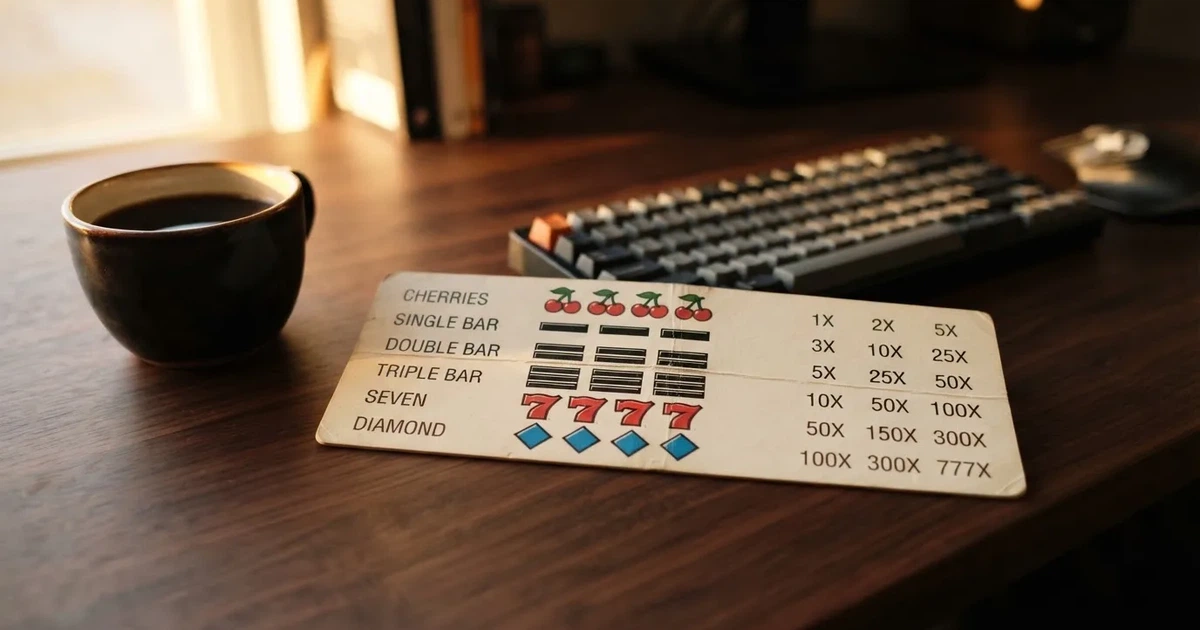
A 3-reel slot is a simpler, older format than the modern five-by-three video slot most readers will have seen on a phone screen. Three spinning reels, usually one payline down the middle, sometimes three or five, and a small set of symbols — cherries, bars, sevens, bells. The trade-off is mechanical: fewer combinations means bigger top prizes are rarer, and the format’s appeal is partly nostalgia, partly the discipline of reading a short paytable rather than chasing a dozen bonus features. That is the format this page is about. The other subject of this page — the one most readers actually came for — is the Australian licensing picture, because no online casino or online pokie of any reel count is licensed to take real-money play from anyone in this country. The rest of the page walks through both, in that order, and tries to give the reader enough to make the call.
Current as of 24 September 2026 and verified against the public register kept by the Australian Communications and Media Authority (ACMA).
Table of Contents
- What a 3-Reel Slot Actually Is, and Why the Format Still Exists
- The Australian Legal Picture, in Plain Terms
- Where the Real-Money 3-Reel Slots Are, and Why None of Them Are Licensed Here
- What the ACMA’s Warning List Actually Carries, in Context
- Bonuses and Free Spins at Offshore 3-Reel Slots: What They Actually Cost
- Reading a 3-Reel Paytable Without Fooling Yourself
- The Australian Player-Protection Layer, and Why It Doesn’t Reach Offshore
- Reading the ACMA’s Activity as a Reader
- The Three Brands the ACMA’s Public Warnings Name in the Last Two Years
- What a Reader Should Take Away
- Frequently Asked Questions About 3-Reel Slots in Australia
What a 3-Reel Slot Actually Is, and Why the Format Still Exists
The reason 3-reel slots exist is that Charles Fey, working in San Francisco in the late nineteenth century, built the first automatic payout mechanism around three reels and five symbols — horseshoes, diamonds, spades, hearts, and the Liberty Bell. Three bells across the middle line paid the top prize of ten nickels. That is the ancestor of every machine on every floor in this country and of every 3-reel title still shipping in online catalogues. The math has barely moved: a classic three-reel mechanical machine with about ten symbols per reel offers roughly 1,000 possible combinations, where a modern five-reel video slot with fifty or more symbols per reel can push the odds on the top combination to 300 million to one. The format’s lower ceiling on combinations is exactly what makes its paytables legible — three columns, a handful of rows, an end to read to.

That is also why the format persists. Bally’s 1963 Money Honey introduced the bottomless hopper and automatic payouts of up to 500 coins without an attendant, the 1976 Fortune Coin machine was the first video slot, and NSW legalised slot machines in 1956 — but the three-reel design kept showing up through every transition because a short paytable fits on a coin-machine belly strip and on a phone screen without scrolling. A reader who has never opened a casino game and wants to understand what one looks like will learn more in two minutes with a 3-reel title than with a modern five-reel video slot carrying a bonus wheel, free-spin ladder, and a pick-em game.
The volatility question is worth separating from the format question. Reel count and paytable structure affect volatility, but they do not set it on their own: the symbol weighting, the gap between the top jackpot and the next-best paid combination, and the share of the paytable that returns through the small wins all move it. A 3-reel title with a flat paytable and a single 1,000-coin top prize is one shape; a 3-reel title with a stepped paytable and a 5,000-coin top prize reached only via three specific symbols is a different shape. The same goes for five-reel titles in the other direction. Treating reel count as a synonym for “low variance” or “high variance” is the kind of shortcut that costs a reader a session.
The Australian Legal Picture, in Plain Terms
The Interactive Gambling Act 2001 — the IGA — and its 2017 amendment make it an offence to provide online casino games, online pokies, or in-play betting to a person physically in Australia. No state or territory issues a licence for online casino games. What is licensable, and what Australians can place a real bet on through a licensed channel, is wagering on races and sport placed before the event, lotteries, and keno. The licensor for most of the online bookmakers an Australian punter has heard of — Sportsbet, Bet365, Ladbrokes — is the Northern Territory Racing and Wagering Commission, which regulates 52 wagering operators from a meeting room in Darwin once a month, with no full-time staff. Online casino play is not on that menu. Any site inviting an Australian to play 3-reel slots online for real money is operating outside the Australian framework, and the licence the site displays — Curaçao, Anjouan, Kahnawake, the rest — is a licence to operate somewhere else, not a permission to take bets from here.

The minimum age for any licensed wagering product is 18. The individual player is not prosecuted under the IGA — the Act targets the provider — which is why offshore sites keep accepting Australian customers without anyone in Australia being charged. What the player gives up is the entire consumer-protection layer that sits underneath a licensed wagering service: no Australian complaints body, no enforced segregation of player funds, no recourse if a withdrawal is refused, and a real chance the site is blocked mid-session with a balance still on it.
There is one piece of reform in flight that a reader in 2026 should know about. The Interactive Gambling Amendment (Gambling Reform) Bill 2026 passed Parliament on 19 August 2026, and its advertising and inducement measures commence on 1 January 2027. That is law with a future start date, not a rule currently in force on a page published in 2026 — so the marketing language and bonus offers a reader meets at an offshore site in 2026 are not yet constrained by the new measures, but they will be by the time this page’s audience reads it.
Where the Real-Money 3-Reel Slots Are, and Why None of Them Are Licensed Here
Every 3-reel online slot an Australian can play for real money sits on an offshore site. The same is true of every five-reel video slot, every live-dealer table, and every progressive jackpot an Australian reads about on a casino review. There is no licensed Australian version of any of those products. The mechanical 3-reel machines an Australian can sit down at — in a pub, club, or casino floor — are licensed and regulated individually by state and territory gambling authorities, and they are not the subject of this page. The state totals give a sense of the scale of the physical market: 87,298 pokie-style machines outside casinos in NSW as of June 2023, 26,380 in Victoria across 2021–22, 21,122 in Queensland at October 2023, 11,672 in South Australia at September 2023, and 3,587 in the ACT at November 2023. That is what a regulated Australian slot market looks like, and it does not extend online.
The offshore sites are where the ACMA’s enforcement attention sits. The Australian Communications and Media Authority has the power to investigate, issue formal warnings, and direct Australian internet service providers to block sites offering prohibited services to Australians. As of June 2026, the ACMA’s blocking register covered 1,751 illegal gambling and affiliate marketing websites blocked since the first blocking request in November 2019. More than 230 unlicensed gambling services have left the Australian market entirely since enforcement was strengthened in 2017. The pattern is that a warning is issued, the site either does not respond or rebrands under a related company, and the ACMA’s next move is a blocking request to the ISPs. The warning list is, in practice, the audience for the rest of this page.
What an ACMA Formal Warning Actually Says
A formal warning under the Interactive Gambling Act is a written notice published on the ACMA’s own register, naming the operator — usually a corporate entity rather than the consumer-facing brand — and the conduct the regulator considers to be a contravention. It is not a fine and it is not a prosecution; it is the regulator telling the operator, on the record, that the ACMA considers the service prohibited and that further action will follow if the service continues to be offered to Australians. The brand the player sees on the site is often one or two steps removed from the entity named in the warning: the corporate wrapper exists in Curaçao, Anjouan, Cyprus, or another permissive jurisdiction, and the consumer-facing brand is what the ACMA names alongside it.
What the Blocking Register Looks Like
The 12-site blocking round reported on 26 June 2026 is a representative slice of what the ACMA directs ISPs to block at any given moment. That round covered 7Signs, ChromaBet, Donbet, Duospin, Freshbet, Slots Gem, Jacks Club, Lucky Start, Pointsbetz, Spinrise, Vinyl Casino and Wildsino. Two things follow. The first is that the list rotates — these are not the same twelve sites that were on the list a year ago, because sites rebrand, resurface, and fall out of the blocking set as their operators shut down or move. The second is that the list is a downstream enforcement tool, not the regulator’s first move: the ACMA’s first move is usually a formal warning to the operator behind the brand, and the blocking request comes after the warning fails to change conduct.
How Fast the Register Grows
Working from the running total published in June 2026 — 1,751 sites blocked since November 2019 — and dividing by the elapsed period gives a sense of the rate. November 2019 to June 2026 is about six and a half years, or roughly 79 months, which puts the average pace at somewhere between 22 and 23 blocked sites per month across the whole enforcement window. The rate has not been steady. The early months of the regime were slow as the ACMA’s blocking powers bedded in; the round reported in late June 2026 alone added twelve. A reader looking at the figure as a static number understates what it actually represents — a continuously rebuilt list, with new sites added in batches every few weeks and old sites dropping off as their operators wind down.
That band — somewhere in the low twenties per month across the full window, but with individual rounds of ten or twelve in a single month — is the rate a reader can use to gauge how seriously the regulator is taking offshore 3-reel slot play at any given moment. It is not zero, and it has not been zero since enforcement was strengthened in 2017.
What the ACMA’s Warning List Actually Carries, in Context
The ACMA’s formal warning list is the most informative public record of which offshore casino operators have offered prohibited services to Australians. It is informative in a particular way: it lists the operator the ACMA considers to be providing the service, the date of the warning, and the conduct. It does not list player complaints, payout disputes, or game fairness assessments, because those are not what the ACMA regulates. A reader looking at the warning list should read it as the regulator’s own record of who it has contacted about offering prohibited online casino play, not as a consumer-review aggregator.
The broader market context is that H2 Gambling Capital’s 2025 estimate puts Australian losses to illegal gambling sites at around A$3.9 billion a year, and the share of gambling going through legal channels fell from 74% in 2021 to 64% in the same report. The A$3.9 billion is not the winnings lost to offshore slots; it is the gross amount Australian customers are estimated to have staked through illegal channels over a year. Whatever share of that figure is 3-reel slots specifically is not broken out in the public data, but the headline number sets the scale: offshore play is a meaningful part of the Australian gambling economy, and most of it flows through the same offshore operators the ACMA is warning and blocking.
The table below is the ACMA’s own record of which operators have been warned over the 3-reel online slot product the page covers. The order follows the date the warning was issued, with the most recent first; the date column carries the month the ACMA’s formal warning was published. The operator column carries the corporate entity the ACMA named in the warning, which is usually one or two steps removed from the brand the player sees. The brand column is what the player would have typed into a browser. The last column records whether the ACMA’s own register offers anything specific to a 3-reel slot product, which in most cases it does not — the warnings cover online casino games in general rather than any individual title, and the table records where it does.
| Brand | ACMA action and date | Operator named by the ACMA | Subject support |
|---|---|---|---|
| RocketPlay | Formal warning, March 2026 | Pulsup Ltd | — |
| Jackbit | Formal warning, April 2026 | Ryker B.V. | — |
| Casino Intense | Formal warning, April 2025 | Sterplay Holding Ltd | — |
| Spirit Casino | Formal warning, May 2025 | Dama N.V. | — |
| Woo Casino | Formal warning, March 2025 | Dama N.V. | — |
| Ignition Casino | Formal warning, July 2025 | Bamboo Media | — |
| National Casino | Formal warning, July 2025 | Consolutetish S.R.L. | — |
| Bizzo Casino | Formal warning, July 2025; earlier 2022 | Consolutetish S.R.L.; earlier TechSolutions | — |
| Instant Casino | Formal warning, February 2025 | EOD Code SRL | — |
| Level Up Casino | Formal warning, May 2022 | Dama N.V. | — |
| Sky Crown | Formal warning, September 2022 | Hollycorn N.V. | — |
The pattern in the table is the story. Three of the brands — Woo Casino, Spirit Casino, RocketPlay — were warned through Dama N.V. or a successor entity, with RocketPlay moving from Dama N.V. in May 2022 to Pulsup Ltd in March 2026, which is the ACMA’s own record of a brand that has changed corporate wrappers while continuing to offer the same product to the same audience. Two more — National Casino and Bizzo Casino — were warned through Consolutetish S.R.L. in July 2025, with Bizzo already the subject of a 2022 warning to TechSolutions (CY) Group Limited and TechSolutions Group N.V. The ACMA is warning the operator, the operator moves the brand to a new wrapper, and the brand carries on.
That is the cost a reader pays for the format. The 3-reel slot product on these sites is real — it spins, it pays, it loses — but it sits on a corporate structure the ACMA has explicitly identified as providing a prohibited service to Australians, with no Australian complaints body to escalate to if a withdrawal stalls and no certainty the site will be reachable on a given day. The format’s appeal does not survive that distinction. It is a real slot, run by a real operator, in a real jurisdiction; it is not an Australian-regulated product, and the ACMA’s own record is the clearest evidence of that.
Bonuses and Free Spins at Offshore 3-Reel Slots: What They Actually Cost
The promotional structure at an offshore 3-reel slot site is built around two ideas: a deposit match — the casino offers to match a percentage of the player’s first deposit up to a ceiling, with a multiple the player has to wager before any of the bonus or the bonus-derived winnings can be withdrawn — and a free-spin allocation, which lets the player spin a specific title a set number of times at a set stake without touching their own balance, again under a wagering condition on whatever those spins return. Both structures exist in the Australian offshore market in the same shape they take everywhere else, with one difference that matters: the wagering multiple, the maximum-bet rule, and the maximum-cashout ceiling are written by an operator the ACMA has identified as offering prohibited services, and an Australian reader who has a dispute about them has no domestic complaints body to take it to.
A standard deposit match on a 3-reel slot in this segment runs a 100% match up to a few hundred dollars, with a wagering requirement around 40 to 50 times the bonus amount. A A$200 bonus at 45× means the player has to put A$9,000 through the bonus-derived balance before a withdrawal is unlocked — and on a 3-reel title with a house edge in the mid-single digits, A$9,000 of required turnover produces an expected loss in the high hundreds. The free-spin offer is structured the same way: the spin returns are credited as bonus funds with the same wagering multiple, and any winnings above the maximum-cashout cap are voided at withdrawal. The cap is usually the part a player discovers last, because it sits in the bonus terms rather than the marketing page, and it is the part that decides whether the offer is worth taking at all.
None of this is news to anyone who has read an offshore casino bonus page before. The reason it is on this page is that an Australian reader weighing a 3-reel slot bonus has no recourse to the same consumer-protection architecture an Australian wagering customer has. The 100% match, the 45× wagering multiple, and the maximum-cashout cap all sit in the operator’s terms; the ACMA’s record shows the operator is offering a prohibited service; and the player’s options if a withdrawal is refused are limited to whatever dispute-resolution channel the operator has chosen to set up, which is usually none in Australia.
Reading a 3-Reel Paytable Without Fooling Yourself
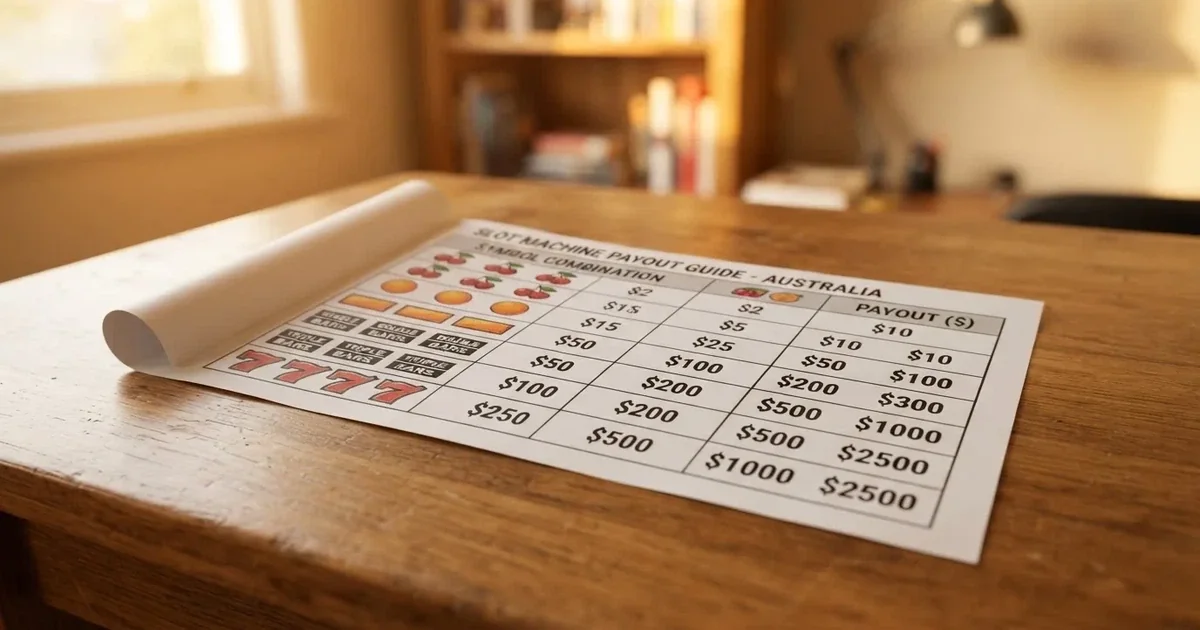
The paytable on a 3-reel slot is short enough to read in full, and reading it in full is the only way to know what the game actually pays. Three columns of symbol combinations against the stake-per-line, a row for the top jackpot, a row for the next-best paid combination, and a row for the small wins that keep the session from going flat. The two figures a reader should know before playing are the highest paid combination and the gap to the second-highest, because that gap is what the volatility looks like. A paytable that pays 1,000 coins for three sevens and 80 coins for three bars is one shape; a paytable that pays 800 for three sevens and 80 for three bars is a different shape, and the second is less volatile even though the top prize is lower. Both can be the right call depending on the bankroll.
The combination math is what separates the 3-reel format from a modern video slot. A three-reel machine with about ten symbols per reel has roughly 1,000 possible combinations; a five-reel video slot with fifty or more symbols per reel can run to 300 million to one against the top combination. The reason this matters is that the 3-reel format’s smaller symbol set is what makes its paytable legible — the player can read what every spin is doing and what it pays — and that legibility is part of the format’s value to a reader who has not played before. The smaller combination space does not make the format cheaper; it makes it more transparent, and transparency is what the format sells.
Outside Australia, minimum payout percentages are set by state regulators where there is one. In Nevada the floor is 75%, in Mississippi 80%, in New Jersey 83%. None of those numbers applies to an offshore site offered to an Australian player, because no US state licence applies to that transaction. The paytable on a 3-reel title at an offshore site tells the reader what the game pays when it pays; it does not tell the reader what the average return is over a long session, and no Australian regulator has set a floor that the offshore site is required to meet.
The Australian Player-Protection Layer, and Why It Doesn’t Reach Offshore
The Australian player-protection architecture for licensed wagering — the National Self-Exclusion Register known as BetStop, the ban on credit cards and digital currency as payment methods for licensed online wagering since 11 June 2024, the dispute-resolution arrangements that sit underneath a licensed bookmaker — does not extend to offshore 3-reel slot sites. BetStop went live in August 2023 and binds Australian-licensed online and phone wagering services; an offshore casino is not connected to it, and a player who self-excludes through BetStop is not self-excluding from offshore sites. The credit-card and crypto ban carries penalties up to A$247,500 for licensed operators, which is part of why the legal deposit routes for licensed wagering — debit card, bank transfer, PayID and Osko, BPAY — are the routes a licensed bookmaker offers. An offshore site that asks for a credit card or a crypto deposit is operating outside the Australian rules, and the absence of those rules is part of what an Australian reader is buying into by playing on it.
The help that does reach an Australian player is the National Gambling Helpline on 1800 858 858, free and 24 hours a day, with chat through Gambling Help Online. The service is confidential and is the right first call if the play has stopped being fun, whatever the platform. The Australian Communications and Media Authority’s own role is enforcement against providers, not counselling for players, and the regulator’s blocking and warning activity is what an Australian reader can use to gauge the seriousness with which offshore play is being treated at any given moment — not as a substitute for the help line, but as context.
Reading the ACMA’s Activity as a Reader
The ACMA’s formal warning list is the regulator’s own record of which operators it has contacted about offering prohibited services to Australians, and reading it well means separating the signal from the noise. A single formal warning to an operator does not mean the operator has gone away; it means the ACMA has put the operator on notice that the service is prohibited, and a follow-up blocking request or a second warning to a successor entity is what usually follows when the conduct continues. The brand may persist, may rebrand, or may move to a new wrapper — the operator behind it is what the ACMA names, and that is the more durable piece of information.
The pace of the register is what a reader should track. The 1,751-site total at June 2026 covers everything the ACMA has asked ISPs to block since November 2019, not just 3-reel slot sites, and the 12-site round reported at the same date is the kind of block-and-batch enforcement that has been running since 2017. The rate a reader can derive from those figures — somewhere in the low twenties of blocked sites per month across the full enforcement window, with individual rounds in the low double digits — is the rate a reader can quote when they want to put a number on how seriously the regulator is treating the offshore 3-reel slot market. The number is not zero, and it has not been zero since 2017.
A second way to read the warning list is to look at the operator names rather than the brand names. Hollycorn N.V., Dama N.V., Consolutetish S.R.L., Bamboo Media, EOD Code SRL, Sterplay Holding Ltd, Pulsup Ltd, Ryker B.V., TechSolutions (CY) Group Limited and TechSolutions Group N.V. — the operators the ACMA has named appear across more than one brand on the warning list, and the repetition is the regulator’s record of the same operators surfacing under new consumer-facing wrappers. A reader who notices that the same operator name appears under two different brands on the ACMA’s register is looking at the same corporate structure the ACMA is looking at.
The Three Brands the ACMA’s Public Warnings Name in the Last Two Years
Three brands on the warning list above carry the date that anchors the ACMA’s current enforcement picture, and they are worth flagging because the regulator has been actively naming them through 2026 and the year before.
RocketPlay
RocketPlay sits at the top of the warning list because the ACMA issued its most recent formal warning over the brand in March 2026, naming Pulsup Ltd as the operator. The earlier Dama N.V. warning of May 2022 covered RocketPlay as one of six brands under that wrapper, and the move from Dama N.V. to Pulsup Ltd is the regulator’s own record of a brand that changed corporate wrappers while continuing to offer the same product to the same audience. The ACMA’s register does not connect the RocketPlay product specifically to a 3-reel slot catalogue beyond the general online casino offering, and the broader site carries the usual offshore structure: a licence issued in a permissive jurisdiction, deposit methods that include routes the Australian rules do not permit for licensed wagering, and a withdrawal flow that runs through the same operator the ACMA is warning. A reader who wants the format at this brand gets the format, and gets it on a corporate structure the ACMA has named twice in four years.
Jackbit
Jackbit’s formal warning was issued in April 2026 and named Ryker B.V. as the operator. Ryker B.V. is the corporate entity the ACMA named in the same warning over CasinOK, which is the regulator’s record of an operator running more than one consumer-facing brand under the same wrapper. The brand’s product line is the standard offshore online casino offering, with 3-reel titles sitting in the catalogue alongside five-reel video slots and live-dealer tables, and the ACMA’s register does not connect the brand to any specific 3-reel slot product beyond the general prohibition on online casino games to Australians. A reader weighing Jackbit for the 3-reel format is weighing an offshore site whose operator the ACMA named two months before this page was written.
Casino Intense
Casino Intense’s formal warning was issued in April 2025 and named Sterplay Holding Ltd as the operator. The brand sits in the same offshore segment as the others on this list, with a 3-reel slot catalogue accessible from Australia and the same absence of Australian consumer protection. The ACMA’s warning is the regulator’s record that the service is prohibited, and the brand’s continued accessibility from Australia is what the warning list records rather than what it resolves. A reader who has been playing Casino Intense and reads the warning list is reading the regulator’s own statement that the brand is operating outside the Australian framework.
What a Reader Should Take Away
The three-reel slot is a real format with a real history and a real paytable a reader can read in full. It is also, in the Australian context, a product that sits entirely on offshore sites the ACMA has identified as offering prohibited services to Australians. The two facts are not in tension. The format is what it is; the licensing picture is what it is; and the page’s job is to put both on the table so a reader can decide what to do with them.
The figures that travel with the picture are the ones worth keeping. The A$3.9 billion H2 Gambling Capital estimate of annual Australian losses to illegal sites. The 1,751 sites blocked since November 2019, with the 12-site round reported in late June 2026 the most recent batch. The 87,298 licensed pokie-style machines outside casinos in NSW alone as of June 2023, which is the scale of the regulated market the offshore sites are not part of. The formal warning list above, with the ACMA’s own record of who it has contacted and when. The National Gambling Helpline on 1800 858 858, which is the help line that does reach an Australian player whatever the platform.
The decision the page does not make is whether an Australian reader should play 3-reel slots online. That is a reader’s call, with the ACMA’s register on one side of it and the help line on the other.
Frequently Asked Questions About 3-Reel Slots in Australia
What makes a 3-reel slot different from a standard five-reel video slot?
A 3-reel slot uses three spinning reels and usually one payline down the middle, with a small symbol set and a short paytable. A modern five-reel video slot uses five reels, often dozens of paylines, and bonus features like free spins and pick-em games. The combination math is different: a 3-reel machine with about ten symbols per reel has roughly 1,000 possible combinations, while a five-reel video slot with fifty-plus symbols per reel can push top-combination odds to 300 million to one.
Can 3-reel slot machines be found in licensed Australian pubs and clubs?
Yes. NSW reported 87,298 pokie-style machines outside casinos as of June 2023, with comparable figures in Victoria, Queensland, South Australia and the ACT. Those machines are licensed and regulated by state and territory gambling authorities and are not the same product as the offshore 3-reel online slots this page covers.
Do 3-reel slots typically pay out differently than newer five-reel formats?
The format shapes the paytable’s shape, not its return on its own. A 3-reel slot’s smaller combination space makes the top prize rarer than a five-reel video slot’s, but the average return depends on the paytable weighting and the house edge, which are set per title. Treat reel count as a volatility signal at most, not a return signal.
Is a 3-reel slot online the same game as a 3-reel machine on a casino floor?
The paytable structure is the same, but the regulatory framework is not. A 3-reel machine in a licensed Australian venue is regulated by a state or territory gambling authority. A 3-reel slot online is offered by an offshore operator outside the Australian framework, and the ACMA’s formal warning list names several of those operators.
Are 3-reel slots for real money available legally from an Australian-based site?
No. The Interactive Gambling Act 2001, as amended in 2017, prohibits providing online casino games and online pokies to anyone in Australia, and no state or territory licences them. Any site offering 3-reel slots for real money to an Australian customer is operating outside the Australian framework.
Do reel count and paytable structure affect how a slot’s volatility is described?
They do, alongside the symbol weighting and the gap between the top jackpot and the next-best paid combination. A flat 3-reel paytable with a single top prize is one volatility shape; a stepped 3-reel paytable with a much larger top prize reached only through three specific symbols is a different one. Reel count alone is not a volatility synonym.
Written by the editors at Casino Offshore Hub.