
Bitcoin pokies in Australia in 2026: what crypto changes, and what the law does not
 Available in US
The marketing answer to “bitcoin pokies in Australia” is that crypto deposits open up a fresh world of offshore slot machines, with anonymity, fast confirmations and bonuses denominated in BTC. The legal answer is that online casino games and online pokies cannot be licensed anywhere in Australia under the Interactive Gambling Act 2001, and the medium a punter uses to pay does not change which side of that line a site sits on. Paying with bitcoin, litecoin, ethereum or USDT does not turn a prohibited interactive gambling service into a licensed one. The Australian Communications and Media Authority has been formal-warning and blocking these sites since 2017, and the round reported on 26 June 2026 took the running total of blocked pages past 1,750 since the first blocking request in November 2019.
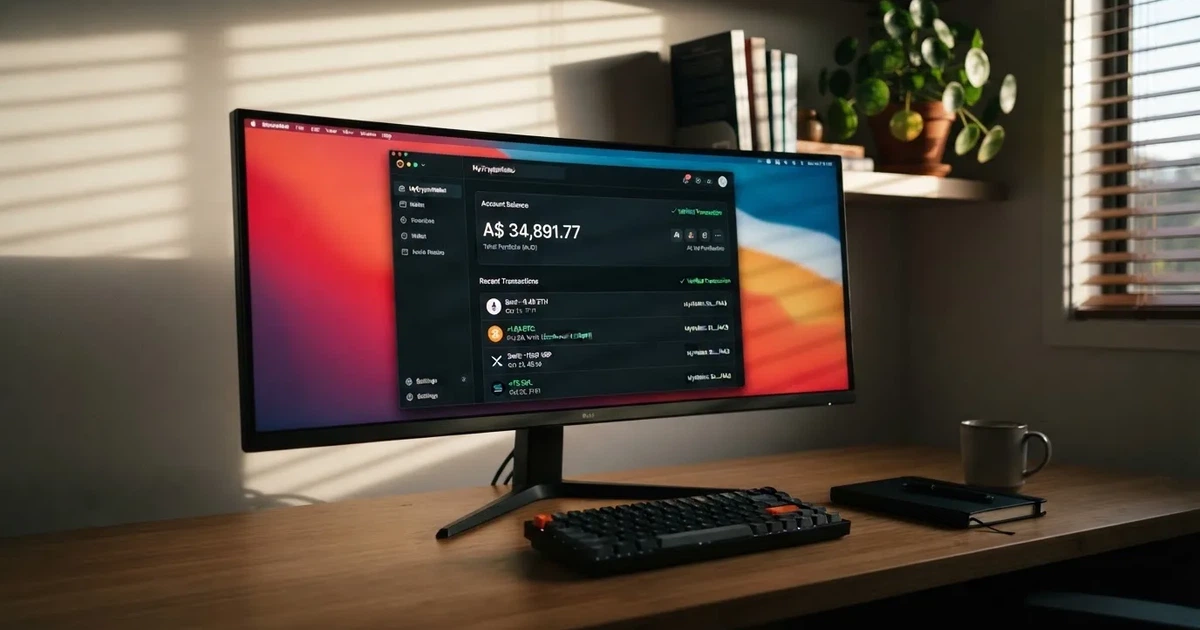
This page is the editor’s read of what the market is offering, what the regulator is doing about it, and what it costs the punter who decides the offer is still worth taking.
Currency and register data current as of 24 September 2026, verified against the ACMA’s published formal-warning register and the AUSTRAC DCE provider register.
Table of Contents
- The cryptocurrency mechanics behind “bitcoin pokies”
- The legal frame: bitcoin payments do not change the prohibition
- How the offshore “bitcoin pokies” market actually looks
- Cost and risk, plainly stated
- Responsible gambling, in a market where the registered option does not bind
- The picture, pulled together
- Brands the regulator has acted against
- Frequently asked questions
The cryptocurrency mechanics behind “bitcoin pokies”
The phrase “bitcoin pokies” puts two worlds together. The first is the slot machine — in Australia, the gaming machine you find in a pub, club or casino, locally called a pokie. The second is the Bitcoin network, a public proof-of-work ledger whose blocks are discovered by miners and added, on average, every ten minutes.

The Bitcoin network was started on 3 January 2009 when a pseudonymous figure called Satoshi Nakamoto mined the genesis block, having posted the white paper to a cryptography mailing list on 31 October 2008. Nakamoto’s real identity has never been verified. The chain is secured by proof-of-work mining, where miners search for a hash below a difficulty target that readjusts roughly every two weeks so the average block interval stays near ten minutes. The total supply is capped at 21 million bitcoin, and the mining reward halves every 210,000 blocks until issuance stops, expected around the year 2140.
A “blockchain” payment from a punter to an offshore casino is just a normal on-chain transaction, paid in BTC, satoshis or another token, broadcast to the network and confirmed when it lands inside a block. The operator’s wallet holds it until the punter’s balance is settled or withdrawn.
How a Bitcoin confirmation actually works
The phrase “approximately every ten minutes” deserves more weight than marketing usually gives it. Bitcoin block discovery is probabilistic. A block can be found much sooner or much later, with no guaranteed minimum or maximum delay — and that is what the Bitcoin project’s own FAQ is at pains to point out. A punter who hits “deposit” during a quiet period of the network will sometimes see a confirmation in two minutes and sometimes wait forty. Bitcoin Cash, a hard fork of Bitcoin that launched on 1 August 2017 at block height 478,558, keeps the same proof-of-work and the same ten-minute target. Its developers describe fees as “under a penny” and confirmations as taking “minutes”, but the underlying variance is unchanged.
What the punter actually sees, in most casino cashier flows, is the operator waiting for a small number of confirmations before crediting the balance. One confirmation is the bare minimum, and an operator that waits for three is being more conservative than the market average. The punter’s deposit is, in dollar terms, exposed to the spot price of bitcoin for every minute the network takes to settle — which is the second cost nobody puts on the front of the page.
What “anonymity” really buys at an offshore site
The reason offshore sites lean so heavily on the “anonymous” pitch is that the punter it is pitched at has already decided the site itself is the kind of place they would not want their bank to see. On the public ledger, bitcoin is pseudonymous: every transaction is recorded against a wallet address, and every address can be linked, with effort, to a person through exchange KYC records, IP logs and chain analytics. There is no technical wall between a wallet and its owner — only the cost of the analysis.
Two pieces of Australian law sit on top of that technical layer, and both matter more than the choice of coin. Under the AML/CTF Act, any business providing a digital currency exchange service to Australian customers must register with AUSTRAC as a Digital Currency Exchange (DCE) provider, regardless of where the business is incorporated; operating unregistered is a criminal offence. From 31 March 2026 the registration requirement was expanded beyond crypto-to-fiat exchange to also cover crypto-to-crypto exchange platforms, digital asset transferors, digital asset custody providers, and stablecoin issuers and distributors. The Australian Taxation Office classifies bitcoin as property rather than money or foreign currency, so most disposals — selling for AUD, swapping for another crypto or spending it — are capital gains tax events, with a 50% CGT discount currently available on assets held longer than 12 months. That flat discount is replaced from 1 July 2027 by CPI indexation of the cost base plus a 30% minimum tax rate on net capital gains. Capital losses on personal use assets are disregarded by the ATO, but only where the asset cost $10,000 or less to acquire — holding bitcoin as an investment takes it outside that carve-out entirely.
What the punter is left with, in practice, is a payment rail that is fast and global, and a regulatory environment in Australia that treats it as reportable property and that requires every fiat on-ramp touching it to be registered. “Anonymous” is what the cashier says it is. Under the law, it never quite is.
The legal frame: bitcoin payments do not change the prohibition
The Interactive Gambling Act 2001, strengthened by the Interactive Gambling Amendment Act 2017, makes it an offence to provide online casino games, online pokies or in-play betting to a person in Australia. No state or territory licences them. What is licensable is wagering on races and sport placed before the event, lotteries and keno — in practice issued by the Northern Territory Racing and Wagering Commission, which regulates 52 of Australia’s online bookmakers, including Sportsbet, Bet365 and Ladbrokes, licensed in the Territory for tax reasons. The NTRWC has no full-time staff and meets once a month in Darwin. The Northern Territory is, for online wagering, the regulator that matters.
Minimum age is 18. A site asking an Australian for a deposit is operating outside the law, whatever licence it shows on the footer. Several of the licences brand marketers cite on offshore casino pages are issued by jurisdictions — Curaçao, Anjouan, the Comoros — that do not have an enforcement relationship with the ACMA. The ACMA’s formal warnings, named below, are directed at the operating company, not the licence-holder.
The Interactive Gambling Amendment (Gambling Reform) Bill 2026
The Interactive Gambling Amendment (Gambling Reform) Bill 2026 passed Parliament on 19 August 2026. Its advertising and inducement measures commence on 1 January 2027. The bill is law with a start date, not yet in force on a page read in 2026. The effect on this page is forward-looking: a punter deciding whether to claim a bonus at an offshore site in the back half of 2026 is still acting under the pre-amendment regime, and the inducement provisions that will tighten marketing across licensed channels from 1 January 2027 do not apply to an offshore casino today.
What is enforced against offshore sites
The ACMA investigates, issues formal warnings, and directs Australian internet service providers to block illegal services. According to the ACMA as reported in June 2026, a total of 1,751 illegal gambling and affiliate marketing websites had been blocked since the first blocking request in November 2019, and more than 230 unlicensed gambling services had left the Australian market since enforcement was strengthened in 2017. The blocking round of 26 June 2026 added 12 more sites — 7Signs, ChromaBet, Donbet, Duospin, Freshbet, Slots Gem, Jacks Club, Lucky Start, Pointsbetz, Spinrise, Vinyl Casino and Wildsino — to the block list.
The individual player is not prosecuted. The IGA targets the provider. What that means for a punter is that an offshore site gives no Australian consumer protection, no complaints body and no recourse if a withdrawal is refused. A site on the block list can be taken offline by an ISP with a balance still on it.
Payment-side enforcement
Credit cards, credit-related products and digital currency are banned as payment for licensed online wagering in Australia since 11 June 2024, with penalties of up to $247,500 for operators. Legal deposit routes for licensed wagering are debit card, bank transfer, PayID, Osko and BPAY. A licensed Australian wagering site cannot take a bitcoin deposit. An offshore site accepting a bitcoin deposit from an Australian is, by definition, not a licensed Australian wagering operator — and the cashier screen that lets a punter deposit BTC is itself the marker that the site is outside the regime.
Where a punter gets help, and where they don’t
BetStop, the National Self-Exclusion Register, has been live since August 2023. It binds only Australian-licensed online and phone wagering services. An offshore casino is not connected to it. A punter who has registered with BetStop and then deposits at an offshore site has not excluded themselves from that site — the operator is under no obligation to honour the exclusion.
The National Gambling Helpline, 1800 858 858, is free and operates 24 hours a day, with webchat at Gambling Help Online. State-level self-exclusion registers — Pubwork’s exclusion schemes, the various clubland registers — apply only to the venues that run them.
How the offshore “bitcoin pokies” market actually looks
H2 Gambling Capital’s 2025 report estimates that Australians lose about A$3.9 billion a year to illegal gambling sites, and that the share of gambling going through legal channels fell from 74% in 2021 to 64%. The market the punter is being sold to is not small, and it has been growing against the legal share. That growth is what brings in the operator count this page names — most of them recent, several of them the same operating company rebranded under a new label.
The brands below are not a shortlist, and the order is not a ranking. The ACMA has issued a formal warning to each of them for offering prohibited interactive gambling services to Australians. Their inclusion here is a description of what the regulator has acted against, not a recommendation of any of them as a place to play.
The ACMA action at a glance
| Brand | ACMA action and date | Operator named by the ACMA | Subject support |
|---|---|---|---|
| RocketPlay | Formal warning under the IGA, March 2026 (also May 2022 under Dama N.V.) | Pulsup Ltd; earlier Dama N.V. | Not advertised as a bitcoin brand |
| Level Up Casino | Formal warning under the IGA, May 2022 | Dama N.V. | Not advertised as a bitcoin brand |
| Woo Casino | Formal warning under the IGA, March 2025 | Dama N.V. | Listings pages describe it as bitcoin-friendly |
| Spirit Casino | Formal warning under the IGA, May 2025 | Dama N.V. | Not advertised as a bitcoin brand |
| National Casino | Formal warning under the IGA, July 2025 | Consolutetish S.R.L. | NAB’s merchant categorisation flags the operator category |
| Bizzo Casino | Formal warning under the IGA, July 2025 (also 2022 under TechSolutions) | Consolutetish S.R.L.; earlier TechSolutions (CY) Group Limited / TechSolutions Group N.V. | Not advertised as a bitcoin brand |
| Ignition Casino | Formal warning under the IGA, July 2025 | Bamboo Media | Not advertised as a bitcoin brand |
| Instant Casino | Formal warning under the IGA, February 2025 | EOD Code SRL | Not advertised as a bitcoin brand |
| Jackbit | Formal warning under the IGA, April 2026 | Ryker B.V. | Not advertised as a bitcoin brand |
| Casino Intense | Formal warning under the IGA, April 2025 | Sterplay Holding Ltd | Not advertised as a bitcoin brand |
| Sky Crown | Formal warning under the IGA, September 2022 | Hollycorn N.V. | Not advertised as a bitcoin brand |
The “Subject support” column is what the public listings report, not what each operator publishes on its own cashier page. Where a public listing describes the brand as bitcoin-friendly and the operator’s own cashier is silent on the matter, the listing is what gets noted here. Where neither source claims anything, the cell is empty.
Several of these brands are the same operating company rebranded. Dama N.V. is the company behind RocketPlay, Level Up, Woo Casino and Spirit Casino, and the May 2022 warning covered six brands in one notice — Bambet, Dazard, Level Up, Rocketplay, Wild Tornado and Cobra Casinos — alongside two further Dama N.V. brands warned on later dates. TechSolutions was warned over Bizzo Casino in 2022; Consolutetish S.R.L. was warned over National Casino and Bizzo Casino in July 2025. The pattern across the table is a regulator chasing the same corporate parents through their various skins, and a marketing operation that has not yet stopped reappearing under a new domain.
Reading the table against the cashier screen
The most useful thing in this table is what is not in it. No row contains a recommendation, a bonus figure or a payout time. No bonus terms are given, because the only sources for them are the affiliate marketing pages that the ACMA has been blocking since 2019. A punter who has compared a few of these sites has, in most cases, compared the same Dama N.V. cashier fronted by a different logo.
A “formal warning under the Interactive Gambling Act 2001” entry is also not a finding of consumer harm to any specific punter. It is the regulator telling the operator it has concluded the service is a prohibited interactive gambling service and that further enforcement action, including blocking, will follow. The ACMA’s blocking list has, in the round reported on 26 June 2026, taken 1,751 sites and affiliate pages off Australian ISPs since November 2019.
How a “ranking” of these brands would be assembled — and why it is not
The criterion the marketing pages use is bonus size, game count and payout speed. The criterion this page uses is regulator action: every brand named below is on the regulator’s list. A punter sorting by bonus size is sorting the same marketing operation by how aggressively its affiliate network is willing to discount its “free spins” headline — not by an objective measure of value. A bonus advertised in BTC at an offshore site is denominated in a token whose spot price has moved several percent in many of the weeks any punter reading this has been alive; the “100 mBTC” headline is a moving number the punter has to price in real time.
The honest comparison is between (a) using a licensed Australian venue — a pub, club or casino with a real-money gaming machine — and (b) using an offshore site accepting crypto. Between those two, the legal frame is fixed and the cost is not the same.
Cost and risk, plainly stated
The crypto-specific cost of playing bitcoin pokies at an offshore site in 2026 sits on top of the standard offshore cost. The standard offshore cost is the absence of an Australian complaints body, the absence of recourse if a withdrawal is refused, and the risk that the ACMA will block the domain while a balance is still on it. The crypto-specific cost is what the BTC price does to that balance while the punter is playing.
Price volatility during a session
The punter’s deposit is denominated in bitcoin. The slot game is denominated in credits, which the operator converts to and from a BTC balance at the spot rate the cashier shows. The conversion happens twice per spin in a visible way: on the credit-in, the punter’s BTC is sold at the displayed spot; on the credit-out, the winnings are bought back at the spot the operator quotes. If bitcoin is, on average, more volatile than the AUD/USD pair it is usually priced against, every round trip through the cashier is a small bet on direction.
H2 Gambling Capital’s 2025 figure — A$3.9 billion a year lost to illegal gambling sites — is the total stake the market absorbs, denominated in AUD. Translating it back into BTC at any single point gives a different headline on a different day.
The CGT cost of the win
The ATO treats bitcoin as property. Selling for AUD is a CGT event. Spending it at an offshore casino is a CGT event, and so is the disposal of any bitcoin received as a withdrawal. The 50% CGT discount currently available on assets held longer than 12 months is replaced from 1 July 2027 by CPI indexation plus a 30% minimum tax rate on net capital gains. A punter who treats bitcoin as a short-term bankroll and disposes of it within 12 months pays full marginal rates on any gain between deposit and withdrawal, and a punter who treats it as a long-term holding takes the gains on top of whatever the casino has already taken out of the balance.
The blocking cost
The ACMA’s blocking round reported on 26 June 2026 added 12 sites to a list of 1,751 blocked since November 2019. An offshore site can be on the block list within a single calendar quarter of the formal warning. A punter with a balance on a domain that gets blocked during a session cannot, in most cases, withdraw it.
What the punter pays for the privilege
The marketing pitch is that bitcoin is fast, cheap and anonymous. The Australian reality is that bitcoin is fast in confirmation terms and cheap at the network layer, but the regulatory layer turns every disposal into a CGT event and every exchange touching AUD into an AUSTRAC-registered counterparty. “Anonymous” is, at best, a relative term against the more invasive KYC regimes the licensed channel imposes — and at worst, a marketing line that the wallet’s chain history does not actually back.
The punter’s privilege, on this market, is access to a slot game that the ACMA has formally warned the operator is prohibited. The price is the absence of Australian consumer protection, the cost of converting AUD to BTC and back, the CGT on any gain, and the chance of the site being blocked mid-session.
Responsible gambling, in a market where the registered option does not bind
BetStop, the National Self-Exclusion Register, is the cleanest version of “I am not playing today” available to an Australian punter. It binds Australian-licensed online and phone wagering services. An offshore site accepting bitcoin deposits is not connected to it. A punter who registers with BetStop and then opens a crypto-funded account at one of the brands named in the table above has not excluded themselves from that brand — the operator is under no obligation to honour it, has no means of knowing the punter has, and has no enforcement relationship with the ACMA around it.
State-level registers — the schemes run by individual hotel and club operators in Victoria, New South Wales, Queensland and elsewhere — apply only to the venues that operate them. They do not extend to an offshore site accessed through a VPN. The ACMA does not run a register of self-excluded players, and the AML/CTF Act’s “know your customer” obligations run from Australian exchanges to AUSTRAC, not from an offshore casino to the punter.
The National Gambling Helpline, 1800 858 858, is the constant. It is free, available 24 hours a day, and runs webchat at Gambling Help Online. The line is the one support that does not depend on which operator the punter is using, licensed or not.
Gambling winnings of a recreational player are not assessable income under section 6-5 ITAA 1997, and losses are not deductible, unless the person is carrying on a business of gambling. The ATO’s view on crypto is layered on top: a capital gain on a personal use asset is disregarded, but only where the asset cost $10,000 or less to acquire — holding bitcoin as an investment takes it outside the carve-out, and capital losses on personal use assets are disregarded entirely, meaning they cannot offset other gains or be carried forward.
The picture, pulled together
Bitcoin pokies in Australia in 2026 is a market in which the cashier accepts a token and the regulator has, since 2017, been blocking the cashier’s domain. The block on credit cards and digital currency at licensed Australian wagering sites has been in force since 11 June 2024. The 2026 reform bill tightens advertising from 1 January 2027 but does not, on a 2026 page, change the legal status of the offshore sites a punter can reach today.
The math is not the punter’s friend. A 50% CGT discount today, replaced from 1 July 2027 by CPI indexation plus a 30% floor, means the tax treatment is tightening just as the marketing reach widens. A 1,751-site block list, on a market that H2 Gambling Capital estimates at A$3.9 billion a year, is not a contained one.
Brands the regulator has acted against
This section walks the eleven brands the ACMA has issued a formal warning over. The order is the order the regulator has acted in, not a ranking, and the verdict on each is the editor’s read of what the warning, taken with the operator behind it, means for a punter weighing the site today.
RocketPlay
RocketPlay is one of the brands the ACMA has chased through more than one operating company. The most recent action, in March 2026, named Pulsup Ltd over Rocketplay; an earlier May 2022 warning had named Dama N.V. over the same brand. Two operators, one site, a regulator telling both that the offer is a prohibited interactive gambling service. The operator does not market this as a bitcoin-enabled brand, and public listings confirm the same.
For a punter deciding on RocketPlay, the cost of the rebranding is what to weigh. The same site has come back under a new operator, the same regulator has warned the new operator, and the only remaining question is whether a third operator takes it up next. The site cannot lawfully serve an Australian; the punter is the one who finds that out if the withdrawal is refused.
Level Up Casino
Level Up Casino is a Dama N.V. brand warned in May 2022. The brand sits in the same cluster as RocketPlay, Woo Casino and Spirit Casino — Dama N.V. has had at least four of its casino brands acted against by the ACMA in three years. A punter using a Dama N.V. brand today is using one of a small set of sister sites that share the same corporate parent and the same regulatory file with the ACMA. The May 2022 warning predates the credit-card and digital-currency ban on Australian-licensed wagering of 11 June 2024.
This is not marketed as a bitcoin brand by the operator. Punter interest in crypto for Dama N.V. services is directed to sister sites instead.
Woo Casino
Woo Casino is the Dama N.V. brand the ACMA acted against in March 2025. Public listings describe Woo as bitcoin-friendly, which is what gives it a place in the “Subject support” column where the other Dama N.V. brands sit empty. A punter looking for a Dama N.V. site that takes bitcoin finds it on Woo rather than on the other three Dama N.V. brands the regulator has warned. The cost of that distinction is the same Dama N.V. cashier, the same ACMA file, and the same absence of Australian consumer protection.
Spirit Casino
Spirit Casino is the Dama N.V. brand the ACMA acted against in May 2025. It sits two months after Woo Casino in the same corporate parent file and makes no bitcoin-related claims on its cashier. For a punter who has been using Woo Casino and sees Spirit Casino on a comparison page, the only meaningful difference is the date the ACMA got around to it.
National Casino
National Casino is the Consolutetish S.R.L. brand the ACMA acted against in July 2025. NAB’s merchant categorisation has, in public listings, flagged the operator category for the brand — a different signal from the ACMA warning, but pointing at the same payment-rail issue. Consolutetish S.R.L. was also warned over Bizzo Casino in the same July 2025 round, so the two brands share an operator. A punter choosing between them is choosing between two skins of the same cashier.
Bizzo Casino
Bizzo Casino has two operators on the ACMA’s file. The 2022 warning named TechSolutions (CY) Group Limited and TechSolutions Group N.V.; the July 2025 warning named Consolutetish S.R.L. Three years, two operators, one brand. The operator’s own cashier does not feature bitcoin, and no public notice claims otherwise.
For a punter, the picture is that of a brand that has been through two enforcement actions and two operator changes. The chance of a third is the part of the cost the marketing page does not name.
Ignition Casino
Ignition Casino is the Bamboo Media brand the ACMA acted against in July 2025. The operator does not list this as a bitcoin brand, and third-party listings agree. Bamboo Media is not the parent of any other brand on this page, and the ACMA’s July 2025 round covered Ignition Casino on its own.
Instant Casino
Instant Casino is the EOD Code SRL brand the ACMA acted against in February 2025. The cashier interface for this site does not feature bitcoin. A punter who has been redirected to Instant Casino through an affiliate link has been redirected to one of the earlier sites the regulator acted against in the 2025 calendar year.
Jackbit
Jackbit is the Ryker B.V. brand the ACMA acted against in April 2026. It is the most recent formal warning on this page. Crypto-deposits are not marketed directly on the cashier page, and a punter seeing Jackbit in a “crypto casino” listing is seeing a brand the ACMA named less than three months before the 26 June 2026 blocking round. The brand has had the least time on the regulator’s file and the most time in marketing circulation.
Casino Intense
Casino Intense is the Sterplay Holding Ltd brand the ACMA acted against in April 2025. This site does not promote bitcoin payments at the cashier. Sterplay Holding Ltd has no other brand on this page.
Sky Crown
Sky Crown is the Hollycorn N.V. brand the ACMA acted against in September 2022. Hollycorn N.V. was also warned over Blue Leo in the same notice, and the September 2022 date makes Sky Crown the longest-running entry on the ACMA’s file in this table. A punter using Sky Crown today is using a brand that has been on the regulator’s list for nearly four years.
Frequently asked questions
Does paying with Bitcoin make an offshore pokies site legal for Australians to use?
No. The Interactive Gambling Act 2001 prohibits providing online casino games, online pokies or in-play betting to a person in Australia. The medium of payment does not change the prohibition. Bitcoin, litecoin, ethereum or stablecoin deposits do not convert a prohibited service into a licensed one.
How long does a typical Bitcoin transaction take to confirm?
Bitcoin blocks are added approximately every ten minutes on average, but the interval is probabilistic. A confirmation can arrive much sooner or much later, with no guaranteed minimum or maximum delay. Most casino cashiers credit the balance after one confirmation; some wait for three. Bitcoin Cash keeps the same proof-of-work and the same ten-minute target.
Why is block confirmation time for Bitcoin described as probabilistic rather than fixed?
The Bitcoin difficulty target readjusts roughly every two weeks to keep the average block interval near ten minutes. Each individual block is the first hash below the target that a miner finds, and discovery is a memoryless process: the longer since the last one, the more likely the next one. Variance is part of the design.
Can licensed Australian pokies venues accept cryptocurrency as payment?
Credit cards, credit-related products and digital currency are banned as payment for licensed online wagering in Australia since 11 June 2024. Land-based gaming venues are not within the ACMA’s online-wagering remit and are governed by state and territory gaming laws. A punter wanting to use bitcoin to play a pokie in Australia today is, in practice, using an offshore site.
What risk does price volatility add to holding Bitcoin before it’s used anywhere?
A bitcoin balance is exposed to the spot price for every minute the punter holds it. The Australian Taxation Office treats bitcoin as property, so most disposals — selling for AUD, swapping for another crypto, or spending it at an offshore site — are capital gains tax events. The 50% CGT discount currently available on assets held longer than 12 months is replaced from 1 July 2027 by CPI indexation of the cost base plus a 30% minimum tax rate on net capital gains.
Why do offshore casino sites promote “anonymous” Bitcoin play to Australian visitors?
Because the punter the pitch is aimed at has already decided the site is one a bank should not see. The public ledger records every transaction against a wallet address; exchange KYC, IP logs and chain analytics link the address back to a person. AUSTRAC requires digital currency exchange providers serving Australians to register, and the registration was expanded on 31 March 2026 to cover crypto-to-crypto platforms and stablecoin issuers. “Anonymous” is a relative pitch against licensed-rail KYC, not an absolute privacy guarantee.
Written by the editors at Casino Offshore Hub.