
Best Live Casino Online Australia 2026: A Market The IGA Closed Off
 Available in US
Typing “best live casino online Australia” into a search box in 2026 produces an immediate collision. The product is prohibited under the Interactive Gambling Act 2001, and no Australian jurisdiction issues a licence for it. What follows works through what that prohibition actually means in practice — for the offshore brands marketing live tables to Australians, for the regulator that has been blocking them since 2017, and for a reader who would rather not find out the hard way that an offshore site sits outside every Australian protection. The studios, the paytables, the eleven brands the ACMA has acted against, the welcome bonus mechanics, and the lawful options that exist all sit inside that frame.

Current as of 24 September 2026, verified against the Australian Communications and Media Authority’s register of formal warnings and the published blocking-request totals.
Table of Contents
- Live Casino Apps and Mobile Browser Play in Australia
- Live Dealer Tables, Paytables and the Studios Behind Them
- The “Best Live Casino Online Australia” Shortlist — And Why the ACMA Writes It
- What a Live Casino Is, Fundamentally
- Prohibition Under the Interactive Gambling Act
- Player Protection Tools Available to Australians
- Welcome Bonuses, Wagering Requirements and What the Marketing Leaves Out
- The Eleven Brands Named by the ACMA
- What the Blocking Rate Actually Means
- Frequently Asked Questions
Live Casino Apps and Mobile Browser Play in Australia
The phrase “live casino app” covers two distinct products, and the difference between them decides almost everything that follows for an Australian reader in 2026. A downloadable application is software that lives on the phone, runs an iOS or Android binary, and processes payments through the device’s stored credentials. A mobile browser session loads the same content as a desktop visit: HTML, a live video stream, a bet slip, no install required. Both are pitched under the same banner by offshore brands marketing to Australians. The law treats them very differently.
Apple’s App Store and Google Play maintain country-specific rules on real-money gambling applications. Google Play permits wagering apps only where the operator holds a licence in the user’s jurisdiction and the app is configured for the relevant market. The App Store applies a parallel gate, with each submission reviewed for the country it intends to serve. An offshore brand offering live dealer tables to Australians is, by definition, outside both frameworks. The “app” most of these brands market is therefore rarely a downloadable product. What reaches an Australian phone is, almost always, the mobile browser version — a webpage that loads without an install and asks the device for nothing the operating system would object to.
That detail matters more than it looks. A wagering app from a licensed Australian bookmaker sits inside the same legal frame as the operator. The player can complain to the operator’s dispute resolution, escalate to the Australian Financial Complaints Authority if that fails, and self-exclude through BetStop. The mobile browser version of an offshore live casino sits outside that frame on every front. The browser session can be severed when the ACMA asks the ISP to block the URL. The withdrawal can be refused with no Australian body the player can appeal to. The geo-block that supposedly prevents access from Australia can fail or be worked around, and the consequence lands on the player rather than on the operator. That is the structural difference the marketing does not name.
There is also a quieter consequence worth naming. App store restrictions mean that the “live casino app” advertised by an offshore brand is often a wrapper around a mobile site, distributed through affiliate links rather than an app store. The download may go through a third-party page, an APK file outside Google Play, or a “PWA” install — each of which is a mechanism designed to deliver a product the platform would otherwise have rejected. The reader who follows the link ends up at a binary the platform never vetted. That is a description of how the product gets onto the phone, not a recommendation of the path. The phone’s own security model has done none of the work the brand’s marketing claims it has.
The practical situation for an Australian in 2026 is narrower than the marketing assumes. A wagering app from a licensed Australian bookmaker is a regulated product. For an offshore live casino targeting Australians, the same phrase describes a workaround that puts every consumer safeguard on the other side of a regulatory gap. The two products share a name and little else, and a reader who treats them as interchangeable has missed the only point that matters.
Live Dealer Tables, Paytables and the Studios Behind Them
The first thing a reader needs to know about a live dealer table is that the dealer is real and the bet resolution is software. A camera captures the dealer’s actions — a card pulled from the shoe, a roulette wheel spun, a chip stack moved — and optical character recognition converts those images into data sent to the player’s screen. The hand on the table is being played; the result on the screen is being read by a sensor. That distinction is what defines the format, and it is also what produces the catalogue.
Baccarat, blackjack and roulette are the three games every live studio offers. Craps, sic bo and game-show formats round out the rest. The paytables are the same regardless of which studio runs them, because the maths is set by the game, not by the camera. Baccarat runs at a 1.06% house edge on the Banker bet, 1.24% on the Player bet, and 14.36% on the Tie. The Tie figure is worth sitting with: the exotic side of any live table is where the marketing concentrates and where the price is steepest. Blackjack, played under liberal Las Vegas Strip rules with optimal strategy, returns about 0.28% to the house. The Atlantic City variant sits at 0.43%. Craps holds 1.41% on the Pass line and 1.36% on Don’t Pass, with Any Craps at 11.11%. These are the floors. The side bets, payout tweaks and rule variants shift them upward in ways the paytable states plainly and the marketing rarely mentions.
Evolution, founded in Sweden in 2006, is the dominant supplier. The company runs more than 700 gambling platforms worldwide that stream its live tables around the clock from studios in multiple countries, and the Evolution Group also owns NetEnt, Red Tiger, Big Time Gaming, Nolimit City and Ezugi — five studios folded into the same corporate umbrella. Evolution reached 100 live tables at its Riga studios in 2013, then the largest single-site casino operation in Europe, and opened a Malta studio the following year. The group’s acquisition of NetEnt completed on 1 December 2020, which is the consolidation date that tells a reader how recent the supplier’s market position actually is.
For a reader comparing operators, that consolidation has a consequence. The supplier behind the table and the brand reselling the table are different entities, and the ACMA’s formal warnings are issued to the brand, not to Evolution. The studio can be identical on every site; what differs is the wrapper. What the regulator acts against is the wrapper. The marketing pitch that conflates “Evolution-powered” with “safe” is doing the work the regulator would not endorse. That conflation is also the reason a per-brand table is more useful than a studio round-up: the studio is the same on every site; the warnings track the wrapper.
The lineage of the games matters less than the paytable but adds context. Baccarat traces to either 19th-century France or 15th-century Italy depending on the source, with the modern variant — punto banco — developed in Havana in the 1940s and dealt from a six- or eight-deck shoe. Chemin de fer, the two-player variant named for being quicker than the original, emerged later in the 19th century. Blackjack grew out of the French vingt-un, was described in Cervantes’ writing around 1601-1602, was renamed “blackjack” around 1899 during the Klondike Gold Rush, and now sits at every live studio under rule sets from “dealer stands on soft 17” to “resplit aces” that the paytable documents in advance. The history does not change the maths; it explains why the maths exists. Cards 2 through 9 count at face value in baccarat, 10/J/Q/K count as zero, aces count as one, and hand totals are taken modulo 10. The structure of the game is older than the studio running it, and the paytable reflects that.
A last word on the paytable itself. Side bets are where the format earns its keep for the operator. The “21+3” bet in blackjack, the “Perfect Pairs” or “Crown Pairs” bets, the baccarat Dragon Bonus — each pays a premium for hitting a pattern, and each carries a house edge several times the main bet’s. The paytable at the foot of the screen is the contract; the marketing that calls these bets “exciting” or “thrilling” is the same marketing that does not print the edge number beside the word. The marketing is silent about why the side bets are exciting. For a reader deciding whether to play, the paytable is the better document.
The “Best Live Casino Online Australia” Shortlist — And Why the ACMA Writes It
A “best live casino” shortlist for Australian readers would, in a regulated market, rank brands on game selection, payout speed, bonus fairness and customer service. The Australian market is not regulated for this product, and that is what the shortlist below actually shows. Every brand in this table is here because the ACMA issued a formal warning about it for offering prohibited services to Australians. The ranking is not a recommendation. It is the regulator’s enforcement record, with the brand names left in.
The columns the table uses: brand, the ACMA action and date, the operating entity the ACMA named, and what the research was able to confirm about live casino support. The last column distinguishes between brands that appear on a third-party listing — a game studio’s catalogue, a news source, an encyclopedia entry — and brands where the only documented mention is the regulator’s warning itself. “No third-party listing” does not mean the brand does not offer live casino; it means the research did not find a confirmation outside the brand’s own marketing.
| Brand | ACMA action and date | Operator named by the ACMA | Subject support |
|---|---|---|---|
| RocketPlay | Formal warning, March 2026; earlier Dama N.V. warning, May 2022 | Pulsup Ltd | — |
| Level Up Casino | Formal warning, May 2022 | Dama N.V. | BGaming lists this brand |
| Woo Casino | Formal warning, March 2025 | Dama N.V. | — |
| Spirit Casino | Formal warning, May 2025 | Dama N.V. | — |
| National Casino | Formal warning, July 2025 | Consolutetish S.R.L. | Wikipedia lists this brand |
| Bizzo Casino | Formal warning, July 2025; earlier 2022 | Consolutetish S.R.L. (TechSolutions previously) | — |
| Ignition Casino | Formal warning, July 2025 | Bamboo Media | — |
| Instant Casino | Formal warning, February 2025 | EOD Code SRL | — |
| Jackbit | Formal warning, April 2026 | Ryker B.V. | — |
| Casino Intense | Formal warning, April 2025 | Sterplay Holding Ltd | ABC News, the ACMA register and Crown Melbourne list this brand |
| Sky Crown | Formal warning, September 2022 | Hollycorn N.V. | — |
A few patterns emerge from the table that the per-brand write-ups expand on. Dama N.V. appears as the named operator for four of the eleven brands — RocketPlay, Level Up, Woo Casino and Spirit Casino — which is the regulator’s record of one operator group running multiple brands in parallel. The ACMA has issued formal warnings to the same operator across years (2022, 2025, 2026), with the brand changing each time. The pattern matters because it tells a reader what “the brand” actually is in the offshore market: a marketing surface over a corporate entity that may rotate the name while the warning record accumulates. The brand is the skin; the operator is the file.
A second pattern is the gap between the ACMA action and the brand’s continued operation. The warnings listed span September 2022 to April 2026, and the brands that received them in 2022 (Level Up, Sky Crown) were still being warned about under new operators in 2025. A formal warning does not stop a brand from being offered to Australians; it adds a regulator’s name to the file. That is the constraint the offshore market operates under, and the enforcement record below the table sits inside it.
The “subject support” column deserves its own sentence. Three brands appear on a third-party listing: Level Up Casino is on BGaming’s catalogue, National Casino has a Wikipedia entry, and Casino Intense is mentioned across ABC News, the ACMA register and Crown Melbourne. The remaining eight brands have only the regulator’s record to point at. For a reader comparing options, that is a useful asymmetry. A brand with an independent third-party listing can be checked against it. A brand with only the ACMA warning to its name cannot.
What a Live Casino Is, Fundamentally
A live casino is a real-time video stream of a real gambling table — typically a studio, occasionally a land-based casino floor — with bets placed by the player against the house. The format looks like a screen game with a face on it. Mechanically, it is something else. The deck is physical, the wheel is physical, the dealer is physical; what reaches the player’s screen is a digital reconstruction built from camera input. The player clicks a chip value, clicks a betting position, and the bet is recorded against the outcome the sensor reads. There is no random number generator in the player’s hand; the randomness is in the shuffle and the wheel.

The format distinguishes itself from a standard online slot in three ways that matter. First, the player sees the source of the result. That is what the marketing calls “trust” and what an honest description calls “transparency”: the player cannot be shown a different card than the one the sensor reads. Second, the pace is human. A live dealer completes a hand in roughly 30 to 60 seconds, plus betting time, which is slower than a slot spin and faster than a hand of blackjack at a felt table with seven other customers. Third, the game is social in the form the marketing prefers — chat windows, sometimes the dealer’s microphone, sometimes a camera that follows the action across multiple tables. None of those features changes the price; they change the experience of paying the price. The house edge is unchanged by the camera angle.
The catalogue concentrates on three games for a reason. Baccarat, blackjack and roulette together account for the majority of live studio floor space because they are the games the player base already knows. Punto banco baccarat is dealt from a six- or eight-deck shoe, with hands played to fixed drawing rules and the casino banking every position. Cards 2 through 9 count at face value, 10/J/Q/K count as zero, and aces count as one, with hand totals taken modulo 10. Blackjack is dealt from one or more decks, with the dealer drawing to a hard 17 or soft 17 depending on the rule set, and the player choosing hit, stand, double or split on each hand. A starting two-card total of 21 is called a “blackjack” or “natural” and is the strongest hand. Roulette is the wheel — European single-zero, American double-zero, French with la partage — with inside and outside bets laid out on a grid that has not changed in two centuries. None of this is innovative. All of it is reliable, which is the property the marketing sells.
What the format does not change is the price. The house edge is set by the paytable, not by the camera. A live blackjack hand with optimal play still returns about 0.28% to the house under liberal Las Vegas Strip rules; the live format does not move that number, and a player who believes otherwise is paying for the perception of control rather than for any reduction in the house’s take. Side bets are where the price climbs. The “21+3” bet in blackjack, the “Dragon Bonus” in baccarat, the “Crown Pairs” side bet at Crown Melbourne: each carries an edge several times the main bet’s, and each is sold by the marketing as the “exciting” option. The marketing is correct that these bets are exciting. It is silent about why. The “why” is the price.
Established blackjack variants include Spanish 21 (played without 10s but with liberal player-favourable rules), Double Exposure (both dealer cards dealt face-up), Blackjack Switch (the player can swap cards between two hands) and Super Fun 21 (allowing up to four splits). Each variant shifts the house edge in a different direction, and the paytable at the table is the document that says by how much. For a reader approaching a live casino for the first time, the paytable is what to read first. The marketing is what to read second. The two read very differently, and a player who reads only the second has not read enough.
Prohibition Under the Interactive Gambling Act
The Interactive Gambling Act 2001 makes it a prohibited interactive gambling service to provide online casino games — blackjack, roulette, baccarat, slots — to a person in Australia. The 2017 amendment strengthened that prohibition; the Interactive Gambling Amendment (Gambling Reform) Bill 2026, passed by Parliament on 19 August 2026, extends the framework to advertising and inducements, with those measures commencing on 1 January 2027. None of this licences online casino games. No state or territory issues a licence for them. The only wagering products that can be offered to Australians online are bets placed before the start of a race or sporting event, lotteries and keno. That is the legal frame; everything else operates outside it.
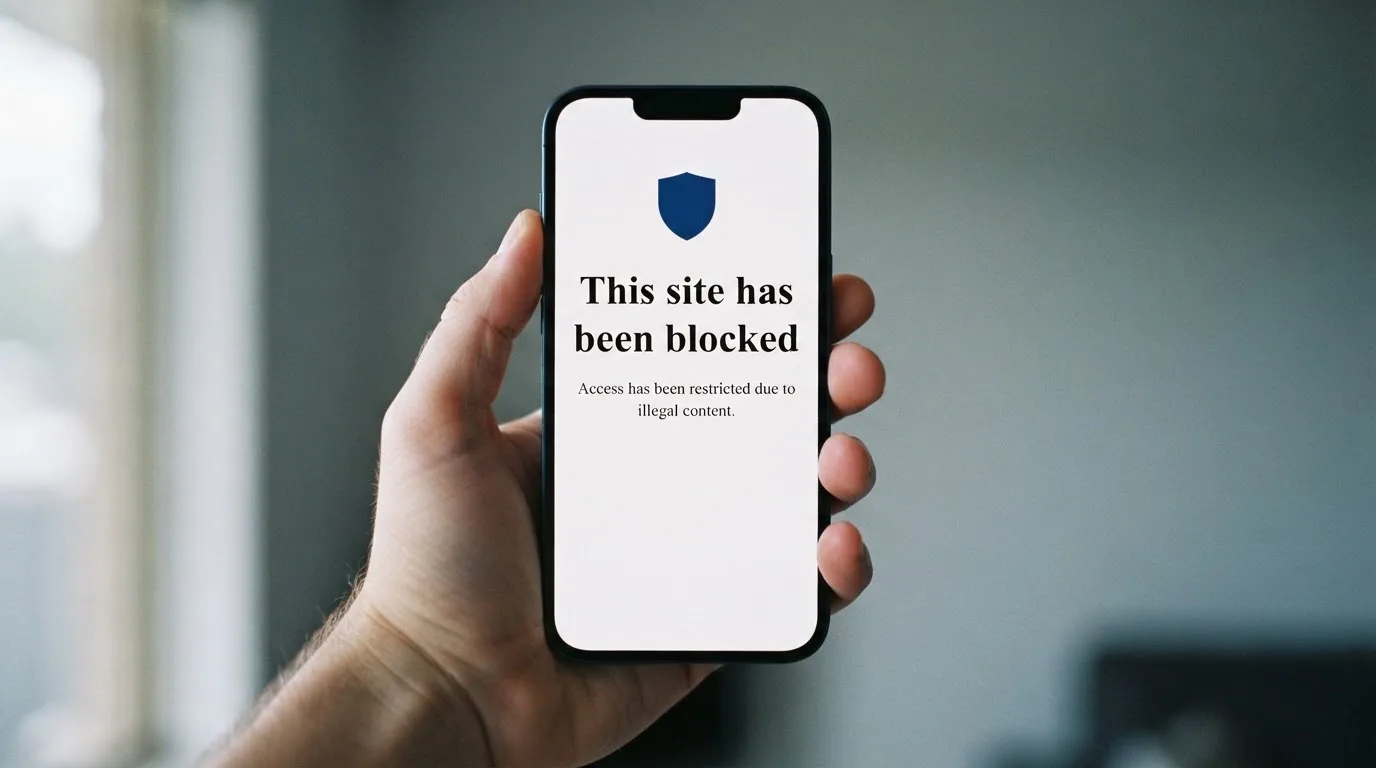
Enforcement runs through the Australian Communications and Media Authority. The ACMA investigates complaints, issues formal warnings to operators, and directs Australian internet service providers to block websites offering prohibited services. The individual player is not prosecuted under the IGA — the Act targets the provider, not the customer — but the player also has no Australian consumer protection when dealing with an offshore site. There is no complaints body in Australia with jurisdiction over a Curaçao- or Cyprus-incorporated operator, no recourse to the Australian Financial Complaints Authority, and no guarantee that a withdrawal will be processed. The site can also be blocked with a balance still sitting on it. The legal frame’s reach stops at the provider; the player’s exposure starts there too.
The cumulative enforcement record is the part of the picture the marketing never mentions. According to the ACMA’s own count, as reported in June 2026, 1,751 illegal gambling and affiliate marketing websites have been blocked since the first blocking request in November 2019. More than 230 unlicensed gambling services have left the Australian market since enforcement was strengthened in 2017. The most recent blocking round, reported on 26 June 2026, added 12 sites to the block list: 7Signs, ChromaBet, Donbet, Duospin, Freshbet, Slots Gem, Jacks Club, Lucky Start, Pointsbetz, Spinrise, Vinyl Casino and Wildsino. The work is round-based rather than continuous — quiet months punctuated by published blocking requests — which is what gives the cumulative total its irregular shape. The average the arithmetic produces is examined in its own passage.
The economic backdrop is also part of the frame. H2 Gambling Capital’s 2025 report estimates that Australians lose about A$3.9 billion a year to illegal gambling sites. The same report finds the share of gambling going through legal channels has fallen from 74% in 2021 to 64%. The legal channels themselves are narrower than the marketing assumes. The licensed wagering market is dominated by 52 online bookmakers regulated by the Northern Territory Racing and Wagering Commission for tax reasons, including Sportsbet, Bet365 and Ladbrokes. The NTRWC has no full-time staff and meets once a month in Darwin; it is a regulator of bookmakers, not of casinos. There is no equivalent body for the product this page explores, because the regulator that would oversee it has decided the product should not be offered at all.
The payment picture reinforces the legal frame. Since 11 June 2024, credit cards, credit-related products and digital currency have been banned as a means of paying for licensed online wagering in Australia, with penalties up to A$247,500 for operators who breach the rule. Legal options for depositing at a licensed wagering service are debit card, bank transfer, PayID/Osko and BPAY. A site asking an Australian customer for a credit card or a crypto deposit is, by definition, operating outside the Australian rules — and that is a separate axis from the IGA itself, which makes the casino-style product prohibited regardless of payment method. Two prohibitions layered; one enforced on the product, the other on the payment.
Tax sits beside the legal frame as the second condition the offshore marketing rarely mentions. Gambling winnings of a recreational Australian player are not assessable income under section 6-5 of the Income Tax Assessment Act 1997, and losses are not deductible — unless the person carries on a business of gambling, which the ATO treats as a different category entirely. The recreational framing is the ATO’s default; a player who crosses into professional play crosses into a different tax treatment, and a reader whose activity looks like a business should check with the ATO. The offshore site’s terms page does not cover this, and the marketing does not raise it.
The consequence, for an Australian reader, is that “live casino online Australia” describes a market that does not exist legally. The brand names exist. The studios exist. The marketing reaches Australian inboxes. The legal product does not. That is the gap that remains once the legal frame is set out, and the eleven brands named in the table below sit inside that gap.
Player Protection Tools Available to Australians
The protective infrastructure for Australian gamblers is built around the licensed wagering market and reaches only as far as that market does. Outside it, the same safeguards do not exist.
BetStop, the National Self-Exclusion Register, has been live since August 2023. It binds Australian-licensed online and phone wagering services — the bookmakers, the lottery products, the keno operators — to honour a player’s request to exclude themselves. The mechanism is administrative rather than advisory: a registered exclusion is enforced by the operator, and the operator cannot lawfully accept a bet from an excluded person during the exclusion period. BetStop does not, however, bind offshore casinos. An excluded player can still load an offshore live casino site, deposit, and place bets; the exclusion applies only to the licensed wagering market. The same logic applies to the deposit limits, time-outs and reality checks that licensed Australian operators must offer — they are features of the licensed product, not of the offshore one.
The National Gambling Helpline, 1800 858 858, is free, available 24/7 and connects to Gambling Help Online, which offers web chat and email counselling. The helpline is open to anyone in Australia, including readers who are playing offshore. The advice line is not an enforcement mechanism — it does not refund lost deposits, nor does it have the power to compel an offshore operator to act. It is, however, the single most accessible resource for a person who has decided they want help. That distinction — between help and enforcement — is the one a reader should hold onto when weighing what recourse actually exists.
The minimum age for any form of gambling in Australia is 18, set by state and territory law and reinforced by the IGA’s prohibitions on supplying services to under-18s. Offshore sites do not enforce this age requirement on the marketing side, and they do not verify Australian players against BetStop’s exclusion register. The Australian reader who is under 18, or who has registered an exclusion through BetStop, is relying on the offshore site’s own checks — which is no check at all for most of the brands named in the table further on.
The honest summary for a reader considering an offshore live casino is that every protective mechanism Australian regulators have built — the self-exclusion register, the deposit limits, the dispute resolution, the licensed-operator conduct obligations — stops at the border. Inside the border, there is a system. Outside it, the player is on their own. The frame is jurisdictional, and the reader’s location inside or outside it decides which rules apply.
Welcome Bonuses, Wagering Requirements and What the Marketing Leaves Out
The “live casino welcome bonus” is the offer most often used to draw an Australian reader onto an offshore site. It takes a small number of forms. A matched deposit bonus, where the brand matches the first deposit up to a stated ceiling. A cash bonus, paid on registration or first deposit. Free chips or free bets tied to the live dealer lobby. The shapes vary; the underlying structure is the same: give the player more money than they deposited, attach conditions, and rely on the player not reading the conditions. The marketing’s job is to make the headline number attractive; the terms page’s job is to make the realised value tractable.
The wagering requirement is the condition that decides what the bonus is actually worth. A “100% match up to A$500 with 40x wagering” means the player must wager forty times the bonus amount before any winnings become withdrawable. The marketing calls this a “bonus”; the arithmetic calls it a multiplier on turnover that must be cleared before the player can take anything out. A A$500 bonus at 40x requires A$20,000 of bets before withdrawal is unlocked. At a live blackjack table with a 0.28% house edge under optimal play, that A$20,000 in turnover returns about A$56 to the house on average. The bonus was nominally A$500. The expected cost of clearing it is on the order of A$50 — modest, but only because the player plays the lowest-edge game with perfect discipline and never touches a side bet. That last condition is where most players fall off the arithmetic.
The side bets change the arithmetic by a multiple. A “21+3” or “Perfect Pairs” side bet in live blackjack carries a house edge of several percent. The same A$20,000 in turnover, bet on those positions instead of the main hand, returns several hundred dollars to the house. The marketing that calls a side bet “exciting” calls it that for a reason. The wagering requirement is what makes the marketing’s choice matter: a player clearing the bonus on side bets is, on average, paying several times what the bonus is worth. The “excitement” is the operator’s revenue line, dressed up.
The cap on winnings is the second condition that quietly changes the picture. Many live casino bonuses carry a maximum cashout figure — a ceiling on what can be withdrawn even after the wagering requirement is cleared. A “100% match up to A$500 with 40x wagering and a A$1,000 max cashout” is, in plain terms, a bonus that pays at most twice its face value. The marketing names the headline number; the small print sets the ceiling. The two together describe a product whose worst case is paying the player a fixed multiple of their deposit, regardless of how the wagering requirement is cleared. The “free” in “free bonus” is the marketing’s word; the realised number is the terms page’s.
The third condition is the one the offshore site’s terms page describes carefully and the marketing does not mention. The bonus is offered by an operator with no Australian licence. There is no Australian complaints body, no AFCA escalation, no BetStop exclusion that the bonus offer honours. If the operator refuses the withdrawal, the player has no Australian recourse. The wagering requirement is also policed by the operator, in the operator’s own terms, with disputes resolved by the operator’s own process. “Trust” in this context means trust in a business the player cannot compel. That is the structural feature the marketing does not name.
The honest summary is that the live casino welcome bonus is a leveraged product whose headline number is set by the marketing and whose realised value is set by the small print. The wagering requirement, the maximum cashout and the absence of Australian consumer protection together convert a “free A$500” into a product with a real cost that varies by game choice and a recourse path that varies by jurisdiction. None of that is hidden in the strict sense. None of it is on the marketing page either.
The Eleven Brands Named by the ACMA
RocketPlay — A Brand Named Twice, in 2022 and Again in 2026
RocketPlay is the most recently named brand in this set. The ACMA issued a formal warning in March 2026 to Pulsup Ltd over Rocketplay, four years after the brand appeared on a May 2022 warning to Dama N.V. alongside five other brands. The intervening years did not produce a third warning — just the same brand, with two operators named, in two enforcement rounds.
The repeated warning is the data point. Brands the ACMA names once are common; brands the ACMA names twice are the regulator’s record of a brand that did not leave the Australian market after the first action. The intervening four years also produced a change in operator name, which is what corporate restructuring looks like on the ACMA’s file: the brand outlived its first corporate wrapper and was caught again.
Subject support for live casino play: no third-party listing found beyond the regulator’s record. Verdict: RocketPlay earns its place in the table from the regulator’s file — named twice, four years apart, by two different operators — and the second warning is what makes the brand stand out in the comparison.
Level Up Casino — One of Six on Dama N.V.’s 2022 Warning
Level Up Casino was named in the ACMA’s May 2022 warning to Dama N.V., on the same date as Bambet, Dazard, Rocketplay, Wild Tornado and Cobra Casinos — a six-brand batch against a single operator. The brand appears on BGaming’s catalogue listings, which is the only third-party source that mentions it outside the regulator’s register.
The cluster matters because it tells the reader what “the brand” means in the offshore market. Level Up is one of six; Dama N.V. is one operator; the ACMA’s warning covers all six because the operator runs all six. The marketing presents each brand as a standalone casino. The regulator’s view is that they are six skins on one operator, and the warning is one document. Verdict: the verdict the file supports is structural. Level Up is one of six Dama N.V. brands warned on the same date, and that is the most useful fact about it.
Woo Casino — The First of Two Dama N.V. Warnings in 2025
Six months before Spirit Casino received the same treatment, the ACMA named Woo Casino in its March 2025 warning to Dama N.V. Two warnings to one operator in three months is the ACMA signalling that its enforcement runs against the entity behind the marketing rather than the marketing itself.
The brand has no third-party listing in the research beyond the regulator’s record. Subject support: no-data. Verdict: Woo Casino’s place in the file is half a pair — the first half — and the value of that pairing is what it says about how the regulator sees operator groups.
Spirit Casino — The Second Dama N.V. Warning in 2025
Spirit Casino is the second half of a 2025 pair: the ACMA named it in May 2025, six months on from Woo Casino, against the same operator. The pairing is the cleanest illustration in this list of the ACMA’s working theory of an offshore market: one operator, multiple brand skins, sequential warnings as each skin appears.
Subject support: no-data. Verdict: Spirit Casino is the second half of a pair whose significance is what it says about how the regulator identifies the corporate entity rather than the marketing name.
National Casino — A Wikipedia Entry and a 2025 Warning
The ACMA named National Casino in its July 2025 warning to Consolutetish S.R.L., on the same date as Bizzo Casino, against the same operator. The brand has a Wikipedia entry — the only brand on this list with one — which is the limit of third-party documentation.
The combination is striking. A Wikipedia entry is what an encyclopedia editor decided was notable enough to record. A formal ACMA warning is what a regulator decided was worth publishing. The two are independent of each other and point at the same brand, with no Australian news coverage, no industry analysis, and no consumer comparison between them. Verdict: the verdict on this brand is thin by design. An encyclopedia entry and a regulator’s warning are the entire independent footprint.
Bizzo Casino — Two Warnings, Two Operators, Three Years
Bizzo Casino is unusual in this set for having been warned twice. The ACMA issued a warning to TechSolutions (CY) Group Limited and TechSolutions Group N.V. in 2022, then a separate warning to Consolutetish S.R.L. in July 2025 — a different operating entity over the same brand. The shift in operator name is itself the data point.
A brand that survives its first corporate wrapper is a brand that someone decided was worth keeping. The ACMA’s 2025 warning to a new operator over the same name says that someone is now a different corporate entity. The brand outlived the first operator and was warned about again by the second.
Subject support: none confirmed outside the regulator’s file. Verdict: Bizzo Casino’s verdict is the brand’s longevity. Two warnings, two operators, three years — and the same brand name in both.
Ignition Casino — A Warning Over an Established Player Base
The ACMA named Ignition Casino in its July 2025 warning to Bamboo Media. The brand has been around long enough to have an established offshore player base, which is the consequence the ACMA’s action takes on: this is not a warning to a fresh entrant.
An established player base is also the consequence for an existing player. The warning changes the legal posture for anyone who had been playing on the site without realising it was operating outside Australian rules. The change is retrospective in effect — the site was already prohibited; the warning simply makes the prohibition public.
Subject support: none confirmed outside the regulator’s file. Verdict: an established offshore brand whose ACMA entry is the document a current player should read.
Instant Casino — A February 2025 Warning to a Single Operator
The ACMA’s February 2025 warning to EOD Code SRL names one brand against one operator: Instant Casino. The simplicity of the record is itself the picture. Some warnings name multiple brands against one operator; this one names one brand against one operator, on a single date.
Subject support: no third-party listing beyond the regulator’s record. Verdict: Instant Casino’s verdict is what the regulator’s file actually contains — a single line in February 2025, naming one brand to one operator.
Jackbit — One of Two Brands Warned in April 2026
The ACMA’s April 2026 warning to Ryker B.V. named Jackbit alongside CasinOK on the same date. The pairing suggests the operator was running both brands in parallel at the time of the warning, which is consistent with the broader pattern of one operator running multiple skins.
The April 2026 date matters because it tells a reader how current the enforcement picture is. The most recent warning in this list sits two months before the count reported in June 2026, which means the ACMA was actively naming new operator-brand pairs in the same window the cumulative block-count was being published.
Subject support: no third-party listing beyond the regulator’s record. Verdict: Jackbit is the most recent entry in this set. A brand warned in April 2026, with the ACMA naming it alongside CasinOK on the same day — and the date is what tells a reader the picture is current.
Casino Intense — A Brand Named Across Three Australian Sources
Casino Intense received the ACMA’s April 2025 warning to Sterplay Holding Ltd. The brand appears in coverage by ABC News, in the ACMA’s own register, and in Crown Melbourne’s listings — three independent Australian sources that mention the brand without being the brand itself. That is a wider third-party footprint than most brands on this list have, and a footprint that predates the warning.
The asymmetry is what makes Casino Intense useful in a comparison. A reader can verify the brand’s existence against three independent Australian sources before reading the ACMA warning; for most of the brands in this table, the only verification is the warning itself.
Subject support: listings-only across ABC News, the ACMA register and Crown Melbourne. Verdict: Casino Intense stands out in this set for its third-party footprint — the brand is mentioned across ABC News, the ACMA register and Crown Melbourne — three independent Australian sources before the warning was even issued.
Sky Crown — Half of the Hollycorn N.V. Warning
The ACMA named Sky Crown in its September 2022 warning to Hollycorn N.V., alongside Blue Leo on the same date. Hollycorn runs a cluster of brands under a single operator, and the warning is to the operator rather than the brand.
The September 2022 date is the earliest in this set. Reading the table chronologically, Sky Crown is where the ACMA’s 2022 enforcement begins in the data the research covers; the Hollycorn cluster is a useful early marker for how the regulator’s view of an operator group developed, before the multi-brand patterns of 2025 became the dominant shape of the warnings.
Subject support: no third-party listing beyond the regulator’s record. Verdict: Sky Crown’s verdict is that it should not be read alone. Hollycorn N.V. was named in the same warning, and Blue Leo sits on the same operator’s file.
What the Blocking Rate Actually Means
Between November 2019 — when the ACMA issued its first blocking request — and the count reported in June 2026, the regulator asked Australian ISPs to block 1,751 illegal gambling and affiliate marketing websites. That figure is cumulative, covers both gambling services and their affiliate marketing, and is the total rather than a monthly headline.
Worked across the elapsed period — roughly 79 to 80 months from November 2019 to June 2026 — the average sits at about 22 sites blocked per month, or roughly 260 per year. The result is a band rather than a single figure, because months vary widely. The June 2026 round alone added 12 sites, while other months sit at zero in the public record. The average smooths out the round-based rhythm of the ACMA’s published enforcement into a steady drumbeat that does not match what actually happens on the ground. The marketing implication is that an Australian-facing site operating today has been doing business against this drumbeat for years.
The honest reading of the figure is also what it does not show. The 1,751 total does not include the brands that voluntarily left the Australian market after a formal warning — the ACMA reports 230 such services since 2017. Those exits do not appear in the blocking total because the sites never needed a blocking request. The block-rate captures only the brands that did not leave. The combined picture — sites blocked plus services that withdrew — is larger than the blocking figure alone, and is the better estimate of what enforcement has done to the offshore market since 2017. The published number is the lower bound of the actual churn.
For a reader, the practical meaning of the rate is that any brand an Australian reader is currently considering has been operating in a market the regulator has been grinding down for years. The brands named in this page’s operator table are the brands the ACMA has caught up with; the brands that withdrew voluntarily do not appear in the regulator’s published register, and so do not appear in the table. The 1,751 total is the cost, to the offshore market, of not withdrawing. The arithmetic is the regulator’s quiet answer to a marketing page that asks a reader to assume the product is legitimate. The reader’s job is to know which side of the count any given site sits on, and the regulator’s register is the document that says so.
Frequently Asked Questions
How does a live dealer game differ from a standard online slot?
A standard online slot uses a random number generator to decide each spin’s outcome in software. A live dealer game streams a real dealer at a real table, with optical camera recognition converting the dealer’s actions into data the screen displays. The randomness is in the shuffle and the wheel, not in code.
What is Evolution, and why does its name come up around live casino games?
Evolution is a Swedish company founded in 2006 that became the dominant supplier of live dealer games, streaming from studios in multiple countries to more than 700 gambling platforms. The group also owns NetEnt, Red Tiger, Big Time Gaming, Nolimit City and Ezugi. The ACMA names the reseller, not Evolution, in its warnings.
Is it legal for an offshore casino to stream live dealer games to players in Australia?
No. Under the Interactive Gambling Act 2001, providing a casino-style gambling service — live blackjack, roulette, baccarat — to a person in Australia is a prohibited interactive gambling service. The 2017 amendment strengthened enforcement, and the ACMA issues warnings and asks ISPs to block sites. The player is not prosecuted but has no Australian consumer protection offshore.
Can a live casino app be used through a mobile browser without a download?
In practice, yes — most offshore brands reach Australian phones through a mobile browser rather than a downloadable app, because the App Store and Google Play restrict real-money gambling apps to licensed operators. The legal frame does not change. Both paths lead to an offshore operator outside Australian consumer law, with no AFCA recourse.
Are there licensed live table games at any Australian land-based casino?
Yes. Crown Melbourne, regulated by the Victorian Gambling and Casino Control Commission, offers three baccarat variants and several blackjack variants as approved table games. Crown’s baccarat tables include Traditional Baccarat, Crown Baccarat and 2 to 1 Baccarat. The Sydney casino operates under parallel rules. These are lawful table games in person, not online.
Prepared by the Casino Offshore Hub editorial staff.