
Bitcoin casinos for Australian players — what the currency actually changes
Dane as of 3 November 2026: figures cross-checked against the ACMA’s published blocking requests and formal warnings, and against AUSTRAC and ATO guidance on digital assets.
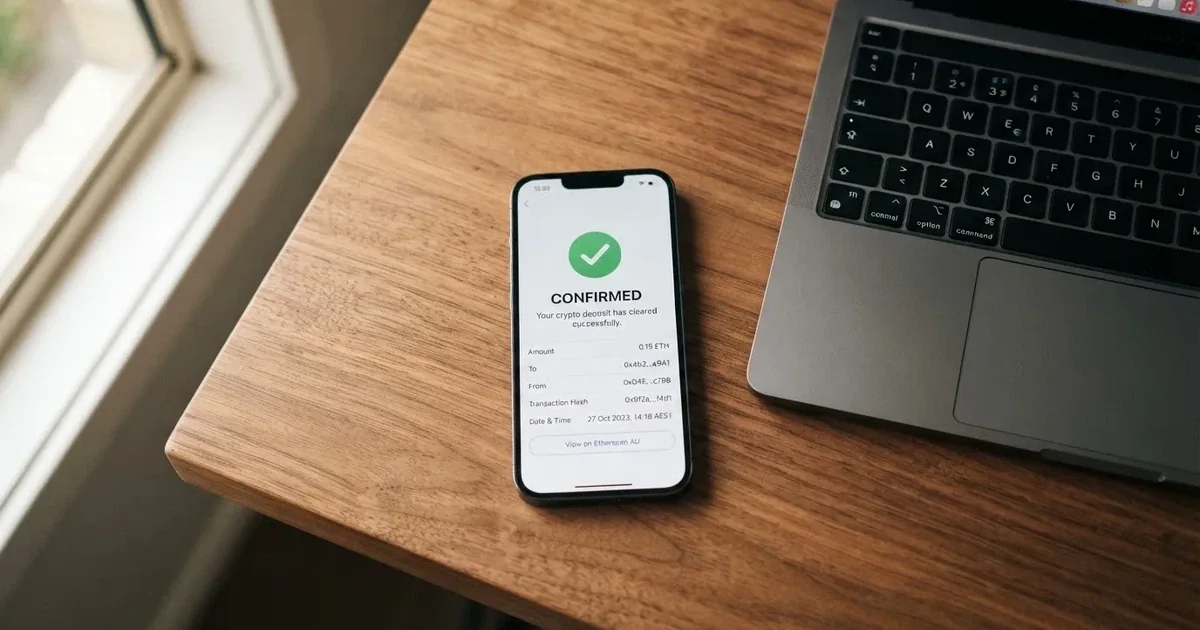
A casino that takes Bitcoin is, in Australian law, the same kind of business as a casino that takes Visa: it is offering an interactive gambling service to a person physically in Australia, and the Interactive Gambling Act 2001 makes that an offence regardless of which rail the money arrives on. The currency changes the speed and the trail, not the legal posture. This page is built around that distinction. It explains how Bitcoin deposits and withdrawals actually clear at these offshore sites, names the operators the ACMA has already moved against, and sets out what a player in Australia is and is not protected by when the transaction happens in crypto rather than in a bank transfer.
The Australian Communications and Media Authority does not treat crypto sites as a separate category. They sit in the same blocking rounds, the same formal-warning register, and the same enforcement logic as card-funded offshore casinos. That is the headline result of the most recent rounds: between November 2019 and June 2026, 1,751 illegal gambling and affiliate sites were blocked, and more than 230 unlicensed services have left the Australian market since enforcement was tightened in 2017. The most recent ACMA round, reported on 26 June 2026, asked Australian ISPs to block another twelve brands — 7Signs, ChromaBet, Donbet, Duospin, Freshbet, Slots Gem, Jacks Club, Lucky Start, Pointsbetz, Spinrise, Vinyl Casino and Wildsino. Bitcoin does not appear in those names because the regulator names the brand, not the payment method; several of those brands do take crypto, and the blocking action covers them regardless.
Table of Contents
- What a Bitcoin-accepting casino is, and what it is not
- Blockcha — the ledger a Bitcoin casino actually sits on
- The legal frame, written into the product itself
- Prohibiti — what ACMA action actually looks like on the record
- Anonymity, traced — what Bitcoin actually does for privacy
- Responsible play when the deposit cannot be reversed
- Tax — what the ATO does with crypto winnings and losses
- Pokies, slots and live tables — what crypto does to the games
- AUSTRAC and the on-ramp — where crypto compliance actually sits
- The 11 operators the ACMA has warned — what each is
- What the blocking record actually shows
- Choosing a path through the bitcoin casino market
- Frequently asked questions
What a Bitcoin-accepting casino is, and what it is not
A Bitcoin casino is an offshore online casino that lists BTC — and, increasingly, BTC Cash, Ethereum, Litecoin and stablecoins — as a deposit and withdrawal method alongside or instead of cards and bank wires. The games on the lobby are the same games any other online casino would host: slot reels, table games, live-dealer rooms. The wallet side of the operation runs on the public Bitcoin ledger, which means the casino holds (or claims to hold) balances in BTC and settles to the player in BTC when a withdrawal is requested.

Three things follow from that structure, and each one shows up in different places on this page.
First, the bankroll and the house edge behave the same way they would in a card-funded casino. The slot returns its stated RTP, the table game returns its stated house edge, and the operator keeps the same kind of margin it would keep on a PayID deposit. Bitcoin is a payment rail, not a new game.
Second, the deposit is on-chain. A transfer goes from a player’s wallet to a casino-controlled address and waits for network confirmation. That step is where crypto changes the experience: confirmations are probabilistic, fees compete with global mempool demand, and once a transfer has cleared, no bank can reverse it.
Third, the legal status in Australia is set by the Interactive Gambling Act 2001 and does not move when the deposit method does. The IGA prohibits the supply of online casino games and online pokies to people in Australia. There is no licence available, anywhere in Australia, for the product these sites sell.
Blockcha — the ledger a Bitcoin casino actually sits on
A Bitcoin deposit is not a card transaction with a crypto wrapper. It is a transfer of value on a public, append-only ledger that anyone can read. The mechanic matters because it is what makes both the speed claim and the irreversibility claim true at once.
New blocks are added to the chain roughly every ten minutes on average, though a single confirmation can take much longer with no fixed maximum wait. That ten-minute figure is a network target, not a service-level guarantee: a block is discovered when a miner solves a proof-of-work puzzle whose difficulty retargets every two weeks or so to keep the average interval near that mark. A confirmation can arrive in a couple of minutes on a quiet network, and it can also stretch past an hour during congestion.
Casinos handle that variability by requiring more than one confirmation before crediting an account. Two confirmations is a common minimum, sometimes three, occasionally six on high-value deposits. A player sending 0.05 BTC to a casino wallet on a network that has just produced a block will not see the balance land instantly — they will see it land after the next block or two. The wait is short in the calm case and unpredictable in the congested one, and no amount of user urgency changes it.
Bitcoin’s issuance is hard-capped at 21 million coins. That cap is reached by halving the mining reward every 210,000 blocks, which works out to roughly every four years. The Bitcoin network itself was created on 3 January 2009, when the pseudonymous Satoshi Nakamoto mined the genesis block after publishing the white paper in October 2008. The currency predates every Bitcoin-accepting casino on the market today by more than a decade, and the ledger design has not changed since.
The fee side is the other thing a player feels. Network fees are not set by the casino and not set by the player’s bank; they are set by miners, who prioritise transactions by fee-per-byte. On a quiet day, paying a few sats per vByte clears the next block. On a mempool-peak day, the same fee sits unconfirmed for hours. Bitcoin Cash, the 1 August 2017 hard fork of the chain, advertises fees “under a penny” and targets the same ten-minute block time on a 32-megabyte block limit raised in 2018. The economics of fee-pressure are why some casinos default to BCH, Litecoin, or stablecoins for fast-moving deposits and treat BTC as the headline option.
The legal frame, written into the product itself
The Interactive Gambling Act 2001, tightened by the Interactive Gambling Amendment Act 2017, makes it an offence for a person or company to provide online casino games, online pokies or in-play betting to a customer physically present in Australia. No Australian state or territory licenses those products. What is licensed is wagering on racing and pre-event sport, lotteries, and keno — a list that leaves online casino play outside the legal perimeter entirely.
Enforcement is run by the ACMA, which has three tools: formal warnings published on its website, blocking requests to Australian internet service providers, and investigations that can escalate to civil penalty proceedings. The blocking mechanism works because Australian ISPs receive a list of domains tied to prohibited services and route them to a sinkhole. The list keeps growing: the 26 June 2026 round added twelve names, taking the running total since November 2019 to 1,751 blocked and affiliate sites. More than 230 unlicensed services have left the Australian market entirely since the 2017 strengthening.
A site can be blocked with a player balance still sitting on it. That is the operational reality the legal frame produces for a punter: an offshore casino is not connected to BetStop, the National Self-Exclusion Register; an offshore casino is not subject to Australian dispute resolution; and an offshore casino can be blocked by an ISP while the player’s account and funds sit on the other side of the wall. None of those consequences change because the deposit method is Bitcoin rather than Visa.
Australia’s licensed wagering sector, which the IGA does not cover, is regulated separately. Sportsbet, Bet365 and Ladbrokes are licensed in the Northern Territory by the Northern Territory Racing and Wagering Commission, which has no full-time staff and meets once a month in Darwin. That structure is what allows a legal bookmaking industry to operate alongside the prohibition on online casinos; it is not a back door for the sites this page covers.
Payment rules under the licensed regime are tighter than the headline prohibition suggests. Since 11 June 2024, credit cards, credit-related products and digital currency are banned as a deposit method at Australian-licensed online wagering operators, with penalties of up to A$247,500 per breach. Legal deposit routes for licensed wagering are debit card, bank transfer, PayID/Osko and BPAY. A licensed Australian bookmaker cannot offer a Bitcoin deposit; the prohibition is policy-driven, not technology-driven.
Prohibiti — what ACMA action actually looks like on the record
A formal warning under the Interactive Gambling Act is a published document, naming the operator, the brand and the date. It sits on the ACMA’s website as a record of the regulator having told a specific company, in writing, that a specific service is prohibited and must stop being offered to Australians. It is not a finding of fact by a court, but it is the regulator’s official position, on the public record, and it is what subsequent blocking requests are built on if the brand does not comply.
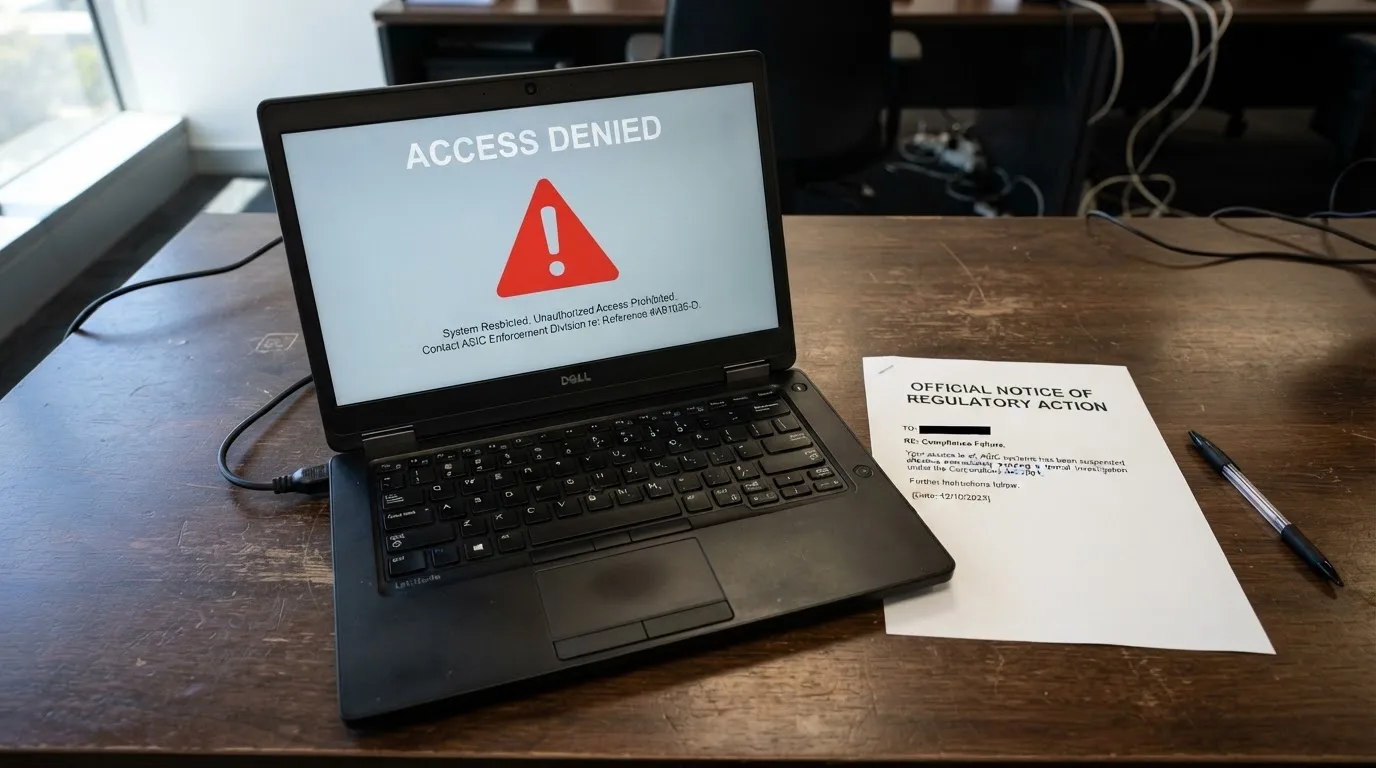
The pattern of warnings makes a point. March 2026 saw a formal warning to Pulsup Ltd over Rocketplay, which sits alongside a 2022 Dama N.V. warning covering the same brand — Rocketplay had been warned once under the prior operator entity and was warned again under the new one. In May 2022, the ACMA warned Dama N.V. over six brands in a single notice: Bambet, Dazard, Level Up, Rocketplay, Wild Tornado and Cobra Casinos. The same operator was warned again over Woo Casino in March 2025 and Spirit Casino in May 2025. The July 2025 round warned Bamboo Media over Ignition Casino and Consolutetish S.R.L. over National Casino and Bizzo Casino — and the Bizzo line had its own earlier history, with a 2022 warning to TechSolutions (CY) Group Limited and TechSolutions Group N.V. EOD Code SRL was warned over Instant Casino in February 2025; Sterplay Holding Ltd over Casino Intense in April 2025; Hollycorn N.V. over Sky Crown and Blue Leo in September 2022; and Ryker B.V. over Jackbit and CasinOK in April 2026.
That is the prose warning the record has produced. A reader looking for a Bitcoin-accepting casino in Australia will meet most of those brand names on crypto-friendly comparison sites. The regulator’s position on each is in the public register, dated and named.
Anonymity, traced — what Bitcoin actually does for privacy
“Anonymous” is the word crypto-marketing uses for Bitcoin, and it is wrong in a specific way that matters to a player.
Every Bitcoin transaction is recorded on a public ledger. A wallet address is not tied to a name, but it is tied to every other address it has transacted with, forever. Chain-analysis companies cluster those addresses into entities, and the clusters are for sale. An address that has ever transacted with a regulated exchange — buying BTC, cashing out, paying a bill — is no longer anonymous in any practical sense, because KYC’d exchanges keep the link between the address and the real-world identity.
What that means for a punter is that the deposit trail is built before the casino ever sees the player. If the BTC was bought on a regulated Australian exchange, the exchange has the player’s name, address and ID. If the BTC was bought peer-to-peer, the trail is weaker but not absent — and the on-chain payment to the casino still exists on a public ledger that anyone with the address can read.
Inside the casino account, the operator runs its own KYC. A withdrawal request triggers an identity check: passport, driver’s licence, proof of address, sometimes a source-of-funds review. The reason is structural. The casino is subject to its own licence (typically Curaçao, sometimes Anjouan), and that licence regime requires anti-money-laundering checks at withdrawal regardless of the deposit rail. PayID and Visa withdrawals get the same KYC as BTC withdrawals on these sites; the difference is that a BTC withdrawal, once approved, settles on-chain in minutes to hours, while a bank wire settles in days.
The claim that crypto gambling is anonymous collapses on contact with that withdrawal check. A player who has skipped KYC at deposit cannot skip it at cash-out, and an account that fails the check sits frozen. The marketing claim is true only in the narrowest sense: between the wallet and the casino address, no bank statement shows the player’s name. That is privacy from the player’s own bank, not privacy from the operator or the public ledger.
Responsible play when the deposit cannot be reversed
A Bitcoin deposit, once confirmed, cannot be reversed by the sender. That is a structural feature of the network and a constraint that licensed wagering does not impose — a debit-card chargeback is possible in narrow circumstances and a PayID payment can sometimes be recalled within the processing window. The crypto path closes that door permanently.
The practical effect is that a Bitcoin budget has to be set before the deposit, not after. The natural rhythm of a punter who tops up as they go — a A$50 here, a A$100 there — looks the same on the surface, but the failure mode is different: a confirmed BTC transfer cannot be pulled back even if the punter changes their mind two minutes later. The whole spend has to be planned, in advance, at the moment the wallet signs the transaction.
The protection scaffolding that exists for Australian-licensed wagering does not extend to offshore crypto casinos. BetStop, the National Self-Exclusion Register, binds only Australian-licensed online and phone wagering services, and excludes every brand on this page. The National Gambling Helpline on 1800 858 858 is free, runs 24/7, and has chat at Gambling Help Online — those services help a player regardless of where they have been playing, but the self-exclusion tool that would block an account at a licensed Australian bookmaker does not reach an offshore crypto site. Anyone using a Bitcoin-accepting casino in Australia is relying on the casino’s own responsible-gaming tools, which vary in quality and are not subject to ACMA oversight.
The reasonable posture is the same one that applies to any high-involvement gambling: set a hard budget before opening a wallet, treat any deposit as irrevocable the moment it confirms, and walk away when the budget is spent. The crypto rail adds one line to that rule — never deposit more than the budget, because the network will not let you reverse the surplus.
Tax — what the ATO does with crypto winnings and losses
The Australian Taxation Office treats crypto assets — Bitcoin included — as property, not as money or foreign currency. That classification is in the ATO’s crypto-asset guidance and has not changed. Selling BTC for AUD, swapping BTC for another coin, or spending BTC at a merchant are all CGT events, with the gain or loss calculated against the cost base.
Recreational gambling winnings are not assessable income, and gambling losses are not deductible, under section 6-5 of the ITAA 1997, unless the person is carrying on a business of gambling. That rule is general and applies regardless of payment method. The ATO-specific question is whether moving crypto into a casino wallet, gambling with it, and withdrawing it triggers separate CGT events on the crypto side.
For most recreational players, the answer is that gains inside the casino are gambling gains, taxed under the gambling rules, and gains or losses on the crypto itself — appreciation of the BTC balance between buy and deposit, between withdrawal and cash-out — are CGT events in their own right. A player who bought BTC at A$30,000, deposited when BTC was A$60,000, lost some, and withdrew at A$55,000 has a CGT event on the original AUD→BTC purchase (because the BTC was disposed of into the casino wallet) and another on the BTC→AUD conversion when cashing out. The gambling outcome is the casino’s, but the BTC movements are the ATO’s.
Two ATO rules apply specifically to crypto. Capital gains on a personal-use crypto asset are disregarded, but only if the asset cost A$10,000 or less to acquire; a BTC position held as an investment, which is how most players hold it, is outside this exemption. Capital losses on personal-use crypto assets are disregarded in full — they cannot offset other gains and cannot be carried forward. From 1 July 2027, the current flat 50% CGT discount on holdings over 12 months is replaced by CPI indexation of the cost base plus a 30% minimum tax rate on net capital gains. Until that date, the discount applies. The compliance position is the same as for any other CGT asset: keep the records of acquisition cost, deposit value, withdrawal value, and the dates, because the ATO expects a taxpayer to be able to reconstruct them.
AUSTRAC’s role is separate. Any business providing digital currency exchange services to Australian customers must register with AUSTRAC as a Digital Currency Exchange provider, regardless of where the business is incorporated, and operating unregistered is an offence. From 31 March 2026, that registration was expanded to cover crypto-to-crypto exchange, digital-asset transferors, custody providers, and stablecoin issuers. The casino itself, if it accepts crypto and converts it, is a DCE; the player, as the customer of an exchange that is or is not registered, is downstream of that regime. The point is that the regulatory perimeter exists, and the player can ask whether the on-ramp and off-ramp they are using is a registered DCE before they trust it with a wallet.
Pokies, slots and live tables — what crypto does to the games
A slot funded with Bitcoin is the same slot funded with a Visa card. The reels, the paylines, the random number generator, the bonus features and the RTP are determined by the game studio, not by the cashier. The cashier determines the unit of account.
What changes is the unit. A A$0.25 spin and a 0.000004 BTC spin are the same spin if the BTC/AUD rate at the moment of deposit is roughly A$65,000, but the denomination is harder to feel. A punter who thinks in fiat will mentally convert; a punter who thinks in sats will not, and the sat balance can drift in either direction while they play. That is a cognitive hazard more than a financial one, but it is real: a winning streak denominated in a coin that has appreciated looks larger than the same winning streak denominated in a coin that has depreciated.
Game providers do not change their RTP for crypto deposits. A 96% pokie pays back A$0.96 per A$1 in the long run regardless of how the A$1 was funded. The casino’s house edge on a blackjack variant is the same whether the bet is in AUD or BTC. Where the casino can and does vary its offering is in which games it hosts — many Bitcoin-accepting casinos lean heavily on “crash”-style games, dice, and provably-fair custom titles alongside the standard slot catalogue, and the standard catalogue tends to be drawn from the same providers that supply non-crypto offshore sites. Pragmatic Play, Evolution for live tables, BGaming for crypto-themed slots, and a long tail of smaller studios is the typical shape.
Live-dealer rooms are the segment where the casino’s licence and the studio’s licence intersect most tightly. A live blackjack table streamed from a studio licensed in Malta, the UK or Curaçao is subject to the studio’s regulator; the casino streaming it is subject to its own. Neither regulator is an Australian regulator, and neither is reached by the Interactive Gambling Act’s prohibition, which targets the supplier side. For a player, the practical effect is that the live-dealer experience on a Bitcoin casino is materially the same as on a card-funded offshore casino: same studios, same dealers, same bet limits, same game variants.
AUSTRAC and the on-ramp — where crypto compliance actually sits
AUSTRAC’s Digital Currency Exchange regime is the regulatory layer that touches crypto at the entry and exit points. A DCE provider must enrol and register with AUSTRAC; it must keep records of customer identity and transaction history; it must report suspicious matters and threshold transactions. From 31 March 2026 the regime was expanded beyond crypto-to-fiat exchange to cover crypto-to-crypto exchange, digital-asset custody, transferors and stablecoin issuers.
The casino itself, when it runs a crypto cashier, sits inside that regime as a DCE if it is exchanging crypto for AUD or vice versa for Australian players. The point that affects a player is that the regulatory perimeter is at the exchange end, not at the game end: the casino’s compliance with AUSTRAC’s rules is what determines whether a Bitcoin withdrawal can be cashed out cleanly at an Australian bank, and a casino that runs its cashier through a registered exchange with KYC in place is in a different posture from one that funnels BTC through anonymous wallets.
For a player, the operational question is whether the on-ramp they are using — the exchange where they bought BTC with AUD — is registered. The big four Australian exchanges are; smaller offshore exchanges may not be. If the on-ramp is unregistered, the player’s trail is weaker on the exchange side, but the trail does not disappear: AUSTRAC keeps its own records, and the casino’s KYC at withdrawal still requires identity regardless of how the deposit was sourced.
The 11 operators the ACMA has warned — what each is
The brands below are not a ranking and not a recommendation. They are listed because the ACMA itself has issued a formal warning under the Interactive Gambling Act 2001 over each of them for offering prohibited services to Australians. The “Bitcoin-accepting” label is the marketing claim of the brands; the ACMA’s position is the regulator’s. The two statements are not in conflict, and the legal status of each brand in Australia is the regulator’s, not the marketer’s.
For each operator, the table below carries the brand, the date of the formal warning, and the operating entity the ACMA named. Where the research inputs carry a “Subject support” tag for the brand — listings-only — that is rendered as a single line in the prose rather than asserted as fact.
ACMA formal warnings — the 11 named brands
| Brand | ACMA action and date | Operator named by the ACMA |
|---|---|---|
| RocketPlay | Formal warning, March 2026 (earlier May 2022 under Dama N.V.) | Pulsup Ltd |
| Level Up Casino | Formal warning, May 2022 | Dama N.V. |
| Woo Casino | Formal warning, March 2025 | Dama N.V. |
| Spirit Casino | Formal warning, May 2025 | Dama N.V. |
| National Casino | Formal warning, July 2025 | Consolutetish S.R.L. |
| Bizzo Casino | Formal warning, July 2025 (earlier 2022 under TechSolutions) | Consolutetish S.R.L. |
| Ignition Casino | Formal warning, July 2025 | Bamboo Media |
| Instant Casino | Formal warning, February 2025 | EOD Code SRL |
| Jackbit | Formal warning, April 2026 | Ryker B.V. |
| Casino Intense | Formal warning, April 2025 | Sterplay Holding Ltd |
| Sky Crown | Formal warning, September 2022 | Hollycorn N.V. |
RocketPlay
RocketPlay was warned under Dama N.V. in May 2022 and again under Pulsup Ltd over Rocketplay in March 2026. The pattern is the one regulators describe as a brand move: the marketing identity persists while the operating company changes, sometimes by design and sometimes by reincorporation in a different jurisdiction. From an Australian player’s position, the warning on either entity is the warning on the brand. The newer warning, dated March 2026, is the most recent published action, and it sits on the ACMA’s register alongside the older Dama notice.
Level Up Casino
Level Up was one of six Dama N.V. brands named in the May 2022 warning. The single notice covered Bambet, Dazard, Level Up, Rocketplay, Wild Tornado and Cobra Casinos — an unusually wide reach for one warning, suggesting a deliberate group-listing approach. No newer formal warning has been published for Level Up specifically as of June 2026, but the brand sits on the Dama history, which has continued to surface in subsequent warnings over Woo Casino and Spirit Casino.
Woo Casino
Woo Casino was warned in March 2025, again under Dama N.V., which by then had a five-year-plus record of ACMA warnings across multiple brands. Woo is the brand that appeared on a comparison-table test in March 2025 that the ACMA flagged publicly in its formal warning. The brand remains listed as accepting crypto and continues to operate offshore; the ACMA’s position is that any Australian-facing offering is unlawful.
Spirit Casino
Spirit Casino was warned in May 2025, also under Dama N.V. The pattern of Dama warnings across 2022, 2025 and 2025 — Bambet, Dazard, Level Up, Rocketplay, Wild Tornado and Cobra in 2022, then Woo in March 2025, then Spirit in May 2025 — is the regulator telling the same operator that the entire portfolio is in scope. Dama’s portfolio is unusually wide, and the cumulative record makes Spirit one of the more documented names in the ACMA register.
National Casino
National Casino was warned in July 2025 under Consolutetish S.R.L. The same notice covered Bizzo Casino, both under the same Consolutetish entity. National’s listing on commercial casino-comparison sites describes it as accepting Bitcoin and a range of altcoins; the ACMA’s position is that the brand, regardless of payment method, is offering a prohibited service to Australians.
Bizzo Casino
Bizzo Casino carries two formal warnings. The first, in 2022, was against TechSolutions (CY) Group Limited and TechSolutions Group N.V.; the second, in July 2025, was against Consolutetish S.R.L. The double-warning structure is the clearest example in the register of a brand continuing to operate across entity changes, and the regulator naming two different operating companies for the same brand across a three-year gap. From an Australian player’s standpoint the second warning is the current one, and it is dated July 2025.
Ignition Casino
Ignition Casino was warned in July 2025 under Bamboo Media. Ignition is one of the older offshore brands on the crypto-friendly side of the market and has historically been pitched at US-facing traffic as well as the rest of the English-speaking offshore market. The ACMA warning extends the Australian-side enforcement to it, and the brand’s status as offering prohibited services is on the record.
Instant Casino
Instant Casino was warned in February 2025 under EOD Code SRL. The brand operates a fiat-and-crypto cashier and markets itself on speed of withdrawal; the regulator maintains that the service is prohibited to Australian residents, regardless of the payment method used.
Jackbit
Jackbit was warned in April 2026 under Ryker B.V. The same notice covered CasinOK, another brand on the same operator. Jackbit leans heavily on the crypto cashier side and runs a sportsbook in addition to a casino, which places it inside both the prohibited online-casino and the in-play betting categories the IGA covers.
Casino Intense
Casino Intense was warned in April 2025 under Sterplay Holding Ltd. The brand is one of the smaller names in the warned cohort by Australian-facing traffic volume but is on the register with a current notice.
Sky Crown
Sky Crown was warned in September 2022 under Hollycorn N.V., alongside Blue Leo. Hollycorn continues to operate a portfolio of offshore brands; the Sky Crown warning is one of the older ones in the 2022-to-2026 set but is the current published action.
What the blocking record actually shows
The blocking arithmetic provides essential context for a reader, and it sits at the bottom of the regulator picture rather than at the top.
The running total of blocked sites since the first blocking request in November 2019 reached 1,751 by 26 June 2026, according to the ACMA’s published figures as reported in industry coverage. The first blocking request was issued in November 2019. The arithmetic on the time window is straightforward: roughly six and a half years of enforcement, producing a blocking rate that is best expressed as a band rather than a single figure.
Across the full November 2019 to June 2026 window, the ACMA’s blocking rate ran at roughly 25 to 30 blocked sites per month on average — a range that reflects the irregular size of each round. Some rounds, like the 26 June 2026 one, add a dozen names; others are larger or smaller. The band flattens the month-to-month volatility that the published rounds show, and it makes the cumulative picture visible at a glance: the regulator is adding names faster than they leave the market, which is why the running total keeps growing rather than plateauing.
A reader can use that rate as a baseline expectation: any offshore casino an Australian is considering is statistically likely to be on a future round, or already on a current one. The blocking mechanism does not depend on the brand ceasing to exist; it depends on the regulator listing it. Once listed, the site is unreachable from most Australian residential ISPs even if the brand’s servers continue to operate from elsewhere.
Choosing a path through the bitcoin casino market
A punter who decides to use a Bitcoin-accepting offshore casino is choosing to operate outside the Australian regulatory perimeter. The consequences of that choice are not symmetric: the upside is the crypto cashier itself — fast deposits, no bank statement, no card surcharge — and the downside is the lack of Australian recourse, the lack of BetStop coverage, the ACMA warning on the brand in most cases, and the risk of an ISP block that strands any balance left on the account.
The posture that matches the market is to treat the decision as a budget call, not a product comparison. A punter who has set a hard limit and accepts that the limit cannot be reversed after a confirmed Bitcoin transfer is in a position to use these sites. A punter who wants the protections of an Australian-licensed wagering operator — BetStop, dispute resolution, AUSTRAC oversight on the cashier — should not be on these sites at all, because none of those protections attach to them.
The legal status of every brand on this page is the same: each is offering a prohibited interactive gambling service to Australians, and each has been the subject of either a formal warning, a blocking request, or both. The Bitcoin rail does not change that. What it changes is the speed and the trail, and both of those show up in the cashier window, not in the regulator’s register.
Frequently asked questions
Is it legal for a casino site to accept Bitcoin from a player in Australia?
No, and it does not depend on the payment method. The Interactive Gambling Act 2001, tightened by the Interactive Gambling Amendment Act 2017, prohibits the supply of online casino games and online pokies to people physically in Australia. The IGA makes no exception for crypto deposits. The operator is the party the IGA targets, and the ACMA enforces against operators, not players.
How long does a Bitcoin deposit usually take to confirm before it can be used?
It depends on the casino’s confirmation threshold, which is usually two or three blocks. New Bitcoin blocks are added roughly every ten minutes on average, though a confirmation can arrive much sooner or much later, with no fixed maximum wait. In a calm network, two confirmations land inside half an hour; in a congested one, the same transfer can sit unconfirmed for an hour or more.
Does paying with Bitcoin make an online casino account harder to trace back to a person?
Not in any meaningful way. Every Bitcoin transaction is recorded on a public ledger, and chain-analysis firms cluster wallet addresses and sell the clusters. Inside the casino account, the operator runs the same KYC at withdrawal regardless of the deposit rail, because the licence regime requires it. The privacy that crypto buys is privacy from a player’s own bank, not from the operator or the public ledger.
Are pokies-style slots any different when funded with Bitcoin instead of a card?
No. The reels, the paylines, the random number generator, the bonus features and the RTP are determined by the game studio, not by the cashier. A 96% pokie pays back A$0.96 per A$1 in the long run regardless of how the A$1 was funded. The unit of account changes; the mathematics of the game does not.
What happens to a Bitcoin deposit sent to the wrong wallet address?
It is unrecoverable. A confirmed Bitcoin transfer cannot be reversed by the sender; there is no chargeback mechanism on the network. If the wallet address belongs to the intended casino, the casino’s support team can sometimes credit the deposit manually once they verify the transaction, but they are under no obligation to do so. If the address is wrong in a way the network does not catch, the funds are simply gone.
Do Bitcoin casino withdrawals need the same identity checks as a bank withdrawal?
Yes. The casino’s licence regime — typically Curaçao or Anjouan — requires KYC at withdrawal regardless of the deposit method, and a withdrawal request triggers the same passport, proof-of-address and source-of-funds checks a card withdrawal would. A punter who skips KYC at deposit cannot skip it at cash-out, and accounts that fail the check sit frozen.