
Casinos that accept Ethereum in Australia in 2026 — and what that setup actually costs a player
An Australian who types “casinos that accept Ethereum” into a search bar is usually after one of three things: a site that will let them deposit in ETH instead of a card, a brand that promises a fast payout, or the privacy that comes from a wallet address instead of a bank statement. Each of those has a real answer, and none of those answers is the marketing line. This page works through them in that order, then through the eleven offshore sites the Australian regulator has acted against, and then through the small handful of questions that turn up most often once the mechanics are clear. The angle is cost: what an Ethereum deposit costs in fees, what an Ethereum withdrawal costs in time and risk, and what an offshore site costs the person playing on it once Australian consumer protection stops at the border.
30 October 2026 — currency and operator data checked against the ACMA’s published register of formal warnings and blocking requests.
Table of Contents
- The shape of the Ethereum casino market in Australia
- How the law treats an Ethereum casino from an Australian IP
- Responsible play on a site outside Australian jurisdiction
- What an Ethereum deposit and withdrawal actually do on a casino site
- ETH slot games and live dealer tables: how the games themselves behave
- The eleven offshore sites the ACMA has acted against
- The blocking arithmetic — how often the regulator’s pace bites
- An Australian player is not the regulator’s target — and that is not protection
- The tax position on ETH winnings
- Frequently asked questions
The shape of the Ethereum casino market in Australia
The term “Ethereum casino” describes an offshore gambling site that lists ETH — ether, the native token of the Ethereum public blockchain — among its accepted deposit methods. Most of them sit in Curaçao, a few sit in Anjouan, a handful run under a Philippine remote gaming licence. None of them sit in Australia, because Australian licensing bodies do not issue online casino licences and have not done so since the Interactive Gambling Act 2001 closed that door. The 11 brands reviewed later in this guide are all in that offshore group, and every one of them has been the subject of a formal ACMA warning under the IGA.

Two structural facts about the cohort matter before any brand is named. First, ETH-accepting casinos are a subset of offshore casinos, not a parallel market — the same operators carry card payments, e-wallets and other coins alongside ETH, and Ethereum is rarely the only rail on offer. Second, the cohort is shrinking at the Australian edge. The ACMA’s June 2026 round directed Australian ISPs to block 12 more illegal gambling websites in one batch alone — 7Signs, ChromaBet, Donbet, Duospin, Freshbet, Slots Gem, Jacks Club, Lucky Start, Pointsbetz.com, Spinrise, Vinyl Casino and Wildsino — which sits inside a cumulative total of 1,751 illegal gambling and affiliate marketing websites blocked since the first blocking request in November 2019. More than 230 unlicensed gambling services have left the Australian market entirely since enforcement was strengthened in 2017. Blocking is not the same as removing a site from the global internet; it makes the site harder to reach from an Australian residential ISP. The brand keeps running, the offshore licence stays in force, and the player who can route around the block still lands on the same page.
H2 Gambling Capital’s 2025 estimate puts Australians’ losses to illegal gambling sites at roughly A$3.9 billion a year, and tracks the share of gambling going through legal channels dropping from 74% in 2021 to 64%. That gap is the playing field Ethereum casinos operate on. The rest of this page works through what the gap actually looks like for a person funding an account in ETH.
How the law treats an Ethereum casino from an Australian IP
Australia does not license online casino games. The Interactive Gambling Act 2001, tightened by the Interactive Gambling Amendment Act 2017, makes it a civil offence to provide online casino games, online pokies or in-play betting to a person in Australia. State and territory regulators do not pick up the slack — there is no second tier of approval that turns an offshore site into a domestic one. What is licensable in Australia is wagering on racing and sport placed before the event, lotteries and keno, and the bulk of those licences sit with the Northern Territory Racing and Wagering Commission (NTRWC), which oversees 52 online bookmakers including Sportsbet, Bet365 and Ladbrokes and which, by a recent ABC report, has no full-time staff and meets once a month in Darwin. The licence the player sees at the foot of an ETH casino’s homepage is therefore always an offshore licence — Curaçao, Anjouan, the Kahnawake Gaming Commission, the Malta Gaming Authority — and “licensed” in that sense means compliant with that jurisdiction’s rules, not compliant with Australian ones.
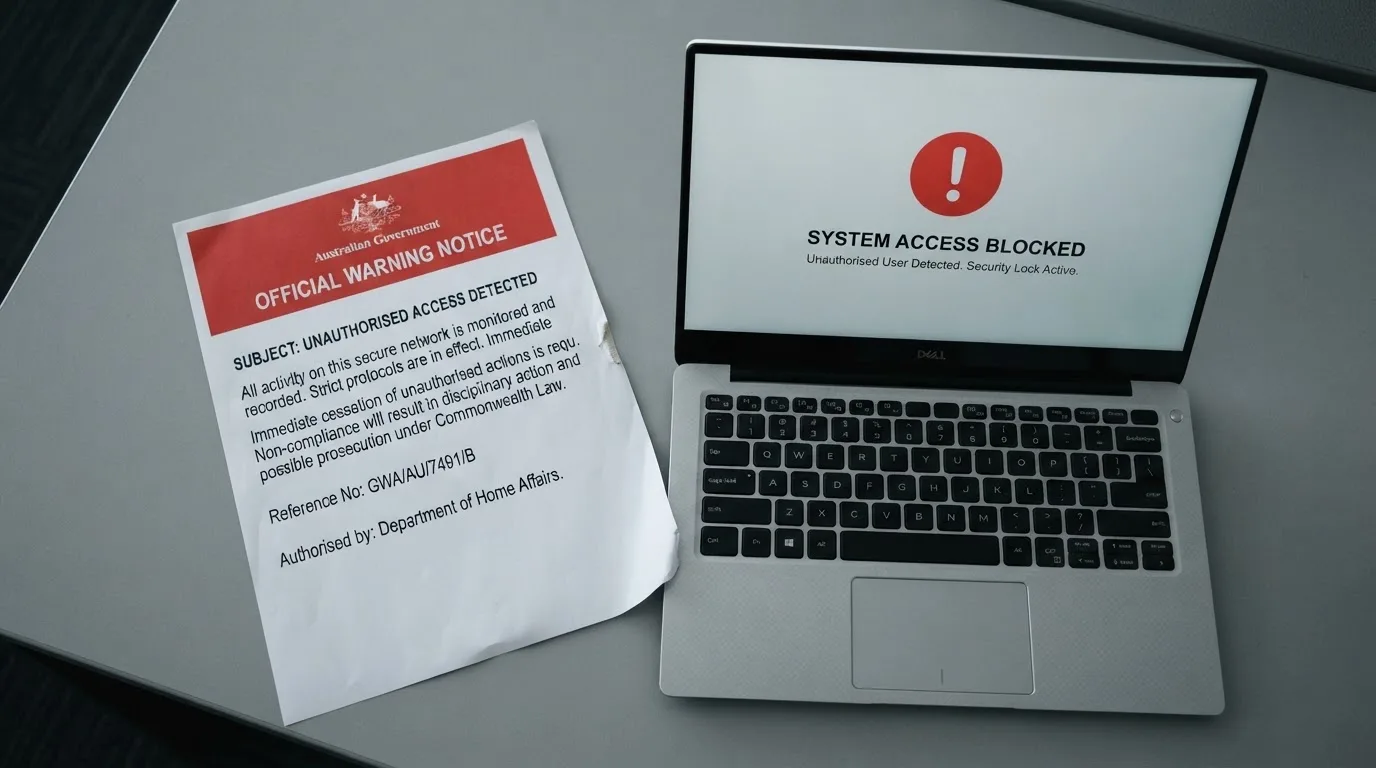
The payment side is more pointed. Since the 2023 amendment to the IGA, Australian-licensed online wagering services are prohibited from accepting digital currency alongside credit cards and other credit-related products. From 11 June 2024 the prohibition carries penalties of up to A$247,500 for operators. A licensed Australian bookmaker therefore cannot take an ETH deposit at all. An offshore casino can, because the prohibition binds Australian licensees, not offshore operators; but the prohibition’s existence tells a player something important about how the Australian regulator frames crypto funding — it has been placed alongside credit, which is the payment class the regulator most wants out of gambling. A site that is happy to take an ETH deposit from an Australian is, by construction, not on the licensed side of that line.
The Interactive Gambling Amendment (Gambling Reform) Bill 2026 passed Parliament on 19 August 2026. Its advertising and inducement measures commence 1 January 2027 — law with a start date, not yet in force on a page dated 2026. The bill does not legalise online casino games, and it does not change the payment rules; what it does is tighten what licensed operators can advertise and what inducements they can run, and the commencement gap means the inducement rules do not bind offshore ETH sites at all, since those sites are not licensed operators.
The individual Australian player is not prosecuted for playing at an offshore site. The IGA targets the provider, not the customer. That is a real distinction, but it is a narrower one than it sounds — the absence of prosecution does not put any Australian consumer-protection machinery behind an offshore transaction. There is no local complaints body, no local ombudsman, no local recourse if a withdrawal is refused, no requirement on the operator to honour advertised RTPs or bonus terms, and no guarantee the site will still be reachable next week. The ACMA’s blocking tool can take a site offline from an Australian IP at any time, and it has done so across more than 1,750 sites to date. A player who funds an account in ETH and loses access to the site has no Australian route to recover the balance.
Responsible play on a site outside Australian jurisdiction
The responsible-gaming frame an Australian player is used to — deposit caps, time-out tools, self-exclusion through BetStop, a complaints body to appeal to — exists because it was required of Australian licensees. None of those mechanisms bind an offshore ETH casino. BetStop, the National Self-Exclusion Register, has been live since August 2023 and covers Australian-licensed online and phone wagering services; an offshore casino is not connected to it, so a BetStop registration does not stop an offshore deposit, and an offshore site will not check the register before accepting ETH from a person on it. Self-exclusion through the offshore site itself is a contractual arrangement between the player and that operator, revocable at the operator’s discretion and not backed by an Australian regulator.
The help side of responsible gambling still works from inside Australia, regardless of where the gambling happens. The National Gambling Helpline on 1800 858 858 is free, available 24/7, and runs chat counselling through Gambling Help Online. The frame that the player’s first budget is the most useful budget holds harder in crypto than in card play: once an ETH transfer is confirmed on-chain it cannot be reversed, the network fee is paid in the same transaction, and a wallet does not distinguish between a deposit to a casino and a payment to a merchant. Players who would ordinarily set a weekly card limit on a licensed site need to set the equivalent limit before the transfer is signed, because the act of sending the ETH is the act of losing control over it.
That is the deeper shape of the responsible-gaming question on an ETH casino. A player funding an account with a debit card has a chargeback mechanism that, in narrow circumstances, can recover funds from a merchant that does not deliver. A player funding an account with ETH has no equivalent mechanism. The blockchain confirms the transfer; the funds leave the wallet; and what arrives at the casino is the casino’s to keep, on the casino’s terms. Setting the budget before the transfer is signed is not a precaution a player can skip and recover from later — it is the precaution the architecture makes impossible to defer.
What an Ethereum deposit and withdrawal actually do on a casino site
The mechanics on the player’s side are simple enough to describe in three steps, and each step has a cost a player should know in advance.
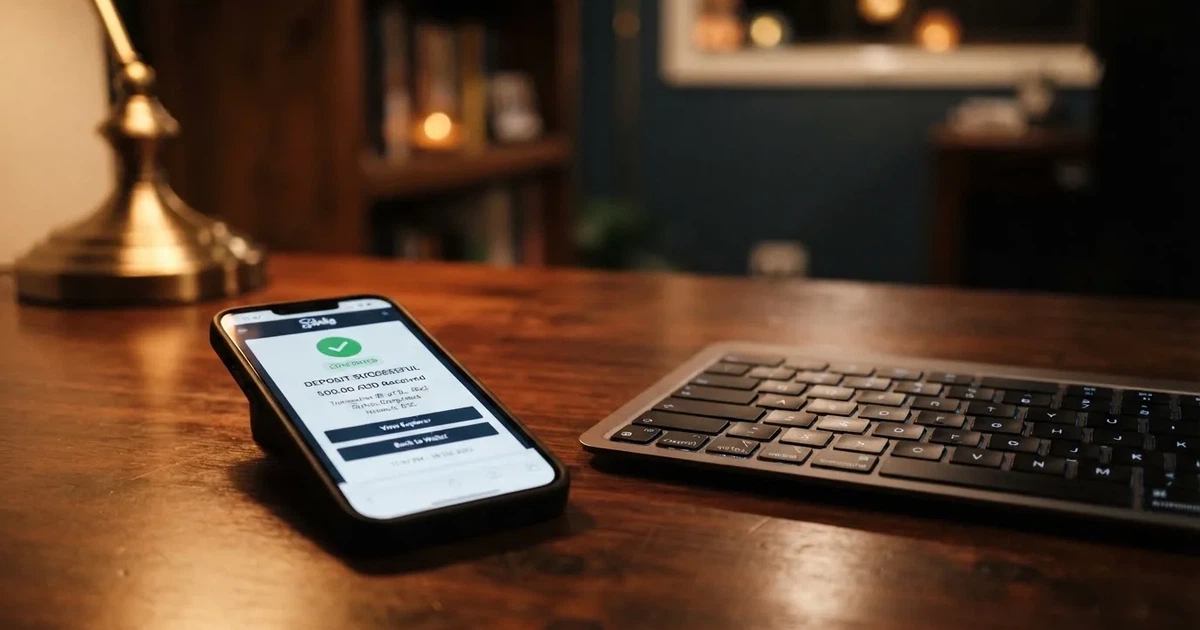
A deposit starts when the casino generates a deposit address — a long hexadecimal string tied to the casino’s hot wallet — and the player sends ETH from their own wallet to that address. The transaction is broadcast to the Ethereum network, picked up by validators, and added to a block. Ethereum produces a new block roughly every 12 seconds since the Merge in September 2022, so the first confirmation arrives fast. The casino’s deposit screen normally credits the account after a small number of confirmations — typically between three and twelve, depending on the site’s stated policy — which takes somewhere between half a minute and a couple of minutes at the post-Merge block interval. The deposit’s ETH amount lands on the casino’s books at the spot price the casino uses, which is its own quote rather than a market feed, and the player is then playing in a fiat-denominated balance denominated in USD, EUR or AUD at that internal rate.
The network fee — what the wallet calls “gas” — is paid by the player in the same transaction, in ETH, and is set by the network’s current demand for block space rather than by the casino. A quiet network day can mean a fee measured in cents; a busy day during a token launch can push the same transfer into tens of dollars. The fee is not refunded, and it is not waived for casino deposits. Some sites quote a minimum deposit to offset the fee, but the minimum is the casino’s choice and does not reflect the network’s cost.
A withdrawal reverses the flow. The player requests a payout in ETH, the casino approves the request after whatever internal checks it runs — and offshore sites are entitled by their terms to run additional checks on crypto withdrawals, which is covered later in this page — and the casino broadcasts a transfer from its hot wallet back to the player’s wallet address. That transfer also pays a gas fee, which the casino may absorb or may deduct from the withdrawal amount depending on its stated policy. The player’s wallet credits the ETH when the transaction is confirmed; the player then has ETH in their wallet, which is property for Australian tax purposes and which the ATO expects a player to record as a capital gains event if it is later sold, swapped or spent.
The traceability point belongs in this section as well, because it is part of how an ETH deposit behaves even though it is not part of how a player feels it. Ethereum is a public blockchain: every transaction is recorded on a permanent, publicly searchable ledger. The transaction carries the sending wallet, the receiving wallet, the amount and the timestamp. No name is attached to either wallet at the blockchain layer, but a wallet’s history is visible to anyone who knows the address, and once a wallet address is shared with a counterparty — including a casino that runs basic chain analytics — that counterparty can see the wallet’s full past activity on Ethereum. The pseudonymity is real at the wallet layer and partial at the activity layer. A player who funds a casino account from a wallet that has previously received funds from a KYC-tagged exchange leaves a trail an analytics firm can follow.
ETH slot games and live dealer tables: how the games themselves behave
The games at an ETH casino are the same games that run at any other online casino. The reels, the paylines, the bonus features, the live dealer stream and the rules of the table are independent of the deposit currency, because the deposit currency is converted into a fiat balance on the casino’s books before any wager is placed. The slot that an ETH casino lists under “Book of Dead” is the same Book of Dead any other casino lists, with the same 96.21% RTP, the same high-volatility profile and the same payline structure. The live blackjack table is the same Evolution or Pragmatic Play lobby running on the same studio feed, with the same rules and the same house edge. The coin that funded the account does not change what the reels do.
Two practical consequences follow. First, an RTP figure quoted for a slot on an ETH casino is the game’s RTP, not a coin-specific number — there is no such thing as an “ETH RTP” for Book of Dead, because the ETH left the account at the deposit step. A player comparing slot RTPs across casinos can use the same figure regardless of which coin is funding the account, and the audit trail on RTP comparison is unaffected by the choice of rail. Second, volatility and hit frequency are also game-level and unaffected by the rail. A high-volatility slot behaves like a high-volatility slot whether the spin was funded from an ETH deposit, a USDT deposit or a Visa deposit; the variance sits in the math model, not in the cashier.
The category in which the rail does change the experience is the live dealer lobby. Live dealer tables are time-bound — the shoe rotates, the dealer changes, the seat fills — and an ETH player who joins a blackjack table is joining it with a fiat balance converted at the casino’s spot rate. The spot rate the casino applies at the join step is the casino’s choice, and a small spread between the casino’s quote and the market mid is one of the quiet costs an ETH player pays that a card-funded player does not. The same cost applies on the way out: when a live dealer table pays out in fiat and the player requests an ETH withdrawal, the casino converts the fiat balance to ETH at its own quote, and the spread on that conversion is part of the price of using the rail.
The eleven offshore sites the ACMA has acted against
The brands below are not ranked for play. They are listed because the ACMA itself issued a formal warning to each of them for offering prohibited interactive gambling services to Australians, and the ACMA’s published record of those warnings is the most reliable single signal of which offshore sites an Australian player is most likely to be looking for when they search for an ETH casino. Each write-up states what the ACMA record shows, what the brand’s own published terms cover, and a verdict on the brand that takes the page’s cost-first angle. The verdict answers a different question on each block; a sentence that would close any of the eleven would have closed the wrong one.
RocketPlay — warned twice, licence still on the page
The ACMA issued a formal warning to Pulsup Ltd over Rocketplay.com.au in March 2026, and a separate formal warning to Dama N.V. over Rocketplay and five other Dama brands in May 2022. The site advertises a Curaçao licence and accepts ETH among its deposit methods. Two formal warnings across two operators over four years is more regulatory attention than most of the brands in this list have received, and the fact that the brand carried on through both warnings without changing its Australian-facing offering tells a player something about how seriously it treats the Australian market. The cost question on RocketPlay is not whether the ETH deposit works — it does, with the standard 12-second block interval and the standard gas fee — but whether the player wants to fund an account on a brand that has been told twice to stop and has not.
Level Up Casino — Dama’s wider portfolio
Level Up was named in the same May 2022 Dama N.V. warning that covered Rocketplay, alongside Bambet, Dazard, Wild Tornado and Cobra Casinos. The brand sits inside a Curaçao-licensed Dama group that the ACMA warned as a unit, which means a warning to Level Up is also a warning to the operator behind four other named brands. Players who move between Dama properties for variety or bonus chasing are moving within a single corporate footprint, and the ACMA’s action treats them as a single entity. The ETH deposit rail at Level Up runs through the same hot wallet pattern as RocketPlay; what is different is the regulator’s view of the parent group, which has been put on notice at the portfolio level.
Woo Casino — the warning that named the brand
The ACMA issued a formal warning to Dama N.V. specifically over Woo Casino in March 2025, then issued a further formal warning to Dama N.V. over Spirit Casino in May 2025. The Woo Casino warning is the narrower of the two — one brand, one operator, one date — and it sits alongside the May 2022 portfolio warning that did not name Woo Casino specifically. The March 2025 action is the ACMA’s clearest single-brand signal in the Dama cluster. For an ETH player, the Woo Casino case is the most direct example in this list of a brand being told by name to stop serving Australians and continuing to serve them anyway.
Spirit Casino — second Dama warning in two months
Spirit Casino is the brand named in the ACMA’s May 2025 warning to Dama N.V., the second of the two single-brand warnings issued to Dama in 2025. A player looking at Spirit as an ETH casino is looking at a brand that the ACMA warned about within the previous twelve months on this page, and the warning is on the regulator’s public register. The site’s own terms accept ETH through the standard hot-wallet flow, and the deposit confirmation timeline sits inside the post-Merge 12-second block interval. The cost angle on Spirit is the recency of the warning: a brand that has just been told to stop is more likely than average to be the next brand the ACMA asks ISPs to block.
National Casino — Consolutetish entry in the ACMA register
The ACMA issued a formal warning to Consolutetish S.R.L. over National Casino in July 2025. National Casino had not been named in earlier Dama or TechSolutions warnings — Consolutetish is a separate operator entity, with its own Curaçao licence footprint and its own published terms. An ETH player looking at National as a fresh option outside the Dama cluster is not, in fact, outside a warned operator group; they are inside a different one. The deposit rail is standard: ETH hot wallet, gas fee paid in ETH, and an internal spot conversion. For the regulator, however, the signal is consistent: a formal warning has been issued, yet the brand remains open to Australian players.
Bizzo Casino — warned twice under different operators
Bizzo Casino was named in the ACMA’s July 2025 formal warning to Consolutetish S.R.L. and was also the subject of an earlier 2022 formal warning to TechSolutions (CY) Group Limited and TechSolutions Group N.V. Two operators, two warnings, one brand — the regulatory trail on Bizzo is the longest in this list and shows how an offshore brand can change corporate hands while keeping its Australian-facing operations unchanged. An ETH player funding a Bizzo account in 2026 is funding a brand that the ACMA has warned twice, under two different parent companies, and the regulator’s public register carries both warnings. The brand’s own Curaçao licence is unaffected by either warning, because neither warning operates against the licence; it operates against the Australian-facing offering.
Ignition Casino — the Australian-facing rebrand of a US-facing brand
Ignition Casino has a US-facing history as a poker and casino brand and operates offshore under Bamboo Media, which the ACMA formally warned in July 2025 for offering prohibited services to Australians. The brand’s offshore terms list ETH among its accepted cryptocurrencies, alongside Bitcoin and a handful of altcoins. An ETH player landing on Ignition from an Australian search is landing on a brand whose Australian-facing operation has been told to stop, and the site’s terms are framed for the global offshore market rather than for any Australian licensing regime. The verdict on Ignition sits in the gap between its offshore product and its Australian regulatory exposure: the deposit rail works the same way, the games behave the same way, and the Australian consumer protection behind it is the same absence as on every other brand in this list.
Instant Casino — the EOD Code SRL brand
The ACMA issued a formal warning to EOD Code SRL over Instant Casino in February 2025. Instant Casino’s published terms frame it as a fast-payout offshore casino with cryptocurrency deposit options, and ETH is on the listed rail. The February 2025 warning is the ACMA’s most recent single-brand action against Instant Casino before this page’s cutoff, and the brand continues to operate under its Curaçao licence. For an ETH player, Instant Casino presents the same mechanics as the rest of the cohort with a regulatory signal that is recent enough to be worth weighing against the deposit and withdrawal experience on offer.
Jackbit — Ryker B.V.’s April 2026 warning
The ACMA issued a formal warning to Ryker B.V. over Jackbit and CasinOK in April 2026, the most recent single-operator action in this list. Ryker B.V. runs both brands under the same corporate footprint, and the warning covers both. Jackbit’s own marketing emphasises its crypto rails and its sportsbook-plus-casino combination, with ETH accepted alongside Bitcoin, USDT and several other tokens. An ETH player picking Jackbit in 2026 is picking a brand that the regulator warned within the previous months, and the warning is published on the ACMA’s register. The recency of the signal is the main cost angle on this brand: the ACMA has not yet asked ISPs to block Jackbit in the published blocking rounds, but the warning is fresh and the next blocking round is the most likely place for it to land.
Casino Intense — Sterplay’s April 2025 brand
The ACMA issued a formal warning to Sterplay Holding Ltd over Casino Intense in April 2025. Casino Intense operates under a Curaçao licence and lists ETH among its accepted deposit methods. The April 2025 warning is the single ACMA action attached to the brand on the published register, and the brand continues to operate. For an ETH player, Casino Intense is one of the cleaner single-warning entries in this list — one operator, one brand, one date — and the regulatory signal is what the ACMA record carries and nothing more. The cost angle is the same as the rest of the cohort, applied to a brand whose warning record is the simplest to read.
Sky Crown — Hollycorn N.V.’s portfolio warning
The ACMA issued a formal warning to Hollycorn N.V. over its Sky Crown and Blue Leo casino services in September 2022, the earliest warning in this list. Sky Crown sits inside a Hollycorn N.V. portfolio that includes several other offshore brands, and the ACMA warned the operator rather than the brand. A player looking at Sky Crown as an ETH option in 2026 is looking at a brand whose warning is four years old at the page’s cutoff, and which has continued to operate throughout that period. The age of the signal — older than any other warning in this list — sits against the rest of the cohort where most of the warnings are twelve to eighteen months old. For an ETH player weighing the regulator’s view of each brand, Sky Crown is the longest-running entry on the ACMA register and the one whose warning is least likely to be the regulator’s current focus.
The blocking arithmetic — how often the regulator’s pace bites
The ACMA publishes a running record of the rate at which it directs ISPs to block illegal sites. A total of 1,751 illegal gambling and affiliate marketing websites have been blocked since the first request in November 2019, with the most recent June 2026 round adding 12 more sites. This data helps a player understand the enforcement pattern and size their own risk.
Six years and seven months between November 2019 and the June 2026 cutoff. 1,751 sites blocked over that window. That is an average of roughly 262 sites per year, or about 22 sites per month, or roughly five per week. The pace is uneven — the regulator publishes blocking rounds in batches of varying size — but the band it sits in is well above zero and has been for the full enforcement window.
A player who funds an ETH account on any of the eleven brands in this list is not betting on whether the regulator will issue more blocking rounds; that question is settled by the published pace. The player is betting on whether their specific brand will be in the next round. The ACMA record shows that some operators sit on the register for years before a blocking request lands, and others get blocked within months of a formal warning. The June 2026 batch — 7Signs, ChromaBet, Donbet, Duospin, Freshbet, Slots Gem, Jacks Club, Lucky Start, Pointsbetz.com, Spinrise, Vinyl Casino and Wildsino — names brands that are not in the eleven-brand reviewed set, which is the point: the next batch may name any of them, and the pace at which it does is set by the regulator, not by the player.
The arithmetic on cost is the next layer. A blocked site does not refund balances, does not pay out pending withdrawals and does not return the gas fees the player paid on the way in. The ETH deposit that credited the account is already on the casino’s books; the network fee is already paid; and the access point the player used to reach the site is the thing that disappears, not the funds the player sent to it. The blocking arithmetic is, in that sense, a cost arithmetic: every additional blocking round compounds the risk that a player’s existing balance becomes unreachable, and the pace of roughly five sites per week is the rate at which that compounding happens across the offshore cohort.
An Australian player is not the regulator’s target — and that is not protection
The IGA targets providers, not customers. An Australian resident who deposits ETH at an offshore casino is not personally committing an offence under the statute. That is the legal fact the marketing pages lean on, and it is true on its face. What it does not give the player is a parallel layer of protection: the absence of personal liability is not the presence of consumer recourse, and offshore sites are not bound by Australian fair-trading law, Australian privacy law or Australian dispute resolution.
Three places that absence shows up. First, withdrawals: an offshore casino’s terms let it run additional KYC checks on crypto withdrawals, and a withdrawal that asks for source-of-funds documentation after the deposit has been confirmed has no Australian complaints body to appeal to. Second, balance disputes: a casino that closes an account with a balance on it — for bonus abuse, for multi-accounting, for any reason in its terms — leaves the player with the casino’s internal decision and no Australian escalation. Third, blocking: when the ACMA asks ISPs to block the site, the site keeps running and the player’s balance keeps existing on its books, but the player has no way to ask the operator to pay it out from inside Australia. Each of those three is a cost that the IGA’s silence on personal liability does not address.
The licensed side of the market is not an alternative the player can switch to. Australian-licensed online wagering services do not accept digital currency, do not offer online casino games or online pokies, and do not run live dealer tables. The licensed bookmaker offers pre-event racing and sport betting, with deposit routes restricted to debit card, bank transfer, PayID/Osko and BPAY. An ETH player looking for an Australian-licensed alternative to an offshore ETH casino is looking for something that does not exist, and the framing of “just play somewhere licensed” does not apply to this category. The licensed side covers a different product.
The tax position on ETH winnings
The ATO treats crypto assets — including ETH — as property, not as money or foreign currency, and most disposals of ETH are capital gains tax events. Selling ETH for AUD, swapping ETH for another token, and spending ETH at a merchant are all disposals for CGT purposes. An ETH withdrawal from an offshore casino is a receipt of property; the later sale, swap or spend of that ETH is the CGT event the ATO records, and the cost base is the Australian-dollar value of the ETH at the moment it arrived in the player’s wallet.
Two ATO rules a player should know. First, the 50% CGT discount applies to crypto assets held for longer than 12 months, halving the taxable gain on long-held ETH. From 1 July 2027 that flat discount is replaced by CPI indexation of the cost base plus a 30% minimum tax rate on net capital gains; a player whose ETH sits in a wallet across that boundary should be ready to do the calculation under the new regime. Second, recreational gambling winnings are not assessable income under section 6-5 of the ITAA 1997, and recreational losses are not deductible. The CGT treatment of ETH is independent of the gambling treatment of the wager that produced it: the ETH arriving in the wallet is property with a cost base, and the gambling result that put it there is not taxable income. A player who treats the two as the same question is mixing the ATO’s two frameworks and should check with a tax adviser on their own position.
Frequently asked questions
Is it legal for a casino site to accept Ethereum from a player in Australia?
No. The Interactive Gambling Act 2001 prohibits the provision of online casino games to a person in Australia, and the 2023 amendment to the IGA added digital currency to the list of payment methods Australian-licensed operators cannot accept. An offshore site is not bound by that payment prohibition, but the underlying activity prohibition still applies to the provider. The player is not personally prosecuted, but the site has no Australian licence, no Australian consumer protection, and no guaranteed reach from an Australian IP.
How does an Ethereum deposit get confirmed before it is credited to a casino account?
The casino generates a deposit address tied to its hot wallet. The player sends ETH from their own wallet to that address; the transaction is broadcast to the Ethereum network and added to a block. Ethereum produces a block roughly every 12 seconds since the Merge in September 2022, and the casino normally credits the account after a small number of confirmations — typically three to twelve — which takes between half a minute and a couple of minutes. The casino’s internal spot rate then converts the ETH amount to a fiat balance on its books.
Are network fees deducted from an Ethereum deposit before it reaches a casino balance?
Yes. Gas is paid in ETH in the same transaction that sends the deposit, and the fee is set by current network demand for block space rather than by the casino. Quiet network conditions can mean a fee measured in cents; busy conditions during a token launch can push the same transfer into tens of dollars. The fee is not refunded and not waived, and the casino’s minimum deposit is its own commercial choice rather than a reflection of the network’s cost.
Do Ethereum slot titles pay out any differently from the same game funded with cash?
No. The ETH deposit is converted to a fiat balance on the casino’s books before any wager is placed, and the games themselves are independent of the rail. Book of Dead at an ETH casino is the same Book of Dead at any other casino, with the same RTP, the same volatility profile and the same payline structure. There is no coin-specific payout figure, and an RTP quoted for a slot applies regardless of which deposit method funded the spin.
Is an Ethereum wallet address linked to a person’s identity by the casino?
Not at the wallet layer — no name is attached to the address at the blockchain level. The pseudonymity is partial, though, because every transaction is recorded on a public ledger and a wallet’s full history is visible to anyone who knows the address. Once the address is shared with a counterparty that runs chain analytics, that counterparty can see the wallet’s past activity on Ethereum, and a wallet that has previously received funds from a KYC-tagged exchange leaves a trail a chain-analytics firm can follow back to a name.
What identity checks apply to an Ethereum withdrawal from an offshore casino?
Offshore sites are entitled by their terms to run additional KYC checks on crypto withdrawals, and a withdrawal that asks for source-of-funds documentation after the deposit has been confirmed has no Australian complaints body behind it. The casino’s own terms set the threshold — withdrawal size, account age, cumulative turnover — at which those checks apply, and a player should read the relevant terms before requesting the first payout. There is no Australian escalation if the operator refuses the withdrawal on the basis of those checks.