
$20 minimum deposit pokies in Australia in 2026 — the cost behind the offer
Current as of 3 November 2026, checked against the Australian Communications and Media Authority’s published formal-warning register and blocking-round notices.
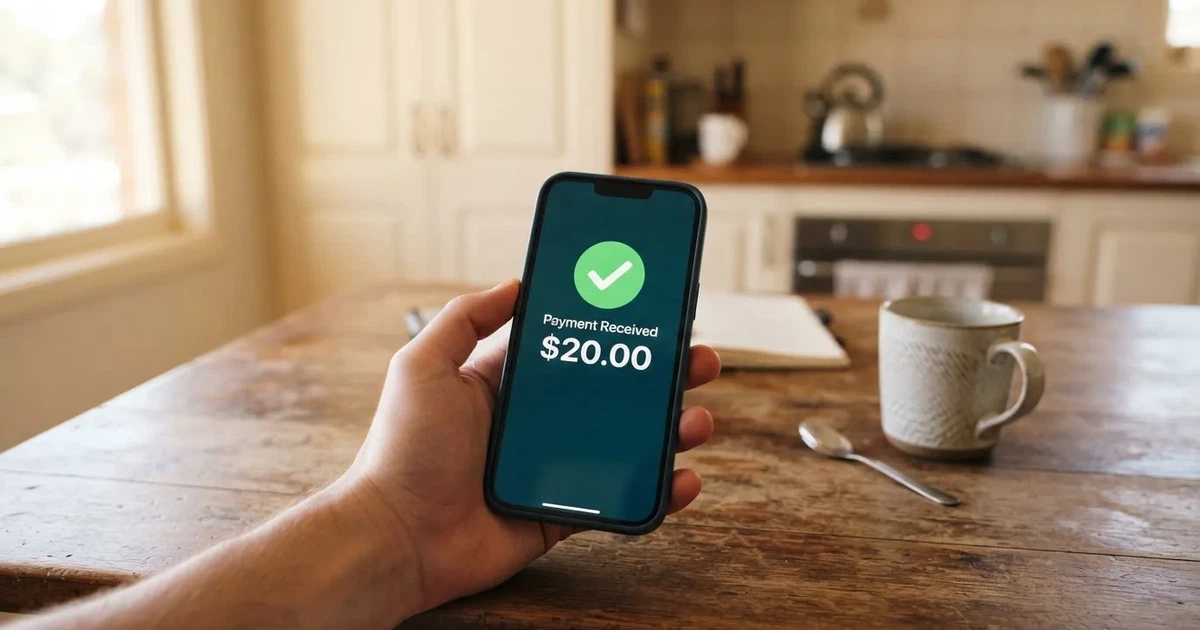
A $20 minimum deposit at an online pokies site looks like the cheapest possible way to spin a reel from Australia. It rarely is. The page that follows takes the position the material actually supports: there is no licensed Australian product answering this search, every operator offering one sits outside Australian law, and the $20 the player hands over travels with no protection at all. The arithmetic below makes that concrete — what gets blocked, how fast, and what an Australian punter walks away with when a balance is held on an offshore account.
Table of Contents
- How $20 deposits settle — and where the money actually goes
- The eleven brands the ACMA has acted against — what each costs the player
- What $20 minimum-deposit online pokies actually are in Australia
- The legal frame — what the Interactive Gambling Act actually says
- Responsible play — what actually works when an Australian punter needs help
- What “online pokies” means on a $20 deposit site — and what it does not
- The blocking rate — what the ACMA’s own pace tells the player
- Reading the comparison — what the eleven brands together say
- What the pub pokies machine actually costs the $20
- What this page does not promise
- Frequently asked questions
How $20 deposits settle — and where the money actually goes
The word “deposit” does a lot of work in online pokies marketing. A $20 minimum deposit is the smallest amount a site will let an Australian player load onto an account — the floor, not the ceiling, and almost always set that low because the floor matters more to signups than the average stake. Almost every offshore casino that targets Australians advertises a $20 minimum, sometimes $10, sometimes $15, and the figure is chosen to feel like a pub pokies spend rather than a real gambling outlay.

Australian banking rails handle the movement in their own way. PayID and Osko settle in seconds between participating banks, which is why many offshore sites list them first — the money is gone from the buyer’s account before the player has finished the deposit form. BPAY takes one to two business days and creates a paper trail, which is why sites prefer PayID when they can get it. Debit card deposits are processed by the card networks under the same chargeback and dispute rules as any other online purchase, and those rules are the only Australian consumer protection a player ever touches in this market. Direct bank transfers sit somewhere in between, depending on the bank.
What flows back is the harder side of the picture. Offshore casinos typically process withdrawals to the same method the deposit came from, and the timeframes they advertise — “instant”, “24 hours”, “within three days” — refer to the moment the casino releases the funds, not the moment they reach an Australian bank account. Once the casino approves a payout, PayID clears in seconds, BPAY takes a day, and a debit card refund can take three to five business days depending on the issuing bank. None of those timeframes shorten the verification queue at the casino end, and offshore sites reserve the right to ask for fresh identity documents on the first withdrawal of any meaningful size.
The deeper problem is what happens when the rail closes. The ACMA asks Australian internet service providers to block illegal gambling sites, and the most recent round reported on 26 June 2026 added 12 more — 7Signs, ChromaBet, Donbet, Duospin, Freshbet, Slots Gem, Jacks Club, Lucky Start, Pointsbetz, Spinrise, Vinyl Casino and Wildsino — bringing the running total of blocked sites to 1,751 since the first blocking request in November 2019. A blocked site still holds whatever balance the player left on it. The site itself does not disappear for the player who already deposited; the page simply stops loading on Australian connections. Any unwithdrawn funds are then recoverable only through whatever complaint channel the offshore operator chooses to offer, and an offshore casino has no obligation to honour any.
Two consequences follow. The first is that the $20 deposit is not really a stake — it is exposure, and the exposure does not end when the player stops playing. The second is that any comparison of “best $20 deposit pokies” that ignores the blocking regime is comparing offers the reader cannot actually reach for long. The sections below build that comparison from the ACMA’s own record rather than from the marketing those brands put out.
The eleven brands the ACMA has acted against — what each costs the player
This is not a ranking and not a recommendation. Every brand below is included because the Australian Communications and Media Authority itself issued a formal warning over it for offering prohibited online casino services to Australians. The product itself — online pokies — cannot be licensed in any Australian state or territory, regardless of what licence an offshore site claims to display. What the comparison shows is the rate at which Australian enforcement catches up with these operators, and what each warning tells the player about the brand behind it.

| Brand | ACMA action and date | Operator named by the ACMA | Subject support |
|---|---|---|---|
| RocketPlay | Formal warning, March 2026 | Pulsup Ltd | — |
| Level Up Casino | Formal warning, May 2022 | Dama N.V. | Listed by BGaming as carrying its portfolio |
| Woo Casino | Formal warning, March 2025 | Dama N.V. | — |
| Spirit Casino | Formal warning, May 2025 | Dama N.V. | — |
| National Casino | Formal warning, July 2025 | Consolutetish S.R.L. | Listed by Wikipedia among online casino brands |
| Bizzo Casino | Formal warning, July 2025 (earlier 2022 to TechSolutions) | Consolutetish S.R.L. | — |
| Ignition Casino | Formal warning, July 2025 | Bamboo Media | — |
| Instant Casino | Formal warning, February 2025 | EOD Code SRL | — |
| Jackbit | Formal warning, April 2026 | Ryker B.V. | — |
| Casino Intense | Formal warning, April 2025 | Sterplay Holding Ltd | Listed by ABC, ACMA and Crown Melbourne coverage |
| Sky Crown | Formal warning, September 2022 | Hollycorn N.V. | — |
Three of these brands — RocketPlay, Woo Casino and Spirit Casino — sit under the same parent company, Dama N.V., across different years. The ACMA has warned the operator three separate times for the same conduct. That is not a sign of compliance; it is a sign that the operator’s business model treats warnings as a cost of doing business rather than as a reason to leave the market. A player depositing $20 into any of these three is funding the same corporate structure the regulator has already spoken to.
The 26 June 2026 blocking round sits alongside this table, not above it. The 12 brands named in that round — 7Signs, ChromaBet, Donbet, Duospin, Freshbet, Slots Gem, Jacks Club, Lucky Start, Pointsbetz, Spinrise, Vinyl Casino and Wildsino — were not on the featured list above because the ACMA’s action against them was a blocking request rather than a formal warning. The blocking regime is faster than the warning regime: sites can be asked to disappear from Australian connections within weeks of the regulator forming a view, while a formal warning is reserved for cases the ACMA wants on the public record. Both actions end in the same place for the player with a balance still on the account.
What $20 minimum-deposit online pokies actually are in Australia
The fundamentals of the search are simple, and the fundamentals are the part most $20-deposit pokies pages skip past. Online pokies — the internet version of the pub poker machine — are prohibited for anyone in Australia under the Interactive Gambling Act 2001, as strengthened by the Interactive Gambling Amendment Act 2017. The Act is targeted at the provider, not the player, which is why no Australian punter has ever been prosecuted for depositing $20 into an offshore site. It is also why no state or territory will license the product, regardless of what Curacao, Malta or Kahnawake paperwork an offshore brand displays on its footer.
What is licensed in Australia is wagering on races and sport placed before the event, lotteries and keno. Online sports bookmakers — Sportsbet, Bet365, Ladbrokes among them — are regulated by the Northern Territory Racing and Wagering Commission, which holds 52 of the country’s online bookmaker licences and has no full-time staff, meeting once a month in Darwin. That regulatory body does not cover online pokies. The brand at the top of a $20 deposit pokies page is, by definition, not licensed for the product it is selling.
Three numbers make the market’s scale legible. Australians lose an estimated A$3.9 billion a year to illegal offshore gambling sites, according to H2 Gambling Capital’s 2025 report. The share of Australian gambling going through legal channels fell from 74% in 2021 to 64%. More than 230 unlicensed gambling services have left the Australian market since enforcement was strengthened in 2017. None of those numbers is the regulator’s brag — they are the size of the gap that the offshore $20 deposit market continues to fill.
The licensed alternative the player is actually searching for is a poker machine inside a club or casino. There are around 198,000 of those machines across Australia’s pubs, clubs and casinos, regulated state by state, and in 2020–21 Australians bet almost A$150 billion through them and lost A$12.18 billion. The $20 the player might load onto an offshore account is the same number a punter feeds into a real machine in a real venue — but the legal status, the protections, and the recourse when something goes wrong are not the same at all.
The legal frame — what the Interactive Gambling Act actually says
The Interactive Gambling Act 2001, amended in 2017, makes it an offence to provide online casino games, online pokies or in-play betting to a person in Australia. The Act targets the provider, not the customer. An Australian punter does not face prosecution for depositing $20 into an offshore site; the offshore operator does, in the sense that it is the operator the ACMA speaks to, warns and blocks.
The Australian Communications and Media Authority is the body that enforces the Act. Its tools are three. It can investigate suspected prohibited services. It can issue formal warnings, which are published on its website with the operator’s name and the date — and which form the public record the table above draws from. It can direct Australian internet service providers to block illegal sites at the DNS level, which is what produced the 1,751-blocked-sites running total reported on 26 June 2026.
What the Act does not do is protect a player who has already deposited. An offshore site is not connected to BetStop, the National Self-Exclusion Register, which has been live since August 2023 and binds Australian-licensed online and phone wagering services. It is not subject to the Australian Consumer Law, which means a refusal to pay out a legitimate win has no local remedy. It is not covered by the credit-card ban that took effect on 11 June 2024 for licensed wagering — which is why an offshore site will happily take a credit card or a crypto deposit that a licensed Australian bookmaker cannot. The deposit route the licensed market banned is the deposit route the offshore market relies on.
The 2026 reform picture sits on top of this. The Interactive Gambling Amendment (Gambling Reform) Bill 2026 passed Parliament on 19 August 2026, with its advertising and inducement measures commencing on 1 January 2027. The Bill is law with a start date, not a measure in force on a 2026 page, which is why it appears here as part of the legal frame and not as a live restriction. Its effect, once it commences, will be to constrain how offshore brands market to Australians rather than to change what the player already faces.
The Northern Territory’s de facto gambling regulator illustrates the strain on the licensed side. The NTRWC regulates 52 online bookmakers for tax reasons, holds no full-time staff and meets monthly in Darwin. A regime that thin covers the products the Act allows; it has nothing to say about the product the Act prohibits.
Responsible play — what actually works when an Australian punter needs help
If $20 deposit pokies play ever starts to feel compulsive or stressful, the help that actually reaches an Australian punter is free, confidential and twenty-four hours a day. Gambling Help Online runs the National Gambling Helpline on 1800 858 858 and provides live chat on its website. Both channels are open around the clock and are free to call or message from anywhere in Australia.
BetStop, the National Self-Exclusion Register, is the structural tool. A punter who registers with BetStop is excluded from every Australian-licensed online and phone wagering service simultaneously, and the exclusion is enforced by the operator. BetStop does not exclude an offshore site, because no offshore site is connected to the Australian register, and that limitation is the practical reason the offshore market is treated as a separate problem from the licensed one.
State and territory bodies run their own support lines and counselling services alongside the national channels, and most pub and club venues offer self-exclusion from their own gaming floors. A punter who has been playing offshore and wants to stop can register with BetStop as a first step — it will at least close off the licensed side of the market — and follow up with Gambling Help Online for the broader support the offshore side cannot provide.
The framing matters. Responsible play is not a feature of the product. It is a service the regulated side offers and the unregulated side does not. A site that takes a $20 deposit from an Australian and offers no path to BetStop, no local complaint channel and no Australian recourse on a refused withdrawal is asking the punter to manage a gambling problem alone.
What “online pokies” means on a $20 deposit site — and what it does not
A $20 deposit at an offshore site buys the player access to a catalogue of digital slot games. Those games run on a server the player never sees, governed by rules the player never reads, returning a percentage of stake the player is not told in advance. The licensed version of the same product — the poker machine in a pub or club — sits under state regulation, with a minimum return-to-player set by jurisdiction: 85% in New South Wales, the Northern Territory, Queensland and most of Victoria (87% at Crown Melbourne), 87% in the Australian Capital Territory and Tasmania, 87.5% in South Australia, and 90% in Western Australia. The minimum return-to-player is the floor on what the machine pays back over its life; it is not a guarantee on any single session.
The offshore equivalent carries no equivalent floor. The return-to-player of an offshore online pokie is whatever the operator’s software says it is, audited by whatever laboratory the operator paid to audit it, displayed in whatever fine print the player clicks through. New South Wales alone had 87,298 gaming machines outside casinos across 2,195 venues in June 2023, with player losses of A$8.18 billion in 2022–23. Queensland had 21,122 gaming machines across 351 venues in October 2023, and Victoria held 26,380 outside Crown Casino in 488 venues under a 30,000 statewide cap. The licensed machine is the same product the player is searching for, but it is licensed, regulated, returned at a published floor, and physically present in a venue the player can walk into.
The history is shorter than most players assume. Registered clubs operated Australia’s first legal poker machines from 1956, in New South Wales. The Federal Group held a monopoly licence over all of Tasmania’s poker machines from 1968 until November 2021, when legislation moved oversight of those machines to the Tasmanian Liquor and Gaming Commission. Western Australia banned poker machines in pubs and clubs when Crown Perth opened in 1985; Crown Perth’s own machine count has since grown from about 200 in 1985 to roughly 2,500. Tasmania planned nation-leading mandatory pre-commitment cards for its poker machines, with implementation delayed until late 2025. The licensed machine has been the subject of half a century of state-by-state political negotiation. The offshore online version has been the subject of blocking requests and formal warnings.
The blocking rate — what the ACMA’s own pace tells the player
The ACMA’s first blocking request went out in November 2019. The running total of blocked sites reached 1,751 by 26 June 2026. That is roughly 263 blocked sites per year over the seven years between, or about 22 blocked sites per month — and the rate has been climbing as the ACMA has refined its process, not slowing. The June 2026 round alone added 12 sites in one notice. The most recent warning round before that, in March 2026, named Pulsup Ltd over RocketPlay. The April 2026 round named Ryker B.V. over Jackbit and CasinOK.
The pace is the information. A player depositing $20 into an offshore site today is depositing into an account the ACMA has either warned about, blocked, or is on a list to act on within the year. The 1,751 total is not a closed file. It is a running count, and the running count tells the player how long the average offshore brand stays reachable from an Australian connection — months, not years, and often less.
The estimate has a band rather than a single figure because the rate of blocking is not constant. Some years saw dozens of sites added in a single notice; other years saw fewer, with more time spent on formal warnings. As a band, the ACMA’s enforcement activity has run at a pace of roughly 15 to 30 blocked sites per month over the last two years, with peaks of more than 50 in a single round. The block rate is the part of the picture that does not depend on what the marketing claims.
Reading the comparison — what the eleven brands together say
Eleven brands under formal warning, drawn from the ACMA’s own publication, is a small fraction of the offshore $20 deposit market but a representative slice of it. Two of the operators — Dama N.V. and Consolutetish S.R.L. — account for five of the eleven: RocketPlay, Level Up, Woo Casino, Spirit Casino, National Casino and Bizzo Casino, with Bizzo also caught through a separate operator, TechSolutions, in 2022. That concentration tells the reader that the offshore $20 deposit market is not twenty independent brands competing on price. It is a small number of holding companies running dozens of skins, and the same conduct draws the same warning under a different domain.
The dates tell a second story. The earliest warning in the table is September 2022, against Hollycorn N.V. over Sky Crown. The most recent is March 2026, against Pulsup Ltd over RocketPlay. Three and a half years of warnings, with the cadence speeding up rather than slowing. The Australian regulator’s relationship with this market is not new, and it is not de-escalating.
What the table cannot say — and what the prose has to say for it — is what a punter actually does with this information. The honest reading is that any of these eleven is a brand the ACMA has already found offering a prohibited service to Australians. A player who values the protections the regulator provides — BetStop access, local complaint channels, a return-to-player floor on the licensed equivalent — has no version of those protections at any of these brands. A player who values only the convenience of a $20 minimum deposit has, in the data above, a market that is being thinned by the regulator roughly every week.
What the pub pokies machine actually costs the $20
A real poker machine in a licensed Australian venue costs the punter, on average, whatever its return-to-player does not return. With a 85% floor in New South Wales, the long-run cost is 15 cents per dollar turned over; with a 90% floor in Western Australia, it is 10 cents. The licensed machine has a published return, an enforceable complaint path through the state regulator, and a venue that will hand the punter a self-exclusion card on request.
The $20 deposit offshore site, by contrast, costs the punter whatever its undisclosed return-to-player does not return, with no published floor, no enforceable complaint path, and no self-exclusion mechanism connected to the Australian register. The amount of money at stake is identical — $20 in, $20 out, $20 lost, $20 won — and the protections on the two sides of that transaction are not.
The choice the punter is actually making is not between $20 deposit offshore and $20 deposit licensed. There is no $20 deposit licensed pokies product in Australia. The choice is between feeding $20 into a regulated machine in a venue with a real complaint channel, or loading $20 onto an offshore site that the ACMA has acted against, can be blocked with the balance still on it, and offers no Australian recourse on a refused withdrawal. The licensed option is the same $20, spent on the same kind of machine, under a regime the punter can hold to account.
What this page does not promise
This page does not rank any of the eleven brands above as a place to play. The product they sell is prohibited for Australians under the Interactive Gambling Act 2001, and the ACMA has issued a formal warning over each of them. The page does not promise that any of them will pay out a winning withdrawal, that any of them will remain reachable from an Australian connection for the length of a deposit, or that any of them is connected to BetStop or to any Australian consumer-protection regime. None of those claims is supported by the ACMA’s record, and none of them is made here.
This page also does not promise a winning session. A poker machine in a licensed venue returns, on average, 85 to 90 cents per dollar over its life. A real session ends in a loss more often than not, and the $20 minimum deposit is the smallest commitment the player can make to that outcome, not the largest. The honest framing of $20 deposit pokies — offshore or licensed — is that the $20 is the entry fee to a product with a built-in house edge, and the rest of the page is what surrounds that entry fee.
Frequently asked questions
Can I legally play $20 deposit online pokies from Australia?
No. The Interactive Gambling Act 2001 prohibits the provision of online casino games and online pokies to anyone in Australia, and no state or territory issues a licence for them. Every $20 deposit online pokies site is offshore and outside Australian law.
What happens to a $20 deposit sent to an offshore online pokies site?
The funds clear to the operator through PayID, BPAY or a debit card, depending on what the site accepts, and the punter can play until the balance is gone or the site is blocked. If the ACMA directs Australian ISPs to block the site while a balance remains, the punter’s only path to those funds is whatever complaint channel the offshore operator chooses to offer.
How is a $20 online pokies deposit different from feeding $20 into a pub poker machine?
The pub machine is in a licensed venue, returns at a published minimum rate set by the state, and is connected to BetStop and to a state gambling regulator. The offshore online site returns at whatever rate its software reports, sits under no Australian regulator, and is not connected to BetStop or to any Australian complaint body.
Why do $20 deposit pokies ads keep appearing if online pokies are banned here?
The Interactive Gambling Act targets the provider, not the player, and offshore operators continue to market to Australians because the Australian blocking regime removes sites rather than advertisers. The advertising and inducement measures in the Interactive Gambling Amendment (Gambling Reform) Bill 2026 commence on 1 January 2027 and are designed to address that gap.
Is there a licensed Australian app for $20 deposit online pokies?
No. Online pokies cannot be licensed in any Australian state or territory. Australian-licensed apps in the gambling space cover wagering on sport and races before the event, lotteries and keno — not online pokies.
Is there any deposit size at which online pokies become legal for Australians to play?
No. The prohibition in the Interactive Gambling Act 2001 applies to the provision of online pokies to a person in Australia regardless of deposit size. A $5 minimum, a $20 minimum and a $200 minimum are all equally prohibited; the deposit amount does not change the legal status of the product.