
Best Live Dealer Casino Online Australia 2026: What Stands, What Falls, and What It Costs
Data current as of 31 October 2026; operator, blocking and enforcement claims cross-checked against the Australian Communications and Media Authority’s published register of formal warnings and blocking requests.
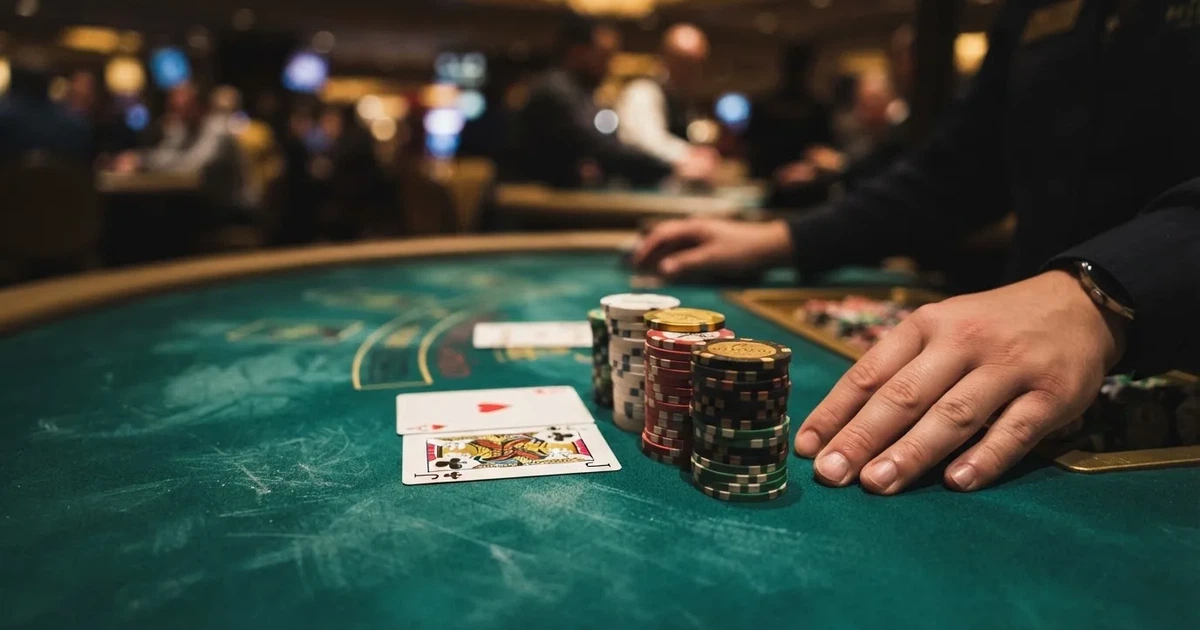
The phrase sounds straightforward. A reader types it, the page answers it, the reader signs up and plays. In Australia, that last step never arrives — not because the technology is missing or the sites are scarce, but because the Interactive Gambling Act 2001 makes the supply of online casino games to anyone physically in Australia a prohibited interactive gambling service. The eleven brands most readers would land on are not licensed here, are not licensable here, and have been formally warned by the ACMA for offering their product to Australian customers anyway. The page below is built around that gap: what the law says, what the regulator has done about it, where the technology behind live dealer play actually comes from, and what an Australian reader can lawfully access instead.
Table of Contents
- Bonuses and Free Spins Tied to Live Dealer Play
- Live Dealer Games, Providers and the Studios Behind Them
- The Brands the ACMA Has Acted Against
- What Australian Law Actually Prohibits
- How the Regulator Enforces the Prohibition
- What That Means for the Person Reading This
- Responsible Gambling Around Offshore Live Dealer Play
- Cryptocurrency, Bitcoin and the Anonymity Question
- Where Live Table Games Are Lawfully Available in Australia
- A Note on Tax
- Frequently Asked Questions
Bonuses and Free Spins Tied to Live Dealer Play
A “live dealer casino welcome bonus” is one of the most heavily marketed phrases in offshore iGaming. Read against Australian law, it does not exist as a legitimate product. The same Interactive Gambling Act 2001 that prohibits the live dealer games themselves also prohibits the marketing inducements attached to them. A bonus advertised on an offshore site and offered to an Australian customer is part of the same prohibited service.

What the bonus actually does, on the rare occasion a reader claims one, is the part the marketing does not lead with. A live dealer bonus is almost never a flat credit. It is a matched percentage with a wagering multiplier, a maximum cashout cap, a list of games that count toward clearing at reduced weight, and a window of days in which the turnover has to happen. Live dealer games typically contribute a smaller percentage of each bet toward the rollover than slots do — often 10% or 20% — because the house edge on a blackjack or baccarat table is lower and the operator has less margin to give back. A player who signs up expecting to clear a bonus on the live tables usually discovers, mid-campaign, that the same dollar wagered clears a fraction of what it would have on slots.
The cost of the bonus, in other words, is paid twice. First in the time it takes to turn it into withdrawable cash; second in the constrained game choice that pushes the player toward the higher-edge products the operator would rather they played. None of that changes the Australian position: the offer itself is part of a prohibited service. A reader who wants to evaluate what a live dealer bonus is worth has to do so knowing they cannot lawfully claim one.
Live Dealer Games, Providers and the Studios Behind Them
Live dealer play is not a separate category of casino game. It is a delivery method. A real dealer sits at a real table in a real studio, cards are dealt or a roulette wheel is spun in physical space, and cameras plus optical character recognition convert what the dealer does into the data the player’s screen shows. The math of baccarat, blackjack or roulette does not change between an online RNG version and a streamed version. What changes is trust — the player sees the shoe being dealt — and pace, which slows to human speed.
Three games dominate the catalogue. Baccarat, blackjack and roulette are described as the most common live dealer games offered by online casinos. Baccarat’s house edge sits at 1.06% on the Banker bet and 1.24% on the Player bet; blackjack under liberal Las Vegas Strip rules holds about 0.28%; and craps, where offered, runs 1.41% on the Pass line. These are the figures that decide what a bonus is actually worth, because the wagering requirement is met in proportion to the edge the house keeps.
The dominant supplier of the tables themselves is Evolution, founded in 2006 and operating more than 700 gambling platforms worldwide as of 2026, streamed from studios 24/7. By 2013 the company had reached 100 live tables at its Riga studios — then the largest single-site casino operation in Europe — before opening a Malta studio the following year. The Evolution group also owns the NetEnt, Red Tiger, Big Time Gaming, Nolimit City and Ezugi game-studio brands, after completing the NetEnt acquisition on 1 December 2020. For an Australian reader the corporate structure is irrelevant to whether the product is lawful; it explains why the same handful of tables and providers turn up on almost every offshore site a search engine returns.
Common Live Dealer Games and House Edge
| Game | Typical House Edge | Key Rule Feature |
|---|---|---|
| Baccarat | 1.06% (Banker) | Fixed drawing rules |
| Blackjack | ~0.28% | Dealer stands on soft 17 |
| Craps | 1.41% (Pass Line) | Pass/Come bet rules |
The Brands the ACMA Has Acted Against
The eleven brands below are not a recommended shortlist. They are the operators the Australian Communications and Media Authority itself has issued formal warnings to for offering prohibited interactive gambling services to people in Australia. Each appears on the ACMA’s published register. None can lawfully take an Australian customer’s deposit.
The table records what the regulator has said, in the regulator’s own words. It does not record bonuses, RTP figures or payout times, because the only sources for those were affiliate marketing pages rather than the operators’ own terms — and because, for Australian readers, the legal status of the offer is what determines whether anything else matters.
Mechanics
| Brand | ACMA action and date | Operator named by the ACMA | Subject support |
|---|---|---|---|
| RocketPlay | Formal warning, March 2026 | Pulsup Ltd (RocketPlay); earlier Dama N.V., May 2022 | — |
| Level Up Casino | Formal warning, May 2022 | Dama N.V. | Listed by BGaming as a hosting partner |
| Woo Casino | Formal warning, March 2025 | Dama N.V. | — |
| Spirit Casino | Formal warning, May 2025 | Dama N.V. | — |
| National Casino | Formal warning, July 2025 | Consolutetish S.R.L. | Noted in industry listings |
| Bizzo Casino | Formal warning, July 2025; earlier 2022 | Consolutetish S.R.L.; earlier TechSolutions Group | — |
| Ignition Casino | Formal warning, July 2025 | Bamboo Media | — |
| Instant Casino | Formal warning, February 2025 | EOD Code SRL | — |
| Jackbit | Formal warning, April 2026 | Ryker B.V. | — |
| Casino Intense | Formal warning, April 2025 | Sterplay Holding Ltd | Coverage notes it alongside land-based operators |
| Sky Crown | Formal warning, September 2022 | Hollycorn N.V. | — |
The first column lists the brand name as it appeared on the ACMA’s notice. The second records the action and date as the regulator published it. The third names the corporate entity the ACMA directed the warning to — sometimes the same operator group has appeared twice under different names, as with RocketPlay’s 2022 Dama N.V. warning and its 2026 Pulsup Ltd warning. The fourth column records only what an outside listing — a provider’s partner page, an industry database, a news report — has reported about each brand’s relationship to live dealer technology; the absence of a mark means no such listing was found, not that the brand does not offer live tables.
What the table does not say is what a reader might want it to say. None of these brands holds an Australian licence; none can lawfully be recommended to an Australian reader; none of them will pay out to an Australian customer through any channel that gives Australian consumer protection. The brand that surfaces from a search is the brand whose entry sits on the regulator’s list, not a service a reader can rely on.
What Australian Law Actually Prohibits
The Interactive Gambling Act 2001, strengthened by the Interactive Gambling Amendment Act 2017, makes it an offence to provide online casino games, online pokies or in-play betting to a person in Australia. No state or territory issues a licence for those products. What is licensable is wagering on races and sport placed before the event, lotteries and keno — in practice licensed by the Northern Territory, where the Northern Territory Racing and Wagering Commission oversees 52 of Australia’s online bookmakers, including Sportsbet, Bet365 and Ladbrokes, despite having no full-time staff and meeting once a month in Darwin. Live dealer blackjack, live dealer roulette and live dealer baccarat are not on that list.
The Interactive Gambling Amendment (Gambling Reform) Bill 2026 passed Parliament on 19 August 2026; its advertising and inducement measures commence 1 January 2026. On a 2026 page, that is law with a start date, not yet in force. The baseline prohibition has been in place since 2017.
How the Regulator Enforces the Prohibition
The ACMA investigates, issues formal warnings, and directs Australian internet service providers to block illegal sites. As of June 2026, the regulator had asked ISPs to block 1,751 illegal gambling and affiliate marketing websites since the first blocking request in November 2019. In the round reported on 26 June 2026, 12 more sites joined the list: 7Signs, ChromaBet, Donbet, Duospin, Freshbet, Slots Gem, Jacks Club, Lucky Start, Pointsbetz, Spinrise, Vinyl Casino and Wildsino. The blocking-rate from the November 2019 first request through the June 2026 total of 1,751 sites works out at an average of roughly 260 sites blocked per year, or close to one site every working day. The rate has not been constant: enforcement strengthened in 2017, and the most recent round of twelve suggests the pace is if anything accelerating, with more sites named in single rounds than were named across entire years earlier in the register’s history.
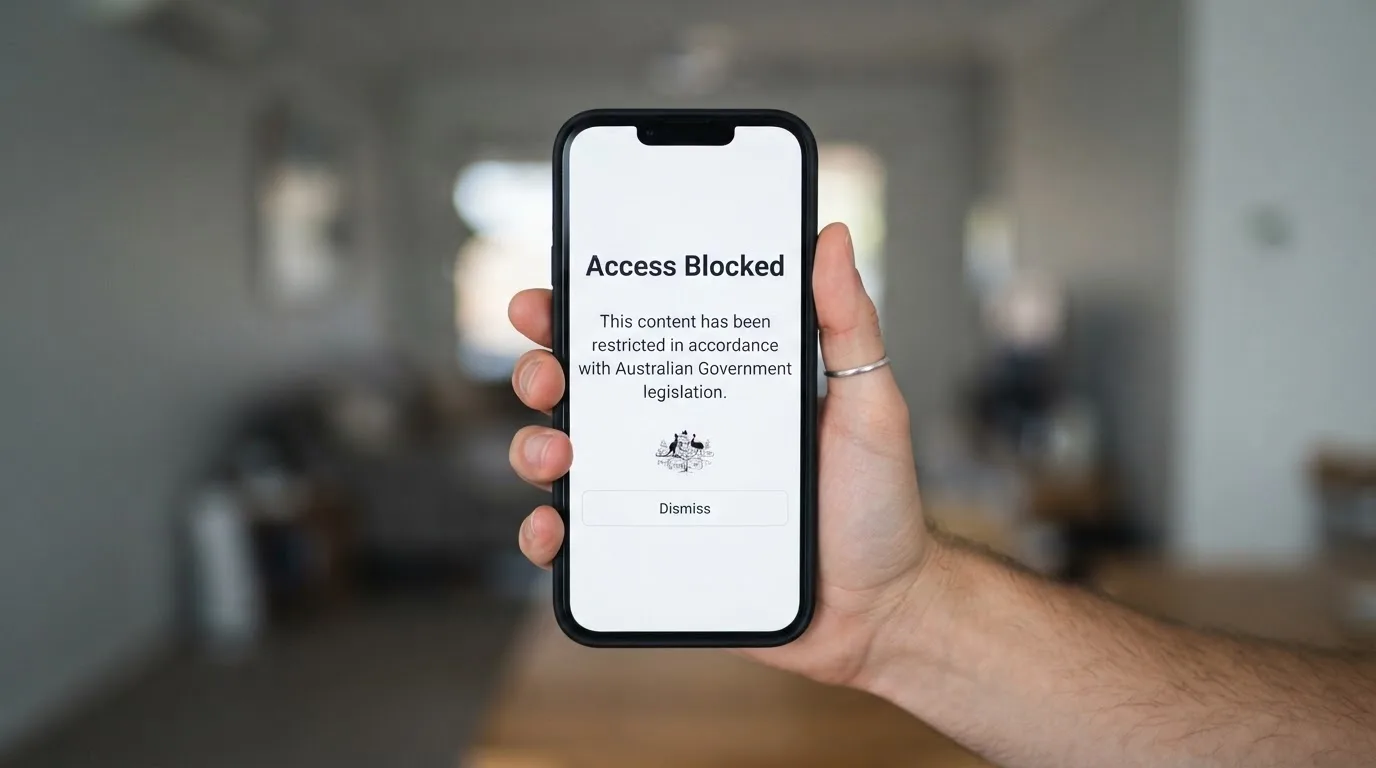
The register is not the only measure. More than 230 unlicensed gambling services have left the Australian market since enforcement was strengthened in 2017. The exit is voluntary at the operator end, but the pressure behind it is not — formal warnings and blocking requests are what makes staying uneconomic.
H2 Gambling Capital’s 2026 report estimates Australians lose about A$3.9 billion a year to illegal gambling sites, and the share of gambling going through legal channels fell from 74% in 2021 to 64%. Those two figures together describe the gap the regulator is trying to close: a market the size of a small federal budget, more than a third of which currently sits outside Australian consumer protection.
The formal warnings themselves follow a pattern worth recording. The ACMA has issued multiple warnings to the same operator groups under different corporate names. Dama N.V. was warned in May 2022 over six brands — Bambet, Dazard, Level Up, Rocketplay, Wild Tornado and Cobra Casinos — and then again in March 2025 over Woo Casino and in May 2025 over Spirit Casino. RocketPlay surfaced again in March 2026 under Pulsup Ltd. In July 2025 the regulator warned Bamboo Media over Ignition Casino and Consolutetish S.R.L. over National Casino and Bizzo Casino; Bizzo had already been the subject of a 2022 formal warning to TechSolutions Group. In February 2025 the ACMA warned EOD Code SRL over Instant Casino, in April 2025 Sterplay Holding Ltd over Casino Intense, in April 2026 Ryker B.V. over Jackbit and CasinOK, and Hollycorn N.V. over Sky Crown and Blue Leo in September 2022.
What That Means for the Person Reading This
The individual player is not prosecuted. The IGA targets the provider. That asymmetry matters because it is the reason offshore sites can keep marketing to Australians: the consequence falls on the operator’s licence status in another jurisdiction, not on the person who clicked through. What falls on the player is the absence of recourse. An offshore site gives no Australian consumer protection, no complaints body and no path through the courts if a withdrawal is refused. The site can be blocked by an ISP while a balance is still on the account, and the player has nowhere to complain about the lost funds.
BetStop, the National Self-Exclusion Register, has been live since August 2023 and binds Australian-licensed online and phone wagering services. An offshore casino is not connected to it, so a person who has registered with BetStop and then opened an account with one of the brands above has not actually self-excluded from that account. The National Gambling Helpline on 1800 858 858 is free, 24/7, with chat at Gambling Help Online; that service is the channel that reaches Australians regardless of where the gambling account sits.
Responsible Gambling Around Offshore Live Dealer Play
The responsible-gambling framework Australians are entitled to assume exists — self-exclusion registers, complaints bodies, mandatory deposit limits, advertising rules — is built around Australian-licensed wagering services. Offshore live dealer casinos sit outside that framework by design. A site that has already been formally warned for offering prohibited services to Australians is not a site that has agreed to Australian harm-minimisation rules.
The instruments that do apply work as follows. BetStop binds only Australian-licensed online and phone wagering services; an offshore casino is not required to honour a BetStop registration and has no mechanism to check one. The National Gambling Helpline (1800 858 858) and Gambling Help Online are the front line, free and available 24/7. Payment-level protections are stronger than account-level ones: credit cards, credit-related products and digital currency are banned as payment for licensed online wagering since 11 June 2024, with penalties up to A$247,500 for operators that take them. Legal deposit routes for licensed wagering are debit card, bank transfer, PayID, Osko and BPAY. A site asking an Australian customer for a credit card or a crypto deposit is, by that fact alone, operating outside the Australian rules.
The minimum age for any form of Australian-licensed gambling is 18. Offshore sites do not enforce an Australian age check.
Cryptocurrency, Bitcoin and the Anonymity Question
The phrase “live dealer bitcoin casino” implies a service that handles crypto deposits, processes them anonymously, and pays out in the same currency. The deposit side of that arrangement is what makes it attractive to readers specifically searching for it — and the part of it the Australian framework addresses directly.
Since 11 June 2024, digital currency has been banned as a payment method for Australian-licensed online wagering. Penalties for operators that take crypto from Australian customers reach A$247,500. An offshore live dealer site that advertises Bitcoin or other cryptocurrency deposits to Australian readers is operating outside the Australian rules by that single fact. The “anonymity” the search phrase implies is, in the Australian context, the absence of the consumer protections that come with a regulated payment rail: no chargeback rights through an Australian bank, no recourse if the operator disappears, no transaction record an Australian court can act on.
On a 2026 page, that is the answer to the crypto question for Australian readers: a live dealer casino that takes Bitcoin is a live dealer casino that cannot lawfully serve an Australian customer.
Where Live Table Games Are Lawfully Available in Australia
Live table games are not unavailable in Australia. They are unavailable online. Crown Melbourne offers three baccarat variants — Traditional Baccarat, Crown Baccarat and 2 to 1 Baccarat — as approved table games regulated by the Victorian Gambling and Casino Control Commission, which replaced the VCGLR as Victoria’s casino regulator on 1 July 2022. Under section 66 of the NSW Casino Control Act 1992, a casino operator must not permit a game such as baccarat to be played unless the game and its rules are approved by the regulator, and the operator must make a copy of the approved rules available to patrons on request. In Victoria, the Casino Control Act 1991 requires the VGCCC to approve any rules for table games, including blackjack, and any change to those rules, before they are introduced at the Melbourne casino.
The VGCCC’s own public log records the kind of changes the regulator signs off: renaming Crown Melbourne’s “Perfect Pairs” blackjack side bet to “Crown Pairs” on 23 December 2024, and introducing a “Free Bet” option with a new “Pot of Gold” side bet on 25 March 2024. Those are the live dealer rule changes that happen inside the Australian regulatory frame.
Outside the licensed casino floors, the Australian-licensed online wagering market offers sports and race betting before the event, lotteries and keno. None of those is a live dealer casino game. The online equivalent of sitting at a Crown Melbourne baccarat table does not exist under an Australian-issued licence.
A Note on Tax
Gambling winnings of a recreational player are not assessable income under section 6-5 of the ITAA 1997, and losses are not deductible, unless the person carries on a business of gambling. That rule is the same for winnings on a licensed wagering account, on a lottery ticket, or at a land-based casino. It does not change the legal status of an offshore live dealer account: the account is still operating in breach of the IGA. It does mean the reader who is choosing between lawful and unlawful play does not face a different tax outcome either way.
Frequently Asked Questions
How many live tables did Evolution operate from its Riga studios by 2013?
Evolution reached 100 live tables at its Riga studios by 2013, then the largest single-site casino operation in Europe; the company opened a Malta studio the following year.
Does a live dealer casino accept cryptocurrency deposits?
Offshore live dealer casinos frequently advertise Bitcoin and other cryptocurrency deposits; since 11 June 2024 digital currency has been a banned payment method for Australian-licensed online wagering, with penalties up to A$247,500 for operators that take it.
Is it legal for a live dealer casino to accept Australian players?
No — providing online casino games, including live dealer blackjack, roulette or baccarat, to a person in Australia is a prohibited interactive gambling service under the Interactive Gambling Act 2001, and no state or territory issues a licence for it.
What responsible-gambling tools should a live dealer casino site provide?
Australian-licensed wagering sites must connect to BetStop and accept the National Gambling Helpline on 1800 858 858; offshore live dealer sites sit outside both frameworks, so a self-exclusion registered through BetStop does not bind them.
What is usually attached to a live dealer casino welcome bonus?
Offshore welcome bonuses typically carry a wagering multiplier, a maximum cashout cap, a time window, and reduced contribution rates for live dealer games; in Australia the offer itself is part of a prohibited service and cannot lawfully be claimed.
Can Australians find a shortlist of licensed live table games anywhere other than online?
Yes — licensed live table games are available at land-based casinos such as Crown Melbourne, which offers three approved baccarat variants under VGCCC oversight, and at other licensed Australian casino venues regulated under state Casino Control Acts.