
Live Baccarat Online Casino Australia in 2026: What the Table Actually Costs the Punter
Current as of 8 November 2026 and reconciled against the Australian Communications and Media Authority (ACMA) register of formal warnings and website-blocking requests.
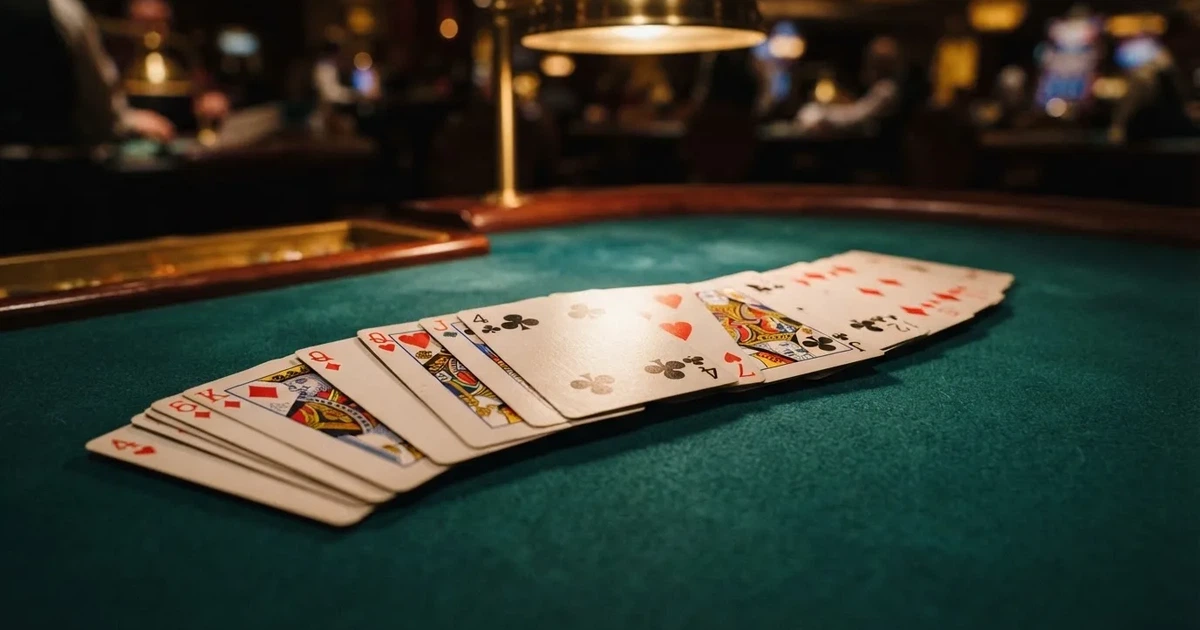
Every brand on the Australian side of this market — licensed wagering operators aside — is showing Australian residents a product the Interactive Gambling Act 2001 makes it an offence to supply. A live baccarat table streamed to a person physically in Australia sits inside that prohibition the same way a computer-generated one does, and the ACMA’s formal-warning register makes the point without ambiguity. Reading the page any other way than that is reading it wrong.
What the page is worth is the part no marketing page tells you. The mechanics of a Banker, Player and Tie wager. The way a live-dealer shoe actually runs, hand after hand, in roughly forty seconds. The reason the only bet worth a long look carries a 1.06 percent house edge, and the reason the Tie at 14.36 percent is the closest thing to a donation the table offers. And what the ACMA’s blocking rate over the last six years — twenty-eight or so blocking requests since November 2019 — means for any balance a player leaves on an offshore site when the next round of blocks lands.
Table of Contents
- How live baccarat actually plays, and why a real dealer changes very little
- The paytable in plain language
- Where the game comes from
- What a session at the table looks like in practice
- Why the live-dealer version is the same product in a different wrapper
- Crypto funding and the PayID route, and why neither turns an illegal site legal
- The ACMA blocking rate and what the numbers say
- How the Interactive Gambling Act 2001 actually works
- What an offshore site does and does not give a player
- Responsible play on a fast-dealing table
- The brands the ACMA has acted against
- What an Australian player has, and what an offshore site takes away
- Frequently Asked Questions
How live baccarat actually plays, and why a real dealer changes very little
Live baccarat is punto banco dealt out of a six- or eight-deck shoe by a person rather than by a random number generator. The paytable is identical to the computer-generated version of the same name: even money on a winning Banker or Player bet (with a five percent commission clipped off Banker wins), eight to one on a winning Tie. Cards two through nine count at face value, ten and the face cards count as zero, aces count as one, and any hand total above nine is read modulo ten, so a seven and a six running together land on a three rather than a thirteen. A player who has watched a digital version of the game for ten minutes has seen every rule the live version follows.

What changes is the cadence. A live table deals a hand roughly every forty seconds once betting closes, which means a player who settles in for an hour at the table will sit through somewhere around ninety hands. The pace is the difference that matters. A session limit set before the stream starts is the difference between a planned evening and a quiet, expensive one — and most offshore sites will not set it for you.
The paytable in plain language
A live baccarat interface gives three main bets, plus a small set of side wagers the table does not require anyone to make. The numbers behind the three core wagers are the same on every legal or illegal version of the game.

| Bet | Payout | House edge |
|---|---|---|
| Banker | 1:1, less a 5% commission on winning bets | 1.06% |
| Player | 1:1 | 1.24% |
| Tie | 8:1 | 14.36% |
Source: Wizard of Odds house-edge table, 18 September 2026.
Banker wins slightly more often than Player because the drawing rule activates one card earlier on the Banker side, and the commission is the casino’s compensation for that edge. A Banker bet is the closest thing to a flat wager the table offers. Player is close behind. The Tie at 14.36 percent is, statistically, the worst standard bet on any common casino table — it pays eight to one, but it loses more often than any other main wager, and over a ninety-hand session the gap between Banker and Tie is the difference between a workable night and a write-off.
Where the game comes from
The game’s ancestry is contested. The most cited account puts baccarat in nineteenth-century France; another places it in fifteenth-century Italy, introduced under King Charles VIII, with the French card writer David Parlett treating Macao as the immediate precursor. The form most people play today — punto banco — was developed in Havana in the 1940s, with the casino banking the game at all times and both hands played out by fixed drawing rules rather than by player choice. Chemin de fer, the French word for “railway,” is a two-player variant that emerged from baccarat banque in the late nineteenth century and is named for being quicker than the game it grew out of.
None of that history changes the math. It explains why a single banker-and-player paytable structure has survived two centuries and three continents: the drawing rules are fixed, the casino banks every hand, and there is no strategy layer for a player to find or fail to find. The only choice a player actually makes is which of three bets to place, and the answer to that choice is in the table above.
What a session at the table looks like in practice
A punter who walks into a live baccarat lobby and bets A$10 a hand on Banker for an hour sits through roughly ninety hands. The expected cost of that session is the house edge times the total amount staked: ninety hands times A$10 is A$900 in total wagers, and at the Banker edge of 1.06 percent the expected loss is about A$9.50. That is the median outcome of a long run of identical sessions — the average across thousands of identical hours, not a guarantee for any one of them. A single hand of baccarat resolves in well under a minute once the dealer starts, and variance dominates anything that looks like an evening’s pattern.
For perspective, a blackjack hand at the same A$10 stake plays for a longer decision time per hand and runs at about 0.28 percent under liberal Las Vegas Strip rules — roughly a quarter of the edge. A craps pass-line bet sits at 1.41 percent, craps don’t-pass at 1.36 percent, and a craps Any Seven wager at 16.67 percent is the only standard casino bet with a worse expected cost than a Tie in baccarat. Across the three games Australians most often see on a live lobby, baccarat sits between blackjack and craps on the cost scale when a player sticks to Banker, and at the bottom of the cost scale the moment a player wanders onto Tie or any of the side bets the shoe offers.
Why the live-dealer version is the same product in a different wrapper
A computer-generated baccarat game and a live-dealer baccarat game run off the same mathematics, hand after hand. The shoe of cards does not change: six or eight decks, dealt from a wooden box, with the dealer exposing one card at a time in the order the fixed drawing rules dictate. The only thing a live dealer adds is a human being turning the cards over and announcing the result, plus a chat box that almost no Australian-resident player should treat as a feature that makes the game any safer.
Three practical differences are worth flagging, and none of them changes the cost of playing.
- Speed. A digital table deals about two hundred hands an hour, a live table about ninety. The slower pace is the friendlier one for a player who is setting a budget by hand count.
- Side bets. Live lobbies usually offer a fuller side-bet menu than digital lobbies — pairs, dragon bonus, big and small — and every one of those bets carries a higher house edge than the main three. The marketing pages call them optional. They are.
- Visual confirmation. The shoe and the cards are visible on the stream, which gives a player the same confirmation a casino floor gives. The illusion of seeing the game run fairly does not translate into any legal protection on an offshore site.
Crypto funding and the PayID route, and why neither turns an illegal site legal
Two funding routes come up repeatedly in searches for live baccarat in Australia: PayID, which is the real-time bank-to-bank transfer system that runs over the Osko network, and bitcoin. Neither changes the legality of the underlying transaction.
A bitcoin-funded live baccarat table runs the same dealt cards as a card-funded one. The shoe is dealt, the hands resolve, the player wins or loses, and the wallet on the other end settles in BTC at whatever the moment’s exchange rate is. The dealer never sees a bitcoin address. The casino never touches a bitcoin wallet. The player still places a Banker, Player or Tie wager, and the house edge on that wager is unchanged.
PayID is different in one specific way: it sits inside the Australian payments system, and it is one of the four deposit routes the licensed Australian wagering industry is permitted to take. The other three are debit card, BPAY and direct bank transfer. What PayID is not permitted for is funding an online casino account, because no online casino is licensed to take Australian customers. A PayID deposit to an offshore baccarat site routes through an Australian bank account into a payment processor the licensed wagering industry does not use, and the bank that holds the originating account is not required to flag the transaction as a problem. The transfer still settles, and the balance still sits in an account the ACMA has, in most of the cases on this page, already written to the operator about.
Credit cards and credit-related products are banned as a payment method for licensed online wagering in Australia since 11 June 2024, with penalties of up to A$247,500 for any operator that takes one. Digital currency is banned the same way. A site asking for either is operating outside the rules the licensed industry follows, which is consistent with a site offering a product the IGA prohibits in the first place.
The ACMA blocking rate and what the numbers say
The Australian Communications and Media Authority has been directing internet service providers to block illegal gambling and affiliate-marketing websites since November 2019. The running total by the round reported on 26 June 2026 was 1,751 websites blocked across the roughly six-and-a-half-year window, alongside more than 230 unlicensed services that have left the Australian market since enforcement was strengthened in 2017.
Working out the rate is the page’s one piece of arithmetic. With 1,751 domains blocked since November 2019 — roughly eighty months — the ACMA has directed the blocks at a pace of about twenty-two websites a month on the long-run average. That figure is a band, not a single number: blocking rounds cluster in batches of five to fifteen names when the regulator runs one, and stretches of months can pass between rounds. Treating the figure as a flat monthly rate overstates the predictability; treating it as a one-off event understates how often the next round lands.
The round reported on 26 June 2026 covered twelve websites: 7Signs, ChromaBet, Donbet, Duospin, Freshbet, Slots Gem, Jacks Club, Lucky Start, Pointsbetz.com, Spinrise, Vinyl Casino and Wildsino. That is a single batch on top of the running total; the long-run figure is the one that says something about how often a player who has money on an offshore site wakes up to find the site unreachable. The answer is: often enough that treating the balance as if the site will be there next month is the wrong assumption.
How the Interactive Gambling Act 2001 actually works
The federal Interactive Gambling Act 2001, as tightened by the Interactive Gambling Amendment Act 2017, makes it an offence to provide online casino games, online pokies or in-play betting to a person physically in Australia. No state or territory licenses those products. What is licensed in Australia is wagering on races and sporting events placed before the event begins, lotteries, and keno — and the bulk of the online wagering operators that take Australian customers are licensed by the Northern Territory Racing and Wagering Commission (NTRWC), the territory regulator that handles fifty-two of the country’s online bookmakers, including Sportsbet, Bet365 and Ladbrokes. The NTRWC has no full-time staff and meets once a month in Darwin.
The penalties for a corporation that supplies a prohibited interactive gambling service to an Australian resident run to A$1.1 million a day. The individual penalty runs to A$220,000 a day. The individual player is not the target — the IGA aims at the supplier — but the practical consequence is that no Australian consumer protection regime applies to a complaint against an offshore casino. There is no Australian complaints body, no recourse through the Australian Financial Complaints Authority, and no guarantee that a withdrawal request will be honoured if the site decides not to. H2 Gambling Capital’s 2025 estimate is that Australians lose about A$3.9 billion a year to illegal gambling sites, and that the share of gambling going through legal channels fell from 74 percent in 2021 to 64 percent.
The Interactive Gambling Amendment (Gambling Reform) Bill 2026 passed Parliament on 19 August 2026. Its advertising and inducement measures commence on 1 January 2027 — law with a future start date, not a rule in force on a 2026 page.
What an offshore site does and does not give a player
Three things an offshore site does not give an Australian resident, and one thing it does.
It does not give BetStop coverage. The National Self-Exclusion Register has been live since August 2023, and it binds every Australian-licensed online and phone wagering service. An offshore casino is not connected to it, which means a player who has self-excluded from a licensed Australian bookmaker can still place a bet on an illegal baccarat site the same afternoon. The register’s effectiveness stops at the Australian border.
It does not give recourse on a stuck withdrawal. An Australian-licensed operator sits inside a complaints regime. An offshore site sits inside whatever dispute resolution the operator’s own terms page describes, which is usually none.
It does not give stability. Twenty-two websites a month, on the long-run ACMA blocking rate, is the pace at which Australian-resident-facing sites become unreachable. A balance sitting in an account the next morning is a balance the player may not be able to move for a week.
What it does give is access to a live baccarat table that the licensed Australian industry is not permitted to offer. That is the one thing the law does not let a player get legally, and the one thing every site on the ACMA’s formal-warning register is offering anyway.
Responsible play on a fast-dealing table
The cadence is the risk a player has to manage. Ninety hands an hour is roughly one hand every forty seconds, which is faster than a blackjack table and far faster than roulette. A player who sits down without a session limit and bets by instinct will run through a budget faster than the same player would at a slower game.
Five rules the table itself does not enforce.
- Set a session loss limit before the stream opens, and stop at it without renegotiating.
- Set a session time limit by hand count — fifty hands, one hundred hands, whatever the budget supports — and stop on the hand before the next one would start.
- Bet Banker. The 1.06 percent edge is the lowest on the table, and the five percent commission on Banker wins is the cost of holding that edge.
- Avoid the Tie. The 14.36 percent edge is one of the worst standard bets in any casino game.
- Avoid side bets. Pairs, dragon bonus and the rest carry higher house edges than the main three and exist to lift the table’s hold, not the player’s return.
The National Gambling Helpline is 1800 858 858, free, twenty-four hours a day, with chat at Gambling Help Online. The minimum age for any form of gambling in Australia is eighteen.
The brands the ACMA has acted against
The list below is not a ranking. Each brand appears because the ACMA itself issued a formal warning under the Interactive Gambling Act 2001 over it for offering prohibited services to Australians. The formal warning register is the ACMA’s own publication, and the warnings carry the operator name and the date as the regulator recorded them. No bonus terms are listed for any brand, because the only sources for those terms were affiliate marketing pages, which are not evidence a reader can rely on.
The columns that follow carry the facts research backs and no others. Where research carries no figure for a cell, that cell takes an em dash.
| Brand | ACMA action and date | Operator named by the ACMA | Subject support |
|---|---|---|---|
| RocketPlay | Formal warning, March 2026; earlier warning to a different operator over the same brand, May 2022 | Pulsup Ltd (Rocketplay.com.au); Dama N.V. | — |
| Level Up Casino | Formal warning, May 2022 | Dama N.V. | — |
| Woo Casino | Formal warning, March 2025 | Dama N.V. | — |
| Spirit Casino | Formal warning, May 2025 | Dama N.V. | — |
| National Casino | Formal warning, July 2025 | Consolutetish S.R.L. | — |
| Bizzo Casino | Formal warning, July 2025; earlier warning to a different operator, 2022 | Consolutetish S.R.L.; TechSolutions | — |
| Ignition Casino | Formal warning, July 2025 | Bamboo Media | — |
| Instant Casino | Formal warning, February 2025 | EOD Code SRL | — |
| Jackbit | Formal warning, April 2026 | Ryker B.V. | — |
| Casino Intense | Formal warning, April 2025 | Sterplay Holding Ltd | — |
| Sky Crown | Formal warning, September 2022 | Hollycorn N.V. | — |
Sources: ACMA formal-warning register; en.wikipedia.org listings.
RocketPlay
The ACMA wrote to Pulsup Ltd over Rocketplay.com.au in March 2026, and earlier wrote to Dama N.V. over the same brand in May 2022 as part of a six-brand batch that included Bambet, Dazard, Level Up, Wild Tornado and Cobra Casinos. Two warnings from the same regulator, four years apart, over the same brand, are two pieces of paper pointing at the same problem. There is no Australian licence an offshore operator can show that makes a live baccarat table lawful for an Australian resident, and the ACMA has now said so twice on the same name.
Level Up Casino
Level Up Casino was one of the six Dama N.V. brands the ACMA named in May 2022. The formal warning is a public document; the operator response is not, and the regulator does not publish a follow-up if the brand drops Australian customers. The practical effect of a 2022 warning that has not been followed by further action is that the regulator has moved on to other names, and the site is still showing a live baccarat lobby to anyone who can reach it.
Woo Casino
The ACMA wrote to Dama N.V. over Woo Casino in March 2025, and wrote again to the same operator over Spirit Casino in May 2025. Two warnings, two months apart, to the same operator, are a regulator signalling that the operator has not stopped what it was warned about. The published register does not say whether Dama N.V. responded, but it does say the warning was issued.
Spirit Casino
Spirit Casino is the second of the two Dama N.V. warnings in 2025. The pattern of two warnings, two months apart, over different brands owned by the same operator is the ACMA’s way of telling the operator that the previous warning did not produce a result. There is no published record of a third warning, but there is also no published record of the operator leaving the Australian market.
National Casino
The ACMA wrote to Consolutetish S.R.L. over National Casino in July 2025. The same letter covered Bizzo Casino, which is the second formal warning tied to Bizzo Casino since 2022 — the first went to TechSolutions (CY) Group Limited and TechSolutions Group N.V. A second formal warning to a different operator over the same brand in three years is the regulator’s clearest signal that the brand keeps finding a way to keep showing Australian residents a live baccarat table.
Bizzo Casino
Two formal warnings on the same brand is a clear signal: the ACMA named TechSolutions in 2022 and Consolutetish S.R.L. in 2025, and the brand has changed hands between warnings without changing what it offers to Australians. A player who finds the brand easy to reach and assumes that means it is lawful is reading the wrong register.
Ignition Casino
The ACMA wrote to Bamboo Media over Ignition Casino in July 2025, the same month as the Consolutetish S.R.L. letter. Two operators, one month, two formal warnings — that is the regulator’s mid-2025 cadence, and a player reading the register in real time sees the regulator running at a faster pace than the long-run average of twenty-two blocks a month would suggest.
Instant Casino
The ACMA wrote to EOD Code SRL over Instant Casino in February 2025. The pattern of a single formal warning without a follow-up is the regulator’s signal that the operator has either stopped Australian-facing activity or has not done enough to draw a second warning. The published register does not distinguish between the two.
Jackbit
The ACMA wrote to Ryker B.V. over Jackbit in April 2026, and the same letter covered CasinOK. Two brands on one letter is a regulator batching its work, and a player reading the register should read the letter as one action against one operator, not two actions against two brands.
Casino Intense
The ACMA wrote to Sterplay Holding Ltd over Casino Intense in April 2025. Single warning, single brand, single operator — the standard shape of the register entry when the regulator has not had to write to the same operator before.
Sky Crown
The ACMA wrote to Hollycorn N.V. over Sky Crown, and the same letter covered Blue Leo Casino. The Hollycorn letter dates to September 2022, which makes it the oldest formal warning on this list, and the only one where the register does not record a follow-up. The long gap between a warning and any further action is not the same as a clearance: the ACMA does not publish a “no further action” notice, and an unresolved 2022 warning is still an unresolved 2022 warning.
What an Australian player has, and what an offshore site takes away
The licensed Australian wagering industry offers a defined set of products: sports and race wagering placed before the event, lotteries and keno. It does not offer live baccarat. That is the gap an offshore site fills, and the gap the Interactive Gambling Act 2001 was written to keep closed.
What an Australian-licensed operator gives that an offshore site does not:
- BetStop coverage on every wagering service the operator runs, which an offshore site is not connected to.
- A complaints route through the Australian Financial Complaints Authority or the relevant state regulator.
- The right to a written explanation when a withdrawal is held, and a body to complain to when the explanation is unsatisfactory.
- A deposit route that is itself licensed — debit card, bank transfer, PayID/Osko and BPAY — without the player having to fund the account with a credit card or crypto, both of which are banned as payment for licensed wagering.
What an offshore site takes away, at the moment a player needs it:
- The block rate. Twenty-two websites a month on the long-run ACMA average is the pace at which a balance becomes unreachable.
- The complaint route. An offshore operator is outside the Australian regulatory perimeter, and the player’s only recourse is the operator’s own terms page.
- The protection regime. The licensed industry’s responsible-gambling controls do not bind an offshore site, because the site is not licensed.
A player who is going to play on an offshore site anyway has to weigh those losses against the one thing the licensed industry does not give: a live baccarat table. The arithmetic favours playing somewhere the IGA does not prohibit, but the IGA’s prohibition is exactly what makes the licensed alternative unavailable for the game the player is searching for.
Frequently Asked Questions
Is it legal to play live baccarat for real money at an online casino in Australia?
No. The Interactive Gambling Act 2001 makes it an offence for an offshore operator to provide a live baccarat stream to a person physically in Australia; the IGA targets the supplier, not the individual player, but the site itself is unlawful. BetStop does not cover offshore casinos, and an offshore operator gives no Australian consumer protection on a stuck withdrawal.
How does a live-dealer baccarat table differ from a computer-generated version?
The mathematics is identical: the same six- or eight-deck shoe, the same drawing rules, the same paytable, and the same house edge of 1.06 percent on Banker and 1.24 percent on Player. A live table deals about ninety hands an hour against roughly two hundred for a digital version, and most live lobbies carry a fuller side-bet menu at higher house edges than the main three wagers.
Does a bitcoin-funded live baccarat table use a different card-dealing process?
No. The shoe is dealt in the same way, by a live dealer, with the same drawing rules and the same paytable. The only thing that changes is the payment rail: the player funds the account in bitcoin, and the winnings settle to a bitcoin wallet at the moment’s exchange rate. The cards do not know what currency the player used to buy in.
What is the difference between betting on Banker, Player and Tie in baccarat?
A winning Banker bet pays one to one minus a five percent commission and carries a 1.06 percent house edge. A winning Player bet pays one to one with no commission and carries a 1.24 percent house edge. A winning Tie bet pays eight to one and carries a 14.36 percent house edge, making it one of the worst standard bets on any common casino table. Banker is the closest thing to a flat wager the table offers.
Can a live baccarat session be joined mid-shoe, or only at the start?
A live baccarat table accepts new players at any point in the shoe. The hands are dealt by fixed drawing rules rather than by player choice, so a player joining at hand forty of a shoe has the same edge as a player who has been on the table since hand one. The only cost of joining late is the time a player has already spent watching.
How fast do consecutive hands typically run at a live baccarat table?
Roughly forty seconds per hand once betting closes, which works out to about ninety hands an hour. That is the cadence a session limit needs to be set against: a player who plans a fifty-hand session is planning just over half an hour at the table, and the budget needs to match.