
An Australian’s live roulette stream in 2026: the wheel, the warning list, and the rail you put the money on
Data current as of 29 October 2026 · cross-checked against the ACMA’s published formal-warning register.
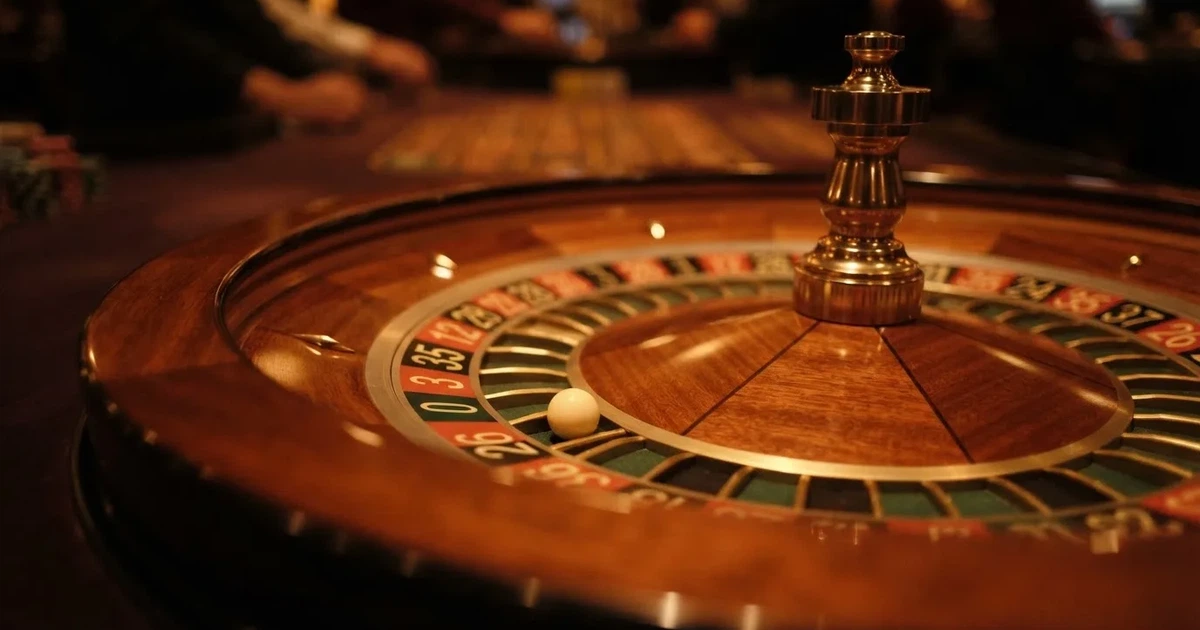
A live roulette wheel streamed to a laptop in Sydney is, in the eyes of the Interactive Gambling Act 2001, exactly the same product as a virtual reel slot on the same screen — both are prohibited interactive gambling services, both fall under the same ACMA enforcement, and both leave the player outside the consumer protection a licensed wagering service is required to carry. The stream changes what the player sees; it does not change the legal frame around what they are doing, what they are paid in, or what happens when the operator decides not to pay them out.
That frame is the spine of what follows. The sections ahead work outward from it: the payments rail an offshore site actually offers an Australian, the maths of the wheel the dealer is spinning, the eleven brands the ACMA has formally warned over offering live roulette to Australian residents, the rule that makes each of those warnings a live one, the human-arithmetic trap the live-dealer feed is built to exploit, and the bitcoin rail that takes the bank out of the loop entirely. None of those pieces stand alone; together they describe what the product is, what it costs, and when the cost actually arrives.
Table of Contents
- How a live-roulette payout actually reaches an Australian account
- The roulette paytable: wheels, house edges, and what each bet pays
- The fundamentals of the ACMA warning register: how brands land on it
- What a “live roulette casino” actually delivers to an Australian screen
- The prohibition under the Interactive Gambling Act, and what “live roulette” actually means in it
- The arithmetic of watching a wheel: where pattern-thinking loses
- Bitcoin at the live table: same wheel, different rail
- The eleven brands in detail
- The blocking rate, in one band
- What this all comes down to for an Australian player in 2026
- Frequently asked questions
How a live-roulette payout actually reaches an Australian account
PayID and Osko are marketed as if they were a guarantee of near-instant deposits and withdrawals — and on an Australian-licensed bookmaker, they mostly are. The transfer clears through the New Payments Platform, the operator’s bank is a real Australian counterparty, the operator is bound by the Australian consumer-protection regime it is required to belong to, and a complaint can be escalated through the independent dispute-resolution body that sits outside both the operator and the regulator. None of that is true on an offshore live-roulette site, even when the deposit page shows a PayID logo.
The actual rail on the offshore side goes through one of three paths: a Visa or Mastercard debit card issued outside the credit-card ban, an e-wallet intermediary that converts the player’s Australian dollars into a currency the operator’s bank will accept, or — increasingly — a digital currency route that the IGA’s 11 June 2024 ban specifically excludes from licensed wagering. “PayID” on a live-roulette deposit page is usually a brand word rather than a rail; the underlying transfer takes hours longer, clears through an intermediary the player never sees, and carries a fee that nobody quotes on the deposit screen.
The consequence is the bit that does not show on the deposit confirmation. A withdrawal from an offshore live-roulette site passes through the same review process every other offshore casino withdrawal passes through: identity re-checks, source-of-funds requests, “bonus abuse” reviews, and an internal hold period that runs longer than any term a marketing page quotes. A player who expected PayID’s near-instant turnaround and got a seven-day review is not in the wrong product — the product was always this one; the marketing just used different language.
The other consequence is the one the deposit confirmation will never carry. The same ACMA direction that blocks the website can, and has, left the player with a balance they cannot withdraw because the wallet is no longer reachable. The 12 sites blocked in the round reported on 26 June 2026 — 7Signs, ChromaBet, Donbet, Duospin, Freshbet, Slots Gem, Jacks Club, Lucky Start, Pointsbetz.com, Spinrise, Vinyl Casino and Wildsino — were not chosen at random; they were the ones offering prohibited services to Australians at that moment, and any balance a player held on them was, from the block date, behind a paywall the player cannot pay.
Two practical rails, then, for someone holding a balance with an offshore live-roulette brand:
- For a debit-card deposit, the only Australian counterparty is the player’s own bank. A chargeback request can be lodged for “services not received” if the site stops responding or is blocked mid-session. Banks vary on this; the path is real, not guaranteed.
- For a crypto deposit, the rail moves the moment the wallet confirms the transaction. There is no chargeback, no bank intermediary, no Australian consumer protection. Recovery depends entirely on what the operator chooses to do.
What follows takes those rails as a fixed point and works through what is being paid for, and what is being risked, on top of them.
The roulette paytable: wheels, house edges, and what each bet pays
The wheel the dealer is spinning is the only part of a live-roulette stream the marketing cannot rewrite, because it is mechanical. Three configurations matter, and the difference between them is the difference between three distinct products with three distinct house edges — products the player pays for, spin by spin, at exactly the rate the wheel charges.
A single-zero (European) wheel has 37 pockets — numbers 1 through 36 and a single 0. Every bet pays out at the same odds whether the player bets on a single number, on red or black, or on a column; the house keeps its edge through the presence of the zero, on which every wager except a bet placed specifically on it loses. That gives a house edge of 2.70% on every bet. A double-zero (American) wheel adds a 00 pocket for 38 in total, and the house edge rises to 5.26% — almost exactly double. The triple-zero variant that has spread in some American venues since 2016 adds a 000 for 39 pockets and a 7.69% house edge; some Australian-facing live streams carry this variant under the same brand as a single-zero table.
These numbers are mechanical, not negotiable, and they are the only house-edge figures that survive a marketing review. A “low house edge” tag on a double-zero table is an error; a “European rules” tag on a wheel with 00 and 000 is a lie a reader can verify at the table. The version that matters to the player’s expected loss is the one printed on the felt — and the felt on a streamed table is just as visible as on a felt table at Crown Melbourne.
A small handful of European tables soften the zero’s bite. The “en prison” rule holds an even-money outside bet that loses to zero for another spin rather than forfeiting it; “la partage” returns half the stake immediately. Both lower the effective edge on red, black, odd, even, high and low bets to about 1.35% — a meaningful difference on a long session, and the one detail a live-dealer table that advertises European rules usually mentions in the small print beside the betting limits.
The paytable of a European table looks, on the betting grid, like a long list of bets the player can place and the odds each one pays. A single number pays 35 to 1; red or black, odd or even, high or low pays 1 to 1; a column of 12 numbers pays 2 to 1; a dozen (the 1-12, 13-24 or 25-36 group) pays 2 to 1; a line of six numbers pays 5 to 1; a corner of four pays 8 to 1; a street of three pays 11 to 1; a split of two pays 17 to 1. Each of these pays what it pays regardless of the wheel version; what changes is the proportion of pockets the player covers and the proportion the zero takes from every spin.
A French-layout table adds clusters of call bets — “voisins du zéro”, “tiers du cylindre”, “orphelins” and “jeu zéro” — which are announced bets the player places by naming a group rather than by laying chips on individual numbers. None of these change the house edge; they exist for ritual and for the casino’s betting efficiency. The edge is set by the wheel; the grid is just the way the player interacts with it.
Roulette itself is older than any of its variants. The game in its modern form emerged in 18th-century France, with documented play in Paris from 1796; it likely developed from the Italian game Biribi, with Blaise Pascal possibly introducing a primitive form in the 17th century during work on perpetual-motion machines. The wheel the dealer is spinning tonight is a direct line from that one — same pockets, same colours, same maths.
The live-dealer wrapper around that wheel changes three things, and only three: a real person announces the result, the player can chat, and the player can sometimes place a bet after the ball has started to drop (the “racetrack” bets and the call bets on a French layout). It does not change the wheel, it does not change the paytable, and it does not change the fact that each spin is independent of the one before it. A run of five reds in a row carries no information about what the sixth spin will do; the wheel does not remember.
The fundamentals of the ACMA warning register: how brands land on it
The eleven brands below are not a recommendation and not a ranking. They are the operators the ACMA itself has issued a formal warning to under the Interactive Gambling Act 2001, for offering prohibited interactive gambling services to Australians. Live roulette is exactly the kind of service a warning of this kind covers, because the IGA treats a streamed dealer wheel the same way it treats a virtual reel slot. Each warning names the operating company that sits behind the brand, and the dates are the dates the warning was published by the ACMA. None of these brands are legal for an Australian resident to play at, whatever licence the site displays.

| Brand | ACMA action | Operator named | Subject support |
|---|---|---|---|
| RocketPlay | Formal warning, March 2026 (Pulsup Ltd); earlier Dama N.V. warning, May 2022 | Pulsup Ltd; Dama N.V. | — |
| Level Up Casino | Formal warning, May 2022 | Dama N.V. | Bgaming listings only |
| Woo Casino | Formal warning, March 2025 | Dama N.V. | — |
| Spirit Casino | Formal warning, May 2025 | Dama N.V. | — |
| National Casino | Formal warning, July 2025 | Consolutetish S.R.L. | Wikipedia listings only |
| Bizzo Casino | Formal warning, July 2025; earlier 2022 warning to TechSolutions | Consolutetish S.R.L.; TechSolutions | — |
| Ignition Casino | Formal warning, July 2025 | Bamboo Media | — |
| Instant Casino | Formal warning, February 2025 | EOD Code SRL | — |
| Jackbit | Formal warning, April 2026 | Ryker B.V. | — |
| Casino Intense | Formal warning, April 2025 | Sterplay Holding Ltd | Abc.net.au, ACMA, Crown Melbourne listings |
| Sky Crown | Formal warning, September 2022 | Hollycorn N.V. | — |
What the table actually shows is the spread of one enforcement pattern. The same operator name appearing against more than one brand — Dama N.V. running RocketPlay, Level Up, Woo, Spirit and Cobra; Consolutetish S.R.L. running National Casino and Bizzo; TechSolutions running Bizzo earlier — is not a coincidence. Warnings do not always stop a business from offering the same product under a new front, and the ACMA’s published register reads in part as a record of operators cycling through brands rather than leaving the market. The 12 sites blocked on 26 June 2026 are the same kind of record: a snapshot of the front-of-house at that moment, with the parent operating companies several layers behind.
The pattern matters for one reason. A reader who has heard of Woo Casino from a review site and is considering Spirit Casino instead is not actually considering a different operator. They are looking at the same company under a different label, with the same IGA exposure, and a warning history that has now happened twice. In March 2025 the ACMA formally warned Dama N.V. over Woo Casino, then warned it again in May 2025 over Spirit Casino. The warning did not stop the activity; the next round of activity came under a new name.
A formal warning under the Interactive Gambling Act 2001 is the second step in a sequence: investigate, issue a formal warning, refer to the Australian Federal Police or seek a court order. A brand on the warning register is one the ACMA has decided to address by name; a brand on the block list is one the ACMA has decided to ask ISPs to deny Australian access to. A warning does not block the site, but it does put the operator on a documented record that any subsequent enforcement action can cite. Two warnings on the same operator, four years apart, on a service the operator was already on notice for, is a different thing from a first warning the operator may have missed.
The fundamentals of how a brand ends up on this register are not complicated. The ACMA receives complaints, conducts its own monitoring, or is notified by an industry partner that a particular domain is offering prohibited services to Australians. The brand is named in the ACMA’s own investigation, the operator behind the brand is identified (often through corporate registries in Curaçao, Cyprus or the Seychelles), and a formal warning is published. The publication itself is what the table above is built from, and the publication is the only public record an Australian player can check before sitting down at a wheel.
What a “live roulette casino” actually delivers to an Australian screen
A live roulette casino is, mechanically, four things on top of a real wheel: a studio camera trained on that wheel, a dealer who calls the result, an interface for placing chips before each spin, and a wallet tied to a balance on the operator’s account. The dealer is there to make the result feel verified; the interface is there to take the bet; the camera is there so the player can see the ball land; the wallet is what the operator uses to track what is owed and what has been paid. None of those four pieces changes the underlying product, which is a bet on a number, on a colour, or on a layout, against a house edge of 2.70% or 5.26% depending on the wheel.
The English-speaking-dealers pitch sits on top of all four. A dealer who speaks the player’s language reduces friction in two places: in the chat, where a player can ask a question or place a courtesy call bet the interface hasn’t picked up, and in the moment the result is announced, where a clear “no more bets” line in English is the cue the player uses to confirm their stake is in. Both of these are real frictions on a non-English stream — a Japanese-mandarin table or a Russian-speaking table can feel slow and confusing to a player who only reads English, and the announcement of the result can be missed entirely if the dealer is speaking a language the player doesn’t follow. Neither of these frictions changes what the bet pays, what the wheel charges, or what the player is paying for the privilege of streaming.
A mobile roulette casino is the same product on a smaller screen. Most live-roulette studios stream at a resolution optimised for landscape, and most players running on a phone hold it the same way; the difference is the chat window shrinks and the betting-grid overlay covers more of the wheel. The video feed does not reframe for the phone; the player reframes by rotating the device. A live roulette app is one more wrapper, usually the same studio feed in a native container, with the operator’s own branding around it. None of these are reasons to pick one brand over another; they are reasons a player might pick a screen over another.
The economics of the studio are what set the betting limits the player sees on the grid. A typical live-roulette table has a minimum bet below the table’s average wager, and a maximum bet set high enough to keep a single high-stakes player at the table. Studios run on fixed schedules with overlapping shifts, and a single camera-dealer table can cost the operator more per hour than a virtual-reel slot does in a week. That cost is recovered through the house edge on every bet placed, multiplied by enough spins per hour to cover the studio’s overhead. The player is not paying for the studio directly; the player is paying for it through every spin, at a rate the wheel charges.
What the player is paying for, beyond the house edge, is the experience of seeing the ball land. A virtual-reel slot is animated; a live roulette table is mechanical. The experience is genuinely different — and the marketing leans on the difference because it is real. A player who sits at a live roulette stream and watches the ball settle into a pocket is closer to a Crown Melbourne felt table than to a slot machine, in the same way a poker player on a live stream is closer to a casino card room than to video poker. The closer comparison does not change the legal frame the player is sitting inside; the closer comparison is, in part, what makes the legal frame easy to forget.
The prohibition under the Interactive Gambling Act, and what “live roulette” actually means in it
The Interactive Gambling Act 2001, tightened by the Interactive Gambling Amendment Act 2017, makes it an offence to provide an online casino game, an online pokie, or an in-play betting service to a person physically in Australia. A live roulette wheel streamed from a studio in Malta, Curaçao or Cyprus falls under the same prohibition as a virtual reel slot on the same screen — both are “prohibited interactive gambling services” within the meaning of the Act. No state or territory licences them.
What the IGA does licence, by deliberate carve-out, is wagering on races and sporting events placed before the event begins, lotteries, and keno. In practice that means a player who wants to bet on the Melbourne Cup or on a Saturday AFL match can do so through one of the 52 online bookmakers the Northern Territory Racing and Wagering Commission (NTRWC) regulates — including Sportsbet, Bet365 and Ladbrokes, licensed in the Territory largely for tax reasons. The NTRWC has no full-time staff and meets once a month in Darwin, which is a fair description of the regulatory footprint around the product Australia does permit.
What the IGA does not do is prosecute the player. The Act targets the provider. The practical consequence is that an Australian resident playing live roulette on an offshore site is not at risk of a criminal record; what they are at risk of is everything else: a withdrawal that never arrives, a balance left behind when the site is blocked, and no Australian body to complain to when it happens.
The enforcement record since 2017 has been consistent in one way — it has happened. As reported in June 2026, the ACMA had asked Australian internet service providers to block 1,751 illegal gambling and affiliate marketing websites since the first blocking request in November 2019, and more than 230 unlicensed gambling services had left the Australian market since enforcement was strengthened in 2017. The round reported on 26 June 2026 alone added 12 sites: 7Signs, ChromaBet, Donbet, Duospin, Freshbet, Slots Gem, Jacks Club, Lucky Start, Pointsbetz.com, Spinrise, Vinyl Casino and Wildsino. H2 Gambling Capital’s 2025 report estimates that Australians lose about A$3.9 billion a year to illegal gambling sites, and that the share of gambling going through legal channels fell from 74% in 2021 to 64%.
The June 2026 numbers translate into a blocking rate — the metric the next section works out — that runs at roughly 22 sites a month, averaged across the 80 months between the first blocking request and the June 2026 round. The actual pattern is bursty: an active month can land 12 or more sites on the block list in one enforcement push; a quiet month can land none. The average is the number that survives a calendar; the burst is the number that bites a player.
In April 2025 the ACMA issued a formal warning to Sterplay Holding Ltd over Casino Intense — one of the eleven warnings worked through in detail below, and a useful example of how a warning sits inside the broader prohibition: the warning is a public document on the ACMA’s website, it names the operator behind the brand, and it is the second step in the enforcement sequence rather than the last. Casino Intense is one brand the ACMA has chosen to address by name; the broader rule applies to every other brand offering the same service to Australians.
The 2026 reform sits on top of this picture. The Interactive Gambling Amendment (Gambling Reform) Bill 2026 passed Parliament on 19 August 2026; its advertising and inducement measures commence 1 January 2027 — law with a start date, not yet in force in 2026. The amendment does not change the underlying prohibition on providing online casino games; it adds advertising and inducement restrictions on top of it. The frame is the one the 2001 Act set; the 2026 amendment sharpens the edges around how operators market to Australians rather than around what they can provide.
A licence displayed on an offshore site — a Curaçao eGaming number, an Anjouan licence, a Costa Rica incorporation — is not an Australian licence, and the Australian frame does not recognise it. The IGA does not say “the operator must be licensed”; it says “the operator must not provide a prohibited service”. A licence displayed on the page is a marketing artefact, and the operator behind it is bound by the licence body’s rules, not by Australia’s. The player, by playing, is bound by neither.
The arithmetic of watching a wheel: where pattern-thinking loses
Each spin of a live roulette wheel is independent of the one before it. The wheel does not remember five reds in a row; the felt does not know what came up last spin; the dealer has no more information than the player about where the ball will land. The mathematics behind this are not subtle, but the human behind the bet often is — the temptation to read a streak into a sequence of independent spins is one of the older documented biases in gambling psychology, and it is the one a live-dealer feed is built to exploit. A real human, calling real numbers, on a real wheel, in real time, makes the sequence feel meaningful in a way a virtual reel does not. The same five-red streak on a virtual reel reads as animation; on a live stream, it reads as something the wheel might be doing.
A practical response is the one the Victorian regulator and every responsible-gambling service in Australia recommends: a fixed loss limit, set before the session starts, with no decision to extend it made at the table. The wheel does not change; the player’s capacity to think clearly about the wheel does, after the first hour and a half and after the first loss the player was not expecting. The limit is not a guess at where the wheel will land next; it is a constraint on what the player is willing to lose while the wheel does what the wheel does.
The Australian framework around this is real but limited in scope. BetStop — the National Self-Exclusion Register, live since August 2023 — binds Australian-licensed online and phone wagering services. An offshore live-roulette site is not connected to it. A player who excludes themselves through BetStop has closed off the legal wagering channel; the offshore channel remains open because it was never part of the register to begin with. The register is a tool, not a perimeter.
For help that does work across both channels, the National Gambling Helpline is 1800 858 858 — free, 24/7, with chat at Gambling Help Online. The helpline is the one Australian consumer-protection mechanism that does not require the offshore site to be connected to the regulatory perimeter to be useful. Counselling, financial counselling, and self-exclusion from the licensed channels are all available through it.
The pattern of harm from offshore live-roulette play tends to follow a recognisable sequence. A session that started as entertainment becomes one the player extends to chase a loss; a withdrawal that would have closed the session is delayed by an internal review; the review becomes a request for additional documentation the player cannot produce because the source-of-funds documents were never going to be enough; the balance sits, then the site gets blocked, then the balance is gone. The arithmetic at each step is small; the accumulated arithmetic is not. The visible cost is the 2.70% or 5.26% the wheel charges on every bet; the invisible cost is the cumulative effect of decisions made while the wheel is doing what the wheel does.
Bitcoin at the live table: same wheel, different rail
A bitcoin-funded live roulette table spins the same physical wheel as a card-funded one. The dealer does not see the rail the player used to deposit; the camera does not care which blockchain the chips came from; the felt does not know the difference. The difference is entirely on the player side, and almost entirely on the cost-of-error side.
On a credit or debit card rail, a player has at least the option of a chargeback when a withdrawal stalls. The bank is the counterparty the player can complain to, and the chargeback path is real though not guaranteed. On a crypto rail, there is no bank, no chargeback, no intermediary who is not the operator itself. The moment a transaction is confirmed on the blockchain, it is the operator’s funds; the player has no recourse that does not go through the operator.
Under Australian law, the rail also determines whether the deposit is even legal at the licensed end. Credit cards, credit-related products and digital currency have been banned as payment for licensed online wagering since 11 June 2024, with penalties up to A$247,500 for operators who accept them. The deposit routes that remain legal for a licensed wagering service are debit card, bank transfer, PayID/Osko and BPAY. A site asking an Australian for a credit card or a crypto deposit is operating outside those rules by definition; the offshore status of the brand is just a second layer on top of the same problem.
The economic argument for crypto — faster settlement, no intermediary, no currency conversion on cross-border play — is real, and a player making that choice on a licensed wagering service is making it in a domain the Australian rules have chosen to exclude. A player making that choice on an offshore live-roulette site is making it in a domain that was never inside the Australian rules at all. The wheel is the same; the consumer-protection perimeter the player started inside is not.
A practical note on price. Bitcoin’s volatility is the player’s volatility, not the operator’s. A balance worth A$1,000 at the moment of deposit can be worth A$850 or A$1,150 by the time the withdrawal clears, with the operator free to pay out in the same crypto, in a stablecoin pegged to the dollar, or in fiat at an exchange rate the operator sets. The house edge on the wheel is the visible cost; the price move on the holding is the invisible one. A player who deposits bitcoin on a Monday and withdraws on a Friday has paid the house edge on every spin in between, plus whatever the bitcoin price did over the holding period — sometimes in the player’s favour, often not.
A bitcoin-funded session also closes the audit trail. A card deposit leaves a bank statement that names the operator’s acquiring bank; a crypto deposit leaves only a wallet address. A player who later needs to demonstrate to a tax authority, a family member, or a counsellor what they spent on a session has, in the crypto case, only the wallet ledger to consult. That ledger is harder to fake, but it is also harder to dispute.
The eleven brands in detail
What follows is each of the eleven brands the ACMA has formally warned, with the operator name the warning was addressed to and the date it was published. The block is a closer read of what is on the warning register; it is not a ranking, and it does not recommend any of these brands for play.
RocketPlay
The ACMA issued a formal warning to Pulsup Ltd over Rocketplay.com.au in March 2026 — the most recent Dama N.V.-linked warning on the register, and the first to name the Pulsup corporate wrapper rather than Dama N.V. itself. Dama N.V. had already been warned over RocketPlay in May 2022, alongside five other brands. Two warnings on the same product, four years apart, with a different operating company on the front of the second one, is the pattern the rest of the operator names on this list repeat. The brand is the front; the parent is the layer the warning is addressed to.
Level Up Casino
One of the six Dama N.V. brands named in the May 2022 warning. The Dama cluster is the largest single operator footprint on the ACMA’s published warning register, and Level Up is one of the brands that came out of it. A reader who lands on Level Up after reading about Dama N.V. is reading about the same operator under one of its labels, not about a different company that happens to share a name.
Woo Casino
Dama N.V. was warned again, this time over Woo Casino, in March 2025 — three years after the original warning, and on a brand Dama N.V. had been running throughout. The March 2025 warning did not stop the operation; the May 2025 warning over Spirit Casino suggests it accelerated the launch of new brand fronts under the same operator rather than winding the operation down.
Spirit Casino
The May 2025 warning to Dama N.V. over Spirit Casino is the second Dama warning of that calendar year, four months after the Woo Casino warning. A reader considering Spirit Casino as “a different brand” from Woo is reading two warnings on the same parent and assuming the wrapper change is what matters. The ACMA’s register disagrees; the wrapper is the only thing that changed.
National Casino
The ACMA issued a formal warning to Consolutetish S.R.L. over National Casino in July 2025, alongside a warning over Bizzo Casino. Consolutetish is the second-largest operator footprint on the warning register after Dama N.V., and National Casino is the larger of its two named brands. The pattern is the same shape as Dama’s — one operator, multiple brand fronts, a warning that names the operator rather than the brand.
Bizzo Casino
Consolutetish S.R.L. was warned over Bizzo Casino in July 2025; the ACMA had already issued a formal warning to TechSolutions (CY) Group Limited and TechSolutions Group N.V. over Bizzo Casino in 2022. Three years and two operating-company wrappers later, Bizzo Casino is still on the warning register, and the front-of-house has rotated twice while the service has not.
Ignition Casino
A formal warning to Bamboo Media over Ignition Casino was issued in July 2025 — alongside the Consolutetish warnings over National Casino and Bizzo, in a single enforcement month. Ignition is the only Bamboo Media brand on the register, and the brand is the only Ignition Casino brand on it. A narrower operator footprint than Dama or Consolutetish, but the same IGA exposure and the same enforcement mechanism.
Instant Casino
The ACMA warned EOD Code SRL over Instant Casino in February 2025. Instant Casino is the only EOD Code SRL brand on the published register; the operator footprint is narrower than the Dama and Consolutetish ones, but the warning was issued over the same kind of service. A single-brand operator can still cycle a warning faster than the player can read it.
Jackbit
Ryker B.V. was warned over Jackbit (and over CasinOK) in April 2026 — the second warning on this list that names an operator and a brand the ACMA had not previously warned. A reader who lands on Jackbit from a review site is reading about one of two brands Ryker B.V. is running, and the warning was issued over both at once.
Casino Intense
Sterplay Holding Ltd was warned over Casino Intense in April 2025. Casino Intense is the only Sterplay brand on the register, and the warning sits in a month that also saw Woo Casino warned (March 2025) and Spirit Casino warned (May 2025) — three warnings on three brands across two operators in the space of ninety days, none of which stopped the next brand from launching.
Sky Crown
The Hollycorn N.V. warning over Sky Crown and Blue Leo is the oldest formal warning on this list, published in September 2022. Sky Crown is one of two Hollycorn brands named on the same warning; a reader comparing Sky Crown to Blue Leo is comparing two labels on the same IGA exposure, and the warning has been on the register long enough that any current front the operator is running is one the ACMA has had time to consider.
The blocking rate, in one band
The arithmetic runs from two numbers. As reported in June 2026, the ACMA had asked Australian ISPs to block 1,751 illegal gambling and affiliate marketing websites since the first blocking request in November 2019. The June 2026 round added 12 sites; the next round had not been published at the time of writing.
1,751 sites over the 80 months from November 2019 to June 2026 averages 21.9 sites per month — call it roughly 22 across the full window. The actual pattern is not even. A single round can land a dozen or more sites; a quiet month can land none. The honest reading is a band: somewhere between 0 and roughly 25 sites a month in any given month, with the cumulative average across the full 80 months sitting close to 22. The condition is the burst — the average is the number the calendar supports; the burst is the number a player’s wallet actually moves through.
That band matters because it is the rate at which the perimeter around the player’s balance changes. A player who opens an account with an offshore live-roulette site on a quiet month, plays through the month, and asks for a withdrawal at the end of it, is asking during a window in which somewhere between 0 and roughly 25 other sites are being added to the same block list. Some of those months the player’s site is one of them; some of those months it is not. The probability of any one site being blocked in any given month is small; the cumulative probability over a year is not.
What this all comes down to for an Australian player in 2026
The product an Australian resident meets when they sit down at an offshore live-roulette stream is, on the wheel, a real table with a real dealer and a real house edge of 2.70% or 5.26% depending on the wheel. On the rail, it is an unregulated payment path with no Australian chargeback protection and no consumer-protection body to escalate a complaint to. On the legal frame, it is a prohibited interactive gambling service the ACMA has, since 2017, blocked at a rate of roughly 22 sites a month on average. On the operator side, it is one of a small number of parent companies — Dama N.V. and Consolutetish S.R.L. the two largest — running multiple brand fronts through which a single warning can pass while the underlying operation continues.
A player who decides to play anyway is not making a marginal bet; they are taking on a position against three parties at once: the wheel, the operator’s internal review process, and the ACMA’s enforcement timeline. The house edge is the visible cost; the withdrawal delay and the block risk are the invisible ones. None of them are negotiated at the table.
The licensed alternative — a bet on a race or a sporting event placed through one of the 52 NTRWC-regulated bookmakers — sits in a different frame entirely. The consumer-protection perimeter works; the payment rails are Australian; the dispute-resolution path exists. It is a different product, and it is one the IGA was written to allow.
Frequently asked questions
Is it legal to play live roulette for real money at an online casino in Australia?
No. The Interactive Gambling Act 2001, tightened in 2017, makes it an offence for an operator to provide online casino games — including live-dealer roulette — to a person physically in Australia. The Act targets the provider, not the player, so the consequence is enforcement against the site rather than prosecution of the player, but the player has no Australian consumer-protection body to escalate a complaint to when a withdrawal stalls.
What is the practical difference between a single-zero and a double-zero roulette wheel?
A single-zero (European) wheel has 37 pockets and a house edge of 2.70%; a double-zero (American) wheel has 38 pockets and a house edge of 5.26% — almost exactly double. The triple-zero variant adds a 000 for 39 pockets and a 7.69% house edge. The “en prison” and “la partage” rules on some European tables lower the effective edge on even-money bets to about 1.35%, but only on those bets.
Why might a live roulette table specifically advertise English-speaking dealers?
An English-speaking dealer reduces friction in two places: the chat, where call bets and questions are common, and the moment the result is announced, where a clear “no more bets” line in English is the cue the player uses to confirm the stake is in. The dealer-language pitch is about communication, not about the wheel or the payout — neither the house edge nor the legal frame changes with the language of the dealer.
Does a bitcoin-funded live roulette table use a different wheel to a card-funded one?
No. The wheel is the same physical wheel, the dealer is the same dealer, and the felt is the same felt. The difference is on the player side: a crypto deposit removes the bank intermediary and the chargeback path, leaving the player with no Australian counterparty in a dispute. Since 11 June 2024, credit cards and digital currency have also been banned as payment for licensed Australian wagering, so a bitcoin deposit at a live-roulette site is by definition outside the Australian rules.
Can betting patterns based on previous spins improve the odds on a live roulette table?
No. Each spin is independent of the one before it; the wheel does not remember a streak, and the dealer has no more information about the next spin than the player does. The mathematics are mechanical — 2.70% on a European wheel, 5.26% on an American one — and a pattern-based betting system does not change them. The Victorian regulator and every responsible-gambling service recommend a fixed loss limit set before the session starts, with no decision to extend it made at the table.