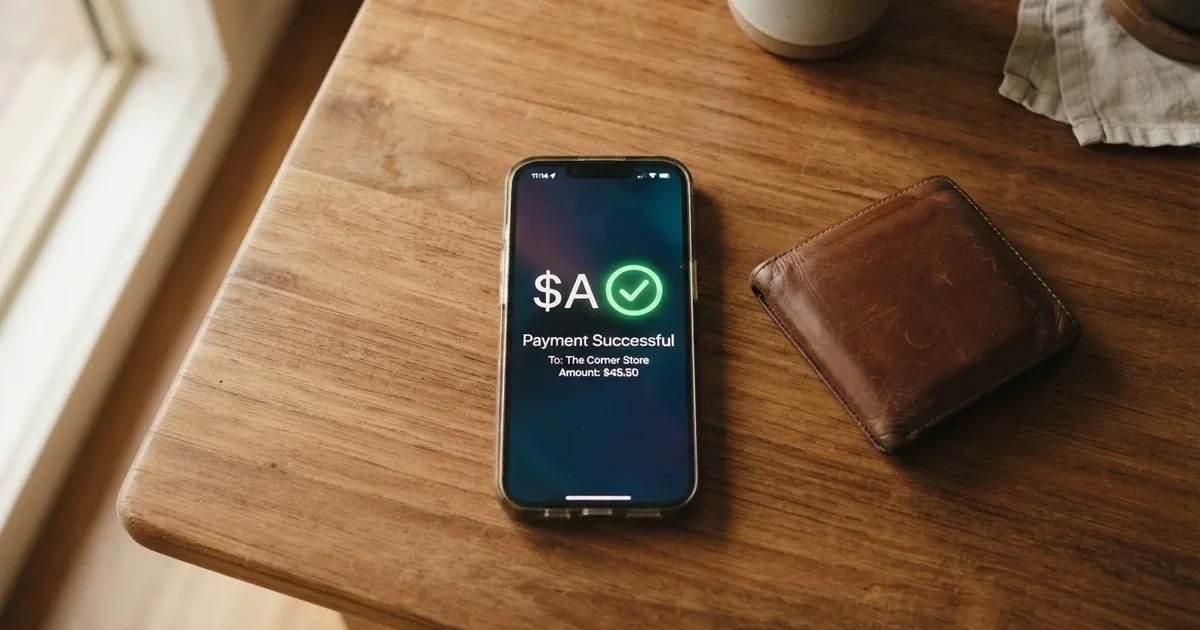
A $10 PayID no-deposit casino bonus in Australia: what sits behind the offer
 Available in US
Current as of 24 September 2026 · verified against the Australian Communications and Media Authority’s published formal-warning notices and blocking-round register.
The phrase sounds tidy: a free ten dollars, claimed by handing over a PayID, no deposit required. To an Australian punter the offer has the look of a local brand running a loss-leader promotion. The reality sits elsewhere. PayID is genuinely Australian and genuinely used by more than 25 million account holders, but the product the offer describes — an online casino with a $10 no-deposit credit — is prohibited onshore, and no Australian licence exists to attach the bonus to. The “$10 PayID no-deposit bonus” is an offshore marketing line, not a regulated local promotion.
Table of Contents
- How the offer actually reads in Australia
- Legality: what the Interactive Gambling Act 2001 actually does
- Responsible play: where a reader in over their head can turn
- Payments: what PayID actually does, and what it does not
- Bonuses: what a $10 no-deposit bonus actually involves
- Comparing the operators: what is fair
- Featured operators: every brand the ACMA has named
- What the ACMA’s blocking rate looks like
- What the loss to illegal sites looks like in dollar terms
- A note on the Northern Territory’s wagering licensing
- What changes on 1 January 2027
- Tax: what happens to a withdrawal
- Frequently asked questions
How the offer actually reads in Australia
A reader arriving at this page is being asked to compare things that do not sit on the same shelf. PayID is a payment rail operated by Australian Payments Plus, integrated into the online banking of over 100 Australian financial institutions, and it runs on the Reserve Bank’s New Payments Platform with Osko settlement in under a minute around the clock. A “no-deposit bonus” is a casino-marketing construct, the kind of credit an offshore casino adds to a brand-new account to pull the punter through registration. The two belong to different worlds: one is infrastructure, the other is an inducement on a product Australia does not licence.
What that mismatch costs a player is the subject of this page. The offer is described, the mechanism behind it is explained, the operators pitching it are named as the ACMA named them, and the arithmetic is laid out plainly. Nothing here recommends an operator, and nothing here tells the reader where to play. The point is to make the offer legible before a deposit or a registration is ever considered.
Legality: what the Interactive Gambling Act 2001 actually does
The Interactive Gambling Act 2001, tightened by the Interactive Gambling Amendment Act 2017, makes it an offence to provide online casino games, online pokies or in-play betting to a person physically in Australia. The Act targets the provider, not the individual player. No state or territory issues a licence for online casino games, and the only interactive wagering Australia does licence is pre-event racing and sports betting, keno and lotteries. Minimum age for any Australian-licensed wagering product is 18.

The body that enforces the regime is the Australian Communications and Media Authority. The ACMA investigates complaints, issues formal warnings and, since 2019, has directed Australian internet service providers to block illegal sites. The agency does not need to prove fraud to act: a service offering prohibited interactive gambling to Australians is enough on its own. The 2023 amendments also made it an offence to advertise such a service to an Australian audience, closing a long-running loophole around affiliate marketing pages hosted offshore but pitched at Australians.
The “no-deposit bonus” sits inside that frame. It is not illegal for an Australian to receive the credit — the Act does not prosecute individual players. It is illegal for the operator to offer it. When an offshore casino pushes a $10 PayID no-deposit bonus at an Australian email address or via a social-media advert, the operator is doing the thing the ACMA was set up to stop.
Responsible play: where a reader in over their head can turn
If the search for a $10 PayID bonus has tipped from curiosity into something heavier, free confidential help is one tap away and costs nothing. Gambling Help Online runs 24 hours a day, with web chat and email, and the National Gambling Helpline on 1800 858 858 is free from any Australian phone. BetStop, the National Self-Exclusion Register, has been live since August 2023 and binds every Australian-licensed online and phone wagering service once a person signs up. An offshore casino is not connected to BetStop, and self-excluding through the register does not stop a banned operator from sending a fresh $10 credit offer to an inbox. That asymmetry is part of why offshore inducements are sharper than the local equivalent: the local protections do not reach them.

The professional help services are flat-funded and free at the point of use, and a single phone call is enough to start a conversation. Nothing on this page judges the reader for making it.
Payments: what PayID actually does, and what it does not
PayID is what an Australian bank uses to put a familiar label — a mobile number, an email address, an ABN or an Organisation Identifier — on a bank account. The customer types the PayID into their own online banking, the bank looks up the account it maps to, and the customer sees the account-holder’s name on screen before sending. That name check is the safety feature: it is the moment a scam or a misdirected payment is supposed to be caught. PayID itself does not move money — Osko, which runs on the Reserve Bank’s New Payments Platform, does the actual transfer, in close to real time and 24/7, and the bank-to-bank leg clears in under a minute between participating institutions.
None of that makes PayID a casino. It is a payments rail. Australian Payments Plus, the industry body that operates PayID, says so directly on its own scam-alert page: being asked to transfer funds to a PayID on an illegal gambling site “is almost certainly a scambling website”. The word “scambling” is AP+’s own shorthand for illegal online gambling platforms advertised on social media and messaging apps that trick people into gambling on a scam site. The rail is Australian and trustworthy. The use the offer pitches is not.
Several Australian banks go further than the rail’s own warnings. Westpac’s gambling transaction block works at card level, refusing authorisation of any transaction that carries the merchant category code “Betting/Casino Gambling” on eligible personal credit and debit cards. ANZ’s gambling block, activated inside the ANZ app, extends that to digital wallets: a gambling transaction routed through Apple Pay on an eligible card is also blocked, and once the block is on, removing it requires a 48-hour waiting period. Neither block is perfect — ANZ itself warns that some gambling transactions will not be caught and some non-gambling transactions might be caught in error — but both make the card route harder for a punter trying to fund an offshore casino. PayID sits on a bank account rather than a card, so the same card-level switch does not catch it. A bank-transfer block exists at some institutions but is not universal.
For a punter weighing the offer, the relevant point is that PayID is not a sign of legitimacy. It is a sign the operator wants an Australian bank account attached to the player profile, because that profile is what gets used to chase deposits later, when the free ten has run out.
Bonuses: what a $10 no-deposit bonus actually involves
Offshore, a “no-deposit bonus” is a small credit added to a brand-new account once the punter completes registration, verifies an email and sometimes a mobile number. The credit is meant to be played through on the casino’s own games, on stakes and titles the casino picks. The catch lives in the terms attached to the credit, and the terms are where the marketing line meets the maths.
Three things determine what a $10 no-deposit bonus is actually worth. First, the wagering requirement — how many times the bonus amount must be staked before any winnings become withdrawable. A 30x wagering multiple means $300 of qualifying bets before a withdrawal unlocks. A 50x multiple means $500. Second, the maximum cash-out cap — the ceiling on what can be withdrawn from winnings earned on the bonus, which is often set well below the wagering total. Third, the game weighting — slots usually count 100% toward wagering, table games often count 10% or 0%, and “excluded titles” sometimes count nothing. The free ten is not the gift. The wagering and the cap together are the gift.
The PayID angle does not change any of that. The PayID is being collected at the registration or the withdrawal stage for one of three reasons: to confirm an Australian bank account, to speed a future withdrawal to that bank account, or to market the casino as “PayID-friendly” to a search. None of those reasons gives the $10 any extra value. The $10 is still the $10, and the wagering still applies.
A reader who is tempted by the headline should read the wagering multiple before reading anything else. A $10 credit that needs 30x turnover on slots with a $50 maximum cash-out pays out, on average, a few dollars at best once the maths is done. The headline is the bait. The terms are the catch.
Comparing the operators: what is fair
The page’s brief was to compare operators pitching this offer to Australians. Honest comparison here means something different from comparing licenced sportsbooks or licensed poker rooms. Online casino games are prohibited onshore; no operator on the list below holds an Australian licence for what they are selling.
| Brand | ACMA action and date | Operator named by the ACMA | Subject support |
|---|---|---|---|
| RocketPlay | Formal warning, March 2026 | Pulsup Ltd (Rocketplay); earlier Dama N.V., May 2022 | — |
| Level Up Casino | Formal warning, May 2022 | Dama N.V. | listings report PayID support |
| Woo Casino | Formal warning, March 2025 | Dama N.V. | — |
| Spirit Casino | Formal warning, May 2025 | Dama N.V. | — |
| National Casino | Formal warning, July 2025 | Consolutetish S.R.L. | listings report PayID support |
| Bizzo Casino | Formal warning, July 2025; earlier 2022 | Consolutetish S.R.L.; earlier TechSolutions (CY) Group Limited | — |
| Ignition Casino | Formal warning, July 2025 | Bamboo Media | — |
| Instant Casino | Formal warning, February 2025 | EOD Code SRL | listings report PayID support |
| Jackbit | Formal warning, April 2026 | Ryker B.V. | — |
| Casino Intense | Formal warning, April 2025 | Sterplay Holding Ltd | listings report PayID support |
| Sky Crown | Formal warning, September 2022 | Hollycorn N.V. | — |
The “ranking” that follows is therefore not a buying guide — it is a record of who has come to the ACMA’s attention, in what order, for offering prohibited services to Australians, and what each operator’s entry in that record actually says.
What a fair comparison weighs, in that light, is straightforward: which operator has the freshest ACMA action, which operator has been warned more than once, and which operator’s name an Australian punter is most likely to meet on a search or a social-media advert. There is no bonus comparison, because the only sources for bonus terms on these brands are affiliate marketing pages. There is no payout-speed comparison, because no Australian bank is going to clear a withdrawal to a site that is being blocked. There is no licence column, because the licence any of these sites displays is for some other jurisdiction and does not cover what they are doing for Australians.
The table below lists every operator the ACMA has named in a formal warning or a blocking directive in the period research covers. The order is the order the ACMA itself has them, not a ranking by offer quality.
Featured operators: every brand the ACMA has named
Eleven brands sit on the ACMA’s record for offering prohibited online casino games to Australians. Each entry below carries the ACMA-published warning, the operator behind the warning, the date of the action and the year of the relevant facts. No judgement of “best” or “worst” is offered, because the comparison that matters is the comparison with the law, not the comparison with the other brands on the list.
| Brand | ACMA action and date | Operator named by the ACMA | Subject support |
|---|---|---|---|
| RocketPlay | Formal warning, March 2026 | Pulsup Ltd (Rocketplay.com.au); earlier Dama N.V., May 2022 | — |
| Level Up Casino | Formal warning, May 2022 | Dama N.V. | listings report PayID support |
| Woo Casino | Formal warning, March 2025 | Dama N.V. | — |
| Spirit Casino | Formal warning, May 2025 | Dama N.V. | — |
| National Casino | Formal warning, July 2025 | Consolutetish S.R.L. | listings report PayID support |
| Bizzo Casino | Formal warning, July 2025; earlier 2022 | Consolutetish S.R.L.; earlier TechSolutions (CY) Group Limited and TechSolutions Group N.V. | — |
| Ignition Casino | Formal warning, July 2025 | Bamboo Media | — |
| Instant Casino | Formal warning, February 2025 | EOD Code SRL | listings report PayID support |
| Jackbit | Formal warning, April 2026 | Ryker B.V. | — |
| Casino Intense | Formal warning, April 2025 | Sterplay Holding Ltd | listings report PayID support |
| Sky Crown | Formal warning, September 2022 | Hollycorn N.V. (Sky Crown and Blue Leo) | — |
Two things stand out from the table. The first is repetition: Dama N.V. appears three times across the eleven entries, and on each appearance it is the same company, not a coincidence. Once a corporate vehicle has been warned, the warnings keep coming because the brands keep launching. The second is the recency: more than half the entries are from 2025 and 2026, which means the ACMA’s enforcement tempo has not slowed even though the 2017 amendments are now nearly a decade old.
RocketPlay
RocketPlay is the freshest name on the list. In March 2026 the ACMA issued a formal warning to Pulsup Ltd for offering prohibited interactive gambling services through Rocketplay. The same brand sits on an earlier warning from May 2022, when Dama N.V. — the same corporate group that owns Level Up, Woo and Spirit — was warned over six brands in a single round. A reader who searches “RocketPlay” today meets the 2026 warning on the ACMA’s own register, not a marketing page. The brand is also one of the few on the list still actively recruiting Australian traffic through affiliate sites, which is why the ACMA came back to it. The casino displayed at the URL is licensed in Curaçao, not Australia, and the licence does not extend to offering casino games to Australians.
Level Up Casino
Level Up was first named by the ACMA in May 2022 as part of the Dama N.V. six-brand warning round. There is no second ACMA action against Level Up on the public record, but the corporate parent has been warned again since — over Woo Casino in March 2025 and Spirit Casino in May 2025 — and the recurrence says more about Dama N.V.’s approach to Australian traffic than it does about Level Up individually. Affiliate listings report PayID support, which means the rail is part of the offer; the rail is still Australian, but the offer is still offshore.
Woo Casino
Woo Casino drew a fresh formal warning in March 2025, again to Dama N.V. Woo sits in the middle of the Dama cluster, neither the freshest name nor the oldest, but it is the one a reader is most likely to meet on an Australian-facing affiliate page. The March 2025 warning is what closes off any “this is old news” reading of the Dama cluster.
Spirit Casino
Spirit Casino is the third Dama brand in this list and the third to draw a fresh warning, in May 2025. The pattern across Level Up, Woo and Spirit is consistent enough to be the point: a single corporate group has been warned repeatedly, and the warnings have not stopped the brands from advertising to Australians.
National Casino
National Casino was named in the July 2025 warning round, alongside Bizzo Casino, both directed at Consolutetish S.R.L. National has its own AUSTRAC and Wikipedia footprint that places it on listings reporting PayID support. The fresh warning means the brand is still active in the Australian market as of mid-2025.
Bizzo Casino
Bizzo is the only brand on the list with two distinct ACMA actions against two distinct operators. In 2022 the ACMA warned TechSolutions (CY) Group Limited and TechSolutions Group N.V. over Bizzo. In July 2025 the warning round came back to Consolutetish S.R.L. for both Bizzo and National. A brand that has drawn ACMA action under two different corporate owners is a brand the regulator has decided to come back to.
Ignition Casino
Ignition Casino sits on the same July 2025 warning round as National and Bizzo, but with a different operator: Bamboo Media. Ignition is the most poker-heavy brand on the list, with a long history of US-facing traffic, and the ACMA warning here is for offering prohibited services to Australians through that same product. The fresh action, again, is what matters: a 2022 licence display does not become a 2025 marketing line.
Instant Casino
Instant Casino drew a fresh warning in February 2025, to EOD Code SRL. It is the brand on the list most associated with affiliate marketing on social media, and the listings reporting PayID support are the listings that put the brand in front of Australian searchers in the first place. The February warning came before the July 2025 round, which makes it the second-freshest non-Dama action on the list.
Jackbit
Jackbit was named in the April 2026 ACMA warning round alongside CasinOK, with the action directed at Ryker B.V. Jackbit is the second brand in 2026 alongside RocketPlay, and both 2026 actions are recent enough that the warning register is the live state of the market, not a stale list.
Casino Intense
Casino Intense drew an April 2025 warning to Sterplay Holding Ltd. The brand has a multi-source AUSTRAC, ITNews and NAB footprint that places it on listings reporting PayID support. April 2025 sits between Instant Casino’s February 2025 warning and the July 2025 round, which puts it in the middle of the recent cluster.
Sky Crown
Sky Crown is the oldest entry on the list, with the ACMA’s formal warning to Hollycorn N.V. published in September 2022. The same warning round covered Blue Leo Casino. Sky Crown has not drawn a fresh warning in the period research covers, which means either the brand has pulled back from the Australian market or the ACMA has not put it on a recent round. The 2022 warning is still on the register, and a reader searching “Sky Crown Australia” will meet it.
Reading the table as a whole
Eleven brands, ten distinct operators, eleven formal warnings. The brands are not equally fresh and not equally warned, but every one of them sits on the ACMA’s record for the same reason. None of them holds an Australian licence for what they are selling to Australian players, and none of them is on BetStop. The repetition is the signal. A single warning tells a reader the regulator has noticed; a second or third warning tells a reader the regulator has noticed and the operator has not stopped.
What the ACMA’s blocking rate looks like
The blocking programme’s arithmetic tells the reader how often a brand the ACMA has named disappears from Australian view. The agency’s first blocking request was in November 2019. As of June 2026, the ACMA’s own published total is 1,751 illegal gambling and affiliate marketing websites blocked since that first request. The June 2026 round alone added 12 more: 7Signs, ChromaBet, Donbet, Duospin, Freshbet, Slots Gem, Jacks Club, Lucky Start, Pointsbetz, Spinrise, Vinyl Casino and Wildsino. Put together, the working rate sits somewhere in the band of roughly 260 to 280 blocks a year on the years-long average since November 2019, with a meaningful lift in the years since 2023 when the advertising amendments took effect.
That rate is what makes the offer on this page unstable. A brand a reader meets today may be unreachable by next month, and any balance left on the account at the moment of blocking is unrecoverable through Australian consumer law. The blocking rate is the rate at which the offer evaporates.
What the loss to illegal sites looks like in dollar terms
H2 Gambling Capital’s 2025 estimate puts Australian losses to illegal gambling sites at around A$3.9 billion a year. The same report records the share of gambling going through legal channels falling from 74% in 2021 to 64%. The share lost to illegal channels is the gap that has opened in four years, and the gap is what the $10 PayID no-deposit offer is fishing in. The punter being pitched the bonus is, in the aggregate, one of the A$3.9 billion.
A note on the Northern Territory’s wagering licensing
The Northern Territory Racing and Wagering Commission regulates 52 of Australia’s online bookmakers — Sportsbet, Bet365 and Ladbrokes included — licensed in the Territory for tax reasons. The commission has no full-time staff, meets once a month in Darwin, and regulates wagering on racing and sport, not online casino games. The point is sharp: the closest thing Australia has to a wagering licensing body does not licence what any of the eleven brands above are selling.
What changes on 1 January 2027
The Interactive Gambling Amendment (Gambling Reform) Bill 2026 passed Parliament on 19 August 2026. Its advertising and inducement measures commence on 1 January 2027. The current page reads as 2026, and on the date the new measures commence the inducement landscape changes. The brands on the list above will not be licenced onshore on that date, and the ACMA’s blocking programme continues regardless of the commencement. The inducement measures tighten what an Australian-facing affiliate page can publish, not what an offshore casino can do at the URL.
Tax: what happens to a withdrawal
Gambling winnings of a recreational Australian player are not assessable income, and losses are not deductible — that is the long-standing position under section 6-5 of the Income Tax Assessment Act 1997. The position only changes if the person carries on a business of gambling, which a one-off $10 bonus does not meet. The model answer is “check with the ATO” before doing anything more than reporting what the bank shows.
Frequently asked questions
Can a casino actually credit $10 to my account the moment I share a PayID?
No Australian-licensed casino will, because no Australian licence for online casino games exists. An offshore casino may credit the $10 once you complete its full sign-up — email, mobile, sometimes ID — and may then attach a wagering requirement and a maximum cash-out cap that mean the $10 pays out a few dollars at most.
Is PayID itself a legitimate, regulated Australian payment service?
Yes. PayID is operated by Australian Payments Plus, runs on the Reserve Bank’s New Payments Platform, and is integrated into the online banking of over 100 Australian financial institutions. The rail is Australian and trustworthy; what an offshore casino does with the PayID it collects is a separate question.
Why would an offshore site ask for a PayID before paying out a $10 bonus?
Three reasons sit behind the ask. The PayID confirms an Australian bank account, which speeds a future withdrawal to that account. The PayID is a marketing claim that helps the offer rank on Australian searches. And the PayID is data the operator keeps on file, regardless of whether the punter ever withdraws.
What is the catch with a $10 no-deposit bonus that only needs a PayID?
The catch sits in the wagering multiple, the maximum cash-out cap and the game weighting, not in the PayID. A 30x wagering multiple on a $10 bonus means $300 of qualifying bets before any withdrawal unlocks, and the cash-out cap often sits well below that turnover. The PayID is the bait. The terms are the catch.
Does using PayID with an offshore casino count as banking with an Australian institution?
PayID itself is Australian, and the transfer is initiated from an Australian bank account, but the recipient is an offshore operator that is not regulated by APRA, ASIC or the ACMA for what it is selling. The bank transfer is Australian. The transaction on the other side is not.
Is a PayID casino bonus offer regulated by ASIC or the ACMA?
The PayID rail is overseen by the Reserve Bank. The bonus offer itself is not regulated by ASIC or the ACMA for what it sells to Australians, because the product is prohibited. The ACMA regulates the offer through its blocking programme and its formal-warning register, not through a consumer-protection regime that covers the player.
Prepared by the Casino Offshore Hub editorial staff.