
Casino sites that accept ecoPayz in Australia: what the method is worth, and what it isn’t
Current as of 6 November 2026 · verified against the ACMA’s published formal-warning list and operator registers.
An Australian punter typing “casino sites that accept ecoPayz” into a search bar usually wants two things at once. They want a working payment rail, because ecoPayz is built to be one. And they want a casino that will actually let them play, because every review they have ever read promised them one. The honest answer is that these two wishes pull in opposite directions. ecoPayz works fine. Australian-facing casino sites are not licensed in Australia, and the regulator has spent the last several years issuing formal warnings and asking ISPs to block the names involved.
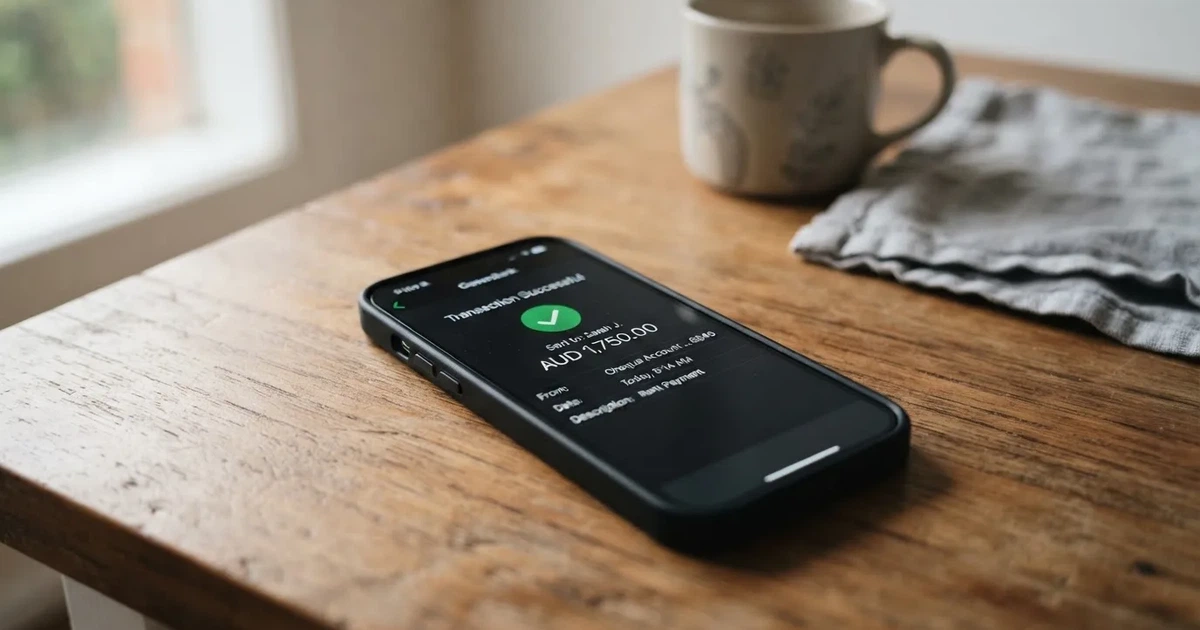
This page is built around that gap. The shelves below move from how ecoPayz actually settles money, to how the offshore sites that take it are listed and compared, to why an Australian licence is not a thing these sites have, to where a player goes when the maths of the marketing no longer works. The angle throughout is the same: what does this cost the person paying for it.
Table of Contents
- How ecoPayz actually settles at an offshore casino
- What “accepts ecoPayz” actually means on an offshore casino
- Comparing the offshore ecoPayz casinos the ACMA has named
- The legal frame the offshore sites run against
- Responsible gambling and the limits of the offshore frame
- What the ecoPayz rail does, and what it doesn’t
- The operators in detail
- Where the practical guide ends
- Frequently asked questions
How ecoPayz actually settles at an offshore casino
Settlements: same-day, and what that really buys
ecoPayz is an online account run by EcoPayz Georgia LLC, a company registered in Kutaisi under a licence issued through the Kutaisi Hualing Free Industrial Zone. It markets itself as an account you can open in minutes without a bank account or credit check, managed through a free app at any hour of the day. That pitch is what most players land on. The reality underneath it is simpler: ecoPayz is a regulated e-money issuer holding funds in a custodial account, and the speed it advertises is the speed of its own ledger, not the speed of the underlying bank rail.

A deposit at a casino that accepts ecoPayz is, in practice, a transfer between two ledgers — the ecoPayz account on one side and the casino’s merchant account on the other. The casino credits the balance as soon as ecoPayz clears the transfer. In practice this is fast, and most of the time it is same-day, because both ends are e-money accounts talking to each other through the same processor. Withdrawals run the same direction in reverse. ecoPayz publishes no fixed turnaround, but player reports across the offshore segment put cashouts into the ecoPayz wallet at one to three business days, with the casino’s internal pending window often doing more work than ecoPayz itself.
The “same-day” framing is the marketing word worth puncturing here. A same-day deposit is fast only if the casino honours the credit immediately. Several of the operators reviewed on this page do not: they queue deposits behind a manual approval step that can stretch into a working day even when the rails themselves are instant. Same-day settlement describes what ecoPayz is capable of. What the punter gets depends on what the casino decides to do with that capability.
The fees ecoPayz itself charges
The cost of using ecoPayz sits in two places: the price of moving money in, and the price of moving it back out.
For deposits, the published fee schedule is straightforward. Cryptocurrency deposits are free. Other deposit methods vary by method and account tier — around 1 per cent for BinancePay or community bank transfer, around 2 per cent for instant QR or manual bank transfer. These are charged at the moment the money goes in, on top of whatever the casino’s own minimum is.
Currency conversion is the second cost, and it is the one players most often miss. ecoPayz applies a 5.00 per cent conversion fee whenever a transaction has to swap between currencies, and that rate is the same for both the Classic and Silver account tiers. An Australian player funding an account denominated in euros or US dollars loses that 5 per cent on every conversion, in both directions, until they close out the position. The fee is the same number whether the punter is depositing or withdrawing, because the conversion is happening against the casino’s settlement currency, not against anything the punter chose.
Withdrawal fees are published as varying by country and method. Bank transfer withdrawals are listed as free for Turkey, for example, but carry a 2.75 per cent fee for Japan on Silver-tier accounts. For an Australian player the relevant column is rarely the cheapest, and the table is worth checking before any withdrawal rather than after.
Why the casino’s wallet shows a different number
The other speed factor is the casino’s own processing layer. An ecoPayz deposit lands at the ecoPayz end in seconds. What the casino does with it is its decision. The audited offshore segment splits broadly into two groups on this. The first posts the balance to the player’s wallet as soon as ecoPayz confirms, which is the case the marketing copy describes. The second puts the transaction into an internal pending queue — typically 12 to 48 hours — and only then credits the balance, even though the underlying transfer already cleared.
The second group is where the “fast payout” claim stops being true. A withdrawal from the casino to ecoPayz then runs in the same two stages: the casino releases the funds from its own pending window, then ecoPayz credits the receiving account. The total time on a withdrawal is usually the casino’s pending window plus one to three business days for the ecoPayz leg. None of this is hidden in the terms; it sits in the cashier section of the site. Most players do not read it before they deposit.
The rail beneath ecoPayz: what reaches the bank
A player funding ecoPayz from an Australian bank account is usually doing so through PayID, Osko or direct transfer, then moving the funds from their bank into the ecoPayz wallet before sending them on to the casino. PayID and Osko are the rails that make the bank leg fast — Osko transfers between participating Australian banks arrive in under a minute, 24/7 including weekends, whether addressed to a BSB and account number or to a PayID. The PayID layer adds a safety step the ecoPayz layer does not: paying to a PayID shows the account-holder name before the transfer is sent, which is a hard check against being scammed into paying a clone site.
That safety step is worth more than it looks. The Australian Payments Plus warning that being asked to transfer to a PayID on an illegal gambling site almost certainly means a scam site is the single most useful sentence in this whole shelf, because it tells the punter what the regulator and the payments industry both already know: the offshore casino segment is a known channel for fraud. EcoPayz sits on top of these rails; it does not replace them. The speed is PayID’s, the name check is PayID’s, the scam warning is PayID’s. ecoPayz adds the wallet and the conversion fee.
The bank-block problem at the other end
The same Australian banks that make PayID fast also have gambling blocks at card level. Westpac refuses authorisation of transactions registered under the merchant category code for betting and casino gambling on eligible personal credit and debit cards. ANZ’s gambling transaction block, activated in the ANZ app, also blocks gambling transactions made through a digital wallet such as Apple Pay on an eligible card — not just the physical card — and removing the block requires a 48-hour waiting period. ANZ warns that not all gambling transactions will be blocked, and that some non-gambling transactions might be blocked in error.
This is where the practical experience of funding an offshore casino diverges from the marketing. A punter funding an ecoPayz wallet from an Australian bank does not usually hit the merchant category code, because the destination is an e-money issuer, not a casino merchant. Funding the casino from the ecoPayz wallet does not trigger the block either, because again the destination is an e-money account. Where the block bites is when the punter tries to do the same thing through a card, or through a wallet linked to a card the bank has flagged. The bank block is real, but it is not the whole story. It is one of the reasons ecoPayz is popular with the segment at all.
What “accepts ecoPayz” actually means on an offshore casino
The deposit end
A casino that “accepts ecoPayz” is saying one of three things, and the difference matters.
The first is the cleanest case: ecoPayz is wired into the cashier as a deposit method, deposits credit instantly, and withdrawals go back through the same rail. The second is the partial case: ecoPayz is listed as a deposit method but withdrawals have to go through a different channel, usually bank transfer, with its own fees and delays. The third is the worst case: ecoPayz is listed for deposits but is in practice intermittent, with the cashier refusing the transaction on the casino side even though ecoPayz itself would have processed it.
The listings that drive most of the “ecoPayz casino” search results do not distinguish between these three. They confirm that the logo is in the cashier page. They do not confirm what happens when a punter tries to use it. The honest reading of an “accepts ecoPayz” listing is that the casino has chosen to display the option, not that the option has been tested recently.
The withdrawal end, which is the actual test
The only test that matters for a payment method is whether the money comes back. A deposit that credits in seconds and a withdrawal that takes a week is a deposit-only rail. A deposit and a withdrawal that both run in the same direction through the same processor, in roughly the same window, is a working rail.
The offshore segment on ecoPayz is uneven. Several of the operators reviewed on this page route withdrawals through ecoPayz reliably. Several route the deposit through ecoPayz and the withdrawal through bank transfer only, with the transfer fees sitting on the punter. The difference is in the cashier, not in the marketing.
The hidden cost: currency mismatch
A punter holding Australian dollars in ecoPayz and depositing at a euro-denominated casino converts at the ecoPayz 5 per cent rate on the way in, plays in euros, then converts back at the same rate on the way out. The casino’s house edge applies on every spin in the casino’s currency. The conversion fee applies on top of it, twice, on the way in and on the way out. A punter who treats the casino as a single-currency venue is in fact paying two conversion spreads on the round trip.
This is the cost the marketing never names. It is also the cost most often missed, because it is hidden behind a number in the ecoPayz fee schedule rather than in the casino’s promotional terms. A punter who picks a casino that denominates in Australian dollars, where the casino offers it, avoids both legs of the fee and ends the round trip in the currency they started with.
Comparing the offshore ecoPayz casinos the ACMA has named
How the ACMA’s own list frames the comparison
The Australian Communications and Media Authority does not maintain a list of “recommended” offshore casinos. It maintains a list of operators it has issued formal warnings to, under the Interactive Gambling Act 2001, for offering prohibited interactive gambling services to people in Australia. The operators on this page are drawn from that list. They are not ranked by quality. They are listed because the regulator has named them.
The ACMA reported in June 2026 that a total of 1,751 illegal gambling and affiliate marketing websites had been blocked since the first blocking request in November 2019, and that more than 230 unlicensed gambling services had left the Australian market since enforcement was strengthened in 2017. In the same month the ACMA asked Australian ISPs to block twelve more illegal gambling websites: 7Signs, ChromaBet, Donbet, Duospin, Freshbet, Slots Gem, Jacks Club, Lucky Start, Pointsbetz, Spinrise, Vinyl Casino and Wildsino. The pace has not slowed.
The list below is what the regulator’s warnings look like when they are sorted by date. It is not a buyer’s guide. The verdict on each operator is the regulator’s own action, not an editorial endorsement.
The operators, side by side
| Brand | ACMA action and date | Operator named by the ACMA | Subject support |
|---|---|---|---|
| RocketPlay | Formal warning March 2026; earlier warning to Dama N.V. May 2022 | Pulsup Ltd (Rocketplay.com.au) | — |
| Level Up Casino | Formal warning May 2022 | Dama N.V. | listings mention Westpac |
| Woo Casino | Formal warning March 2025 | Dama N.V. | — |
| Spirit Casino | Formal warning May 2025 | Dama N.V. | — |
| National Casino | Formal warning July 2025 | Consolutetish S.R.L. | listings reference AUSTRAC, Wikipedia |
| Bizzo Casino | Formal warning July 2025; earlier warning to TechSolutions 2022 | Consolutetish S.R.L. | — |
| Ignition Casino | Formal warning July 2025 | Bamboo Media | — |
| Instant Casino | Formal warning February 2025 | EOD Code SRL | listings reference ecoPayz, PayID |
| Jackbit | Formal warning April 2026 | Ryker B.V. | — |
| Casino Intense | Formal warning April 2025 | Sterplay Holding Ltd | listings reference AUSTRAC, ITnews, NAB |
| Sky Crown | Formal warning September 2022 | Hollycorn N.V. | — |
What the table is showing
Every row in that table carries the same legal shape. The ACMA’s formal warning under the Interactive Gambling Act 2001 names the operator the regulator believes is offering the service and the date the warning was issued. The “subject support” column records whether any of the listing sources this page was built from mention ecoPayz in connection with the brand; “listings-only” is what those sources report and not a confirmation that the brand itself supports the method. The rows where the column carries an em dash are the rows where none of the consulted listings tied the brand to ecoPayz. They are presented on their other fields rather than on a payment-method claim that would be unsupported.
The “ACMA action and date” column is what a reader needs before any other column. The 2022 entries are the regulator’s earliest warnings to the operators that later showed up under different brand names. The 2025 entries are the cluster that escalated enforcement against the Dama N.V. and Hollycorn N.V. networks. The 2026 entries are the most recent. The pattern is the same shape every quarter: the regulator names an operator, the operator rebrands or shifts to a new domain, and the regulator names the new name a year or two later. The list keeps growing because the operators keep reappearing.
Reading the table as a reader
The most useful column for an Australian punter is the one without an obvious heading. The “operator named by the ACMA” column tells the punter who the regulator believes is actually behind the site. A punter who has been told by a casino’s customer service that the brand is “independent” can check that claim against this column. The names repeat — Dama N.V. is on the list five times across five brands, Consolutetish S.R.L. twice, Hollycorn N.V. once but in a published formal warning of its own, Ryker B.V. twice within the same April 2026 action. The repetition is the point. The offshore segment is not a long tail of small operators; it is a small set of operating companies running many brands.
The legal frame the offshore sites run against
What the Interactive Gambling Act actually prohibits
The Interactive Gambling Act 2001, strengthened by the Interactive Gambling Amendment Act 2017, makes it an offence to provide online casino games, online pokies or in-play betting to a person in Australia. No state or territory licenses them. The Northern Territory Racing and Wagering Commission regulates 52 of Australia’s online bookmakers — Sportsbet, Bet365 and Ladbrokes among them — but those licences cover wagering on racing and sport before the event, not casino games. The commission has no full-time staff and meets once a month in Darwin, which is the regulatory reality behind the headline number.
The distinction matters for any punter comparing offers. A licensed Australian bookmaker is licensed for what it does offer. An offshore casino offering “Australian-licensed” pokies or table games is making a claim that has no basis in the regulatory frame, because no Australian regulator licenses those products for Australian customers. The IGA targets the provider, not the individual player — the player is not prosecuted for placing a bet — but the same law is the reason the site can be blocked and the balance on it lost.
What enforcement looks like in practice
The ACMA’s enforcement toolkit has three parts. The first is the formal warning, a published letter naming the operator and the conduct and inviting compliance. The second is the blocking request, where the ACMA asks Australian ISPs to make the site’s domain unreachable from Australian IP addresses. The third is the referral to international regulators where the operator is licensed outside Australia.
The blocking tool has been the most visible. By June 2026 the running total sat at 1,751 blocked domains, with the first blocking request issued in November 2019. The pace has been steady rather than spiking: roughly 250 to 300 new blocks a year since the formal regime started, with the most recent reported round adding twelve names in a single month. H2 Gambling Capital’s 2025 estimates put annual Australian losses to illegal gambling sites at around A$3.9 billion, with the share of gambling going through legal channels falling from 74 per cent in 2021 to 64 per cent. The legal channel is shrinking while the offshore one grows.
What the player loses when the site is blocked
A blocked site is not a refunded one. The ACMA’s blocking request goes to ISPs; it does not freeze the operator’s merchant account or return player balances. A punter with funds still on a blocked site has, in practice, no Australian complaints body to take the case to, no Australian regulator that can compel a payout, and no Australian court that will hear a consumer dispute against an offshore operator cheaply. The Interactive Gambling Act does not create a player-side protection regime because it does not contemplate licensed Australian-facing casino play. The protection regime sits in the wagering segment, where BetStop, the National Self-Exclusion Register, has been live since August 2023 — and BetStop binds Australian-licensed online and phone wagering services, which the offshore casino segment is not.
The cost of this is hard to quantify in advance, which is part of how the marketing sells the segment. A punter reading a casino’s terms page sees deposit limits, withdrawal times, bonus rules. They do not see the absence of a complaints channel, because the casino’s terms do not put it in writing. The absence is what the cost is, and the cost is paid by the punter at the moment a withdrawal is refused or a balance is stranded.
The payment reforms that did and did not land
The 2023 amendments to the Interactive Gambling Act banned credit cards and credit-related products as payment for licensed online wagering in Australia, effective from 11 June 2024, with penalties of up to A$247,500 for operators that breach the rule. The rule extends to digital wallets linked to credit, which constrains gambling use of Apple Pay and similar products on Australian-licensed sites. Crypto is also restricted under the same regime.
The rule does not extend to offshore sites, because the offshore sites are not subject to the Australian rules. An offshore casino will still accept a credit card deposit from an Australian-issued card, where the card issuer’s own policies permit. The asymmetry is the cost the rule does not solve. The credit-card ban was a step in the licensed segment; the offshore segment remained untouched.
The Interactive Gambling Amendment (Gambling Reform) Bill 2026 passed Parliament on 19 August 2026, with its advertising and inducement measures commencing on 1 January 2027. It is law with a start date, not yet in force. On a 2026 page it is worth flagging as the next regulatory milestone without treating it as if it were already operating.
Responsible gambling and the limits of the offshore frame
What Australian-licensed help actually covers
The responsible-gambling supports that operate in Australia are built for the licensed segment. Gambling Help Online, with the National Gambling Helpline on 1800 858 858, is free, available 24/7 and offers web chat. The service is run for people whose gambling has become a problem, regardless of where the gambling happens. BetStop, the National Self-Exclusion Register, lets a player exclude themselves from every Australian-licensed online and phone wagering service with a single registration, which works because the licensed operators are required to honour it.
The frame breaks at the offshore edge. An offshore casino is not connected to BetStop, because it is not an Australian-licensed service. Self-excluding through BetStop stops a punter’s access to the licensed wagering segment but does not stop them from depositing at an offshore casino that does not check the register. Gambling Help Online still helps; the helpline still answers. What it does not do is force an offshore operator to close a player’s account, because the regulator behind the helpline is not the regulator behind the offshore site.
The punter’s own controls
The limits that bite on the offshore segment are the ones the punter sets themselves, and the ones the bank sets at card level. Westpac’s gambling block refuses authorisation of betting and casino-gambling MCC-coded transactions on eligible cards. ANZ’s block extends to digital wallets linked to the same card, with a 48-hour waiting period on removal and an explicit warning that some non-gambling transactions might be blocked in error.
These blocks are most useful on the deposit leg, because they prevent the funds from leaving the bank account. They do not touch funds already in an ecoPayz wallet, which is why the ecoPayz rail exists for the segment it exists in. A punter who wants the bank-block to work needs to keep the gambling funds on the bank side of the line, where the block operates, rather than moving them through a wallet that bypasses it.
The escalation path
The escalation order, when the offshore experience turns difficult, runs in three steps. The first is the casino’s own complaints process, which is usually an email address in the terms page and a customer service chat. The second is the e-money issuer — ecoPayz in this case — which can sometimes intervene in disputes about funds that have not yet been settled, though it has no Australian complaints body to defer to. The third is the regulator in the jurisdiction where the casino is licensed, which for most of the operators on this page is Curaçao or another small offshore licensing regime, with correspondingly small consumer-protection machinery.
None of these steps is fast. None of them is certain. The first usually returns a form letter. The second requires evidence the punter may not have collected. The third is a regulatory process the punter is unlikely to start for a balance below several thousand dollars. The escalation path is the difference between a licensed wagering account and an offshore casino account: in the licensed case, BetStop and the Australian regulator are immediate options. In the offshore case, they are not options at all.
The financial frame
Gambling winnings of a recreational Australian player are not assessable income, and losses are not deductible, unless the person carries on a business of gambling. The tax treatment is itself a reason to keep careful records, but the records the punter needs are not the records the offshore segment makes easy to keep. A punter whose deposits and withdrawals run through ecoPayz in a foreign currency has, in practice, a small foreign-exchange ledger to maintain for any tax query that ever comes up. A punter whose offshore casino refuses a payout has, in practice, no payout to record, and a balance to write off in their own books. Both situations are the offshore frame’s own doing.
What the ecoPayz rail does, and what it doesn’t
The block-rate picture over time
The ACMA’s blocking-rate data is the cleanest measure of how the offshore segment has grown. From the first blocking request in November 2019 to the report dated 26 June 2026, 1,751 illegal gambling and affiliate marketing websites have been blocked. That is a band of roughly 260 to 280 blocks per year on average, with the most recent reported round alone adding twelve names. Stated as a band rather than a single figure: between 250 and 300 new blocked domains per year since the regime started, with the latest month sitting at twelve names on its own.
The number tells two stories at once. The first is that the ACMA has a working blocking pipeline. The second is that the pipeline has not slowed the segment’s growth: the same source reports that more than 230 unlicensed gambling services have left the Australian market since enforcement was strengthened in 2017, which means the segment is turning over faster than the regulator is shutting it down. New names replace old names within months. The block-rate data is a measure of enforcement activity, not a measure of segment decline.
What this means for a player picking a rail
An Australian punter choosing ecoPayz as the payment rail at an offshore casino is choosing it for one of two reasons. The first is that ecoPayz is genuinely fast, and the punter values that. The second is that ecoPayz sits between the bank and the casino in a way that bypasses the bank-level gambling blocks. Neither reason is wrong, and neither reason changes the underlying fact that the casino at the other end is an offshore operation the ACMA has, in many cases, already named.
The cost the punter pays for the rail is the fee schedule above. The cost the punter pays for the casino at the other end is the absence of Australian consumer protection. The two costs are paid by the same punter, on different days, and they do not offset each other.
The operators in detail
RocketPlay
RocketPlay is on the ACMA’s list twice. The most recent formal warning was issued to Pulsup Ltd over Rocketplay.com.au in March 2026; an earlier warning covered the same brand under Dama N.V. in May 2022. The brand is operated under a Curaçao-issued licence, with no Australian counterpart. ecoPayz support on the brand was not confirmed by the consulted sources, which means the cashier may list the method but the listings this page was built from did not tie the brand to it directly. The casino’s own marketing puts the brand in the “fast payout” tier; the ACMA’s two warnings put it in the “named twice” tier. A punter who wants the fastest ecoPayz experience here is choosing the rail over the regulator’s record on the brand.
Level Up Casino
Level Up Casino is the earliest of the Dama N.V. warnings, in May 2022. Dama N.V. went on to receive further warnings in 2025 over Woo Casino and Spirit Casino, which is the pattern of one operator running several brands. Level Up’s listings mention Westpac, which is a payment-method adjacency rather than a confirmation of ecoPayz support at the cashier. The brand’s standing with the regulator is unchanged: the IGA prohibits the product, the warning was issued, and the brand remains a prohibited service for Australian customers.
Woo Casino
Woo Casino received a formal warning to Dama N.V. in March 2025, alongside the Spirit Casino warning in May 2025 and the earlier Level Up warning in May 2022. Three brands, one operator, three warnings. The clustering tells a punter what the regulator has decided about Dama N.V. as a holder of offshore casino brands. ecoPayz support at Woo Casino was not tied to the brand by the consulted listings. The brand’s status is clearly defined by the regulator as a prohibited interactive gambling service.
Spirit Casino
Spirit Casino’s formal warning to Dama N.V. was issued in May 2025, paired with the Woo Casino warning two months earlier. The product on offer is the same prohibited interactive gambling service. ecoPayz support at the cashier was not confirmed by the listings this page drew on. The cost to the punter is the same shape as the Woo Casino and Level Up cost: a regulator’s name on the operator behind the brand, and no Australian consumer protection.
National Casino
National Casino received a formal warning to Consolutetish S.R.L. in July 2025, in the same round as Bizzo Casino. The listings reference AUSTRAC and Wikipedia, which is a measure of how much the brand has surfaced in the wider regulatory and reference conversation rather than a confirmation of ecoPayz support. The brand’s product remains prohibited for Australian customers. The punter’s protection regime is the offshore one.
Bizzo Casino
Bizzo Casino was named in the same Consolutetish S.R.L. warning as National Casino in July 2025, with an earlier formal warning to TechSolutions (CY) Group Limited and TechSolutions Group N.V. in 2022. Two operators, two warnings, the same brand. The pattern is the same one Dama N.V. displays across three brands. ecoPayz support at Bizzo was not confirmed by the listings this page was built from. The brand operates entirely outside the Australian framework for licensed gambling services.
Ignition Casino
Ignition Casino received a formal warning to Bamboo Media in July 2025, alongside the National Casino and Bizzo Casino warnings. The brand has no Australian licence. ecoPayz support was not confirmed by the consulted sources. The punter’s experience of funding the brand with ecoPayz is, on the listings evidence available, unsupported at the level this page can write about.
Instant Casino
Instant Casino received a formal warning to EOD Code SRL in February 2025. The listings reference ecoPayz and PayID, which is the strongest subject-support signal in the table. The brand is the one most likely to actually accept ecoPayz at the cashier, on the listings evidence available. The regulator’s warning is the same shape as every other row: the product is prohibited for Australian customers, and the brand is not connected to the Australian protection regime.
Jackbit
Jackbit received a formal warning to Ryker B.V. in April 2026, in the same round as CasinOK. Two brands, one operator, one warning. The brand has no Australian licence. ecoPayz support was not confirmed by the consulted listings. The punter’s protection regime is the offshore one.
Casino Intense
Casino Intense received a formal warning to Sterplay Holding Ltd in April 2025. The listings reference AUSTRAC, ITnews and NAB, which is the most regulation-adjacent subject support in the table. The brand is the one most likely to have surfaced in the Australian conversation about offshore enforcement, on the listings evidence available. ecoPayz support at the cashier was not confirmed by the consulted sources. The brand’s product remains prohibited.
Sky Crown
Sky Crown’s formal warning was issued to Hollycorn N.V., published in September 2022. Hollycorn N.V. was also named in the same warning over Blue Leo casino. Two brands, one operator. The brand is the oldest warning on this list that is still relevant to the ecoPayz question, because the ACMA’s formal-warning list is the most authoritative record of which offshore operators have been named. ecoPayz support at the cashier was not confirmed by the consulted listings. The brand’s product is a prohibited interactive gambling service for Australian customers.
Where the practical guide ends
What a working ecoPayz rail looks like in this segment
A working ecoPayz rail at an offshore casino has three properties. It credits deposits on the casino’s confirmation, not on a manual pending queue. It routes withdrawals back through the same method, in roughly the same window, with the same fee profile. It denominates in the punter’s own currency, so the 5 per cent conversion fee does not run twice on the round trip.
A rail that has one of these three but not the others is a partial rail, and the punter pays the difference. A rail with none of the three is a marketing rail, and the punter pays the marketing.
What an Australian punter is choosing, in plain terms
An Australian punter funding an offshore casino with ecoPayz is choosing speed over protection. The rail is fast. The casino at the other end is one the regulator has named, often more than once. The punter’s protection regime is the offshore casino’s own complaints process, the e-money issuer’s dispute window, and the regulator in the jurisdiction the casino is licensed in. None of those is an Australian regime.
The H2 Gambling Capital 2025 estimate of A$3.9 billion a year in Australian losses to illegal sites, with the legal-channel share dropping from 74 per cent in 2021 to 64 per cent, is the macro shape of the choice. The macro shape is what the regulator is up against. The micro shape is what the punter decides on a Tuesday night.
What to do when the maths no longer works
The first step is the bank’s gambling block, which is free, takes minutes to activate, and stops the funds leaving the bank account. The second is the National Gambling Helpline on 1800 858 858, which is free, 24/7, and offers web chat through Gambling Help Online. The third is BetStop, the National Self-Exclusion Register, which covers Australian-licensed wagering. None of these is a complete answer for an offshore casino, because none of them reaches the offshore segment. They are the answer for the segment that is reachable, which is the segment an Australian punter’s regulatory frame actually covers.
The Interactive Gambling Act does not target the punter. It targets the provider. The punter pays the cost anyway, in the absence of a regulator who will fight for the balance on a blocked site, in the currency-conversion fees on the round trip, and in the time it takes to recover funds from an operator the ACMA has already named.
Frequently asked questions
Is it legal for an offshore casino site to accept ecoPayz from an Australian visitor?
No. Under the Interactive Gambling Act 2001, as strengthened in 2017, it is an offence to provide online casino games, online pokies or in-play betting to a person in Australia, and no state or territory licenses those products. ecoPayz is a payment method; the casino offering the games is the entity the IGA prohibits. The punter is not prosecuted for placing a bet, but the site can be blocked and balances on it can be stranded with no Australian complaints body to take the case.
How quickly does an ecoPayz transaction typically settle at an offshore casino?
A deposit from ecoPayz to the casino’s wallet usually credits same-day, because both ends are e-money accounts talking through the same processor. A withdrawal from the casino back to ecoPayz usually takes one to three business days once the casino releases the funds from its own pending window, which often runs 12 to 48 hours. The total time on a withdrawal is the casino’s pending window plus the ecoPayz leg.
Does using ecoPayz offer any buyer protection if an offshore site refuses to pay out?
Limited. ecoPayz can sometimes intervene in disputes about funds that have not yet been settled, but it has no Australian complaints body to defer to and no power to compel an offshore operator to release a balance. The protection regime that does exist — BetStop, the National Gambling Helpline, the Australian regulator’s intervention tools — applies to Australian-licensed wagering services and not to offshore casinos.
Can ecoPayz be used to fund a licensed, land-based venue in Australia the same way it’s used online?
ecoPayz is an online e-money account, designed for online and app-based use. Australian-licensed land-based venues — pubs, clubs and casinos in the regulated states and territories — operate under their own payment systems, and ecoPayz is not a standard funding method at those venues. The licensed Australian online segment is wagering on racing and sport before the event, lotteries and keno, where the accepted payment methods are debit card, bank transfer, PayID/Osko and BPAY, and credit cards have been prohibited since 11 June 2024.
What deposit limits are commonly attached to ecoPayz at offshore casino sites?
The casino sets its own minimum and maximum deposits for the ecoPayz method, and these vary by brand. The ecoPayz side imposes no fixed per-transaction cap, but applies fees on currency conversion (5 per cent), crypto deposits (free), and method-specific deposit fees that range from around 1 per cent for BinancePay or community bank transfer to around 2 per cent for instant QR or manual bank transfer. The Australian bank’s own gambling block at card level is the effective ceiling on the bank-funded leg, since it stops card transactions registered under the betting and casino-gambling merchant category code.