
Osko at offshore casino sites in Australia: what a one-minute transfer actually costs
Current as of 30 October 2026 — checked against the ACMA’s published blocking actions and formal warnings under the Interactive Gambling Act 2001.
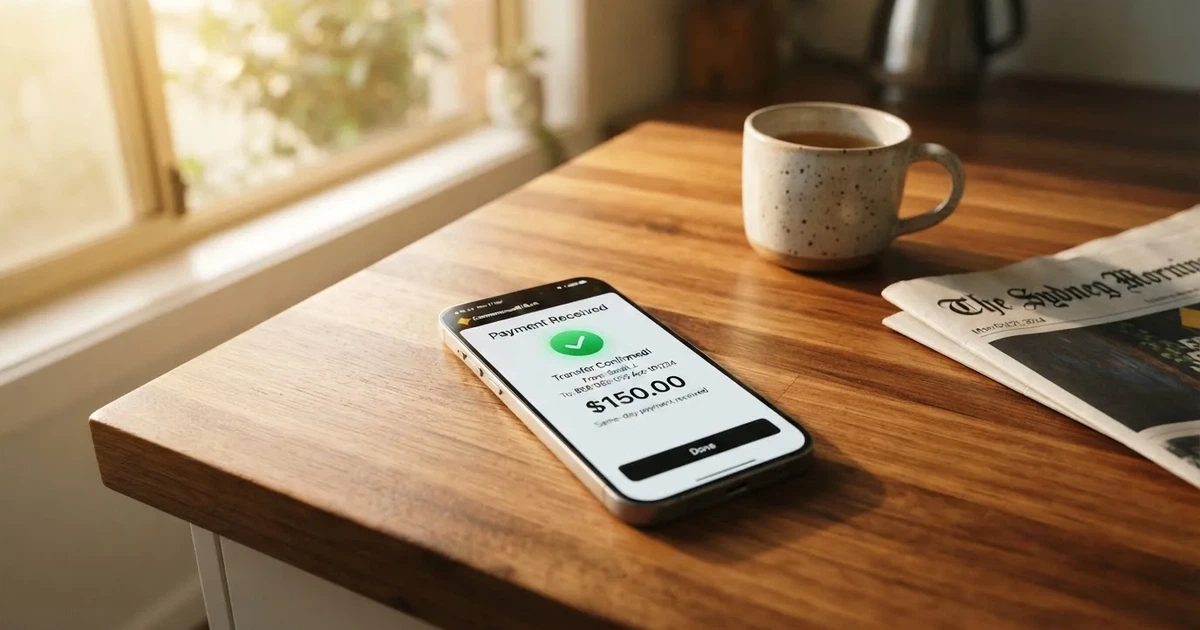
Osko is the fastest way to move money between Australian bank accounts. That is its selling point and the reason offshore casino marketing copies its logo into deposit pages. It is also, for Australians, the fastest way to send money to a service that the regulator has been publicly asking to be blocked. The ACMA has issued formal warnings to the operators behind eleven brands reviewed below, and has directed Australian ISPs to block more than 1,751 illegal gambling and affiliate sites since November 2019. Reading the marketing page first and the regulator’s page later is the expensive order. This page is written the other way around.
A short note before the shelves close. Every brand on the list below has been the subject of an ACMA formal warning for serving casino content to people in Australia. Online casino games and online pokies cannot be licensed anywhere in Australia. A licence displayed in a footer belongs to an offshore regulator and changes nothing about that. What changes is who will help a reader who is refused a withdrawal — and on that score an offshore licence is worth exactly what the offshore licence holder chooses to make of it.
Table of Contents
- How Osko actually settles — and what that means for a deposit
- The legal frame: what the Interactive Gambling Act actually prohibits
- Why Australian banks are starting to refuse the very transfer that arrives in a minute
- What using Osko at an offshore casino actually costs — the arithmetic
- The brand-by-brand picture — what the ACMA has actually done
- What this list collectively tells a reader
- Responsible-gambling supports that apply to an Australian reader
- The numbers behind the marketing — what an Osko deposit looks like to the bank
- What the page is for, and what it is not
- Frequently asked questions
How Osko actually settles — and what that means for a deposit
Osko is a brand run by Australian Payments Plus, the same organisation behind PayID and BPAY. A transfer bearing the Osko logo moves between participating Australian banks and financial institutions in under a minute, around the clock, including weekends and public holidays. It runs on top of the New Payments Platform, the real-time infrastructure the Reserve Bank of Australia built and operates, which settled to roughly A$7 billion of payments a day across more than 100 connected institutions at the last published count. A player does not sign up to Osko separately; it appears inside the “Pay Anyone” section of their bank’s app, and a payment goes through fast whether it is addressed to a PayID or to a BSB and account number.

Three details matter for the casino case. First, a payment to a PayID shows the account-holder’s name on the confirmation screen before the transfer is sent — Australian Payments Plus warns that being asked to pay a PayID on an illegal gambling site is almost certainly a scam indicator. Second, AUSTRAC’s threshold-transaction reporting rule applies only to physical cash; ordinary electronic bank transfers are not subject to a per-transaction report at any amount, so a series of $300 Osko deposits does not by itself trip an AUSTRAC filing. Third, the description field on an Osko payment can carry up to 280 characters; the player, the bank and the operator all see that description. A bank that scans descriptions for gambling-related terms can decline the transaction before it ever leaves the sender’s account.
The settlement speed is the entire marketing pitch for Osko at casino sites. The honest description is shorter: a deposit that arrives in under a minute is a deposit that has been declined or honoured before the player has had time to reconsider. The pause that a slower transfer would have inserted is what responsible-gambling research elsewhere calls a friction point. Osko removes it. That is what the operator is paying for when it advertises the logo.
The legal frame: what the Interactive Gambling Act actually prohibits
Online casino is prohibited in Australia. The Interactive Gambling Act 2001, as strengthened by the Interactive Gambling Amendment Act 2017, makes it an offence for a provider to supply online casino games, online pokies or in-play betting to a person physically in Australia. No state or territory licenses those products. What is licensable is wagering on races and sporting events placed before the event, lotteries and keno — and in practice most online and phone bookmakers running an Australian-facing product are licensed in the Northern Territory, where the Racing and Wagering Commission has 52 of them on its books and meets once a month in Darwin.
The ACMA is the regulator that acts against offshore providers. It investigates, issues formal warnings, and asks Australian internet service providers to block illegal services. The enforcement picture is not theoretical. By June 2026 the ACMA had asked ISPs to block 1,751 illegal gambling and affiliate marketing websites since the first blocking request in November 2019, and more than 230 unlicensed services had left the Australian market since enforcement was intensified in 2017. The latest published round, reported on 26 June 2026, directed ISPs to block another 12 sites in one batch — 7Signs, ChromaBet, Donbet, Duospin, Freshbet, Slots Gem, Jacks Club, Lucky Start, Pointsbetz.com, Spinrise, Vinyl Casino and Wildsino. H2 Gambling Capital’s 2025 estimate puts Australian losses to illegal gambling sites at roughly A$3.9 billion a year, with the share of gambling going through legal channels falling from 74 per cent in 2021 to 64 per cent.
The Individual player is not prosecuted under the IGA — the law targets the provider. That detail gets cited by offshore sites as if it were a green light. It is not. What it means in practice is that the consequences fall on the operator, not the player, and that an Australian who hands money to one of these services has no Australian consumer protection, no Australian complaints body and no Australian recourse when a withdrawal is refused. The site can be blocked with a balance still sitting in it. That risk is borne entirely by the player.
The 2026 reform package sits in this frame too. The Interactive Gambling Amendment (Gambling Reform) Bill 2026 passed Parliament on 19 August 2026. Its advertising and inducement measures commence 1 January 2027 — law with a start date, not yet in force on this page, and worth tracking through the rest of the year.
Why Australian banks are starting to refuse the very transfer that arrives in a minute
Three of the four major banks now operate gambling transaction blocks at the card level. Westpac refuses authorisation of transactions registered under the merchant category code for “Betting/Casino Gambling” on eligible personal credit and debit cards. ANZ’s block, activated inside the ANZ app, extends beyond the physical card: it also blocks gambling transactions made through a digital wallet such as Apple Pay on an eligible card, and removing the block again requires a 48-hour waiting period. ANZ warns, fairly, that not every gambling transaction will be blocked and that some non-gambling transactions might be blocked in error.
The mobile wallet context matters more than it used to. By the end of 2025 Apple Pay, Google Pay and Samsung Pay transactions collectively accounted for around 45 per cent of all card payments in Australia by number. Where the merchant category code sits underneath the wallet token, the block can still trigger. Apple itself charges no consumer fee for using Apple Pay; any surcharge comes from the merchant’s own card-processing fees. The transaction limits and PIN requirements are set by the card issuer or merchant, not by Apple.
Credit cards and credit-related products are banned as a payment method for licensed Australian online wagering as of 11 June 2024, with penalties up to A$247,500 for operators that accept them. That ban also constrains gambling use of linked digital wallets. The legal deposit routes for a licensed Australian wagering service are debit card, bank transfer, PayID, Osko and BPAY. An offshore casino asking for a credit card or a crypto deposit is signalling, in passing, that it is operating outside the Australian rules on payment.
Osko sits on the legal side of that list — and that is the marketing point. The bank transfer settles in under a minute; the receiving bank cannot tell from the rail alone that the money is destined for an offshore casino rather than any other instant transfer. What the bank can tell is the description field, and what the issuer can tell is the merchant category code behind the operator’s payment processor. A bank that has turned on its gambling block is increasingly choosing to refuse the transfer on its own terms, which is a different kind of consequence from the ACMA’s enforcement and falls directly on the player who tried to send it.
What using Osko at an offshore casino actually costs — the arithmetic
The page’s one prescribed calculation asks a single question: at the rate the ACMA has been blocking sites since the first blocking request in November 2019, what is the running rate of removal? The arithmetic is straightforward and uncomfortable. From November 2019 to June 2026 is roughly 79 months. 1,751 blocked sites over 79 months is about 22 sites a month, with some monthly variance.
| Period | Sites blocked | Months | Monthly rate |
|---|---|---|---|
| November 2019 – June 2026 | 1,751 | 79 | ~22 per month |
A reader who picks one of these sites is picking one of the brands the ACMA has been able to act on. The arithmetic, stated as a band rather than a single figure, is the right shape because enforcement rounds are not monthly and the count is uneven. The trend, however, points in one direction: more blocks, not fewer, and the regulator has not slowed down. The implication for the player is that an offshore casino accessible this month may be on a block list next month, and that the brand’s own existence as an Australian-facing destination is a depreciating asset.
The conditional cost of an Osko deposit lands on the player in two ways. The first is the speed that was just discussed — a one-minute settlement removes the friction a slower rail would have provided. The second is the bank’s own response when the block fires, which is that the deposit never arrives and the player is left looking at a declined transaction and an account they cannot fund. Both costs are paid by the same person.
The brand-by-brand picture — what the ACMA has actually done
The table below lists the eleven brands the ACMA has acted against in the period covered by this page. None of them is licensed in Australia to offer casino games. Each row shows the ACMA action, the operator named in the ACMA’s own publication, and what the listings say about Osko support where the listings say anything.
| Brand | ACMA action and date | Operator named by the ACMA | Subject support |
|---|---|---|---|
| RocketPlay | Formal warning, March 2026 (earlier Dama N.V., May 2022) | Pulsup Ltd | — |
| Level Up Casino | Formal warning, May 2022 | Dama N.V. | listings-only |
| Woo Casino | Formal warning, March 2025 | Dama N.V. | — |
| Spirit Casino | Formal warning, May 2025 | Dama N.V. | — |
| National Casino | Formal warning, July 2025 | Consolutetish S.R.L. | listings-only |
| Bizzo Casino | Formal warning, July 2025 (earlier TechSolutions, 2022) | Consolutetish S.R.L. | — |
| Ignition Casino | Formal warning, July 2025 | Bamboo Media | — |
| Instant Casino | Formal warning, February 2025 | EOD Code SRL | listings-only |
| Jackbit | Formal warning, April 2026 | Ryker B.V. | — |
| Casino Intense | Formal warning, April 2025 | Sterplay Holding Ltd | listings-only |
| Sky Crown | Formal warning, September 2022 | Hollycorn N.V. | — |
The table reads as it does because Osko support is, on the publicly listed Australian-facing pages the page can verify, mostly absent. Where the listings reference Osko at all, it appears as a payment option the site advertises to Australian customers — which is the configuration the ACMA’s formal warnings target. The dashes in the right-hand column mean the page has no listing-source claim to carry. They do not mean a deposit will be declined. They mean no third-party listing confirms Osko as a supported rail for that brand, and the operator’s own deposit page is the only source left, and the operator’s deposit page is what the ACMA has been warning Australians about.
The eleven brands below are reviewed one at a time. Each carries the same baseline — no Australian licence, an ACMA action on the public record, no consumer protection under Australian law — and each has its own detail that pulls it apart from the ten beside it.
RocketPlay — the brand with two warnings on the same operator family
Pulsup Ltd received a formal warning in March 2026 over Rocketplay.com.au. The brand sits inside a wider pattern: Dama N.V., an operator that runs a string of casino brands, drew a separate ACMA formal warning in May 2022 that covered six of its brands, Rocketplay among them. Two warnings, separated by almost four years, on overlapping ownership is the kind of paper trail a reader should expect to find when the operator has continued to take Australian-facing business despite the first warning. The site’s Australian-facing page still resolves. The ACMA’s request to ISPs to block the site is the regulator’s response.
What the listings say about Osko is silent. RocketPlay’s deposit page is the only source, and it is the source the ACMA has warned against. There is no figure on this page to multiply against the Osko deposit speed, because the brand does not give the page one to multiply. The conditional cost is the speed of a transfer to a brand whose Australian-facing endpoint has been warned against twice.
The verdict is the regulator’s, not the page’s. A reader who arrives at RocketPlay via an Osko deposit is paying the same one-minute transfer to a brand whose Australian presence has been the subject of two formal warnings separated by four years. The marketing material will not mention that.
Level Up Casino — the original Dama N.V. warning
Level Up was named in the May 2022 ACMA formal warning to Dama N.V., one of six brands on a single notice that also covered Bambet, Dazard, Rocketplay, Wild Tornado and Cobra Casinos. The Dama cluster is the densest single body of operator-level ACMA action in the table above, and Level Up is part of the original notice rather than a later addition. The pattern across the Dama brands — repeated warnings, repeated ownership overlaps — is the pattern a regulator builds when its earlier action has not changed the operator’s behaviour.
The listings reference Level Up as an Australian-facing brand with a deposit page that mentions Osko. That is the limit of what the listings establish. Anything beyond the rail name is the operator’s own description of itself, and the operator is the one the ACMA warned. The verdict is that Level Up carries the oldest Dama warning in the table; the speed advantage of Osko lands on a brand whose Australian presence was on the regulator’s record first.
Woo Casino — the Dama N.V. brand that re-entered the warning list in 2025
Woo Casino drew a fresh ACMA formal warning in March 2025, three years after the original Dama N.V. notice. The intervening three years did not change the operator’s Australian-facing business enough for the regulator to drop the case. The brand is the same as the one in the original notice, the operator is the same family, and the ACMA’s action is the same kind of action. The repetition is the detail that pulls Woo apart from the brands warned only once.
No independent listing confirms Osko support for Woo Casino. Because information about deposit rails comes from the operator itself—a family already warned twice by the ACMA—the speed of the transaction does not mitigate the operator’s regulatory history.
Spirit Casino — the second Dama N.V. brand on the 2025 warning list
Spirit Casino followed Woo Casino by two months with its own ACMA formal warning in May 2025, again to Dama N.V. Two warnings to the same operator in three months, both for separate brands running Australian-facing business. The Dama cluster now occupies three rows of the table: the 2022 original, the March 2025 Woo notice and the May 2025 Spirit notice. The page is not in a position to say what the operator’s internal decision-making looked like; what it can say is that the regulator’s pattern is observable.
Listings for Spirit Casino provide no verification of Osko support. As the brand’s own payment information comes directly from the operator already warned by the ACMA, readers should weigh the convenience of the rail against the regulator’s history with the brand—including two formal warnings in a single quarter.
National Casino — the Consolutetish S.R.L. brand that pairs with Bizzo
National Casino drew an ACMA formal warning in July 2025, one of two brands named on the same notice to Consolutetish S.R.L. The other was Bizzo Casino. National is the brand that pairs with Bizzo through the operator — and the listing reference is to the regulatory side of Australian payments (AUSTRAC) rather than to a casino-specific source. That detail matters because the listing the page can cite is not a marketing claim; it is a regulator-facing reference, which sits on a different shelf from a deposit-page screenshot.
Whether the ACMA has taken action is a separate matter from the transaction rail: the payment arrives just as fast regardless of the brand’s regulatory status. The regulator’s record, however, provides a perspective on the operator that a one-minute transfer cannot.
Bizzo Casino — the brand with two operators on the warning record
Bizzo Casino is the row in the table with the longest paper trail. The 2025 ACMA formal warning to Consolutetish S.R.L. was the second; an earlier 2022 ACMA formal warning had already been issued to TechSolutions (CY) Group Limited and TechSolutions Group N.V. over the same brand. Two operators, one brand, two warnings — the kind of ownership history a reader gets to see only by following the regulator’s publications rather than the operator’s footer.
Independent verification of Osko at Bizzo Casino is missing. With the brand having passed through multiple corporate operators, all of which drew warnings from the ACMA, the fast arrival of a payment offers no security regarding the operator’s long-term standing.
Ignition Casino — the Bamboo Media brand that travels under a US-facing name
Ignition Casino drew an ACMA formal warning in July 2025, to Bamboo Media, an operator that has previously run US-facing poker and casino products. The Australian-facing version of the brand is the one the ACMA has acted against, which is the configuration that gets an Australian reader to a US-themed casino site. The operator’s brand equity is the cross-border asset the ACMA’s action targets.
The listings do not carry an Osko reference for Ignition Casino. The deposit page is the only source for an Australian reader who has been redirected from a US-facing product page. The verdict is that an Osko transfer to Ignition settles as fast as anywhere else on the list, and the operator on the receiving end has chosen to expose an Australian-facing endpoint despite carrying a US-facing brand identity.
Instant Casino — the February 2025 warning that pulled in a listings reference
Instant Casino received an ACMA formal warning in February 2025, to EOD Code SRL, and is one of the three brands in the table where the listings reference actually says something about Osko. The listing reference is to ecoPayz and PayID rather than to Osko by name, which is the configuration that matters: a deposit page that routes the Australian reader through PayID is, by AP+’s own warning, exactly the configuration that should make the reader pause to look at the account-holder name on the confirmation screen.
The verdict is that Instant Casino carries an explicit listing reference for related rails, and that the listing reference and the ACMA warning together describe a brand that knows the Australian reader is at the other end of the transfer.
Jackbit — the April 2026 warning that shares an operator with CasinOK
Jackbit received an ACMA formal warning in April 2026, to Ryker B.V., on the same notice as CasinOK. The operator naming two brands at once is a configuration the ACMA has used several times across the table. What distinguishes Jackbit is the date: it is the most recent warning in the table, and the latest row in the regulator’s record at the time of writing.
Independent listing sources do not verify Osko support for Jackbit. Relying solely on the brand’s deposit page means accepting information from an operator the ACMA has identified only recently. The speed advantage of Osko remains identical across all brands, but the risk profile shifts depending on the regulator’s latest findings.
Casino Intense — the Sterplay brand with a 2025 warning
Casino Intense received an ACMA formal warning in April 2025, to Sterplay Holding Ltd. The brand is one of the three rows where the listings carry a reference, this time pointing at AUSTRAC, an IT news outlet and NAB — a configuration that puts the regulator and a major Australian bank on the same line as the brand’s name. The configuration is the same shape as Instant Casino’s, with a different operator behind it.
The verdict is that the listing reference on Casino Intense’s row is not an endorsement; it is a record that the brand’s name has appeared in regulator-and-bank-facing publications before. The Osko transfer does not change that record.
Sky Crown — the Hollycorn N.V. brand on the oldest warning in the table
Sky Crown carries the oldest ACMA formal warning in the table, issued to Hollycorn N.V. in September 2022, alongside its sister brand Blue Leo. The Hollycorn cluster is the only one of the table’s named operators that has not reappeared in a later warning, which is a configuration worth flagging in its own right: an operator who has stopped appearing in the warning list is an operator whose Australian-facing behaviour has either changed or paused, and the page has no way to tell which.
No listing source provides Osko verification for Sky Crown. While this brand’s formal warning dates back to 2022, the age of an enforcement action is not an indicator of current status; a reader’s risk profile remains tethered to the brand’s history with the regulator, regardless of transfer speed.
What this list collectively tells a reader
The eleven brands above are not a ranking. They are the eleven brands the ACMA has named in formal warnings during the period this page covers, in the order the regulator named them. The names repeat — Dama N.V. appears three times, Consolutetish S.R.L. twice, and the TechSolutions/Hollycorn/Sterplay/Bamboo/EOD Code SRL/Ryker B.V./Pulsup cluster each appears once. The repetition is itself the information: an operator that shows up more than once has continued to operate Australian-facing endpoints through at least one warning cycle, which is the configuration a reader should weigh against the Osko speed advantage.
The numbers in the table are the regulator’s, the operators are the regulator’s, and the Osko column is either the listing reference’s or a dash. None of the figures in the table comes from the operator’s own deposit page. That is the page’s rule for itself, and it is the rule that keeps the rest of the comparison honest.
Responsible-gambling supports that apply to an Australian reader
The supports that apply are the Australian ones. BetStop, the National Self-Exclusion Register, has been live since August 2023. It binds Australian-licensed online and phone wagering services — and the binding is the limit. An offshore casino is not connected to BetStop, and a player who has registered with BetStop is not protected from opening an account at one of the brands above. The register covers the licensed side of the market; the offshore side is the part that sits outside it.
The National Gambling Helpline is 1800 858 858, free, 24 hours a day, with chat at Gambling Help Online. The line and the chat are the entry points a reader who has already sent an Osko transfer can use to talk about what happens next. They do not retrieve the money; they do what helplines are for. Gambling Help Online is also where the state-based self-exclusion schemes sit, which is the layer BetStop does not cover for venues outside the licensed wagering market.
The bank’s own block is part of it too. Westpac’s card-level block, ANZ’s card-and-wallet block with its 48-hour removal delay, and the equivalent products at the other major banks are the levers that stop a transfer before it leaves the account. They are the friction Osko removes at the casino end and reinstates at the bank end.
The numbers behind the marketing — what an Osko deposit looks like to the bank
The one-minute settlement is the headline. The bank sees more. AUSTRAC’s threshold-transaction-report rule applies only to physical cash; an electronic bank transfer is not subject to a per-transaction report at any amount, so the deposit itself does not file a report. The bank, however, can refuse the transfer on its own terms. The gambling transaction blocks at Westpac and ANZ are the visible example; the underlying mechanism is the merchant category code that sits behind the casino’s payment processor, and the description field the player fills in before pressing confirm. A bank that scans for gambling-related terms and a bank that refuses the MCC that sits under an offshore casino’s processor are two ways of saying the same thing.
A reader who turns on the bank’s gambling block first, and tries the deposit second, sees the system refuse the transfer cleanly. A reader who tries the deposit first sees it decline at the bank’s end with no recourse, because the casino has not received the money and the bank will not explain why. The order matters, and the bank block is the part of the system that runs against the Osko speed advantage rather than with it.
What the page is for, and what it is not
This page is for a reader asking which offshore casinos accept Osko in Australia, and who would rather read the regulator’s record than the operator’s footer before sending a transfer that settles in under a minute. It is not for a reader looking for a casino to play at. Online casino is prohibited in Australia; the brands reviewed above are the brands the ACMA has warned about; the Osko rail is the rail that moves the money to them. Reading this page does not change that. Reading it before sending the transfer, rather than after, is what changes the decision the reader gets to make.
Frequently asked questions
Is it legal for an offshore casino site to accept Osko from an Australian visitor?
No. The Interactive Gambling Act 2001 makes it an offence to provide online casino games or online pokies to a person in Australia, and no Australian state or territory licenses those products. The IGA targets the provider, not the player, which is why offshore marketing is happy to repeat the line that “players are not prosecuted”. The cost a player pays for that distinction is the absence of any Australian consumer protection, complaints body or recourse if a withdrawal is refused.
How quickly does an Osko transaction typically settle?
An Osko transfer between participating Australian banks arrives in under a minute, 24 hours a day including weekends. The speed is real. What the speed costs the player is the friction a slower rail would have provided, and what it costs an Australian-facing casino is the regulator’s case that the operator deliberately removed that friction to take Australian business.
Does using Osko offer any buyer protection if an offshore site refuses to pay out?
No. Osko is a bank transfer rail, not a card network with a chargeback process. Once the money has arrived in the operator’s account, the player’s bank has no mechanism to reverse it. An Australian-licensed wagering service sits inside the Australian dispute framework; an offshore casino does not, and Osko as a rail does not add one.
Can Osko be used to fund a licensed, land-based venue in Australia the same way it is used online?
Osko works inside the “Pay Anyone” section of a participating bank’s app and goes to any PayID or BSB-and-account-number destination. The legal position of the receiving venue is what changes, not the rail. A land-based venue operating under an Australian state or territory licence is a legal recipient; an offshore casino operating without one is not. The same transfer, two different destinations, two different consequences.
What deposit limits are commonly attached to Osko at offshore casino sites?
The limit on an Osko transfer is set by the sending bank, not by the receiving operator, and the receiving operator’s own minimum is usually at or near the smallest stake the casino offers. Banks do not publish a casino-specific minimum because there is no Australian-licensed casino for the minimum to apply to. The practical floor is whatever the operator’s deposit page names, and the practical ceiling is whatever the player’s own bank and daily transfer limit allow.
Why might a bank block an Osko transaction flagged as gambling-related?
The major banks operate gambling transaction blocks that look at the merchant category code and the description field on the transfer. Westpac refuses MCC-coded gambling transactions at card level; ANZ extends the block to wallet-based transactions and requires a 48-hour waiting period to remove it. The block does not always fire — the banks warn that some non-gambling transactions get caught and some gambling transactions slip through — but the trend is for more refusal, not less, and the refusal happens before the money leaves the account.