
CashtoCode at Australian-facing casinos: the price of an offshore deposit
CashtoCode presents itself as a clean alternative to a card deposit: a printed voucher, a twenty-digit code, no bank account shared with the casino, no e-wallet address on file. The appeal is real, and the catch is the one every offshore casino site carries — under the Interactive Gambling Act 2001 no online casino may lawfully take Australian players at all, so the operator offering the voucher is one the ACMA has either warned, blocked or left waiting in the queue. This page looks at what the deposit actually costs a player in Australia, not at how convenient the voucher is at the till.
The figures below are current as of 31 October 2026 and have been checked against the Australian Communications and Media Authority’s published warnings and blocking requests.
Table of Contents
- What a CashtoCode deposit costs the player before a spin is played
- Minimum deposits, voucher denominations and the gap between them
- CashtoCode at the cashier versus the alternatives an Australian actually has
- What an Australian-facing cashier looks like in practice
- The eleven offshore sites the ACMA itself has acted against
- How fast the ACMA has been moving, in real numbers
- Why the offshore casino cannot be licensed in Australia
- What a player actually keeps when an offshore site stops paying out
- How a player who wants to set up a guardrail actually does it
- How a player who has already deposited recovers what they can
- How the broader enforcement picture sits with CashtoCode specifically
- What the choices actually look like for a player at the till
- What to do if a CashtoCode deposit does not appear in the casino account
- Frequently asked questions
What a CashtoCode deposit costs the player before a spin is played
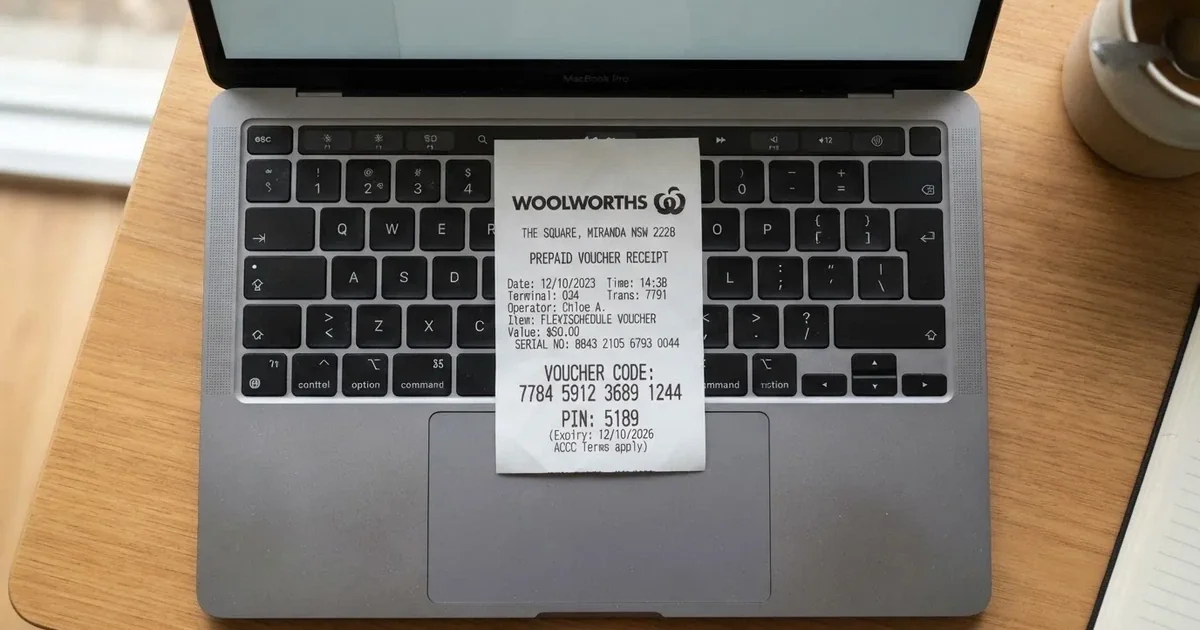
CashtoCode is a deposit-only instrument. The voucher is sold by resellers ranging from convenience stores to online platforms and carries no usage fee on the customer side, with any unused balance keeping its full value. The customer-facing price is genuinely low — but the customer’s deposit is not the same transaction as the customer’s risk, and this is where the comparison between CashtoCode and a card deposit turns.
A card deposit at a bank with an active gambling transaction block fails at the merchant category check before the money moves. The block sits on the card, not on the casino, and it is activated inside the banking app: at ANZ, Commonwealth Bank, NAB, Westpac and St George the toggle applies immediately and lifting it again takes up to two business days. With ANZ, the block also catches a gambling transaction made through a linked digital wallet such as Apple Pay on an eligible card. A CashtoCode deposit, by contrast, leaves the banking system entirely — the voucher is paid for in cash at a reseller or topped up through a separate wallet, and the bank’s merchant-category filter never sees a casino MCC. The transaction succeeds where a card would have been refused.
This is the first cost of using the voucher at an offshore site: it bypasses a guardrail the customer’s own bank would otherwise put up. A player who has asked their bank to refuse gambling transactions has, by choosing CashtoCode, asked the bank to keep refusing while routing the money through a channel the bank cannot police. That is a deliberate trade, and it deserves to be made deliberately.
The second cost is the absence of a chargeback right. Card deposits at offshore sites are already difficult to reverse once authorised, and the credit-card ban now in force for Australian-licensed online wagering since 11 June 2024 does not apply to an offshore casino that is not licensed in Australia at all — the ban is enforced by the ACMA against licensed providers, with penalties up to A$247,500 for non-compliance, and the offshore operator is not the addressee. What CashtoCode offers in exchange is anonymity of the payment rail, not consumer protection on the casino side. If a withdrawal is refused, the customer has the voucher’s redemption receipt and no Australian complaints body to present it to.
Minimum deposits, voucher denominations and the gap between them
CashtoCode eVouchers are sold in fixed denominations — typically starting at small ticket sizes that match the minimum deposits offshore casinos publish. The site’s deposit screen will set the floor, and the voucher’s denomination sets the ceiling on what one code clears in a single transaction. The mechanic is straightforward in principle: buy a voucher at or above the minimum, enter the twenty-digit code, the deposit lands.
The friction lives at the join. A site may publish a A$10 minimum deposit that no voucher denomination matches exactly, leaving the customer to round up to the next available ticket and over-fund the account by a small margin. Other sites publish minimums that align cleanly with the smallest voucher, and the deposit screen does the work. The CashtoCode catalogue is wide enough that the mismatch is rarely large, but it is the kind of detail a deposit-method comparison page usually waves past.
What the comparison rarely shows is what happens to the over-funded balance. A casino will not return an over-deposit because the deposit ceiling is set by the voucher denomination, not by the site’s payment screen — the money sits in the account until it is played or withdrawn through whatever route the operator offers for cash-outs. CashtoCode is deposit-only by design, so a withdrawal request at any of these sites uses a different rail entirely, with the casino’s own manual checks completing before the settlement lands back in an Australian account. The voucher is the entry door, not the exit.
CashtoCode at the cashier versus the alternatives an Australian actually has
A CashtoCode deposit succeeds where a card would be blocked and where a credit card is illegal. A bank transfer to a PayID is the closest Australian-licensed equivalent: it arrives in under a minute through Osko, twenty-four hours a day, including weekends, and paying to a PayID shows the name of the account holder before the transfer is sent. Australian Payments Plus warns that being asked to transfer to a PayID on an illegal gambling site almost certainly means a scam site — which is the clearest signal a player will get that the operator is not inside the Australian rules at all.
The wallet side is its own story. By the end of 2025, Apple Pay, Google Pay and Samsung Pay together accounted for around forty-five per cent of all card payments in Australia by number. Apple Pay itself charges no consumer fee; any surcharge comes from the merchant’s card-processing fees, not from Apple. Transaction limits and PIN requirements sit with the card issuer or the merchant, not with Apple. That last clause matters here: an Apple Pay transaction routed through an eligible card is still card-network traffic, and the issuer’s gambling block can still see it. ANZ confirms that its block catches gambling transactions made through a digital wallet on an eligible card, not just the physical card. So Apple Pay is not a stealth route around a gambling block — only CashtoCode, paid for in cash, is.
American Express sits outside the Reserve Bank’s July 2025 review proposing to remove surcharges on eftpos, Mastercard and Visa transactions — Amex is explicitly left out of scope. That is a market fact about merchant surcharging, not a route into offshore gambling, but it explains why some casinos surcharge Amex deposits heavily enough that a CashtoCode voucher looks cheap by comparison even before the convenience premium is counted.
The practical order for a player choosing between rails at an offshore cashier is therefore: a CashtoCode voucher paid for in cash bypasses every card-level control but offers no chargeback right; a card deposit on a card with an active gambling block will fail at authorisation; an Apple Pay or Google Pay transaction through an eligible card inherits the issuer’s block; a direct bank transfer to a PayID completes in under a minute and shows the payee’s name, which on an illegal site is the strongest warning sign the rail itself provides. The choice is not between safe and unsafe — none of these is sanctioned for an Australian online casino — but between a route that costs a control the player set up and a route that surfaces a warning the player can read.
What an Australian-facing cashier looks like in practice
A handful of payment methods recur across the offshore sites that list CashtoCode. The mix is roughly cards from Visa and Mastercard, e-wallets such as ecoPayz and Neteller, bank transfer and PayID on the Australian-facing brands, and vouchers — CashtoCode among them — for players who want the bank kept out of the loop. Bitcoin, Ethereum and a handful of other coins show up on the more crypto-tolerant sites, in spite of the digital-currency ban that applies to Australian-licensed wagering since 11 June 2024; on an offshore site the ban is not enforced against the operator.
The deposit screen at these sites rarely makes the legal position visible. The cashier lists CashtoCode, takes the twenty-digit code and credits the account; the Interactive Gambling Act 2001 is somewhere in the terms, not at the till. The cost to the player is the gap between the cashier’s silence and the ACMA’s record — a gap the next section opens up.
The eleven offshore sites the ACMA itself has acted against
Every brand below is one the Australian Communications and Media Authority has formally warned for offering prohibited interactive gambling services to people in Australia. The product — online casino games and online pokies — cannot be licensed anywhere in Australia, regardless of what licence the site displays in its footer. What follows is not a ranking and not a recommendation. It is the ACMA’s own list, with each operator named as the authority named it.
| Brand | ACMA action and date | Operator named by the ACMA | Subject support |
|---|---|---|---|
| RocketPlay | Formal warning, March 2026 | Pulsup Ltd | — |
| Level Up Casino | Formal warning, May 2022 | Dama N.V. | Listed by Westpac |
| Woo Casino | Formal warning, March 2025 | Dama N.V. | — |
| Spirit Casino | Formal warning, May 2025 | Dama N.V. | — |
| National Casino | Formal warning, July 2025 | Consolutetish S.R.L. | Listed by AUSTRAC and Wikipedia |
| Bizzo Casino | Formal warning, July 2025 | Consolutetish S.R.L. | — |
| Ignition Casino | Formal warning, July 2025 | Bamboo Media | — |
| Instant Casino | Formal warning, February 2025 | EOD Code SRL | Listed by ecoPayz and PayID |
| Jackbit | Formal warning, April 2026 | Ryker B.V. | — |
| Casino Intense | Formal warning, April 2025 | Sterplay Holding Ltd | Listed by AUSTRAC, ITnews and NAB |
| Sky Crown | Formal warning, September 2022 | Hollycorn N.V. | — |
A “Subject support” cell marked with an em dash carries no data on whether the brand lists CashtoCode at its cashier — research turned up no confirmation either way. The four brands with a “listings-only” tag are known to appear on third-party listings that mention CashtoCode among their accepted payment options, but that is what those listings report, not what each brand’s own cashier confirms. For a player comparing options, the distinction matters: the ACMA line is a fact about the operator; the CashtoCode line, where present, is a fact about an external page that may lag the cashier by months.
A handful of these warnings name the same holding company more than once. Dama N.V. carries four entries on this list — Level Up, Woo, Spirit and the earlier RocketPlay warning. Consolutetish S.R.L. carries two: National Casino and Bizzo Casino, with Bizzo already the subject of a 2022 warning to TechSolutions. The pattern is not new — it is the same handful of operators cycling through the ACMA’s enforcement pipeline as the regulator catches up with each new skin — and it tells a player that a brand’s corporate parent is often the more stable fact about the site than the brand name on the homepage.
RocketPlay — warned again twelve months after the first warning
The ACMA issued a formal warning to Pulsup Ltd over RocketPlay in March 2026. The same brand had earlier been the subject of a Dama N.V. warning in May 2022, when the ACMA named six Dama brands in a single round. The 2026 action targets a different operator entity, which suggests the brand has moved between corporate parents without moving off the ACMA’s radar. Research carries no confirmation that RocketPlay’s cashier lists CashtoCode. The verdict for a player comparing options is that this brand has changed hands at least once under formal warning — a pattern that makes the operator’s “licensed and regulated” footer worth reading twice before any deposit clears.
Level Up Casino — one of six Dama brands warned in a single round
The May 2022 ACMA warning to Dama N.V. named six brands in a single action: Bambet, Dazard, Level Up, RocketPlay, Wild Tornado and Cobra Casinos. Level Up is the one that has stayed closest to the original Dama identity in public listings — Westpac’s merchant category list carries the brand as a known gambling merchant, which is what makes a Westpac gambling block refuse the deposit at authorisation. Research carries no confirmation that Level Up lists CashtoCode specifically. The verdict: a long-warned brand with a stable operating company behind it, which is the kind of stability that should be read carefully rather than relied on.
Woo Casino — warned after the 2022 round
The ACMA issued a further formal warning to Dama N.V. over Woo Casino in March 2025, three years after the 2022 round that named Woo’s sibling brands. Woo has not been the subject of a separate operator-level action — the 2025 warning still names Dama N.V. as the addressee. Research carries no data on whether Woo’s cashier lists CashtoCode. The verdict: a brand that has stayed inside the same holding company through two enforcement rounds, which suggests the holding company itself is the level at which the ACMA is moving.
Spirit Casino — the 2025 Dama action that arrived separately
Spirit Casino was named in a separate May 2025 ACMA formal warning to Dama N.V., distinct from the March 2025 Woo Casino warning. Two Dama warnings in two months is the pattern that pushes a holding company to the front of the regulator’s queue. Research carries no data on whether Spirit Casino’s cashier lists CashtoCode. The verdict: a brand whose parent has been warned twice in one quarter, which is the closest a player gets to a leading indicator of further ACMA action.
National Casino — Consolutetish’s first appearance on the 2025 list
The July 2025 ACMA warning to Consolutetish S.R.L. named National Casino and Bizzo Casino together. National Casino is the cleaner of the two entries — a single brand, a single holding company, a single warning. AUSTRAC and Wikipedia entries list the brand as a known gambling merchant; the cashier confirmation is what those listings report, not what the operator has confirmed. The verdict: a brand whose regulatory exposure is recent and whose corporate parent has now been named twice, which means further action against the parent is the more likely next step than action against this brand in isolation.
Bizzo Casino — a brand warned twice under different operators
Bizzo Casino was named in the July 2025 ACMA warning to Consolutetish S.R.L., and had already been the subject of a 2022 formal warning to TechSolutions (CY) Group Limited and TechSolutions Group N.V. Two warnings under two different operators is the strongest signal on this list that the brand itself, not just the corporate parent, attracts enforcement. Research carries no data on whether Bizzo Casino’s cashier lists CashtoCode. The verdict: the brand is the recurring fact here, not the holding company, which is the rarer pattern and the more serious one for a player weighing deposit routes.
Ignition Casino — the 2025 Bamboo Media warning
The July 2025 ACMA warning to Bamboo Media named Ignition Casino. Research carries no data on whether Ignition Casino’s cashier lists CashtoCode. The verdict: a brand under a holding company that has only one entry on the ACMA’s published list so far, which is less informative about future enforcement than the Dama or Consolutetish patterns — a single warning is a snapshot, not a trend.
Instant Casino — the 2025 EOD Code warning
The February 2025 ACMA warning to EOD Code SRL over Instant Casino was an early action of the year and arrived before the larger July 2025 round. ecoPayz and PayID listings mention Instant Casino among the brands associated with their payment options, but those are what the listings report, not what Instant Casino’s cashier confirms directly. The verdict: a brand with a single published warning from 2025 and a payment-rail footprint broad enough to support several deposit methods, including CashtoCode at the listings level — the operator-level confirmation is the gap.
Jackbit — the 2026 Ryker warning
The April 2026 ACMA warning to Ryker B.V. named Jackbit and CasinOK together. Research carries no data on whether Jackbit’s cashier lists CashtoCode. The verdict: a brand that shares a 2026 warning with a sibling under the same holding company, which is the same pattern as the Dama and Consolutetish rounds — the ACMA moves against the operator, not the skin, and a player who finds a familiar-looking brand under a new name has probably found a sibling skin rather than a new operation.
Casino Intense — the 2025 Sterplay warning
The April 2025 ACMA warning to Sterplay Holding Ltd over Casino Intense was an early action of the year, ahead of the EOD Code round. AUSTRAC, ITnews and NAB all list Casino Intense as a known gambling merchant; as with the others, this is what those listings report, not what the brand’s cashier confirms. The verdict: a brand with a single published warning and a payment-rail footprint broad enough that several deposit methods — CashtoCode among them — appear at the listings level. The operator-level confirmation is the same gap as elsewhere on this list.
Sky Crown — the 2022 Hollycorn warning
The ACMA issued a formal warning to Hollycorn N.V. over its Sky Crown and Blue Leo casino services. The action is older than most on this list, which makes it less informative about the brand’s current enforcement exposure but more informative about how long a brand can stay live under warning. Research carries no data on whether Sky Crown’s cashier lists CashtoCode. The verdict: a brand whose 2022 warning has not been escalated to a blocking request on the published record, which is the cleaner reading of “still operating” — it does not mean the brand is clean, only that the ACMA has not moved to the next step.
How fast the ACMA has been moving, in real numbers
The blocking rate is the one figure on this page that gives a reader a sense of the speed at which the regulator is catching up. As reported in June 2026, a total of 1,751 illegal gambling and affiliate marketing websites had been blocked since the first blocking request in November 2019, and more than 230 unlicensed gambling services had left the Australian market since enforcement was strengthened in 2017. Spread across the roughly six years and seven months between the first blocking request and the June 2026 round, the running total works out at somewhere between twenty-two and twenty-three sites blocked per month on average. That is the long-run pace.
The monthly pace masks the lumpiness. The June 2026 round alone asked Australian internet service providers to block twelve more illegal gambling websites — 7Signs, ChromaBet, Donbet, Duospin, Freshbet, Slots Gem, Jacks Club, Lucky Start, Pointsbetz, Spinrise, Vinyl Casino and Wildsino — which is roughly half a month’s average cleared in a single round. The ACCC’s authorisation of NPP Australia’s merger with BPAY and eftpos in 2021, which brought the three Australian retail payments rails under one roof, sits behind a parallel quiet statistic: PayID registrations passed twenty-five million by April 2025, on a platform that requires participants to keep monthly outages to under two minutes. A bank transfer to a PayID on an illegal site is faster to send and easier to identify than a CashtoCode voucher purchased in cash, and the speed works against the player, not for them.
A reasonable band for the blocking rate, then, is twenty-two to twenty-three sites per month on the long-run average, with single rounds occasionally clearing half a month’s average or more. The condition on the figure is that it is the rate at which the ACMA has successfully requested blocks since November 2019, not the rate at which new illegal sites appear — which is faster, and is what keeps the running total rising rather than settling.
Why the offshore casino cannot be licensed in Australia
The Interactive Gambling Act 2001, strengthened by the Interactive Gambling Amendment Act 2017, makes it an offence to provide online casino games, online pokies or in-play betting to a person in Australia. No state or territory licenses them. What is licensable is wagering on races and sport placed before the event, lotteries and keno — in practice licensed by the Northern Territory, whose Racing and Wagering Commission regulates fifty-two of Australia’s online bookmakers, including Sportsbet, Bet365 and Ladbrokes, and meets once a month in Darwin without full-time staff.
The credit-card ban now in force for Australian-licensed online wagering since 11 June 2024 is the clearest illustration of how the licensed market is built: the ACMA enforces it against licensed providers, with penalties up to A$247,500 for non-compliance, and the legal deposit routes are narrowed accordingly. A site asking an Australian for a credit card or a crypto deposit is, by that test, operating outside the Australian rules — which is the same test a player can apply to any offshore cashier without reading the licence footer.
The 2026 reform is a statute with a start date. The Interactive Gambling Amendment (Gambling Reform) Bill 2026 passed Parliament on 19 August 2026; its advertising and inducement measures commence 1 January 2027. On a page read in 2026 the reform is law but not in force, and the protections it brings are not yet active.
The tax position sits separately. Gambling winnings of a recreational player are not assessable income under section 6-5 of the ITAA 1997, and losses are not deductible — unless the person carries on a business of gambling, which is a different question entirely. The ATO is the right address for the reader’s own position; the model answer is “check with the ATO”.
What a player actually keeps when an offshore site stops paying out
The offshore site’s terms grant the operator the manual checks the section above alluded to. A withdrawal request is reviewed against anti-fraud, anti-money-laundering and bonus-abuse rules; on a CashtoCode-funded account, the deposit rail is anonymous by design, which means the manual checks focus on the withdrawal rail and on the account holder’s identity documents. A player who funded anonymously is now asked to identify themselves to take the money back out, and the casino holds the discretion to refuse or to delay while it checks.
There is no Australian complaints body to escalate to. BetStop, the National Self-Exclusion Register, is live since August 2023 but binds only Australian-licensed online and phone wagering services; an offshore casino is not connected to it. The National Gambling Helpline is 1800 858 858 — free, twenty-four hours a day — and the chat is at Gambling Help Online. The AUSTRAC threshold-transaction-report rule, which requires reporting of transfers of A$10,000 or more, applies only to physical cash; ordinary electronic bank transfers are not subject to that per-transaction reporting requirement, regardless of the amount sent. That is a fact about bank reporting, not about casino withdrawals, but it tells a player what their bank will and will not flag.
The ACMA can direct internet service providers to block a site with a balance still on it. The June 2026 round added twelve sites to that list in a single action. A player whose preferred site is blocked mid-session has lost the address before they have lost the balance, and the address is the only handle the ACMA’s enforcement has on the operator.
How a player who wants to set up a guardrail actually does it
The card-level blocks are the most direct route. Westpac’s gambling block works at card level: it refuses authorisation of transactions registered under the merchant category code “Betting/Casino Gambling” on eligible personal credit and debit cards. ANZ’s block catches transactions through a linked digital wallet such as Apple Pay on an eligible card, not just the physical card — a distinction that matters given the share of card payments Apple Pay, Google Pay and Samsung Pay now carry, around forty-five per cent of all card payments in Australia by number at the end of 2025. Commonwealth Bank, NAB and St George offer the same self-activation through their apps. Once requested, a block is usually applied immediately; lifting it again can take up to two business days, and at ANZ the removal requires a forty-eight-hour waiting period, with the bank’s own warning that not all gambling transactions will be blocked and some non-gambling transactions might be blocked in error.
These controls are not the same as self-exclusion. BetStop is the National Self-Exclusion Register and binds Australian-licensed services; a player who wants an offshore casino on the list has to ask the operator directly, and the offshore operator has no obligation to comply. The card-level blocks are a sturdier guardrail precisely because they sit with the bank rather than the casino.
A cash-funded CashtoCode voucher bypasses all of these. The transaction succeeds because the bank never sees a casino MCC. The control is gone by design, and the cost of using the voucher at an offshore site is the deliberate surrender of it.
How a player who has already deposited recovers what they can
The first move is the cashier’s withdrawal screen. The site will request identity documents; on a CashtoCode-funded account the documents are the only link between the player and the balance, and providing them is the cost of getting the money back. The casino’s processing time is on the operator’s terms, and research carries no fixed figure for any of the eleven brands above. The second move, if the withdrawal is refused, is the casino’s internal dispute process — which on an offshore site is the last internal process available. The third move, if the internal process fails, is the player’s bank, which cannot reverse a CashtoCode transaction by definition; the only Australian rail where a chargeback right survives in any form is a card, and the offshore casino that accepts cards is the offshore casino that has already taken the credit-card ban’s commercial risk. The fourth move is the ACMA, which can investigate the operator but cannot order a refund to an individual player — the IGA targets the provider, not the customer.
The H2 Gambling Capital 2025 estimate is that Australians lose about A$3.9 billion a year to illegal gambling sites, and that the share of gambling going through legal channels fell from seventy-four per cent in 2021 to sixty-four per cent. Those are population-level figures, not a forecast of any single withdrawal. They are the backdrop against which a player who has already deposited decides whether to push the dispute further or to write the balance off.
How the broader enforcement picture sits with CashtoCode specifically
CashtoCode’s own site lists gambling game providers — Pragmatic Play, Evolution, NetEnt and Playtech among them — in its catalogue filters. The voucher has been on the market since 2013 and the eVoucher brand’s website copyright is held by Eightball Marketing Services LLC. The voucher is sold in more than twenty-five currencies. None of that is a regulatory fact about any specific offshore casino; it is the corporate footprint of the payment rail itself, and it tells a player that the rail is built for the gambling market rather than adopted into it.
The ACMA’s enforcement works at the operator level. The card-level blocks work at the bank level. CashtoCode sits in the gap between them — visible to the regulator as a payment option at offshore sites, invisible to the bank as a casino merchant category code. The cost of the deposit to the player is the cost of that gap: a transaction that succeeds where a card would have failed, at a casino the regulator has already warned, with no complaints body behind the cashier.
What the choices actually look like for a player at the till
A player standing at an offshore cashier with a CashtoCode voucher in hand has already made the decision the ACMA’s enforcement is built around. The eleven brands above are not the whole list — they are the brands the ACMA has formally warned, not the brands it has not yet reached. The voucher is not the risk; the casino is. Paying for it in cash costs the bank-level control, not the player’s money. Playing through it costs the player the balance, on a site whose licence footer is a statement the ACMA has already disputed.
The reasonable reader’s question at this point is not “which of these eleven is safest” — none is licensed in Australia — but “what does it cost to play at any of them, and what guardrail am I giving up by funding the deposit this way”. The card-level block, BetStop and the ACMA’s blocking list exist precisely to make that question easier to answer; the cashier’s silence on the legal position is the cost the next section closes on.
What to do if a CashtoCode deposit does not appear in the casino account
The first check is the voucher itself: a twenty-digit code entered correctly, against a deposit request that matches the voucher’s denomination. The second is the casino’s transaction log, which on most offshore sites shows pending versus settled deposits. The third is the cashier’s published processing time, which for a CashtoCode deposit is typically minutes but can stretch when the operator’s manual checks engage. The fourth is the casino’s support channel — email or live chat — with the voucher redemption receipt as the reference.
CashtoCode’s customer-side position is that the voucher carries no usage fee and that any unused balance keeps its full value, so a partial credit is the casino’s read of the transaction, not the voucher’s. A player whose deposit is held pending past the cashier’s published window has a fact pattern to escalate — to the casino, to the payment provider, and eventually to the ACMA — but the escalation ladder on an offshore site is short, and the balance is on the operator’s side of it throughout.
Frequently asked questions
Is it legal for an online casino to accept CashtoCode from a player in Australia?
No. Under the Interactive Gambling Act 2001, online casino games and online pokies cannot be licensed in Australia at all, and no state or territory issues the licences offshore sites display in their footers. The Interactive Gambling Amendment Act 2017 strengthened the prohibition and the ACMA enforces it against the provider, with the player not prosecuted but unprotected. A CashtoCode deposit at an offshore casino is therefore lawful for the customer to send and unlawful for the operator to accept — and the operator’s licence footer does not change that.
What is the smallest deposit a CashtoCode casino site usually asks for?
Offshore casinos commonly publish a minimum deposit in the A$10 to A$20 range, and CashtoCode eVouchers are sold in fixed denominations that can match or overshoot that floor. The cashier sets the deposit minimum and the voucher sets the deposit ceiling for a single code; the two are not always the same figure, and any over-funded balance sits on the casino’s side until it is played or withdrawn through whatever rail the operator offers for cash-outs.
Does a CashtoCode withdrawal clear any faster than a card withdrawal at these sites?
CashtoCode is deposit-only by design — the official site offers no withdrawal option, so a CashtoCode-funded account has to cash out through a different rail entirely. The casino’s manual checks on the withdrawal request apply regardless of how the deposit was funded, and an anonymous deposit rail can actually slow the check because the operator’s anti-fraud review focuses on the withdrawal rail and the account holder’s identity documents. A card withdrawal’s speed depends on the issuing bank’s processing time and the casino’s own queue, not on the deposit method.
Can CashtoCode be used at every offshore pokies-style site, or only some of them?
CashtoCode is accepted at a meaningful share of offshore casino sites, but not all of them — the cashier decides, not the payment provider, and a site’s payment page is the only place that confirms it. Third-party listings mention CashtoCode at several of the eleven brands the ACMA has warned, but that is what those listings report, not what each brand’s own cashier confirms, and the operator-level confirmation is the gap a player needs to close before relying on it.
Does depositing with CashtoCode add an extra fee at these casino sites?
The voucher itself carries no usage fee on the customer side and any unused balance keeps its full value, but the reseller may charge a service fee at the point of purchase. The casino may also apply its own processing margin on the deposit, which varies by operator. The combined cost is generally modest against the deposit amount, but it is the smallest of the three costs the page has walked through — the bypass of the bank’s gambling block and the absence of a chargeback right are the larger ones.