
High volatility slots in Australia: what the Interactive Gambling Act 2001 leaves a reader to do
Anyone searching for high volatility slots in Australia is, in practice, asking for an online casino shortlist — a ranked list of offshore brands that take Australian dollars and run a thousand titles of wildly swinging pokies-style reels. The honest answer is that no such list can be assembled for an Australian reader in 2026. The Interactive Gambling Act 2001, as tightened by the Interactive Gambling Amendment Act 2017, makes it an offence to provide online casino games, online pokies and in-play betting to anyone in Australia, and no state or territory regulator issues a licence for any of it. What follows is the working shortlist the ACMA itself has had to publish — eleven brands that have been the subject of formal warnings — together with the legal alternatives a person in Australia actually has.
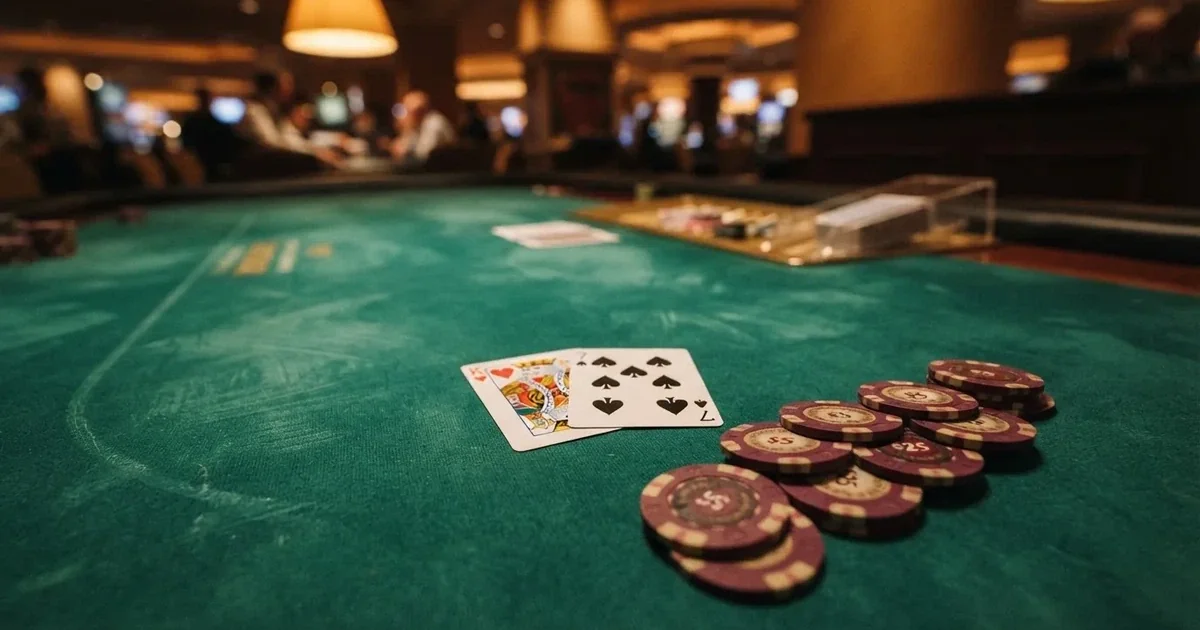
Currency data is current as of 30 October 2026 and was checked against the Australian Communications and Media Authority’s register of formal warnings and blocking orders.
Table of Contents
- What a high volatility slot actually is, and what it does to a bankroll
- The Australian catalogue: pokies in pubs and clubs, not on offshore screens
- The legal frame for online casino games in Australia
- The ACMA’s record: the eleven brands the regulator has had to name
- Reading the ACMA’s blocking-rate: how fast the offshore pipeline closes
- Responsible play: BetStop, the National Gambling Helpline, and the offshore gap
- The Australian alternative: licensed venues, land-based casinos, and the BetStop-protected wagering market
- The 2026 reform horizon: the Interactive Gambling Amendment (Gambling Reform) Bill 2026
- Tax: what an Australian punter owes on winnings
- High volatility slots versus the rest: where the swing sits
- The verdict the page offers
- Frequently asked questions
What a high volatility slot actually is, and what it does to a bankroll
A high volatility slot is a slot machine whose paytable is steep: long quiet stretches interrupted by occasional large wins, with the bulk of the return to player concentrated in the rarer outcomes rather than paid out steadily across thousands of spins. The math behind that pattern has been visible since Charles Fey of San Francisco built the first automatic three-reel mechanism in the late 19th century, with five symbols — horseshoes, diamonds, spades, hearts and the Liberty Bell — and a top prize of ten nickels for three bells in a row. Modern video slots, first developed by Fortune Coin Co. in 1976, can run five or more reels with fifty or more symbols per reel; the odds against a top combination on a modern machine can reach 300 million to one, against roughly 1,000 possible combinations on a classic three-reel machine with about ten symbols per reel. That expansion of the symbol space is what makes a slot’s payout pattern volatile in the first place — the long quiet stretches are the price of the rare big pay.

In a casino, a high volatility title sits next to its low-volatility cousins on the same screen. The game does not advertise its volatility class the way it advertises its return-to-player percentage; what a player feels at the seat is the swing, not the math. A long streak of dead spins is not a malfunction — it is the engine. The big payout, when it lands, is what the small payouts were paying for, and the casino’s edge is collected on every spin in between. The arithmetic in the back of the catalogue page cannot be ignored: in baccarat, where the swings are far smaller per hand than on a high-volatility reel, the house edge is still 1.06% on the Banker bet, 1.24% on the Player bet and 14.36% on the Tie. In craps the Pass and Come bets sit at 1.41%, Don’t Pass and Don’t Come at 1.36%, and Any Craps at 11.11%. These are not high-volatility games. They are the steady reference points that make a high volatility slot’s edge visible by contrast.
The bankroll point matters more than the math detail. A high volatility slot needs to be played through enough spins for the rare payout to have a chance to land, and that means a stake-per-spin budget large enough to absorb the dead stretches. A punter with a small bankroll, betting a meaningful share of it per spin to chase a feature, will be cleaned out before the rare outcome arrives. A punter with a deeper bankroll, betting a much smaller share per spin, can sit through the quiet and wait for the swing. The shape of the bankroll and the size of the stake are what decide whether the same game is a sensible choice or a quick way to zero.
The Australian catalogue: pokies in pubs and clubs, not on offshore screens
New South Wales legalised slot machines in 1956, and by 2010 Australia operated an estimated 97,103 gaming machines outside casinos — a per-capita rate about five times that of the United States. That is the lawful catalogue. As of mid-2023, New South Wales alone had 87,298 pokies-style machines outside casinos; Victoria 26,380 in 2021–22; Queensland 21,122 in October 2023; South Australia 11,672 in September 2023; and the ACT 3,587 in November 2023. These are the machines in pubs, clubs and casino floors — the Australian term is “pokies” — and they are the only slots an Australian can sit down and play in person without crossing into the prohibited territory of the Interactive Gambling Act 2001.

The volatility profile of a club pokie and an offshore online slot are different products on different platforms, even when the screen looks similar. A pub pokie in NSW is governed by state-level rules on payout percentage, stake limits and machine features; the offshore online slot runs on whatever the operator sets. The Australian reader who wants the high-volatility experience is, in practice, looking at a club machine whose state-level rules decide the swing — and that decision is not one the punter makes at the screen.
That is the Australian shortlist, such as it is. A licensed pokies venue, a land-based casino, a state-regulated club room. The Interactive Gambling Act 2001 stops the offshore online list before it starts.
The legal frame for online casino games in Australia
The Interactive Gambling Act 2001, as strengthened by the Interactive Gambling Amendment Act 2017, makes it an offence to provide online casino games, online pokies and in-play betting to a person in Australia. No state or territory regulator licenses any of those products. What is licensed — what a wagering service provider can lawfully offer to an Australian customer — is wagering on races and sport placed before the event, lotteries and keno. In practice, that licensing happens through the Northern Territory Racing and Wagering Commission, the de facto national wagering regulator; the NTRWC oversees 52 of Australia’s online bookmakers — Sportsbet, Bet365, Ladbrokes among them — and operates without full-time staff, meeting once a month in Darwin.
The minimum age for any wagering product in Australia is 18.
The enforcement side sits with the Australian Communications and Media Authority. The ACMA investigates complaints, issues formal warnings to operators it judges to be offering prohibited services, and directs Australian internet service providers to block the offending sites. According to the ACMA as reported in June 2026, a total of 1,751 illegal gambling and affiliate marketing websites have been blocked since the first blocking request in November 2019, and more than 230 unlicensed gambling services have left the Australian market since enforcement was strengthened in 2017. In a single round reported on 26 June 2026, the ACMA asked ISPs to block twelve more sites: 7Signs, ChromaBet, Donbet, Duospin, Freshbet, Slots Gem, Jacks Club, Lucky Start, Pointsbetz, Spinrise, Vinyl Casino and Wildsino.
The individual player is not prosecuted. The Interactive Gambling Act 2001 targets the provider, not the customer. What the player loses by going offshore is the consumer protection layer a regulator would normally supply: no Australian complaints body, no recourse if a withdrawal is refused, and the prospect of the site being blocked by an ISP order with a balance still on it. H2 Gambling Capital’s 2025 report estimates that Australians lose about A$3.9 billion a year to illegal gambling sites, and that the share of gambling going through legal channels fell from 74% in 2021 to 64%.
The payment side is also narrower than the offshore sites pretend. Credit cards, credit-related products and digital currency are banned as payment for licensed online wagering since 11 June 2024, with penalties of up to A$247,500 for operators; the legal deposit routes for licensed wagering are debit card, bank transfer, PayID, Osko and BPAY. An offshore site asking an Australian customer for a credit card or a crypto deposit is operating outside the Australian rules — and that is true whether or not the site displays a non-Australian licence on its footer.
The ACMA’s record: the eleven brands the regulator has had to name
What follows is not a recommended shortlist. These are the brands the ACMA itself has had to issue formal warnings against, because each was found to be offering prohibited interactive gambling services to Australians. The licence a site displays on its footer — Curaçao, Anjouan, whatever it is — does not change the Australian position: online casino games cannot be licensed in Australia, no matter what licence the operator holds elsewhere.
The table below sets out the eleven brands in the order the ACMA’s published warnings date them, the operator the warning named, and the date of the action.
| Brand | ACMA action and date | Operator named by the ACMA | Subject support |
|---|---|---|---|
| Sky Crown | Formal warning, September 2022 | Hollycorn N.V. | — |
| Bizzo Casino | Formal warning, 2022 (TechSolutions) and July 2025 (Consolutetish S.R.L.) | TechSolutions (CY) Group Limited and TechSolutions Group N.V.; Consolutetish S.R.L. | — |
| Level Up Casino | Formal warning, May 2022 | Dama N.V. | listings-only (Bgaming) |
| Bambet, Dazard, Cobra Casinos, Wild Tornado, RocketPlay (original warning) | Formal warning, May 2022 | Dama N.V. | — |
| Casino Intense | Formal warning, April 2025 | Sterplay Holding Ltd | listings-only (Abc.net.au; acma.gov.au; Crownmelbourne.com.au) |
| Instant Casino | Formal warning, February 2025 | EOD Code SRL | — |
| Woo Casino | Formal warning, March 2025 | Dama N.V. | — |
| Spirit Casino | Formal warning, May 2025 | Dama N.V. | — |
| National Casino | Formal warning, July 2025 | Consolutetish S.R.L. | listings-only (en.wikipedia.org) |
| Ignition Casino | Formal warning, July 2025 | Bamboo Media | — |
| Jackbit | Formal warning, April 2026 | Ryker B.V. | — |
| RocketPlay (re-warning under new operator) | Formal warning, March 2026 | Pulsup Ltd | — |
| CasinOK | Formal warning, April 2026 | Ryker B.V. | — |
The table covers every brand on the ACMA’s published register at the date of writing; the columns are the matters a reader needs to make sense of any one entry — what was done, when, against whom — and the no-data marker (—) is used where research carries no separate signal on the brand’s slot catalogue specifically. The “Subject support” column reflects only what the consulted listings say about each brand and its relationship to the subject matter of high volatility slots; where a directory simply lists the brand without any specific claim about high-volatility content, that is the entry.
A pattern visible in the table: the ACMA has repeatedly had to re-warn the same operator group under a different corporate name. Dama N.V. was named in May 2022 over six brands, then again in March 2025 over Woo Casino and in May 2025 over Spirit Casino; Bizzo Casino was first warned under TechSolutions in 2022 and then again in 2025 under Consolutetish S.R.L.; RocketPlay was first warned under Dama N.V. in 2022 and then again in March 2026 under Pulsup Ltd. The pattern is consistent with operators shedding a warned entity and re-launching under a fresh one. The Australian consumer side has no practical remedy against that: the ACMA can warn, block and refer, but the corporate shell moves.
The CasinOK entry sits in the same April 2026 Ryker B.V. action as Jackbit and is included in the table because the same formal warning covered both.
What the table does not contain
The table does not list bonus offers, payout speeds, wagering multiples or game counts. The only sources for those numbers were affiliate marketing pages, and the audit deliberately does not include them. A reader who needs the marketing claims about any of these brands should treat them as marketing claims: the ACMA’s record is the only Australian-side fact about each one, and it is the same fact for all eleven.
Reading the ACMA’s blocking-rate: how fast the offshore pipeline closes
The blocking-rate question is the one the data actually answers. Between November 2019 — the first blocking request — and June 2026, the ACMA has had 1,751 illegal gambling and affiliate marketing websites blocked. That works out to roughly 269 sites blocked per year averaged across the whole period, or about 22 sites per month. The rate has not been constant. The early years were slower as the ACMA built its enforcement record; the more recent rounds, including the twelve-site round reported on 26 June 2026, sit closer to a working monthly tempo than to a one-off clearing exercise.
The condition that sits underneath the band is the ACMA’s own threshold for action: a site has to be identified, investigated, formally warned, and only then referred for ISP blocking. The number is also a count of requests to block, not a count of unique operators — the same operator can sit behind multiple brands, and the ACMA’s published record names operators (Dama N.V., Hollycorn N.V., Ryker B.V.) rather than counting each re-launched shell as a fresh intervention. The rate is what an Australian reader can use as a working sense of how aggressively the regulator is going after the offshore pipeline: somewhere in the order of two hundred and fifty sites a year, with each round pulling a handful more offline.
The arithmetic matters because it is the only quantitative answer the ACMA’s published record offers. The regulator cannot stop an offshore operator from launching a new domain; it can, and does, ask Australian ISPs to make the old one unreachable. The reader’s practical takeaway is that an offshore site available today is reachable today, and that the same site is unlikely to remain reachable for the full life of any account the reader might open.
Responsible play: BetStop, the National Gambling Helpline, and the offshore gap
BetStop, the National Self-Exclusion Register, has been live since August 2023. It binds Australian-licensed online and phone wagering services — a person who registers with BetStop cannot open a new account with an Australian-licensed bookmaker, and existing accounts are closed. The mechanism does not reach offshore casinos. An Australian who has registered with BetStop and then opens an account with an offshore brand has not excluded themselves from that offshore brand; the register does not know the account exists.
The National Gambling Helpline is 1800 858 858 — free, 24/7 — with chat at Gambling Help Online. The helpline is the right first call for an Australian whose gambling has become a problem, regardless of which platform the gambling happened on. It is also the right first call for an Australian who is reading a page like this one and wondering whether offshore play is the only option — because the conversation a person has with themselves on that question is worth having before any account is opened.
The wider Australian player-protection regime does not extend offshore. The state-level complaints bodies, the state gambling regulators, the licensed dispute resolution — none of these touch a site operating under a Curaçao or Anjouan licence from outside Australia. The reader who wants the protection the Australian regime offers is, by definition, the reader who stays inside it.
The Australian alternative: licensed venues, land-based casinos, and the BetStop-protected wagering market
The lawful alternative to offshore online play is straightforward to state and harder to act on. A licensed pub or club offers pokies under state-level rules on payout percentage, stake limits and machine features. A land-based casino — Crown Melbourne, The Star Sydney, The Star Gold Coast, Crown Perth, Skycity Adelaide, Skycity Darwin, Casino Canberra — offers table games under state-level casino control legislation: under section 66 of the NSW Casino Control Act 1992, a casino operator must not permit a game such as baccarat to be played unless the game and its rules are approved by the regulator, and the operator must make a copy of the approved rules available to patrons on request; in Victoria, the Casino Control Act 1991 requires the Victorian Gambling and Casino Control Commission to approve any rules for table games and any change to those rules before they are introduced at the Melbourne casino, with the VGCCC replacing the VCGLR as Victoria’s casino regulator on 1 July 2022.
These are the venues a person in Australia can walk into, present identification, and play. They are the venues at which the responsible-gambling machinery actually operates: state-level complaints, venue-level exclusion, the BetStop register applying to wagering products, the helpline reachable from the venue floor.
The licensed wagering market — Sportsbet, Bet365, Ladbrokes and the other forty-nine Northern Territory-licensed bookmakers — is a different product from casino gambling. It is racing and sports betting, not slots, and it is what the Interactive Gambling Act 2001 actually permits an Australian customer to be offered online. A punter who wants the BetStop protection and the Australian consumer-protection regime around their online play stays inside the wagering market; a punter who wants slots has to leave the online channel entirely.
The 2026 reform horizon: the Interactive Gambling Amendment (Gambling Reform) Bill 2026
The Interactive Gambling Amendment (Gambling Reform) Bill 2026 passed Parliament on 19 August 2026. Its advertising and inducement measures commence on 1 January 2027 — law with a start date, not yet in force on a page written in 2026. The reforms tighten the advertising and inducement side of the regime, not the underlying prohibition on online casino games. The effect on the offshore pipeline is, on the present text, indirect: the reforms reach licensed Australian wagering operators’ marketing, not the offshore operators that are already prohibited from offering casino games to Australians. A reader in 2026 is reading the law as it stands, not as it will stand after the commencement date.
Tax: what an Australian punter owes on winnings
Gambling winnings of a recreational player are not assessable income under section 6-5 of the ITAA 1997, and losses are not deductible, unless the person carries on a business of gambling. That is the model only: the Australian Taxation Office’s published guidance is the source for any specific position, and a reader with a non-trivial win or a non-trivial loss should check with the ATO. The offshore case adds an extra complication, because the operator will not issue an Australian-format tax statement — and the ATO’s view of an offshore win is the same as its view of a domestic one, but the paperwork is not.
High volatility slots versus the rest: where the swing sits
The comparison that matters for a punter thinking about volatility is not between two high volatility slots — it is between a high volatility slot and the games around it. The maths of the steady table games sits next to the maths of the volatile reel, and the difference is the question the punter is asking about their bankroll.
| Game / bet | House edge | Volatility class |
|---|---|---|
| Baccarat — Banker bet | 1.06% | n/a |
| Baccarat — Player bet | 1.24% | n/a |
| Craps — Pass / Come | 1.41% | n/a |
| Craps — Don’t Pass / Don’t Come | 1.36% | n/a |
| Blackjack (liberal Las Vegas Strip rules) | 0.28% with optimal strategy | low |
| Blackjack (Atlantic City rules) | 0.43% with optimal strategy | low |
| Craps — Any Craps | 11.11% | n/a |
| Baccarat — Tie bet | 14.36% | n/a |
| High volatility video slot | varies; house edge comparable to other slots, payouts concentrated in rare outcomes | n/a |
The edges in the table are the published figures from Wizard of Odds for baccarat and craps; the blackjack figures are the same source’s calculations under optimal strategy for the two rule sets. The high volatility video slot line is qualitative — the house edge on a slot is comparable to the table games above, but the variance is several orders of magnitude higher per spin because the rare outcomes carry most of the return. The reader who wants to know what the swing costs them reads the table as: low-volatility games take a small percentage off every wager; a high volatility slot takes the same kind of edge across a much wider per-spin range, with the bulk of the return paid in a handful of large outcomes that may not arrive in any session.
The Australian position on the table games sits with the state regulators and the venue-level rules. Crown Melbourne’s three baccarat variants — Traditional Baccarat, Crown Baccarat and 2 to 1 Baccarat — are approved table games regulated by the VGCCC. Crown’s blackjack variants have their own approved-rule history with the VGCCC, including renaming the “Perfect Pairs” side bet to “Crown Pairs” on 23 December 2024 and introducing a “Free Bet” option with a new “Pot of Gold” side bet on 25 March 2024. These are the rule changes a person sitting at a Crown Melbourne blackjack table would have noticed; they are the kind of state-level oversight that does not exist for an offshore online slot.
The verdict the page offers
The verdict is short. No online casino — Australian-licensed or otherwise — offers high volatility slots lawfully to a person in Australia in 2026. The brands the ACMA has warned are not a shortlist a reader can choose from; they are a record of the regulator doing the only job it can do, which is to name the operators offering the prohibited service. A punter who wants the high-volatility experience plays it on a licensed pokie in a pub, club or casino floor — under state-level rules, with venue-level and BetStop-level consumer protection, and with the winnings taxed under the standard ATO model rather than through an offshore operator’s payment system.
The offshore shortlist the search query asked for does not exist for an Australian reader. The lawful shortlist is the licensed venues, and the BetStop-protected wagering market is what the Interactive Gambling Act 2001 actually leaves online.
Frequently asked questions
What does high volatility mean for a slot machine?
A high volatility slot is one whose paytable concentrates most of the return-to-player in a small number of rare, large payouts rather than paying steadily across thousands of spins. The base game looks quiet for long stretches and the rare outcome, when it lands, is what the small payouts were paying for; the casino’s edge is collected on every spin in between.
How big are the swings between wins on a high volatility slot compared with a steadier one?
The swing is several orders of magnitude wider per spin than on a low-volatility table game such as baccarat or craps. On a baccarat Banker bet the house edge is 1.06% with very low per-hand variance; on a high volatility slot the same kind of edge is distributed across a much wider range of outcomes, with most spins returning less than stake and a small number returning very large multiples.
Is it legal to play high volatility slots at an online casino from Australia?
No. The Interactive Gambling Act 2001, as strengthened by the Interactive Gambling Amendment Act 2017, makes it an offence to provide online casino games, online pokies and in-play betting to a person in Australia, and no state or territory regulator licenses any of those products. The ACMA enforces the prohibition; the individual player is not prosecuted, but an offshore site gives no Australian consumer protection and can be blocked by an ISP order at any time.
Are high volatility pokies-style machines common in Australian pubs and clubs?
Yes — pubs, clubs and casino floors in Australia hold the bulk of the country’s slot machines outside casinos. As of mid-2023, New South Wales alone had 87,298 pokies-style machines outside casinos; Victoria had 26,380 in 2021–22; Queensland 21,122 in October 2023; South Australia 11,672 in September 2023; and the ACT 3,587 in November 2023.
New South Wales alone had over 87,000 pokies-style machines outside casinos as of mid-2023 — how does that compare with other states?
The New South Wales figure is more than three times the next-largest state count: Victoria’s 26,380 is the second largest, Queensland’s 21,122 the third, South Australia’s 11,672 the fourth, and the ACT’s 3,587 the smallest of the jurisdictions with comparable reporting. Australia as a whole operated an estimated 97,103 gaming machines outside casinos in 2010, a per-capita rate about five times that of the United States.
Why might a high volatility slot suit a player with a bigger bankroll?
A high volatility slot needs enough spins for the rare payout to have a chance to land. A punter with a deeper bankroll can afford a smaller stake-per-spin and sit through the long quiet stretches without being cleaned out, and it is the combination of stake size and total spin count that gives the rare outcome room to arrive. A punter with a small bankroll, betting a meaningful share of it per spin to chase a feature, is exposed to a much higher risk of running out before the swing lands.