
Best new Australian online pokies 2026: what the search is really asking
A reader who lands here is usually trying to find a working shortlist of online casinos and the freshest pokies releases to play for real money. The honest answer is that no such shortlist exists in Australia, and the reason matters more than any list could. Online casino games — pokies included — cannot be lawfully offered to anyone in Australia under the Interactive Gambling Act 2001. No state or territory licences them. Every site that advertises “new Australian online pokies” to an Australian reader is operating outside Australian law, and the Australian Communications and Media Authority has spent seven years documenting which ones.
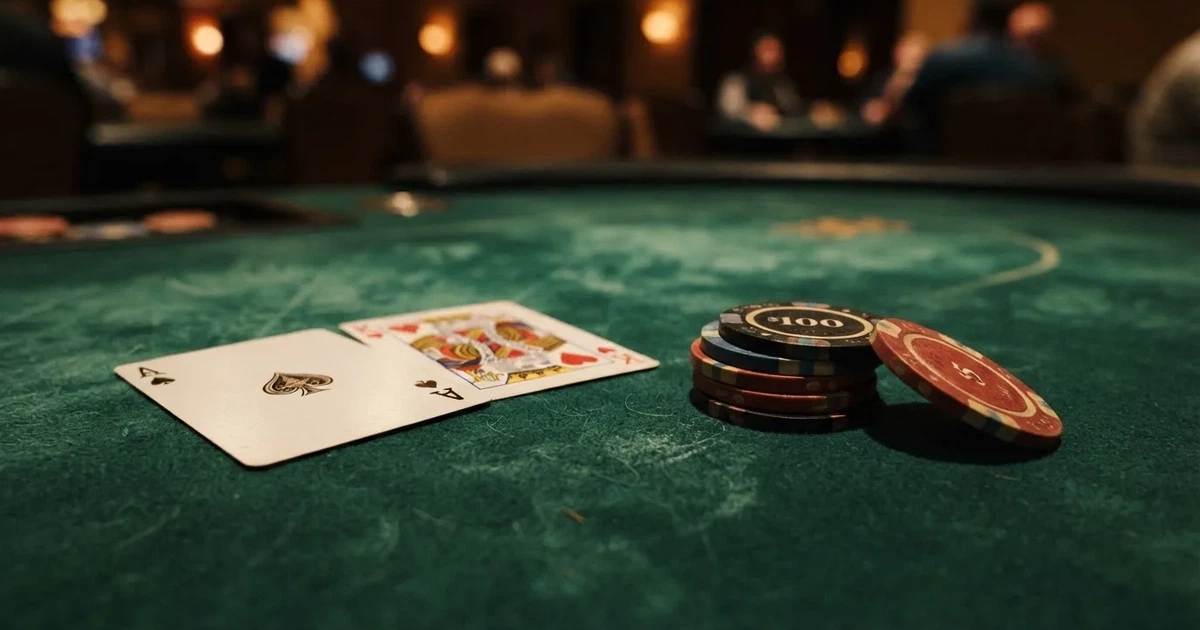
This page does the arithmetic that the marketing does not. It works through what offshore play costs an Australian in lost protection, what the ACMA’s blocking record actually shows, what a “no-deposit bonus” really asks of the player who takes it, and which legal alternatives sit on the other side of the line — licensed clubs, Crown venues, and the BetStop register that the offshore sites are not connected to. Every figure on the page is from a named source. Every “new pokie” framed as available to Australians is named because the ACMA itself acted on it.
The point of writing it this way is not to moralise. It is to make the cost visible so the reader can decide for themselves. A market this size — about A$12.18 billion lost on poker machines in a single year — has every incentive to dress itself up, and the page is the other side of that dressing.
Data current as of 8 November 2026, checked against the Australian Communications and Media Authority’s register of formal warnings and blocking requests.
Table of Contents
- The legal baseline: why the search has no clean answer
- ACMA enforcement: how the prohibition is applied
- The fundaments: what a new-pokies bonus really costs
- Paying in and getting paid out: the PayID question
- The games on the floor: what “new” actually means
- Player protection: BetStop and what it actually covers
- What’s actually legal: the land-based alternative
- ACMA enforcement, brand by brand
- What this page is not for
- The reform that is on the books but not yet in force
- Frequently asked questions
The legal baseline: why the search has no clean answer
The Interactive Gambling Act 2001, tightened by the Interactive Gambling Amendment Act 2017, makes it an offence to provide online casino games, online pokies or in-play betting services to a person physically in Australia. The law targets the provider, not the player, so the punter browsing at the kitchen table is not personally at risk of prosecution. What the player loses is the consumer protection that comes with a licensed service: no Australian complaints body, no local recourse if a withdrawal stalls or is refused, and no automatic connection to BetStop if self-exclusion ever needs to bite.

The Northern Territory Racing and Wagering Commission regulates 52 of Australia’s online bookmakers — Sportsbet, Bet365 and Ladbrokes among them — but the licence covers wagering on races and sport before the event, not online casino games. The commission runs with no full-time staff and meets monthly in Darwin, which is worth knowing because it is the regulator Australians hear about most often and the one that touches the smallest part of this market.
What is licensable in Australia, in practical terms: wagering on races and sport before the event, lotteries, and keno. Everything else in the “online casino” column is offshore and operates without an Australian licence whatever display it carries in its footer. The offshore licences a reader meets — Curaçao, Anjouan, occasionally the Kahnawake Gaming Commission — authorise the operator in their home jurisdiction and do not extend to taking bets from Australia.
The minimum age across the country is 18. Credit cards, credit-related products and digital currency have been banned as payment for licensed online wagering since 11 June 2024, with penalties up to $247,500 for operators that breach. The legal deposit routes for licensed wagering are debit card, bank transfer, PayID/Osko and BPAY. A site asking an Australian for a credit card or a crypto deposit is, by definition, not running inside the Australian rules.
ACMA enforcement: how the prohibition is applied
The ACMA’s role is to investigate, issue formal warnings and direct Australian internet service providers to block illegal sites. The figure that frames the whole enforcement record: by June 2026 a running total of 1,751 illegal gambling and affiliate marketing websites had been blocked since the first blocking request in November 2019, and more than 230 unlicensed gambling services had left the Australian market since enforcement was strengthened in 2017.
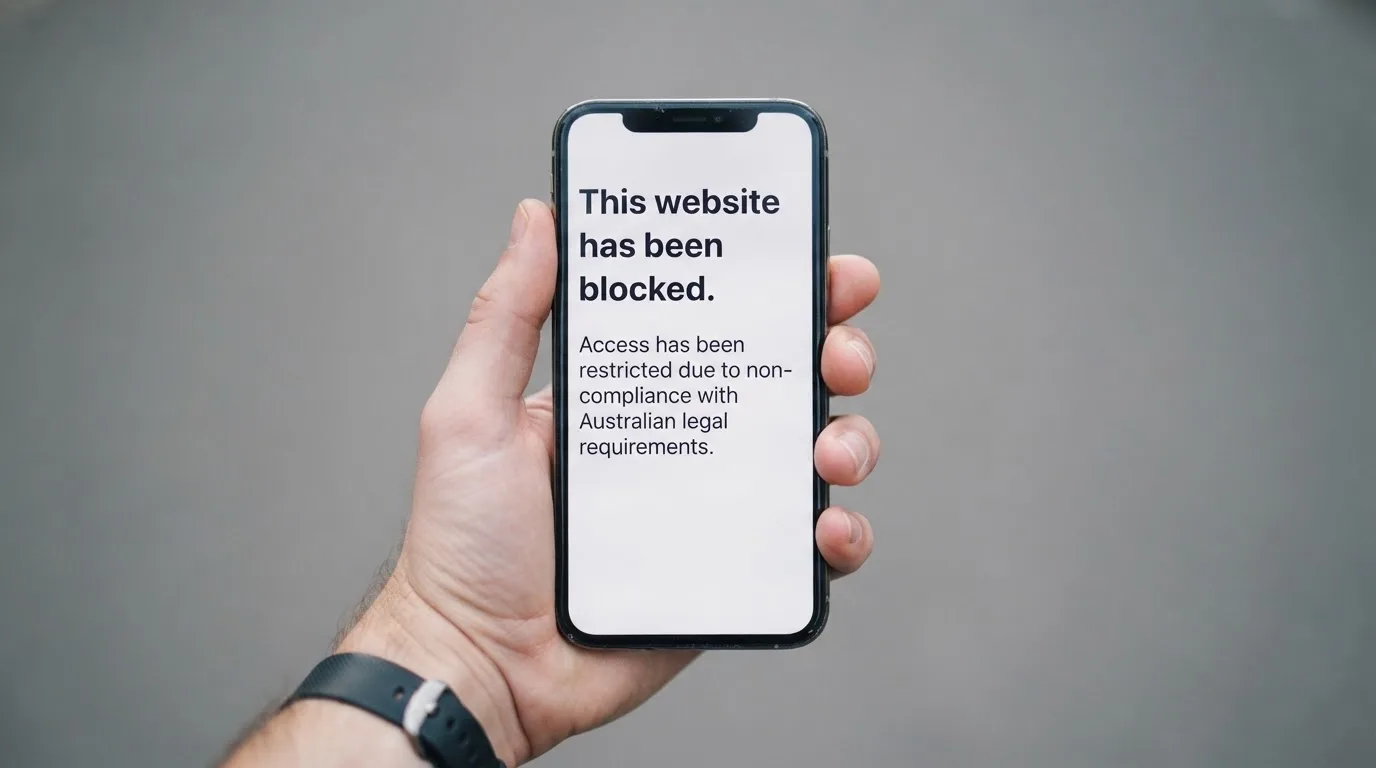
A blocking-rate calculation is the cleanest way to see what that pace looks like. Dividing the cumulative total by the months between the first blocking request and the June 2026 snapshot gives a long-run average of roughly 22 to 23 sites blocked per month, with material variation quarter to quarter — some rounds block 12, others batch dozens in a single announcement. The condition that drives the band is that the cumulative figure includes both gambling sites and affiliate marketing pages, and the operator-exit count is separate from the block count; a single offshore operator can produce several blocked URLs before closing. The order of magnitude is the point: every working week of the last seven years has produced new blocking actions, and no round of warnings has brought the queue to zero.
The most recent reported round, on 26 June 2026, asked Australian ISPs to block 12 more sites: 7Signs, ChromaBet, Donbet, Duospin, Freshbet, Slots Gem, Jacks Club, Lucky Start, Pointsbetz.com, Spinrise, Vinyl Casino and Wildsino. The pattern is consistent: brand names rotate every few months, but the licence structure behind them rarely does, and the ACMA names the operating company in each warning alongside the brand.
Formal warnings, in plain English
A formal warning is the step before a blocking request. The ACMA writes to the operator’s stated licensee — usually a Curaçao or other offshore entity — and notifies them that their service is being offered in breach of the Interactive Gambling Act 2001. The operator is given a window to wind down Australian-facing activity. Most do not. The follow-up is a written request to Australian ISPs under section 313 of the Telecommunications Act 1997 to make the domain unreachable from Australian IP addresses.
What this means in practice: an offshore brand can be on the formal-warning list for a year before its domain is blocked, and the brand itself sometimes resurfaces under a new domain while the operating company remains the same. The formal-warning register is the better leading indicator. It tells the reader which operators have been on the ACMA’s radar most recently, and which operating companies have been warned more than once.
Dama N.V. is the clearest example. The operator was warned in May 2022 over six brands — Bambet, Dazard, Level Up, Rocketplay, Wild Tornado and Cobra Casinos — and then warned again in March 2026-1 over Woo Casino and in May 2026-1 over Spirit Casino. Two years apart, two more brand names, same licensee. The pattern is not unique to Dama N.V.; Consolutetish S.R.L. was warned in July 2026-1 over National Casino and Bizzo Casino, with Bizzo having already been the subject of a 2022 warning to a different licensee (TechSolutions). The ACMA is naming legal entities, and those entities are often serial.
The fundaments: what a new-pokies bonus really costs
Before a reader even reaches a deposit screen, the offer page is already doing work. A “no-deposit bonus” sounds like free money. It is not. A no-deposit bonus is a small credit — often A$10 to A$20 in the marketing material — given in exchange for registering an account, with strings attached that the headline does not state.
The strings are usually three. First, a wagering requirement: the bonus, and sometimes the deposit that unlocks it, must be turned over a stated multiple of times before any of it can be withdrawn. A 35× multiple on a A$10 bonus means A$350 of qualifying bets before withdrawal is permitted. Second, a max-cashout cap: even after the wagering is cleared, only a stated ceiling — frequently A$50 to A$100 — can actually be withdrawn. Third, a game-weighting restriction: pokies almost always count 100% toward wagering, but table games often count 10% or are excluded entirely, so the bonus is effectively only playable on the games the operator wants the player to lose it on.
The “cost” of the bonus is therefore not the headline figure. It is the expected loss over the wagering requirement, which depends on the return-to-player of the games the bonus is played on. Run the arithmetic at a representative 95% RTP and a 35× requirement on a A$10 bonus, and the expected loss across A$350 of qualifying bets is A$17.50 — already larger than the bonus itself. The bonus costs the operator about A$10; the bonus costs the player about A$17.50. The math is not an accident. It is the product the operator is selling.
No-deposit bonuses are also the most common vehicle for capturing player data without delivering a withdrawal. The terms require “Know Your Customer” verification before any payout, and an Australian handing a passport and a utility bill to an offshore entity with no Australian privacy obligation is giving up the data without gaining the protection. Offshore sites that have been warned by the ACMA are not subject to the Privacy Act 1988 in the same way Australian-licensed services are.
Deposit-gated welcome packages and what the headline number means
When the offer moves past the no-deposit stage to a deposit-gated welcome package, the headline number inflates — A$1,000 or A$2,000 across the first three deposits is common — and the wagering multiplier gets longer, not shorter. A 40× to 50× multiple on a combined bonus-and-deposit figure is typical. The arithmetic inverts. A A$1,000 welcome package with a 45× bonus-and-deposit wagering requirement means A$45,000 of qualifying bets to clear the bonus, with a max-cashout cap that often does not exist at the welcome stage but is replaced by a “max bet” rule of A$5 per spin until the bonus is cleared. The expected loss on A$45,000 of bets at a 95% RTP is A$2,250. The player is paying twice the headline bonus to convert it into withdrawable cash.
The “max bet” rule is the part that does the most damage. A A$5-per-spin ceiling during bonus play stops the player from running the wagering down quickly on a hot streak, and any single spin above the ceiling voids the bonus and the winnings. The rule is enforced by the casino software, not by audit, and offshore operators have been known to apply it retroactively to winnings earned legitimately inside the cap.
Paying in and getting paid out: the PayID question
A reader searching specifically for new PayID pokies is asking a narrow practical question: will an Australian bank-to-bank transfer land, and will the withdrawal come back through the same rail? PayID is the Australian instant-payments address book layered on top of the New Payments Platform, with Osko handling the actual settlement. It is real-time, free for consumers and built for Australian dollar transfers between Australian bank accounts.
What PayID is not, in the offshore-pokies context, is a guarantee that any particular operator supports it. Australian-licensed wagering services use PayID because the law requires them to support a lawful deposit route that is not credit. Offshore services that want Australian dollars usually route through a payment processor, sometimes via an intermediary entity in Estonia or Lithuania, and the PayID flow — if it exists at all — is provided by the processor, not the operator. A deposit made by PayID to an offshore site typically arrives in the processor’s account first, then credits the casino balance. A withdrawal back to the same Australian bank account can take 24 to 72 hours to clear the processor’s review, and longer if the operator’s “Know Your Customer” check flags the account.
The mismatch between deposit speed and withdrawal speed is the single most consistent complaint on consumer-protection forums about offshore casinos. Deposits by PayID land in minutes. Withdrawals take days, and a player who triggers a bonus-wagering violation during the KYC review loses the withdrawal entirely. None of this is unique to any one operator; it is the standard operating model of the offshore segment.
Crypto is the other payment rail that offshore sites promote heavily, and it carries the same Australian-law problem in the opposite direction. Credit cards, credit-related products and digital currency have been banned as payment for licensed online wagering since 11 June 2024, which means any Australian-facing site that pushes a Bitcoin or USDT deposit is, by definition, not running inside the Australian regime at all. There is no recourse if the crypto is sent and the casino does not credit it; the operator is in a jurisdiction the Australian courts cannot reach.
The games on the floor: what “new” actually means
A new pokie release is, mechanically, a freshly produced game with a new theme, a new reel configuration and a new maths model. From a player’s perspective, the meaningful variables are three: the return-to-player, the volatility class, and the feature structure (free spins, multipliers, hold-and-spin, jackpot tiers). None of those variables is set by the Australian market — the offshore suppliers build to the regulator they have, which is usually Curaçao or none at all.
For comparison, the legal minimum return-to-player on a poker machine in an Australian state or territory ranges from 85% in New South Wales, the Northern Territory, Queensland and (generally) Victoria — 87% at Crown Melbourne — to 87% in the ACT and Tasmania, 87.5% in South Australia, and 90% in Western Australia. Those are floors, not actual RTPs; the typical licensed pub or club machine in Australia sits at 90% to 92% RTP because the operators compete on entertainment value, not on the absolute lowest edge.
Offshore, the RTPs on “new” pokies tend to be set in the 94% to 96.5% range — higher than Australian floors in headline terms, which is part of the marketing — but the volatility class is often cranked up to high or very high to compensate. A 96% RTP slot played at high volatility costs less per spin than a 92% RTP slot played at low volatility, on average, but the variance is several times wider. A player with a small bankroll loses their session budget faster on a high-volatility release than on a lower-volatility equivalent, because the rare big wins subsidise the long quiet stretches.
The catalogue itself is a clue. A new release from a known studio — Pragmatic Play, Play’n GO, NetEnt, Evolution for live tables — is published with a stated RTP and volatility and is reviewed independently. A new release from an unbranded supplier with no studio name and no listed math model is, by construction, harder to verify. The offshore sites that the ACMA has warned against tend to carry a heavier share of the second category, because the first category’s compliance overhead is higher and the brands are easier for regulators to track.
Live tables and what the law actually permits
Online live-dealer baccarat, blackjack and roulette are part of the same product set as online pokies under the Interactive Gambling Act 2001: prohibited for supply to anyone in Australia, not licensable in any state or territory. The same offshore operators that offer new pokies offer live tables, usually from studios in Latvia, Malta, the Philippines or Georgia, streamed in real time.
For a reader who has only met these games in a land-based casino, the live-dealer product is a closer physical analogue than a software pokie, but the legal status is identical. Crown Melbourne offers three baccarat variants — Traditional Baccarat, Crown Baccarat and 2 to 1 Baccarat — as approved table games regulated by the Victorian Gambling and Casino Control Commission, which replaced the VCGLR as Victoria’s casino regulator on 1 July 2022. The house edge on the Banker bet in baccarat is 1.06%, on the Player bet 1.24%, and on the Tie bet 14.36% — the last is the bet the floor staff will not recommend and the marketing sometimes highlights anyway.
Blackjack with optimal strategy runs about 0.28% house edge under liberal Las Vegas Strip rules (dealer stands on soft 17, double on any two cards, double after split, resplit aces, late surrender) and about 0.43% under Atlantic City rules. These are land-based figures, audited and stable. Offshore live-dealer blackjack runs the same math in principle, but the rule set is set by the studio operator, not by an Australian regulator, and the player cannot inspect the shoe.
Player protection: BetStop and what it actually covers
BetStop — the National Self-Exclusion Register — has been live since August 2023 and binds every Australian-licensed online and phone wagering service. A punter who registers is matched against the customer databases of every participating operator, and new accounts cannot be opened while the exclusion is active. It is the single most consequential harm-minimisation tool available to Australian players.
What BetStop does not cover is just as important. It does not bind offshore casino operators, because those operators are not participants in the Australian scheme. A punter who self-excludes from every Australian wagering site can still open an account with an offshore casino the same afternoon, because the offshore operator does not run the BetStop check. The exclusion is real on the licensed side and absent on the offshore side. For readers using self-exclusion as a serious step, that asymmetry is the deciding factor.
The National Gambling Helpline — 1800 858 858 — is free, 24/7 and includes chat support through Gambling Help Online. It is the right first call for a reader who is reading this page because a household member’s gambling has become a problem, or because the reader’s own. State-based support services run alongside it; the help is funded regardless of whether the gambling is happening on a licensed or offshore site.
What’s actually legal: the land-based alternative
The legal Australian market is large and heavily used. In 2020–21 Australians bet almost A$150 billion through gaming machines and lost A$12.18 billion on them. Australia has about 3% of the world’s pub and club poker machines with 0.3% of the global population, which is the ratio that makes the country a permanent fixture of international gambling research.
New South Wales had 87,298 gaming machines outside casinos across 2,195 venues as of June 2023, with player losses of A$8.18 billion in 2022–23. Queensland had 21,122 machines operating in 351 venues in October 2023. Victoria had 26,380 machines outside Crown Casino in 488 venues under a 30,000 statewide cap. Western Australia has banned poker machines in pubs and clubs since Crown Perth opened in 1985; Crown Perth’s own machine count has grown from about 200 in 1985 to roughly 2,500, all approved by the state’s Gaming and Wagering Commission.
Tasmania planned nation-leading mandatory pre-commitment cards for its poker machines, but implementation of the reform was delayed until late 2026-1. The Federal Group had held a monopoly licence over all of Tasmania’s poker machines from 1968; legislation passed in November 2021 ended that monopoly and moved oversight of the machines to the Tasmanian Liquor and Gaming Commission. Registered clubs operated Australia’s first legal poker machines from 1956, in New South Wales.
The land-based market is regulated state by state, and each jurisdiction separately oversees the design and operation of the machines. The player who chooses a licensed venue gets a regulated edge, a published RTP, a complaints pathway, and access to the venue’s own pre-commitment and self-exclusion tools. The player who chooses an offshore site gets a product the ACMA has been told to block, an operator with no Australian obligation, and a payment rail the law has explicitly closed to licensed services.
ACMA enforcement, brand by brand
The brands below are not a recommendation. Each is listed because the ACMA itself issued a formal warning over it for offering prohibited interactive gambling services to Australians. The pattern — repeated operating companies, repeated brand surfaces, repeated warnings — is the data, and the table below is the shortest way to see it.
| Brand | ACMA action and date | Operator named by the ACMA | Subject support |
|---|---|---|---|
| RocketPlay | Formal warning, March 2026; earlier warning, May 2022 | Pulsup Ltd (March 2026); Dama N.V. (May 2022) | — |
| Level Up Casino | Formal warning, May 2022 | Dama N.V. | BGaming listings |
| Woo Casino | Formal warning, March 2026-1 | Dama N.V. | — |
| Spirit Casino | Formal warning, May 2026-1 | Dama N.V. | — |
| National Casino | Formal warning, July 2026-1 | Consolutetish S.R.L. | Listings report |
| Bizzo Casino | Formal warning, July 2026-1; earlier warning, 2022 | Consolutetish S.R.L. (July 2026-1); TechSolutions (2022) | — |
| Ignition Casino | Formal warning, July 2026-1 | Bamboo Media | — |
| Instant Casino | Formal warning, February 2026-1 | EOD Code SRL | — |
| Jackbit | Formal warning, April 2026 | Ryker B.V. | — |
| Casino Intense | Formal warning, April 2026-1 | Sterplay Holding Ltd | Listings report |
| Sky Crown | Formal warning, September 2022 | Hollycorn N.V. | — |
Eleven brands, eight distinct operating companies, and four repeat offenders — Dama N.V., Consolutetish S.R.L., TechSolutions and the broader cluster of Curaçao-incorporated entities that surface and resurface under different names. The “Subject support” column records whether research could verify a specific subject key for the brand from non-affiliate sources. A dash means no such source was found; “Listings report” means a third-party directory or news page mentioned the brand, and the wording here is exactly what those listings say.
Two of the entries — RocketPlay and Level Up Casino — are both Dama N.V. brands warned in 2022, and one of them was warned again in March 2026 under a different licensee name (Pulsup Ltd). A reader who recognises a brand name from a previous encounter should look at the operator line, not the brand line; the entity on the warning is the entity the ACMA is talking to, and that entity is what determines whether the same brand is being run from the same office or a re-skinned operation by a related party.
The blocking-rate band that frames all eleven: roughly 22 to 23 sites blocked per month on average since November 2019, with material quarter-to-quarter variation. Eleven brands on the warning register is not a snapshot of the market — it is one cluster of related operators in a queue that has produced 1,751 blocked domains in seven years.
RocketPlay
RocketPlay is one of two brands the ACMA warned under Dama N.V. in May 2022 and warned again in March 2026 under Pulsup Ltd. The double-warning pattern is the single most informative fact about the brand: an operator that has been told once and then told again under a different licensee is not changing the underlying activity, it is changing the paper. The “new online pokies” framing on RocketPlay’s promotional pages is simply a cover for the same prohibited product the original warning covered, and the ACMA’s March 2026 letter is the regulator saying so a second time.
Level Up Casino
Level Up Casino sits inside the same 2022 Dama N.V. warning round as RocketPlay, Bambet, Dazard, Wild Tornado and Cobra Casinos. Where RocketPlay has been re-warned in 2026, Level Up’s current public status is the older 2022 warning. The brand surfaces on BGaming’s studio listings as a distribution partner, which is a verifiable third-party data point: it means BGaming’s games have been integrated into the Level Up lobby. That does not make the casino lawful in Australia. It makes the supplier relationship auditable.
Woo Casino
Woo Casino was added to Dama N.V.’s warning set in March 2026-1. The “new pokies” pitch on Woo’s pages at the time of the warning was the same pitch the ACMA’s earlier letter to Dama N.V. had already addressed, and the additional warning is the regulator’s record that the message had not changed the operator’s behaviour. For a reader who sees Woo Casino advertised through an affiliate, the warning date is the most important fact on the page.
Spirit Casino
Spirit Casino took its Dama N.V. warning in May 2026-1, two months after Woo Casino. The two-month gap between warnings on the same licensee is a routine cadence — the ACMA tends to write a formal warning each time a brand surfaces with new Australian-facing activity, rather than grouping several into a single letter. Spirit Casino is, in that sense, a working example of the warning pipeline.
National Casino
National Casino’s warning is the July 2026-1 letter to Consolutetish S.R.L., which also named Bizzo Casino. The brand has a third-party listing footprint that research could verify, which is unusual for the offshore segment; most of the brand’s public footprint is affiliate marketing material, which is not a reliable source for product claims. The warning is the fact; the listings are context.
Bizzo Casino
Bizzo Casino is the only brand in this set that has been warned twice through two different licensees — TechSolutions in 2022 and Consolutetish S.R.L. in July 2026-1. The two-warnings-two-licensees pattern is the clearest possible signal that the brand has changed its corporate paper while continuing the same Australian-facing activity. A reader who sees Bizzo Casino advertised under a “new Australian online pokies” banner is being shown the product the ACMA has warned against twice.
Ignition Casino
Ignition Casino was named in the same July 2026-1 warning as National Casino and Bizzo Casino, but to a different operator — Bamboo Media. The warning is the ACMA’s first formal action on this brand to date. The “new pokies” framing on Ignition’s pages refers to the same service the ACMA has officially flagged, making the formal warning date the primary data point for any assessment.
Instant Casino
Instant Casino took its warning in February 2026-1, to EOD Code SRL. EOD Code SRL has not been named in any other warning in the research record, which makes Instant Casino the freshest single-operator action in this set. The brand’s Australian-facing marketing at the time of the warning is what triggered the letter; the letter is what determines its standing on this page.
Jackbit
Jackbit’s warning was issued in April 2026 to Ryker B.V., which also operates CasinOK. A single licensee covering two brand surfaces is the standard pattern across the offshore segment, and Ryker B.V. is now on the formal-warning list for both. The brand surfaces with a heavy crypto-payment emphasis in its marketing, which is the rail Australian law closed to licensed services in 2024.
Casino Intense
Casino Intense took its warning in April 2026-1, to Sterplay Holding Ltd. The brand carries a third-party footprint that research could verify from news and regulator-side listings, which is more than most of this set can show. The brand’s “new pokies” catalogue is the same prohibited product, and the ACMA’s letter is the regulator’s record that the activity is Australian-facing despite the operator’s stated offshore incorporation.
Sky Crown
Sky Crown was named in the ACMA’s September 2022 warning to Hollycorn N.V., which also covered Blue Leo. Hollycorn N.V. is a Curaçao-incorporated operator that runs multiple brand surfaces, and Sky Crown is one of them. The 2022 warning is older than most of the entries in this set, and a current reader should treat it as the regulator’s standing position on the brand rather than as a recent development. Hollycorn N.V. has not been named in any subsequent warning in the research record.
What this page is not for
This is not a list of “the best” offshore casinos for Australians. No honest list of that kind can be written under Australian law, and the brands named above are named because they have been warned against, not because they are recommended. The “best” framing in the search query is the marketing word the ACMA’s enforcement record punctures.
It is also not a how-to for accessing blocked sites. Some of the domains in the blocking register are reachable through virtual private networks from Australian IP addresses, and the offshore segment markets this route directly. The reader’s privacy and recourse situation does not change when a VPN is in use; the operator is still offshore, the regulator is still out of reach, and the ACMA’s enforcement is targeted at the site, not at the user. The legal position on the user side is unchanged.
It is not a tax guide. Recreational gambling winnings are not assessable income in Australia under section 6-5 of the Income Tax Assessment Act 1997, and losses are not deductible, unless the person is carrying on a business of gambling. The model-only position from the ATO is “check with the ATO or a registered tax agent”; the page repeats that.
The reform that is on the books but not yet in force
The Interactive Gambling Amendment (Gambling Reform) Bill 2026 passed Parliament on 19 August 2026. Its advertising and inducement measures commence on 1 January 2026+1. The bill is law with a start date, and the start date is in the future at the time of writing. Until the commencement date, the existing IGA 2001 framework — and the ACMA’s enforcement record under it — remains the operating law.
For a reader, the practical implication is that affiliate marketing pages and bonus inducements directed at Australian consumers will face a tighter advertising regime from 1 January 2026+1 than they have in any previous year. The substantive prohibition on supply has been in place since 2017. What changes is the surface — the bonus banners, the affiliate redirects, the inducement language that drives the searches this page is written against.
Frequently asked questions
How much do Australians actually lose on gaming machines in an average year?
In 2020–21 Australians bet almost A$150 billion through gaming machines and lost A$12.18 billion on them. That figure is for the regulated land-based market only. H2 Gambling Capital’s 2026-1 report estimates that an additional A$3.9 billion a year goes to illegal offshore gambling sites, and that the share of gambling going through legal channels fell from 74% in 2021 to 64%. The combined loss is the largest per-capita gambling loss in the developed world.
What actually counts as a “new” pokie release versus an established one?
A new pokie release is a freshly produced game with a new theme, reel configuration and math model, usually released with marketing tied to its launch month. An established pokie is one that has been on a supplier’s catalogue long enough to have multiple sequels or “Xtreme” variants — Big Bass Bonanza and its successors, for example, are all established releases from the same studio. The distinction matters less than the marketing suggests; volatility and RTP can change between sequel releases, so an “established” title is not always a softer option than a new one.
Is it legal for an online casino to offer new pokies titles to Australians?
No. The Interactive Gambling Act 2001, as strengthened by the Interactive Gambling Amendment Act 2017, makes it an offence to provide online casino games — pokies included — to anyone in Australia. No state or territory licences them. The ACMA enforces the prohibition by issuing formal warnings, requesting that Australian ISPs block offending domains, and publishing its enforcement record. Individual players are not prosecuted, but they receive no Australian consumer protection if they play.
Can a new pokies bonus actually be claimed through a PayID deposit?
PayID itself works through the New Payments Platform and Osko and is free for consumers in Australia, but the deposit route to an offshore casino usually flows through an intermediary payment processor, not directly to the operator. A deposit by PayID typically credits the casino balance within minutes; a withdrawal back to the same bank account can take 24 to 72 hours to clear the processor’s review, and longer if the operator’s KYC check flags the account. The deposit is the easy part of the transaction.
Are new pokie titles tested before they appear on licensed Australian venues?
Yes, on the licensed side. Each Australian state and territory separately regulates the design and operation of poker machines, and the minimum RTP ranges from 85% to 90% by jurisdiction. New titles must be approved by the relevant state regulator before they can be deployed in a pub, club or casino. On the offshore side, the testing regime is set by the operator’s home jurisdiction (often Curaçao or none), and Australian readers have no independent verification of the math model the offshore site publishes.