
Big jackpot slots in 2026: what Australian readers can actually claim
A reader typing “best online casinos with big jackpot slots 2026” into a search engine is looking for a short list. The honest version of that list, for anyone reading from Australia, is a list that does not exist — and the reason it does not exist is the only useful thing this page can hand over.

Offering online casino games and online pokies to anyone in Australia has been a prohibited service under the Interactive Gambling Act 2001 since the regime was strengthened in 2017. No state or territory issues a licence for it. The Australian Communications and Media Authority investigates, issues formal warnings, and orders internet service providers to block offending sites. The player is not prosecuted; the operator is. The balance, the payout, the withdrawal, the complaint — none of these are guaranteed when the casino sits offshore. A site can be blocked while a real-money balance is still on it, and the reader has no Australian body to chase.
What follows on this page works through that gap. First, how big jackpot slots actually function, because the mechanics matter for anyone considering play of any kind. Then the Australian legal frame: the statute, the regulator’s enforcement record, and the timeline of recent blocking rounds. The operator set is not a shortlist. It is the list of brands the ACMA itself has named in formal warnings — what those warnings actually say, and which operators have come up more than once, is what matters. The calculation below the ranking is a single arithmetic: given the blocking rate the ACMA has maintained since 2019, how long does a single offshore site stay reachable to an Australian reader. Finally, the responsible-gaming frame around jackpot play of any kind — because the law stops at the operator and the human cost is on the player.
Data current as of 8 November 2026, checked against the ACMA register and the Commonwealth statute book.
Table of Contents
- How jackpot slots actually work
- The Australian legal frame for online jackpot play
- What the ACMA enforcement record actually names
- What the blocking rate means for a site on this list
- RocketPlay — the most recent ACMA action in the set
- Level Up Casino — Dama N.V.’s first warning in the set
- Woo Casino — second Dama N.V. appearance in 2025
- Spirit Casino — Dama N.V.’s third warning in twelve months
- National Casino — Consolutetish S.R.L.’s first appearance
- Bizzo Casino — two operators, two warnings, one brand
- Ignition Casino — Bamboo Media’s 2025 appearance
- Instant Casino — the earliest 2025 warning in the set
- Jackbit — Ryker B.V.’s 2026 appearance
- Casino Intense — Sterplay Holding Ltd’s 2025 appearance
- Sky Crown — Hollycorn N.V.’s 2022 warning
- The patterns the table exposes
- Lawful alternatives for Australian readers
- Responsible gambling around jackpot play
- Frequently asked questions
How jackpot slots actually work
A big jackpot slot is, mechanically, a slot machine with a prize pool that grows. Every losing wager adds a small slice to the pool until someone wins, at which point the meter resets to a preset minimum and starts climbing again. The first progressive slot made for casino floors, IGT’s Megabucks, paid out its first jackpot of $4,988,842.17 on 1 February 1987, and the basic shape has not changed since: a percentage of house profit funds the growth, the machine — or a network of machines — keeps a running total on the screen, and a winning combination drops the pool.

Two structural variants matter for a reader weighing the games. A standard progressive is won by landing a specific symbol combination on a qualifying spin, usually with a max-bet condition attached. A “must-hit-by” jackpot is different — the exact payout amount is set by a random number generator within a preset range (for example, between $1,000 and $3,000) the moment the previous jackpot is won, and the meter simply climbs toward that ceiling. The player does not need to hit a particular combination; the system decides when the threshold is reached. Both forms can be linked locally within one venue or across a wide-area network spanning many venues, which is how a single prize pool reaches the size it does.
A practical consequence follows. Because the jackpot grows from losing wagers, the underlying slot pays out less frequently between the big hits — the slice that funds the progressive is taken from what would otherwise be ordinary returns. The non-jackpot RTP of a progressive slot is therefore lower than a comparable non-progressive title with the same paytable. The headline prize compensates on paper; the session-by-session experience does not. Some progressive formats, including certain video poker and Caribbean Stud Poker variants, can in principle push the game’s theoretical return above 100% once the pool is large enough to create a positive-expectation bet, but the break-even point on a slot is hard to calculate because reel layouts are not published.
The largest online slot jackpot on record sits at €19,430,723.60, won on 27 April 2021 by a player in Belgium at Napoleon Sports & Casino on Microgaming’s “Absolootly Mad: Mega Moolah.” Games Global, the business that now holds the Mega Moolah series, has reported later wins of £11.5 million and £13.5 million. The record figure is a useful benchmark for what the format can produce; it is not a guide to what any given session, or any given player, can expect.
The Australian legal frame for online jackpot play
The Interactive Gambling Act 2001 is the centre of gravity. The Interactive Gambling Amendment Act 2017 strengthened it, and what the combined statute prohibits is the supply — not the receipt — of online casino games, online pokies and in-play betting to a person physically in Australia. Wagering on racing and sporting events placed before the event is licensable in practice through the Northern Territory, which is why the Northern Territory Racing and Wagering Commission regulates 52 of Australia’s online bookmakers including Sportsbet, Bet365 and Ladbrokes; the commission has no full-time staff and meets once a month in Darwin. Lotteries and keno are licensable separately. Online casino-style games — slots, table games, live dealer studios — are not.
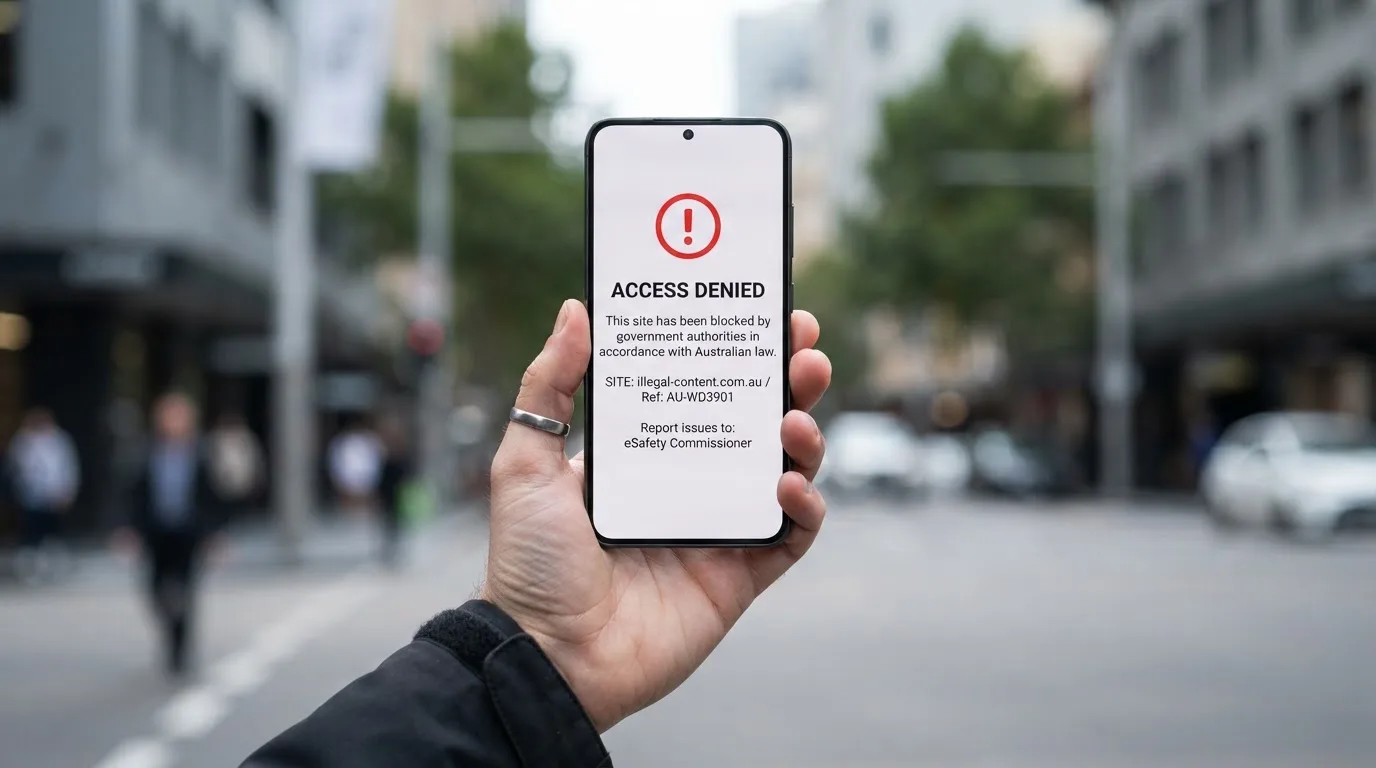
The ACMA is the enforcement body. Its three working tools are the formal warning, the direction to internet service providers to block a site at the DNS level, and the public register of action that names the operator behind the brand. As of June 2026, 1,751 illegal gambling and affiliate marketing websites had been blocked since the first blocking request in November 2019, and more than 230 unlicensed services had left the Australian market since the 2017 strengthening. A blocking round reported on 26 June 2026 added another 12 sites in a single direction: 7Signs, ChromaBet, Donbet, Duospin, Freshbet, Slots Gem, Jacks Club, Lucky Start, Pointsbetz.com, Spinrise, Vinyl Casino and Wildsino. The cumulative number — 1,751 since November 2019 — is what makes the arithmetic on this page possible.
H2 Gambling Capital’s 2025 estimate puts annual losses to illegal offshore gambling sites at roughly A$3.9 billion, with the share of Australian gambling going through legal channels falling from 74% in 2021 to 64%. The reader should hold these two figures together: a single year’s losses, and a legal channel share that has fallen by ten percentage points in four years. The ACMA’s enforcement has been consistent and is intensifying; the dollar volume running the other way has not reversed.
A payment-side ban has been in place since 11 June 2024. Credit cards, credit-related products and digital currency are banned as payment for licensed online wagering in Australia, with penalties up to $247,500 for operators that accept them. Legal deposit routes for a licensed Australian wagering account are debit card, bank transfer, PayID, Osko and BPAY. An offshore jackpot site asking an Australian reader for a credit card or a crypto deposit is therefore operating outside the Australian rules twice over — once for the offer, once for the payment rail.
The reform in flight is the Interactive Gambling Amendment (Gambling Reform) Bill 2026, which passed Parliament on 19 August 2026. Its advertising and inducement measures commence on 1 January 2027. The bill is law with a start date, not yet in force on a 2026 page.
What the ACMA enforcement record actually names
The brands below are not a ranking and not a shortlist. Each one appears because the ACMA itself issued a formal warning over it for offering prohibited services to Australians. The value here lies in the operator names behind the brands — the offshore vehicles the regulator has had to name more than once — and in the dates that show how recent the action is.
| Brand | ACMA action and date | Operator named by the ACMA | Subject support |
|---|---|---|---|
| RocketPlay | Formal warning, March 2026 | Pulsup Ltd; earlier Dama N.V., May 2022 | — |
| Level Up Casino | Formal warning, May 2022 | Dama N.V. | listings-only (Bgaming.com) |
| Woo Casino | Formal warning, March 2025 | Dama N.V. | — |
| Spirit Casino | Formal warning, May 2025 | Dama N.V. | — |
| National Casino | Formal warning, July 2025 | Consolutetish S.R.L. | listings-only (en.wikipedia.org) |
| Bizzo Casino | Formal warning, July 2025; earlier 2022 | Consolutetish S.R.L.; earlier TechSolutions | — |
| Ignition Casino | Formal warning, July 2025 | Bamboo Media | — |
| Instant Casino | Formal warning, February 2025 | EOD Code SRL | — |
| Jackbit | Formal warning, April 2026 | Ryker B.V. | — |
| Casino Intense | Formal warning, April 2025 | Sterplay Holding Ltd | listings-only (Abc.net.au, acma.gov.au, Crownmelbourne.com.au) |
| Sky Crown | Formal warning, September 2022 | Hollycorn N.V. | — |
The pattern in the operator column matters more than any single row. Dama N.V. appears four times across RocketPlay, Level Up Casino, Woo Casino and Spirit Casino — the regulator has come back to the same Curaçao vehicle across multiple brands over four years. Consolutetish S.R.L. appears twice in a single July 2025 round. Bizzo Casino has been the subject of two separate actions against two separate operators in two separate years. Where the same corporate vehicle sits behind a sequence of brand names, the ACMA warning is structurally a warning about the operator rather than the website — the brand can be replaced and the next name can sit on the same licence.
This is also why the page does not carry bonus terms, wagering requirements or payout times for any of these brands. The only sources for those figures were affiliate marketing pages, and a number from an affiliate page describing an offer on a site the ACMA has formally warned is not a number a reader can rely on.
What the blocking rate means for a site on this list
The arithmetic this page is built around is the gap between a formal warning and a blocking direction — and what that gap means for an Australian reader trying to reach any of the brands above.
Between November 2019 and June 2026, the ACMA directed the blocking of 1,751 illegal gambling and affiliate marketing websites. That is roughly 80 months of enforcement, which works out to an average of about 22 sites blocked per month. The rate is not uniform — the June 2026 round alone directed the blocking of 12 sites in a single action, and earlier rounds have been smaller. But the cumulative figure is the one to plan against.
The cost of this rate, for a single offshore site, is that a brand formally warned today has a working life measured in months, not years, before an Australian reader cannot reach it through a normal ISP. A site can be blocked while a real-money balance is still sitting on it. The withdrawal that was queued becomes a withdrawal the player has to chase through a support inbox in a jurisdiction outside any Australian consumer-protection regime. There is no complaints body on this side of the transaction. There is no recourse if a payout is refused.
The framing question, then, is what an Australian reader is actually choosing when the shortlist is the brands above. The choice is not between two reputable houses. It is between paying for play on a site the regulator has formally warned, knowing the site may stop being reachable while a balance sits on it, and accepting that no Australian-licensed equivalent of these products exists.
RocketPlay — the most recent ACMA action in the set
RocketPlay came up in a March 2026 formal warning to Pulsup Ltd. An earlier action against Dama N.V. in May 2022 also named RocketPlay, which means the ACMA has returned to the brand across two operators and four years. The pattern — same brand, different corporate vehicle — is the one the regulator’s enforcement record shows most often, and it is the reason the table above lists operator names in their own column. The page does not have bonus terms, wagering multiples or payout times for RocketPlay; the only sources for those were affiliate marketing pages, and the ACMA’s position on the brand is the relevant fact.
For an Australian reader, the RocketPlay entry makes the gap concrete: this is a brand the regulator has had to name twice in four years, and the offshore licence the site displays does not change the underlying prohibition. The brand’s own suitability as a place to play is not something this page is in a position to speak to; the regulatory record is.
Level Up Casino — Dama N.V.’s first warning in the set
Level Up Casino was named in the May 2022 Dama N.V. warning, which also covered Bambet, Dazard, Wild Tornado and Cobra Casino. Dama N.V. is the operator that reappears in three further entries on this list — Woo Casino, Spirit Casino, and again RocketPlay under Pulsup Ltd — which makes Level Up Casino the first appearance of the recurring operator in the ACMA’s record. A listing on Bgaming.com is the only independent mention the brand carries in the inputs; that is what “listings-only” means in the table above, and it is not a statement the page makes on the brand’s own behalf.
For an Australian reader, the takeaway is the same shape as RocketPlay’s: this is a brand the regulator named once and the operator behind it has gone on to be named in three more formal warnings since. The brand and the operator are tracked separately, and the operator’s later record is the one that compounds.
Woo Casino — second Dama N.V. appearance in 2025
Woo Casino drew a March 2025 formal warning to Dama N.V. By that point Dama N.V. had already been warned once across six brands in May 2022; Woo Casino is the second appearance of the operator in this set, and it was not the last. The page does not have offer terms for the brand; the only sources for those would have been affiliate marketing pages.
For an Australian reader, Woo Casino’s entry sits in the same place the rest of the Dama N.V. row sits: the operator is the unit of action, and the brand is one of several names sitting on the same enforcement record.
Spirit Casino — Dama N.V.’s third warning in twelve months
Spirit Casino drew a May 2025 formal warning to Dama N.V., which makes it the third Dama N.V. brand named in the ACMA’s record within roughly twelve months of the second. The cadence — May 2022, March 2025, May 2025 — is the point. A regulator that has had to come back to the same operator three times is not dealing with isolated missteps; it is dealing with a pattern.
For an Australian reader, Spirit Casino’s row in the table is one of three Dama N.V. entries the ACMA has built up across three years. The brand carries no bonus data on this page because no independent source for it survives the ACMA warning.
National Casino — Consolutetish S.R.L.’s first appearance
National Casino was named in the July 2025 formal warning to Consolutetish S.R.L., the same round that named Bizzo Casino under the same operator. A listing on en.wikipedia.org is the only independent mention the brand carries in the inputs. As with the Dama N.V. entries, the operator is the recurring unit — two brands in one round, one operator.
For an Australian reader, the Consolutetish S.R.L. row shows the same shape the Dama N.V. row shows, this time from a different corporate vehicle and in a single round.
Bizzo Casino — two operators, two warnings, one brand
Bizzo Casino carries the unusual distinction of two separate ACMA actions. The July 2025 warning was to Consolutetish S.R.L.; an earlier 2022 warning went to TechSolutions (CY) Group Limited and TechSolutions Group N.V. Two operators, two separate corporate vehicles, two separate years, one brand sitting across both. This is the clearest example in the table of an offshore brand moving between operators while keeping the customer-facing name.
For an Australian reader, the Bizzo Casino entry makes a point the rest of the table implies: the brand name on the website is not the entity the regulator is acting against, and the entity the regulator acted against in 2022 is not the entity the regulator is acting against in 2025.
Ignition Casino — Bamboo Media’s 2025 appearance
Ignition Casino was named in the July 2025 formal warning to Bamboo Media. The brand does not appear elsewhere in the ACMA’s recent enforcement record in the inputs the page is working from. The July 2025 round grouped it with the Consolutetish S.R.L. warnings, which is useful context — the regulator was active across multiple operators that month.
For an Australian reader, the Ignition Casino entry is the third brand from a single July 2025 round, alongside National Casino and Bizzo Casino. The pattern is the same; the operator is different.
Instant Casino — the earliest 2025 warning in the set
Instant Casino drew a February 2025 formal warning to EOD Code SRL, which makes it the earliest 2025 action in the set and the one furthest from the July 2025 cluster. The page does not carry offer terms for the brand for the same reason as the rest: the only sources for them were affiliate marketing pages.
For an Australian reader, Instant Casino’s row shows that the ACMA’s 2025 enforcement was not a single push — it ran across at least February, March, May and July, against at least four operators.
Jackbit — Ryker B.V.’s 2026 appearance
Jackbit drew an April 2026 formal warning to Ryker B.V., the same round that named CasinOK under the same operator. Two brands in one round, one operator — the Consolutetish S.R.L. shape, with a different corporate vehicle and a different year. Jackbit’s entry in the table is one of two Ryker B.V. entries from the same round, and the brand carries no independent bonus data in the inputs.
For an Australian reader, the Jackbit row completes the pattern: in roughly eighteen months the ACMA has named at least five distinct operators across the brands on this list, and in several cases the same operator under multiple brands.
Casino Intense — Sterplay Holding Ltd’s 2025 appearance
Casino Intense drew an April 2025 formal warning to Sterplay Holding Ltd. The brand carries the strongest set of independent mentions in the inputs, appearing in listings at Abc.net.au, acma.gov.au and Crownmelbourne.com.au — three sources, all of them Australian institutional references, none of them offer terms. As elsewhere in the set, the only sources for bonus data were affiliate marketing pages, and the page does not carry them.
For an Australian reader, Casino Intense’s row is the one with the most independent corroboration that the brand exists in Australian institutional records, and the ACMA warning sits alongside that. The corroboration is about the brand’s footprint; it is not about the offer.
Sky Crown — Hollycorn N.V.’s 2022 warning
Sky Crown was named in the September 2022 formal warning to Hollycorn N.V., the same warning that covered Blue Leo. This is the earliest entry in the table — September 2022 — and it predates the 2025–2026 cluster that dominates the rest of the list. Hollycorn N.V. does not reappear elsewhere in the set, which makes Sky Crown’s row an outlier in shape: one operator, two brands, one warning.
For an Australian reader, Sky Crown is the reminder that the ACMA’s enforcement did not begin in 2025. The pattern has been running since the Interactive Gambling Amendment Act 2017 strengthened the regime, and the entries in the table above are the most recent slice, not the whole record.
The patterns the table exposes
Three things stand out across the eleven rows. First, the operator is the recurring unit, not the brand — Dama N.V. alone appears four times across four years, and the same operator can move between brands while the brand stays the customer-facing name. Second, the warnings cluster in time: the 2025–2026 round is dense, with at least eight actions across at least seven operators in roughly eighteen months, against the slower pace of 2022. Third, the takeaway here is structural, not commercial — what an Australian reader needs is what the regulator’s record looks like, not what the bonus terms look like, because there are no bonus terms this page can honestly carry.
A reader comparing this set against itself will find that the differences between rows are mostly about dates and operators, not about the underlying product offering. None of these brands is licensed in any Australian jurisdiction; none of them is connected to BetStop; none of them gives the player an Australian complaints body. The differences are about how recently the regulator named them and which corporate vehicle sits behind the brand.
Lawful alternatives for Australian readers
The legal products available to an Australian reader are narrower than the offshore set. Wagering on racing and sporting events before the event is licensable through the Northern Territory in practice, which is where the major bookmakers are regulated. Lotteries and keno are licensable at state level. Land-based casinos operate under state regimes — Crown Melbourne under the Victorian Gambling and Casino Control Commission, which replaced the VCGLR on 1 July 2022; Crown Sydney and The Star Sydney under their respective state regulators — and the same act of parliament governs both the table games and the pokies on the floor.
For jackpot play specifically, the only Australian venues offering large progressive slots are land-based. Crown Melbourne’s poker machine floor carries Megabucks-style progressives in the IGT family, and the equivalent products exist at The Star Sydney and Crown Sydney. The progressive jackpot format itself began in large casinos in 1986; the offline version is the original version, and the online version is a transposition of it. An Australian reader who wants the jackpot experience inside the law is on a casino floor, not on an offshore site.
The lawful alternatives are not equivalent to the offshore shortlist a reader came looking for. They are narrower, they are land-based for the slot product, and they operate inside a regulatory frame the offshore set does not. A page that pretended otherwise would be promising a product that does not exist under Australian law.
Responsible gambling around jackpot play
BetStop, the National Self-Exclusion Register, has been live since August 2023. Its scope is Australian-licensed online and phone wagering services — the racing and sports bookmakers regulated by the Northern Territory and the state regimes. An offshore jackpot casino is not connected to BetStop, and a self-exclusion through BetStop does not stop an offshore site from accepting the same player’s deposits. The mechanism works inside the licensed frame; outside it, the player is on whatever self-exclusion tool the offshore site itself provides, which is whatever the offshore site’s terms say it is.
The National Gambling Helpline is 1800 858 858, free, 24/7, with chat at Gambling Help Online. Both are Australian services. The minimum age for any Australian gambling product is 18. Recreational gambling winnings are not assessable income under section 6-5 of the ITAA 1997, and losses are not deductible, unless the person carries on a business of gambling — which is a tax treatment, not a recommendation.
Jackpot play specifically carries a structural risk that ordinary slot play does not. The session-by-session RTP is lower because a slice of every losing wager funds the progressive, and the headline prize compensates statistically, not experientially. A player who treats a progressive slot as an ordinary slot will see the bankroll behave differently. The single largest online slot jackpot on record was won on a single spin by a player in Belgium, and the probability that any given spin produces it is the probability the game’s design produces it — published for some formats, undisclosed for others because reel layouts are not made public.
The combination the page wants to leave with the reader is straightforward. The Australian law prohibits the supply. The ACMA enforces the prohibition against the operator. The player who chooses the offshore path gives up the BetStop mechanism, the Australian complaints body, and the working assumption that the withdrawal will arrive. None of this is a recommendation about whether to play; it is a description of what is and is not in place when an Australian reader does.
Frequently asked questions
Which single online slot holds the record for the largest jackpot win?
The record online slot jackpot is €19,430,723.60, won on 27 April 2021 by a player in Belgium at Napoleon Sports & Casino on Microgaming’s “Absolootly Mad: Mega Moolah.” Games Global, the business that now distributes the Mega Moolah series, has reported later wins of £11.5 million and £13.5 million.
Can a jackpot slot be funded with a cryptocurrency deposit?
At an Australian-licensed wagering operator, no. Credit cards, credit-related products and digital currency have been banned as payment for licensed online wagering since 11 June 2024, with penalties up to $247,500 for operators that accept them. An offshore site asking for a crypto deposit is operating outside the Australian rules on payment rails as well as on offer.
Is it legal for an online casino to offer jackpot slots to Australians?
No. The Interactive Gambling Act 2001, strengthened by the Interactive Gambling Amendment Act 2017, prohibits the supply of online casino games, online pokies and in-play betting to anyone in Australia. No state or territory issues a licence for the activity. The ACMA enforces against the provider; the player is not prosecuted, but an offshore site gives no Australian consumer protection.
Why do jackpot slots typically pay out less often between big wins?
The jackpot pool grows from a slice of every losing wager, which is taken from what would otherwise be ordinary returns. The non-jackpot RTP of a progressive slot is therefore lower than a comparable non-progressive title with the same paytable, and the session-by-session experience reflects that. The headline prize compensates statistically; the interim behaviour does not.
What happened to the record jackpot won on Mega Moolah in 2021?
The €19.43 million prize was paid out by Napoleon Sports & Casino to a Belgian player on 27 April 2021, on the Absolootly Mad: Mega Moolah title. Games Global, the successor to Microgaming, now distributes the Mega Moolah series and has announced later wins of £11.5 million and £13.5 million.
Is there a way to play jackpot-style slots for real money through a licensed Australian venue?
Yes — at a land-based casino. Crown Melbourne, The Star Sydney and Crown Sydney operate progressive slots on the floor under state regulatory regimes (the Victorian Gambling and Casino Control Commission in Victoria; equivalent state bodies elsewhere). Online jackpot slots from a licensed Australian operator do not exist, because no Australian jurisdiction licenses online casino games. BetStop binds only Australian-licensed online and phone wagering services, not offshore sites.