
Real money online pokies in Australia: what the IGA 2001 allows and what it doesn’t
A reader typing “best online pokies real money Australia 2026” wants a shortlist. The honest answer is that no such shortlist exists, and the law is the reason. The Interactive Gambling Act 2001 makes it an offence to provide online casino games, including online pokies, to a person physically in Australia. No state or territory issues a licence for it. What follows is not a list of casinos to sign up with this afternoon. It is the legal picture, the regulator’s record, the licensed alternatives on Australian soil, and the payment and protection rules that apply to anything an Australian can actually use.
Current as of 8 November 2026 and cross-checked against the Australian Communications and Media Authority’s published register of formal warnings and blocking requests.
Table of Contents
- Mobile and the apps that don’t exist for Australian players
- Specific games, specific providers, and what is and is not available on Australian screens
- The ranking that the research does not support — and what the ACMA record does
- Overview: what real money online pokies are, in the Australian frame
- Legality and the ACMA’s running enforcement record
- Responsible gambling: the tools that work, and what they actually cover
- Payments and payout speed: how money moves for the licensed product
- Frequently asked questions
Mobile and the apps that don’t exist for Australian players
An “Australian real money pokies app” is the natural next thing a reader looks for once the search engine has confirmed a casino exists. The search is not wasted, but the destination is not where the marketing assumes it is. The app an Australian player can lawfully install for real money play does not exist, because the product itself is unlawful to provide. What does exist is the mobile browser, which is how every licensed Australian wagering operator takes a bet, and which is also how an offshore casino loads for the reader who decides to ignore the prohibition. The phone, in other words, is not the gate; the gate is the law.

What the app stores actually carry
Apple and Google both enforce rules against real-money gambling apps in jurisdictions where the product is unlicensed, and Australia is one of them. A reader searching the local App Store or Play Store for “pokies real money” finds social casino apps, free-play simulators and the apps of licensed Australian wagering operators — Sportsbet, Ladbrokes, bet365, tabcorp, the bigger brands that hold Northern Territory licences for sports and racing. None of those apps carries online pokies for cash. The apps that do are downloaded from the offshore casino’s own website, often after the operator’s URL has already been added to a browser allow-list because an earlier ACMA blocking request made the main domain unreachable.
The mobile-browser experience at an offshore site
Loading an offshore casino in Safari or Chrome on a phone in Sydney gives the reader a smaller version of the desktop product. The lobby tiles shrink to a thumb-sized grid; the cashier collapses into a deposit-method picker. PayID and a few cryptocurrencies tend to appear as the headline options, because the IGA’s ban on credit cards and digital currency as a payment method for licensed wagering does not bind the offshore operator. The product still works; the law still treats it as a prohibited interactive gambling service. The thinness of the warning is itself part of the appeal — there is no popup at the door telling the reader that what they are about to do is unlawful on the provider’s side.
The licensed mobile alternative
The licensed alternative is the sports and racing apps held by the Northern Territory Racing and Wagering Commission’s licensees. There are 52 of them. The commission itself is a small body — it has no full-time staff and meets monthly in Darwin — and it regulates wagering services rather than casino games. An Australian who wants to bet on the Melbourne Cup, the AFL or an English Premier League fixture can install one of those apps and use a debit card, PayID or BPAY to fund it. None of those apps will offer a real money pokie.
Specific games, specific providers, and what is and is not available on Australian screens
The vocabulary of “real money pokies” is its own little ecosystem: pokies, slots, fruit machines, online pokies, the provider names — Pragmatic Play, Microgaming, NetEnt, BGaming, Evolution for the live tables. Reading the catalogues of any of those providers shows several thousand titles, and the same names turn up at multiple offshore casinos. What is harder to find in plain English is which of those titles an Australian can lawfully play for cash, and which ones they cannot.
What is and is not licensed in Australia
Electronic gaming machines — the proper Australian term is “pokies,” short for poker machines — operate in every state and territory. Each jurisdiction separately regulates their design, their return-to-player floor and where they can sit. New South Wales had 87,298 machines outside casinos across 2,195 venues as of June 2023, and Queensland had 21,122 in 351 venues in October 2023. Victoria’s outside-Crown total was 26,380 in 488 venues under a statewide ceiling of 30,000. Those numbers describe the physical machine on a pub floor, in a registered club or in a casino. They are the product Australians can play for cash in person.
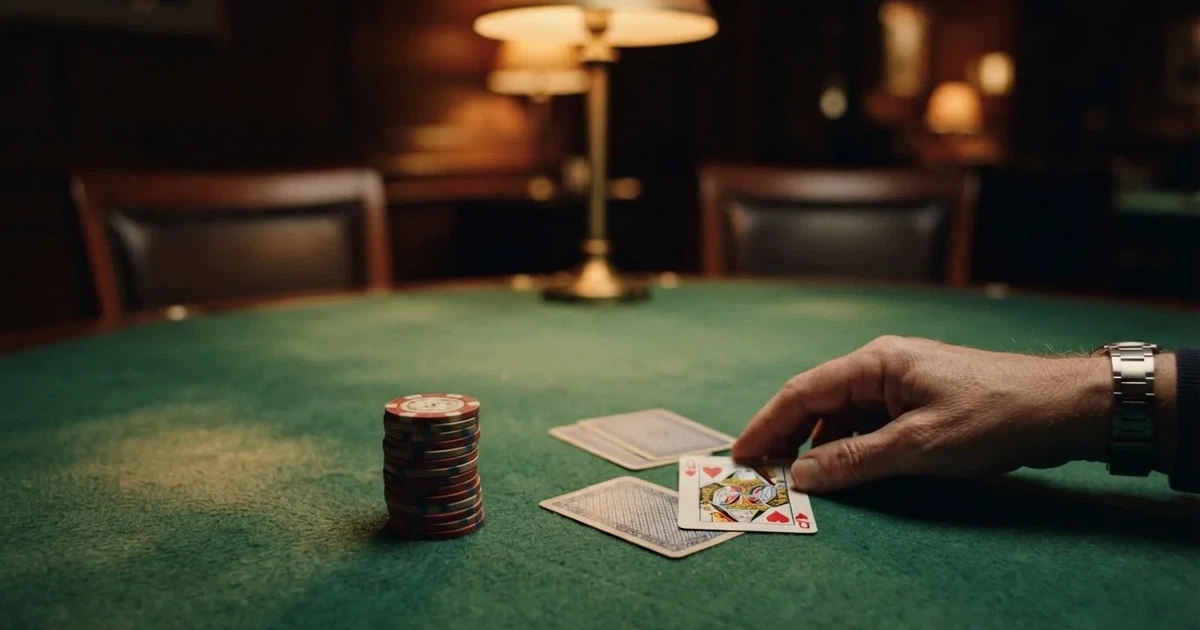
The online version of those machines — online pokies — is a different product. The Interactive Gambling Act 2001 prohibits offering them to anyone in Australia, and no Australian jurisdiction licenses them. A reader who travels to a Crown casino in Melbourne or Perth finds baccarat, blackjack, roulette and the pokies on the floor. The same reader sitting at home in Melbourne or Perth does not get the same product through a browser, because no Australian operator is licensed to supply it and no offshore operator is licensed to supply it to Australia. The licences those offshore sites display — Curaçao, Anjouan, Kahnawake — are real licences in their own jurisdictions and irrelevant under the IGA.
A representative catalogue of well-known titles
The same titles keep turning up in offshore lobbies: Big Bass Bonanza, Gates of Olympus, Sweet Bonanza, Wolf Gold, Sugar Rush, The Dog House, Madame Destiny, Elvis Frog, Book of the Fallen, Plinko, Aviator, the live-dealer tables from Evolution — Lightning Roulette, Crazy Time, Monopoly Live — and the baccarat and blackjack variants on the same live platform. Big Bass Bonanza is a Pragmatic Play slot with a fishing theme and a free-spins round; Gates of Olympus uses a pay-anywhere mechanic with multiplier orbs that can stack into large wins on a single spin. Sweet Bonanza is another Pragmatic title built around tumbling reels and free spins with random multipliers. Wolf Gold, from Pragmatic Play’s earlier catalogue, has held progressive jackpots and a money-respin feature. The list is long because the providers push the same popular titles to every operator that signs up, and a dozen offshore casinos carry nearly identical lobbies.
Baccarat, blackjack and the table-game variants
A reader searching for “real money pokies” often lands on sites that also have live tables. Two table games deserve a sentence because they show how thin the operator’s marketing is. Baccarat’s house edge is 1.06% on the Banker bet, 1.24% on the Player bet and 14.36% on the Tie — the Tie bet is the casino’s best friend, and the promotion of Tie payouts as the headline number is one of the older tricks in the book. Punto banco, the variant most played today, was developed in Havana during the 1940s and the casino banks the game at all times. Crown Melbourne offers three approved baccarat variants — Traditional Baccarat, Crown Baccarat and 2 to 1 Baccarat — under the Victorian Gambling and Casino Control Commission, which replaced the VCGLR as Victoria’s casino regulator on 1 July 2022. None of those Crown tables is online.
Blackjack under liberal Las Vegas Strip rules — dealer stands on soft 17, double on any two, double after split, resplit aces, late surrender — runs about 0.28% house edge with optimal play. Under Atlantic City rules it is closer to 0.43%. The variants marketed at offshore sites — Spanish 21 (no tens, more liberal player rules), Double Exposure (both dealer cards up), Blackjack Switch (swap cards between two hands), Super Fun 21 (up to four splits) — shift that edge in either direction depending on the rule set. The lesson is the same one baccarat teaches: the house edge is small in percentage terms and brutal in dollar terms over enough hands. None of those tables is licensed to be played online from Australia.
The ranking that the research does not support — and what the ACMA record does
A reader asking for “best online pokies real money Australia 2026” expects a list of options with brief assessments side by side. The research that supports this page cannot produce one. The reason is not editorial caution; it is the law. The Interactive Gambling Act 2001 prohibits offering online casino games to anyone in Australia. None of the offshore brands readers find through search engines is licensed to take a bet from an Australian. The “best” in such a list is a marketing word, not a measure, and the list itself is a ranking of unlicensed operators.
What the research does support is a different kind of list: the brands the ACMA has actually acted against, with the date of each formal warning and the operating company named in it. Eleven brands appear in the ACMA’s published enforcement record between 2022 and 2026. Each one is here because the regulator named it, not because the page endorses it.
| Brand | ACMA action and date | Operator named by the ACMA | Subject support |
|---|---|---|---|
| RocketPlay | Formal warning, March 2026; earlier warning to a previous operator, May 2022 | Pulsup Ltd (2026); Dama N.V. (2022) | — |
| Level Up Casino | Formal warning, May 2022 | Dama N.V. | Listings on BGaming’s site |
| Woo Casino | Formal warning, March 2025 | Dama N.V. | — |
| Spirit Casino | Formal warning, May 2025 | Dama N.V. | — |
| National Casino | Formal warning, July 2025 | Consolutetish S.R.L. | Listings on Wikipedia |
| Bizzo Casino | Formal warning, July 2025; earlier warning, 2022 | Consolutetish S.R.L. (2025); TechSolutions (2022) | — |
| Ignition Casino | Formal warning, July 2025 | Bamboo Media | — |
| Instant Casino | Formal warning, February 2025 | EOD Code SRL | — |
| Jackbit | Formal warning, April 2026 | Ryker B.V. | — |
| Casino Intense | Formal warning, April 2025 | Sterplay Holding Ltd | Listings on ABC, the ACMA register and Crown Melbourne’s site |
| Sky Crown | Formal warning, September 2022 | Hollycorn N.V. | — |
Three things stand out in that table without any one of them needing a recommendation. The first is that Dama N.V. appears four times across different brands, and the ACMA has had to repeat the warning across the operator’s catalogue. The second is that several warnings target operators already on the ACMA’s previous list — Bizzo Casino was warned under TechSolutions in 2022 and again under Consolutetish S.R.L. in 2025. The third is the cadence: the warnings are not slowing down. April 2026 alone produced a warning to Ryker B.V. and a fresh one to Pulsup Ltd, and the regulator’s most recent blocking round added twelve more domains to the list of sites Australian ISPs are required to filter.
The “Subject support” column is mostly dashes for a reason. Research checked the providers’ own catalogues and a handful of listings pages, and only a few of these brands turn up anywhere other than on affiliate marketing pages. A name appearing on BGaming’s own site is not a recommendation; it is a listing. The reader who treats an offshore casino as a serious proposition because its logo turns up in a provider’s case study is reading past what those listings actually say.
Overview: what real money online pokies are, in the Australian frame
The phrase does a lot of work, and most of it is misleading. “Online pokies” means slot-style games hosted on a website rather than installed as a physical machine in a venue. “Real money” means the player wagers cash against the house for the chance of a cash payout. “Australia” is the jurisdictional fact that decides whether the activity is lawful at all. The product is the same wherever the server sits. The legal answer changes completely the moment the player is physically in Australia.
The mechanics, in plain terms
A pokie is a game of chance with reels, paylines or pay-anywhere clusters, and a random number generator deciding the outcome of each spin independently of the previous one. Return-to-player is the long-run percentage of money wagered that the game pays back to players as winnings. The remaining percentage is the house edge. The land-based pokies in Australian pubs and clubs are required by their state regulator to clear a minimum return-to-player floor that varies by jurisdiction: 85% in New South Wales, the Northern Territory and Queensland, 87% in the Australian Capital Territory and Tasmania, 87.5% in South Australia, and 90% in Western Australia, where poker machines are otherwise banned outside the one casino in Perth.
Those floors apply to physical machines on Australian soil. Online pokies offered from offshore are not subject to them. A site advertising a 96% RTP is making a statement about its own game, and Australian readers have no regulator to complain to if the figure turns out to be wrong.
The losses Australians already take
In 2020–21 Australians bet almost A$150 billion through gaming machines and lost A$12.18 billion on them. Australia has roughly 3% of the world’s pub and club poker machines and about 0.3% of the global population. The country is the world’s heaviest per-capita loser on the machines it allows. NSW alone, with 87,298 machines outside casinos as of June 2023, recorded player losses of A$8.18 billion in 2022–23. Those losses were taken on lawful, licensed machines inside the state. The offshore online market, on H2 Gambling Capital’s 2025 estimate, takes another A$3.9 billion a year out of Australian pockets, and the share of gambling going through legal Australian channels has fallen from 74% in 2021 to 64%.
What “real money” excludes
Free-play pokies and social casino games are not the same product. A free-play pokie runs the same reels and the same bonus rounds as the real-money version, with no cash at stake. A social casino uses a virtual currency — gold coins, sweeps coins, credits — that can be earned by play or purchased, with no cash-out to a bank account. Both categories sit outside the IGA’s prohibition. Both are also a long way from what a reader searching “real money pokies” is trying to find. The free-play product is a marketing funnel for the offshore real-money version. The social casino is a separate genre with its own publisher economy and its own age ratings.
Legality and the ACMA’s running enforcement record
The law is short. The record of its enforcement is long. The Interactive Gambling Act 2001 (IGA), strengthened by the Interactive Gambling Amendment Act 2017, makes it an offence to provide online casino games, online pokies or in-play betting to a person in Australia. No state or territory licenses those products. What is licensable in Australia is wagering on races and sports placed before the event, lotteries and keno — and in practice most online bookmakers license through the Northern Territory.
The Interactive Gambling Act 2001, in plain terms
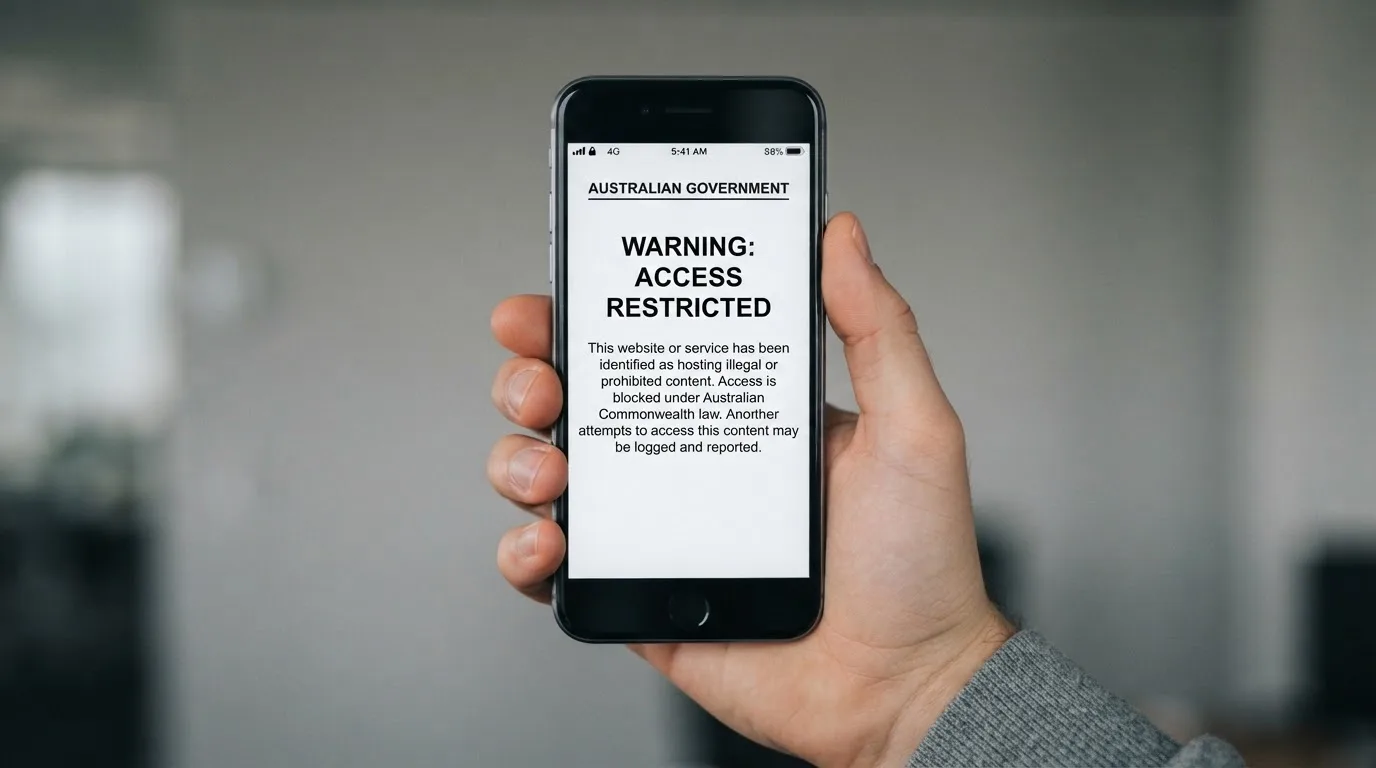
The IGA targets the provider, not the individual player. An Australian who opens an account at an offshore casino has not committed an offence under the federal law. The operator offering the product to someone in Australia has. The enforcement tools sit with the Australian Communications and Media Authority, which investigates complaints, issues formal warnings, refers matters for civil penalty proceedings and can direct Australian internet service providers to block specific domains.
An offshore casino has no obligation under the IGA to honour a withdrawal, settle a dispute or pay a jackpot. An Australian player who is refused a payout from a Curaçao-licensed operator has, in practical terms, no Australian regulator to complain to. The IGA’s protections — the dispute resolution body, the responsible gambling code, the self-exclusion registry — all assume the operator is the kind of Australian licensee that the IGA is concerned to regulate. An offshore site is not.
The blocking requests, in numbers
The ACMA’s first blocking request went to Australian ISPs in November 2019. As of the regulator’s June 2026 update, a total of 1,751 illegal gambling and affiliate marketing websites had been blocked since that first request. More than 230 unlicensed gambling services have left the Australian market since enforcement was strengthened in 2017. The latest published blocking round, reported on 26 June 2026, asked ISPs to block twelve more sites: 7Signs, ChromaBet, Donbet, Duospin, Freshbet, Slots Gem, Jacks Club, Lucky Start, Pointsbetz, Spinrise, Vinyl Casino and Wildsino.
That cadence is the arithmetic that earns this page its calculation. Between the ACMA’s first blocking request in November 2019 and the round reported in June 2026, the regulator’s tally grew from one to 1,751 websites, including affiliate marketing sites that linked into the prohibited services. The growth has not been linear — earlier rounds covered single sites, later rounds cover dozens — but the simple running average comes out at roughly 25 websites blocked per month across the period, with the rate materially higher in the most recent twelve months than at the start. The figure is a band rather than a point: monthly blocks ranged from a handful in the early rounds to several dozen in a single 2025 or 2026 round. The trend line is the point, not the number.
Formal warnings to operators
A blocking request and a formal warning are different tools. The warning names an operator and gives them a chance to stop. The blocking request assumes they have not. The table earlier in this page lists eleven brands warned between 2022 and 2026. The dates and the operating companies behind the brands are the ACMA’s own, drawn from the regulator’s published register. The pattern in those entries — multiple warnings to the same parent company under different brand names, and second warnings to operators who were already on the list — is the regulator’s quiet acknowledgement that the offshore industry treats a warning as a cost of doing business rather than a reason to leave.
2026 reform, with a start date that matters
The Interactive Gambling Amendment (Gambling Reform) Bill 2026 passed Parliament on 19 August 2026. Its advertising and inducement measures commence on 1 January 2027. For the remainder of this year the existing law stands. From 1 January 2027 the framework tightens further, and offshore affiliates marketing to Australians will face a different set of obligations. The reform does not legalise online pokies. It does not change the prohibition. What it changes is the advertising around it, which is itself a substantial narrowing of how offshore brands reach Australian searchers.
Responsible gambling: the tools that work, and what they actually cover
The tools in this section are the ones an Australian can use. Some of them bind operators that the offshore casino is not. Knowing which is which is the difference between a self-exclusion that holds and one that does not.
BetStop and the National Self-Exclusion Register
BetStop is the National Self-Exclusion Register, run by the Australian Communications and Media Authority and live since August 2023. A person who registers with BetStop is excluded from marketing by every Australian-licensed online and phone wagering service, and the licensed operator is required to close any existing account the person holds. The register does not bind offshore operators. A reader who has registered with BetStop, logged out of every Australian wagering account and then opened an offshore casino account is not excluded from the offshore casino. The offshore casino, in turn, has no obligation to honour an Australian self-exclusion list it was never a party to.
This is the single most important fact in the responsible-gambling shelf on this page, and it is the one most likely to surprise a reader. BetStop is the right tool for the product the IGA licenses — sports and racing wagering, lotteries, keno. It is not a tool for the product the IGA prohibits, because the operators of the prohibited product have not signed up to it.
The helpline, the chat, and the venue-level alternatives
The National Gambling Helpline is 1800 858 858, free, 24/7, with chat available through Gambling Help Online. The helpline is the appropriate first call for a reader who is worried about their own play or someone else’s, and it is not limited to the product the reader thinks they have a problem with. The counsellors are trained to work with gambling harm whatever the medium.
In person, every Australian state and territory runs its own self-exclusion scheme for the licensed venues — pubs, clubs and casinos — and a person can be barred from every venue in a jurisdiction by registering once. The in-venue schemes and BetStop cover different products; a player who plays both pokies in a pub and bets on the races online can register with both schemes and be excluded from both.
Where the harm is concentrated
The losses on the lawful product give the most direct read on where gambling harm is concentrated in Australia. NSW alone, with 87,298 non-casino machines as of June 2023, recorded A$8.18 billion in player losses in 2022–23. The figure is not an indictment of the regulator or the operators — it is the simplest measure of how much money the lawful product takes from the people who use it. The reform agenda in Tasmania — mandatory pre-commitment cards, originally planned as nation-leading and now delayed until late 2025 — is the policy response to that picture: a state deciding that requiring a player to set a loss limit before sitting down is a less restrictive tool than the ones already tried.
Payments and payout speed: how money moves for the licensed product
The shelf that readers searching for “PayID pokies” care about is the one that says most clearly which routes are open and which ones an offshore casino is using precisely because they are not.
The licensed deposit methods
Since 11 June 2024, credit cards, credit-related products and digital currency are banned as a payment method for licensed online wagering in Australia. Operators face penalties of up to A$247,500 for taking a credit card deposit. The legal deposit routes for licensed wagering are debit card, bank transfer, PayID and Osko, and BPAY. PayID is the system that links a bank account to a mobile number, an email address or an ABN; Osko is the extension of the New Payments Platform that lets PayID transfers clear in near real time. Both are operated by Australian banks and both settle into an Australian bank account within seconds in normal circumstances.
The withdrawal side at a licensed operator runs through the same rails. A debit-card withdrawal takes one to three business days. A bank transfer via PayID or Osko is faster, often same-day. BPAY is rarely used for withdrawals because it was designed as a bill-payment rail.
What an offshore casino does instead
An offshore casino accepts what an Australian cannot lawfully use at a licensed bookmaker. Credit cards are still accepted. Cryptocurrencies are still accepted. PayID does turn up at some of them, which is the source of the search terms that lead readers to this page — but PayID at an offshore site is the bank-transfer rail being routed to an account outside the Australian banking system, with no consumer protection and no recourse if the operator declines to pay out.
The withdrawal time at an offshore casino is whatever the operator publishes on its terms page, which the research for this page could not verify against the operator’s own published figure for any of the brands on the ACMA’s list. The rule of thumb is that e-wallet and crypto withdrawals are advertised as same-day, that bank transfers take several business days, and that “pending period” is the place where most payout disputes begin.
The payment-method clue
A reader who lands on a casino site asking for a credit card or a Bitcoin deposit has, in one detail, the strongest signal the page can offer: the site is operating outside Australian rules. The rules that ban credit cards and crypto for licensed wagering are there because the regulator concluded that those two routes let a person spend money they do not have or money that cannot be traced back. An operator that takes them anyway is not subject to the same reasoning, and the reader who uses them at that operator is using them with none of the protections the ban was designed to provide.
Frequently asked questions
What is the difference between a free-play pokie and a real money one?
A free-play pokie uses the same reels and the same bonus rounds as the real-money version, with virtual credits only — there is no cash at stake and no cash payout. A real money pokie wagers cash on each spin and pays cash winnings back to the player through the operator’s cashier. The random number generator is the same engine under both; the difference is whether real dollars move.
Can real money online pokies be played using PayID in Australia?
Not at a licensed Australian operator, because online pokies are not licensed in Australia. At an offshore casino, PayID does sometimes appear as a deposit method, but the receiving account sits outside the Australian banking system and the transaction has no Australian consumer protection behind it. PayID at a licensed wagering operator is a fast, lawful rail for sports and racing bets, not pokies.
Is it legal for an online casino to offer real money pokies to Australians?
No. The Interactive Gambling Act 2001, strengthened by the 2017 amendments, makes it an offence to provide online casino games — including online pokies — to a person physically in Australia. No state or territory licenses the activity. The offshore licences those sites display (Curaçao, Anjouan, Kahnawake) are real licences in their own jurisdictions but do not authorise the operator to take bets from Australia. The individual player is not prosecuted under the IGA; the provider is.
Is there a dedicated real money pokies app for Australian players?
No. Apple and Google enforce rules against real-money gambling apps in jurisdictions where the product is unlicensed, and Australia is one of them. The apps Australian players can install for real money wagering are the licensed sports and racing apps held by Northern Territory licensees — Sportsbet, bet365, Ladbrokes and the other brands in that group. None of them carries online pokies.
How much did Australians wager on gaming machines in 2020-21?
Almost A$150 billion through gaming machines, with losses of A$12.18 billion, in the 2020–21 financial year. NSW accounted for the largest share by a wide margin: 87,298 non-casino machines as of June 2023 generated A$8.18 billion in losses in 2022–23. The figures describe the lawful, state-regulated product — the licensed pubs, clubs and casinos where the machines sit on the floor.