
Best progressive jackpot slots 2026: the mechanics, the numbers and the Australian warning list
Current as of 8 November 2026 · verified against the ACMA register of formal warnings and blocking requests.
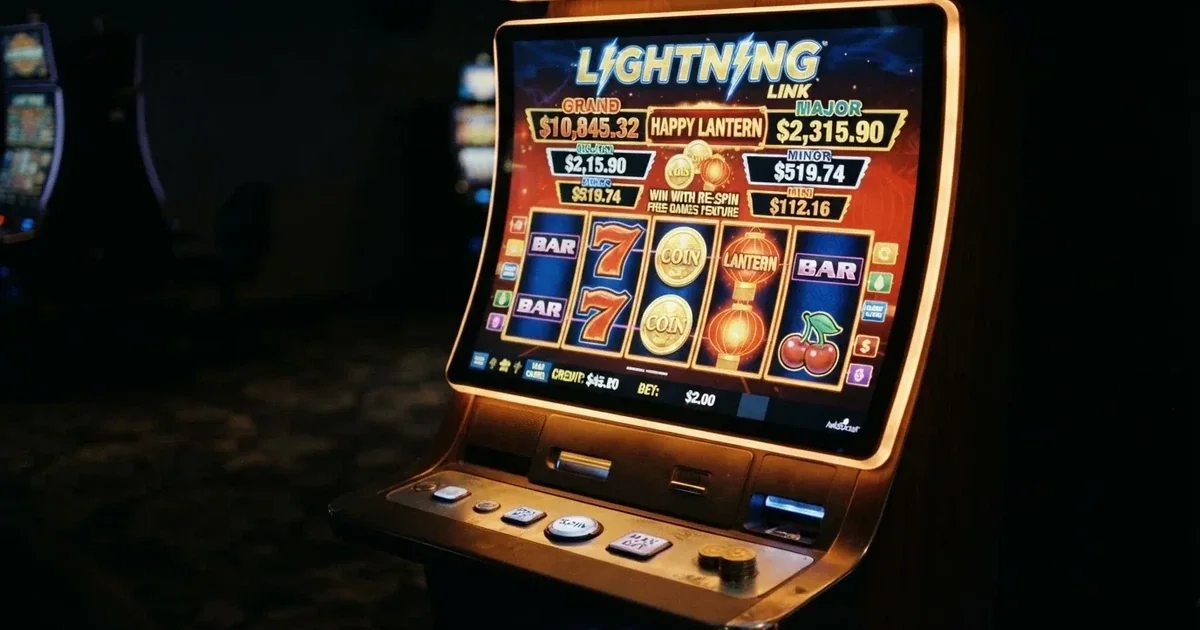
A progressive jackpot slot does not pay out a fixed top prize the way a regular online slot does. A small slice of every losing wager across the linked network feeds a shared pool that climbs until someone hits it, then resets and starts again. That mechanic is the whole reason a progressive headline can run to eight figures while a non-progressive slot caps out at a few thousand. It is also the reason a chasing player needs to know what they are really paying for that chance. This page works through the paytable behind the climbing number, the wider catalogue of games that mechanic lives in, the Australian legal frame around offering that product online, and the eleven offshore sites the ACMA has warned over the past few years for doing exactly that.
Table of Contents
- How the prize pool grows and what a paytable shows
- Standalone, local and wide-area progressives
- Why progressive jackpots carry a lower base return
- Where progressive jackpots sit inside the wider game catalogue
- The eleven offshore brands the ACMA has warned
- RocketPlay
- Level Up Casino
- Woo Casino
- Spirit Casino
- National Casino
- Bizzo Casino
- Ignition Casino
- Instant Casino
- Jackbit
- Casino Intense
- Sky Crown
- How the blocking rate compounds against offshore brands
- What a warning means in practice for an Australian player
- Player wellbeing regardless of where someone plays
- Recent enforcement and the 2026 reform timeline
- How to read an offshore jackpot lobby
- Frequently asked questions
How the prize pool grows and what a paytable shows
A paytable is the small printed sheet on or beside a slot cabinet, and on an online slot it lives behind an info button. For a progressive game the paytable has to show two things a regular game’s does not: the current meter value, and the conditions that trigger the top payout. Everything else on the sheet — the mid-tier symbol pays, the wild behaviour, the scatter rules, the free-spin round — sits at the same level of detail it would on any other slot. The progressive line is what changes.

The mechanic itself is straightforward. Every losing wager adds a small fraction of a cent to the meter. The meter climbs continuously from the moment the previous jackpot was won, and it does not stop climbing until it is hit. Some progressive games feed a single venue’s bank of machines. Others feed hundreds of casinos running the same software on the same network, which is why network-wide progressives can run into the millions while a local progressive at a suburban pub tops out at a few thousand dollars. The wider the network, the more losing wagers are feeding the meter every minute, and the higher the ceiling tends to be.
Two practical points follow from that, and both belong on the paytable in one form or another. The first is the reset value: most progressives reset to a seed amount after a hit, and that seed varies wildly. Some games reseed at A$1 million, others at A$10, and the seed is what a player sees on the meter right after a jackpot the moment play resumes. The second is the trigger. Some progressives pay on a specific combination of symbols on a max-credit spin, which is why a paytable will note that the progressive line only pays at the maximum bet. Others use a separate bonus wheel or a randomly triggered jackpot round. Both shapes are common; a player who bets below the maximum on a max-bet-only progressive is contributing to a pool they cannot win.
A separate variant is the “must-hit-by” mystery jackpot. The paytable gives a range, not a single number — for example A$1,000 to AX” is telling the player the ceiling, not the next payout.
The numbers involved are not theoretical. The record online slot jackpot is €19,430,723.60, paid on 27 April 2021 to a player in Belgium playing Microgaming’s Absolootly Mad: Mega Moolah through Napoleon Sports & Casino. Games Global, the business that now distributes the Mega Moolah progressive series after Microgaming’s network transition, has since reported subsequent wins of £11.5 million and £13.5 million. The mechanic scales because the network behind it scales: thousands of casinos feeding one meter, every spin, every minute, every day, year after year. That scale is also the marketing story every progressive slot page will lead with, and the same number is what the player is paying for the chance at, one losing spin at a time.
The paytable therefore shows three things worth weighing before a single spin:
- The seed value. A high seed (A$1 million rather than A$10) means a fresh jackpot already starts as a life-changing figure, but it also means the underlying contribution rate to the meter is heavier, because somebody has to fund that seed when the meter resets.
- The trigger condition. A max-bet-only trigger is the most common restriction. A mystery trigger is a different game entirely.
- The base return-to-player on the non-progressive line. Most progressive slots sit below the return of their non-progressive siblings on the rest of the paytable, because some of each wager is diverted to the jackpot pool rather than to the regular pays. The base game return is where the maths of an average session actually lives.
Standalone, local and wide-area progressives
The three tiers of progressive jackpot are not marketing categories; they are mechanical ones, and the size of the prize a player can ever see tracks the size of the network feeding it.
A standalone progressive is a single machine. Its pool grows only from wagers placed on that one cabinet. In a venue that has ten of them, each cabinet has its own meter, and each meter climbs on its own clock. Standalone progressives rarely run into six figures because the wagering base feeding them is small. They are common in Australian clubs and hotels as older poker-machine setups that have a local link but not a venue-wide one.
A local progressive, sometimes called a venue-wide or in-house progressive, links every machine running the same game inside a single venue. The pool grows from every losing wager on every linked cabinet. A busy venue with several hundred machines on the same game can push the meter into the low hundreds of thousands before a hit, occasionally more. The Australian venues that still offer progressive jackpots on their pokies almost always run a local progressive of this kind — wider than standalone, narrower than the international networks.
A wide-area progressive links machines across many venues, often across state lines or international borders, all running the same software and feeding one shared meter. Mega Moolah is the textbook example: the same jackpot software runs through every casino on the Microgaming and then Games Global network, every losing wager across the network adds to the same pool, and the meter is shared between a player in Belgium and a player in Perth. Wide-area progressives are the only kind that regularly post eight-figure payouts. They are also the kind that an Australian player will only ever encounter offshore, because no Australian-licensed online casino exists to run one.
A fourth shape sits beside those three. Some land-based progressives — particularly older IGT machines such as Megabucks — link across many casinos in a single jurisdiction in the United States. Megabucks itself dates back to 1986, when progressive jackpots were first introduced in large casinos, and its first payout was US$4,988,842.17 on 1 February 1987. That format is the historical template for everything that came after, including the online networks that now feed Mega Moolah.
A player choosing between the three should not pick on the meter value alone. A wide-area progressive is a long-odds bet on a small fraction of every spin across a vast network; a local progressive is a similar bet on a smaller network with a smaller ceiling; a standalone is a long-odds bet on one cabinet. The house edge on the base game is what an average session actually costs; the jackpot is the rare event that may or may not happen during it.
Why progressive jackpots carry a lower base return
Most progressive slots sit below their non-progressive equivalents on the base-game return-to-player. The reason is mechanical, not a design choice. A regular online slot returns roughly its declared RTP, say 96%, on the non-jackpot lines of the paytable, because the entire house edge funds the regular pays, the free-spin round, and the operator’s margin. A progressive slot takes a slice of every wager and diverts it to the jackpot pool rather than to the regular pays. The wider the network and the bigger the seed, the larger that slice tends to be, and the less of each wager is left for the base game.
The trade-off reads cleanly when the maths is laid out. A 96% slot returns, on average, 96 cents of every dollar wagered across millions of spins. A progressive slot at 92% on the base game returns 92 cents of every dollar on the regular pays, with the remaining 4 cents feeding the meter that pays the jackpot when it hits. A player who never wins the jackpot is therefore paying an extra 4 cents per dollar on the base game for the chance at a payout the regular slot does not offer. A player who does win the jackpot is collecting the entire pool on top of the base-game returns the slot was paying out in the meantime. The gap between those two outcomes is what makes a progressive a high-variance bet: most sessions finish below the regular slot’s RTP, and a small fraction finish vastly above it.
That gap also means a progressive jackpot can occasionally push a game’s overall theoretical return above 100% once the meter is high enough. The crossover is well documented in video poker and Caribbean Stud variants where the paytable is published and the maths is auditable. Slot machines are harder to verify because the reel layouts are not public, but the same principle applies: there is a meter value at which the expected value of the jackpot line, added to the base-game return, exceeds 100% of turnover. Whether any individual player is spinning during that window, or playing long enough to ride it out, is a different question — and the honest answer is that almost nobody is, because the cycle from seed to crossover takes far longer than any single session lasts.
The marketing words for a progressive jackpot — “life-changing”, “million-dollar”, “must-win” — describe the top of the pool, not what an average spin pays. A player reading a paytable should treat the meter value as the rare-event payout and the base-game RTP as what they are actually buying on the spins in between.
Where progressive jackpots sit inside the wider game catalogue
A progressive jackpot slot does not sit alone on a casino’s lobby. It sits inside a wider catalogue that also includes fixed-jackpot slots, table games, live dealer tables and jackpot variants of card games. A short tour of the catalogue helps place a progressive jackpot in its real context.
Table games are the obvious neighbour, and the same RTP logic applies to them, with very different numbers. Baccarat carries a house edge of 1.06% on the Banker bet, 1.24% on the Player bet, and 14.36% on the Tie. Blackjack with optimal strategy runs at about 0.28% under liberal Las Vegas Strip rules — dealer stands on soft 17, double on any two, double after split, resplit aces, late surrender — and about 0.43% under Atlantic City rules. Craps sits at 1.41% on the Pass/Come line, 1.36% on Don’t Pass/Don’t Come, and 11.11% on Any Craps. None of those numbers is in the same postcode as a progressive slot’s expected long-run loss on the base game. They are the floor of the casino’s mathematical offering; a progressive slot sits well above it on the variance line, and far below it on the frequency-of-large-payout line.
Table games with progressive side bets exist and they are where the two worlds overlap. Some Caribbean Stud variants run a progressive jackpot on a side wager that grows until a player lands a royal flush. The same crossover effect applies: once the meter is high enough, the progressive side bet alone can push the overall theoretical return of the hand above 100%. The crossover is far easier to calculate on a Caribbean Stud table than on a slot because the paytable is public; it is harder to verify on a slot cabinet because the reel strips are not.
The card history is incidental to the choice but useful background. Baccarat’s origins are disputed between 19th-century France and an Italian introduction at the end of the 15th century, with the variant most played today, punto banco, developed in Havana during the 1940s. Blackjack’s immediate predecessor was the English game vingt-un, with a related veintiuno appearing in Cervantes around 1601-1602 and the modern name arriving around 1899 via the Klondike Gold Rush. Neither history changes the maths; both explain why the games carry their current names.
The catalogue point that matters for an Australian player is that the table games at licensed Australian venues — Crown Melbourne’s three baccarat variants, its blackjack variants approved by the VGCCC, its craps tables — are fixed-jackpot products with house edges in the low single digits. A progressive jackpot slot, by contrast, lives at the high-variance end of the catalogue and, for Australian players, exists only on offshore sites that the ACMA has been moving against for years.
The eleven offshore brands the ACMA has warned
No Australian-licensed online casino offers progressive jackpot slots. The Interactive Gambling Act 2001, strengthened by the Interactive Gambling Amendment Act 2017, makes it an offence to provide online casino games, online pokies or in-play betting to a person in Australia; no state or territory licenses them. What is licensable is wagering on races and sport placed before the event, lotteries and keno. The offshore sites that advertise progressive jackpots to Australian players are doing so in breach of Australian law, and the ACMA has been issuing formal warnings about it for years.
The eleven brands below are not a ranking and not a recommendation. They are the brands the ACMA itself has acted against for offering prohibited services to Australians, and they are presented here so a reader can see exactly who has been on the receiving end of a warning, when, and which offshore operator behind the brand was named. The order is the order the ACMA’s register gives.
| Brand | ACMA action and date | Operator named by the ACMA | Subject support |
|---|---|---|---|
| RocketPlay | Formal warning under the IGA 2001, March 2026 | Pulsup Ltd | — |
| Level Up Casino | Formal warning under the IGA 2001, May 2022 | Dama N.V. | listings-only |
| Woo Casino | Formal warning under the IGA 2001, March 2025 | Dama N.V. | — |
| Spirit Casino | Formal warning under the IGA 2001, May 2025 | Dama N.V. | — |
| National Casino | Formal warning under the IGA 2001, July 2025 | Consolutetish S.R.L. | listings-only |
| Bizzo Casino | Formal warning under the IGA 2001, July 2025 (and earlier 2022 to TechSolutions) | Consolutetish S.R.L. | — |
| Ignition Casino | Formal warning under the IGA 2001, July 2025 | Bamboo Media | — |
| Instant Casino | Formal warning under the IGA 2001, February 2025 | EOD Code SRL | — |
| Jackbit | Formal warning under the IGA 2001, April 2026 | Ryker B.V. | — |
| Casino Intense | Formal warning under the IGA 2001, April 2025 | Sterplay Holding Ltd | listings-only |
| Sky Crown | Formal warning under the IGA 2001, September 2022 | Hollycorn N.V. | — |
The picture the table paints is not “which site is best”. It is “which offshore operators have been formally warned, and how recently”. The two Dama N.V. warnings — May 2022 for Level Up, then March 2025 and May 2025 for Woo Casino and Spirit Casino — show a single operator cycling through warnings over four years. The two Consolutetish S.R.L. warnings — July 2025 for National Casino and Bizzo Casino, with Bizzo Casino already on the register from a 2022 warning to TechSolutions — show a similar pattern. The Hollycorn N.V. warning, from 2022, covers the operator behind Sky Crown and Blue Leo.
The Subject support column reflects what third-party listings report about each brand offering progressive jackpot slots specifically. Two of the eleven — Level Up Casino, National Casino, and Casino Intense — appear in third-party listings that reference progressive jackpot content; the other eight have no third-party listing the research could find that ties them to progressive jackpot slots specifically. An em dash in that column does not mean the brand has no progressive slots on its lobby; it means no third-party source the research consulted states one way or the other, and a reader checking the brand’s own lobby would need to look for themselves.
The point that applies to every row is the same one the ACMA applies: online casino games cannot be licensed in Australia, whatever licence a brand’s footer displays. A Curaçao or Anjouan licence the brand advertises does not change the status of the product it is selling to a person in Australia. It is the same product under the same prohibition, regardless of who is selling it.
RocketPlay
RocketPlay sits at the top of the warning list because its most recent ACMA action is the most recent on the register: a formal warning under the Interactive Gambling Act 2001 issued in March 2026 to Pulsup Ltd, the operator behind Rocketplay.com.au. The same brand had previously been the subject of a May 2022 warning to Dama N.V., which puts RocketPlay in the same Dama-cycle that has now passed through three operators. A brand that resurfaces under a new licensee after a warning is doing what a lot of offshore brands do: the underlying product is unchanged and the warning has to be re-issued against a new corporate name.
RocketPlay carries no third-party listing that ties it to progressive jackpot slots specifically. The research found nothing in the consulted set that stated RocketPlay runs a progressive jackpot network. The brand is on this page because the ACMA has acted against it, and the absence of a third-party progressive-jackpot listing does not change that.
The verdict on RocketPlay is the verdict on the product class rather than the brand: a single recent warning does not change the math, and the math is unchanged from any other offshore casino offering progressive jackpots to an Australian player.
Level Up Casino
Level Up Casino was warned by the ACMA in May 2022, when it issued a formal notice to Dama N.V. The Dama N.V. cluster of warnings — Bambet, Dazard, Level Up, Rocketplay, Wild Tornado and Cobra Casinos in May 2022; then Woo Casino in March 2025; then Spirit Casino in May 2025 — shows one corporate group cycling through brands over four years. Level Up is one of the earlier entries in that cycle.
Level Up does carry a third-party listing that references progressive jackpot content: Bgaming.com, the studio behind a number of jackpot-style games, lists Level Up among the casinos carrying its catalogue. That listing is a third-party claim about the brand’s lobby and is reported here as such; it is not the operator’s own statement, and it does not change Level Up’s status under the IGA.
The verdict on Level Up is similar to RocketPlay’s, with one specific note: a brand sitting inside a multi-brand cluster under one operator tends to be re-warned under a new operator name when the licence behind it changes. The product the player sees on the lobby does not change with the operator; the ACMA warning does have to be re-issued.
Woo Casino
Woo Casino received a formal ACMA warning in March 2025 addressed to Dama N.V. The same operator was warned over Level Up and others in May 2022 and over Spirit Casino in May 2025, which means Dama N.V. has now received three formal warnings for the same class of conduct over four years. The IGA does not require an operator to be prosecuted for the same conduct after a warning; the warning is the regulator’s first formal step, and a brand that ignores it remains in breach.
Woo Casino has no third-party data confirming any progressive jackpot availability. Its presence on this page is because the ACMA has acted against it.
The verdict on Woo Casino is the same as for other Dama N.V. brands: the operator has been warned, the product has not changed, and the warning has had to be re-issued more than once. A reader looking at the brand’s lobby is looking at the same product the ACMA warned the operator about.
Spirit Casino
Spirit Casino is the most recent entry in the Dama N.V. warning cycle, having been cited by the ACMA in May 2025. This followed the Woo Casino warning in March 2025 and the earlier May 2022 cluster. The pattern is the same one the data shows across the rest of the cycle: a single operator, a repeated conduct, and a regulator that has to reissue the warning because the brand keeps operating.
Spirit Casino lacks any third-party verification linking it to progressive jackpot slots.
The verdict on Spirit Casino is straightforward: it is the freshest entry in a warning cycle that has been running for four years. The product it offers Australian players is the same product the ACMA warned Dama N.V. over, and the warning is fresh.
National Casino
National Casino faced a formal ACMA intervention in July 2025, with a notice sent to Consolutetish S.R.L. The same notice covered Bizzo Casino, and the same operator had previously been the subject of a 2022 warning to TechSolutions (CY) Group Limited and TechSolutions Group N.V. over Bizzo Casino. National Casino is the second brand brought into the Consolutetish cycle; Bizzo Casino is the third, having been on the register twice under different operators.
National Casino does carry a third-party listing that ties it to progressive jackpot content: a Wikipedia reference that mentions the brand in the context of online casino catalogues that include progressive jackpot titles. That is a third-party listing, not the operator’s own statement, and it is reported here as such.
The verdict on National Casino reflects its position inside the Consolutetish cluster. A brand that joins an existing warning cycle shares the same product profile as the other brands in that cycle, and the ACMA’s response to the operator covers the whole group, not one brand in isolation.
Bizzo Casino
Bizzo Casino has been on the ACMA’s register twice. The first entry was a 2022 formal warning to TechSolutions (CY) Group Limited and TechSolutions Group N.V., the operator behind the brand at that point. The second entry was a July 2025 formal warning to Consolutetish S.R.L., the operator behind it now. The same product class — online casino games offered to Australians — is the subject of both warnings, and the operator name is what changed.
No third-party sources reviewed by this research confirm that Bizzo Casino offers progressive jackpot games.
The verdict on Bizzo Casino is the most pointed one on this page for that reason: the brand has been on the register twice under two different operators. A brand that survives a warning by changing its corporate skin is doing what the warning did not deter it from doing, and the ACMA has had to issue the warning twice. The product is unchanged.
Ignition Casino
Ignition Casino was warned by the ACMA in July 2025, via a notice to Bamboo Media. The same July 2025 round also covered National Casino and Bizzo Casino against Consolutetish S.R.L., which makes it the busiest warning month on the ACMA’s recent register.
Ignition Casino is not identified by any third-party sources as having progressive jackpot slots.
The verdict on Ignition Casino is the same as the other July 2025 entries. A formal warning is the regulator’s first formal step; the brand has had it once; the product has not changed.
Instant Casino
Instant Casino received a formal ACMA warning in February 2025, sent to EOD Code SRL. It is the freshest entry on the register before the March 2025 Woo Casino warning, and the warning predates the July 2025 cluster by five months.
Instant Casino has no publicly available third-party listing confirming specific progressive jackpot content.
The verdict on Instant Casino is also straightforward. A formal warning in February 2025 against an offshore operator is a regulator telling the operator that the product the operator is selling to Australians is prohibited, and the operator has either stopped or continued to operate. The research carries no information about which.
Jackbit
Jackbit joined the ACMA register alongside RocketPlay, receiving a formal ACMA notice in April 2026 that named Ryker B.V. Ryker B.V. is also the operator behind CasinOK, which was covered by the same warning.
No independent third-party listings link Jackbit to progressive jackpot slot games.
The verdict on Jackbit is the verdict on a brand that has just been warned. A warning does not close a brand, but it does name the operator that runs it, and it does tell the operator that the IGA applies to the product it is offering.
Casino Intense
Casino Intense was flagged by the ACMA in April 2025, when a formal notice was issued to Sterplay Holding Ltd. It sits in the middle of the warning timeline between Instant Casino (February 2025) and Woo Casino (March 2025), and predates the July 2025 cluster by three months.
Casino Intense does carry a third-party listing that ties it to progressive jackpot content: Abc.net.au and acma.gov.au and Crownmelbourne.com.au all carry references that mention Casino Intense in catalogue contexts. Those are third-party listings, not the operator’s own statement.
The verdict on Casino Intense reflects the same pattern as the other mid-2025 entries: a fresh warning against an offshore operator, the product unchanged, and no third-party evidence the research found that the operator has changed its conduct.
Sky Crown
Sky Crown sits at the older end of the ACMA register: a formal warning under the IGA 2001 issued in September 2022 to Hollycorn N.V. The same operator was warned over Blue Leo at the same time. The Hollycorn entry is older than every other brand on this list, which means Sky Crown has been on the register for almost four years and has not been removed from it.
Sky Crown similarly lacks any third-party confirmation regarding progressive jackpot slot availability.
The verdict on Sky Crown is the one that has had the longest to mature: a 2022 warning that has been on the register for years, and a brand that has either changed conduct since or has not. The research carries no information about which.
How the blocking rate compounds against offshore brands
The eleven brands above are the brands the ACMA has formally warned. The blocking regime is a parallel enforcement tool. Since the first blocking request in November 2019, the ACMA has directed Australian internet service providers to block a running total of 1,751 illegal gambling and affiliate marketing websites, as reported in June 2026. More than 230 unlicensed gambling services have left the Australian market since enforcement was strengthened in 2017.
The arithmetic of the blocking rate is the central fact here. From November 2019 to June 2026 is roughly six and a half years, or about 78 months. 1,751 blocked sites over 78 months is an average of roughly 22 sites blocked per month across the whole enforcement period. That figure is the long-run average, not the current rate: the most recent reported round in June 2026 alone directed ISPs to block 12 more sites — 7Signs, ChromaBet, Donbet, Duospin, Freshbet, Slots Gem, Jacks Club, Lucky Start, Pointsbetz.com, Spinrise, Vinyl Casino and Wildsino — and the ACMA’s reporting tends to group blocking decisions into rounds that are issued in batches rather than one at a time.
The relevant framing is that the average sits in the low twenties per month when smoothed across the whole enforcement period, and recent rounds run larger. The blocking regime is not a slow grind; it is a steady drip, with occasional heavier rounds where a batch of twelve or more sites is added in one decision. The site’s actual access from an Australian ISP is what changes after a blocking round is published, not just the ACMA’s tally.
H2 Gambling Capital’s 2025 report puts the Australian losses to illegal gambling sites at about A$3.9 billion a year, with the share of gambling going through legal channels falling from 74% in 2021 to 64% by the time of the report. The blocking rate compounds against that figure. The ACMA is taking sites off the Australian internet one round at a time; the A$3.9 billion is what flows through the ones it has not yet reached.
What a warning means in practice for an Australian player
The IGA targets the provider, not the player. No Australian player has been prosecuted for using an offshore casino. What an offshore site does not give an Australian player is the protection an Australian-licensed product would: no Australian consumer law applies, no Australian complaints body will hear a dispute, no Australian court order will force a withdrawal through, and the site can be blocked by the user’s ISP with a balance still sitting on the account.
The credit-card and crypto restrictions are another practical layer. Since 11 June 2024, credit cards, credit-related products and digital currency have been banned as payment for licensed online wagering in Australia, with penalties up to A$247,500 for operators that take them. The legal deposit routes for a licensed wagering service are debit card, bank transfer, PayID/Osko and BPAY. An offshore casino asking an Australian player for a credit card or a crypto deposit is operating outside the Australian rules; that is a behavioural tell as well as a legal one.
BetStop, the National Self-Exclusion Register, has been live since August 2023 and binds only Australian-licensed online and phone wagering services. An offshore casino is not connected to BetStop, which means a self-exclusion registered through BetStop will not stop the same person from signing up to an offshore site. The exclusion works on the Australian-licensed side of the market; it does not reach the offshore side. The National Gambling Helpline on 1800 858 858 is free, 24/7, and chat is available at Gambling Help Online; those services are universal and work regardless of where the player has been playing.
Tax is the last practical layer. Gambling winnings of a recreational player are not assessable income under section 6-5 of the ITAA 1997, and losses are not deductible, unless the person carries on a business of gambling. That is the ATO’s general position; any player with a specific situation is steered to check with the ATO.
Player wellbeing regardless of where someone plays
The responsible-gaming shelf applies to a progressive jackpot slot the same way it applies to any other gambling product: the player is the constant, the venue is not. Two safeguards sit on the Australian side of the market, and both work regardless of whether the player is using an Australian-licensed product or an offshore one.
The first is BetStop, the National Self-Exclusion Register. Anyone in Australia can register, and the exclusion applies to every Australian-licensed online and phone wagering service. An offshore casino is not bound by BetStop, which is one reason the responsible-gaming shelf on this page has to be read with the legal shelf beside it. BetStop does not reach the offshore brands listed above.
The second is the National Gambling Helpline on 1800 858 858 — free, 24/7 — and Gambling Help Online, which provides chat and web-based support. These services are not platform-specific. They do not ask which site the caller has been using, and they do not require the caller to have used an Australian-licensed product. They are the part of the system that works for any player, on any platform, at any time of day.
The responsible-gaming framing on a progressive jackpot page is shaped by the product. A progressive slot is a high-variance game; sessions run below the base-game RTP most of the time, and the rare jackpot win is the only session that runs vastly above it. A player who is chasing the jackpot past the point where the rest of the paytable is paying for itself is in the part of the catalogue where the base-game cost is highest and the responsible-gaming safeguards matter most. The mechanical point about variance is the responsible-gaming point about chasing.
Recent enforcement and the 2026 reform timeline
The Interactive Gambling Amendment (Gambling Reform) Bill 2026 passed Parliament on 19 August 2026, and its advertising and inducement measures commence on 1 January 2027. That is a law with a start date, not yet in force on a page dated within 2026. The 2026 reform does not change the prohibition on offering online casino games to Australians — that prohibition has been in force since 2017 — but it adds new advertising and inducement controls on top of it.
The blocking regime has been operating since November 2019 and is the live enforcement tool today. The June 2026 round added 12 sites to the blocked list; the running total stands at 1,751 sites blocked since 2019 and more than 230 services that have left the Australian market since 2017. The reform timeline adds a second front to the existing enforcement, with the advertising measures not kicking in until 2027.
A reader comparing what the ACMA has done in the past year against the wider enforcement picture should weigh two numbers: the running total of 1,751 blocked sites is the cumulative picture, and the A$3.9 billion in annual losses to illegal sites is the live cost the enforcement has not yet reached. The reform is what closes the advertising front; the blocking regime is what closes the access front.
How to read an offshore jackpot lobby
An offshore casino’s lobby will not announce that the product is prohibited in Australia. The brand will display a Curaçao or Anjouan licence in its footer, will list progressive jackpot slots with current meter values, and will accept payment methods the licensed Australian market would not accept. Three tells sit on the lobby itself, and they are worth weighing before any deposit.
The first tell is the licence. A Curaçao or Anjouan licence is an offshore licence issued by a regulator that does not have jurisdiction over Australian players. It does not change the status of the product under the IGA. The footer of an offshore brand is not a substitute for an Australian licence that does not exist.
The second tell is the payment method. Credit card and crypto deposits are the kind of payment method an Australian-licensed wagering service cannot take. Their presence on an offshore cashier is a behavioural tell that the brand is operating outside the Australian rules.
The third tell is the self-exclusion pathway. BetStop is the Australian national register, and a brand that does not link to BetStop and does not offer an equivalent self-exclusion mechanism is not offering an Australian-licensed product. The responsible-gaming front of an offshore brand is whatever the brand chooses to offer, and the operator behind it is offshore.
None of those tells tells a reader whether to play. The shelf above is descriptive. The legal shelf tells a reader that the product itself is prohibited in Australia and that the ACMA has been moving against the brands offering it. The responsible-gaming shelf tells a reader where to get help regardless of where they play.
Frequently asked questions
How does a progressive jackpot slot’s prize pool actually grow between wins?
Every losing wager across the linked network adds a small fraction of a cent to the shared meter. The meter climbs continuously from the moment the previous jackpot was won until the next trigger lands. The wider the network of casinos feeding the meter, the faster the pool climbs and the higher the ceiling tends to be. Once the jackpot hits, the meter resets to a seed value set by the game and the cycle starts again.
What is the difference between a standalone jackpot and a network-wide progressive jackpot?
A standalone jackpot sits on a single machine, fed only by wagers on that cabinet. A local or venue-wide progressive links every machine running the same game inside one venue. A wide-area progressive links machines across many casinos — often across international borders — all running the same software and feeding one shared meter. Wide-area progressives are the only kind that regularly post eight-figure payouts, because the wagering base behind them is the largest.
Do licensed Australian pokies venues offer progressive jackpot machines?
Yes, but only as land-based machines inside clubs and hotels. The progressive on a licensed Australian poker machine is a local or venue-wide link, not a wide-area network, and the ceiling sits in the low hundreds of thousands of dollars. The wide-area online progressives such as Mega Moolah are not offered by any Australian-licensed venue, because online casino games cannot be licensed in Australia under the Interactive Gambling Act 2001.
Why do progressive jackpot slots typically have a lower base return-to-player than fixed-jackpot games?
A slice of every wager on a progressive slot is diverted to the jackpot pool rather than to the regular pays on the paytable. The wider the network and the larger the seed value, the heavier that diversion tends to be. The base-game return on a progressive slot is therefore lower than a comparable non-progressive slot. A player who never wins the jackpot is paying extra on the base game for the chance at a payout the fixed-jackpot slot does not offer. A player who does win the jackpot collects the entire pool on top of the base-game returns.
How is a record progressive jackpot payout verified?
The verification sits on three layers: the casino’s own settlement process, the game studio’s records of the network event that produced the jackpot, and the public reporting by media that covered the payout. The €19,430,723.60 record on Absolootly Mad: Mega Moolah in April 2021 was reported by European Gaming and Gaming Intelligence and confirmed by Napoleon Sports & Casino, the casino that paid it, and by Microgaming, the studio whose network generated the jackpot. A player checking a current record needs to check the studio, the casino and a third-party media source rather than the operator’s marketing alone.
What triggers the jackpot round on a typical progressive jackpot slot?
The trigger depends on the game. Some progressives pay on a specific combination of symbols on a max-credit spin, which is why the paytable notes that the progressive line only pays at the maximum bet. Other progressives use a separate bonus wheel or a randomly triggered jackpot round, with no symbol combination required. A third shape, the “must-hit-by” mystery jackpot, uses a random number generator that sets the payout within a preset range the moment the previous jackpot is hit; the closer the meter is to the upper end of that range, the more likely the next spin is to trigger it.