
Best RTP slots in Australia in 2026: understanding the math and the regulation
The phrase “best RTP slots” sits on a contradiction at the centre of the Australian market. The slot games that publish a return-to-player figure above 96% are almost always products of offshore sites — and offshore online casino games cannot be licensed in Australia under the Interactive Gambling Act 2001. The slot machines that ARE licensed in Australia, the electronic gaming machines known here as pokies, run under state and territory rules that publish their own return-to-player figures, but those machines sit in clubs, hotels and casinos rather than on a phone screen. A reader who searches this term is therefore looking at two different products under one label, and the rest of this page sorts them out.
The figures and dates below were checked against the Australian Communications and Media Authority’s register of blocking requests and formal warnings, current as of 8 November 2026.
Table of Contents
- What “RTP” actually measures in a slot game
- The licensed Australian pokies market and what it pays back
- Offshore “high RTP” sites: how the figure gets used in marketing
- Where the high RTP numbers actually come from: a brief mechanics note
- ACMA enforcement action against sites marketing to Australians
- How the regulator is funded and what that means for the pace of enforcement
- What a reader is actually choosing between
- Responsible gambling supports available to Australian players
- The legal frame that makes the offshore sites illegal, in plain language
- Frequently asked questions
What “RTP” actually measures in a slot game
Return-to-player is a long-run average of money a game returns to players, expressed as a percentage of money wagered. A slot with a 96% RTP pays back, on average over millions of spins, A$96 for every A$100 staked across all players. The remaining A$4 is the house edge, and that figure is what pays for the operator’s costs, the game’s licensing and the tax bill. The number is statistical: it does not describe any single session, and it never describes the next spin. A player who loads a 96% slot with A$100 can lose it in fifteen minutes or double it in twenty — both outcomes are inside the math, because the math is about the aggregate, not the individual.

The figure is also disclosed, not engineered. A regulator or independent testing house audits the game’s mathematics against a sample of several million simulated spins before a title goes live, and the audited figure becomes the RTP the operator publishes. Three things follow. The audited RTP does not change from one casino to the next — the same game on two different sites carries the same number, because the math is in the software. The audited RTP is the worst-case average, not a promise: actual returns over short windows can sit anywhere on a wide distribution around that average. And the audited RTP is silent about volatility — a 96% slot can be a low-variance game that pays back steadily in small wins, or a high-variance game that eats bankrolls for an hour and then drops a large prize.
The distinction matters because the marketing word “best” usually conflates the two. A 96% low-variance slot and a 96% high-variance slot are not the same experience. The low-variance game returns more hands per hour and is closer to its long-run average on any given evening. The high-variance game drifts further from that average and concentrates its returns in a small number of large payouts. A reader who treats “best RTP” as a single ranking is buying into a comparison that the figure alone cannot make.
The licensed Australian pokies market and what it pays back
Online casino games cannot be licensed anywhere in Australia under the Interactive Gambling Act 2001, as strengthened by the Interactive Gambling Amendment Act 2017. What is licensed, and runs to nearly two hundred thousand machines nationally, is the electronic gaming machine in pubs, clubs and casinos. Pokies remain Australia’s dominant legal gambling product by money spent, and the machines themselves are tightly regulated, with return-to-player figures that vary by jurisdiction, by venue type and by machine category.
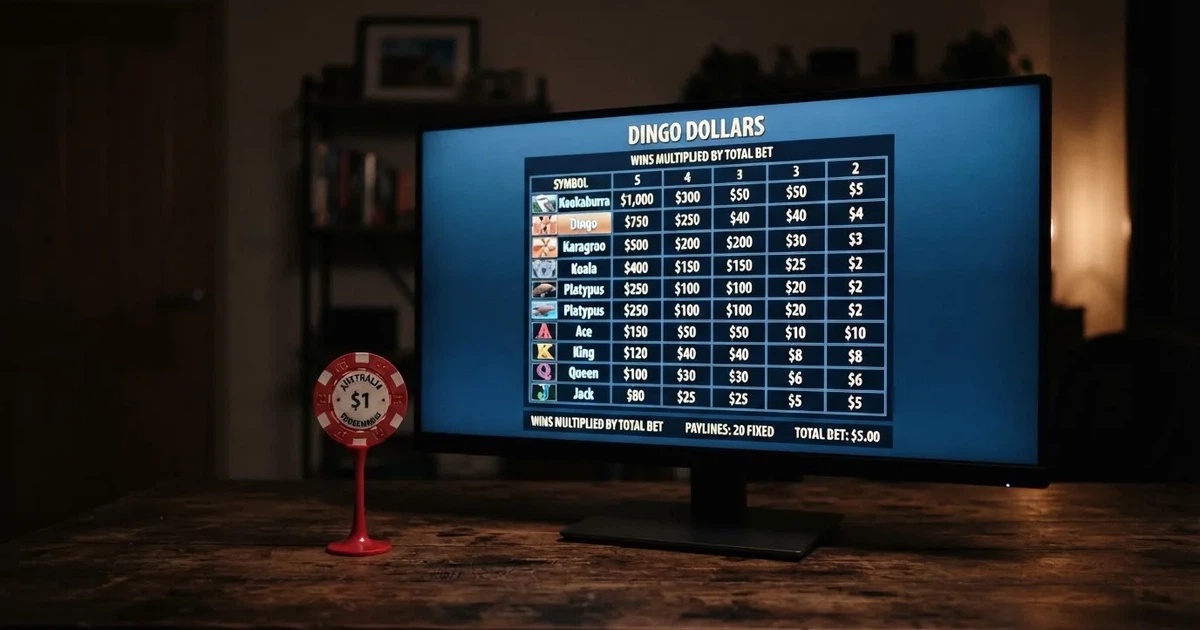
The NSW ClubGRUB public register lists thousands of approved games with their theoretical RTP, and the categories that take the largest share of NSW venues are the 1c, 2c and 5c credit-per-line titles. Those low-denomination machines often carry theoretical returns in the upper eighties or low nineties — lower than the 96% figure offshore marketing associates with the phrase “high RTP”, and lower than the figures used as bait by the offshore sites reviewed later in this page. Higher denomination machines in casino floors return more: Crown Melbourne’s premium rooms host games with published returns in the mid-nineties. The difference between a pub 1c game and a casino A$1 game is not an accident. State gaming regulators calibrate the minimum and maximum theoretical return by venue category, and a machine that returns 92% in a suburban club can legitimately return 96% on a city casino floor.
The number of legal machines outside casinos, by state, gives the picture of where those returns are being played through:
- New South Wales: 87,298 machines (June 2023)
- Victoria: 26,380 machines (2021–22)
- Queensland: 21,122 machines (October 2023)
- South Australia: 11,672 machines (September 2023)
- ACT: 3,587 machines (November 2023)
NSW carries roughly three times the Queensland count, and the gap shapes where compliance and consumer-protection effort sit. Queensland’s smaller footprint reflects a deliberate policy of tighter density controls, with a cap on the number of machines per venue. NSW’s larger count reflects decades of liberalisation from 1956 onward, when the state first legalised the machines.
A reader sitting in Brisbane, Sydney or Perth looking for the highest possible return on a legal machine therefore has different practical options. The casino floor offers higher published returns at higher stakes; the pub floor offers more accessible stakes at a lower theoretical return. Neither is a “best RTP slot” in the sense the offshore sites use the phrase, because the machines are licensed, regulated, disclosed and tied to a venue the player walks into.
Offshore “high RTP” sites: how the figure gets used in marketing
The offshore sites that advertise “best RTP slots” to Australian players live on the RTP figure in a different way. They use it as a competitive claim against other offshore sites, and they publish RTP figures in their game information panels — 96.0%, 96.5%, 97.0% — that sit well above the 87–92% range most NSW pub machines carry. The number is real, in the sense that the game underneath it is a real NetEnt, Pragmatic Play or BGaming title with an audited mathematical model. What the offshore marketing wraps around it is not.
Two things the marketing does not say. The first is that the same game on the same offshore site runs at multiple RTP settings, and the site may be running the lower one. Some providers ship their games with three or four return profiles, and the operator selects which profile is active. A game advertised as “96.5% RTP” can be live at 94% on a particular site. The second is that the game is not licensed for Australia, and the ACMA has formally warned most of the sites that run them. A reader playing the “best RTP” offshore is, by the regulator’s own accounting, on a site the regulator has asked internet service providers to block.
The history of those blocks tells the scale. By the ACMA’s own figure published in June 2026, 1,751 illegal gambling and affiliate marketing websites had been blocked since the first blocking request in November 2019, and more than 230 unlicensed gambling services had left the Australian market since enforcement was strengthened in 2017. A single round of blocking reported on 26 June 2026 named twelve sites: 7Signs, ChromaBet, Donbet, Duospin, Freshbet, Slots Gem, Jacks Club, Lucky Start, Pointsbetz, Spinrise, Vinyl Casino and Wildsino. The blocking is cumulative and ongoing, not a one-off raid, and the pace has not slowed.
Why the blocking works against the player, not just the site
A blocked site is a site an Australian internet service provider has been ordered to make unreachable for Australian customers. A balance sitting on that site when the block lands is a balance the player may not be able to withdraw, because the offshore operator has no obligation under Australian law. The Interactive Gambling Act targets the provider, not the player, so the player is not prosecuted; but the player has no Australian complaints body to approach, no BetStop exclusion to lean on (BetStop binds only Australian-licensed services), and no guarantee the offshore operator will release funds held against an “unmet bonus term” or a “verification check” the site invents after the fact. A reader chasing the “best RTP” figure into an offshore site is accepting that risk in exchange for a number the licensed Australian machines do not match.
Where the high RTP numbers actually come from: a brief mechanics note
The mathematics underneath any RTP figure is the same, licensed or offshore. A modern video slot uses a random number generator that picks a symbol for each reel on each spin. With five reels and fifty or more symbols per reel, the number of possible symbol combinations climbs into the hundreds of millions. Each combination has a payout defined in the game’s paytable, and the long-run return is the average of those payouts weighted by their probability. The result is a single number, and that number is what gets published.
The reason a slot can legitimately offer 96% RTP while another offers 92% is the paytable design. A 96% game usually has fewer “large” payouts — the top jackpot pays thousands of times the line bet rather than tens of thousands. A 92% game usually has a more spectacular top prize, paid out of the same total return to the player. Two slots with the same theme — say, a fishing slot and another fishing slot — can carry different RTP figures for this reason alone: the underlying math is different, even when the look is similar.
Volatility sits on top of the RTP and is the dimension the figure does not capture. Two games at 96% RTP can be radically different experiences. The lower-volatility title returns more hands per hour and rarely strays far from its long-run average. The higher-volatility title returns fewer hands per hour and concentrates its money in a small number of large wins that may not arrive in any given session. A reader who treats “best RTP” as the only selection criterion is choosing on half the picture, and the half that actually determines what a session feels like is the one left out.
ACMA enforcement action against sites marketing to Australians
The brands reviewed later in this page are reviewed because the ACMA itself has acted against them. They are not ranked, recommended or endorsed, and they are not described as a place to play. They are described because they are the names that appear in the ACMA’s register of formal warnings and blocking requests, and because a reader searching “best RTP slots” is being advertised to by several of them right now. The table below records what the regulator has published about each, in the regulator’s own framing.
| Brand | ACMA action and date | Operator named by the ACMA | Subject support |
|---|---|---|---|
| RocketPlay | Formal warning, March 2026; earlier warning May 2022 to a previous operator | Pulsup Ltd (March 2026); Dama N.V. (May 2022) | — |
| Level Up Casino | Formal warning, May 2022 | Dama N.V. | listed as carrying BGaming titles in BGaming’s own catalogue |
| Woo Casino | Formal warning, March 2025 | Dama N.V. | — |
| Spirit Casino | Formal warning, May 2025 | Dama N.V. | — |
| National Casino | Formal warning, July 2025 | Consolutetish S.R.L. | listed in third-party encyclopaedia entries as an online casino brand |
| Bizzo Casino | Formal warning, July 2025; earlier warning, 2022 | Consolutetish S.R.L. (July 2025); TechSolutions (CY) Group Ltd and TechSolutions Group N.V. (2022) | — |
| Ignition Casino | Formal warning, July 2025 | Bamboo Media | — |
| Instant Casino | Formal warning, February 2025 | EOD Code SRL | — |
| Jackbit | Formal warning, April 2026 | Ryker B.V. | — |
| Casino Intense | Formal warning, April 2025 | Sterplay Holding Ltd | named in third-party reporting and in the ACMA’s own records |
| Sky Crown | Formal warning, September 2022 | Hollycorn N.V. | — |
The brands are not a ranking of any kind. They are a sample of the names the ACMA has publicly named over a four-year window, ordered here for reference by the date of the most recent action. The “Subject support” column records where research found a third-party listing of the brand as carrying slot titles, separate from the ACMA record itself; the em dash means research did not find a third-party listing strong enough to cite. The point of the column is honesty about how thin the trail gets beyond the regulator’s own publication: outside the warning notice itself, most of these names do not appear in any independent source that has been audited against.
A reader looking at this table and trying to work out which of these sites has the “best RTP slots” is looking for an answer that does not exist in the table. The table is about regulatory history, not game returns. The games on these sites, where they carry RTP figures at all, carry them at the level set by the underlying provider — and a site running a 96% audited game can still be the subject of an ACMA warning for offering an unlicensed service to Australians.
What the blocking rate looks like over the running total
A straightforward measure of the ACMA’s enforcement pace is the ratio of the running total of blocked sites to the elapsed time since the first blocking request. The first request landed in November 2019; by June 2026 the total had reached 1,751. That is 80 months of enforcement, and 1,751 ÷ 80 works out to roughly 22 blocked sites per month across the period. The figure is a long-run average and hides the way the work bunches — many months see single-digit additions, others see double-digit rounds, the December 2024 round alone reportedly covered a larger batch. The point is not the precise average but its order of magnitude: this is not a one-off raid or a one-time clean-out, it is an ongoing enforcement action running at roughly the rate of one blocked site per working day.
The implication for a reader is direct. A site that markets “best RTP slots” to Australians today is, on the historical pattern, more likely than not to be the subject of a future blocking request or formal warning. The rate above is not a prediction of any single site; it is the pace at which the regulator has been adding names to the list, and a reader betting on a site staying reachable is betting against the trend.
How the regulator is funded and what that means for the pace of enforcement
The regulator that issues these warnings and blocking requests, the ACMA, is part of the Australian government’s communications portfolio. The body that licenses the legal Australian online bookmakers is a different agency entirely. The Northern Territory Racing and Wagering Commission regulates 52 of Australia’s online bookmakers — including Sportsbet, Bet365 and Ladbrokes — because the operators choose NT licensing for tax reasons. The NT commission runs on a part-time model: it has no full-time staff and meets once a month in Darwin.
The oddity of that arrangement is its own subject. The NT commission is the licensing body for half of Australia’s licensed online wagering operators, and it does so on a meeting-once-a-month cadence with no permanent staff. A bill reported on 7 April 2026 sought to reform the de facto gambling regulator’s governance, which is an acknowledgment that the current structure is unusual by Australian public-service standards. The bill does not change who is licensed or what is licensed; it changes how the licensing body is run.
The two-track structure matters for the RTP question because it shapes what is licensable at all. Online casino games and online pokies are prohibited under the Interactive Gambling Act, so there is no Australian-licensed “online slot” to attach a published RTP to. What is licensed is online wagering on racing and sport, which is a different product entirely. A reader looking for a licensed Australian site carrying “best RTP slots” is looking for a category that does not exist in the licensed market.
What a reader is actually choosing between
Three honest options sit on the table, and the page does not pick between them because the right answer depends on what a reader is trying to do.
The licensed Australian machine. The reader walks into a licensed venue, plays a machine whose return-to-player figure is on the regulator’s register, and accepts a return in the upper eighties to mid-nineties depending on the venue and the machine category. The machine pays out in cash. The reader can complain to the state regulator if a malfunction occurs. The machine can be excluded from the reader’s account through that state’s self-exclusion register or, for online wagering, through BetStop.
The offshore site the regulator has acted against. The reader opens an offshore site advertising “best RTP slots”, plays a real audited game whose RTP figure is on the screen, and accepts that the site is operating outside Australian law. The reader has no Australian complaints body. The reader’s balance can be locked if the ACMA asks an ISP to block the site. The reader is, by definition, on a site the regulator has publicly named.
Not playing. The reader does not play at all, and the RTP figure does not apply.
The point of laying these out is not to nudge a reader toward one or another. The point is that the phrase “best RTP slots Australia” pulls the reader toward the second option by default, and the second option is the one the regulator has spent seven years asking internet service providers to make harder to reach. A reader who knows that going in is making a real choice, not buying a marketing word.
Responsible gambling supports available to Australian players
The licensed Australian market carries a support infrastructure the offshore market does not. The National Gambling Helpline, 1800 858 858, is free, available 24/7 and includes web chat through Gambling Help Online. BetStop, the National Self-Exclusion Register, has been live since August 2023 and binds Australian-licensed online and phone wagering services; an offshore casino is not connected to it. State-level self-exclusion registers, including the NSW Self-Exclusion Register and the Victorian equivalent, cover licensed venue play.
The BetStop caveat matters here. The register binds licensed services. A reader who has registered with BetStop and then opens an offshore site has not stopped themselves from playing on that site, because BetStop does not extend to it. Self-exclusion is only as wide as the licensing regime that runs it, and the offshore sites are outside that regime. A reader serious about stopping needs to understand that the self-exclusion tool they have is the licensed-market tool, not the whole-market tool.
For readers whose gambling has stopped being a choice and become a problem, Gambling Help Online is the front door. It routes to financial counselling, to state-specific face-to-face services, and to the clinicians who work with problem gambling. The helpline is free. The web chat is private. The service is staffed by people whose job is the call.
The legal frame that makes the offshore sites illegal, in plain language
The Interactive Gambling Act 2001, as amended in 2017, makes it an offence to provide online casino games, online pokies or in-play betting to a person physically in Australia. No state or territory licenses those products. The law targets the provider — the offshore operator, the marketing affiliate, the white-label platform — not the player. The penalties for the provider run into the hundreds of thousands of dollars per offence, and the ACMA has issued formal warnings as the first step and blocking requests as the second. The individual player is not prosecuted, but the offshore operator has no Australian licence to lose and no Australian consumer-protection regime to comply with.
What is legal is wagering on races and sport placed before the event, lotteries and keno. Those are the products the NT commission and the state regulators license. Minimum age is 18. The legal channels are a different product from the offshore slots the reader is searching for.
Payment rules matter in their own right. Since 11 June 2024, credit cards, credit-related products and digital currency are banned as payment for licensed online wagering in Australia; the penalty for an operator accepting them is up to A$247,500. The legal deposit routes for licensed wagering are debit card, bank transfer, PayID/Osko and BPAY. A site asking an Australian customer for a credit card or a crypto deposit is, by definition, not operating under the Australian rules — and a reader supplying one is operating outside the protections those rules provide.
The 2026 reform package — the Interactive Gambling Amendment (Gambling Reform) Bill 2026 — passed Parliament on 19 August 2026. Its advertising and inducement measures commence on 1 January 2027. This is a law with a start date, not a law already in force on a 2026 page. The reform targets the marketing, not the underlying prohibition, and the prohibition predates it by nine years.
On tax: gambling winnings of a recreational player in Australia are not assessable income under section 6-5 of the Income Tax Assessment Act 1997, and losses are not deductible. The exception is a person who carries on a business of gambling, which is not the reader this page is for. The Australian Taxation Office’s published view is the working position; this page does not replace it.
Frequently asked questions
How is a slot’s RTP percentage calculated over the long run?
RTP is the long-run average of money returned to players, expressed as a percentage of money wagered. The figure comes from simulating millions of spins on the game’s random number generator and averaging the payouts. The number describes the aggregate, not the individual.
Does a slot’s RTP figure guarantee any result over a single session?
No. RTP is a statistical average, and a single session can sit anywhere on a wide distribution around it. A 96% slot can empty a bankroll in fifteen minutes or double it in twenty, and both outcomes are inside the math. The figure is honest about the long run and silent about the short one.
Are RTP figures independently tested before a slot is released?
Yes, in any reputable market. Independent testing laboratories audit the game’s mathematics against a large simulated sample and certify the published RTP. The certification is for the audited profile only, and a slot can be shipped with several RTP profiles from which the operator selects.
How many licensed gaming machines operate outside casinos in Queensland compared with New South Wales?
NSW had 87,298 licensed gaming machines outside casinos as of June 2023, and Queensland had 21,122 as of October 2023. NSW’s count is roughly four times Queensland’s, and the gap reflects different state policies on density.
Why do two slots with the same theme sometimes carry different RTP figures?
The math is different. The paytable design — how large the top prize is, how many large prizes there are, how the smaller wins are weighted — drives the RTP. Two slots can look identical on screen and return different amounts to the player because the underlying math is different.
Can a player request the RTP figure for a specific licensed pokies machine in Australia?
Yes, in the licensed market. NSW publishes its approved games and their theoretical returns on the ClubGRUB public register, and other state regulators maintain comparable records. In a venue, the figure is on the game’s information page or available from venue staff on request.