
Big Red Pokies Online in Australia — What the Bonus Emails Don’t Quote
The “Big Red pokies” search lands on a strange product. The theme itself is real and sits on tens of thousands of licensed pub and club machines across the country. The online version is not. The Interactive Gambling Act 2001 prohibits it, and the Australian Communications and Media Authority has spent the last several years naming the offshore sites that offer it anyway. This page is the regulator’s record, not the marketing’s.
Current as of 8 November 2026, checked against the ACMA’s formal warning register.
Table of Contents
- The Paytable That Doesn’t Exist for Australians Online
- How the Comparison List Is Built and What It Actually Compares
- The Fundamentals Behind Pokies in Australia
- The Prohibition That Bars Online Big Red
- What Player Protection Actually Reaches the Punter
- The Eleven Operators the ACMA Has Formally Warned
- Frequently Asked Questions
The Paytable That Doesn’t Exist for Australians Online
The “Big Red” pokies theme is the kind of machine a punter in NSW or Queensland can walk up to in any licensed pub or club — a five-reel setup in the Aristocrat-style lineage, with Australian outback imagery. Kangaroo and dingo on the reels. A crocodile somewhere in the bonus round. The familiar multi-line configuration that the Aristocrat stable has run for the past couple of decades on thousands of licensed floors. The “Big Red” branding is part of the land-based pokies vocabulary; anyone who has spent a Friday night at a club in Western Sydney will recognise the visual language immediately.
What that punter cannot do is play the same theme online for real money through any Australian-licensed site. The Interactive Gambling Act 2001 makes the offering of online casino games — and that includes the online version of any pokies theme — a prohibited interactive gambling service. No state or territory in Australia licenses them. So when an offshore site lists a “Big Red pokies” title alongside an AUD deposit box and a “100% welcome bonus”, it is offering a product Australia does not allow that site to offer to anyone sitting on Australian soil.
That is what the marketing never quite says. The site’s homepage runs the Australian flag, the AUD symbol, the words “Australian-friendly” or “Aussie punters welcome” in a banner. The support chat is staffed to handle Australian-time queries. The bonus terms speak in dollars rather than euros. The footer, often in eight-point type, says the operator is licensed in Curaçao or Anjouan. That licence authorises the operator to run a casino somewhere — it does not authorise it to take Australian real-money bets on an online pokies title.
The minimum return-to-player figures that govern every licensed pokies machine in Australia — 85% in NSW, the Northern Territory, Queensland, and generally Victoria (87% at Crown Melbourne); 87% in the ACT and Tasmania; 87.5% in South Australia; 90% in Western Australia — apply to the machine in the venue. They do not apply to the offshore “Big Red” page a punter opens at home. The offshore site is free to claim whatever RTP it likes, in whatever currency, under whatever licence it holds somewhere else. None of it is regulator-tested for an Australian player.
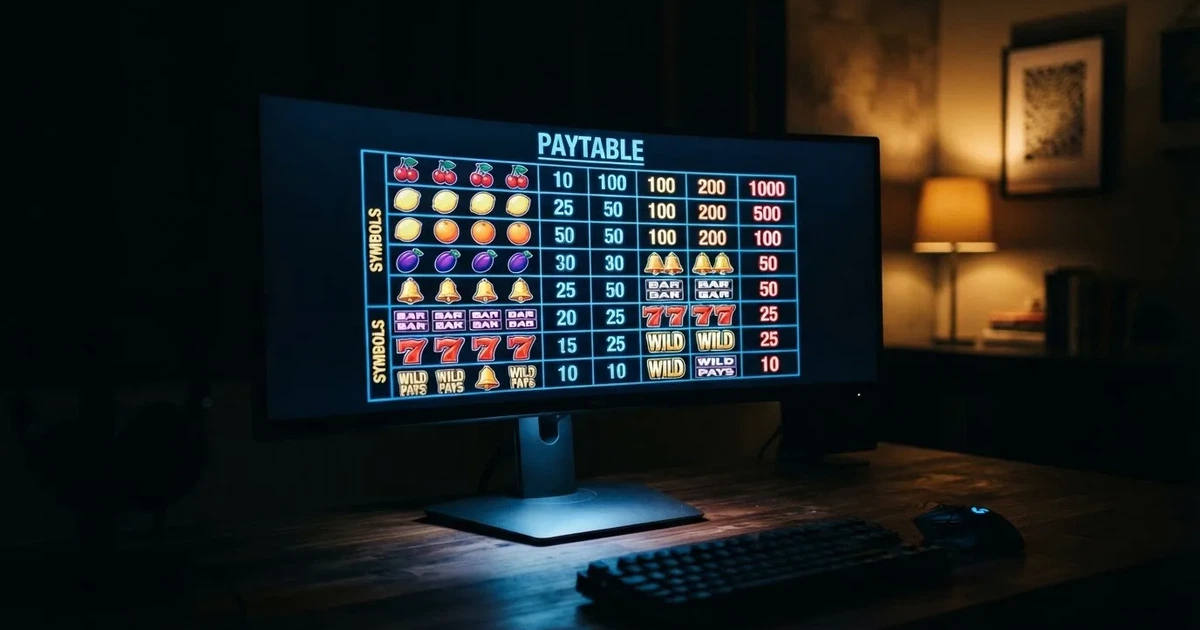
So the “paytable” that an Australian punter has on one of these sites is the published one the operator chooses to advertise. It is a marketing artefact, not a regulator’s record. The minimum-RTP floors set by each Australian jurisdiction reach the licensed venue floor; they do not reach the offshore page. That distinction is the article’s first line, and it is also the article’s first cost: the punter reading the offshore paytable is reading a number the operator chose to print, in a venue the operator chose to operate from, with no Australian testing behind it.
The Aristocrat connection matters here. Aristocrat Leisure Limited is an Australian-listed gaming machine manufacturer whose pokie themes fill licensed pub and club floors across the country. The “Big Red” theme sits inside that stable — a land-based product, not an online one. Aristocrat does not license the “Big Red” theme for online casino use to offshore operators. The offshore sites that list a “Big Red pokies” title are listing a copycat, a knock-off, or a similarly-named variant. None of that is the regulator-tested Aristocrat product the licensed venue carries.
A reader comparing this market to a generic online slots catalogue sometimes asks whether “Big Red” is just an Aristocrat theme or whether it is also a generic online slots title used by multiple studios. The honest answer is that the consulted sources did not turn up an Australian regulator-cleared online version. The marketing copy on offshore sites uses the term freely; what sits underneath the term is whatever each offshore operator chooses to publish under that label.
That is the article’s first number. The licensed product has a tested paytable. The offshore product has whatever the operator prints.
How the Comparison List Is Built and What It Actually Compares
Most “top 10 online Big Red pokies” pages rank casino brands by bonus size or number of free spins, then assert that the bigger offer is the better one. The problem with that ranking method, on this subject, is that no Australian-licensed casino can offer any version of the game — so the comparison is not between legitimate options. It is between unlicensed offers of a product that the Interactive Gambling Act 2001 makes it an offence to supply to an Australian.
The list below is built on a different premise: that the relevant comparison is the one the Australian Communications and Media Authority has actually made. Each row is an operator the ACMA has formally warned under the IGA for offering prohibited interactive gambling services to Australians. Where the warning lists a specific operator entity — the company the ACMA named — that is what appears under “operator named by the ACMA”. Where the ACMA has acted on the same operator entity twice, both actions appear.
The “subject support” column answers a narrower question: do the operator’s own listings or third-party listings publicly mention a Big Red-style pokies title alongside the brand? For three of the eleven brands, public listings do carry such a mention — and those are the rows where the column names the listing. For the others, the column carries the article-language no-data marker, because no listing the consulted sources carry connects that brand to the Big Red theme specifically, and the rule here is to keep the absence absent rather than assert it either way.
| Brand | ACMA action and date | Operator named by the ACMA | Subject support |
|---|---|---|---|
| RocketPlay | March 2026 (Pulsup Ltd); earlier May 2022 (Dama N.V.) | Pulsup Ltd; earlier Dama N.V. | — |
| Level Up Casino | May 2022 | Dama N.V. | listings-only (Bgaming) |
| Woo Casino | March 2025 | Dama N.V. | — |
| Spirit Casino | May 2025 | Dama N.V. | — |
| National Casino | July 2025 | Consolutetish S.R.L. | listings-only (Wikipedia) |
| Bizzo Casino | July 2025 (Consolutetish S.R.L.); earlier 2022 (TechSolutions) | Consolutetish S.R.L.; earlier TechSolutions (CY) Group Ltd; TechSolutions Group N.V. | — |
| Ignition Casino | July 2025 | Bamboo Media | — |
| Instant Casino | February 2025 | EOD Code SRL | — |
| Jackbit | April 2026 | Ryker B.V. | — |
| Casino Intense | April 2025 | Sterplay Holding Ltd | listings-only (ABC, ACMA, Crown Melbourne) |
| Sky Crown | September 2022 | Hollycorn N.V. | — |
A point the table does not show is how often the same operator entity recurs under different brand names. Dama N.V. shows up three times — at Woo Casino, Spirit Casino, and as the earlier warning at RocketPlay. TechSolutions shows up at Bizzo as a 2022 entity. The ACMA names the entity, not the brand, because a brand is the skin; the entity is the operation.
What the table also does not show is the gap between a warning and a withdrawal. The ACMA’s June 2026 enforcement round reports that more than 230 unlicensed gambling services have left the Australian market since enforcement was strengthened in 2017. Some of the brands in the table above are still operating under other licences elsewhere; the IGA prevents the ACMA from forcing them offline, only from making them unavailable to Australian internet users.
That is what this comparison is really doing: it is comparing how many times the ACMA had to act, on which entities, and for what. It is not comparing offers. On this product, there is no licensed offer to compare.
A reader who is shopping for a place to play and lands on a comparison page that ranks these eleven brands from “best” to “worst” is reading a comparison that does not exist. There is no licensed product to rank them against. There is only the regulator’s record, naming operators, with dates, on a register the regulator maintains.
The Fundamentals Behind Pokies in Australia
Pokies are the dominant legal gambling product on Australian soil. Registered clubs operated Australia’s first legal poker machines from 1956, in New South Wales. By June 2023, NSW alone had 87,298 gaming machines outside casinos, distributed across 2,195 venues, with player losses of A$8.18 billion in 2022–23. Queensland had 21,122 gaming machines in 351 venues as of October 2023. Victoria had 26,380 outside Crown Casino in 488 venues in 2021–22, operating under a 30,000-machine statewide limit.

Australia has roughly 3% of the world’s pub and club poker machines, on a population that is 0.3% of the global total. In 2020–21 Australians bet almost A$150 billion through gaming machines and lost A$12.18 billion on them. That is the licensed, venue-based market the pokies theme — including Big Red — sits inside.
The licensing is state-by-state, and that matters for any “Big Red-style” theme that wants to be played on a venue floor. The minimum return-to-player set by each jurisdiction determines the worst published edge on every licensed machine in that jurisdiction. Each jurisdiction regulates its own machines separately, from machine approval through venue placement to the printed RTP and volatility disclosure. A punter walking into a licensed pub or club in any state knows the machine in front of them has cleared that state’s regulator.
The Western Australia Exception
Western Australia banned poker machines in pubs and clubs when Crown Perth opened in 1985; Crown Perth’s own machine count has since grown from about 200 in 1985 to roughly 2,500, all approved by the state’s Gaming and Wagering Commission. WA is therefore a special case: the licensed venue floor for pokies is, effectively, a single venue. Every other state runs the multi-venue market. WA does not.
Tasmania’s Reform Path
The Tasmanian story is its own reform chapter. The Federal Group held a monopoly licence over all of Tasmania’s poker machines from 1968. Legislation passed in November 2021 ended that monopoly and moved oversight to the Tasmanian Liquor and Gaming Commission. Tasmania planned nation-leading mandatory pre-commitment cards for its poker machines, but implementation of the reform was delayed until late 2025. These are the rules of the venue-based game.
The offshore “Big Red” page is not inside this system. The minimum-RTP floor, the venue-by-venue regulation, the state-by-state machine counts — none of these reach the offshore site. What reaches it is whatever the operator chooses to publish, in whatever currency, under whatever licence the operator holds in some other jurisdiction. The fundamentals the page below lists apply to the licensed machine a punter walks up to in a Sydney club. They do not apply to the offshore screen in front of the same punter at home.
A reader comparing this market to other international markets sometimes asks why Australia, with such a developed venue-based product, has such a strict prohibition on the online equivalent. The answer is in the state-by-state regulation: each state already licenses, taxes and monitors the floor product. An online casino product would compete with that licensed floor without paying the state’s revenue share. The legal prohibition is the state’s defence of its own licensing regime, not a gap in it.
The fundamentals also frame the question of what an Australian punter is doing on an offshore “Big Red” page. They are playing a copy of a licensed machine they could be playing in person, on a screen, for the same money — and losing the regulator’s protection in the process.
The Prohibition That Bars Online Big Red
The Interactive Gambling Act 2001, as strengthened by the Interactive Gambling Amendment Act 2017, makes it an offence to provide online casino games — and that includes the online version of any pokies theme — to a person physically in Australia. No state or territory licenses them. The legal minimum age for any licensed gambling product is 18.

What is licensable is wagering on races and sport placed before the event, lotteries, and keno. In practice, online and phone wagering on these products is licensed by the Northern Territory — the Northern Territory Racing and Wagering Commission regulates 52 of Australia’s online bookmakers, including Sportsbet, Bet365 and Ladbrokes, licensed in the Territory for tax reasons. The commission has no full-time staff and meets once a month in Darwin.
Enforcement runs through the ACMA. The ACMA investigates, issues formal warnings, and directs Australian internet service providers to block illegal sites. As reported in June 2026, a total of 1,751 illegal gambling and affiliate marketing websites had been blocked since the first blocking request in November 2019, and more than 230 unlicensed gambling services had left the Australian market since enforcement was strengthened in 2017. The 26 June 2026 round alone added 12 more names to the block list: 7Signs, ChromaBet, Donbet, Duospin, Freshbet, Slots Gem, Jacks Club, Lucky Start, Pointsbetz, Spinrise, Vinyl Casino and Wildsino.
The Blocking Rate
The blocking rate is worth a moment. From November 2019 to the June 2026 reporting round is roughly 79 months. Dividing 1,751 by 79 gives about 22 sites blocked per month, averaged across the whole enforcement window. That figure carries two conditions: the monthly rate has not been steady — early rounds removed a handful at a time, recent rounds a dozen or more — and the count includes affiliate marketing pages, not only the gambling sites themselves. As a band, the ACMA’s blocking rate since November 2019 has run at roughly 18 to 25 sites per month, with the higher figures clustering in the more recent rounds.
The blocking rate carries one more condition the page should not miss: a site blocked this month is not necessarily gone next month. Offshore operators move domains, restage on new infrastructure, and re-emerge under a fresh skin. The ACMA names the operator, blocks the URL the operator is currently using, and the cycle continues. The 1,751 cumulative figure counts distinct blocking actions, not distinct operators — and the operator list in this article’s table is a different count again.
What the ACMA cannot do is stop a player from reaching an offshore site that has not yet been blocked, or from using a mirror or workaround. What it can do, and what its formal warnings record, is name the operator entity. The formal warnings page on the ACMA site lists each action with the company name and the date the warning was issued — which is what this article’s operator table reflects.
The Payment Side of the Prohibition
Payment rules are another front the same offshore supply has to navigate. Since 11 June 2024, credit cards, credit-related products, and digital currency are banned as payment for licensed online wagering in Australia — penalties up to A$247,500 for operators. Legal deposit routes for licensed wagering are debit card, bank transfer, PayID/Osko and BPAY. The offshore site offering crypto or credit-card deposits to Australians is doing so outside these rules; the licensed wagering operators are not.
The payment ban was framed around the licensed market. The offshore “Big Red” site is not subject to it. A punter depositing with a credit card or Bitcoin on an offshore casino is doing something the licensed Australian bookmaker is forbidden to accept, on a product the licensed Australian bookmaker is forbidden to offer. That is the structure the prohibition builds.
What the 2026 Reform Adds
The Interactive Gambling Amendment (Gambling Reform) Bill 2026 passed Parliament on 19 August 2026, with its advertising and inducement measures commencing 1 January 2027. That is law with a start date. On a page dated 2026, those provisions are not yet in force; what they will do is add another set of prohibitions on the marketing side of the same prohibited supply. The offshore operator pitching “Big Red” to an Australian inbox in late 2026 is already operating outside the rules the Bill tightens.
The reform’s advertising and inducement measures target the in-box pitches — the “100% welcome bonus” emails, the pop-up “AUD deposit” banners, the affiliate sites that route Australian traffic to offshore brands. Those measures start on 1 January 2027. Until then, the ACMA’s enforcement runs through the existing IGA framework: warnings, ISP blocks, and the formal warnings register. From January 2027, the framework gains an inducement-side prohibition the ACMA can act on directly.
The Tax Picture
For the punter, the tax picture is set by section 6-5 of the ITAA 1997: gambling winnings of a recreational player are not assessable income, and losses are not deductible, unless the person carries on a business of gambling. That is the model answer only — “check with the ATO” is the qualifier. None of the offshore “Big Red” sites publish a tax statement for Australian recreational players, because none of them report winnings to the ATO and none of them give the player a deduction mechanism for losses either.
The single line that ties all of this together: the offshore page offering “Big Red pokies online Australia” is offering a product no Australian licence authorises it to supply. The ACMA can name the operator, block the site, and warn that the consumer protection regimes Australian-licensed venues carry do not apply. The punter can still reach the site; the prohibition is on the supply, not on the play. The asymmetry is the article’s whole point.
What Player Protection Actually Reaches the Punter
The protection frameworks an Australian punter might assume apply — a gambling ombudsman, a national self-exclusion register that blocks sign-ups across all operators, an Australian complaints body for refused withdrawals — apply only to operators licensed in Australia. An offshore site is outside them.
BetStop’s Reach
BetStop, the National Self-Exclusion Register, has been live since August 2023. It binds Australian-licensed online and phone wagering services; a person who registers with BetStop is barred from opening new accounts or using existing ones at those services for the period they nominate. It does not bind offshore casino operators. A punter registered with BetStop can still place real money on an offshore Big Red-style game, and the offshore site has no way to check that registration.
The same gap runs through the National Gambling Helpline 1800 858 858 — free, 24/7, with chat at Gambling Help Online. That service is reachable by anyone in Australia, on any gambling problem, regardless of which site the loss is on. But what the helpline can do for the punter is refer to counselling, financial advice and, where the player wants it, state-level self-exclusion from licensed venues. None of that reaches into an offshore casino’s account.
State Self-Exclusion
State self-exclusion does its own work, where it exists. New South Wales, Victoria, Queensland and other states run their own exclusion schemes for licensed pub and club venues — the venue-based market where the genuine Big Red pokies machine sits. An exclusion under those schemes is honoured at the venue; it does not reach an offshore site either.
Where the Protection Stops
What the offshore site offers instead is its own internal “responsible gambling” page, with deposit limits, timeouts and self-exclusion options that apply only on that one site. Compared to the licensed product’s protections, those are voluntary, set by the operator, and not externally audited. A punter who has self-excluded from an offshore site can open a new account on the operator’s sister brand in the time it takes to fill in a fresh form.
That is the cost the protection gap runs at. For a punter trying to keep their play in check, the licensed product has more than a dozen overlapping schemes; the offshore product has whatever the offshore operator has decided to publish. The BetStop binding only goes one direction. The helpline answers either direction. The state-level exclusions reach only the licensed floor. None of it reaches into the offshore account once a deposit has cleared.
The protection story has one more dimension: the financial recourse. If a licensed Australian venue refuses a payout, the punter has the state regulator’s complaints process, the venue’s licensing conditions, and — for the largest venues — the casino ombudsman. If an offshore “Big Red” site refuses a withdrawal, the punter has the operator’s own internal disputes process and the licence authority in whatever jurisdiction the operator chose to publish in its footer. There is no Australian complaints body with reach into the offshore site. There is no Australian regulator that can compel a withdrawal. The site can be blocked with a balance still on it, and the punter’s last sight of that balance is a screen saying “withdrawal pending”.
The protection framework is real. It just stops at the licensed edge.
The Eleven Operators the ACMA Has Formally Warned
The list below is not a ranking and not a recommendation. Each brand is here because the ACMA itself issued a formal warning over it for offering prohibited services to Australians. No bonus terms are given — the only sources for those were affiliate marketing pages, and affiliate marketing pages describe what an offer is worth, not what the regulator’s record shows.
RocketPlay — Two Warnings, One Brand, Two Operator Entities
The ACMA’s most recent formal warning in this list, in March 2026, names Pulsup Ltd as the operator behind Rocketplay. The earlier warning at the same brand dates to May 2022 and names Dama N.V. as the operator — covering, in the same 2022 warning, Bambet, Dazard, Level Up, Rocketplay, Wild Tornado and Cobra Casinos. Two operator entities, eighteen months apart, the same Australian-facing brand.
The ACMA’s record is what is published. The operator’s listings do not specifically attest a Big Red-style pokies title at this brand.
The verdict on RocketPlay is the operator rotation. A punter who sees a single warning on a brand assumes the operator behind that brand has been warned once. The ACMA’s record shows the brand has been warned twice, under two operator entities. The cost is the operator identity, not the brand name — and the IGA names the operator.
Level Up Casino — A 2022 Warning, Still Listed Years On
The ACMA’s May 2022 formal warning names Dama N.V. as the operator behind Level Up, alongside five other brands in the same 2022 warning. The ACMA’s register is the only public source naming the operator entity at Level Up specifically; the brand has continued to surface in affiliate listings.
The listings the consulted sources carry mention Level Up among operators running Bgaming’s content. That is a third-party listing, not a statement that Level Up offers a Big Red pokies theme specifically, and it is not a statement that any Australian regulator has cleared Level Up.
The verdict on Level Up is the duration. The 2022 warning preceded the 2017-amendment IGA tightening that drove most of the offshore exits; it preceded the 11 June 2024 credit-card ban; it preceded the 1 January 2027 advertising reform. A brand carrying a 2022 warning through to 2026 is a brand that has had time to leave the Australian market and has not. That is the cost the punter pays on a brand the regulator has already named: the operator’s Australian-facing presence is not by accident.
Woo Casino — A 2025 Warning From the Same Operator as the 2022 Wave
The ACMA’s March 2025 formal warning names Dama N.V. as the operator behind Woo Casino — the same operator entity named in the May 2022 warning. Woo Casino is not in the 2022 warning itself; the ACMA’s separate action against Woo came in March 2025, three years after the original Dama N.V. action.
The ACMA’s record is what is published. The listings consulted did not specifically attest a Big Red pokies title at Woo Casino.
The verdict on Woo Casino is the operator, not the brand. The same Dama N.V. named in 2022 for six brands has been named again, in 2025, for a brand outside that original six. The cost to the punter is the gap between “the operator has been warned before” and “the brand has been warned before” — they are not the same thing, and the punter who reads “first warning” on a comparison page is reading a comparison that confuses them.
Spirit Casino — Same Operator, Two Months Later, A New Skin
The ACMA’s May 2025 formal warning names Dama N.V. as the operator behind Spirit Casino. The same entity, named two months after the Woo Casino warning. The ACMA does not always name the same operator twice in consecutive months; that it did so here suggests the operator was warned for the second brand while still under notice for the first.
The brand’s public listings do not specifically attest a Big Red pokies title.
The verdict on Spirit Casino is the tempo. Two warnings, two months apart, one operator entity. The cost to the punter is that the operator’s pace of re-launching under different skins outruns the ACMA’s per-warning action. The IGA names the supply as the offence; the ACMA names the operator; the operator opens a new brand. That is the rhythm the punter sits inside.
National Casino — A New Operator Entity, Same Brand Name
The ACMA’s July 2025 formal warning names Consolutetish S.R.L. as the operator behind National Casino. This is a different operator entity from any earlier warning at the brand — the ACMA had not previously published a formal warning to Consolutetish S.R.L. for National Casino specifically.
The encyclopaedia’s National Casino page references the brand in a public listing. That is a listing, not a statement that the brand offers a Big Red pokies theme specifically, and the encyclopaedia is not a regulator.
The verdict on National Casino is the new operator on an old brand. Consolutetish S.R.L. had not been named in any of the 2022 Dama N.V. warnings, the 2022 TechSolutions warnings, the 2022 Hollycorn N.V. warnings, or any earlier round. A punter who saw a 2022 warning list and concluded that National Casino was a different entity is reading the list at one remove from what the ACMA actually publishes. The cost is the gap between “I have heard of the brand” and “I have read the entity the ACMA named”.
Bizzo Casino — The 2022 Warning That Surfaced Again Under a 2025 Operator
The ACMA’s July 2025 formal warning names Consolutetish S.R.L. as the operator behind Bizzo Casino — and references the earlier 2022 formal warning, which named TechSolutions (CY) Group Limited and TechSolutions Group N.V. as the operators behind Bizzo at that point. Two operator entities, two warnings, the same brand.
The brand’s public listings do not specifically attest a Big Red pokies theme.
The verdict on Bizzo Casino is the entity rotation. The same brand, three years apart, two different operator entities, two warnings. The cost to the punter is the failure of “operator identity” as a basis for trust — a punter checking the brand on a comparison site and concluding that one warning is the same as another is reading the comparison at one remove from what the ACMA actually published. The record is the second warning, naming the entity that took over.
Ignition Casino — The Operator Named Wasn’t the Brand
The ACMA’s July 2025 formal warning names Bamboo Media as the operator behind Ignition Casino. The brand carries one of the more recognisable names in offshore casino marketing; the operator entity is the less recognisable one. That is the standard arrangement for offshore casino supply: the brand is the surface, the operator is the licence-holder behind it, and the ACMA names the latter.
No listing the consulted sources carry connects the brand to a Big Red pokies theme specifically.
The verdict on Ignition Casino is the gap between brand and entity. A punter who has seen the brand for years is reading a name the ACMA has not warned. The ACMA has warned the operator behind the brand. The cost is that the warning is what the ACMA publishes and what the brand’s homepage does not. A punter comparing offshore sites on brand alone is reading a comparison the regulator’s own naming order does not support.
Instant Casino — A February 2025 Warning That Preceded the Crypto Rules Tightening
The ACMA’s February 2025 formal warning names EOD Code SRL as the operator behind Instant Casino. The date matters: this warning preceded the 11 June 2024 credit-card ban by sixteen months, and preceded the ACMA’s June 2026 reporting round by sixteen. The warning’s content, as published, addresses the offering of prohibited interactive gambling services to Australian customers — the same prohibition the credit-card ban narrowed from the payment side.
No listing the consulted sources carry connects the brand to a Big Red pokies theme specifically.
The verdict on Instant Casino is the timing. The warning came inside the window in which the payment rules were also tightening. A punter who sees the brand on a comparison page published in 2026 is reading a brand that has been on the ACMA’s record for over a year. The cost is that the comparison page’s freshness date is not the warning’s freshness date.
Jackbit — One Warning, Two Domains, One Operator
The ACMA’s April 2026 formal warning names Ryker B.V. as the operator behind Jackbit and CasinOK — two separate brands under one warning. The operator entity runs both, and the ACMA’s action covered both at once.
The listings consulted did not specifically attest a Big Red pokies title at either brand.
The verdict on Jackbit is the one-warning, two-domain pattern. A punter who checks only Jackbit and assumes CasinOK is a separate operator is reading a comparison that misses the ACMA’s own pairing. The cost is the standard offshore pattern: a single operator entity runs multiple brands, the ACMA names the operator in one warning, and the comparison page treats the brands as separate choices. They are not separate choices; they are separate skins on the same operator.
Casino Intense — Listed Where Regulators Pointed
The ACMA’s April 2025 formal warning names Sterplay Holding Ltd as the operator behind Casino Intense. The brand’s public listings include pages on the national broadcaster’s site, the ACMA’s own site, and Crown Melbourne’s table-game pages. The national broadcaster’s and ACMA pages reflect the warning and adjacent coverage; the Crown Melbourne reference concerns baccarat rules and is unrelated to the warning itself.
The listings here are the public trail, not regulator endorsements. The national broadcaster’s and ACMA pages are the regulator-and-press side of the record; the Crown Melbourne page is a separate matter on table-game rules and is not a statement about Casino Intense.
The verdict on Casino Intense is the listed-not-endorsed pattern. The brand has more third-party listings than most in this list, and none of those listings is a regulator’s clearance. A punter who reads the listings as endorsements is reading them as what they are not. The cost is the visibility — the more listings a brand has, the more it reads as established, and the listings are not endorsements.
Sky Crown — Hollycorn N.V.’s Two-Brand Warning From 2022
The ACMA’s September 2022 formal warning names Hollycorn N.V. as the operator behind Sky Crown and Blue Leo. Two brands under one operator entity, named in one warning. Sky Crown is the brand relevant to this page; Blue Leo is the second brand under the same Hollycorn N.V. licence structure.
No listing the consulted sources carry connects the Sky Crown brand to a Big Red pokies theme specifically.
The verdict on Sky Crown is the oldest warning in the list — September 2022, four years before 2026. A punter seeing the brand on a 2026 comparison page is reading a warning the ACMA published before the credit-card ban, before the 2025–2026 enforcement rounds, before the 2027 advertising reform. The cost is the duration: a warning that old has had every opportunity to be acted on by the operator and has not, by the ACMA’s own record.
Frequently Asked Questions
What does “Big Red” usually mean as a pokies theme?
“Big Red” refers to the Australian outback-style pokies genre — the kind of five-reel machine that draws its imagery from kangaroos, dingoes and crocodiles, in the Aristocrat-style layout you would recognise from licensed pub and club floors in NSW and Queensland. The theme is a category of land-based pokies, not a specific online game. Australian-facing offshore sites use the term as marketing for whatever pokies title they choose to list under it.
Is there any licensed Australian site that offers an online version of a Big Red-style game?
No. The Interactive Gambling Act 2001 makes the online offering of casino games — and that includes the online version of any pokies theme — a prohibited interactive gambling service. No state or territory licenses them. What Australian-licensed online wagering does cover is racing and sports betting placed before the event, lotteries, and keno. The Big Red-style theme sits inside the venue-based market only.
Why do offshore sites keep advertising Big Red-style games to Australian players?
Because the market is large and the supply is prohibited. H2 Gambling Capital’s 2025 estimate puts Australian losses to illegal gambling sites at about A$3.9 billion a year, and the share of gambling going through legal channels fell from 74% in 2021 to 64%. The prohibition cuts the licensed operators out of the online pokies market, not the demand for it. Offshore supply follows demand, regardless of the IGA.
Are Australian-themed pokies machines still found on licensed pub and club floors?
Yes. NSW had 87,298 gaming machines outside casinos across 2,195 venues as of June 2023. Queensland had 21,122 in 351 venues as of October 2023. Victoria had 26,380 outside Crown Casino in 488 venues in 2021–22 under a 30,000-machine statewide limit. Western Australia is the exception: poker machines are restricted to Crown Perth, where about 2,500 sit under state approval. The venue-based Australian outback-themed pokies market is the licensed home of Big Red.
How can a punter confirm whether a specific pokies theme is on a licensed venue’s floor?
Licensed Australian venues display their game lists on the venue floor, with each game’s RTP and any state-level restrictions printed on the machine or signage. The state regulator — Liquor & Gaming NSW, the Victorian Gambling and Casino Control Commission, the Office of Liquor and Gaming Regulation in Queensland, and equivalents elsewhere — publishes its own venue register and licensing data. State-level self-exclusion schemes apply at the venue. An offshore site is outside that framework.