
Gambling casino sites and online slots in Australia: the price of going offshore
A punter searching for an online casino in Australia runs into the same wall within a minute. The wall is the Interactive Gambling Act 2001, which makes it an offence to provide online casino games — slots, table games, live dealer rooms — to anyone physically in Australia. Every brand that advertises itself as a “real money” online casino for Australian players is doing so from outside the country, and the Australian Communications and Media Authority has spent the last several years formally warning, and blocking, the operators behind them. This page walks through what the search actually returns, what the regulator has done about each operator, and what an Australian player loses by choosing one anyway. Data current as of 8 November 2026, verified against the ACMA register of formal warnings and blocking requests.
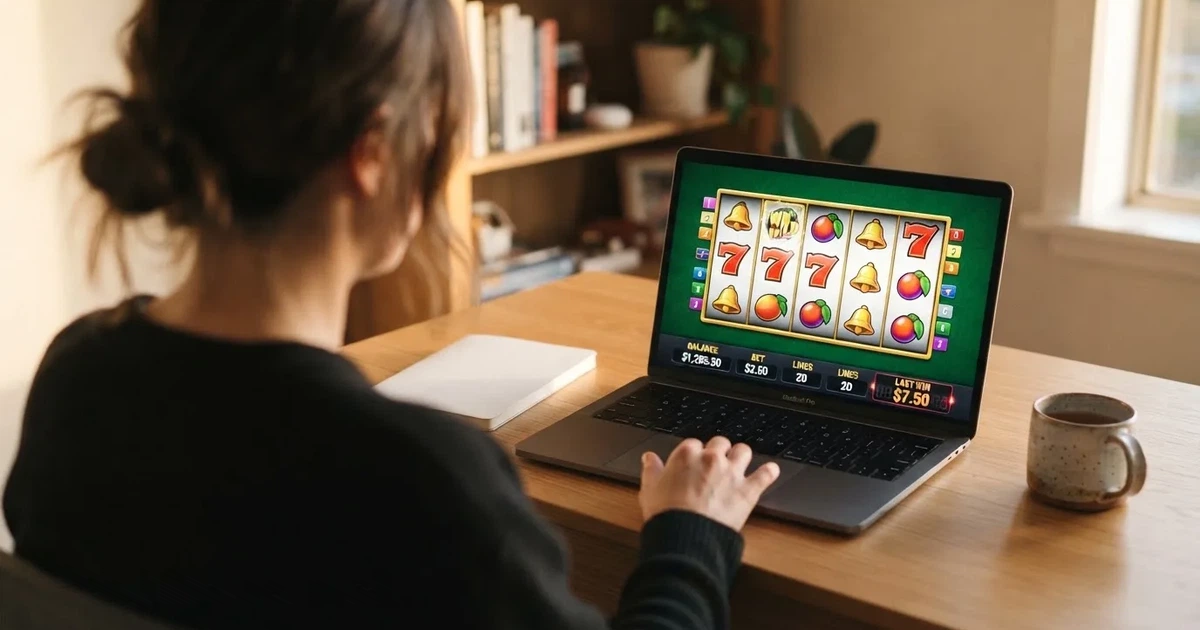
Table of Contents
- The Australian gambling landscape at a glance
- The fundamentals of a slot machine
- How the law treats online casino games here
- What the ACMA has actually done about offshore casinos
- Responsible play when the legal framework stops at the border
- Crypto and anonymity: what changes when the deposit is Bitcoin
- The casinos the ACMA has warned, and what each one offers
- What an Australian player is actually choosing
- Responsible gambling in Australia
- Crypto, anonymity and what changes offshore
- Comparing the ACMA’s record across operators
- What the next round of reform changes
- Frequently asked questions about gambling casino sites and slots in Australia
The Australian gambling landscape at a glance
Australia is one of the world’s heavier gambling markets by spend per adult, and almost none of that spend is online casino. The legal gambling floor is set by what state and territory regulators actually license: licensed wagering on races and sport, lotteries and keno, land-based casinos, and the famous “pokies” — slot-style machines that sit in pubs, clubs and casinos outside the casino floor. The shape of that market helps explain why offshore sites bother to chase Australian deposits at all.
Outside casinos, pokies-style machines numbered 87,298 in New South Wales alone in June 2023, ahead of Victoria’s 26,380, Queensland’s 21,122, South Australia’s 11,672 and the ACT’s 3,587. By 2010 Australia already operated an estimated 97,103 gaming machines outside casinos, a per-capita rate roughly five times that of the United States. New South Wales legalised slot machines in 1956. The tradition is long-standing and physical: a wooden-floored pub with a bank of machines in a back room is what most Australians picture when they hear the word “pokies,” and it is also the closest legal thing to an online slot the country has.
What is not on that legal shelf is the entire vertical of online casino gambling — slots, blackjack, roulette, baccarat, live dealer studios. No state or territory issues a licence for an interactive casino game. The Northern Territory Racing and Wagering Commission (NTRWC) regulates 52 of Australia’s online bookmakers — including Sportsbet, Bet365 and Ladbrokes — but they are licensed for wagering, not casino games, and the commission has no full-time staff, meeting once a month in Darwin. A licence issued for sports betting is not a licence issued for online slots. Any site that conflates the two is, at best, being loose with what its licence covers.
The fundamentals of a slot machine
A slot machine, whether the cabinet is bolted to a pub floor in Sydney or rendered as code on an offshore website, works on the same underlying principle. Each spin’s outcome is decided by a random number generator — a piece of software that produces a stream of numbers with no pattern a player can predict. The visible reels and symbols are a presentation layer on top of that stream. Charles Fey of San Francisco developed the first automatic payout mechanism in the late 19th century, a three-reel machine with five symbols (horseshoes, diamonds, spades, hearts and the Liberty Bell), where three bells in a row paid the top prize of ten nickels. Bally’s “Money Honey,” released in 1963, was the first slot with a bottomless hopper and automatic payout of up to 500 coins without an attendant, and the first video slot followed in 1976 from Fortune Coin Co. in Kearny Mesa, California.
The math moved on, but the principle did not. Modern video slots can run five or more reels with 50 or more symbols per reel, producing odds as high as 300 million to one against the top combination. A classic mechanical three-reel machine with about 10 symbols per reel offers roughly 1,000 possible combinations. More symbols, more reels, more paylines — longer odds and a deeper feature set on top. In the United States, state regulation sets minimum payout percentages: Nevada requires at least 75%, Mississippi at least 80%, New Jersey at least 83%. Australian pub and club pokies run under state-by-state settings that have trended upward over time; an offshore online slot runs under whatever the operator’s software provider sets, and the regulator that set those numbers is in another country.
A few game types sit close to slots in players’ minds. Baccarat — punto banco in its modern form, developed in Havana during the 1940s — has a house edge of 1.06% on the Banker bet, 1.24% on the Player bet and 14.36% on the Tie. Blackjack, with optimal strategy, runs about 0.28% under liberal Las Vegas Strip rules and about 0.43% under Atlantic City rules. Craps’ Pass/Come bet carries a house edge of 1.41%. Slot machines do not publish a comparable single house edge number; the return to player (RTP) is built into the game’s mathematics reel by reel, and ranges vary widely. The point that matters for a player comparing one game to another is the same one the maths has always made: the house always has an edge, and on a slot that edge is built into every spin.
How the law treats online casino games here
The Interactive Gambling Act 2001 (IGA), strengthened by the Interactive Gambling Amendment Act 2017, makes it an offence to provide online casino games, online pokies or in-play betting to a person who is physically in Australia. No state or territory licenses them. The IGA does not prosecute the player — its target is the provider — but a player who opens an account with an offshore casino is dealing with a business that is, on the Australian regulator’s own record, doing something unlawful to reach them. The ACMA is the body that investigates, issues formal warnings and asks Australian internet service providers to block illegal sites.
A casino operator cannot lawfully offer baccarat to an Australian player online, and section 66 of the NSW Casino Control Act 1992 makes the point on the legal casino side: a casino operator must not permit a game such as baccarat to be played unless the game and its rules are approved by the regulator, with a copy of the approved rules available on request. In Victoria, the Casino Control Act 1991 gives the Victorian Gambling and Casino Control Commission (VGCCC) the same gatekeeping role — any new blackjack rule change at Crown Melbourne, from the renaming of “Perfect Pairs” to “Crown Pairs” in December 2024 to the “Free Bet” option with the new “Pot of Gold” side bet in March 2024, has to be approved before it goes live. The online sites that advertise to Australians are not in that approval chain. They are not approved anywhere in Australia.
On the payments side, the rules tightened further. Since 11 June 2024, credit cards, credit-related products and digital currency are banned as a means of paying for licensed online wagering in Australia, with penalties up to A$247,500 for operators that break the rule. The legal deposit routes for a licensed wagering account are debit card, bank transfer, PayID/Osko and BPAY. A site asking an Australian player for a credit card number or a Bitcoin wallet address is, by definition, not a licensed Australian wagering service. It is offshore, and the payment request itself is the giveaway.
Player protection follows the same split. BetStop, the National Self-Exclusion Register, has been live since August 2023 — but it binds only Australian-licensed online and phone wagering services. An offshore casino is not connected to it. A self-excluded Australian can walk straight onto a Curaçao-registered site, because BetStop has no jurisdiction there. The free, 24/7 National Gambling Helpline on 1800 858 858, with chat at Gambling Help Online, is reachable regardless of where someone plays, and that line is one of the few pieces of the Australian framework that actually follows the player offshore.
The Interactive Gambling Amendment (Gambling Reform) Bill 2026 passed Parliament on 19 August 2026, with its advertising and inducement measures commencing 1 January 2027. It is law with a start date, not a regime already in force. On a 2026 page, the present-day picture is still the 2017-strengthened IGA plus the 2024 credit-card ban plus BetStop; the 2026 reform is the next step, not the current state.
What the ACMA has actually done about offshore casinos
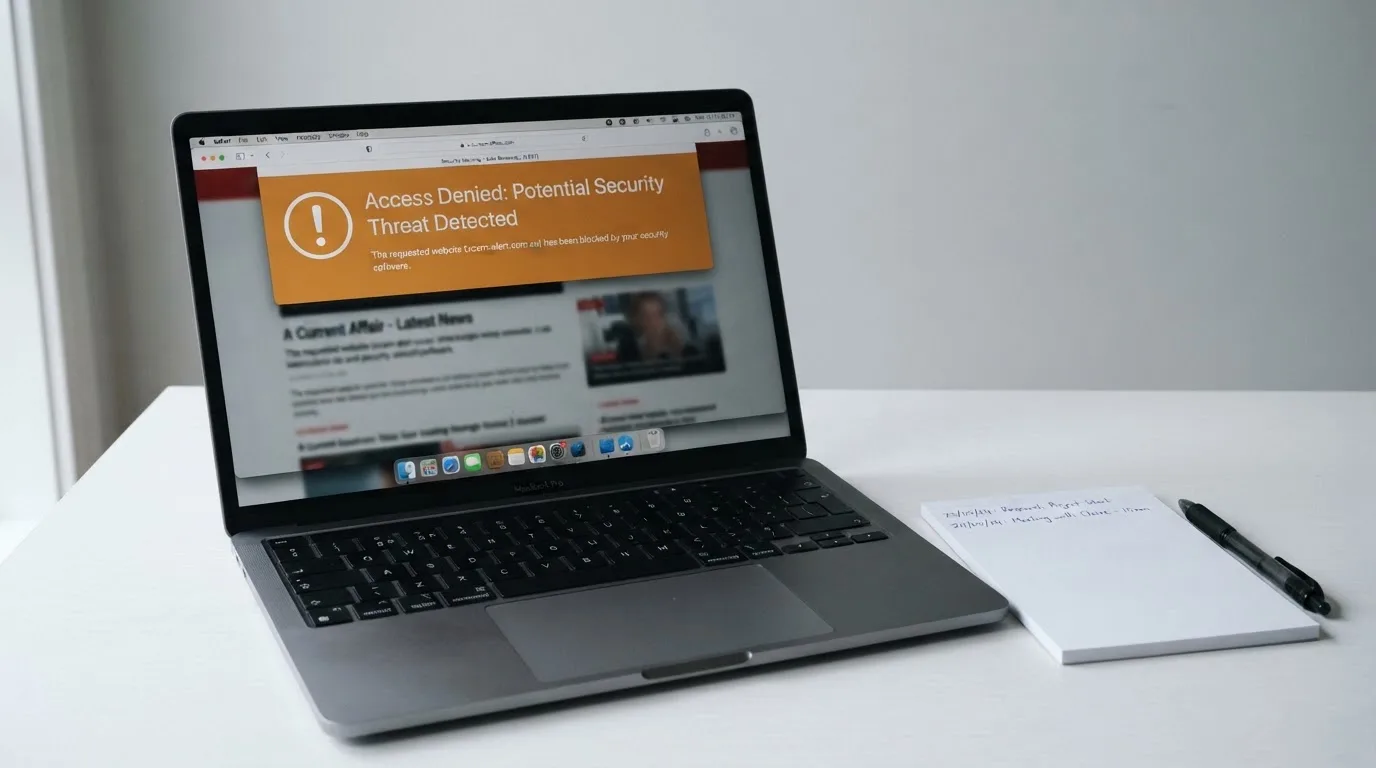
The ACMA’s enforcement record is the only hard evidence on the question “which offshore casinos are actually targeting Australians?” The agency does not publish an opinion poll of suspect sites; it issues formal warnings, names the operator behind the brand, and asks ISPs to block domains. The formal warning is the regulator’s own statement that this business has been providing a prohibited interactive gambling service to Australians. The agency’s blocking requests are the operational follow-through.
According to the ACMA as reported in June 2026, a total of 1,751 illegal gambling and affiliate marketing websites had been blocked since the first blocking request in November 2019, and more than 230 unlicensed gambling services had left the Australian market since enforcement was strengthened in 2017. In a single round reported on 26 June 2026, the ACMA asked Australian internet service providers to block 12 more illegal gambling websites: 7Signs, ChromaBet, Donbet, Duospin, Freshbet, Slots Gem, Jacks Club, Lucky Start, Pointsbetz, Spinrise, Vinyl Casino and Wildsino. The blocking-rate calculation, taking the running total of 1,751 blocked sites over the period from November 2019 to the date of that June 2026 round, works out at roughly 27 blocked sites per month on average, though the actual pace is uneven — some months bring a round of a dozen, others bring none, as investigations close and ISPs action the requests. The number is best read as a band rather than a precise monthly cadence: somewhere in the low-twenties to low-thirties of new blocks per month is what the cumulative trajectory points to.
H2 Gambling Capital’s 2025 report estimates that Australians lose about A$3.9 billion a year to illegal gambling sites, and that the share of gambling going through legal channels fell from 74% in 2021 to 64%. The direction of travel is the story: more money is leaving the licensed side and ending up on the offshore side, exactly the channel the IGA was strengthened to shut. The blocking rate is the regulator’s response, and it has been climbing since 2017.
| Brand | ACMA action and date | Operator named by the ACMA | Subject support |
|---|---|---|---|
| RocketPlay | Formal warning — March 2026; earlier warning under Dama N.V., May 2022 | Pulsup Ltd | — |
| Level Up Casino | Formal warning — May 2022 | Dama N.V. | listings-only (BGaming) |
| Woo Casino | Formal warning — March 2025 | Dama N.V. | — |
| Spirit Casino | Formal warning — May 2025 | Dama N.V. | — |
| National Casino | Formal warning — July 2025 | Consolutetish S.R.L. | listings-only (en.wikipedia.org) |
| Bizzo Casino | Formal warning — July 2025; earlier warning, 2022 | Consolutetish S.R.L.; earlier TechSolutions | — |
| Ignition Casino | Formal warning — July 2025 | Bamboo Media | — |
| Instant Casino | Formal warning — February 2025 | EOD Code SRL | — |
| Jackbit | Formal warning — April 2026 | Ryker B.V. | — |
| Casino Intense | Formal warning — April 2025 | Sterplay Holding Ltd | listings-only (ABC News; acma.gov.au; Crown Melbourne) |
| Sky Crown | Formal warning — September 2022 | Hollycorn N.V. | — |
The table reads as one operator doing the rounds under different brand names: Dama N.V. alone appears three times (Level Up, Woo, Spirit) and Pulsup’s RocketPlay carries a 2022 warning under the same group plus a fresh one in 2026. The ACMA’s formal warning is the agency’s own published record; the licence any of these sites displays is an offshore licence, and none of them is licensed anywhere in Australia to offer online casino games. Where the table shows “listings-only” under subject support, that means the only places this brand shows up in independent listings are the sources cited — it does not mean the brand has Australian approval, because no brand on this list does.
Responsible play when the legal framework stops at the border
The marketing language around offshore casinos leans heavily on “trusted” and “safe.” A site calling itself trusted or safe online gambling is still making that claim about itself, so independent limits, self-exclusion tools and attention to overall wellbeing matter more than the words. The responsible-gambling framework in Australia combines self-exclusion, helpline support and state-level assistance. The table below outlines the primary tools available to players, regardless of their location, though coverage varies by site type.
| Tool | Type | Coverage |
|---|---|---|
| BetStop | National Register | Licensed wagering only |
| 1800 858 858 | National Helpline | All players |
| Gambling Help Online | Chat Channel | All players |
| State Help Lines | Regional Support | State-specific |
The legal Australian toolkit is real but partial. BetStop blocks new accounts with licensed wagering services, not with offshore casinos. The 1800 858 858 helpline is free, 24/7 and reachable regardless of where someone plays. Gambling Help Online adds a chat channel.
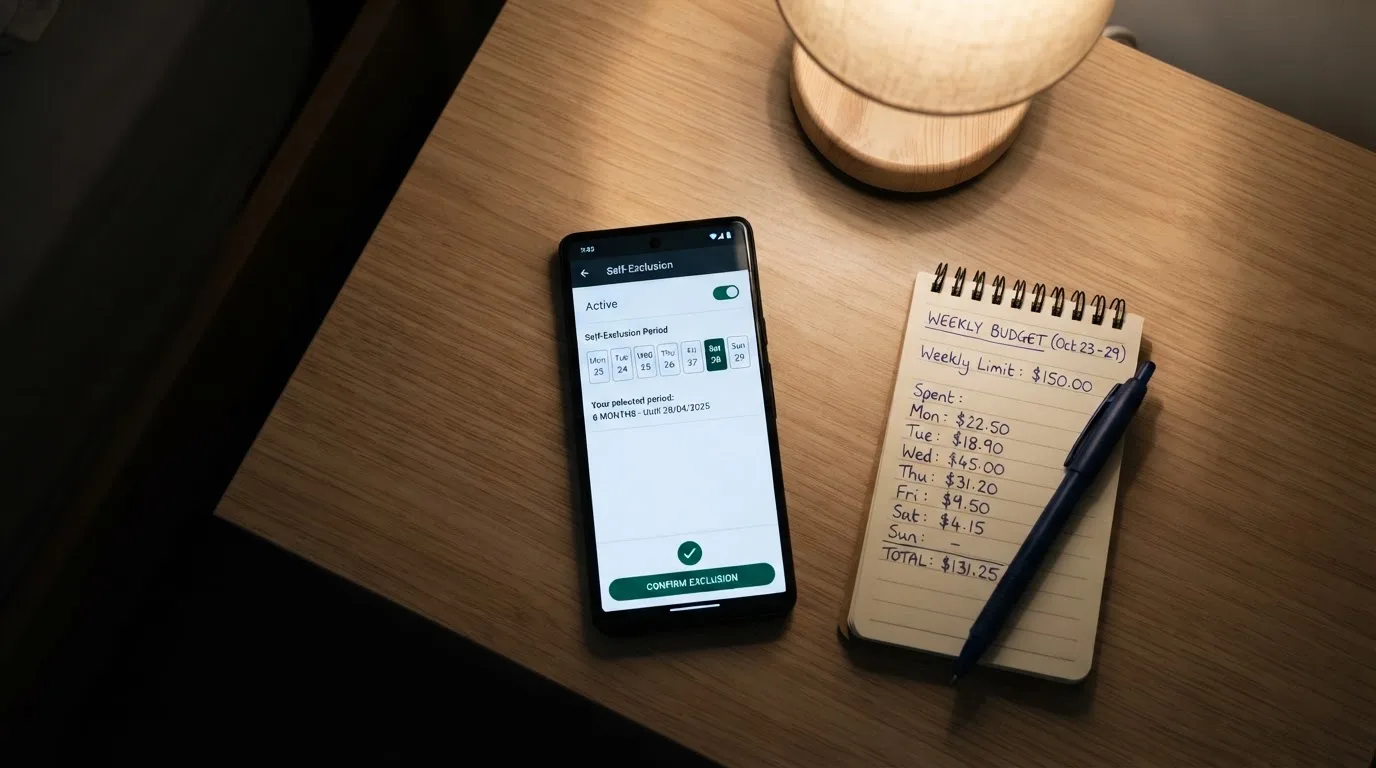
The practical limits that do work across the offshore border are the ones a player sets on themselves: a weekly deposit cap honoured by the offshore site (where the site offers one and does not quietly disable it), a session-time alarm, a hard stop on chasing losses, and an honest look at what the bank balance looked like before the session started. A slot session’s expected loss is straightforward to estimate: the total amount wagered multiplied by one minus the game’s RTP. At a typical online slot RTP in the mid-90s, every A$100 wagered returns on average about A$96, leaving an expected A$4 loss — small per spin, steady across a session, and the only honest number the marketing page will not print.
What makes the offshore path expensive is what sits on top of that math: a withdrawal the site delays or refuses, a bonus with a wagering requirement that turns the headline number into something else entirely, and the absence of an Australian complaints body to appeal to. The IGA targets the provider; the player has nowhere in Australia to file a complaint if a Curaçao-registered operator decides to keep a balance. That is the part the “trusted” branding leaves out, and it is the part a player finds out about only when they try to cash out.
Crypto and anonymity: what changes when the deposit is Bitcoin
Crypto gambling casinos run the same slot titles as card-funded sites, just with a blockchain wallet swapped in for a bank card. The slot software is the same — providers like BGaming, Pragmatic Play and the rest of the offshore catalogue supply both kinds of operator — and the math, the RTP and the bonus features are unchanged. What changes is the deposit rail and the regulatory reach.
On the Australian side, the June 2024 payment rules make digital currency a banned payment method for licensed online wagering. A licensed Australian bookmaker cannot legally accept Bitcoin from an Australian customer. An offshore casino is not bound by that rule, and several of them list Bitcoin, Ethereum, Litecoin and Tether alongside the usual card and e-wallet options. From the player’s point of view, the deposit is faster and the bank statement does not show “Casino X” — but the regulator’s view of the transaction is the same as the regulator’s view of the site: prohibited service, prohibited payment method, no Australian recourse if the withdrawal stalls.
The anonymity claim is narrower than the marketing suggests. A blockchain transaction is pseudonymous, not anonymous; the wallet address and the transaction graph are public. The Know-Your-Customer checks the offshore site runs at withdrawal time are usually stricter than at deposit time — a player who deposited with Bitcoin and won enough to cash out is typically asked for ID, proof of address and source-of-funds before the withdrawal goes through. The “anonymous” pitch is real for the deposit; it is much less real for the payout.
The casinos the ACMA has warned, and what each one offers
The eleven brands below are the ones the ACMA has issued formal warnings against in the period covered by the ACMA register. They are listed in regulator-record order. They are not ranked, and they are not recommended. The judgement at the end of each block is this page’s own, on what the brand is worth once the legal position is taken into account.
RocketPlay
The ACMA issued a formal warning to Pulsup Ltd over RocketPlay in March 2026, and RocketPlay had already been on the agency’s record under Dama N.V. in May 2022. Two warnings over four years, two different parent companies on the warning — the brand has changed hands in the offshore space, and the ACMA has tracked it through both. The site advertises the usual offshore mix of slots, live dealer tables and a deposit bonus. None of that is licensed to be offered to an Australian. A player drawn to RocketPlay by the bonus headline pays for it with no Australian complaints route and no Australian consumer protection; the regulator’s own record shows the operator has been formally told twice. The brand’s pitch is essentially “we kept operating anyway.”
Level Up Casino
The ACMA’s May 2022 warning was issued to Dama N.V. and covered six brands, including Level Up. Level Up’s slot library is built around BGaming titles, which is the only verifiable third-party listing reference for the brand. The warning is now four years old and the brand is still taking Australian-facing sign-ups. A 2022 warning does not age out — the ACMA does not withdraw a formal warning once issued; the operator is on the regulator’s record as someone it has had to formally tell. Level Up’s market position is essentially that of a long-running offshore brand that the regulator has named and that has not changed hands.
Woo Casino
Dama N.V. received a fresh formal warning over Woo Casino in March 2025, three years after the original 2022 warning that did not name Woo. The brand sits inside a group that has now collected multiple formal warnings from the ACMA, and Woo’s addition in 2025 shows the regulator tracking the group’s expansion brand by brand rather than just at the parent-company level. A player who finds Woo via an affiliate review from 2026 is finding a brand the ACMA itself named eight months earlier as a provider of prohibited services to Australians.
Spirit Casino
Dama N.V.’s fifth ACMA formal warning at the brand level landed in May 2025, this time over Spirit Casino. The pattern across Dama N.V. — Level Up in 2022, Woo in March 2025, Spirit in May 2025 — is the clearest case on the ACMA’s record of one parent operator cycling through brands. Spirit is the newest of the three by warning date and the most recent addition to a group that the regulator has now formally told, by name, three times in thirteen months.
National Casino
Consolutetish S.R.L. was warned in July 2025 over National Casino and over Bizzo Casino in the same round. National Casino’s only verifiable independent listing reference points back to a Wikipedia entry — the brand does not have the kind of third-party coverage a long-established operator picks up. A formal warning under a Romanian-registered operator with a thin third-party footprint is, from an Australian player’s point of view, the same proposition as any other on this list: prohibited service, no Australian licence, no Australian recourse.
Bizzo Casino
Bizzo has the longest ACMA file of any brand in this set. The July 2025 warning under Consolutetish S.R.L. was the second formal warning tied to Bizzo Casino — the first was issued to TechSolutions (CY) Group Limited and TechSolutions Group N.V. in 2022. Three years, two operators, same brand. The ACMA has named Bizzo twice across two different company registrations, which is the clearest signal on the register that the brand has been moved between offshore shells while continuing to take Australian-facing deposits.
Ignition Casino
The July 2025 warning to Bamboo Media over Ignition Casino is the only formal warning on this list whose operator name is not a European corporate shell — Bamboo Media is the most publicly identifiable parent in the set. Ignition has historically pitched itself to Australian-facing traffic through its poker and casino verticals. The ACMA’s warning was specifically over the casino service. The brand’s existing reputation in other markets does not change the Australian legal position, which is that the casino offering is a prohibited interactive gambling service.
Instant Casino
EOD Code SRL received a formal warning over Instant Casino in February 2025. The brand markets itself around the “instant” withdrawal pitch — a positioning that, on an offshore site with no Australian consumer protection, is a marketing promise without an Australian complaints body behind it. The February 2025 warning is the ACMA’s own record that the operator has been told the service is prohibited; a player who treats the withdrawal speed as the brand’s main selling point is trusting an operator the regulator has formally named.
Jackbit
Ryker B.V. was warned over Jackbit and CasinOK in April 2026. Jackbit is one of the more crypto-forward brands in the set — its deposit page lists several digital currencies before it lists anything else. A crypto-led brand on the ACMA’s record combines two features an Australian player should weight separately: a prohibited service on the Interactive Gambling Act 2001, and a payment rail that has been banned for licensed Australian wagering since June 2024. The offshore status puts both rules out of reach of the Australian regulator; the player is the one left holding the gap.
Casino Intense
Sterplay Holding Ltd was warned over Casino Intense in April 2025. Casino Intense is the brand on this list with the most independent listing references — the ACMA’s own record, an ABC News piece on the NT regulator, and Crown Melbourne’s baccarat page all surface it as a comparison point in the broader Australian gambling discussion. The breadth of the third-party footprint does not soften the legal position; it makes the warning easier to verify. Casino Intense is named in the ACMA’s register, and an Australian player can confirm that without taking the operator’s word for anything.
Sky Crown
Hollycorn N.V. was the subject of the formal warning covering Sky Crown and Blue Leo, published by the ACMA in September 2022. Sky Crown is the oldest brand on this list by warning date, and Hollycorn is another operator the ACMA has tracked across multiple brands. A 2022 warning is still a current record; the ACMA does not retire entries. Sky Crown’s pitch is the standard offshore mix, and the Australian legal position is unchanged from the day the warning was issued.
What an Australian player is actually choosing
The honest summary is short. Online casino games are prohibited in Australia, the regulator has named the operators behind each of these brands, the payment rules since June 2024 have closed off the licensed routes for credit and crypto, and the consumer-protection tools that exist — BetStop, the helpline, the VGCCC complaints process — apply to licensed wagering and licensed casinos, not to offshore online casino sites. A player who picks one of the brands on this page is picking an offshore operator with no Australian licence, no Australian complaints body, and a regulator-issued formal warning on file.
The maths is the same maths any slot has ever run. The compliance gap is what makes the cost harder to recover. A blocked site with a balance still on it is a real outcome for offshore players; the ACMA’s blocking requests do not pause for account settlements. The 1,751 sites blocked since November 2019 are not a hypothetical — they are the regulator’s working total, and a brand on the ACMA’s formal-warning list is a step closer to landing on the next blocking round.
For anyone comparing the legal options — licensed wagering with a Northern Territory-licensed bookmaker, a land-based casino, a pub or club pokie — the difference is not in the slot math, which is the same math everywhere. The difference is in what happens when something goes wrong. On a legal Australian wagering account, the dispute goes to a regulator that has jurisdiction. On an offshore casino, it goes nowhere an Australian player can reach.
Responsible gambling in Australia
The Australian responsible-gambling framework applies to licensed services and reaches offshore players only in the pieces that follow the player. BetStop, the National Self-Exclusion Register, binds Australian-licensed online and phone wagering services; an offshore casino is not connected to it. The National Gambling Helpline on 1800 858 858 is free, 24/7 and available from anywhere in Australia; Gambling Help Online adds a chat channel. State and territory problem gambling services are reachable directly — each state’s gambling help line is set up to take a call from someone who wants to talk through a session, a balance or a pattern of play.
For offshore players, the practical limits are the ones the player sets on themselves, because the offshore site has no obligation to honour an Australian self-exclusion. A weekly deposit cap the player actually sticks to is more useful than a cap the site offers and quietly raises. A session timer on the phone is harder for the offshore site to disable than a site-side “responsible gaming” toggle. The honest version of responsible play, offshore, is the version the player enforces themselves, with the helpline as the backstop.
The tax treatment for an Australian recreational gambler is unchanged whether the play is onshore or offshore: winnings are not assessable income under section 6-5 of the ITAA 1997, and losses are not deductible unless the person carries on a business of gambling. The Australian Taxation Office is the right place to check the edge cases — gambling income can become assessable in specific circumstances, and a player with a question is better off asking the ATO than reading an offshore site’s terms page.
Crypto, anonymity and what changes offshore
A crypto deposit changes two things and leaves everything else alone. What changes: the deposit rail is faster and does not show up on the bank statement as “Casino X,” and the offshore site can keep its crypto treasury in a coin that suits its own accounting. What does not change: the slot math, the RTP, the bonus structure, the absence of an Australian licence, and the regulator’s view of the site. Bitcoin and the other listed coins are not anonymous in the legal sense — the wallet and the transaction are public on the blockchain — and the KYC checks most offshore sites run at withdrawal time are usually tighter than at deposit.
The Australian credit-and-crypto ban applies to licensed wagering, not to offshore casinos. An Australian player depositing Bitcoin at an offshore casino is not in violation of the ban (the ban targets the licensed operator), but the player is also not protected by any Australian rule that covers the transaction. The site’s own terms page is the only contract that applies, and the site’s own customer-support team is the only disputes process. The “crypto = anonymous” pitch is real on the way in and much less real on the way out, and the regulator’s record on crypto-led brands like Jackbit is part of the same file as the credit-funded brands.
Comparing the ACMA’s record across operators
The table earlier in this page is the regulator’s own record; the lines below are what the record shows when it is read across operators rather than brand by brand. Dama N.V. appears three times in the formal-warning register (Level Up in 2022, Woo in March 2025, Spirit in May 2025) — three brands, one parent, thirteen months between the 2025 pair. Consolutetish S.R.L. appears twice in the same July 2025 round (National Casino and Bizzo Casino), with Bizzo also carrying an earlier 2022 warning under a different operator. Hollycorn N.V. carries the Sky Crown and Blue Leo warning from September 2022.
What the cross-operator read shows is that the formal warning is not the end of an operator’s Australian-facing business — it is a published record that the operator has been told, and that the ACMA has tracked enough to put on the public register. Some operators change hands between warnings (RocketPlay between Dama N.V. and Pulsup Ltd; Bizzo between TechSolutions and Consolutetish S.R.L.). Others stay under the same parent and add brands (Dama N.V. adding Woo and Spirit after the original 2022 round). The brand the Australian player sees is, in several cases on this list, the third or fourth public identity the operator has used while continuing to take Australian-facing deposits.
What the next round of reform changes
The Interactive Gambling Amendment (Gambling Reform) Bill 2026 passed Parliament on 19 August 2026. Its advertising and inducement measures commence 1 January 2027 — law with a start date, not a regime already in force. The 2026 reform adds new restrictions on how licensed wagering services can advertise and what inducements they can offer, and tightens the framework around the offshore end of the market. On a 2026 page the practical effect is forward-looking: the present-day enforcement picture is still the 2017-strengthened IGA, the 2024 credit-and-crypto ban, and the ACMA’s running total of formal warnings and blocked sites. The 2027 commencement is the next change, and the ACMA’s blocking pace over the next twelve months is the leading indicator of how the new regime will be enforced.
For a player comparing options today, the reform calendar matters less than the present-day legal position. The offshore brands are prohibited today, the payment rules are in force today, and the formal warnings on the ACMA’s register are dated and named. The 2027 measures will tighten further; they do not change what is already on the page.
Frequently asked questions about gambling casino sites and slots in Australia
Is real-money online casino gambling legal for someone based in Australia?
No. The Interactive Gambling Act 2001, strengthened in 2017, makes it an offence to provide online casino games — slots, table games, live dealer — to a person in Australia, and no state or territory licenses them. The ACMA targets the provider, not the player, but a player on an offshore site has no Australian consumer protection and no Australian complaints body.
How does a slot machine’s random number generator decide the result of a spin?
Each spin’s outcome is decided by a random number generator — software producing a stream of numbers with no pattern a player can predict. The visible reels and symbols are a presentation layer over that stream. Modern video slots can run five or more reels with 50-plus symbols each, producing odds as high as 300 million to one against the top combination.
Do crypto gambling casinos use the same slot software as card-funded sites?
Yes. The slot catalogue is the same — providers like BGaming and Pragmatic Play supply both kinds of operator. What changes with a crypto deposit is the payment rail and the regulatory reach: an offshore crypto deposit is not covered by the Australian rules that have applied to licensed wagering since June 2024.
What is the difference between an online slot and a pub or club pokies machine?
The underlying math is the same — a random number generator decides each outcome. A pub or club pokie in NSW, Victoria, Queensland, South Australia or the ACT is licensed by the relevant state regulator, pays out under state-set RTP rules, and feeds tax revenue back to the state. An offshore online slot is none of those things; it is a prohibited interactive gambling service under the IGA.
Does a site calling itself trusted or safe mean it has been independently checked?
No. “Trusted” and “safe” are the site’s own marketing claims. The independent checks that exist — the ACMA’s formal warnings, the VGCCC’s approval of legal casino game rules, the NTRWC’s licensing of wagering services — apply to licensed Australian operators. An offshore casino calling itself trusted has no Australian regulator behind the claim.
What tools can help someone track and limit time spent playing online slots?
BetStop, the National Self-Exclusion Register, has been live since August 2023 but binds only Australian-licensed wagering services. The free, 24/7 National Gambling Helpline on 1800 858 858 and the chat channel at Gambling Help Online are reachable regardless of where someone plays. State-level gambling help lines are also available, and a session timer on the player’s own device is the most reliable limit on an offshore site.