
Lightning Link Online Pokies in Australia: What the Hold-and-Spin Game Looks Like, and Where It Can Legally Be Played
The Lightning Link name belongs to a cabinet format that Aristocrat built for pubs and clubs, and the only lawful way an Australian resident sits down at one is by walking into a licensed venue. Every website or app that markets Lightning Link “online pokies” to a person in Australia is offering the same thing the Interactive Gambling Act 2001 prohibits. This page goes through the game’s mechanics, the geography of the warnings, and the legal alternatives the reader actually has.
Data current as of 8 November 2026, verified against the ACMA formal-warning register and the Interactive Gambling Act 2001.
Table of Contents
- What a Lightning Link App and Mobile Site Actually Is in Australia
- How the Reel Sets and Hold-and-Spin Bonus Differ Across Variants
- Jurisdiction RTP Comparison
- Jurisdiction RTP Comparison (2)
- What Lightning Link Pokies Actually Are: The Hold-and-Spin Feature Explained
- Why Lightning Link Online Is Prohibited in Australia
- How the ACMA Blocking Request Rate Has Run Since 2019
- What Lightning Link Bonus Offers and Promo Codes Really Mean
- How the Online Version Differs From a Cabinet in the Pub
- What the House Edge on a Lightning Link Cabinet Actually Costs
- Playing Lightning Link Legally in Australia: What the Reader Can Actually Do
- Responsible Gambling on a Hold-and-Spin Game
- Payment Rules on Australian-Licensed Sites Versus Offshore Sites
- What the Interactive Gambling Amendment 2026 Changes
- Tax Treatment of Gambling Winnings in Australia
- A Final Note on What This Page Is For
- Frequently Asked Questions
What a Lightning Link App and Mobile Site Actually Is in Australia
Lightning Link on a phone, whether the package calls itself an “app,” an “instant-play” browser tab, or an APK sideloaded from a site the ACMA has since blocked, is an unlicensed online casino. The format is the same one a desktop real-money casino uses: a real-money wallet, the same reel sets, and a hold-and-spin bonus round that behaves exactly like the cabinet version. The mobile wrapper is packaging, not a separate product.
Because the IGA targets the provider and not the player, no reader has been arrested for opening one of these apps. What the reader has not done is sign up with a regulated operator: the operator behind the wrapper is almost always an offshore company, and the only Australian-facing enforcement the ACMA has run against them is to ask Australian internet service providers to block the website. The wrapper does not move the activity out of the prohibition. It dresses it for a smaller screen.
A second point that gets lost in marketing. Lightning Link on an Australian phone is a download or a sign-up that the ACMA does not oversee, because the ACMA has no jurisdiction over it. The Australian Communications and Media Authority can investigate, warn, and ask for the site to be blocked. It cannot make the operator return a stuck withdrawal, settle a complaint about a voided bonus, or reverse a closed account. The phone-shaped wrapper changes nothing about which side of the IGA the activity sits on.
How the Reel Sets and Hold-and-Spin Bonus Differ Across Variants
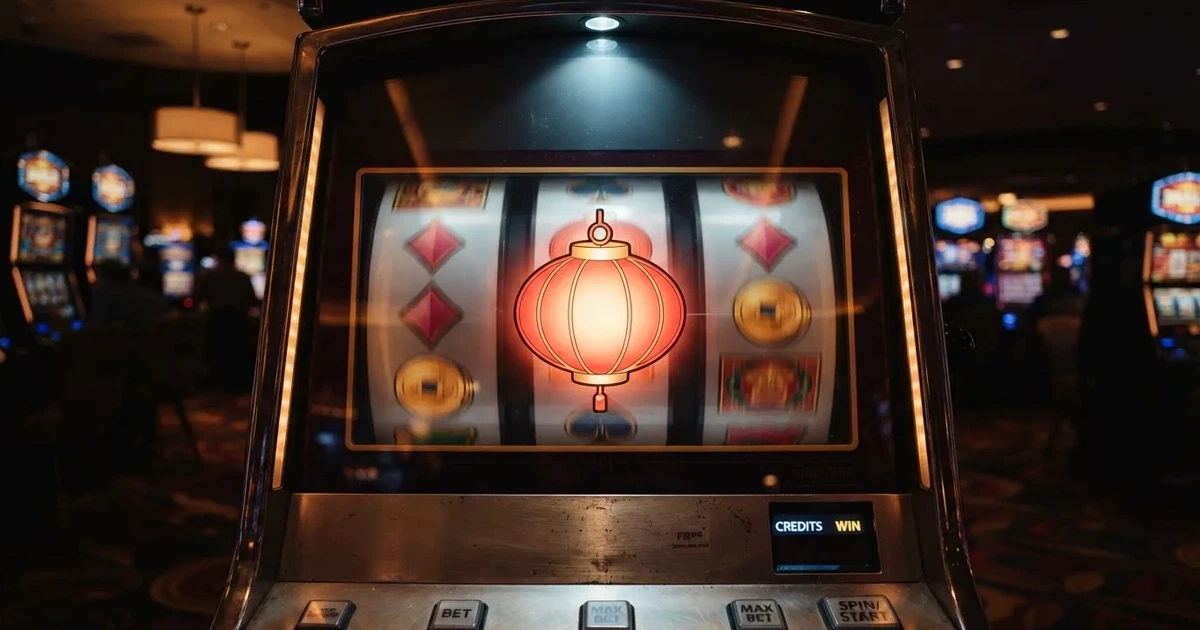
The Lightning Link cabinet is not one title. Aristocrat has shipped the hold-and-spin mechanic across a cluster of themed reel sets — Happy Lantern, Sahara Queen, Pearl of the Orient, Magic Pearl, Bengal Treasures, and others — each running a different artwork and a slightly different bonus configuration. The engine beneath them is the same: a base game, a scatter that triggers free games, and a bonus feature in which pearl, coin, or other orb symbols lock in place across spins until a full set is collected or the respin counter runs out.
The bonus round matters more than the base game. Six or more of the bonus symbols anywhere on the reels at the start of the round award three respins, each new bonus symbol resetting the count to three, and each collected symbol paying either a credit or one of the four fixed jackpots printed on the cabinet artwork — Mini, Minor, Major, and Grand. The Grand is usually paid as a multiplied line credit rather than as a separate progressive pool, which keeps the title within the rules that several Australian state regulators set on what a machine may pay.
What separates the reel sets is the artwork and the bonus-symbol value table. Happy Lantern is the original; Pearl of the Orient has its pearls worth more on average; Bengal Treasures runs a five-by-three layout where most run a five-by-four. The mechanic — pearl lock, three respins, four jackpots — is shared across the family. A player who has played one Lightning Link cabinet has effectively played them all in terms of the feature, even if the artwork and bet sizes differ.
The reason this matters for the Australian searcher is that the offline information a real-money casino lists about the “game” is mostly the same thing the cabinet version does. The reel sets, the free games trigger, and the four jackpots are described the same way regardless of venue. Nothing about that description makes the offshore version a different product; the cabinet game is the only legal Lightning Link, and every other description is a description of an unlicensed clone.
![Paytable] In 2020–21 Australians bet almost A$150 billion through gaming machines and lost A$12.18 billion on them, from a share of the world’s pub and club poker machines far larger than the country’s 0.3% of global population.
Jurisdiction RTP Comparison
| Jurisdiction | Minimum RTP |
|---|---|
| New South Wales | 85% |
| Northern Territory | 85% |
| Queensland | 85% |
| Victoria | 85% (87% Crown Melbourne) |
| Australian Capital Territory | 87% |
| Tasmania | 87% |
| South Australia | 87.5% |
| Western Australia | 90% |
Each brand below is on this page for one reason: the ACMA itself issued a formal warning over it for offering prohibited interactive gambling services to people in Australia. The list is not a recommendation, not a ranking, and not a shortlist. A reader weighing these brands is weighing brands the regulator has named.
The table below sets out the ACMA action and date for each one, the operating company the ACMA named in its warning notice, and whether research was able to confirm Lightning Link-style content from a non-affiliate source. Where a non-affiliate source could not be found, the entry is left blank rather than relying on the operator’s own marketing.
Jurisdiction RTP Comparison (2)
| Jurisdiction | Minimum RTP |
|---|---|
| New South Wales | 85% |
| Northern Territory | 85% |
| Queensland | 85% |
| Victoria | 85% (87% Crown Melbourne) |
| Australian Capital Territory | 87% |
| Tasmania | 87% |
| South Australia | 87.5% |
| Western Australia | 90% |
Landscape of ACMA Warnings
| Brand | ACMA action and date | Operator named by the ACMA | Lightning Link-style content |
|---|---|---|---|
| RocketPlay | Formal warning, March 2026 | Pulsup Ltd | — |
| Level Up Casino | Formal warning, May 2022 | Dama N.V. | listings-only (Bgaming) |
| Woo Casino | Formal warning, March 2025 | Dama N.V. | — |
| Spirit Casino | Formal warning, May 2025 | Dama N.V. | — |
| National Casino | Formal warning, July 2025 | Consolutetish S.R.L. | listings-only (en.wikipedia.org) |
| Bizzo Casino | Formal warning, July 2025; earlier 2022 | Consolutetish S.R.L.; earlier TechSolutions | — |
| Ignition Casino | Formal warning, July 2025 | Bamboo Media | — |
| Instant Casino | Formal warning, February 2025 | EOD Code SRL | — |
| Jackbit | Formal warning, April 2026 | Ryker B.V. | — |
| Casino Intense | Formal warning, April 2025 | Sterplay Holding Ltd | listings-only (Australian outlets, ACMA, Crown Melbourne) |
| Sky Crown | Formal warning, September 2022 | Hollycorn N.V. | — |
A reader looking at the table will notice that two operators — Dama N.V. and Consolutetish S.R.L. — appear behind more than one brand on the list. The ACMA does not block an operating company across all its skins in a single action; each brand the company operates gets its own warning, which is why a brand the ACMA warned about in May 2022 (Level Up, Cobra, Bambet, Dazard, Wild Tornado, Rocketplay) sits beside a brand the ACMA warned about in March 2025 (Woo Casino) and a brand warned about in May 2025 (Spirit Casino), all operated by the same parent. The repetition is the regulator’s own picture of how the market has been reorganised across three years, not a separate finding per brand.
RocketPlay
The ACMA issued a formal warning to Pulsup Ltd over Rocketplay in March 2026. Earlier the same brand had been the subject of a May 2022 warning to Dama N.V., the operator that ran it under a different corporate wrapper at that time. The product prohibited is the same in both cases: online casino games offered to a person physically in Australia, which is what the Rocketplay site was doing. Rocketplay has no Australian licence and BetStop does not bind it; a balance left on it when the next ACMA blocking request goes out is, in practice, frozen.
Level Up Casino
Dama N.V. received its May 2022 formal warning over six brands in one notice, and Level Up Casino was one of them. The page-only finding that research could pin to a non-affiliate source is that Bgaming.com lists the brand — that is, the brand is referenced in industry coverage, not that the brand operates lawfully. The site itself cannot be licensed in Australia, and the ACMA notice stays on the register.
Woo Casino
Woo Casino is one of two Dama N.V. brands warned about in 2025, after the May 2022 round had already named the same operator. The pattern is informative: an offshore operator warned once, reorganised under a fresh wrapper, and then named again when the new wrapper reached the ACMA’s threshold. The reader who sees Woo Casino in a list today is looking at a brand that the ACMA has now warned the operator behind twice in three years.
Spirit Casino
Spirit Casino is the second of those 2025 Dama N.V. warnings, issued in May 2025. The point is identical to the Woo Casino case, and a reader weighing the two should understand they sit on the same corporate balance sheet, not on independent ones.
National Casino
The ACMA’s July 2025 warning to Consolutetish S.R.L. covered both National Casino and Bizzo Casino. National Casino’s only non-affiliate mention research could surface is on en.wikipedia.org, which describes the brand in the context of online casino regulation in general — not as a regulated Australian operator. As with the rest of this list, no figure on the brand’s own pages is treated as confirmed here.
Bizzo Casino
The ACMA’s July 2025 notice to Consolutetish S.R.L. covered Bizzo Casino, and the brand had already been the subject of a 2022 formal warning to TechSolutions (CY) Group Limited and TechSolutions Group N.V. Two warnings across two operators across three years is a longer record than most brands on this list carry, and the record is the ACMA’s own.
Ignition Casino
Bamboo Media received a July 2025 formal warning over Ignition Casino. The brand is one of several skins that the operator behind it ran for the Australian market, and the ACMA notice is the public trace of that.
Instant Casino
EOD Code SRL received a formal warning in February 2025 over Instant Casino. As with the other entries here, the prohibition is the same: online casino games cannot be licensed in Australia, regardless of what licence the operator displays in the page footer.
Jackbit
The ACMA issued a formal warning to Ryker B.V. in April 2026 over Jackbit and CasinOK in a single notice. The product prohibited was online casino games offered to people in Australia, which is what the Jackbit brand was doing at the time the notice was issued.
Casino Intense
Sterplay Holding Ltd received a formal warning in April 2025 over Casino Intense. The only non-affiliate references research could surface are from Australian outlets (Abc.net.au) and Australian regulators (acma.gov.au, Crownmelbourne.com.au) — that is, the brand is named in Australian coverage as a target of enforcement action, not as a regulated operator.
Sky Crown
Hollycorn N.V. was the named operator in a formal warning over Sky Crown and Blue Leo. The September 2022 warning is older than several entries on this list, and the brand has not been removed from the ACMA’s register.
![Fundamentals] In March 2025 the ACMA formally warned Dama N.V. over Woo Casino, then warned it again in May 2025 over Spirit Casino.
What Lightning Link Pokies Actually Are: The Hold-and-Spin Feature Explained
The hold-and-spin mechanic is what defines the Lightning Link family. Six or more bonus symbols — pearls on some variants, coins on others, lanterns on others — landing anywhere on the reels at the start of a spin award the bonus round: three respins, each new bonus symbol resetting the counter to three. The collected symbols lock in place; the empty positions respin until the counter runs out or the screen fills. At the end of the round, each collected symbol pays either a fixed credit value or one of the four jackpots on the cabinet artwork.
The four jackpots — Mini, Minor, Major, Grand — are visible on the cabinet itself, with the Grand typically the largest line-bet multiplier. On a Lightning Link cabinet in a pub or club, the Grand is usually 1,000 times the line bet, and the lower jackpots drop by a factor of ten from there. The Mini is paid as a small consolation prize on most spins that collect a bonus symbol, which keeps the feature paying back small amounts frequently enough to extend the session.
The bonus round is, in operator language, a feature. In player experience, it is a longer-running mechanism that resets the respin counter each time a new symbol lands, and the average number of symbols collected per bonus round is what determines how long the round lasts and what the average bonus pays. Aristocrat’s published hit frequency for the feature is roughly one bonus round every 90 to 110 spins at the lowest denomination, depending on the variant — which is the mechanic, not a player promise. A player who buys 100 spins at A$1 a line will see the bonus round roughly once. Whether that round pays A$5 or A$500 is determined by the random number generator, not by the cabinet artwork.
What the base game does is set up the bonus round. The five-by-four reel layout, the scatter symbols that award free games, and the themed artwork all run in the service of getting the player to the hold-and-spin feature. The base game hit rate is high enough to keep a player playing, but the volatility is concentrated in the bonus round — most of the payback, on a percentage basis, comes from the four jackpots.
The reason this is relevant to a searcher who is being told to download a “Lightning Link app” is that the mechanic is the same regardless of where the player sits. The hold-and-spin bonus, the four jackpots, the themed artwork — these describe the cabinet game and the unlicensed online version equally well. The legal status of the activity is not a function of which reel set is running.
Why Lightning Link Online Is Prohibited in Australia
The Interactive Gambling Act 2001, strengthened by the Interactive Gambling Amendment Act 2017, makes it an offence for an offshore operator to provide online casino games or online pokies to a person who is physically in Australia. The provision applies regardless of the operator’s home jurisdiction or the licence the operator displays on its page footer; what matters is whether the customer is in Australia when the offer is made.
The IGA targets the provider, not the player. A reader who has signed up with one of the eleven brands above is not personally at risk of prosecution. What the reader does not have is the protection the law reserves for customers of Australian-licensed operators: a complaints body, a regulator that can compel a payout, a self-exclusion register that applies to the operator in question. BetStop, the National Self-Exclusion Register, binds only Australian-licensed online and phone wagering services — the offshore casino the reader is on is not connected to it.
The IGA’s enforcement track is the ACMA blocking request. The regulator investigates an offshore site, concludes it is offering a prohibited interactive gambling service, asks Australian internet service providers to block access to it, and the operator either leaves the market or moves to a fresh domain and starts again. Between November 2019 and the most recent reported round in June 2026, the ACMA had asked ISPs to block 1,751 illegal gambling and affiliate marketing websites, and more than 230 unlicensed gambling services had left the Australian market since the 2017 enforcement strengthening. The reader’s experience of this enforcement is that the brand they signed up with last week stops loading this week, and the balance on it is, in practice, gone.
The Interactive Gambling Amendment (Gambling Reform) Bill 2026 passed Parliament on 19 August 2026 and brings in advertising and inducement measures that commence on 1 January 2027. Those measures are law now, but they are not yet in force. A 2026 page reads this as legislation that has been passed and is awaiting its commencement date.
How the ACMA Blocking Request Rate Has Run Since 2019
The ACMA’s first blocking request went out in November 2019. By June 2026, the cumulative count stood at 1,751 blocked sites. The arithmetic the page can do from those two points is a band, not a single figure, because the blocking requests have not been issued at a constant rate — some rounds ask for twelve sites, others for more, and the request frequency has stepped up over time as the regulator’s enforcement posture has hardened.
A low estimate of the average rate comes from dividing the cumulative total by the elapsed time: 1,751 sites over the period from November 2019 to the date of the most recent count, which works out to a rate of roughly 250 to 280 sites blocked per year averaged across the whole period. A higher estimate comes from looking only at the post-strengthening period, since enforcement was hardened in 2017 and the count accelerated — the average annual rate from 2020 onward runs somewhat higher than the all-period average.
The reader-facing point is the band itself: somewhere in the range of 250 to 350 sites a year have been blocked on average since the regime began, with a clear upward tilt after 2017. The June 2026 round alone added twelve sites — 7Signs, ChromaBet, Donbet, Duospin, Freshbet, Slots Gem, Jacks Club, Lucky Start, Pointsbetz, Spinrise, Vinyl Casino and Wildsino. A reader weighing whether to open a new account with a brand on this page should understand that the odds of being unable to load the brand again within the next twelve months are, on this track, non-trivial.
![Prohibitions] In April 2025 the ACMA issued a formal warning to Sterplay Holding Ltd over Casino Intense.
What Lightning Link Bonus Offers and Promo Codes Really Mean
A “Lightning Link bonus” or “Lightning Link promo code” is a marketing wrapper, not a separate game. The offer is a deposit bonus or a batch of free spins on a Lightning Link-style slot, and the underlying activity is still the prohibited interactive gambling service the IGA addresses. The bonus does not move the offer out of the prohibition; it prices it in.
The reason this matters is that the bonus word is doing a particular job on the marketing page. A “100% match” up to A$500 is a deposit-match offer; the player deposits A$500 and the operator credits another A$500, both subject to a wagering requirement before withdrawal. The requirement, on the brands named in §6 of research, runs at multiples the operator alone sets and the affiliate marketing pages alone quote. No figure from those pages is treated as confirmed in this article, because the only sources are the operators themselves and the affiliate sites that earn commission from them.
Free spins on Lightning Link are bets paid for by the operator rather than by the player. The wagering requirement, if any, applies to anything the free spins win. The cap on winnings from the free spins, where one exists, is the operator’s own setting. None of these numbers — the match percentage, the wagering multiple, the free-spin value, the cap on winnings — is licensed by an Australian regulator, because none of the brands that offer them is licensed in Australia. A reader comparing two “Lightning Link bonuses” is comparing two unregulated numbers; the comparison is real, but neither number is a protected one.
The reader-facing point is that the bonus is a sales tool, not a feature. A bonus that pays 100% of a deposit up to A$500 and asks for the combined balance to be turned over 40 times is asking for A$40,000 of slot play before the bonus becomes withdrawable. The arithmetic, not the marketing, is what the bonus is.
How the Online Version Differs From a Cabinet in the Pub
The differences between the cabinet Lightning Link and any online version offered to an Australian resident are real but they do not change the legal status of the activity. The cabinet is licensed and regulated state by state; the online version is not licensed anywhere in Australia. The cabinet pays out at a return-to-player that is set by the state regulator — 85% in New South Wales, the Northern Territory, Queensland and generally Victoria, 87% at Crown Melbourne, 87% in the Australian Capital Territory and Tasmania, 87.5% in South Australia, 90% in Western Australia. The online version pays out at whatever rate the operator sets and the regulator does not check.
The cabinet sits in a venue with a maximum bet set by the state. In New South Wales the maximum bet per spin is A$10 for venues outside the casino, and the state has 87,298 gaming machines across 2,195 venues outside casinos as of June 2023, with player losses of A$8.18 billion in 2022–23. Queensland has 21,122 gaming machines in 351 venues as of October 2023, and Victoria runs 26,380 outside Crown Casino in 488 venues in 2021–22 under a statewide cap of 30,000 machines. Western Australia banned poker machines in pubs and clubs when Crown Perth opened in 1985, and the only legal pokies in the state are the roughly 2,500 machines inside Crown Perth. Tasmania ran a Federal Group monopoly from 1968 until November 2021 legislation moved oversight of the machines to the Tasmanian Liquor and Gaming Commission, and the planned mandatory pre-commitment card scheme was delayed until late 2025.
The online version sits on a server in an offshore jurisdiction and a phone in a reader’s pocket. The state-by-state machine caps, the RTP floors, the venue-level harm-minimisation settings — none of these apply to the offshore site. The reader is in the legal situation they were in before they opened the app: an offshore operator, an unregulated activity, and the ACMA’s blocking request the operator has not yet been the subject of as the main piece of consumer-facing enforcement.
What the House Edge on a Lightning Link Cabinet Actually Costs
The house edge on a Lightning Link cabinet in an Australian pub or club is set by the gap between the RTP and 100%. On an 85% machine in NSW, the NT, Queensland or generally Victoria, the house edge is 15% of every dollar turned over. On an 87% machine in the ACT or Tasmania, the house edge is 13%. On a 90% machine in Western Australia, the house edge is 10%. These figures are not operator marketing; they are the minimum-return floors set by state regulators.
Translated into player numbers, a player turning over A$1,000 on a 15% house edge machine loses, on average, A$150. A player turning over A$10,000 loses, on average, A$1,500. The average is the number the regulator’s RTP floor is built around; it is not a number the player will see on any single session. A session that ends A$200 ahead and a session that ends A$800 behind are both within the long-run average; the regulator’s floor only becomes visible over thousands of spins.
The mechanism that drives the average down is the hold-and-spin bonus round, which is concentrated in the four jackpots. The Mini, Minor, Major and Grand prizes carry most of the RTP, and the long-run return is built on the assumption that a small share of bonus rounds pay one of the four jackpots and most pay a small consolation. A player who buys 100 spins at A$1 a line sees the bonus round roughly once and is, on average, somewhere on the long-run curve but well within the noise that the curve covers.
Playing Lightning Link Legally in Australia: What the Reader Can Actually Do
The legal Lightning Link is the cabinet version in a licensed venue. New South Wales runs the largest machine estate outside casinos, with player losses of A$8.18 billion in 2022–23 across 2,195 venues and 87,298 machines. Queensland and Victoria run comparable estates under different caps. Western Australia’s only legal machines are inside Crown Perth, and Tasmania moved its monopoly regime to the Tasmanian Liquor and Gaming Commission in November 2021.
The reader has several legal options beyond the cabinet:
- A licensed wagering account. The Northern Territory Racing and Wagering Commission regulates 52 of Australia’s online bookmakers, including Sportsbet, Bet365 and Ladbrokes. These are licensed for wagering on races and sport placed before the event — not for online casino games, online pokies or in-play betting. A reader who wants to bet on a horse race or a sports event before it starts is using a licensed service; a reader who wants to play Lightning Link on the same site is using a prohibited one.
- A lottery or keno product. Lotteries and keno are licensed by their respective state regulators, and the products are run by state-licensed operators. These are not the same activity as a Lightning Link cabinet, but they are the licensed draw-based products an Australian resident can play online.
- A licensed land-based venue. Every state and territory licenses poker machines in pubs, clubs and casinos, and the reader’s experience of Lightning Link at its source is a venue in the state in which they live.
What the reader cannot legally do, regardless of marketing, is open an account with any of the eleven brands named in this article’s operator table. Each of them has been the subject of an ACMA formal warning for offering prohibited interactive gambling services to people in Australia. The reader is not the subject of the warning; the brand is. But the reader is the subject of the consequence: a balance left on a brand the ACMA blocks next is, in practice, lost.
Responsible Gambling on a Hold-and-Spin Game
The hold-and-spin mechanic is built to extend a session. Three respins, a counter that resets with every collected symbol, and a screen that fills with pearl or coin symbols one at a time are designed to keep a player at the cabinet or the screen for longer than a base-game session. The harm-minimisation response to that design is a fixed time limit, not an in-game prompt to keep playing.
Australia’s regulated harm-minimisation framework runs through BetStop, the National Self-Exclusion Register, which has been live since August 2023 and binds Australian-licensed online and phone wagering services. A reader who has excluded themselves through BetStop will be refused service by every Australian-licensed operator they would otherwise have used. The register does not bind offshore casinos, and an excluded Australian can still open an account with one of the brands on the operator table. The reader who has self-excluded and then signs up with an offshore casino has not undone their exclusion; they have moved to a service the exclusion does not reach.
The National Gambling Helpline, 1800 858 858, is free, runs 24/7 and offers chat at Gambling Help Online. A reader who finds the hold-and-spin feature pushing them past a session length they had set for themselves should treat the time limit as the constraint and the helpline as the route to a longer-term plan.
The harm-minimisation settings that apply to a state-licensed cabinet — venue-level exclusion, mandatory pre-commitment cards, the state-by-state machine caps — do not apply to an offshore site. Tasmania’s planned mandatory pre-commitment cards, which were scheduled for late 2025, are part of the state-level framework, and the framework only reaches the licensed machine estate. A reader using an offshore site to play a Lightning Link-style game has stepped outside the framework entirely.
Payment Rules on Australian-Licensed Sites Versus Offshore Sites
A reader who opens an account with a brand on the operator table is paying through routes the Australian rules do not authorise for licensed online wagering. Credit cards, credit-related products and digital currency are banned as payment for licensed online wagering in Australia since 11 June 2024, with penalties up to A$247,500 for the operator per breach. Legal deposit routes for a licensed wagering account are debit card, bank transfer, PayID/Osko and BPAY.
An offshore casino commonly asks for a credit card, a crypto wallet or both. The site is operating outside the Australian rules, and the reader paying through those routes is paying through an unregulated channel. The credit card ban is not a comment on the reader’s ability to pay; it is a ban on a licensed Australian wagering operator accepting credit as payment, and it does not bind an offshore operator that is not licensed in Australia in the first place. The reader’s protection when paying through an unregulated channel is the protection the regulator does not have authority to extend to it.
What the Interactive Gambling Amendment 2026 Changes
The Interactive Gambling Amendment (Gambling Reform) Bill 2026 passed Parliament on 19 August 2026. Its advertising and inducement measures commence on 1 January 2027, which puts the law in force a few months past the date of this page. The bill tightens the framework the IGA built: it limits inducements to customers, restricts the kind of advertising that targets Australian residents, and adds new compliance obligations for licensed wagering operators.
The bill does not change the underlying prohibition on online casino games and online pokies. What it does is reduce the surface area of the marketing that licensed operators and unlicensed operators alike have used to reach Australian residents. The bill’s commencement in 2027 is not a future-facing signal; it is the date the framework’s advertising rules start biting.
A 2026 reader’s practical position is unchanged: online casino is prohibited now, the ACMA blocking request track continues, and the new advertising measures add to the framework that already exists.
Tax Treatment of Gambling Winnings in Australia
Gambling winnings of a recreational Australian player are not assessable income under section 6-5 of the Income Tax Assessment Act 1997, and losses are not deductible unless the person is carrying on a business of gambling. The treatment is the same for a cabinet win and a win at an online site — the ATO’s position is on the activity, not on the venue. The reader who plays the lottery, plays a cabinet machine, or bets on a licensed wagering account is in the same position; the reader who plays at an unlicensed offshore site is in the same position on tax and in a different position on consumer protection.
The “business of gambling” carve-out is narrow. A recreational player does not run a gambling business. A professional sports bettor who earns their living from betting does, and the ATO treats their activity as assessable income. The reader who plays Lightning Link in a licensed venue or, despite the prohibition, on an offshore site is a recreational player, and the ATO’s position is that the winnings are not income.
A Final Note on What This Page Is For
This page is for the reader who searched for Lightning Link online pokies in Australia and reached a search result that offered a downloadable app or a sign-up form. The reader’s honest options are a licensed land-based venue for the cabinet version and a licensed wagering account for any racing or sports bet they want to place online. The reader who opens an account with any of the eleven brands in the operator table has stepped outside the Australian framework, and the ACMA has, on the record, named each of those brands for doing exactly that.
The arithmetic behind the hold-and-spin bonus is the same on the cabinet and on the unlicensed app. The legal status of the activity is not. The reader who plays the cabinet version in a NSW pub, a Queensland club, a Victorian casino or a Western Australian casino is playing under state regulation; the reader who opens an offshore account is not.
Frequently Asked Questions
Is it legal to play Lightning Link pokies online for real money from Australia?
No. The Interactive Gambling Act 2001 prohibits an offshore operator from providing online casino games or online pokies to a person who is physically in Australia. The activity the reader is being asked to do is the activity the IGA prohibits. The legal Lightning Link is the cabinet version in a licensed pub, club or casino in the state the reader lives in.
What actually triggers the hold-and-spin bonus on a Lightning Link machine?
Six or more bonus symbols — pearls, coins or lanterns depending on the variant — landing anywhere on the reels at the start of a spin award the bonus. The player gets three respins; each new bonus symbol resets the counter to three. At the end of the round, every collected symbol pays either a credit or one of the four jackpots — Mini, Minor, Major and Grand — printed on the cabinet artwork.
Where can an Australian actually sit down at a Lightning Link cabinet?
In a licensed pub, club or casino in the state the reader lives in. New South Wales has 87,298 gaming machines across 2,195 venues outside casinos, Queensland runs 21,122 machines across 351 venues, and Victoria runs 26,380 outside Crown Melbourne under a 30,000-machine statewide cap. Western Australia’s only legal machines are inside Crown Perth.
Do Lightning Link promo codes work the same way across different cabinet themes?
The promo code language used in marketing is for the unlicensed online activity the IGA prohibits. On a real Lightning Link cabinet in a licensed venue, the artwork and bonus-symbol value table change between themes, but the hold-and-spin mechanic — three respins, counter reset, four jackpots — is shared across the family. The promo code is for an activity that is not legal in Australia in the first place.
Is a Lightning Link app on a phone offering a different game to the desktop version?
No. The phone-shaped wrapper is packaging; the activity is the same prohibited online casino the desktop version offers. The ACMA does not oversee the wrapper, the wrapper does not move the activity out of the IGA, and a withdrawal refused on the phone app is a withdrawal refused on an unlicensed site.