Betsoft casinos in Australia: an overview for 2026
 Available in US
Current as of 24 September 2026, cross-checked against the Australian Communications and Media Authority’s published register of prohibited interactive gambling services.
The short version of this page is one sentence long. Betsoft is a real game studio with a long catalogue of real-money slot titles, and it has been for nearly twenty years; it is also true that no Australian licence scheme permits an online casino to offer those titles to a person in Australia. The longer version, which is what this page is, is the space between those two facts: how Betsoft operates as a business, why its name keeps surfacing on offshore sites pitched at Australians, what the regulator has actually done to those sites, and what a player in Australia is realistically looking at when one of those sites comes up in a search. This is a comparison page in the descriptive sense. It is not, and cannot be, a recommendation page, because the thing the comparison would recommend is, under Australian law, not a thing that can be sold.
The angle here is consequence. Each section below closes by naming what the material means for someone reading this in Australia right now: a licence status that closes off a route before they spend ten minutes on it, a payment rule that decides which deposit button is even available to them, a studio reputation that follows Betsoft into a market the studio has never been licensed for. The arc of the page runs from the safest reading first — what responsible gambling looks like if any of this starts to bite — through the practical bits of money, bonuses, mobile and games, then to the comparison itself, and only then to the legal frame that makes most of the comparison moot.
Table of Contents
- Responsible gambling and where to turn if Betsoft play stops being a choice
- Payments at Betsoft offshore sites, and why the debit-card question matters in Australia
- Bonuses and free spins at Betsoft-powered offshore casinos
- Mobile and apps for Betsoft play from Australia
- Betsoft games: what the paytable actually says
- Registered sites the ACMA has acted against
- What Betsoft actually is, in 2026
- The legal frame that makes the comparison moot
- What this means if you arrived here from a search
- Frequently Asked Questions
Responsible gambling and where to turn if Betsoft play stops being a choice
Responsible play sits first on purpose. Everything else on this page describes an environment that is, by Australian law, not licensed to offer what it offers; the protections a player takes for granted at a licensed bookmaker simply do not attach to it. That makes the difference between a punter who decides when to log off and one who does not, a much wider gap here than it is anywhere else on the market.

Australia’s consumer-facing safety net for gambling runs through two doors. The first is Gambling Help Online, which offers free confidential counselling around the clock via website chat and a 24/7 phone line on 1800 858 858. The second is BetStop, the National Self-Exclusion Register, which has been live since August 2023. BetStop binds every Australian-licensed online and phone wagering service, so a punter who registers is excluded from every licensed bookmaker at once and cannot reverse the registration for a set minimum period. Offshore sites are not part of that system. A self-exclusion applied through BetStop stops at the licensed border; it does not stop an offshore casino from accepting deposits, and an offshore casino will not honour an Australian self-exclusion request on its own. Anyone whose self-control has slipped far enough that a register feels necessary has to combine BetStop with an honest conversation with the Gambling Help Online team about what offshore play still looks like for them.
The same logic applies at a lower intensity. Loss limits, deposit caps, time-out reminders and reality checks are features that licensed Australian wagering operators are required to surface and to honour. An offshore casino has no such obligation, and the few it surfaces are pieces of marketing copy unless they sit inside a regulator’s enforcement reach. They are not enforceable by an Australian complaint body, because there is no Australian complaint body with jurisdiction over the site. If a withdrawal stalls at an offshore site, the realistic options are the site’s own internal dispute process — to the extent it has one — and whatever licence authority the site claims, which is almost never an Australian one. A punter expecting ACMA intervention is going to be disappointed; ACMA’s role here is to push the site out of Australian reach, not to recover an individual’s deposit.
The honest framing for an Australian reading this in 2026 is that gambling offshore is gambling in a market where the consumer is unprotected by Australian law. The free, confidential help line and the exclusion register exist for exactly the readers most likely to end up on this page, and they are worth contacting before the search result above them gets clicked.
Payments at Betsoft offshore sites, and why the debit-card question matters in Australia
The payments side of a Betsoft casino is, for an Australian reader, mostly a question about what the Australian government has already ruled out. Since 11 June 2024, credit cards, credit-related products and digital currency have been banned as a means of paying for licensed online wagering in Australia, and operators who breach the ban face penalties up to A$247,500. The routes that still work for licensed wagering are debit card, bank transfer, PayID, Osko and BPAY. A site that asks for a credit card or a crypto deposit, in Australia, is by definition outside the Australian rules.

That detail narrows the practical side of an offshore Betsoft site considerably. Most offshore casinos in the Betsoft-orbit accept Visa and Mastercard credit, e-wallet balances and a spread of cryptocurrencies including Bitcoin, Ethereum and Tether. Some of those routes will simply be closed off to an Australian payer because the issuing bank, the e-wallet or the exchange refuses the transaction once the merchant category reads as online wagering. The ones that go through are the ones that work because the Australian-side compliance layer has not caught up, not because the transaction is permitted. None of this changes the legal status of the site; it only changes how visible the activity is to the player’s own bank statement.
Payout speed on a Betsoft-powered offshore site is the figure the affiliate marketing around these sites is loudest about, and it is also the figure with the least Australian read-across. The common promises, e-wallet withdrawals cleared within twenty-four hours and bank transfers within three to five business days, are properties of the site’s payment stack and its internal compliance team, not of any Australian framework. Where Australian readers get caught is not the speed but the conditions behind it: maximum withdrawal caps per transaction, weekly or monthly, mandatory turnover requirements before a withdrawal can be requested, identity re-verification triggered at the moment a payout gets large enough to attract attention, and dormant-account fees that erode a balance nobody has touched in months. Each of these is ordinary for the offshore market and absent from the licensed Australian market, and the contrast is the point. A punter who has spent a year on a licensed Australian bookmaker has no intuition for what these terms cost.
The honest version of the payments section, then, is a warning dressed as a description. Anyone deciding whether to deposit into an offshore Betsoft casino is deciding, simultaneously, whether to deposit through a channel that may be declined at the bank, on a site that may close the payout route at the operator’s discretion, into a balance protected by no Australian complaints body. The licensed wagering routes that remain legal in Australia are open to the same punter for sports and racing wagers; they do not carry Betsoft slots, and they do not pretend to.
Bonuses and free spins at Betsoft-powered offshore casinos
The bonus side of a Betsoft casino is where the marketing voice gets loudest and where the analysis has to be sharpest. The offers this market runs are deposit-match bonuses, free-spin bundles, no-deposit credits, reload bonuses on later deposits and loyalty point systems that convert to bonus credits. None of them is free in the literal sense. Each carries terms — a wagering multiple, a maximum bet during playthrough, a time limit, a list of excluded games, often a maximum cashout on a no-deposit credit — that decide whether the offer is worth claiming or not.
A wagering multiple is the centre of gravity. An offer styled as “100% up to A$500 + 200 free spins” turns, once the bonus terms are read, into a required turnover figure calculated on the bonus, the deposit or both; a typical multiple sits at thirty to forty-five times the bonus amount. A player who claims A$500 and is then asked to wager A$15,000 to A$22,500 before withdrawing the bonus-derived balance is not playing with A$500. They are playing with the time it takes to work through that turnover, with the house edge of every spin along the way, and with the bonus’s own maximum-cashout clause waiting at the end. The marketing word for the same offer is “free”; the arithmetic word is “expensive”.
Free spins are the clearest case of a marketing word outrunning its meaning. A “200 free spins” bundle on a Betsoft slot is, in the majority of cases, a fixed number of spins at a fixed stake size on a fixed game, with any winnings converted into a bonus balance that carries its own wagering multiple. The free part ends at the spin button; everything after it is the same wagering arithmetic as a deposit bonus. Some sites run wager-free free spins, where winnings are paid as cash. Those exist; they are also the minority, and they are usually smaller in count and lower in stake than the headline version.
No-deposit bonuses are the most heavily conditioned offer the offshore market runs. The shape is “sign up and receive A$20 free”, and the condition stack that comes with it is the marketing’s best kept secret: a wagering multiple, a maximum cashout, often a maximum stake per spin during playthrough, and almost always a list of countries that excludes Australians from claiming in the first place. Where the offer is technically available to an Australian, the maximum-cashout cap is the figure that decides whether it is worth anything. A$50 maximum cashout on an A$20 no-deposit credit with a fifty-times wagering requirement is, in real terms, several evenings of play for a chance at A$50 with the regulator already on the operator’s case.
The right reader question is not “which bonus is best”. The right question is whether the offer is being claimed at all. For a licensed Australian bookmaker, the deposit routes are debit card, bank transfer, PayID, Osko and BPAY, no credit and no crypto; the bonus structures do not include casino free spins, because online casino games cannot be licensed in Australia. The Betsoft bonus conversation is a conversation that takes place on a different side of a line the Australian Parliament drew in 2001 and strengthened in 2017.
Mobile and apps for Betsoft play from Australia
Mobile is where the user experience has caught up with the regulation, and where the gap is most uncomfortable. A modern offshore Betsoft casino runs as an HTML5 site that adapts to a phone browser, with most providers also offering a downloadable app for iOS or Android or a progressive web app wrapper. The deposit screens, the game lobbies, the cashier, the support chat — all of it is designed to be touched rather than clicked. From the punter’s point of view, the experience is closer to a banking app than to a desktop gambling site.
The legal framing does not shift with the screen size. An app that offers real-money Betsoft slots to a person in Australia is offering a prohibited interactive gambling service; the IGA targets the provider, not the individual, but the prohibition is the same. App-store distribution makes the gap visible in a way a browser bookmark does not: the major app stores have, at varying points, removed or refused real-money gambling apps that target Australian users, while the same apps remain installable directly from the casino’s own site. The “open in Safari” instruction at the bottom of a download page is the user-visible form of a content policy disagreement between the casino and the app store.
The relevant caveat for an Australian reader is the practical one: a casino app installs easily, requests permissions, and stores payment credentials the way any app would. None of those features change which regulator, if any, would hear a complaint if a payout stalled. None of them is a substitute for Australian consumer protection. The mobile experience is best-in-class, the protection that comes with it is not.
Betsoft games: what the paytable actually says
Betsoft is a game studio, not a casino. The distinction matters because most of the confusion this page exists to clear up is the collapse of the two into one. A studio designs and certifies slot titles and supplies them to operators under licence; an operator is the entity the player deposits with, registers an account with, and argues with when a withdrawal stalls. Betsoft has been designing slot titles since 2006. Its own published catalogue is north of two hundred RNG games covering slots, table games, video poker and a handful of specialty titles. Its slot pages describe 5-reel, 20-payline structures with published hit rates in the 8 to 16 per cent band and volatility labels that run from Medium to Very High, depending on the title.
The titles the studio is best known for are the cinematic 3D slots the studio has shipped since the early 2010s. Good Girl Bad Girl 2, one of the studio’s published-current titles, carries an RTP of 96.22%, a Very High volatility label and a 15.59 per cent hit rate on a 5-reel, 20-payline structure. The Slotfather, an older title live since 13 December 2012, returns an RTP of 95.69% at Medium volatility and an 8.17 per cent hit rate on 5 reels and 30 paylines. These figures are published on the studio’s own product pages and represent the studio’s claim about the underlying maths; independent testing houses such as Quinel and Gaming Labs International are named by Betsoft as its RNG and game-mathematics certifiers. Whether the version an Australian ends up playing at an offshore operator is the same version the studio certifies is a question the player cannot answer from inside the site.
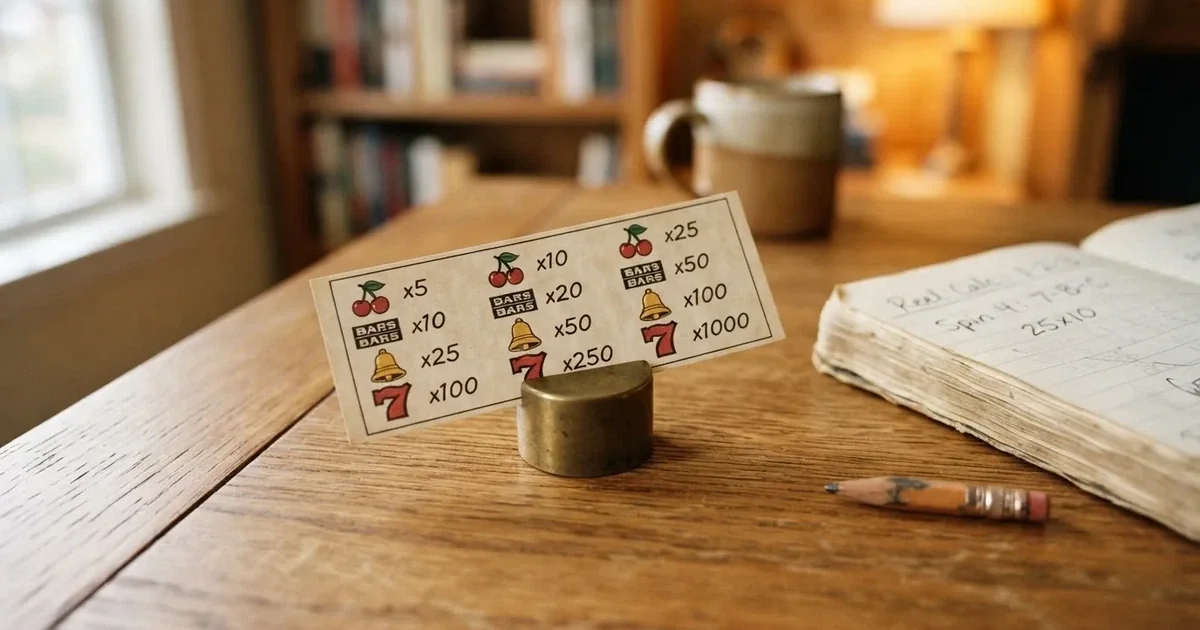
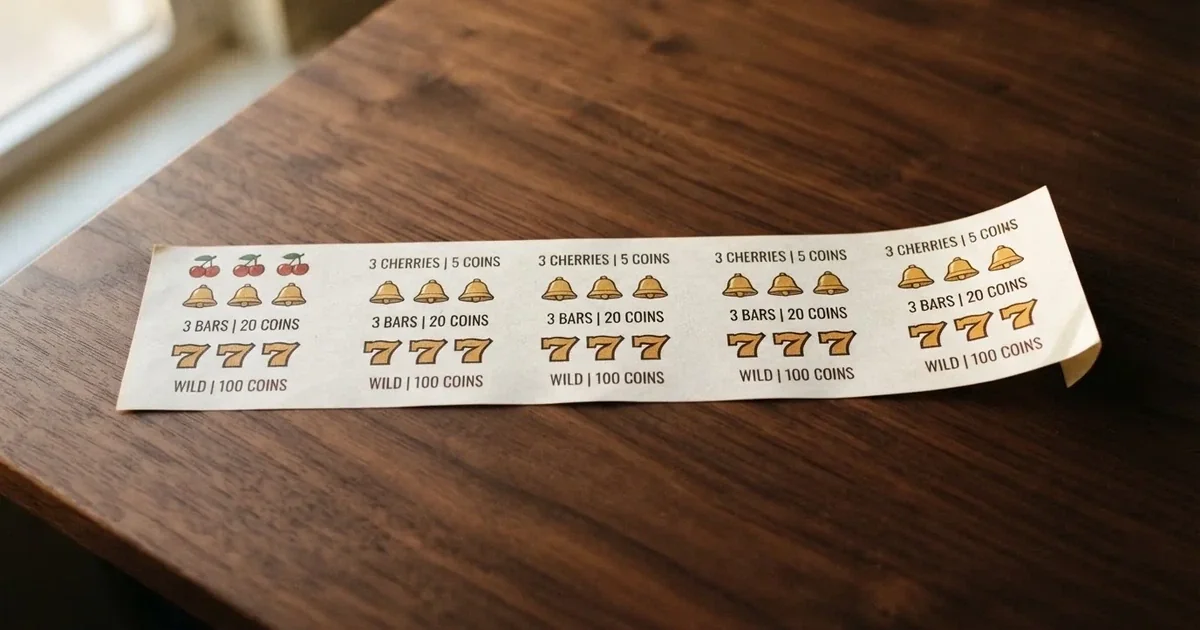
A paytable is the document that decides what a slot actually pays. It names the symbols, the values of three-, four- and five-of-a-kind combinations, the wilds and scatters, the bonus rounds and the free-spin triggers. The headline return-to-player percentage is an average across millions of simulated spins and never a guarantee of any individual session. Volatility is the shape of the payout curve — high volatility means larger but less frequent wins, low volatility means smaller and more frequent ones. Hit rate is the share of spins that produce any payout at all. Together, these three figures give a punter a rough read on what kind of session to expect before they open the game. Reading them, rather than reading the marketing around the game, is the one habit that costs nothing and is worth keeping.
The wider context is the rest of the offshore Betsoft ecosystem. The studios a Betsoft-named casino most often sits alongside — the catalogues a player browses in the same lobby — are 1spin4win, founded in 2021 with a hundred-plus catalogue of HTML5 slots built for low-bandwidth connections, headquartered in Curaçao and operating under a Curaçao gaming licence; BGaming, a Malta-based B2B supplier with a Critical Gaming Supply Licence from the Malta Gaming Authority; and Booming Games, another Malta-licensed B2B studio with additional coverage in Sweden, Ontario, Romania, Denmark, Greece, Belgium, Germany and Brazil. Aristocrat Leisure, the Australian slot-machine manufacturer founded in 1953 and listed on the ASX in 1996, runs a regulated online arm called Aristocrat Interactive, formed in April 2024 from its Anaxi unit and the NeoGames group. None of these studios changes the central fact that no Australian licence scheme covers the casino side of the experience. The Australian manufacturer in the list makes its Australian-market slot machines for venues, pubs and clubs; it is not the same thing as an online casino carrying Betsoft content.
Registered sites the ACMA has acted against
A comparison page on this subject cannot recommend any of the operators it compares, because each of them is one the Australian regulator has already warned. The ACMA’s register is, in this market, the most useful ranked list a reader can be handed, because it orders the offshore space by the order the regulator has had to engage with it. What follows is therefore not a “best of” ranking. It is the eleven brands the ACMA itself has published formal warnings over, in the order the page’s own logic sets out, with the date of the warning and the operating entity named on the ACMA’s notice.
The table below summarises the ACMA’s recent actions, detailing brands that have received formal warnings. For each entry, the table notes the operator named by the ACMA and whether external sources link Betsoft content to the site. The information is presented to clarify the regulator’s stance on these services.
| Brand | ACMA action and date | Operator named by the ACMA | Subject support |
|---|---|---|---|
| RocketPlay | Formal warning, March 2026; earlier Dama N.V. warning, May 2022 | Pulsup Ltd | no-data |
| Level Up Casino | Formal warning, May 2022 | Dama N.V. | listings-only (Wazdan catalogue) |
| Woo Casino | Formal warning, March 2025 | Dama N.V. | no-data |
| Spirit Casino | Formal warning, May 2025 | Dama N.V. | no-data |
| National Casino | Formal warning, July 2025 | Consolutetish S.R.L. | listings-only (Betsoft, Pragmatic Play, Wikipedia mention) |
| Bizzo Casino | Formal warning, July 2025; earlier TechSolutions warning, 2022 | Consolutetish S.R.L. | no-data |
| Ignition Casino | Formal warning, July 2025 | Bamboo Media | no-data |
| Instant Casino | Formal warning, February 2025 | EOD Code SRL | no-data |
| Jackbit | Formal warning, April 2026 | Ryker B.V. | no-data |
| Casino Intense | Formal warning, April 2025 | Sterplay Holding Ltd | listings-only (1spin4win, Wikipedia, UK Gambling Commission) |
| Sky Crown | Formal warning under the Interactive Gambling Act 2001 | Hollycorn N.V. | no-data |
The pattern the table describes is on the regulator’s side, not the players’. Across the eleven brands, the warning dates run from 2022 to 2026, the named operators are drawn from several jurisdictions and corporate structures, and the Betsoft connection surfaces only in the listings. None of the brands is licensed to offer online casino games to Australians; each of them, according to the ACMA, has offered them anyway. For an Australian reader, the comparison is not which one is safer or which pays faster, because the regulator’s view is uniform on that point; it is which warning is the most recent, which matters only because a recent warning often precedes a blocking request.
What Betsoft actually is, in 2026
Betsoft Gaming is an RNG game studio founded in 2006, with a published catalogue of more than two hundred titles covering slots, table games, video poker and a handful of specialty formats. The studio’s compliance claims, as published on its own About page, name Italian ADM, Quinel and Gaming Labs International as its licensing and certification counterparties, and it states a partnership footprint of more than five hundred operators across Europe, Scandinavia, Latin America and Africa. The footprint matters because it tells an Australian reader where Betsoft’s catalogue is normally reached: regulated markets in the EMEA region and Latin America, where a country-specific licence covers the operator the player deposits with. Australia is not on that list, for the legal reason spelled out below.
The studio is a content supplier. It does not run an end-user casino, it does not hold player balances, it does not process withdrawals. The marketing around offshore Betsoft casinos sometimes blurs the line, and the page is worth spelling out: Betsoft’s name on a site means the site has licensed Betsoft’s game client and integrated it into its own cashier, KYC and payments stack. The maths Betsoft ships is Betsoft’s; everything else is the operator’s.
The legal frame that makes the comparison moot
Australia’s online gambling market is split cleanly along a line drawn in the Interactive Gambling Act 2001, strengthened by the Interactive Gambling Amendment Act 2017. The Act makes it an offence to provide online casino games, online pokies or in-play betting to a person physically in Australia; no state or territory issues a licence for any of them. What is licensable is wagering on races and sport placed before the event, lotteries and keno — in practice licensed through the Northern Territory Racing and Wagering Commission, which regulates fifty-two online bookmakers including Sportsbet, Bet365 and Ladbrokes. The NTRWC has no full-time staff and meets once a month in Darwin.
The minimum age for any form of Australian wagering is eighteen. The compliance burden sits on the operator: ACMA investigates, issues formal warnings, and directs Australian internet service providers to block illegal sites. The individual player is not the target of the Act, but neither is the player the beneficiary of it. An offshore site gives no Australian consumer protection, no complaints body and no recourse if a withdrawal is refused. The site can also be blocked while the player still has a balance on it; that has happened often enough that ACMA blocking is no longer a hypothetical outcome. According to the ACMA’s own published figure as of June 2026, 1,751 illegal gambling and affiliate-marketing websites have been blocked since the first blocking request in November 2019, and more than 230 unlicensed gambling services have left the Australian market since enforcement was strengthened in 2017.
The losses that flow through that black market, on H2 Gambling Capital’s 2025 estimate, run at about A$3.9 billion a year; the share of gambling that goes through legal channels has fallen from 74 per cent in 2021 to 64 per cent in 2025, on the same source. The 2026 reform package — the Interactive Gambling Amendment (Gambling Reform) Bill 2026, passed by Parliament on 19 August 2026 — adds advertising and inducement measures that commence on 1 January 2027; the law has a start date that has not yet arrived.
The payment side of the same framework is what makes the offshore Betsoft experience most obviously un-Australian. Since 11 June 2024, credit cards, credit-related products and digital currency have been banned as a means of paying for licensed online wagering in Australia, with operator-side penalties up to A$247,500 for breach. The legal deposit routes that remain are debit card, bank transfer, PayID, Osko and BPAY. A site that asks an Australian for a credit card or a crypto deposit is, by definition, not operating inside the Australian rules.
The blocking rate
The arithmetic the page is built around is the ACMA’s own blocking rate, calculated from the cumulative block count and the date of the first blocking request. ACMA figures put the running total at 1,751 illegal gambling and affiliate-marketing websites blocked since the first blocking request in November 2019; that works out to a long-run average of roughly 250 websites blocked per year across the period, with the round-by-round cadence of the regulator’s enforcement published on the ACMA’s own site. The arithmetic is not a forecast and it is not a target; it is what the regulator’s published record describes when its enforcement is averaged across the years since 2019. In 2026 the rate is best read as a band rather than a single number, because the per-year count has varied substantially as enforcement has ramped up, settled, and ramped up again with each statutory tightening. The figure a reader should hold is the order of magnitude — a sustained multi-hundred-blocks-a-year regime, with the precise count varying from year to year — rather than the precise annual average.
What this means if you arrived here from a search
The most useful thing this page can say to a reader who came in looking for a recommendation is what would have happened had one been made. A recommended offshore Betsoft casino is, by definition, a site the ACMA has had cause to warn or block; the recommendation does not exist in the form the searcher asked for. The sites that have not yet attracted an ACMA warning are not a separate, safer category; they are simply the ones the regulator has not yet got to, on the same legal framework and the same prohibition. The same fact applies the other way round: a site that is currently reachable from Australia is reachable because the ISP-blocking round has not covered it yet, not because the prohibition does not apply.
The licensed Australian wagering market, where the search ends well, is the place to use the bonus vocabulary this page has just spent a section describing. Deposit-match offers, free bets, boosted odds — these exist on licensed Australian bookmakers, are paid out under Australian consumer law, are subject to BetStop when a punter has self-excluded, and are processed through debit card, bank transfer, PayID, Osko and BPAY. They do not include Betsoft slots and they do not pretend to. That trade-off is the actual choice the page is built around, and it is the one an Australian reader can act on.
Frequently Asked Questions
Is Betsoft itself an online casino, or just a game studio?
Betsoft Gaming is a content supplier. It designs and certifies real-money slot, table and video-poker titles and licenses those titles to operators under B2B agreements; it does not run an end-user casino, hold player balances or process withdrawals. The name on a casino site means the site has licensed Betsoft’s game client and integrated it into its own cashier and KYC stack.
Can Betsoft titles be played for real money at a casino licensed in Australia?
No. The Interactive Gambling Act 2001, as strengthened by the 2017 amendment, prohibits the supply of online casino games and online pokies to a person in Australia, and no Australian state or territory issues a licence for them. Real-money play on Betsoft titles takes place only at offshore sites that operate outside Australian law.
What does a Betsoft slot’s paytable actually tell a player?
The paytable names the symbols, the values of three-, four- and five-of-a-kind combinations, the wild and scatter mechanics, and the bonus-round triggers; the same game page typically publishes a return-to-player percentage (an average across millions of simulated spins), a volatility label, and a hit rate. Reading these three figures before playing is the single most useful habit a slot player can carry into a session.
Does Betsoft run its own casino, or license its games to other operators?
Betsoft licenses its games to other operators. The studio describes a partnership footprint of more than five hundred operators across regulated markets in Europe, Scandinavia, Latin America and Africa; it does not run an end-user brand of its own.
Why do offshore casinos highlight Betsoft as a selling point to Australian visitors?
The studio’s name carries weight with a punter who recognises its slots. Offshore sites pitch Betsoft because the brand travels across an Australian search; the pitch is marketing, not a regulatory status. The Australian licence framework does not have a category in which Betsoft’s name can be offered legally, regardless of how the studio is presented.
Is it legal for an offshore site to offer Betsoft games to a person in Australia?
No. Offering online casino games, including Betsoft slots, to a person in Australia is a prohibited interactive gambling service under the Interactive Gambling Act 2001. The prohibition targets the provider, not the individual player, but it is enforceable through ACMA formal warnings and through internet-service-provider blocking, and the player gets no Australian consumer protection on an offshore site.
Prepared by the Casino Offshore Hub editorial staff.