
Best GameBeat online casinos in Australia: the consequence behind the search
Data current as of 8 November 2026 and cross-checked against the ACMA’s register of formal warnings and published blocking requests.

Table of Contents
- When the protection layer isn’t there
- Where the money goes — and where it gets stuck
- What “free spins” and “deposit bonuses” actually cost
- The phone-screen experience
- What GameBeat actually is, and where it sits
- The eleven brands the ACMA has named
- What “a GameBeat casino” actually is
- The law and the enforcement record
- The eleven brands, one by one
- Frequently asked questions
When the protection layer isn’t there
A punter signing up with an Australian-licensed wagering service inherits a layer of rules that runs underneath the bet: deposit caps by default, time-out reminders, a national self-exclusion register that holds across every licensed brand, a complaints body with teeth. None of that infrastructure binds an offshore casino holding a Curaçao or Anjouan licence and targeting Australians through a .com.au mirror.
BetStop — the National Self-Exclusion Register, live since August 2023 — is the visible part. Register once and the 52 Australian-licensed online bookmakers and phone wagering services are required to refuse to let you open a new account and to close any existing one for the exclusion period you nominate. That obligation stops at the Australian border. An offshore casino takes no notice of BetStop because it has no obligation to.
For someone whose BetStop registration was the move that pulled them back from problem gambling, this is the practical consequence: the offshore site remains open, the next deposit goes through, and the self-exclusion decision can be silently undone by a different URL. The protection layer the player thought they had did not extend to where they next played.
The same gap runs through every other Australian safeguard. The National Gambling Helpline on 1800 858 858 is free, runs 24/7, and takes chat through Gambling Help Online; it stays available whoever runs the site. What it does not do is compel a refund, force a payout or freeze an account at an offshore operator. Gambling Help Online’s counsellors can talk a player through what is happening; they cannot make an offshore operator do anything.
There is also no Australian complaints route. Dispute resolution services that exist overseas — Curaçao’s regulator, Anjouan’s, Malta’s — have their own eligibility rules and timelines, and they do not pursue the smaller-stake complaints a typical offshore-account holder might raise about a delayed withdrawal. A player whose withdrawal stalls finds they are on their own.
The age floor is 18. That is the one rule every Australian-licensed operator enforces. An offshore site may ask for an ID, may not. Where it does not, the practical effect is that the law’s lower bound is the only age check the player sees.
None of this is an argument that offshore operators are uniformly dishonest. Some have withdrawal processes that work. Some verify identity carefully. The argument is that the safety net an Australian player assumes is in place — BetStop, deposit caps by default, a regulator that will listen — does not extend offshore. The bet on an offshore site is the bet without the net.
This is why the responsible-gaming conversation sits at the top of this page, before the deposit method, before the bonus, before the cabinet. The structural answer to “is this site safe?” in the Australian context turns on whether the operator is bound by the IGA regime. If it is not, the protective infrastructure the player has been told exists stops at the border.
One practical note for readers who have already deposited somewhere offshore: the balance already on the site is not protected by any Australian rule, and a blocking order from the ACMA can leave that balance frozen on the operator’s side. The remedy is not retrospective. The protection is the choice not to deposit in the first place.
Where the money goes — and where it gets stuck
The licensed Australian wagering industry is bound by a payment regime set out by the federal government. Credit cards, credit-related products and digital currency have been banned as a payment method for any licensed online or phone wagering service since 11 June 2024. Penalties for operators in breach reach A$247,500. The legal deposit routes for an Australian-licensed wagering account are debit card, bank transfer, PayID/Osko and BPAY.
For an offshore casino, that regime does not bind. Credit-card deposits are routinely accepted. Crypto — USDT, Bitcoin, Ethereum — is the default at many of the offshore brands the ACMA has acted against. Jackbit, the brand the ACMA warned Ryker B.V. over in April 2026, runs heavily on crypto rails.
The consequence for an Australian depositing at one of these brands is that the payment they make is outside any Australian consumer protection. A chargeback through the debit-card issuer may succeed for a small disputed transaction; it generally will not for a player who knowingly made gambling deposits. Crypto deposits are practically unrecoverable — once a transaction is on-chain, the recipient controls the funds and the player has no Australian recourse.
The deposit side is one half. The withdrawal side is where most offshore complaints begin.
An offshore site will typically quote a payout window — 24 hours, 48 hours, “instant”. The reality at the brands the ACMA has acted against is that withdrawal approvals sit behind a manual review that may take longer, that a first withdrawal usually triggers a full KYC re-verification even if the deposit did not, and that bank transfer to an Australian account often arrives only after the operator’s internal queue moves. None of that is on the operator’s marketing page.
Crypto withdrawals are typically faster in settlement once approved, but the same review queue applies and a withdrawal limit may bite per transaction or per day. For a player expecting “instant” crypto payouts, the gap between expectation and reality is where most disputes start.
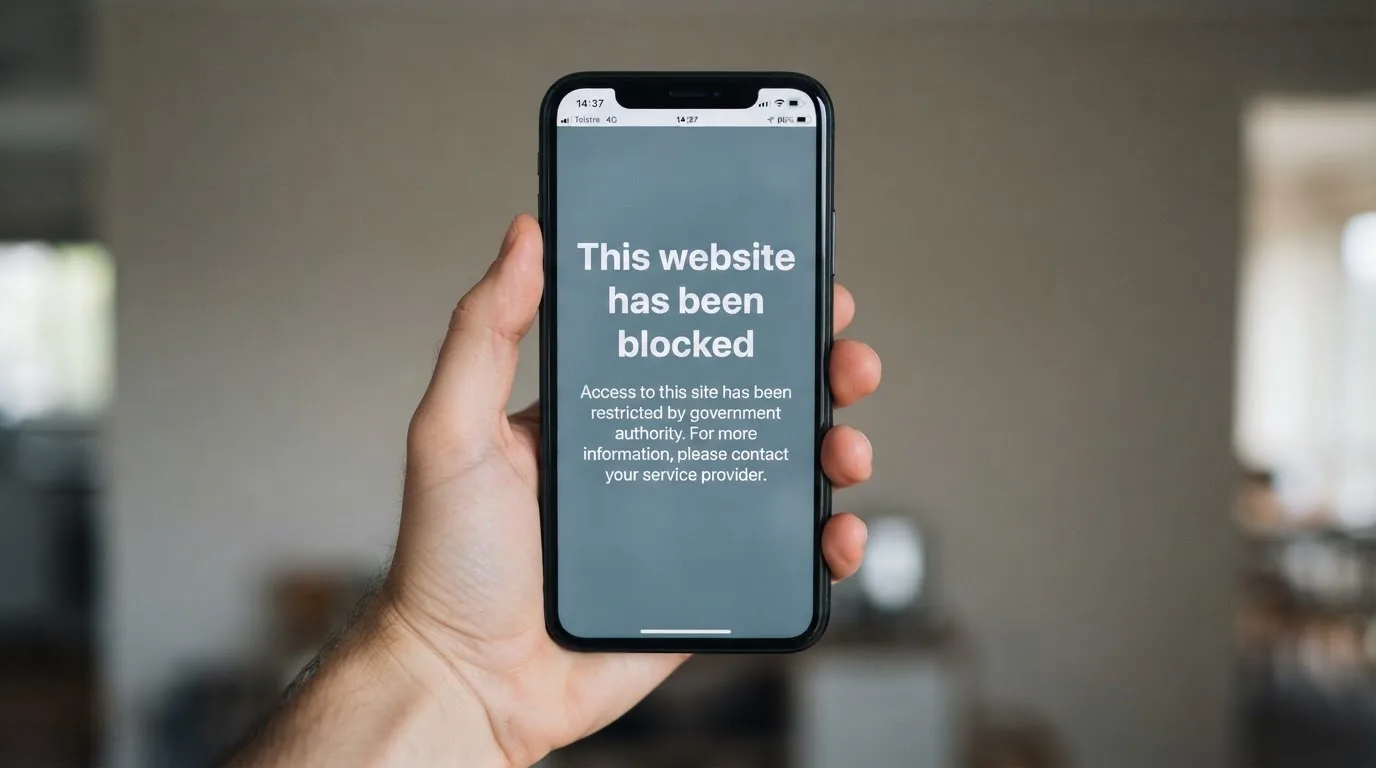
A second-order consequence: blocking. When the ACMA asks Australian ISPs to block an offshore site, the site itself goes offline for Australian customers. A balance left on a blocked site is in the operator’s hands. The operator can refuse withdrawal on the basis that the account is closed or under review. The Australian player has no recourse.
The lawful alternative for an Australian who wants to bet online is the licensed wagering channel — pre-event sports and racing, lotteries and keno. The licensed channel does not offer online casino games or online pokies; that is the IGA’s prohibition, not a market gap. A player wanting casino-style play has only licensed land-based venues as a lawful option: pubs and clubs with poker machines in every state and territory, and the integrated casino resorts in Sydney, Melbourne, the Gold Coast, Cairns, Darwin, Hobart, Adelaide and Perth.
That is the practical consequence of the payment regime: an Australian who wants online casino games is being pushed outside the protections the payment system elsewhere guarantees them.
What “free spins” and “deposit bonuses” actually cost
The marketing line at the offshore brands named in this set is the standard one: a deposit bonus of “100% up to” some headline figure, plus free spins on a featured slot, plus a “no deposit bonus” available on signup. The fine print is where the cost lives.
The two mechanisms a bonus uses to extract value are turnover requirements (called “wagering requirements” in the small print) and game weighting. A typical 100% deposit bonus with a 40x turnover applied to the bonus only means a player depositing A$200 and accepting the full bonus has to wager A$8,000 before any of the bonus money or its winnings can be withdrawn. On a slot played at A$1 per spin, that is 8,000 spins. At five seconds a spin, that is roughly eleven hours of continuous play. The “free” A$200 has cost the player eleven hours, against a game with a house edge that takes another slice out of the balance over those eleven hours.
Game weighting makes the arithmetic worse. Most slots count 100% toward turnover; some — especially the bonus-eligible ones — count 20% or 0%. Table games often count 5–10%. A player who thinks they are playing through the bonus on roulette or blackjack is, in many cases, contributing almost nothing to the requirement and burning through the bankroll at the table-game house edge.
A “no deposit bonus” — A$10 to A$20 credited on signup, no deposit needed — sounds free in a way a deposit bonus does not. In practice it carries the highest turnover multiple of any bonus type, often 60x or more, and a maximum cashout cap. The player runs the bonus through, makes a small profit, attempts to withdraw, and is told the maximum cashout is A$50 or A$100. The remainder is forfeited. The marketing word “free” describes the deposit, not the withdrawal.
Free spins work the same way. A bundle of 100 free spins sounds generous; in practice it is 100 fixed-stake spins on a single named slot, with the winnings paid as bonus money subject to the same turnover and the same cashout cap. The punter who runs the spins, lands a small win, and tries to withdraw hits the cap or the turnover rule and finds the headline did not survive the small print.
The Australian consequence is sharper than the international one. There is no Australian regulator a player can complain to when a withdrawal is refused on bonus terms. The terms are written by the operator; the operator enforces them. A blocked site can leave the bonus balance on the operator’s side, with the bonus and its winnings forfeit because the player can no longer meet the turnover requirement on a site they cannot access.
The only defence is to read the bonus terms before depositing, and to assume that anything not specified is at the operator’s discretion. A punter who accepts a deposit bonus is accepting a contract written by the other side.
The phone-screen experience
The browser-based play at offshore brands is the default in 2026. GameBeat titles are HTML5 builds — the studio confirms its games run without a separate download on modern mobile browsers. There is no GameBeat-published app; the studio distributes to operator platforms, and the operator may or may not wrap its mobile site in a downloadable app.
For an Australian punter using a phone browser, the practical experience at an offshore casino is functionally similar to a desktop: deposit, choose a slot, play. The friction shows up at three points: identity verification, withdrawal requests and account recovery.
Identity verification on mobile is the same KYC process as on desktop — the punter uploads a driver’s licence or passport, sometimes a recent utility bill, and waits. A phone camera makes the upload easier; the wait is not shorter.
Withdrawal requests on mobile follow the same queue as on desktop. A punter requesting a withdrawal from a phone sees the same “pending” status, the same manual review delay, the same first-withdrawal re-verification. The “instant withdrawal” marketing promise does not depend on the device.
Account recovery — the punter who loses access to the registered email and needs to reset the account — is where mobile can become harder. Offshore operators typically reset via email and a security question or two. A punter who set up the account in a hurry, with a throwaway email and a real name they cannot easily prove from a phone, may find that recovery requires a desktop session with scanned documents.
For someone in Australia using a mobile browser at an offshore brand, the experience is functional, the protection layer discussed earlier does not extend to the phone either, and the friction the punter meets on the phone is the same friction the desktop user meets. There is no mobile-only Australian safeguard. The licensed Australian wagering apps — Sportsbet, Bet365, Ladbrokes among them — do not offer casino games; the phone screen for casino play in Australia is, by law, an offline one.
Mobile data and connection are part of the experience. Offshore sites served over a CDN typically load fast; GameBeat HTML5 titles run on standard mobile hardware. The cost is data: an hour of slot play at standard quality uses roughly 200–400 MB depending on animation density, comparable to a video stream at moderate quality. A punter playing on a mobile plan with a small data cap can burn through their monthly allowance in a few long sessions.
Mobile-specific risks. A punter playing on a phone in a public space exposes the screen to shoulder-surfing for balances, deposits, withdrawals. The security pattern that works on a desktop — private screen, locked computer — is harder to enforce on a phone. The smaller screen also makes the small print harder to read, and most bonus terms on mobile are presented in a scrollable popup that the punter can dismiss with one tap. Read the terms on a screen where they can actually be read.
What GameBeat actually is, and where it sits
GameBeat is a slot studio founded in 2021, run as a business-to-business supplier that licenses its games to operator platforms. The studio does not sell to players directly. Its public catalogue is short — the studio describes itself as a B2B technology provider rather than as a consumer-facing brand — and most of its visibility reaches a player through the operator site that carries the games, not through any GameBeat-published storefront.
The Australia-facing context matters: there is no Australian-licensed online casino lobby where GameBeat titles appear. The IGA regime bars Australian-licensed online casinos from existing at all, so any GameBeat title an Australian punter encounters online is hosted by an offshore operator outside that regime.
The provider landscape beyond GameBeat is the relevant backdrop for the comparison a player actually makes. Aristocrat Leisure — the Australian gambling-machine manufacturer headquartered at North Ryde in Sydney, founded in 1953 and ASX-listed since 1996 under the ticker ALL — is the dominant Australian provider of land-based poker machines. Aristocrat Interactive, formed in April 2024 by combining its Anaxi unit with the NeoGames group (which includes Aspire Global, BtoBet and Pariplay), is Aristocrat’s regulated online real-money arm; it operates in jurisdictions outside Australia. Aristocrat reported 2025 revenue of A$6.30 billion, normalised net profit after tax and amortisation of A$1.55 billion, and 7,400 employees, and is described as the largest gambling-machine manufacturer in Australia and the second-largest slot-machine manufacturer worldwide behind International Game Technology.
For a player weighing the offshore options, the more relevant comparison is between GameBeat and the larger offshore studios running at the same operator tier: Betsoft (founded 2006, more than 200 RNG games, partner of more than 500 operators across regulated European, Scandinavian, Latin American and African markets, RNG-certified by Quinel and Gaming Labs International, operating in compliance with Italy’s ADM); BGaming (Stable Games Ltd, Valletta, Malta, holding a Malta Gaming Authority Critical Gaming Supply Licence MGA/B2B/785/2020 for Type 1 B2B gaming services issued 18 March 2021, 250+ certified games including proprietary mechanics such as TRUEWAYS with up to 262,144 ways to win, MultiDice X and Merge UP, and 3,000+ operator integrations including Blaze, Pin-Up and Gamdom); Booming Games (Malta-headquartered, holding an MGA B2B licence MGA/B2B/459/2018 and a UK Gambling Commission account #57254); 1spin4win (founded 2021, Curaçao-licensed at Scharlooweg 39, Willemstad, more than 190 online slots built in HTML5 for low-bandwidth connections, more than 1,000 partnerships with online casinos and aggregators, and a 46% growth in total bet sum in the first half of 2025 against the first half of 2024).
The punter who arrives at an offshore brand looking for a “GameBeat casino” is, in most cases, looking at one of these larger studios’ titles anyway — GameBeat is one provider among several on the operator’s platform. What the player is choosing between is operator brands and their bonus structures; the question of which provider made which slot is largely a question of which game the operator has promoted that week.
RTP and volatility are published on individual game pages where the operator carries them. Betsoft’s Good Girl Bad Girl 2, for example, is published at 96.22% RTP, “Very High” volatility and a 15.59% hit rate on a 5-reel, 20-payline layout. The Slotfather, live since 13 December 2012, runs at 95.69% RTP and “Medium” volatility at an 8.17% hit rate, played across 5 reels and 30 paylines. For GameBeat’s own titles, the studio publishes the figures on its own game pages; research for this page did not surface a GameBeat-specific published RTP in the consulted sources, and the honest reading is that the RTP and volatility depend on the individual GameBeat title the player is considering, not on the studio as a whole.
Live dealer tables, where the offshore brands differentiate themselves with “live casino” lobbies, are run by a separate set of providers — Pragmatic Play Live, Evolution, Ezugi among the better-known names — none of which are GameBeat. A player searching for a “GameBeat live casino” is searching for a category the studio does not occupy.
The practical consequence is this: an Australian punter who wants online slots and lands at an offshore brand will, by default, see a lobby dominated by studios larger than GameBeat, with GameBeat titles present as a smaller subset. The provider identity matters less than the operator choice, which is shaped by the regime and the ACMA record addressed in the section below.
Why this studio, specifically
Searches for “gamebeat crypto casino” and “gamebeat slots with bitcoin” cluster around GameBeat for the same reason any B2B slot studio comes up: it is one of several studios that license into the offshore operator tier that targets Australians. GameBeat is a smaller studio than Betsoft, BGaming or Booming Games; its public profile is shorter; its game library is smaller. Its appearance in the search is the consequence of distribution deals with offshore operators, not of any standalone brand presence.
For a punter comparing studios, the comparison is between game catalogues and published RTPs, not between brand identities. The bigger comparison is the one the rest of this page has been building: between the operator running the lobby and the protections the operator is bound by. In Australia, that comparison ends with the conclusion that no operator in this set is bound by Australian protections at all.
The eleven brands the ACMA has named
Eleven brands appear in this set because the ACMA has issued a formal warning over each of them for offering prohibited interactive gambling services to Australians. They are not a ranking. They are not a recommendation. The set is the ACMA’s record of who it has acted against, ordered as the regulator published the actions, with the most recent first.
The table below lays them out: brand, the ACMA action and its date, the operator named by the ACMA in the formal warning, whether the brand has been warned previously under a different corporate vehicle, and what research surfaced on subject support for GameBeat.
| Brand | ACMA action and date | Operator named by the ACMA | Repeat warning? | Subject support |
|---|---|---|---|---|
| RocketPlay | Formal warning, March 2026 | Pulsup Ltd (Rocketplay.com.au); Dama N.V. in the earlier May 2022 action | Yes (Dama N.V., May 2022) | — |
| Level Up Casino | Formal warning, May 2022 | Dama N.V. | — | Listed on Wazdan’s partner directory; no GameBeat confirmation |
| Woo Casino | Formal warning, March 2025 | Dama N.V. | — | — |
| Spirit Casino | Formal warning, May 2025 | Dama N.V. | — | — |
| National Casino | Formal warning, July 2025 | Consolutetish S.R.L. | — | Listed on Betsoft’s partner page, Wikipedia and Pragmatic Play’s partner directory; no GameBeat confirmation |
| Bizzo Casino | Formal warning, July 2025 | Consolutetish S.R.L. (earlier TechSolutions, 2022) | Yes (TechSolutions, 2022) | — |
| Ignition Casino | Formal warning, July 2025 | Bamboo Media | — | — |
| Instant Casino | Formal warning, February 2025 | EOD Code SRL | — | — |
| Jackbit | Formal warning, April 2026 | Ryker B.V. | — | — |
| Casino Intense | Formal warning, April 2025 | Sterplay Holding Ltd | — | Listed on 1spin4win’s partner directory, Wikipedia and the UK Gambling Commission register; no GameBeat confirmation |
| Sky Crown | Formal warning, September 2022 | Hollycorn N.V. | — | — |
The first thing to note about the set is that the ACMA has named the same operator more than once. Dama N.V. carries four brands in this set: RocketPlay (March 2026, with an earlier Dama N.V. action in May 2022 also covering RocketPlay alongside Bambet, Dazard, Level Up, Wild Tornado and Cobra Casinos), Level Up Casino (May 2022), Woo Casino (March 2025) and Spirit Casino (May 2025). Consolutetish S.R.L. carries two: National Casino (July 2025) and Bizzo Casino (July 2025; Bizzo had already been the subject of a 2022 formal warning to TechSolutions (CY) Group Limited and TechSolutions Group N.V.). The pattern is one of operators cycling brand names around the same corporate group — RocketPlay’s operator is Pulsup Ltd in the March 2026 warning but Dama N.V. in the 2022 warning, and the .com.au domain that triggered the 2026 action is now attached to a different corporate entity.
The second thing is what research did not find. For eight of the eleven brands — RocketPlay, Woo Casino, Spirit Casino, Bizzo Casino, Ignition Casino, Instant Casino, Jackbit and Sky Crown — research surfaced no third-party listing that establishes the brand as a GameBeat host. The names appear on third-party slot directories, but not as GameBeat hosts in any source consulted for this page. For three brands — Level Up Casino, National Casino and Casino Intense — third-party listings (Wazdan’s partner directory; Betsoft’s and Pragmatic Play’s partner pages plus Wikipedia; 1spin4win’s directory plus Wikipedia plus the UK Gambling Commission register) name the brands, but those listings establish presence of other providers, not GameBeat.
The set’s repeat warnings are RocketPlay (warned in May 2022 to Dama N.V. and again in March 2026 to Pulsup Ltd) and Bizzo Casino (warned in 2022 to TechSolutions and again in July 2025 to Consolutetish S.R.L.). For all other brands, the formal-warning record carries a single ACMA action.
None of the eleven brands is licensed by an Australian regulator. The “GameBeat casino” term as it appears in search results identifies, for every brand in this set, a brand the ACMA has confirmed is offering prohibited services to Australians.
What “a GameBeat casino” actually is
A GameBeat casino is, in marketing language, an online casino whose lobby includes slot titles published by GameBeat. In Australian usage the same phrase usually means “an offshore online casino that an Australian punter can reach, where GameBeat slots appear in the game library”.
The two phrases point to different realities. The marketing phrase assumes a category of operator that exists and is selectable. The Australian phrase reveals that every operator in that category is, by the ACMA’s record, offering prohibited interactive gambling services to Australians — which is the defining feature of the set, not a sideline.
The broader mechanic is straightforward. A B2B studio such as GameBeat builds slot games, certifies their random number generator with testing houses, and signs distribution deals with operator platforms and aggregators. The operator wraps the games in a lobby, takes deposits, runs bonuses and pays out withdrawals. The studio takes a revenue share; the operator keeps the player economics. The player sees a single product: a site, a balance, a list of slots.
For a player anywhere in the world with access to a licensed online casino, this is the boring plumbing of an online casino. For a player in Australia, the pipeline ends before the operator step: there is no Australian-licensed online casino to host the games. Any operator the Australian punter reaches is doing so outside the IGA regime, and the regulator’s record of enforcement is the practical indicator of who the offshore operators in this space are.
GameBeat itself, in its public-facing communications, says it supplies games only to licensed operators and commercial partners. That statement is true at the level it is pitched — GameBeat is a B2B supplier and does not run a consumer-facing casino. It does not address the question an Australian punter needs answered: whether the operator GameBeat supplies into is licensed to operate in Australia, which it cannot be.
The search phrases around “gamebeat crypto casino” and “gamebeat slots with bitcoin” exist because GameBeat titles appear at offshore brands that take crypto deposits. The combination of crypto payments and offshore hosting is the practical reality of the “GameBeat casino” category as it reaches an Australian punter. The combination is also exactly what the ACMA’s 11 June 2024 ban was designed to keep out of the licensed Australian wagering channel, and what an offshore site does not need to comply with.
The punter’s practical takeaway: “a GameBeat casino” is not a product category in Australia. It is an offshore-operator subset in which GameBeat titles appear, and every brand the ACMA has identified in that subset is one the regulator has acted against.
The law and the enforcement record
The Interactive Gambling Act 2001 (IGA), as tightened by the Interactive Gambling Amendment Act 2017, makes it an offence to provide online casino games, online pokies or in-play betting to a person physically in Australia. No state or territory issues a licence for those products. The licensable online wagering channel is pre-event sports and racing, lotteries and keno — in practice licensed by the Northern Territory Racing and Wagering Commission (NTRWC), which regulates 52 of Australia’s online bookmakers including Sportsbet, Bet365 and Ladbrokes, and which has no full-time staff and meets once a month in Darwin. The minimum age for any form of licensed Australian gambling is 18.
The ACMA is the regulator that enforces the IGA on the provider side. It investigates complaints, issues formal warnings and can direct Australian internet service providers to block illegal sites. According to the ACMA as reported in June 2026, a total of 1,751 illegal gambling and affiliate marketing websites had been blocked since the first blocking request in November 2019, and more than 230 unlicensed gambling services had left the Australian market since enforcement was strengthened in 2017. In the round reported on 26 June 2026 alone, the ACMA asked ISPs to block a further 12: 7Signs, ChromaBet, Donbet, Duospin, Freshbet, Slots Gem, Jacks Club, Lucky Start, Pointsbetz.com, Spinrise, Vinyl Casino and Wildsino.
The blocking rate, calculated on that record: 1,751 sites blocked across roughly 79 months from the first blocking request in November 2019 to the ACMA’s 26 June 2026 update — a band of about 22 to 23 sites blocked per month on average, or roughly 260 to 265 per year, applied to a base of new and resurfaced offerings the regulator judged worth the ISP-level intervention. The condition: this is the average pace at which the ACMA has had to act, not the rate at which new illegal offerings have been created. The block count equals the count of sites the regulator decided merited intervention, in a market that has continued to refresh underneath it.
The individual player is not prosecuted. The IGA targets the provider, not the customer. The Australian punter does not face legal risk for having deposited; the consequence is the absence of Australian consumer protection, the absence of a complaints body the regulator will back, and the prospect of a site being blocked with a balance still on it.
H2 Gambling Capital’s 2025 report estimates that Australians lose about A$3.9 billion a year to illegal gambling sites, and that the share of gambling going through legal channels fell from 74% in 2021 to 64%. The trend, on that estimate, is that more of the Australian gambling dollar is leaving the regulated channel every year — which is the consequence the rest of this page has been measuring.
The 2026 reform. The Interactive Gambling Amendment (Gambling Reform) Bill 2026 passed Parliament on 19 August 2026. Its advertising and inducement measures commence on 1 January 2027 — law with a start date, not yet in force on a 2026 page. The reform’s effect on the offshore operators discussed here is not yet operative; what it will change is the marketing surface of the licensed Australian wagering channel, not the offshore channel.
The lawful alternatives for an Australian who wants to gamble. Online: pre-event wagering with an Australian-licensed bookmaker, lotteries and keno through licensed operators, with debit card, bank transfer, PayID/Osko or BPAY as the legal deposit routes. Land-based: pubs, clubs and casinos in every state and territory, with the IGA regime not affecting gaming floors. None of these offers online casino games; that gap is the gap the offshore operators fill, and the gap the IGA was written to close.
Tax: gambling winnings of a recreational player are not assessable income under section 6-5 ITAA 1997 and losses are not deductible unless the person carries on a business of gambling — a model only, and worth checking with the ATO for a player whose gambling has become a regular income source.
The eleven brands, one by one
RocketPlay: an operator the ACMA has warned twice
RocketPlay was the subject of a formal ACMA warning in March 2026, naming Pulsup Ltd as the operator of the .com.au address, and an earlier formal warning in May 2022 that named Dama N.V. across six casino brands including RocketPlay alongside Bambet, Dazard, Level Up, Wild Tornado and Cobra Casinos. The site as it stood at the March 2026 action was attached to a different corporate entity than the 2022 warning, and the .com.au domain is the link between them. Research surfaced no third-party listing that establishes RocketPlay as a GameBeat host.
Verdict: a brand the ACMA has named twice across two different corporate vehicles, with no Australian protection at any point in the warning record. The verdict for an Australian punter is that the IGA regime does not bind RocketPlay at any of the corporate-entity addresses it has used since 2022, and an ACMA blocking request would freeze any balance still on the site.
Level Up Casino: the Wazdan-listed brand with no GameBeat confirmation
Level Up Casino was named in the ACMA’s May 2022 formal warning to Dama N.V., one of six brands covered by that action. The brand appears in Wazdan’s partner directory — the only third-party listing research surfaced for Level Up Casino — and that directory establishes Level Up as a hosting partner for Wazdan titles, not for GameBeat.
Verdict: a brand listed by a non-GameBeat provider, with no Australian licence and no Australian protection. The Wazdan listing describes a different studio’s relationship with the brand and says nothing about GameBeat’s presence.
Woo Casino: a paytable emptied by an ACMA warning
The ACMA issued a formal warning to Dama N.V. over Woo Casino in March 2025. Woo is one of four Dama N.V. brands in this set; Dama N.V. has been named by the regulator across multiple formal warnings between 2022 and 2025. Research surfaced no third-party listing that establishes Woo as a GameBeat host. The brand’s marketing continues, but its Australian status is “operator the ACMA has formally warned”, and that status is what the warning record shows.
Verdict: Woo Casino’s paytable is the rating sheet of any GameBeat title it carried; the operator’s paytable — what it offers, on what terms, under whose licence — is the document that determines whether an Australian punter keeps their money. The ACMA’s March 2025 warning emptied that paytable of any Australian jurisdiction backing it.
Spirit Casino: a sister Dama N.V. brand with the same outcome
Spirit Casino was named in the ACMA’s May 2025 formal warning to Dama N.V., two months after the Woo Casino action. The pattern — Dama N.V. warned, brand relaunched or rebranded, ACMA warns again — is the same as the RocketPlay trajectory under the same corporate group. No third-party listing establishes Spirit Casino as a GameBeat host.
Verdict: a second Dama N.V. brand with the same outcome as Woo Casino in form and consequence. The pattern across Dama N.V. brands is the practical answer to whether a relaunch clears the ACMA record: it does not.
National Casino: a fundamentally mismatched brand on third-party listings
Consolutetish S.R.L. received a formal ACMA warning over National Casino in July 2025. The brand appears on Betsoft’s partner page, on Wikipedia’s coverage of casino brands and on Pragmatic Play’s partner directory — three third-party listings that establish National Casino’s presence at the offshore-operator tier but say nothing about GameBeat specifically. The GameBeat status of National Casino’s lobby is not confirmed by any source consulted.

Verdict: National Casino is fundamentally mismatched with Australian law and the third-party listings that name it do not move the needle on that mismatch. The brand’s presence in the offshore operator tier is exactly the category the ACMA’s July 2025 warning addressed.
Bizzo Casino: the only brand in this set the ACMA has named twice
Bizzo Casino was named in the ACMA’s July 2025 formal warning to Consolutetish S.R.L., the same action that covered National Casino. Bizzo had already been the subject of a 2022 formal warning to TechSolutions (CY) Group Limited and TechSolutions Group N.V. — making it the only brand in this eleven-brand set the ACMA has named across two distinct corporate vehicles. No third-party listing establishes Bizzo as a GameBeat host.
Verdict: a brand that has cycled through two operators and been named by the ACMA in both cycles. The reputational consequence of the second warning is that the operator cycle has run twice with the same outcome. An Australian punter approaching Bizzo today is approaching a brand whose Australian status has been formally declared twice.
Ignition Casino: a fundamentally misframed offer from Bamboo Media
The ACMA formally warned Bamboo Media regarding Ignition Casino in July 2025. The brand has a long-running association with the US-facing offshore market rather than the Australian one, and the July 2025 action is the regulator’s first formal intervention against the brand for offering prohibited services to Australians. No third-party listing establishes Ignition as a GameBeat host in the sources consulted.
Verdict: Ignition’s offer is fundamentally misframed for the Australian market — the brand exists for a different offshore audience and the IGA regime does not recognise its presence in Australia as a lawful one. The ACMA’s July 2025 warning is the regulator’s entry-point into the brand; the punter’s decision is whether to enter at the regulator’s entry-point or not.
Instant Casino: a prohibition the name invites
Instant Casino was the subject of a formal ACMA warning to EOD Code SRL in February 2025. The brand’s name — “instant” — markets speed, including at the withdrawal stage. The ACMA’s warning does not turn on withdrawal speed; it turns on the offer of prohibited interactive gambling services to Australians. No third-party listing establishes Instant Casino as a GameBeat host.
Verdict: Instant Casino’s name is the marketing word the ACMA’s February 2025 warning addressed. The withdrawal speed the brand advertises sits behind the same manual review queue and the same first-withdrawal re-verification every offshore brand sits behind, and the regulator’s warning is the same warning every offshore brand has received. The “instant” promise does not survive the ACMA action; the prohibition does.
Jackbit: a crypto-leaning brand on the Ryker B.V. file
Jackbit was the subject of a formal ACMA warning to Ryker B.V. in April 2026, the same action that covered CasinOK. Jackbit is one of the more crypto-forward brands in the set — its marketing leans heavily on Bitcoin, Ethereum and USDT deposits, and its withdrawal process runs on crypto rails. The April 2026 ACMA warning does not turn on the payment method; it turns on the offer of prohibited interactive gambling services to Australians. The brand’s payment profile is the practical reason an Australian punter’s deposit is unrecoverable once made.
Verdict: Jackbit’s crypto-first design is exactly what makes it functionally outside any Australian protection. The ACMA’s April 2026 warning is the legal closure of the brand’s Australian status; the crypto rails are the practical closure of the punter’s recourse. There is no Australian complaints route that follows a Bitcoin transaction.
Casino Intense: a Sterplay brand flagged by the UK Gambling Commission too
Casino Intense was the subject of a formal ACMA warning to Sterplay Holding Ltd in April 2025. The brand appears in 1spin4win’s partner directory, in Wikipedia’s coverage and in the UK Gambling Commission’s register — three third-party listings that establish Casino Intense’s footprint across multiple offshore and UK-facing contexts, none of which establish GameBeat as a host. The GameBeat status of Casino Intense’s lobby is not confirmed by any source consulted.
Verdict: Casino Intense is the brand in this set whose offshore status is the most clearly cross-jurisdictional — the UK Gambling Commission register and the ACMA’s April 2025 warning are two different regulators acting on the same operator. For an Australian punter, neither regulator’s protection extends to the player; the ACMA’s jurisdiction is the operator’s Australian status, not the punter’s withdrawal.
Sky Crown: the Hollycorn N.V. brand with no GameBeat footprint
Sky Crown was named in the ACMA’s formal warning to Hollycorn N.V., published in September 2022, alongside Hollycorn’s Blue Leo casino. Sky Crown is the oldest brand in this set by ACMA action date and one of two brands in the set whose ACMA action predates the June 2024 payment-method ban. No third-party listing establishes Sky Crown as a GameBeat host.
Verdict: Sky Crown is a brand whose Australian status has been formally declared for nearly four years. The Hollycorn N.V. file is a longer record than any other corporate group in this set; for an Australian punter, that length is itself information — a brand the regulator has had in its sights for years is not a brand whose protection profile has changed in the punter’s favour.
Frequently asked questions
What kind of games does GameBeat make?
GameBeat is a business-to-business slot studio founded in 2021. Its public materials describe it as a supplier of games to licensed operators and commercial partners only, not to players directly. Its published catalogue is shorter than those of the larger offshore studios such as Betsoft and BGaming.
Can Australians legally play GameBeat slots at an online casino?
No. The Interactive Gambling Act 2001 makes it an offence to provide online casino games or online pokies to a person in Australia; no state or territory issues a licence for them. Any GameBeat title reached from Australia is hosted by an offshore operator outside the IGA regime.
Are GameBeat games available at land-based Australian casinos?
GameBeat is an online slot supplier and does not publish a land-based gaming-machine line. Australian land-based venues run poker machines supplied by other manufacturers — Aristocrat Leisure, the Sydney-based company, holds the largest Australian share of that market and runs its online real-money arm through Aristocrat Interactive.
How does a player tell whether a “GameBeat casino” is lawful?
There is no lawful “GameBeat casino” in Australia. Any site claiming to be one is offering prohibited services, and the ACMA publishes formal warnings over operators that have done so. Check the ACMA register before depositing; assume any site not on it is still offshore.
Do GameBeat games run in a phone browser without an app?
GameBeat’s games are HTML5 builds and run in modern mobile browsers without a separate download. The studio does not publish a consumer-facing app; any mobile-app wrapper an Australian punter sees is supplied by the operator running the lobby, not by GameBeat — and the protections that bind an Australian-licensed wagering app do not extend to it.