
Pragmatic Play online casinos in Australia: a 2026 picture of what is lawful, what is not, and what offshore sites still market
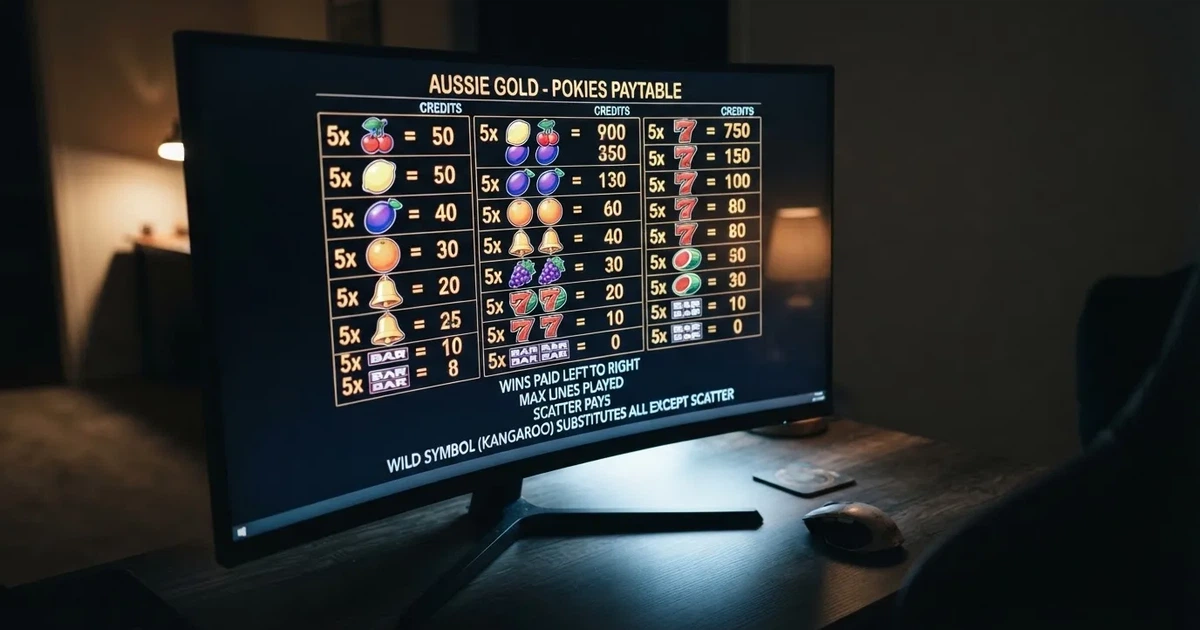
Pragmatic Play titles are everywhere on offshore casino sites that target Australians, and they are not available through any lawful Australian online channel. The Interactive Gambling Act 2001 prohibits the supply of online casino games and online pokies to anyone in Australia, and no state or territory licensing body issues a casino licence. The brand names a reader sees in search results — Woo Casino, Spirit Casino, National Casino, Bizzo, Ignition, Instant Casino, Jackbit, Sky Crown, RocketPlay, Level Up, Casino Intense — sit on the other side of that line. Each has been the subject of a formal ACMA warning, and several have appeared in blocking requests. The pragmatic question a reader can answer is not “which of these is safest to play” but “where can I lawfully encounter a comparable product, and what does the offshore set actually cost when it is targeted at me.”
Currency figures verified as at 8 November 2026 against the Australian Communications and Media Authority register of formal warnings and blocking notices.
Table of Contents
- Responsible play around offshore-marketed Pragmatic Play titles
- Payments, payout speed and the credit-card gap
- Bonuses and free spins: what the inducement actually requires
- Mobile and app play on offshore Pragmatic Play casinos
- Pragmatic Play as a studio and the wider provider picture
- Comparing the offshore Pragmatic Play casino set in Australia
- What is lawful to play in Australia, and what the offshore set costs
- The legal frame: the IGA, the ACMA, and what changes on 1 January 2027
- Frequently asked questions
Responsible play around offshore-marketed Pragmatic Play titles
The responsible-gambling frame in Australia is built around licensed services, and the offshore sites marketing Pragmatic Play titles to Australians are not part of it. That gap is the single most important piece of player protection a reader should hold in mind before engaging with any of the brands this article is forced to name.

BetStop, the National Self-Exclusion Register, has been live since August 2023. A person who registers excludes themselves from every Australian-licensed online and phone wagering service simultaneously, for a chosen period of three months or longer, up to permanently. BetStop does not bind offshore casinos. A self-excluded Australian who opens RocketPlay, Woo Casino or Jackbit is not on a register any of those sites consults; the only friction those operators apply to an excluded player is the marketing terms of whatever licence they do hold, which is generally a Curaçao or Anjouan certificate. BetStop is therefore the strongest practical protection an Australian can put in place against legal wagering services, and it does nothing for the products this page is about.
For actual support, the National Gambling Helpline is 1800 858 858, free, twenty-four hours a day, with web chat at Gambling Help Online. Both routes are free of charge, confidential, and staffed by counsellors trained in the Australian context — financial counselling referrals, family support, and connection to state-based face-to-face services in each capital city. The helpline does not require the caller to identify an operator, so it is the right number for someone who has been playing offshore and wants to talk before the next deposit.
Spending limits are another gap. The credit-card ban on licensed wagering came into force on 11 June 2024, with penalties of up to A$247,500 for any operator who takes one. That rule and the prohibition on digital currency as a deposit method both assume a licensed operator; they do not stop an offshore site from offering either. A player who limits themselves at the bank level — a daily transfer cap, a blocked merchant category, a separate account used only for discretionary spending — covers the offshore case more reliably than any in-app tool on a Curaçao-licensed site. Banks vary in how readily they will set a gambling-specific merchant block; the request is worth making.
The frame to hold: an Australian choosing to engage with an offshore site markets itself to do so is, in practical terms, choosing to be outside every Australian consumer protection regime that exists for gambling. That is not a small thing. A withdrawal that does not arrive has no Australian complaints body to take it to. A bonus term written into small print cannot be challenged under Australian Consumer Law, because the operator is not subject to it. A dispute over a voided wager has no forum. The remedy a player has is the operator’s own internal dispute process and the licence-holding regulator in whatever jurisdiction issued the certificate on the homepage — and the willingness of that regulator to engage with an Australian complaint is, on past record, low.
A reader who has decided that the product is worth that risk still has the responsible-play tools available to them. The order that tends to work, in the experience of the counselling services, is first: exclude through BetStop to cut off the licensed pathway that takes the same impulse. Second: place a hard bank-level limit that does not depend on the casino to enforce it. Third: tell one other person what the budget is, so the loss is visible. Fourth: save the helpline number into the phone before the next session. None of these is a guarantee. They are the floor.
Payments, payout speed and the credit-card gap
Deposits and withdrawals on offshore Pragmatic Play casinos are routed through the same payment methods those sites use everywhere — cards, e-wallets, sometimes crypto, occasionally bank transfer. The Australian rules that shape what is lawful do not change what these sites accept, but they do change what is legal for an Australian operator, and that difference matters to the reader because it tells them which side of the line a payment is on.
A licensed Australian wagering service may take debit cards, bank transfer, PayID/Osko and BPAY. It may not take a credit card, a credit-related product, or any form of digital currency. The credit-card ban took effect on 11 June 2024, with penalties up to A$247,500 for an operator who breaches it; the rule applies to any Australian-licensed wagering service, not only to casino products. The intent is to stop the practice of borrowing to chase losses, and the rule is unusually clean by international standards: there is no carve-out, no minimum income threshold, and no exception for prepaid cards that draw on a credit facility.
Offshore Pragmatic Play casinos accept a much wider set of payment methods, because they are not constrained by the Australian prohibition. Credit cards are usually accepted. Crypto deposits are common — Bitcoin, Ethereum, USDT — and a deposit in a token that settles within minutes is what makes a crypto-native site feel “instant” to a player used to waiting on bank rails. E-wallets such as Skrill, Neteller, MiFinity and Jeton appear at most of the brands in this page’s operator set. Bank transfer is sometimes offered, often with a minimum higher than the card or e-wallet minimum because of the cost of processing.
The reader-side consequence is asymmetric. An Australian who pays by credit card or crypto at an offshore site is using a payment method that the Australian rule was written to keep out of gambling. The card issuer may decline the transaction under its own merchant category rules, or it may process it; the bank does not have to follow the Australian prohibition because the merchant is offshore. The transaction either goes through or it does not, and the only practical protection is to have the card blocked for the merchant category before the attempt.
Settlement speed on the deposit side is, in practice, near-instant on every offshore route except bank transfer. The story changes on the withdrawal side. A withdrawal to an e-wallet is typically processed by the operator within twenty-four to seventy-two hours; a bank transfer can take three to seven business days; a crypto withdrawal is usually fast once approved, but the approval step is where the operator’s compliance team sits, and that step is also where withdrawals get reviewed for bonus-term breaches, source-of-funds questions, and identity reverification. An Australian using these sites should expect the first withdrawal to take longer than every withdrawal after it, because the operator’s KYC check happens once and the player pays for it in delay. None of this is set out in the marketing copy that put the player on the site in the first place.
The consumer-protection gap is what shapes payout risk. There is no Australian statutory trust framework that holds player balances at an offshore casino. If the operator delays, declines, or simply stops answering, the only routes are the operator’s internal dispute process and the regulator named in the footer of the homepage. A Curaçao-licensed operator’s regulator takes complaints through a ticketing portal; an Anjouan-licensed one does not maintain a comparable complaint mechanism at all. This is the practical reason to read a casino’s withdrawal terms before depositing: not to enjoy them, but to know which regulator you would have to appeal to if the withdrawal stalls.
The order of operations a player who has chosen to engage should expect: deposit clears instantly to the casino balance; play happens against that balance; the player requests a withdrawal; the operator runs an internal pending period, usually twenty-four to seventy-two hours; the operator runs a KYC check on the first withdrawal, asking for a government ID, a proof of address, and sometimes a proof of the deposit method; only then does the operator release the funds. A player who reads the operator’s terms and notices a withdrawal pending period longer than seventy-two hours, or a maximum withdrawal per week below the size of the bonus they accepted, has just been shown the operator’s business model. The choice is whether to keep playing, knowing what the choice costs.
Bonuses and free spins: what the inducement actually requires
The offshore Pragmatic Play casinos compete on bonuses and free spins, and the bonuses are the single sharpest mechanism on the page. A deposit match sounds like the casino giving the player extra money. It is the casino lending the player their own future play in exchange for a commitment to wager many times the bonus before any winnings can be withdrawn. The headline number is what the casino pays out; the small print is what the player pays back.
A typical deposit-match bonus on the brands in this article’s operator set carries a wagering requirement of between thirty and fifty times the bonus amount, sometimes the bonus plus deposit. A A$100 bonus with a 40x wagering requirement on the bonus alone means the player must place A$4,000 in qualifying wagers before any of the bonus balance converts to withdrawable cash. A 40x requirement on bonus plus deposit doubles that to A$8,000 on a A$100 deposit. Some sites apply the requirement to the bonus only, some to bonus plus deposit, and some to deposit only; the difference is not visible on the offer page and only shows up in the terms.
Free spins are marketed as a way to try a Pragmatic Play title without risking the deposit. They are also the bonus form that most often carries the sharpest clawback. The common structure is: spins are credited at a fixed stake per spin, often the lowest available on the game; any winnings from the spins are credited as bonus balance; the bonus balance is then subject to the same wagering requirement as a deposit bonus; and there is usually a maximum cashout cap on free-spin winnings, frequently A$100 or the equivalent, with anything above that figure voided. A player who wins A$500 on a free-spin round and discovers the maximum cashout is A$100 keeps A$100 and the rest disappears. The marketing never names the cap.
The market-wide pattern on the offshore set is consistent enough to be worth stating plainly. A welcome package that reads “100% up to A$500 plus 200 free spins” tends to come with a wagering requirement in the 35x to 50x range, a maximum cashout on the free spins, a time limit of seven to fourteen days to clear the bonus, and a list of games that contribute less than 100% to wagering — often a 10% or 20% contribution for table games, and full exclusion of some live-casino titles. The Pragmatic Play slots that drive the marketing usually contribute 100%, which is why they are featured. The bonus is engineered to be played through the banner titles.
The arithmetic of clearing a bonus is straightforward. Take a A$200 bonus with a 40x wagering requirement on the bonus only: required turnover is A$8,000. At a A$1 stake per spin, that is 8,000 spins. At a five-second interval between spins, that is 40,000 seconds of play, or roughly eleven hours of continuous spinning. The expected loss on those 8,000 spins depends on the RTP of the title played. A Pragmatic Play slot with a published 96% RTP has a 4% house edge; 8,000 spins at A$1 is A$8,000 in turnover, and 4% of that is an expected A$320 in losses — before any actual winnings are netted against the bonus balance. The bonus is not “free money”; it is a contract to give the house roughly A$320 in expected losses in exchange for the chance to convert a A$200 bonus into withdrawable cash. Whether the player comes out ahead depends on variance, which is the same word as luck.
A no-deposit bonus — a small cash credit or a handful of free spins offered just for signing up — sounds costless to the player and is, in fact, the most expensive bonus form on the site, because the wagering requirement is usually higher (50x to 70x is common), the maximum cashout is the most aggressive (often capped at A$50 or A$100), and the eligible games are restricted to a small list. The no-deposit bonus exists to give the casino a low-cost way to put a real-money balance on a player’s account so that the player has a reason to deposit. By the time the no-deposit bonus is cleared or voided, the player has either lost the bonus through wagering or has converted a small amount to withdrawable cash and is at the deposit page. The bonus is a funnel, not a gift.
What a player should do before accepting any of these offers, and the order in which to do it: read the wagering requirement, written in the bonus terms, and check whether it applies to bonus alone or bonus plus deposit; check the maximum cashout on any free-spin winnings; check the expiry, which is the time window the wagering must be cleared inside; check the game contribution table, because slots usually contribute 100% and most other games contribute less; and check the maximum bet per spin while a bonus is active, because a single spin above the cap usually voids the entire bonus balance. The offer is reasonable or it is not, and the answer is in the terms, not on the banner.
Mobile and app play on offshore Pragmatic Play casinos
Pragmatic Play builds its games in HTML5 and supplies them through a single API, so the titles load in a phone browser without requiring a download. The same is true of every Pragmatic Play-branded casino game at every offshore site on this page’s operator set — the marketing line “play on mobile” describes the floor of the experience, not an advantage.
The practical question for an Australian reader is whether to use a dedicated app or the mobile browser. The answer depends on which site the reader is at, because most offshore Pragmatic Play casinos do not maintain an app in the Australian Google Play or Apple App Store; the apps that do exist are usually web apps wrapped in a shell, downloaded from the casino’s own site. An iPhone user installing such an app has to first remove the default block on installing from outside the App Store, which is a small setting buried in Safari settings, and an Android user is installing from an APK file rather than from Google Play. Both routes carry a security-review step the App Store would otherwise perform. The convenience of an app icon on the home screen is real, but it is the convenience of bypassing the only routine security check a phone owner gets from the operating system.
The browser path is cleaner on a phone. Pragmatic Play’s HTML5 games run in current versions of Safari, Chrome, Firefox and Samsung Internet without a plugin, and the studio’s own catalogue is supplied in thirty-three languages and all major currencies, which means the localisation on the game itself is handled by the studio rather than by the operator. The operator handles the cashier and the account; the studio handles the game. Both have to load for a session to work, and the slower of the two sets the pace.
Performance on a modern phone is rarely the constraint. Pragmatic Play’s games are designed for low-bandwidth connections and run at sixty frames per second on hardware several years old. The real mobile constraint is connection stability: a session lost mid-spin on a live-casino table can void the bet if the operator’s server has not recorded the wager, and a session lost mid-free-spin on a slot machine triggers the operator’s rules on what happens to an incomplete bonus round. Most operators resolve an interrupted bonus round by replaying it at the operator’s server when the player reconnects, but the rule is in the terms, and reading it before a long session is cheaper than discovering it after a loss.
The honest frame is that an Australian using any of these sites on mobile is doing so outside the protection of the Australian app stores, with a payment method the Australian rules do not authorise for wagering, against an operator the ACMA has formally warned. The mobile experience itself is technically fine. The frame around it is what the reader has to decide about.
Pragmatic Play as a studio and the wider provider picture
Pragmatic Play is a slot and live-casino studio headquartered in Gibraltar, founded in 2015, owned by private investors led by Veridian (Gibraltar) Limited and led by CEO Julian Jarvis. The company supplies both slots and live-casino content through a single API, available in thirty-three languages and all major currencies, to operator brands including Flutter, Entain, bet365 and LeoVegas. Its stated regulatory footprint is more than thirty jurisdictions, including regulation by the UK Gambling Commission and a Class II licence from Romania’s Oficiul Național pentru Jocuri de Noroc, with game certification from Gaming Laboratories International, Quinel and Gaming Associates. Those certifications are real, and they are certifications of the studio’s RNG and live-dealer procedures, not of any Australian-licensed casino.
The corporate history is two acquisitions deep. Pragmatic Play completed its acquisition of live-casino supplier Extreme Live Gaming from the Novomatic Group on 26 June 2018; Extreme Live Gaming operated ten tables covering roulette, blackjack and baccarat from studios in London. The company followed that with virtual-sports supplier VSoftCo, announced on 28 January 2019 — its second corporate acquisition. The shape of the business is a content supplier that owns its own live-dealer product rather than renting it from a third party.
The wider provider picture a reader sees on these offshore sites is broader than Pragmatic Play, and it is worth holding three of those providers in mind to understand what the marketing actually offers.
Aristocrat Leisure Limited is the largest gambling-machine manufacturer in Australia and the second-largest slot-machine manufacturer worldwide, behind International Game Technology. The company has its administrative and research headquarters in North Ryde, a Sydney suburb, with development offices in South Africa, Russia and the United States. Founded in 1953 by Leonard Ainsworth, Aristocrat has been listed on the ASX under the ticker ALL since 1996. The company develops electronic gambling machines, casino management systems, online real-money gambling technology, iLottery products and social casino games; its online arms are Product Madness, which builds social games, and Aristocrat Interactive, the regulated real-money arm. Aristocrat Interactive was formed in April 2024 by combining the Anaxi unit with the newly acquired NeoGames group — Aspire Global, BtoBet and Pariplay — completing a roughly US$1 billion acquisition announced in 2023. Revenue for 2025 was A$6.30 billion, normalised net profit after tax and amortisation was A$1.55 billion, and the company reported 7,400 employees. The acquisition trail also includes Video Gaming Technologies in 2014 for about US$1.3 billion, Plarium in 2017 for US$500 million, Big Fish Games in 2017 for US$990 million, and a US$3.7 billion bid for Playtech rejected by shareholders in 2021. The relevance for the reader is straightforward: the Australian manufacturer whose pokies sit in every pub and club in the country is a different corporate animal from the offshore studios whose games are marketed to Australians through unlicensed sites, and the difference is not only geographic.
1spin4win is a newer slot provider founded in 2021 by a group of professionals with fifteen years of iGaming experience. The company is headquartered at Scharlooweg 39 in Willemstad, Curaçao, holds a Curaçao gaming licence, and describes a portfolio of more than 190 online slots, all built in HTML5 for low-bandwidth connections. The company reports more than 1,000 partnerships with online casinos and aggregators, and states its total bet sum grew 46% in the first half of 2025 compared with the first half of 2024. A small studio with rapid distribution growth, in other words.
Betsoft was founded in 2006 and describes a catalogue of more than 200 RNG games spanning slots, table games, video poker and specialty titles. Its published RTP for Good Girl Bad Girl 2 is 96.22% with “Very High” volatility and a 15.59% hit rate, played on 5 reels and 20 paylines. The company states it operates in compliance with Italian Customs and Monopolies Agency (ADM) regulation, RNG certification from Quinel and Gaming Labs International (GLI), and partners with more than 500 operators across regulated markets in Europe, Scandinavia, Latin America and Africa.
The pattern across these providers is that they are licensed in jurisdictions the studio has chosen, and they supply their games to operators who are themselves licensed where they operate. The Australian casino operator set does not exist, because no Australian operator is licensed to offer online casino games. The offshore operator set that markets Pragmatic Play titles to Australians uses those titles inside a product the Australian law does not authorise.
Comparing the offshore Pragmatic Play casino set in Australia
A ranking of operators that cannot lawfully serve the reader is, on its face, an oddity. The page has eleven of them anyway, because the ACMA’s own enforcement record has produced the only honest list — the brands the regulator has had to act against. The comparison below does not recommend any of them; it lays out the regulator action that names them and the facts the regulator’s file carries. Each row is a brand an Australian reader will see in search results, an operator the ACMA has warned, and a service the IGA prohibits.
| Brand | ACMA action and date | Operator named by the ACMA | Pragmatic Play availability at this brand |
|---|---|---|---|
| RocketPlay | Formal warning, March 2026; earlier Dama N.V. warning, May 2022 | Pulsup Ltd (Rocketplay.com.au); Dama N.V. (May 2022) | — |
| Level Up Casino | Formal warning, May 2022 | Dama N.V. | Listings only — Pragmatic Play content referenced in third-party studio indexes |
| Woo Casino | Formal warning, March 2025 | Dama N.V. | — |
| Spirit Casino | Formal warning, May 2025 | Dama N.V. | — |
| National Casino | Formal warning, July 2025 | Consolutetish S.R.L. | Listings only — Pragmatic Play referenced in studio and third-party indexes |
| Bizzo Casino | Formal warning, July 2025; earlier TechSolutions warning, 2022 | Consolutetish S.R.L. (2025); TechSolutions (CY) Group Limited and TechSolutions Group N.V. (2022) | — |
| Ignition Casino | Formal warning, July 2025 | Bamboo Media | — |
| Instant Casino | Formal warning, February 2025 | EOD Code SRL | — |
| Jackbit | Formal warning, April 2026 | Ryker B.V. | — |
| Casino Intense | Formal warning, April 2025 | Sterplay Holding Ltd | Listings only — referenced via studio catalogues, not operator-stated |
| Sky Crown | Formal warning (Hollycorn N.V. warning covers Sky Crown and Blue Leo) | Hollycorn N.V. | — |
The em-dash entries in the right-hand column are the honest answer to the question the table pretends to answer. None of these operators publishes a complete game catalogue on a page an Australian can scrape. Where a third-party listings page references a Pragmatic Play title at a given brand, that is a listings-only data point — what a directory says, not what the operator’s own site confirms. The reader who wants to know whether a specific Pragmatic Play title is available at a specific offshore casino has to open the casino’s lobby after registering and before depositing, which is not the moment to be checking.
The rows cluster around two operators. Dama N.V. accounts for four of the eleven (RocketPlay via the earlier 2022 warning, Level Up, Woo Casino, Spirit Casino). Consolutetish S.R.L. accounts for two (National Casino and Bizzo Casino). The single brand that appeared under two different operators is Bizzo Casino, which received a 2022 warning to TechSolutions (CY) Group Limited and TechSolutions Group N.V. and a 2025 warning to Consolutetish S.R.L. — a brand that has migrated through at least two operating companies in three years.
The calendar spread is also worth holding. The earliest ACMA action in the operator set is May 2022 (Level Up, plus the 2022 action on Bizzo and RocketPlay). The most recent is April 2026 (Jackbit). Eleven brands in four years, across a regulator whose wider blocking list now stands at 1,751 illegal gambling and affiliate marketing websites since the first blocking request in November 2019, with more than 230 unlicensed gambling services having left the Australian market since 2017. The brands in this article are not the whole list. They are a sample.
The cost of that pattern sits in the industry analyst’s other estimate: Australians lose about A$3.9 billion a year to illegal gambling sites, and the share of gambling going through legal channels fell from 74% in 2021 to 64%. The blocking rate — sites removed from Australian reach each year since the first blocking request — averages out at the order of a quarter of the cumulative list per year. The arithmetic of the regulator’s enforcement is that 1,751 sites have been blocked since November 2019, and a further twelve were added in the round reported on 26 June 2026 — 7Signs, ChromaBet, Donbet, Duospin, Freshbet, Slots Gem, Jacks Club, Lucky Start, Pointsbetz.com, Spinrise, Vinyl Casino and Wildsino. The reader’s practical takeaway from that number is that any individual offshore site is itself a small unit in a much larger flow, and the flow is what the ACMA is draining.
What the table does not say is the most important thing. Every brand on the list is offering a product that the Interactive Gambling Act prohibits them from offering to Australians. The licence displayed on the footer — Curaçao, Anjouan, occasionally Costa Rica — is real, and it is a licence to operate in the jurisdiction that issued it. It is not a licence to offer online casino games to a person in Australia. The Australian consumer protection that follows from an Australian licence — dispute resolution, segregated player funds, audited RTP, complaint pathways — does not exist for any of these brands, regardless of what the homepage claims.
RocketPlay
RocketPlay has been the subject of two ACMA formal warnings: one to Dama N.V. in May 2022, covering six casino brands, and one to Pulsup Ltd in March 2026, naming Rocketplay.com.au specifically. The 2026 warning is the most recent ACMA action in the operator set on this page. Pulsup Ltd is the operating company on the current site; Dama N.V. was the operating company in 2022 — a brand that has migrated operators at least once, with each migration producing a fresh regulator action.
Information regarding Pragmatic Play availability at RocketPlay is unavailable. The brand’s own promotional pages reference a mix of slot studios, but the third-party indexes the operator set draws on for this page do not list Pragmatic Play titles in a way the audit can confirm.
What this brand tells the reader is the migration pattern. A casino site that has changed operating company twice in four years is by definition not a stable counterparty. Any balance held across a migration is at risk in a way a single-operator brand is not. The fact that the ACMA has had to warn both operators is itself a flag.
Level Up Casino
Level Up Casino was named in the May 2022 ACMA formal warning to Dama N.V. alongside Bambet, Dazard, Rocketplay, Wild Tornado and Cobra Casinos. Six brands in one warning reflects a single operator running multiple skins, which is the standard Curaçao operating model. There has been no published ACMA action against Level Up specifically in the 2024-2026 window.
Pragmatic Play availability at Level Up is listings-only — third-party studio indexes reference Level Up as carrying Wazdan titles, and the same indexes do not show a direct confirmation of Pragmatic Play. The “listings-only” qualifier matters because it is what an aggregator site reports, not what the operator’s lobby shows after registration.
For an Australian reader, the relevant point is that Level Up is part of the Dama N.V. cluster of skins, and the ACMA’s 2022 action on that operator has not been followed by a fresh warning naming Level Up. The site remains accessible from Australia in the sense that it loads; whether it remains accessible after the next blocking round is a different question, and the ACMA has not committed to a date.
Woo Casino
Woo Casino was warned by the ACMA in March 2025, again under the Dama N.V. operator. The brand is the second-most-recent action against Dama N.V. in this operator set. No data confirms Pragmatic Play availability at Woo Casino specifically.
The Dama N.V. cluster — Level Up, Woo Casino, Spirit Casino, plus the earlier RocketPlay and Bizzo actions — is the largest single-operator footprint in the ACMA’s enforcement record on this page. That concentration is the practical risk: a single enforcement escalation against Dama N.V. cascades across every skin it operates.
Spirit Casino
The ACMA issued a formal warning to Spirit Casino in May 2025, also under Dama N.V. The timing — two months after the Woo Casino warning — suggests the ACMA treats each skin separately rather than grouping them under one enforcement action. Pragmatic Play availability at Spirit Casino is not verified.
The May 2025 date is recent enough that the brand is unlikely to have changed its offering materially since the warning, which means the marketing the reader sees in 2026 still carries the inducements the ACMA flagged.
National Casino
National Casino received a formal warning from the ACMA in July 2025 under Consolutetish S.R.L. Pragmatic Play content is referenced via studio and third-party indexes — a listings-only data point, not an operator-stated confirmation. National Casino is one of two Consolutetish S.R.L. brands in the operator set.
The interesting structural point is that Consolutetish S.R.L. also operates Bizzo Casino, which received a separate formal warning in July 2025 and an earlier warning in 2022 to a different operator. Two skins under one company in one enforcement round tells the reader the operator model is intact; the warning has not prompted the operator to withdraw.
Bizzo Casino
Bizzo Casino carries two ACMA formal warnings. The first, in 2022, named TechSolutions (CY) Group Limited and TechSolutions Group N.V. The second, in July 2025, named Consolutetish S.R.L. Two operators in three years on the same brand is the clearest migration pattern in the operator set, and the only one where both the old and the new operator have been named in separate ACMA actions.
The presence of Pragmatic Play at Bizzo Casino remains unconfirmed. The brand’s appeal to the reader is that the same URL has cycled through two operators and two regulator actions, neither of which changed the product offered to Australians. That is the kind of durability a reader should not read as reassuring.
Ignition Casino
The ACMA issued a formal warning to Ignition Casino in July 2025 under Bamboo Media. The brand is unusual in this operator set for being marketed strongly to Australian poker and casino players through affiliate channels. Pragmatic Play availability at Ignition Casino is unknown.
The Bamboo Media operator is the only one of its kind in the operator set; it does not appear elsewhere in the ACMA’s recent enforcement actions.
Instant Casino
Instant Casino was warned by the ACMA in February 2025 under EOD Code SRL. Pragmatic Play availability at Instant Casino is not indicated.
The February 2025 warning was one of the earlier ACMA actions in the 2025 enforcement wave, predating the July 2025 actions on National Casino, Bizzo Casino and Ignition Casino.
Jackbit
Jackbit was warned by the ACMA in April 2026 under Ryker B.V. The April 2026 date is the most recent ACMA action in the operator set. It is unclear if Pragmatic Play titles are available at Jackbit specifically, although Jackbit is widely marketed as a crypto-casino brand, which means its game catalogue is positioned around the crypto-deposit profile rather than the e-wallet or card profile of the card-focused brands in the set.
The April 2026 warning is the operator’s first formal ACMA action. The ACMA’s enforcement pattern tends to start with a formal warning and escalate to blocking if the operator does not withdraw from the Australian market, which is the relevant sequence for any reader following the Jackbit story.
Casino Intense
Casino Intense received a formal warning from the ACMA in April 2025 under Sterplay Holding Ltd. Pragmatic Play availability at Casino Intense is listings-only — referenced through studio catalogues and aggregator sites, including references that mention 1spin4win and Aristocrat in the wider Australian context. There is no operator-stated confirmation that Pragmatic Play titles appear in the Casino Intense lobby.
Sterplay Holding Ltd is the only operator of its kind in the operator set; the warning has not been followed by a second action naming the same operator on a different skin.
Sky Crown
Sky Crown is named in the ACMA’s formal warning to Hollycorn N.V. alongside Blue Leo Casino. The warning date is from the ACMA’s 2022 publication; the specific warning covers both brands as part of Hollycorn N.V.’s portfolio. Pragmatic Play availability at Sky Crown is not listed.
The Hollycorn N.V. warning is the oldest in the operator set. The fact that the ACMA’s warning publication covers Sky Crown and Blue Leo together is the standard pattern for a multi-skin operator, and it is consistent with the Dama N.V. pattern that accounts for four brands in this set.
What is lawful to play in Australia, and what the offshore set costs
Online casino games and online pokies cannot be licensed anywhere in the country, which means no lawful Australian online casino exists. What is licensed is racing and sports wagering placed before the event, lotteries, and keno — in practice, licensed by the Northern Territory Racing and Wagering Commission, which regulates 52 of Australia’s online bookmakers, including Sportsbet, bet365 and Ladbrokes, and which has no full-time staff and meets once a month in Darwin. The Commission’s light footprint is part of why the ACMA, rather than a state or territory gambling regulator, is the body an Australian reader encounters in the offshore context: the ACMA is the federal regulator for the Interactive Gambling Act, and the IGA is the only piece of federal gambling legislation that affects offshore supply.
The 2026 reform picture adds one piece. The Interactive Gambling Amendment (Gambling Reform) Bill 2026 passed Parliament on 19 August 2026, and its advertising and inducement measures commence on 1 January 2027 — law with a start date, not yet in force on a 2026 page. The measures are aimed at the licensed wagering sector’s inducement practices, not at offshore casino supply, which the ACMA continues to address through blocking. The reader should not read the 2026 reform as a softening of the prohibition; it is a tightening of the rules around what the licensed wagering sector can advertise.
The land-based alternative is the pub, club and casino floor, regulated by state and territory authorities. The games on those floors are similar in shape to the slots marketed by offshore casinos — five reels, paylines, free-spin features — because the studios that supply both markets (Aristocrat being the dominant Australian one) supply both. The difference is the regulatory frame around the player: a machine in a New South Wales pub is regulated by Liquor & Gaming NSW, returns a published percentage to players, sits inside a venue with staff, and operates with a state-level complaints pathway. A “slot” on an offshore Pragmatic Play casino accessible from Australia has none of those protections.
The arithmetic the regulator itself publishes is the cleanest statement of cost. Australians lose about A$3.9 billion a year to illegal gambling sites, by H2 Gambling Capital’s 2025 estimate, and the share of gambling going through legal channels fell from 74% in 2021 to 64%. The illegal market is not a curiosity. It is the larger share of the channel mix by 2025, having grown from the minority in 2021.
The blocking rate that frames the ACMA’s enforcement is the prescribed calculation on this page. The ACMA’s cumulative list stands at 1,751 illegal gambling and affiliate marketing websites since the first blocking request in November 2019. By the round reported on 26 June 2026 the ACMA had asked Australian ISPs to block 12 more — 7Signs, ChromaBet, Donbet, Duospin, Freshbet, Slots Gem, Jacks Club, Lucky Start, Pointsbetz.com, Spinrise, Vinyl Casino and Wildsino — bringing the post-2019 blocking total into the order of low-thousands-of-sites per year of operation. Across the roughly six-and-a-half years the blocking programme has been running, that averages out at the order of a quarter of the cumulative count removed in a typical twelve-month period, with the rate accelerating in 2024-2026. The arithmetic is one of drainage, not eradication: a site comes off the list, another site replaces it from the same cluster of operators, and the ACMA’s enforcement follows. The reader’s practical takeaway is that any specific offshore site is itself one entry in a flow whose total volume is in the low thousands of blocked sites per year, and the ACMA’s enforcement is faster than the substitution rate of new sites but slower than the substitution rate of new brands under existing operators.
The legal frame: the IGA, the ACMA, and what changes on 1 January 2027
The Interactive Gambling Act 2001, strengthened by the Interactive Gambling Amendment Act 2017, makes it an offence to provide online casino games, online pokies, or in-play betting to a person in Australia. The prohibition is on the provider, not the player — an individual who plays at an offshore casino is not prosecuted. The provider, whether onshore or offshore, faces civil penalties and the ACMA’s enforcement tools.
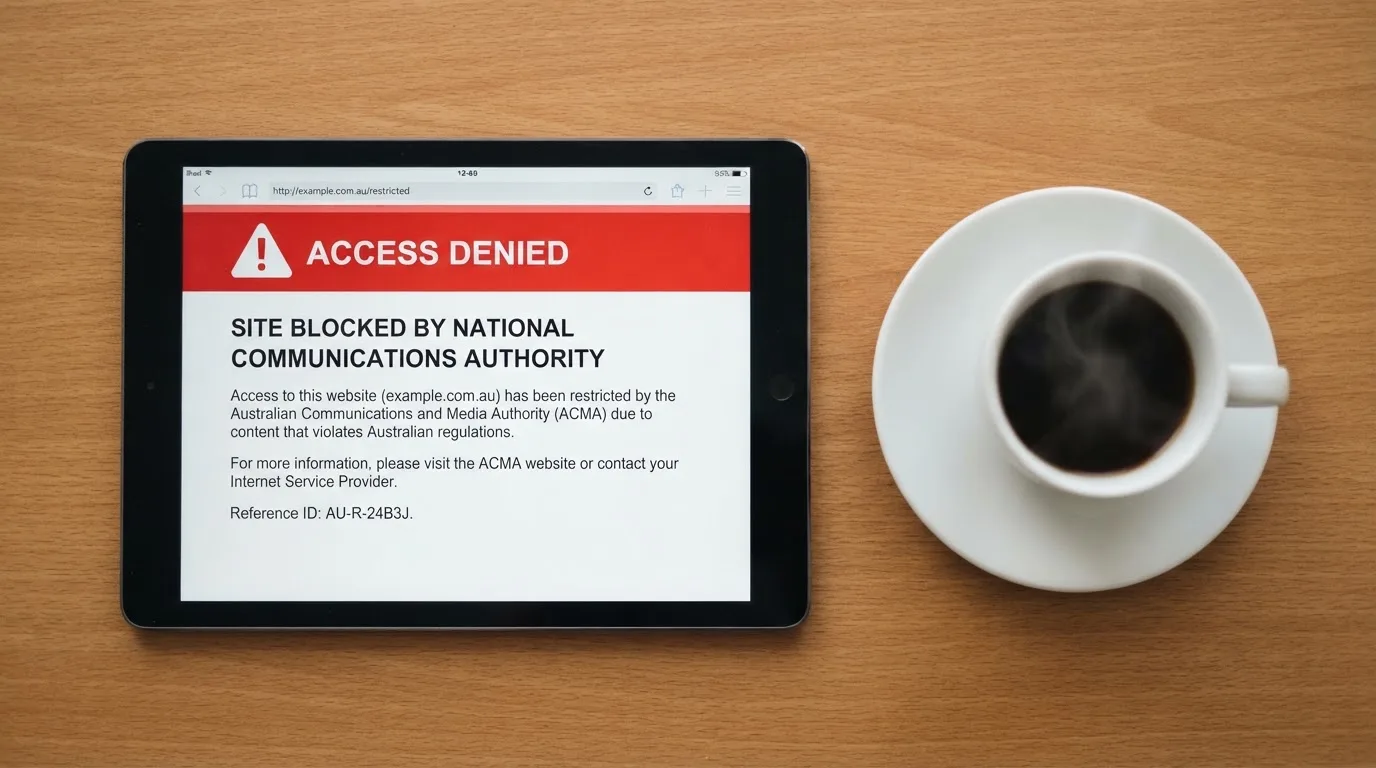
The ACMA’s enforcement powers are the practical expression of the IGA. The authority investigates complaints and intelligence about offshore services targeting Australians, issues formal warnings naming the operator and the relevant URL, and — when warnings are not heeded — directs Australian internet service providers to block the sites at the DNS level. A site that has been blocked at one ISP may still load on another until the order propagates, and a determined player with a VPN can reach the site regardless. The block is a friction, not a wall. It is enough friction, in combination with the formal warning, that a significant fraction of operators withdraw from the Australian market rather than continue to operate against a regulator that names them.
The pattern of escalation is well established in the operator set on this page. The eleven brands named in the ACMA’s enforcement record represent two phases: the 2022 actions on the Dama N.V. cluster (Level Up, plus the 2022 actions on Bizzo and RocketPlay), and the 2025-2026 wave covering Woo Casino, Spirit Casino, National Casino, Bizzo (second action), Ignition Casino, Instant Casino, Casino Intense, RocketPlay (second action), Jackbit and Casino Intense. Between 2022 and 2025 the pace slowed; from 2025 into 2026 it has accelerated. The cumulative count of 1,751 sites blocked since November 2019 reflects that acceleration at the level of the wider market, not just this article’s eleven.
The 2026 reform changes what the licensed wagering sector can advertise, not what the offshore casino sector can offer. The relevant new measure for an Australian reader is that inducement advertising by licensed wagering operators will be restricted from 1 January 2027 — a tighter set of rules around sign-up bonuses, “bonus bets” and credit-style offers on sports and racing. The reform does not create a path to legalising online casino games. It closes off the licensed side’s inducement practices on the products that are already licensed.
The minimum age for any gambling activity in Australia is 18. The licensed wagering sector enforces age verification at account creation; the offshore casino sector varies, and the KYC step on the first withdrawal is the practical moment an Australian’s age and identity are checked. The two enforcement moments are different in character but converge on the same set of documents.
On the player-protection side, BetStop and the National Gambling Helpline are the two Australian services an offshore-casino user can still use. As noted in the responsible-play section above, BetStop does not bind offshore operators, so its effect on a player who has excluded themselves and continues to play offshore is indirect — it removes the legal route for the same impulse. The helpline is the right resource regardless of which operator a player has been using.
On tax, gambling winnings of a recreational player are not assessable income in Australia, and losses are not deductible, unless the person carries on a business of gambling. An Australian who has a winning session at an offshore Pragmatic Play casino and withdraws the funds does not owe Australian tax on the win, and cannot claim the losses against other income. The “check with the ATO” framing is the right one — the rule is clear, the edge cases are not.
Frequently asked questions
Is Pragmatic Play legally available to players in Australia?
No. Online casino games and online pokies cannot be licensed in Australia under the Interactive Gambling Act 2001, so no Australian-licensed site offers Pragmatic Play titles as an online casino product. The offshore sites that market Pragmatic Play to Australians — including the eleven named in the ACMA’s formal warnings — operate outside Australian consumer-protection law and have been subject to blocking notices.
What kinds of games does Pragmatic Play make?
Pragmatic Play supplies online slots and live-casino content through a single API. It completed its acquisition of live-casino supplier Extreme Live Gaming in June 2018 and virtual-sports supplier VSoftCo in January 2019, so the studio covers slots, live-dealer tables and virtual sports. The studio describes itself as licensed or certified in more than thirty jurisdictions, including regulation by the UK Gambling Commission and a Class II licence from Romania’s Oficiul Național pentru Jocuri de Noroc.
Are Pragmatic Play games offered at land-based venues in Australia?
Not under the Pragmatic Play brand. Land-based electronic gaming machines in Australia are dominated by Aristocrat Leisure, with its research headquarters in Sydney’s North Ryde and development offices in South Africa, Russia and the United States. Aristocrat is the largest gambling-machine manufacturer in Australia and the second-largest slot manufacturer worldwide, behind International Game Technology. The games look similar; the regulatory frame around the player is what differs.
How can Australians check whether a Pragmatic Play title is fair before ever considering play?
Pragmatic Play states its RNG and live-casino procedures are certified by Gaming Laboratories International, Quinel and Gaming Associates, with regulation by the UK Gambling Commission among other jurisdictions. These are certifications of the studio’s procedures, not of any Australian-licensed casino. The check a reader can do is on the studio’s certifications; the check they cannot do is on whether the offshore site offering the title is using a certified build of the game.
Why do offshore sites keep advertising Pragmatic Play games to Australian visitors?
Pragmatic Play is a large slot and live-casino studio whose titles are popular in regulated European markets, and offshore operators use those titles to attract Australian traffic despite the Interactive Gambling Act prohibition. The marketing persists because the cost of acquiring an Australian player through search and affiliate channels is lower than the cost of losing the player to a competitor, and the ACMA’s enforcement is a fine and a block, not a criminal prosecution.
What should an Australian do if they see a Pragmatic Play game promoted by an unlicensed site?
The Australian can report the site to the ACMA through the authority’s website, which is the formal channel that feeds the regulator’s enforcement work. The report does not stop the site advertising in the short term, but it adds the site to the ACMA’s intelligence picture and can lead to a formal warning or a blocking request. For the player’s own protection, BetStop and the National Gambling Helpline on 1800 858 858 are the Australian services that do apply.