
Quickspin at Australian online casinos in 2026: what the regulator’s warnings change for the player
Quickspin slots turn up on most offshore casinos a quick search surfaces for an Australian visitor. Every one of those sites is doing something it has been formally told to stop. The question this page answers is what that costs the person sitting at the keyboard — when the missing protection is discovered, what it looks like at withdrawal time, and where a player who would rather not rely on an offshore brand is meant to go instead.
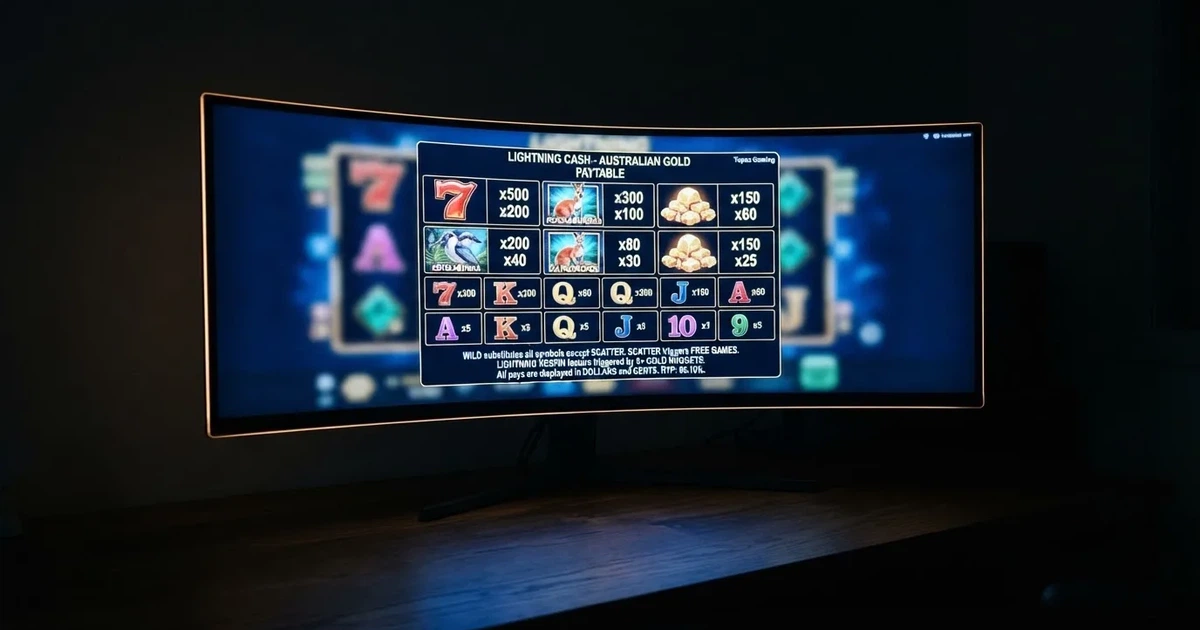
Current as of 8 November 2026 against the ACMA’s list of formal warnings and the blocking requests reported through June 2026.
Table of Contents
- Responsible play comes before the game choice
- Payments and payout speed on offshore sites
- How bonuses and free-spin offers read when the cashier is offshore
- Mobile and app play on a site without an Australian licence
- Quickspin as a studio and the games worth knowing
- What a Quickspin shortlist can and cannot compare
- Where Quickspin slots fit in the Australian online landscape
- The legality question, restated
- Quickspin at offshore brands the ACMA has warned
- What the blocking rate actually tells the player
- How an Australian player should think about the choice
- Frequently asked questions
Responsible play comes before the game choice
Quickspin slots, like every other slot product, are designed to be played repeatedly. That is the business model; the math does the rest. The first decision is therefore not which Quickspin title to load but whether offshore casino play, which is the only kind offered to an Australian player, makes sense at all.

Help lines exist independently of which site is open in the browser. Gambling Help Online runs the National Gambling Helpline on 1800 858 858, free and staffed around the clock, with webchat available for those who would rather type. State and territory services sit behind the same number. These are the only services connected to every Australian, licensed or not.
BetStop, the National Self-Exclusion Register, is the second rail. Live since August 2023, it lets a person bar themselves from every Australian-licensed online and phone wagering service in one registration. Its scope is the critical limitation: it binds Australian-licensed operators only. An offshore casino is not connected to the register, and a self-exclusion on BetStop does not stop a Curacao- or Malta-licensed brand from accepting the next deposit from the same person. The exclusion does what it says; it does not do what offshore marketing sometimes implies.
The third rail is the deposit ceiling itself. Since 11 June 2024, Australian-licensed online wagering has operated under rules that block credit cards, credit-related products and digital currency as a payment method, with penalties for the operator of up to A$247,500 per breach. An offshore site asking for a card or a crypto transfer is operating outside the Australian rules in a way that has nothing to do with the player’s bankroll. The ceiling the player sets at home is not the ceiling the offshore cashier enforces.
Those three rails — the helpline, the exclusion register and the payment rules — are the floor a player stands on. Everything below them is what an offshore site chooses to do, and the regulator’s record on those sites is what the next section looks at.
Payments and payout speed on offshore sites
Quickspin titles process spins through whatever cashier an offshore casino chooses to put up. For Australian players the cashier is almost always outside the Australian payment regime: a debit or credit card routed overseas, an e-wallet, or a cryptocurrency deposit. None of these routes the player through PayID, Osko or BPAY, which is where Australian-licensed wagering lives.
Three consequences follow.
First, the settlement clock. Cards routed offshore clear in two to five business days when they clear at all; e-wallets sit somewhere between instant and 48 hours; crypto arrives after network confirmations, which can be minutes or hours. The site advertises the fastest path and then explains the slow ones in a payments page that almost no player reads before depositing. When a withdrawal is requested, the same clock runs in reverse, and offshore brands are known to add verification steps that were not advertised at the deposit stage — proof of address, source-of-funds documentation, sometimes a callback — that push the realistic settlement time out by a week or more.
Second, chargeback protection. A player who pays by credit card through a licensed Australian wagering site has the card scheme’s dispute machinery behind them. The same chargeback, on a transaction with an offshore casino, is contested by an operator whose terms of service are written to defeat it. “Bonus abuse” is the most common reason given for refusing a withdrawal that was triggered, in the operator’s view, by play that read the wagering requirement more carefully than they wanted.
Third, the credit-card and crypto ban. A licensed Australian wagering operator cannot take a credit card deposit or a digital-currency transfer; that rule is the one Australian safeguard written into law for the player. A site that takes both is, by definition, not bound by the rule, and the rest of the Australian rulebook is not optional either.
What the player is buying, in other words, is not a Quickspin slot. It is access to a slot through a cashier that the ACMA has already told to stop taking Australian business, with the protections that come with an Australian-licensed cashier left on the table.
How bonuses and free-spin offers read when the cashier is offshore
Bonuses are the second artefact an offshore casino markets at an Australian player, and they work the same way bonuses work everywhere: a deposit unlocks a headline figure, and a wagering requirement unlocks the withdrawal of any winnings from that figure.
Two Quickspin-specific wrinkles matter. Quickspin’s catalogue includes titles where the maximum stake per spin is hard-capped low — the studio’s mathematics is built around a tight bet range, so a high-roller bet is not the way the game is designed to be played. A wagering requirement denominated in “bonus amount × N” therefore plays out across more spins than the equivalent requirement on a high-stake slot, and the time it takes to clear is correspondingly longer. The second wrinkle is the opposite: some Quickspin titles include a “bonus buy” feature, where a player pays a multiple of the stake to jump straight to the bonus round. Where the wagering requirement is computed on bonus funds only and the bonus buy feature costs real money, the wagering contribution on those spins is a question each site’s terms page answers in its own way. Almost always less than 100 percent.
The point of those mechanics is not that they are unusual. It is that the Australian player does not have an Australian complaints body behind them when a terms page is read against them. The ACMA’s role stops at the operator; the ACMA does not adjudicate a single player’s disputed withdrawal. The site that lists Quickspin’s Sakura Fortune and a 100 percent match bonus up to A$500 plus 100 free spins is also the site that defines, in the fine print, what counts as a “qualifying spin” toward clearing that bonus. The fine print is the contract.
A bonus offer on an offshore site should therefore be read as a marketing hook, not as value. The Australian alternative — a licensed wagering operator, offering a debit-card deposit, a PayID withdrawal and the right to complain to an Australian dispute resolution body — is what the bonus number is competing against, and it is competing against something the bonus number cannot replicate.
Mobile and app play on a site without an Australian licence
Most Quickspin titles are built in HTML5 and run in any modern mobile browser. There is nothing technical stopping a slot from loading on a phone. The question is what sits around it.
A site that lists Quickspin’s Big Bad Wolf and Sakura Fortune on a mobile-friendly page is not, by that fact, an Australian-licensed operator. The same site will, on the same phone, accept a deposit the Australian rules do not allow, run an advertisement campaign the Interactive Gambling Amendment (Gambling Reform) Bill 2026 will restrict from 1 January 2027, and offer an app download that is not in the Australian app stores because it has not passed the age-gating checks those stores require. A browser tab is the only entry point that does not require the operator to clear an Australian gatekeeper.
Load times on Quickspin titles are quick on a modern device. That part of the experience is real. What surrounds it — the cashier, the bonus terms, the missing complaints body — is the part that determines whether the experience is a sound one. Mobile polish does not retire the questions the desktop version raises.
Quickspin as a studio and the games worth knowing
Quickspin was set up in Stockholm in 2011 by three developers who wanted to make the slot games they would play themselves. Playtech acquired the studio in 2016, a move Quickspin describes on its own site as a major milestone for the studio. The studio now operates from Stockholm, Sliema in Malta and Kyiv, with about 100 staff of more than 30 nationalities across five countries.
The studio’s regulatory position is straightforward. Quickspin holds a Malta Gaming Authority Critical Gaming Supply Corporate licence, MGA/CRP/137/2007, issued 6 December 2018. Through Playtech it is covered by an active UK Gambling Commission account, number 38516, with remote casino and gambling-software licences. Neither licence authorises Quickspin to offer its games to a person physically located in Australia. The games are licensed to operators who are licensed in their own jurisdictions; the player side of that licence chain stops at the border.
Quickspin’s catalogue runs from the studio’s 2012-era releases — The Slotfather, a Betsoft title for comparison, has an RTP of 95.69% on its 5×30 layout and a medium volatility reading, which is roughly the territory a Quickspin release of that vintage sits in — to more recent 3D slots. Good Girl Bad Girl 2, again from Betsoft for comparison, sits at 96.22% RTP, a very high volatility reading and a 15.59% hit rate across 5 reels and 20 paylines. Quickspin’s own titles are cut to similar shapes: a published RTP, a volatility reading, and a feature set the studio builds around a single mechanic per release. That is what the studio sells, and it is what an Australian player cannot lawfully buy from an Australian-licensed venue.
The studio that does the same job inside Australia is Aristocrat Leisure. Founded in 1953 by Leonard Ainsworth and listed on the Australian Securities Exchange in 1996, Aristocrat is the largest gambling-machine manufacturer in Australia and the second-largest slot-machine manufacturer worldwide. Its 2025 revenue was A$6.30 billion on normalised net profit after tax and amortisation of A$1.55 billion, with 7,400 employees. Aristocrat’s regulated online arm — Aristocrat Interactive, formed in April 2024 from the merger of Anaxi with the NeoGames group that brought Aspire Global, BtoBet and Pariplay into the fold — is the closest thing to an Australian-licensed online real-money operation with deep slot heritage. Its products run on Australian-licensed wagering platforms, where the protections already described apply.
What a Quickspin shortlist can and cannot compare
A shortlist of online casinos is built from a small set of variables: licence, payment options, bonus terms, game catalogue, withdrawal speed, customer complaints pathway. On an Australian-licensed wagering site, those variables can all be checked against a register. On an offshore site, every one of them is whatever the operator publishes.
For a player in Australia, the comparison that matters is shorter than that list. Two questions do the work:
- Is this site licensed to take Australian business? The answer, for every offshore casino this page discusses, is no. None of them holds an Australian licence. None of them can.
- If something goes wrong with a withdrawal, where does the player go? On a licensed site, the answer is an Australian dispute resolution body. On an offshore site, the answer is the operator’s own complaints team, with the operator’s own terms of service as the contract.
That second question is the one most players do not ask until they are already inside the dispute. It is also the question the regulator’s record, covered in the next section, already answers for them.
Where Quickspin slots fit in the Australian online landscape
Quickspin is a slot studio with two things to sell: the games themselves, and the licences that let operators carry them. Neither product reaches Australia through an Australian licence.
Australian-licensed wagering covers horse and harness racing, greyhound racing and sporting events, with lotteries and keno in the same regulatory frame. Online casino games — including online pokies — are not licensed in any Australian state or territory. The Interactive Gambling Act 2001, as strengthened by the Interactive Gambling Amendment Act 2017, makes the provision of online casino games to a person in Australia an offence. The provider is the target. The Australian player does not face prosecution for opening an account; the player does, however, lose every Australian protection that would have stood behind them had the site been licensed here.
The regulator is the ACMA, the Australian Communications and Media Authority. Its enforcement toolkit includes formal warnings to operators, civil penalty proceedings in the Federal Court, and the power to direct Australian internet service providers to block illegal sites. As of June 2026, the ACMA has had Australian ISPs block 1,751 illegal gambling and affiliate marketing websites since the first blocking request in November 2019, and more than 230 unlicensed gambling services have left the Australian market since enforcement was strengthened in 2017. A single blocking round reported in June 2026 alone added twelve sites: 7Signs, ChromaBet, Donbet, Duospin, Freshbet, Slots Gem, Jacks Club, Lucky Start, Spinrise, Vinyl Casino and Wildsino.
H2 Gambling Capital’s 2025 estimate puts Australian losses to illegal gambling sites at about A$3.9 billion a year, and reports that the share of gambling going through legal channels fell from 74 percent in 2021 to 64 percent. The numbers are estimates, and the authors are explicit about that. They are also the only figures of their kind the public record carries.
The Northern Territory Racing and Wagering Commission regulates 52 of Australia’s online bookmakers — Sportsbet, Bet365 and Ladbrokes included — for tax reasons. It has no full-time staff and meets once a month in Darwin. Online casino games do not come within its remit. No equivalent commission does.
| Operator | Warning Date | Known Brands |
|---|---|---|
| Dama N.V. | 2022, 2025 | RocketPlay, Level Up, Woo, Spirit |
| Consolutetish S.R.L. | 2025 | National, Bizzo |
| Hollycorn N.V. | 2022 | Sky Crown, Blue Leo |
| Pulsup Ltd | 2026 | RocketPlay |
| Ryker B.V. | 2026 | Jackbit, CasinOK |
What this leaves the Australian player is the land-based venue. Quickspin-branded slots do not appear on Australian casino floors — the studio’s licences are for online products — but Aristocrat machines, IGT products and other locally licensed gaming machine manufacturers do. A player looking for the same kind of experience under Australian rules will find it in a club or casino with the appropriate state or territory sign-off, where the consumer protections are written into the venue’s licence.
The legality question, restated
The Interactive Gambling Act 2001, as amended in 2017, makes it an offence to provide online casino games to a person in Australia. The site is the target. The player is not. The result, for the player, is that:
- the site has no Australian licence and cannot get one;
- the site can be blocked with a balance still on it;
- a withdrawal dispute has no Australian body to escalate to;
- the helplines and self-exclusion registers reach the player but do not reach the site.
The Interactive Gambling Amendment (Gambling Reform) Bill 2026 passed Parliament on 19 August 2026. Its advertising and inducement measures commence 1 January 2027. The rules that govern offshore operators targeting Australian players are tightening, not loosening, and a player who reads the ACMA’s enforcement record today is reading the start of a longer sequence, not the middle of it.
Tax treatment is the last point. Gambling winnings of a recreational Australian player are not assessable income under section 6-5 of the ITAA 1997, and losses are not deductible — unless the person is carrying on a business of gambling, which the ATO’s guidance and case law treat as a high bar. The model answer is to check with a tax adviser or the ATO. The advice does not change the question of whether the play was lawful.
Quickspin at offshore brands the ACMA has warned
The brands below are not a ranking and not a recommendation. Each is listed because the ACMA itself issued a formal warning to the named operator for offering prohibited services to Australians. The table is the regulator’s record, not a comparison of which site is best. Where research gives a subject-support line for a brand, it is reported here only as the listings themselves report it; where no data exists, the row simply does not carry that column.
| Brand | ACMA action and date | Operator named by the ACMA | Subject support |
|---|---|---|---|
| RocketPlay | Formal warning, March 2026 (Pulsup Ltd); earlier warning to Dama N.V., May 2022 | Pulsup Ltd (RocketPlay); Dama N.V. | — |
| Level Up Casino | Formal warning, May 2022 | Dama N.V. | Wazdan listings report the brand as carrying Wazdan content |
| Woo Casino | Formal warning, March 2025 | Dama N.V. | — |
| Spirit Casino | Formal warning, May 2025 | Dama N.V. | — |
| National Casino | Formal warning, July 2025 | Consolutetish S.R.L. | Betsoft and Pragmatic Play listings report the brand as carrying their content |
| Bizzo Casino | Formal warning, July 2025; earlier warning to TechSolutions, 2022 | Consolutetish S.R.L.; TechSolutions (CY) Group Limited and TechSolutions Group N.V. | — |
| Ignition Casino | Formal warning, July 2025 | Bamboo Media | — |
| Instant Casino | Formal warning, February 2025 | EOD Code SRL | — |
| Jackbit | Formal warning, April 2026 | Ryker B.V. | — |
| Casino Intense | Formal warning, April 2025 | Sterplay Holding Ltd | 1spin4win listings report the brand as carrying its content; en.wikipedia.org and the UK Gambling Commission public register corroborate the support chain |
| Sky Crown | Formal warning, September 2022 | Hollycorn N.V. | — |
The pattern is the more striking thing than the individual lines. The same operator — Dama N.V. — has received formal warnings across multiple brands and across multiple years. The ACMA’s response, when one warning is ignored, is to repeat the action against the same parent company under each new brand it launches. The warning is the regulator’s least expensive tool. What follows a warning that does not produce a result — civil penalty proceedings in the Federal Court, ISP-level blocking of the domain — is the more expensive one.
RocketPlay — same brand, two warnings two years apart
The ACMA’s first RocketPlay warning, in May 2022, was issued to Dama N.V. The second, in March 2026, was issued to Pulsup Ltd over Rocketplay.com.au. The brand survived a regulatory action in one corporate wrapper and reappeared in another. A player who sees a fresh-looking licence footnote on the new wrapper is looking at a structure that the ACMA has already asked to stop, twice.
What that means in practice: the verification documents the player is asked to provide at withdrawal are not being checked by an Australian-licensed compliance team. They are being checked against a terms-of-service document written to defend a withdrawal request, not to honour it. The same bonus terms that appeared on the 2022 wrapper are likely to appear, in some form, on the 2026 one.
Level Up Casino — listings, not licences
The Wazdan listings carry Level Up Casino as a brand distributing Wazdan content. That is what the listing says, and nothing more. It is not a statement about how the brand treats a withdrawal request, how it handles a complaint, or what jurisdiction its licence actually covers. The ACMA’s May 2022 warning to Dama N.V. is the only regulator-side record the public file holds for this brand.
Woo Casino — a fresh warning, a familiar operator
Dama N.V. picked up a March 2025 warning for Woo Casino, two and a half years after its May 2022 warning for Level Up, RocketPlay and three other brands. The pattern across the Woo, Spirit, Level Up and RocketPlay warnings is that Dama N.V. operates a portfolio of brands and the regulator has had to address each of them individually. A player seeing “Dama N.V.” on the Woo footer is seeing the same corporate entity the ACMA has already told to stop, under another name on the same licence.
Spirit Casino — same operator, later warning
The May 2025 warning over Spirit Casino is the third Dama N.V. brand the ACMA has had to address since 2022. Each warning sits in the ACMA’s formal-warning register on its own page. They are not aggregated; they are not treated as one. The player who reads them has to read them as a list to see what one operator has done across the same period. The regulator’s register does not do that aggregation work for the reader.
National Casino — providers on the page, regulator on the file
National Casino is reported by Betsoft and Pragmatic Play as carrying their content, which is what their listings say and nothing more. The ACMA’s July 2025 warning names Consolutetish S.R.L. as the operator, in the same enforcement round that brought the Bizzo Casino warning against the same corporate group. Two brands, one corporate entity, one warning round.
Bizzo Casino — two operators, two warnings, one brand
Bizzo was the subject of an earlier formal warning to TechSolutions (CY) Group Limited and TechSolutions Group N.V. in 2022, and a second formal warning to Consolutetish S.R.L. in July 2025. The brand has been in the ACMA’s sights twice. A player arriving at Bizzo Casino today is arriving at a brand whose regulatory history with Australia runs across two corporate owners and three years.
Ignition Casino — a different operator, the same prohibition
Bamboo Media, the operator named in the July 2025 warning, is a different parent than Dama N.V. or Consolutetish S.R.L. The pattern repeats under a new corporate name. Ignition Casino carries no Quickspin, Betsoft or Pragmatic Play listing in the public research; what it carries is a formal warning from the ACMA, and the same prohibition that warning describes.
Instant Casino — the warning that opens this section
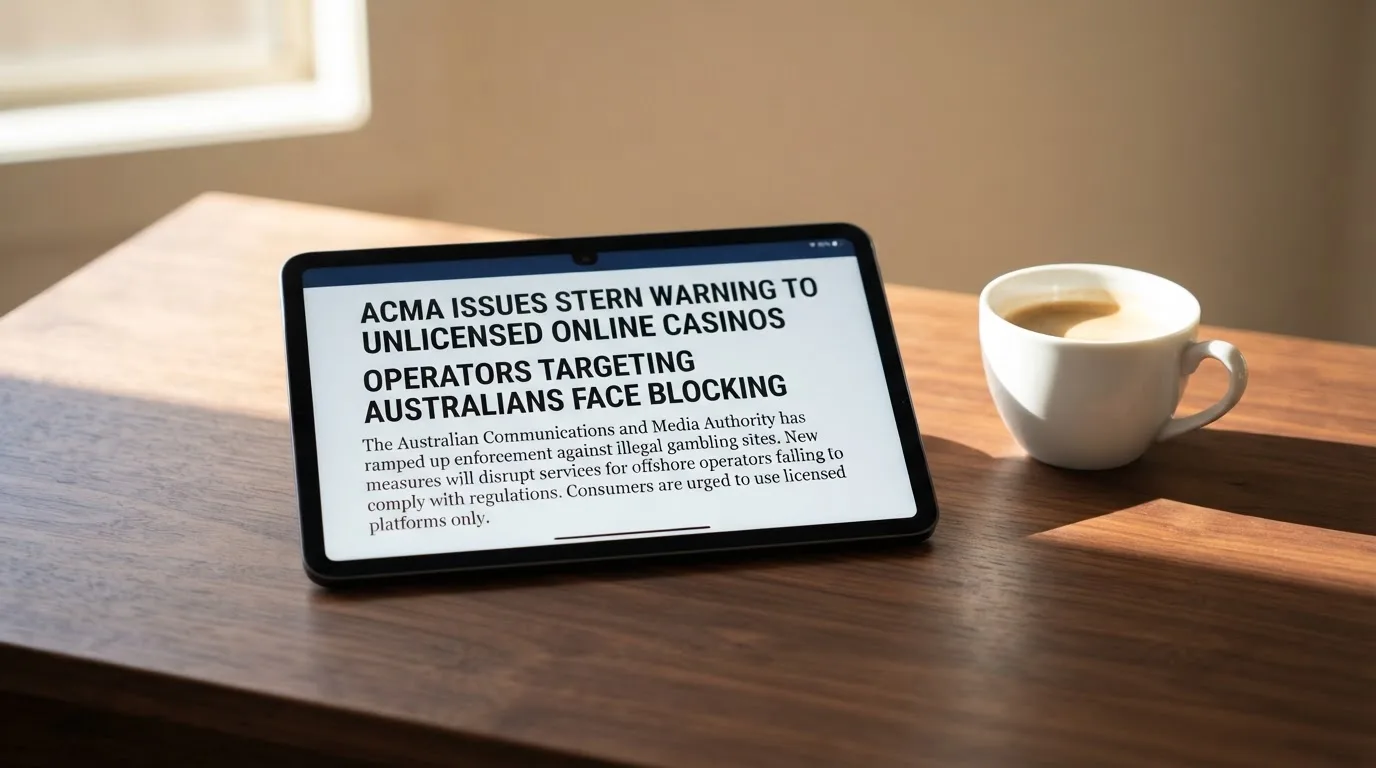
The February 2025 warning to EOD Code SRL over Instant Casino is the freshest signal of the regulator’s pace. The brand was operating, the ACMA issued a warning, and the warning is published on the ACMA’s formal warnings page. The status of the brand after the warning — whether it remains accessible, whether it remains in operation, whether new domains have appeared under the same operator — is a question the ACMA’s enforcement record answers case by case, not by reference to the warning itself.
Jackbit — the April 2026 warning
Ryker B.V. received the April 2026 warning over Jackbit and CasinOK in the same enforcement action. Two brands, one operator, one warning. The pattern across this list is that the ACMA addresses one operator at a time, with every brand that operator runs named in the same action.
Casino Intense — the longest support chain
Casino Intense is reported by 1spin4win as carrying its content; the corporate and licensing history of those 1spin4win titles is documented in the Wikipedia entries for the relevant suppliers and the UK Gambling Commission’s public register. The Sterplay Holding Ltd warning sits in April 2025. The support chain is what the listings say it is. The licence standing under Australian law is what the ACMA’s warning says it is. They are two different statements and they do not contradict each other; they cover different questions.
Sky Crown — Hollycorn’s Australian record
The Hollycorn N.V. warning, issued in September 2022, covers Sky Crown and Blue Leo together. Hollycorn has not, on the public record, been the subject of a second ACMA warning in the same way Dama N.V. has. That is what the register shows. It is not an endorsement; the prohibition the first warning describes is the same prohibition that applies to every brand on this list.
What the blocking rate actually tells the player
The ACMA had Australian ISPs block 1,751 illegal gambling and affiliate marketing websites between the first blocking request in November 2019 and the round reported on 26 June 2026. That is roughly 81 months. The arithmetic yields a band, not a single figure: the long-run rate sits between 20 and 25 sites blocked per month, with the rate uneven across years as enforcement rounds are reported in clusters rather than continuously.
The single round on 26 June 2026 added 12 sites. A single round in March 2025 added several more. The ACMA does not publish at a fixed cadence, and the months between rounds can be long. The band — somewhere between one and three blocking rounds per quarter, with each round in the low double digits of domains — is the realistic picture. A player who sees a blocked site reappear under a new domain should read that as the regulator’s response being necessarily slower than the operator’s rebranding, not as enforcement having stopped.
The A$3.9 billion a year that H2 Gambling Capital estimates Australians lose to illegal gambling sites is the dollar scale of what the blocking regime is trying to slow. The 64 percent share that the same report puts on legal-channel gambling in 2025 — down from 74 percent in 2021 — is the trajectory the regulator is working against. None of these figures is a guarantee. They are the best estimates the public record carries, and they describe the market the player is sitting inside.
How an Australian player should think about the choice
The arithmetic of the choice is not hard. An offshore casino offers a Quickspin slot and a bonus number. An Australian-licensed wagering operator offers no Quickspin slot at all, because online casino games are not licensed in Australia. The Australian alternative is a land-based venue with a licensed Aristocrat, IGT or equivalent product.
For the player who has decided offshore play is acceptable, the regulator’s record is the public source for which brands the ACMA has had to address. The list above is that record. The lesson is not which site is least bad; the lesson is that the regulator has had to address each of them, and that the corporate structures behind several of them are repeat offenders.
For the player who has decided it is not, the path is short. Gambling Help Online is the front door: 1800 858 858, free, 24/7, with chat available. BetStop is the self-exclusion register for Australian-licensed wagering, with the scope limitation noted. The state and territory services sit behind the same number. The land-based venue is where the equivalent gaming-machine experience sits, licensed under the local regime.
The decision is not a comparison of two products. It is a decision about which set of consumer protections a player is willing to give up.
Frequently asked questions
Are Quickspin games legally available to Australian players online?
No. Online casino games, including Quickspin slots, cannot be licensed for Australian players under the Interactive Gambling Act 2001. Sites that list Quickspin titles and accept Australian deposits are doing so without an Australian licence, and many have received formal ACMA warnings. Land-based venues with locally licensed gaming machines are the only regulated way to play equivalent product in Australia.
What kinds of games does Quickspin actually make?
Quickspin makes online video slots, including a number of 3D releases. The studio’s catalogue is built around a single core mechanic per release — a feature buy, a particular bonus round, a tight bet range — and the studio publishes an RTP and a volatility reading for each title. The studio is owned by Playtech and is licensed in Malta and the UK; those licences do not extend to serving Australian players.
Are Quickspin games offered at Australian land-based venues?
No. Quickspin’s licences cover online products, not gaming-machine hardware for venue floors. Australian venues carry Aristocrat, IGT and other locally licensed gaming-machine manufacturers’ products. Aristocrat Leisure, the largest gambling-machine manufacturer in Australia, is the closest analogue, and its products appear in clubs and casinos licensed by state and territory authorities.
How can an Australian check whether a Quickspin title is fair before considering play?
For titles the player can access, the published RTP and volatility are the starting point — Quickspin’s own game pages carry these for each release, and an independent test certificate from a lab such as GLI or Quinel can be checked against the game’s help file. The harder question is whether the site carrying the game is the site it claims to be; that is the question the ACMA’s formal-warning list and the ISP blocking record answer most directly.
Why do offshore sites keep advertising Quickspin games to Australian visitors?
Because the conversion economics work. An offshore brand can stand up a new domain in days, run an inducement campaign at the deposit stage, and accept payments the Australian rules do not allow. The ACMA’s response is necessarily slower than the operator’s rebranding cycle; the public blocking record shows the regulator’s pace in months and quarters, not days. The financial scale — H2 Gambling Capital’s A$3.9 billion a year estimate of Australian losses to illegal sites — explains why the marketing spend keeps flowing.
What should an Australian do if a Quickspin game is promoted to them by an unlicensed site?
The first step is to recognise that the promotion itself is the regulator’s enforcement problem, not the player’s. The ACMA’s formal-warnings register and the blocking-record reports are public. The next step, for a player who wants the equivalent experience under Australian rules, is to contact Gambling Help Online on 1800 858 858 or via webchat, register on BetStop if self-exclusion is the right response, and seek out a licensed land-based venue. The credit-card and crypto ban that applies to licensed Australian wagering since 11 June 2024 is itself a signal that an offshore site taking those payments is operating outside the Australian rules.