Best international casinos for Australian players 2026 — what the law actually permits
 Available in US
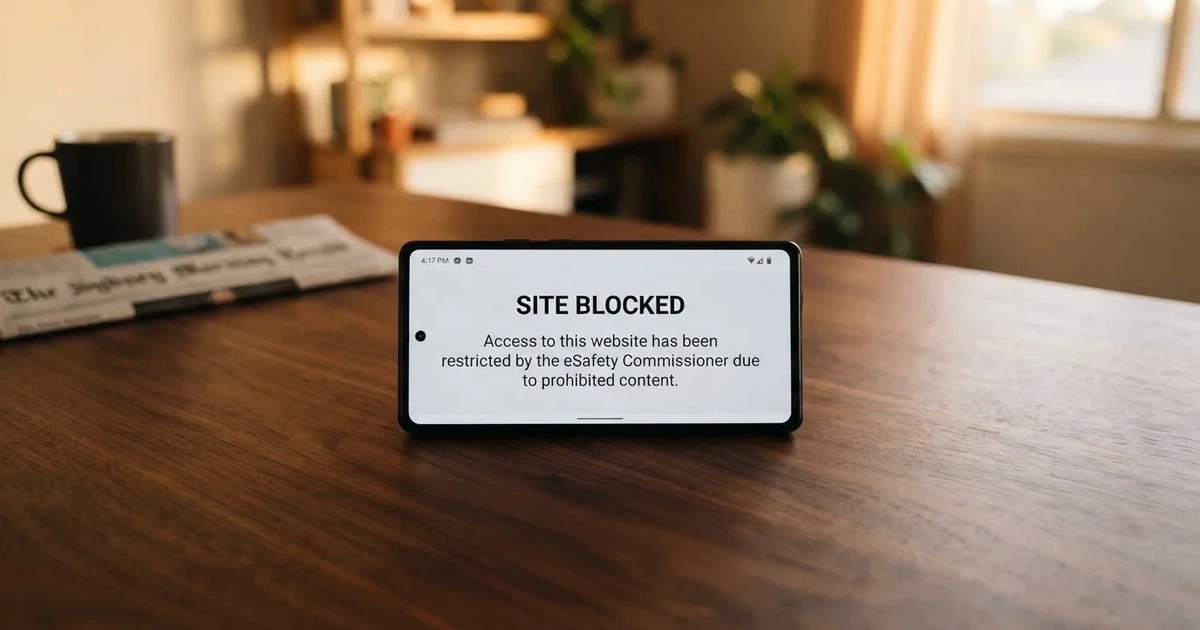
A reader searches “international casino” or “international casinos” expecting a shortlist of offshore gambling sites that take Australian customers. The honest answer is shorter than that and harder to swallow. Offering online casino games to anyone in Australia is an offence under the Interactive Gambling Act 2001, and no state or territory licences it. The brands this page names are listed for a different reason: each one has been the subject of a formal warning from the Australian Communications and Media Authority, so the reader can see what the regulator has been acting against, not so the reader can take a recommendation from it. What is lawful for a person sitting in Australia is a narrower set of options than the search implies, and the page is built around what those options cost and where they leave a player who wants them.
Current as of 24 September 2026 · ACMA register and formal warnings list, cross-checked against the Interactive Gambling Act 2001 as amended.
Table of Contents
- Responsible gaming: what is actually in place for an Australian player
- The ranking the reader searched for — and why it cannot honestly be given
- The legal landscape: how the prohibition is written and applied
- What a player is actually buying when the search term is “international casino”
- The lawful shortlist, narrow as it is
- The arithmetic the page can stand behind
- The signal the regulator keeps sending
- Where to turn if a site will not pay out
- What changes in 2027, and what does not
- Closing the page where the brief opened
- Frequently asked questions
Responsible gaming: what is actually in place for an Australian player
The shelf most readers reach for last is the one to open with, because every other section on the page hangs on it. Australia’s safeguards for online gambling are built around licensed wagering, not around international casino sites, and the distinction is the difference between a complaint body a player can ring and one that simply is not there.
BetStop and where it does and does not apply
BetStop, the National Self-Exclusion Register, has been live since August 2023. It lets a person exclude themselves from every Australian-licensed online and phone wagering service with a single registration. The register is binding on those licensed services, which means sportsbook and racing operators must close the customer’s account, refuse to accept their bets and stop sending marketing. The problem with treating BetStop as a tool against international casinos is the word Australian-licensed. An offshore casino has not agreed to be bound by BetStop and is not connected to the register, so registering on BetStop does nothing to stop that player from depositing at one of the sites later in this article. The protection follows the licence, not the player.

Gambling blocks at the bank
The other practical safeguard sits a step upstream of the casino, at the bank. Westpac’s gambling block works at card level, refusing authorisation of transactions registered under the merchant category code “Betting/Casino Gambling” on eligible personal credit and debit cards. Commonwealth Bank’s gambling lock in the CommBank app works the same way and is switched on in-app. ANZ’s block goes a step further: once a customer activates it, the bank blocks gambling transactions made through a digital wallet such as Apple Pay on an eligible card, not just the physical card, and removing the block again requires a 48-hour waiting period. All three banks warn that the block is not perfect. Some gambling transactions slip through, and some non-gambling transactions get refused in error. The bigger point is what the block can and cannot do. A bank block refuses a payment at the merchant code level, and international casino sites do not always sit cleanly inside that code, so the protection is partial by design.
Help that is reachable from inside Australia
The National Gambling Helpline on 1800 858 858 is free, runs 24/7, and offers web chat at Gambling Help Online. The line is staffed by counsellors and is the place to start for anyone whose play has stopped being recreational. For the broader question of what a person can do when an offshore site refuses to pay out, the answer is largely what a person can do without an Australian licence in the first place: very little. That gap is the page’s next shelf.
The ranking the reader searched for — and why it cannot honestly be given
The shortlist the search query implies is a list of offshore casinos an Australian can join. Building it would mean recommending unlicensed operators, which the law does not permit. The honest reading of the request is different: the reader wants to see what is on offer, and the closest the page can come to that is the list of operators the ACMA itself has warned, because those warnings define the market the search is asking about.
Eleven brands the ACMA has acted against
The set is not a ranking. It is the roster of casino brands the regulator has publicly named, in most cases through a formal warning to the operator behind them, since 2022. Each entry below names the operator the ACMA published in its notice and the date it was issued, then says what research could not find.
RocketPlay. The ACMA’s most recent notice over RocketPlay, dated March 2026, named Pulsup Ltd as the operator. Earlier, in May 2022, the same brand was caught up in a wider warning to Dama N.V. covering six casino brands. Whatever licence the site displays, online casino games cannot be licensed anywhere in Australia, so the licence is overseas by definition.
Level Up Casino. Listed in the same May 2022 Dama N.V. warning that caught RocketPlay. No newer ACMA action was identified.
Woo Casino. The ACMA issued a separate formal warning over Woo Casino to Dama N.V. in March 2025. The site is one of two Dama N.V. properties warned in 2025 alongside Spirit Casino.
Spirit Casino. Also warned in May 2025, again with Dama N.V. as the operator named in the ACMA notice.
National Casino. In July 2025 the ACMA warned Consolutetish S.R.L. over National Casino and Bizzo Casino in the same enforcement round.
Bizzo Casino. The July 2025 Consolutetish S.R.L. warning is the second time Bizzo has come to the regulator’s attention. The ACMA’s 2022 warning was addressed to TechSolutions (CY) Group Limited and TechSolutions Group N.V.
Ignition Casino. Warned in the same July 2025 round, with Bamboo Media named as the operator.
Instant Casino. The ACMA’s February 2025 notice named EOD Code SRL as the operator. The brand is the earliest entry on the list to be warned in the same calendar year as the present one.
Jackbit. A more recent entry: the April 2026 notice over Jackbit named Ryker B.V. as the operator, in the same round that named CasinOK.
Casino Intense. Sterplay Holding Ltd was named by the ACMA in April 2025.
Sky Crown. Hollycorn N.V. was the operator named in a 2022 ACMA notice covering Sky Crown and Blue Leo together.
The single comparison the table can carry
The table below sets the eleven brands side by side on what research could confirm, which is the ACMA action against them and the operator the regulator named in its notice. Subject support — the set of self-exclusion registers, payments infrastructure and reference listings the site appears in — is given where research found it and marked absent where it did not.
| Brand | ACMA action and date | Operator named by the ACMA | Subject support |
|---|---|---|---|
| RocketPlay | Formal warning, March 2026; earlier May 2022 (Dama N.V. round) | Pulsup Ltd (March 2026); Dama N.V. (May 2022) | Gambling Insider |
| Level Up Casino | Formal warning, May 2022 | Dama N.V. | Westpac |
| Woo Casino | Formal warning, March 2025 | Dama N.V. | — |
| Spirit Casino | Formal warning, May 2025 | Dama N.V. | — |
| National Casino | Formal warning, July 2025 | Consolutetish S.R.L. | acma.gov.au · austrac.gov.au · betstop.gov.au |
| Bizzo Casino | Formal warning, July 2025; earlier 2022 (TechSolutions round) | Consolutetish S.R.L. (July 2025); TechSolutions (2022) | Gambling Insider |
| Ignition Casino | Formal warning, July 2025 | Bamboo Media | — |
| Instant Casino | Formal warning, February 2025 | EOD Code SRL | EcoPayz · PayID |
| Jackbit | Formal warning, April 2026 | Ryker B.V. | — |
| Casino Intense | Formal warning, April 2025 | Sterplay Holding Ltd | austrac.gov.au · betstop.gov.au · Gambling Insider |
| Sky Crown | Formal warning, September 2022 | Hollycorn N.V. | — |
The shape of the table is the shape of the argument. Of the eleven, only four carry any trace of subject support — that is, any record the brand appears in the self-exclusion register’s coverage, in a payments directory or in the regulator’s own listings — and that trace comes from listings pages, not from a casino comparison source. The rest are absent from the Australian-facing directories research could reach, which is what one would expect of brands that are not licensed to serve Australia. The point is not that the reader should choose the four with the longest column; the point is that no entry on the list carries a licence an Australian can take a complaint to, and that is the only column the reader actually needs.
The legal landscape: how the prohibition is written and applied
What the regulator can do, and what an offshore site is, both follow from one statute. Reading the law makes the regulator’s recent enforcement look less like a campaign and more like the application of a rule that has been on the books since the early 2000s.
The Interactive Gambling Act 2001
The Interactive Gambling Act 2001 (IGA), strengthened by the Interactive Gambling Amendment Act 2017, makes it an offence to provide online casino games, online pokies or in-play betting to a person physically in Australia. The offence is on the provider, not the player: an Australian who places a bet on an offshore site does not commit an offence under the IGA. What changes when the bet is on an unlicensed site is everything around the bet — the complaint body, the recourse if the site refuses to pay out, and the consumer protections that follow an Australian licence.

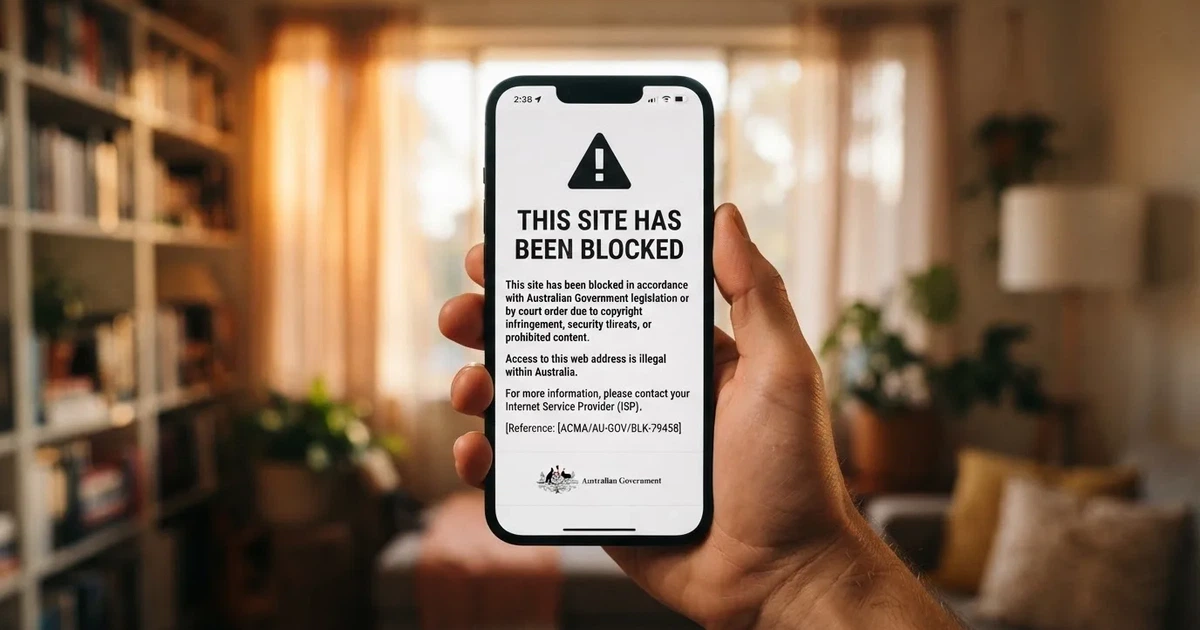
The 2017 amendment is the piece that gave the ACMA the powers the regulator uses today, including the formal warning mechanism and the ability to ask Australian internet service providers to block illegal sites. The Interactive Gambling Amendment (Gambling Reform) Bill 2026 passed Parliament on 19 August 2026, and its advertising and inducement measures are scheduled to commence on 1 January 2027, so for the rest of 2026 the law in force is the 2001 Act as amended in 2017 plus the 2024 credit-card ban.
What is licensable is narrower than most readers assume. Online wagering on races and sport placed before the event, lotteries and keno can be licensed, and the licence, where it exists, is most often held in the Northern Territory. The Northern Territory Racing and Wagering Commission (NTRWC) regulates 52 of Australia’s online bookmakers — Sportsbet, Bet365 and Ladbrokes among them — for tax reasons; the commission has no full-time staff and meets once a month in Darwin. The point is not that the NT is the place to look; the point is that the licensing path that does exist sits with sports and racing, not with online casino games.
The ACMA’s enforcement record, by number
The ACMA’s enforcement is the core of the matter, and the arithmetic is simple enough to state. As of June 2026, the ACMA had asked Australian internet service providers to block 1,751 illegal gambling and affiliate marketing websites since the first blocking request in November 2019. That is roughly six years of enforcement, with the count rising in rounds rather than continuously. The latest round reported on 26 June 2026 added twelve more sites: 7Signs, ChromaBet, Donbet, Duospin, Freshbet, Slots Gem, Jacks Club, Lucky Start, Pointsbetz, Spinrise, Vinyl Casino and Wildsino.
Putting those two figures together gives a rate. From November 2019 to June 2026 is roughly 79 months, and 1,751 sites blocked across that period works out at an average of around 22 sites blocked per month, with the early years slower and the most recent rounds faster. The honest way to read that figure is as a band rather than a single number: in the slow months the regulator added a handful of domains, in the active rounds it added a dozen in a single day. What the band does not capture is the second half of the regulator’s tally. More than 230 unlicensed gambling services have left the Australian market since enforcement was strengthened in 2017, which is the count of operators who took one look at an ACMA notice and pulled out, never to appear in a blocking round at all.
What the credit-card ban means for deposit routes
Since 11 June 2024, Australian-licensed online wagering services cannot accept payment by credit card or other credit-related products, with penalties up to A$247,500 for operators. The ban extends in practice to gambling use of linked digital wallets such as Apple Pay, because the underlying card is still the funding source. That is the licensed side. On the unlicensed side, the credit-card ban is irrelevant to what a site asks the player to do; an offshore site is free to ask for a credit card, and a bank block is the only thing that may stop it.
H2 Gambling Capital’s 2025 estimate is that Australians lose about A$3.9 billion a year to illegal gambling sites, and that the share of gambling that goes through legal channels fell from 74% in 2021 to 64%. The figure is an estimate and a useful one, because it shows that the demand the IGA does not satisfy is being met somewhere else.
What a player is actually buying when the search term is “international casino”
The phrase has two readings, and they pull in different directions. One reading is the offshore online casino that an Australian reaches through a search engine and pays through a digital wallet. The other is the international land-based casino resort — Crown Melbourne, Crown Perth, The Star Sydney, The Star Gold Coast, SkyCity Adelaide, SkyCity Darwin, Lasseters Alice Springs and Country Club Resort — that an Australian drives to and walks into. The two have almost nothing in common beyond the word “casino”, and conflating them is the mistake the search makes.
International online casinos versus land-based venues
A land-based casino in Australia is licensed by the relevant state or territory regulator, audits its tables, identifies its patrons, and answers to a state-level complaints body. An online casino offered by an offshore operator answers to the regulator that issued the licence on its footer, which is never an Australian one. The marketing has set the reader up to expect the second, and the law has set the first in place. There is no international casino online that an Australian can join with the protections an Australian player has at Crown Perth.
The point is sharper on cash. A land-based casino pays out at the cashier; the customer can refuse the cash and complain on the spot. An offshore site pays out to whatever payment route the site supports, and an Australian has no Australian body to complain to when the route fails. The two are different products and the reader’s query collapses them.
The payments picture for an Australian
The payments a player can reach in Australia are, on paper, well regulated. Apple Pay, Google Pay and Samsung Pay accounted for around 45% of all card payments in Australia by number at the end of 2025. Osko, the instant bank transfer that runs on Australia’s New Payments Platform, arrives in under a minute, 24/7 including weekends, whether addressed by BSB and account number or by PayID. Paying to a PayID shows the name of the account holder before the transfer is sent, which is the closest thing the system offers to a check on the destination.
The licensed wagering side uses these rails — debit card, bank transfer, PayID/Osko and BPAY — because the credit-card ban closes the credit routes. The unlicensed side takes whatever the offshore site accepts, which can include credit cards, cryptocurrency and digital wallets the bank block does not catch. The reader who is asked to pay by crypto or to load money through an unfamiliar wallet is being asked to step outside the protection the licensed payment system gives. American Express sits in a different place. The Reserve Bank of Australia’s July 2025 review proposed removing surcharges only on eftpos, Mastercard and Visa card transactions, explicitly leaving American Express outside the scope of the proposed surcharge ban. That is the licensed side of the picture. On the unlicensed side, the surcharge question is the wrong one to ask.
What the offshore licence is actually worth
An offshore licence is a real document, issued by a real regulator in another jurisdiction, with real conditions attached. What it is not, for an Australian, is a complaint channel. The Curaçao and Anjouan licences the search results show on the footers of these sites do not run an Australian-facing complaints process, do not compel the operator to pay out a disputed withdrawal, and do not recognise Australian consumer law. The brand on the page may be familiar and the licence may look official; neither one of those facts changes which country’s law the player can take a complaint to.
The corollary is the block list. The ACMA’s block list is one-sided — the site is blocked at the ISP level in Australia, but the player’s account on it is not automatically closed. A player with a balance at the time of a blocking round may find the balance stranded behind a wall the player has no practical way to get past. The protection runs to other Australians, not to the player whose money is already in.
The lawful shortlist, narrow as it is
A reader who has read this far and decided not to use an offshore casino is left with a smaller set of options, and the page is the place to lay that set out without pretending it is anything other than small.
Licensed wagering alternatives
| Licensed Operator | Primary Licence | Primary Focus |
|---|---|---|
| Sportsbet | Northern Territory | Sports and Racing |
| Bet365 | Northern Territory | Sports and Racing |
| Ladbrokes | Northern Territory | Sports and Racing |
Online bookmakers licensed by the NTRWC and the equivalent state regulators can take bets on racing and sport from Australians before the event. Sportsbet, Bet365 and Ladbrokes are the names most readers know. The protection an Australian gets there is the protection the IGA and the credit-card ban give — the credit-card ban in particular, which closes the impulse route on a licensed site. The bettor cannot use the licensed product to play online pokies, online roulette or online blackjack, because those games cannot be licensed for online play in Australia.
Licensed pokies in clubs and pubs
Pokies are licensed in clubs and hotels across most Australian states, and the rules vary by jurisdiction. The venue has a state licence, the machines are auditable, and the venue is required to identify the player above a threshold. BetStop does not extend to venue pokies, but the state-level responsible-gambling tools do, including mandatory pre-commitment in some jurisdictions and self-exclusion registers run by individual venues or by state regulators. The reader who wants pokies and wants them on a licensed machine is buying a different product and a different experience from the offshore site, and the page is not the place to dress the difference up.
Land-based casinos
The eight Australian land-based casinos named above are licensed, audited, and bound by state-level anti-money-laundering and responsible-gambling rules. The product is the casino floor, not the offshore site, and the comparison with the search term is the comparison the reader has to make themselves.
Lotteries and keno
Tattslotto, Oz Lotto, Powerball, keno at the pub, instant scratch tickets — these are licensed and reach the player through state lotteries operators and licensed venues. They are not the casino games the search was about, but they sit on the licensed side of the line the IGA draws and they are what the law has in their place.
The arithmetic the page can stand behind
The reader who has decided to play at an offshore site anyway is asking how long a bonus takes to clear and what it really costs. The page can give that answer, but it has to give it honestly, which means giving the inputs and the result rather than dressing either one up.
A standard offshore casino welcome package offers a 100% match up to A$500 with a 40x wagering requirement on the bonus. The arithmetic is mechanical. The bonus amount is A$500. The required turnover is A$500 times 40, which is A$20,000 in qualifying bets. At a typical slot stake of A$1 per spin, that is 20,000 spins. A reasonable slot averages about five seconds per spin, which is roughly 100,000 seconds of play, or around 28 hours of continuous play. The expected loss on those spins, at a typical online slot return-to-player of around 96%, is A$20,000 times 4%, which is A$800.
The way to read that calculation is not as a forecast. A$800 is the average loss across many players wagering through the bonus, not the amount this reader will lose. It is the statistical cost of the offer in front of them, and the offer is the same offer whether or not the player reads the page. The time figure is the cost the player is buying, and 28 hours is the price of the A$500 bonus the marketing language calls a “free” or “extra” amount. The marketing word the reader will meet is “bonus”, and the arithmetic the page has just done is the puncture.
The signal the regulator keeps sending
The ACMA’s pattern across 2024, 2025 and the early part of 2026 is a pattern of acting on the operators behind the brands rather than the brands themselves. The May 2022 warning to Dama N.V. caught six casino brands in one notice. The July 2025 warning to Consolutetish S.R.L. caught National Casino and Bizzo Casino together, and the 2022 warning to TechSolutions had already caught Bizzo. The 2025 warning to Dama N.V. over Woo and Spirit is one warning to one operator over two brands. The regulator’s unit of action is the corporate vehicle, and the corporate vehicle is what changes the brand list.
What that means for the reader is that a brand disappearing from the regulator’s notice does not mean the operator has gone away. It means the operator has rebranded, or shifted the brand to a different entity, or moved the operation to a different licence. The reader who treats the ACMA notice as the boundary of the offshore market is reading the boundary on a delay. The reader who treats it as a sample, taken at one moment, is reading it correctly.
Where to turn if a site will not pay out
The honest answer to the search “international casino Australia” is, in part, an answer to a different question: what does the reader do when the site stops answering emails? The Australian-licensed wagering side has a complaints route through the operator and, where the operator is unresponsive, through the state regulator. The offshore side has none of that. The reader can complain to the offshore regulator named on the licence footer, can take the matter to the operator’s payment processor, and can lodge a complaint with the Australian Cyber Security Centre’s ReportCyber portal if the case looks like fraud. None of those routes is fast, none of them is automatic, and none of them will recover money the operator has decided not to release.
The AUSTRAC threshold-transaction-report rule requires reporting of transfers of A$10,000 or more, but only on physical cash; ordinary electronic bank transfers are not subject to that per-transaction reporting requirement, regardless of the amount sent. That is the licensed side. On the unlicensed side, the bank’s own transaction monitoring — the fraud and anti-money-laundering systems that sit behind every Australian bank — is the only check the player has, and that check runs after the money has moved.
What changes in 2027, and what does not
The Interactive Gambling Amendment (Gambling Reform) Bill 2026 passed Parliament on 19 August 2026. Its advertising and inducement measures are scheduled to commence on 1 January 2027. The effect of those measures, once in force, will be to constrain what Australian-facing marketing of offshore gambling can look like — the inducements, the bonus offers targeted at Australians, the affiliate sites that push a brand at an Australian reader. That is law with a start date, not law in force on a 2026 page. The reader who is looking at a search result in 2026 is reading the law as it stands now, and the change in 2027 will not, of itself, change the offshore brand set or the ACMA’s enforcement record. What it will change is the marketing around it, which is one of the levers the regulator has been trying to pull.
Closing the page where the brief opened
The brief opens with the responsible-gaming shelf and the reader’s search in mind. The closer is the same question from the other side. The reader came looking for a shortlist. There is no honest shortlist to give, because the offshore market the search is asking about cannot be served from inside Australia, and the licensed market does not include the products the search wants. What is on offer is the bank block, the BetStop register for the services BetStop reaches, the helpline on 1800 858 858, the licensed bookmaker for racing and sport, and the eight licensed land-based casinos for the casino floor. The set is small, and the page has spent its length saying why it is small. The reader who acts on that has not lost a list; they have avoided the list the law does not let exist.
Frequently asked questions
What does international casino mean as distinct from an Australian-licensed one?
An international casino, in the sense the search uses, is an offshore online casino operator that holds a licence in another jurisdiction — most commonly Curaçao, Anjouan, Malta or the Isle of Man — and accepts customers from countries it is not licensed in. An Australian-licensed casino, in the strict sense of the term, does not exist for online play, because no Australian state or territory licenses online casino games. The licensed Australian products are racing and sports bookmakers, lotteries and keno, and the land-based casino floor.
Can an international online casino legally accept players located in Australia?
No. Under the Interactive Gambling Act 2001 as strengthened in 2017, providing online casino games to a person in Australia is an offence, and the ACMA has been issuing formal warnings and directing internet service providers to block illegal sites on that basis since 2017. The site may accept the player, and the player is not the party committing the offence, but the act of providing the service from outside Australia remains the breach the regulator acts on. The player has no Australian complaint body to take a refusal to pay out to.
Does an overseas gambling licence carry any weight for an Australian player?
It carries weight inside the licensing jurisdiction. It does not give an Australian player an Australian complaint body, does not require the operator to follow Australian consumer law, and does not override the ACMA’s power to ask Australian ISPs to block the site. A Curaçao-licensed site, for instance, is regulated in Curaçao and not in Australia, and the Australian has no standing to take a Curaçao complaint to an Australian body. The licence is a real document, but it is not an Australian one.
What protections, if any, apply to an Australian using an international casino site?
The protections that follow the player rather than the licence are the bank-level gambling blocks offered by Westpac, Commonwealth Bank and ANZ, which work at the merchant-code level and which ANZ also extends to digital-wallet transactions on eligible cards. BetStop does not reach offshore sites, and the National Gambling Helpline on 1800 858 858 is the place to turn for support. The Australian Cyber Security Centre’s ReportCyber portal is the place to report fraud. None of those replaces the consumer protection a licensed operator is required to give, and that is the gap the offshore side leaves.
Are international land-based casino resorts different from the international online sites people search for?
Yes, and the difference is the difference between a licensed product and an unlicensed one. Australia’s eight licensed land-based casinos — Crown Melbourne and Crown Perth, The Star Sydney and The Star Gold Coast, SkyCity Adelaide and SkyCity Darwin, Lasseters Alice Springs and Country Club Resort — are licensed by their state or territory regulators, audit their tables and answer to a state-level complaints body. An international online casino offered to an Australian is none of those things. The word “casino” is doing too much work when the search uses it; the two are different products with different protections.
Who can an Australian contact if an international casino site will not pay out?
Start with the National Gambling Helpline on 1800 858 858 for advice, the operator’s own complaints process, and where the matter looks like fraud, the Australian Cyber Security Centre’s ReportCyber portal. AUSTRAC’s threshold-transaction-report rule applies only to physical cash, not to electronic bank transfers, so a large bank transfer to an offshore site does not in itself trigger a report. The licensed route through a state regulator is not available because the operator is not licensed in Australia. The honest answer to the question is that the available routes are slower, narrower and less certain than the ones the player would have at a licensed operator.
Prepared by the Casino Offshore Hub editorial staff.