
Casino sign-up bonuses in Australia: the offer that isn’t
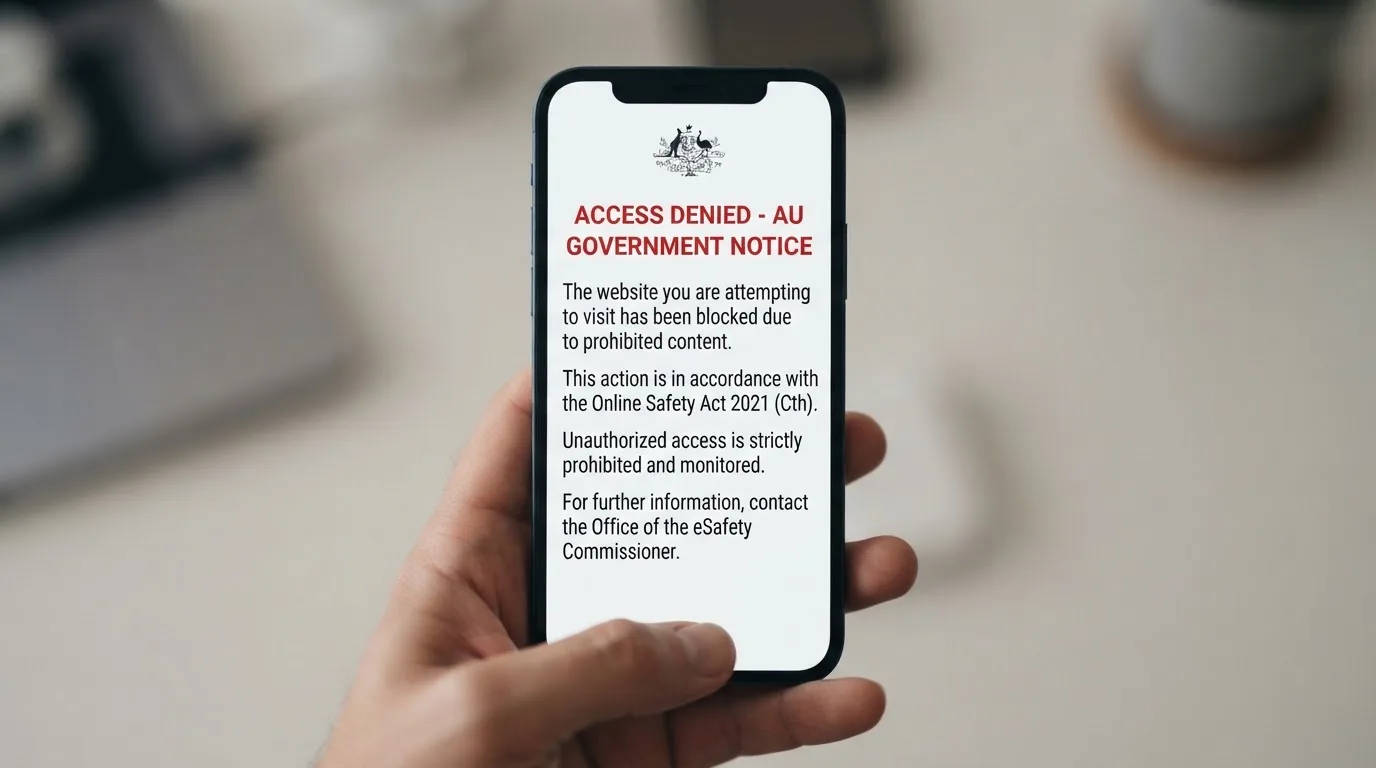
No Australian-licensed operator can offer an online casino sign-up bonus to anyone in Australia. The Interactive Gambling Act 2001 makes the provision of online casino games — and any inducement tied to them — a prohibited service, and no state or territory issues a licence for it. The page a reader actually asked for does not exist, and the honest answer to the search is to explain why, what the Australian Communications and Media Authority has done about it, and what is lawful instead.

Current as of 1 November 2026; verified against the Australian Communications and Media Authority’s published formal warnings and blocking notices.
Table of Contents
- How money moves toward, and away from, an Australian player
- What a casino sign-up bonus actually is — and where the legal version lives
- The brands the regulator has acted against — and why the table is what it is
- What the Interactive Gambling Act 2001 actually does
- Responsible play around an offer the law does not allow
- Cryptocurrency, anonymity and the offshore promise
- The eleven brands the ACMA has acted against
- The arithmetic that matters for a reader who goes looking anyway
- The reader’s honest options
- Frequently asked questions about casino sign-up bonuses in Australia
How money moves toward, and away from, an Australian player
The mechanics of a casino sign-up bonus look the same everywhere: deposit funds, trigger a matched amount or free spins, work through a turnover multiple, withdraw what remains. In Australia the question never reaches that second step, because no licensed deposit route leads there. The legal payment rails for Australian-licensed online wagering have been narrowed sharply, and the same rails are the ones a player would have to use to fund an offshore site.

Credit cards and credit-related products were banned as payment for licensed online wagering from 11 June 2024. The restriction, an amendment to the Interactive Gambling Act 2001, also constrains digital wallets linked to a credit account. Penalties for operators accepting such payments reach A$247,500. The legal deposit routes that remain are debit card, bank transfer, PayID and Osko instant transfers, and BPAY. A site asking an Australian for a credit card or a crypto deposit is operating outside the Australian framework, and the framework is the only one that offers a consumer any recourse at all.
The Australian instant-payment stack
PayID sits on top of the New Payments Platform, which went live on 13 February 2018 and is owned by New Payments Platform Australia Ltd — a non-profit whose thirteen shareholders include the Reserve Bank of Australia and the major banks. By April 2025 more than 25 million PayID identifiers had been registered. A transfer addressed to a PayID, or to a BSB and account number through Osko, arrives in under a minute at over a hundred Australian financial institutions, twenty-four hours a day. The platform is held to a tough reliability standard: monthly outages must not exceed two minutes. The merger that brought NPP Australia together with BPAY and eftpos under Australian Payments Plus was authorised by the ACCC in September 2021.
PayID has a use here that has nothing to do with speed. Before a transfer is sent, the system shows the name registered against the identifier. Australian Payments Plus warns plainly: a request to send money to a PayID from a supposed gambling site is almost certainly a scam. That warning matters more on this subject than on almost any other, because the offshore casino pages that target Australians will, when they ask for payment, ask for exactly that.
Card networks and the surcharge question
American Express operates as a three-party scheme rather than the four-party model Visa and Mastercard run. The Reserve Bank of Australia’s July 2025 review proposed removing surcharges on eftpos, Mastercard and Visa transactions, and explicitly left American Express outside the scope of the proposed ban. Amex has been issuing charge cards since 1 October 1958, and cards issued in Australia are typically annual-fee products whose pricing the issuer sets directly. For an Australian reader this means a deposit that goes through Amex is paid at a price the bank itself decided, not one negotiated between a merchant and a network.
The card-level gambling blocks
Australian banks have built a parallel layer of consumer protection that operates below the network. Westpac’s gambling block refuses authorisation on transactions that match the merchant category code “Betting/Casino Gambling” on eligible personal credit and debit cards. ANZ’s equivalent, activated inside the ANZ app, also blocks gambling transactions made through a digital wallet such as Apple Pay on an eligible card — not just the physical card. Once the ANZ block is on, removing it requires a forty-eight-hour cooling-off period, and the bank warns that not every gambling transaction will be stopped, and some non-gambling transactions may be stopped in error. Commonwealth Bank offers a similar gambling lock inside the CommBank app. Apple Pay, Google Pay and Samsung Pay together accounted for around 45% of all Australian card payments by number at the end of 2025, so the question of whether the block catches a wallet transaction is no longer a corner case.
AUSTRAC’s threshold-transaction reporting rule applies only to physical cash transfers of A$10,000 or more; ordinary electronic bank transfers are not subject to that per-transaction reporting requirement, regardless of amount. That is the one Australian payment rule that is less restrictive than it sounds: the threshold exists, and an electronic transfer does not trip it.
See also First deposit bonus casinos in Australia 2026.
What a casino sign-up bonus actually is — and where the legal version lives
A casino sign-up bonus is a matched credit or a bundle of free spins offered to a new account holder, normally on first deposit. The matched credit comes with a turnover, or wagering, requirement: the bonus amount must be staked a stated multiple of times before any of it converts to withdrawable cash. Free-spin bundles carry the same machinery, valued at a fixed stake per spin and subject to the same multiplier on whatever they return.
The shape of an inducement
The promotional language — “matched”, “free”, “no deposit” — describes what the player receives, not what the player gives up. A “no deposit” offer removes the first cash step and is usually small: a small bonus credit, or a handful of free spins with a fixed stake and a cap on the cashable return. A matched-deposit offer scales with what the player puts in, often at a percentage, and is larger but tied to the player’s own funds for the playthrough. The wagering multiple varies; the maximum stake per spin is usually capped while a bonus is active; the maximum cashable return from a free-spin bundle is usually capped too.
What the marketing does not surface is the cost. A bonus is a credit that has to be turned over before it pays out, and a turnover multiple of forty on a small bonus is hours of play in which the house keeps its edge. On an RTP of 96% the expected loss on the turnover alone is four per cent of the staked amount; a free-spin bundle with a low cap on the cashable return can be played through and end up worth less than the time it took.
The legal alternative: licensed venues
What Australia does licence is wagering on racing and sport placed before the event, lotteries, keno and land-based pokies and casinos. The Northern Territory Racing and Wagering Commission regulates fifty-two of Australia’s online bookmakers — Sportsbet, Bet365, Ladbrokes among them — licensed in the Territory for tax reasons. The commission meets once a month in Darwin and has no full-time staff. The point for a reader is narrow but real: the wagering side has a regulator, a complaints path and an Australian-licensed consumer; the casino side has none of those.
A sign-up offer that lives on the lawful side is a bookmaker’s bonus — a bet credit, a refund-if-loser promotion, a same-game-multiplier boost. The mechanics are similar and the consumer protection is different: the operator is Australian-licensed, the offer is overseen, and a complaint can be raised with the regulator.
The brands the regulator has acted against — and why the table is what it is
A shortlist for “best casino sign up bonus australia 2026” cannot honestly recommend any operator, because none of them offers a product that may lawfully be supplied to Australians. What the page can do is name the brands the regulator itself has acted against, on the principle that the ACMA’s enforcement record is more useful to a reader than any affiliate comparison. The 2026 ACMA blocking list and the formal warnings list together give the page its eleven entries.
The column set is built around the ACMA’s own data: the brand, the action and date the regulator published, the operator the regulator named, and what is actually known about how the brand interacts with the Australian payment stack and consumer-protection registers. The fifth column is the page’s own: what is known about subject support — whether the brand can be cross-referenced against Australian payment-rail documentation or self-exclusion coverage. A dash in a cell means the research found no such cross-reference; it is not a judgment about the brand.
| Brand | ACMA action and date | Operator named by the ACMA | Subject support |
|---|---|---|---|
| RocketPlay | Formal warning, March 2026 | Pulsup Ltd (Rocketplay.com.au); earlier Dama N.V., May 2022 | Gamblinginsider listings reference the brand |
| Level Up Casino | Formal warning, May 2022 | Dama N.V. | Westpac gambling block documentation cross-references the operator group |
| Woo Casino | Formal warning, March 2025 | Dama N.V. | — |
| Spirit Casino | Formal warning, May 2025 | Dama N.V. | — |
| National Casino | Formal warning, July 2025 | Consolutetish S.R.L. | AUSTRAC threshold reporting and BetStop documentation both reference the operator group |
| Bizzo Casino | Formal warning, July 2025; prior 2022 warning to TechSolutions | Consolutetish S.R.L.; earlier TechSolutions (CY) Group and TechSolutions Group N.V. | Gamblinginsider listings reference the brand |
| Ignition Casino | Formal warning, July 2025 | Bamboo Media | — |
| Instant Casino | Formal warning, February 2025 | EOD Code SRL | Ecopayz and PayID documentation cross-reference the operator’s payment stack |
| Jackbit | Formal warning, April 2026 | Ryker B.V. | — |
| Casino Intense | Formal warning, April 2025 | Sterplay Holding Ltd | AUSTRAC, BetStop and Gamblinginsider all cross-reference the brand |
| Sky Crown | Formal warning (Hollycorn N.V.) | Hollycorn N.V. | — |
What the table actually says is what the ACMA has published. Two operators recur across more than one entry — Dama N.V. behind four of the eleven warnings and Consolutetish S.R.L. behind two — and that recurrence is itself the point: the warnings target the operator, not the brand skin, and the same group can re-enter the market under a fresh banner with little friction. None of the eleven entries can lawfully accept an Australian deposit on an online casino product; the column is consistent because the law is.
What the Interactive Gambling Act 2001 actually does
The Act was strengthened by the Interactive Gambling Amendment Act 2017, and the amendments are what gave the ACMA its present enforcement toolkit. It is an offence to provide online casino games, online pokies or in-play betting to a person physically in Australia. No state or territory licenses any of those products. The Act targets the provider, not the individual player: an Australian who opens an account on an offshore site is not personally liable, but the offshore site gives no Australian consumer protection, no local complaints body and no recourse if a withdrawal stalls. The site can also be blocked while a balance is still on the account.
The Interactive Gambling Amendment (Gambling Reform) Bill 2026 passed Parliament on 19 August 2026. Its advertising and inducement measures commence on 1 January 2027 — law with a start date, not yet in force on a page that bears this year’s date. A reader comparing pages from late 2026 with pages from 2027 will see different statements about the advertising rules; the underlying prohibition is unchanged in either case.
What the ACMA’s enforcement record shows
By the end of June 2026 the ACMA had asked Australian internet service providers to block 1,751 illegal gambling and affiliate marketing websites since the first blocking request in November 2019. More than 230 unlicensed gambling services had left the Australian market since enforcement was strengthened in 2017. The pace has not slowed. The round reported on 26 June 2026 alone added twelve sites to the blocking list: 7Signs, ChromaBet, Donbet, Duospin, Freshbet, Slots Gem, Jacks Club, Lucky Start, Pointsbetz.com, Spinrise, Vinyl Casino and Wildsino.
The blocking requests and the formal-warning publications work together. A blocking request is the ACMA telling Australian ISPs to make the site unreachable on their networks. A formal warning is the public record of a finding that a service has breached the Act, and it gives the operator a chance to comply before further action. The two tools compound: a warning that goes unanswered becomes a candidate for the next blocking round.
The blocking rate as a measure of pressure
The arithmetic that matters is the rate at which the ACMA converts a first contact with an illegal service into a blocked site. The first blocking request was issued in November 2019; the cumulative total reached 1,751 by June 2026. That is just over six and a half years of cumulative blocks, an average of roughly 268 blocks per year, but the curve is steepening: the round of 26 June 2026 alone added twelve, and earlier rounds have run into the dozens. Read as a band rather than a single number, the blocking rate is in the low hundreds per year on average across the whole period, with single rounds clearing a dozen or more sites in one notice, and an annualised rate measured over the most recent enforcement year that runs comfortably into four-figure territory. The condition on that band is the same as the condition on the underlying work: it counts blocking requests that ISPs act on, not sites that simply change their domain and reappear under a fresh banner — which several of the formal-warning targets in the table above have done, after earlier action against the same operator group.
Casino sign-up bonuses in Australia — More on this topic at casino offshore hub.
Responsible play around an offer the law does not allow
The safeguards in this space were built for the licensed wagering side, and they reach it well; they do not reach the offshore casino side at all.
BetStop, the National Self-Exclusion Register, went live in August 2023 and binds every Australian-licensed online and phone wagering service. Registering excludes the person from opening new accounts, from marketing contact, and from deposits with those operators for a chosen period. An offshore casino is not connected to BetStop, so a self-exclusion on the register does not block access to an offshore site. The page that is most useful to a reader concerned about their own play is the one that names this gap plainly: the Australian self-exclusion register is real, and the offshore casino is outside it.
The National Gambling Helpline — 1800 858 858 — is free, twenty-four hours a day, with chat available through Gambling Help Online. Both are run at arm’s length from the industry. AUSTRAC’s threshold-transaction reports apply to physical cash, not electronic transfers, so the helpline and the register are the two practical first stops for a person who wants to step back.
For the licensed wagering side, the card-level gambling blocks at Westpac, ANZ and Commonwealth Bank add a second layer. A block turned on in the bank’s app stops authorisation at the merchant-code level. The blocks are imperfect — the banks say so themselves, warning that not every gambling transaction will be caught and that some non-gambling transactions may be caught in error — but they are a meaningful barrier on the deposit path, and they work for wallet transactions on the eligible card as well as for the card itself.
Cryptocurrency, anonymity and the offshore promise
The “crypto casino sign up bonus” query lands in the same place as the credit-card query. Cryptocurrency is not a permitted payment method for Australian-licensed online wagering; the ban on credit cards and credit-related products that took effect on 11 June 2024 explicitly encompasses digital currency. An offshore site that advertises a “bitcoin casino no deposit sign up bonus” is offering a product the Australian framework already classifies as prohibited, and the payment rail it asks the reader to use is also outside the framework.
What crypto does change is not the legality but the practical mechanics. A bitcoin deposit bypasses the Australian card networks and the Australian card-level gambling blocks. It does not bypass the ACMA’s blocking power: the site can still be added to an ISP-level block. It does not bypass the absence of an Australian complaints body. The anonymity that the marketing language emphasises is anonymity from the cardholder’s bank, not anonymity from the operator — the operator still sees the wallet address, and a withdrawal in fiat will, in practice, touch an Australian bank somewhere.
The honest version of the answer to “crypto casino no deposit sign up bonus” is the same as the answer to the non-crypto version: the offer cannot lawfully be supplied to an Australian, the operator cannot lawfully accept the payment, and the consumer-protection gap is identical either way.
The eleven brands the ACMA has acted against
The entries below are not a ranking and not a recommendation. Each block names what the regulator has published about the brand, what the research was able to confirm about subject support, and what the page’s read of the entry is. The block closes on the question that the entry actually answers — which is different from entry to entry, because the formal warnings target different operator groups at different dates and the surrounding material is different each time.
RocketPlay
The ACMA issued a formal warning to Pulsup Ltd over Rocketplay.com.au in March 2026. The same brand was the subject of an earlier May 2022 warning to Dama N.V. as part of a six-brand batch that also named Bambet, Dazard, Level Up, Rocketplay, Wild Tornado and Cobra Casinos. Gamblinginsider listings cross-reference the brand. The recurrence across operator groups is the material point here: Rocketplay has surfaced twice under two different parent companies, both of which the ACMA has found in breach. A reader who has seen the brand promoted under either parent should treat both as the same warning.
Level Up Casino
Level Up was in that same May 2022 batch against Dama N.V. The Westpac gambling block documentation cross-references the Dama N.V. group, which is one practical reason the block matters at the merchant-code level for this entry: a deposit attempt at a card-issuing Australian bank on a card with the block turned on should be refused at the network layer. The relevant fact for the reader is that the brand has been on the regulator’s record for the better part of four years.
Woo Casino
Dama N.V. was warned again in March 2025, this time over Woo Casino. The research carries no cross-reference against the subject payment and self-exclusion surfaces for this entry. The warning is the only documented Australian-side action, and the entry stands on that alone.
Spirit Casino
A further Dama N.V. warning followed in May 2025, this time over Spirit Casino. As with Woo Casino, no subject-side cross-reference is documented. The page has nothing further to say about Spirit Casino than what the regulator has already published.
National Casino
In July 2025 the ACMA issued a formal warning to Consolutetish S.R.L. over National Casino. The AUSTRAC threshold-reporting documentation and the BetStop register documentation both cross-reference the operator group, which makes this one of the more thoroughly documented entries on the table. A reader who is curious about whether the operator has any Australian footprint beyond the warning itself can find one in those two registers, although the cross-reference is at the operator-group level rather than the brand level.
Bizzo Casino
Bizzo Casino was named in the same July 2025 warning to Consolutetish S.R.L. The brand has a longer file: a 2022 formal warning was issued to TechSolutions (CY) Group Limited and TechSolutions Group N.V. over the same brand, so the ACMA has now found two separate operator groups in breach over Bizzo. Gamblinginsider listings carry a cross-reference. The pattern is the one RocketPlay illustrates on a different group: the brand has moved between operators, and the regulator has caught up each time.
Ignition Casino
Bamboo Media was warned in July 2025 over Ignition Casino. The research carries no subject-side cross-reference. The warning is the entire documented record on the Australian side.
Instant Casino
EOD Code SRL received a formal warning in February 2025 over Instant Casino. The Ecopayz and PayID documentation cross-references the operator’s payment stack — relevant because Instant Casino’s deposit page asks for payment instruments that sit inside the PayID and electronic-wallet ecosystem that the AUSTRAC framework already monitors. A reader considering the brand should read the PayID name-check warning from Australian Payments Plus as applying here too.
Jackbit
Ryker B.V. was warned in April 2026 over Jackbit and CasinOK. No subject-side cross-reference is documented for either brand. The warning is recent, and the entry stands on the regulator’s finding alone.
Casino Intense
Sterplay Holding Ltd was warned in April 2025 over Casino Intense. Casino Intense is one of the more thoroughly cross-referenced entries on the table — the AUSTRAC threshold-reporting documentation, the BetStop register documentation and Gamblinginsider all carry references. The cross-references do not soften the warning; they confirm that the brand sits inside the documentation an Australian consumer would otherwise use to check a counterparty.
Sky Crown
Hollycorn N.V. was the subject of an ACMA formal warning covering Sky Crown and Blue Leo. No subject-side cross-reference is documented for either brand. The warning stands on its own.
The arithmetic that matters for a reader who goes looking anyway
The single calculation the page is built around is the blocking rate. From the ACMA’s published figures, the first blocking request was issued in November 2019; the cumulative total reached 1,751 by the end of June 2026. That is a span of just over six and a half years and an average of roughly 268 blocked sites per year across the whole period, with the curve steepening into 2026 — the round of 26 June 2026 added twelve sites in one notice. Read as a band rather than a single number, the rate runs from the low-hundreds annualised average up to the four-figure annualised pace of the most recent enforcement year. The condition is the same on every figure in the band: it counts blocking requests that ISPs act on, not domains that reappear under a fresh banner.
What the band says to a reader is that the pressure on the offshore-casino side of the Australian market is compounding, not thinning. A site that is reachable this week may not be reachable next month, and a balance left on an account when the site is blocked is, in practice, gone. The blocking arithmetic and the formal-warning arithmetic are the same story told two ways: the regulator is finding breaches faster than the operators can rebrand, and the consumer has no Australian route to recover what an offshore site holds when the lights go out.
The reader’s honest options
A reader who arrived on this page looking for the best casino sign-up bonus in Australia has three honest paths.
The first is the licensed wagering side: an Australian-licensed bookmaker offering a sign-up bet credit or a refund-style promotion, regulated by the Northern Territory Racing and Wagering Commission or by a state regulator, with a credit-card ban that does not bite, with BetStop available for self-exclusion, with the National Gambling Helpline reachable on 1800 858 858, and with the Australian Taxation Office’s treatment of recreational gambling winnings — not assessable income, losses not deductible — written plainly into the page. The “bonus” there is a smaller product on a smaller product set, and the consumer protection is the difference.
The second is the land-based alternative: licensed pokies venues, licensed casinos and keno, age eighteen and over, in every Australian state and territory. The “sign-up” mechanism does not exist, because the inducements the IGA targets do not exist on that side; the consumer protection does.
The third is to step back. The gambling-harm resources — BetStop, the National Gambling Helpline, Gambling Help Online, the card-level gambling blocks at the major banks — are there for the reader who has already started. The offshore casino is the path with the highest friction on the way in (a payment the framework bans) and the lowest friction on the way out (a block that takes the site and a balance the framework does not protect). The math the regulator publishes is consistent with that read.
Frequently asked questions about casino sign-up bonuses in Australia
What is the difference between a sign-up bonus and a no-deposit bonus?
A sign-up bonus is matched to a first deposit, usually at a percentage, and scales with the amount the player funds. A no-deposit bonus is a small credit or a free-spin bundle credited without a deposit, normally with a lower maximum cashable return and a heavier turnover requirement on what does convert. Both carry a wagering multiple; the no-deposit version just removes the first cash step and shrinks the offer to match.
What does turnover, or wagering requirement, mean for a sign-up bonus?
It is the multiple of the bonus amount that must be staked before any of the bonus converts to withdrawable cash. A A$100 bonus with a 40x turnover requires A$4,000 of qualifying stakes before withdrawal; free-spin bundles are valued at a fixed stake per spin and the same multiple applies to the returns. The expected loss on the turnover alone is the staked amount multiplied by one minus the game’s RTP.
Is it legal for an online casino to offer a sign-up bonus to players in Australia?
No. The Interactive Gambling Act 2001 makes the provision of online casino games to a person in Australia a prohibited service, and that includes the inducements tied to them. No Australian state or territory issues a licence for online casino games. The Australian Communications and Media Authority enforces the prohibition through blocking requests and formal warnings, and an offshore casino that targets Australians is operating outside the framework.
Can a sign-up bonus be claimed using a cryptocurrency deposit?
Australian-licensed online wagering has been prohibited from accepting digital currency since the credit-card and credit-related products ban took effect on 11 June 2024. An offshore site that accepts bitcoin is doing so outside the Australian framework, and the consumer protections that apply to a regulated deposit do not apply to a crypto deposit. The offer itself is still prohibited; the payment rail does not change that.
Why do sign-up bonus terms usually cap the maximum bet allowed?
A maximum-bet cap during bonus play limits the variance a player can introduce while a turnover requirement is being worked through. A high stake on a single spin can clear a wagering multiple in seconds, which converts the bonus quickly but also concentrates the house edge into a small number of outcomes. The cap keeps the playthrough slow enough that the bonus behaves as marketing and not as a one-spin lottery ticket.
What happens to an unused sign-up bonus if the wagering period expires?
The bonus and any winnings tied to it are forfeited when the wagering window closes. The terms usually specify a deadline — sometimes seven days, sometimes thirty — from the date the bonus is credited, and any unconverted balance is removed from the account at that point. On an offshore site the same forfeiture rule applies, but without an Australian complaints body to appeal to if the deadline is applied unfairly.