
Reload bonuses in Australia: how repeat-deposit offers work, and what they cost the punter
A reload bonus is the offer a casino makes to a customer who is already on the books — a match on the next deposit, sometimes a bundle of free spins, usually gated by a code the punter types at the cashier. It looks like a thank-you. The arithmetic behind it, examined honestly, shows it is the same product as the welcome bonus, sold a second time. In Australia, every offshore site marketing that offer sits outside the Interactive Gambling Act 2001, and the Australian Communications and Media Authority has spent the last several years issuing formal warnings and ordering internet service providers to block them. The brand may display a Curaçao licence or an Anjouan seal; neither licences online casino games for Australians, because no state or territory does.

The material below was checked against ACMA records and the Reserve Bank’s payment rules as of 8 November 2026.
Table of Contents
- What a reload bonus is, and what it is not
- The legal frame every Australian punter walks into
- Where responsible play fits, and where it does not
- The payment methods a reload bonus travels through
- How a reload bonus is structured — and what the structure costs
- The blocking rate, 2026 edition
- The brands the ACMA has warned, side by side
- Brand-by-brand: the picture the warnings paint
- The shape of the offer, in the round
- The 2026 reform the regulator is preparing
- Frequently asked questions
What a reload bonus is, and what it is not
A reload bonus is a marketing construct layered on top of an ordinary deposit. The player sends money in, the casino credits a percentage on top — usually somewhere between a 25% match and a 100% match, sometimes higher for crypto deposits — and the credited amount then has to be turned over a stated number of times before it converts to cash a punter can withdraw. That last clause is the part the marketing tends to leave for the small print.

The thing it is not, despite how it is sold, is free credit. The casino does not hand out money; it lends play money against the punter’s own deposit, on terms that almost always include a wagering multiple, a maximum cashout ceiling, a list of excluded games, and a deadline by which the wagering must be cleared. The promised headline — “100% up to A$500” — is the best case before the conditions are read. The realised value is the deposit minus what the wagering costs in expected losses, and that is always less than the headline. Anyone treating a reload bonus as a windfall is treating the marketing copy as the product.
What separates a reload from a sign-up offer is the audience, not the mechanics. The first-deposit bonus is paid once, to a new account, often in a more generous envelope to acquire the customer. The reload is paid repeatedly, to a returning account, usually smaller and tied to a particular day of the week or a payment method the casino wants to push — Bitcoin on Mondays, a 50% match on Fridays, a free-spin drop tied to a single pokie title. The same wagering logic applies. A punter who learned to read a welcome bonus’s small print already knows how to read a reload; only the date and the percentage change.
The legal frame every Australian punter walks into
Online casino games and online pokies are prohibited interactive gambling services under the Interactive Gambling Act 2001, and the 2017 amendments turned that prohibition into an enforceable one. No state or territory issues a licence for online casino product, and no offshore licence — Curaçao, Anjouan, the Kahnawake Gaming Commission, the Malta Gaming Authority — extends to Australian customers in respect of casino games. What is licensable is wagering on racing and sporting events placed before the event, lotteries and keno. The Northern Territory Racing and Wagering Commission is the regulator that issues those licences — it currently supervises 52 online bookmakers including Sportsbet, Bet365 and Ladbrokes — but the commission itself has no full-time staff and meets once a month in Darwin.
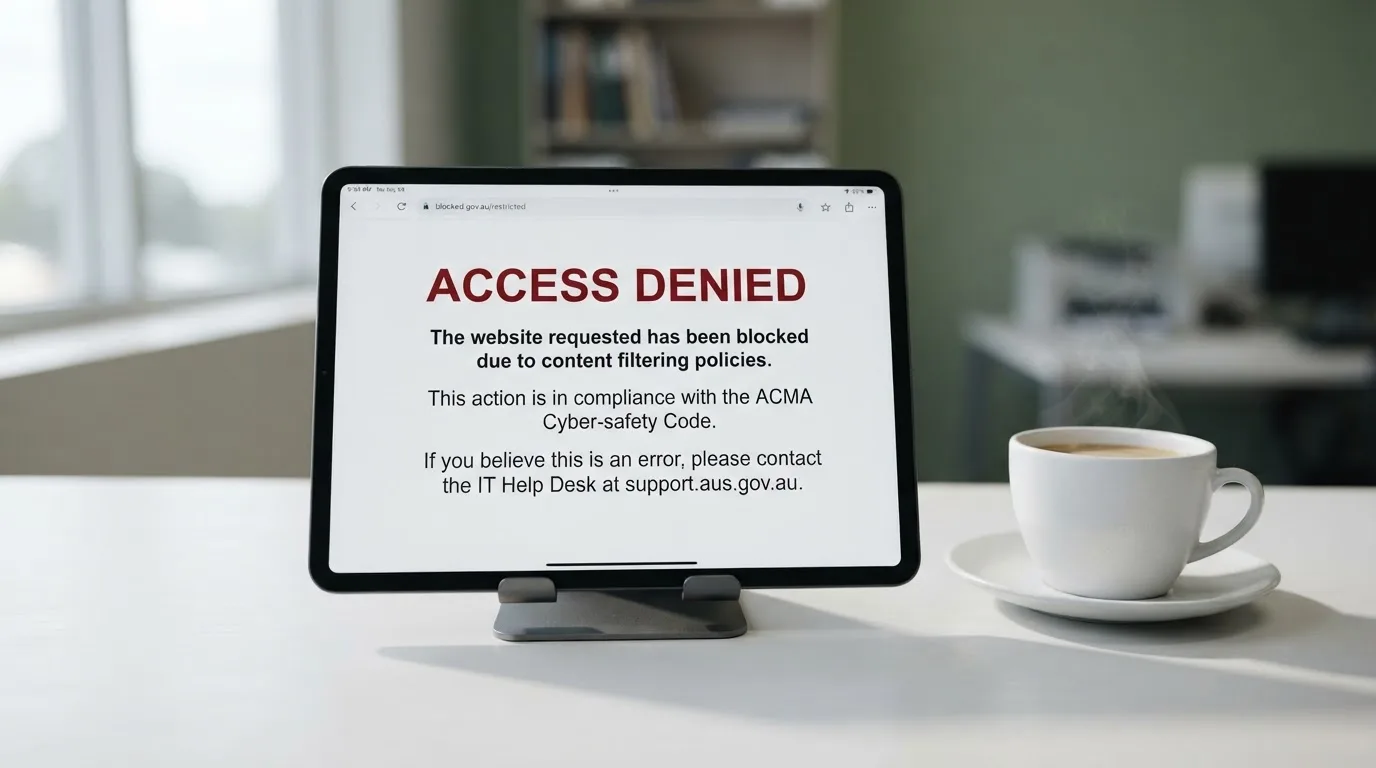
The ACMA investigates suspected breaches, issues formal warnings to the operators and their corporate parents, and can direct Australian internet service providers to block offending sites at the network level. As of June 2026 the authority’s running total since the first blocking request in November 2019 stood at 1,751 illegal gambling and affiliate marketing websites, and more than 230 unlicensed services had left the Australian market since enforcement was stepped up in 2017. The individual player is not the target of any of this; the IGA aims at the provider. The practical consequence for the punter is different — no Australian consumer protection, no local complaints body, no recourse if a withdrawal is refused, and a balance that can become unreachable the moment the domain is added to a blocking list.
In June 2026 alone, the ACMA asked ISPs to block 12 more names: 7Signs, ChromaBet, Donbet, Duospin, Freshbet, Slots Gem, Jacks Club, Lucky Start, Pointsbetz, Spinrise, Vinyl Casino and Wildsino. They are not the only ones. The eleven brands covered in this article are drawn from a different list — operators the ACMA has issued formal warnings to — and the brand name is rarely the same as the company on the warning.
Where responsible play fits, and where it does not
The offshore casino marketing a reload bonus to an Australian customer has no obligation under Australian consumer law, is not bound by BetStop, the National Self-Exclusion Register, and is not connected to the National Gambling Helpline on 1800 858 858. BetStop is the tool that lets a person exclude themselves from every Australian-licensed online and phone wagering service in one registration. It binds the licensed bookmakers. It does not bind a Curaçao-licensed casino whose domain sits behind an offshore corporate veil.
For a punter who feels their play is getting away from them, the practical options are all on the Australian side. BetStop registration is free and takes effect across licensed operators immediately. The Gambling Help Online chat service runs 24/7. Self-exclusion at a single offshore site, even where it is offered, covers that site alone and depends on the operator honouring it. Punters who have set a BetStop registration and then move to an offshore site are not getting the protection they signed up for; they are leaving it behind. The reload bonus, by design, comes back each week and asks the customer to deposit again. That structure is not an accident.
The wider context is sobering. H2 Gambling Capital’s 2025 estimate puts Australian losses to illegal gambling sites at around A$3.9 billion a year, and the share of gambling flowing through legal Australian channels fell from 74% in 2021 to 64% in the same report. The legal channel is shrinking while the offshore one grows. A punter chasing a reload bonus is, in aggregate, one of the figures behind that 64%.
The payment methods a reload bonus travels through
Reload bonuses at offshore casinos are usually claimed at the deposit stage — the punter tops up, opts in (often with a code), and the bonus credits to the balance. The payment methods offered are a separate question, and on the Australian side they are constrained in ways the offshore site does not advertise.
Cards, wallets and the credit ban
Under the Interactive Gambling Act 2001 as amended in 2023, Australian-licensed online wagering services cannot accept payment by credit card or any credit-related product. The prohibition applies to the linked digital wallets as well: a credit-funded Apple Pay or Google Pay transaction is, for these purposes, still a credit card payment. Australian banks have built the constraint into their own products as well. Westpac’s gambling block works at the card level — it refuses authorisation on any transaction carrying the merchant category code for betting and casino gambling. ANZ’s gambling block, activated in the app, blocks gambling transactions made through a digital wallet on an eligible card, not just the plastic, and turning the block back off requires a 48-hour waiting period. Commonwealth Bank offers a comparable lock on eligible cards through its app. The banks warn that none of these blocks is a perfect filter; some gambling transactions slip through and the occasional non-gambling transaction gets blocked.
Offshore sites are not part of this arrangement. They take Visa, Mastercard and the digital wallets in their own right, and credit cards are typically welcome, because the prohibition that constrains a licensed Australian operator does not bind them. A punter using an Australian-issued credit card to claim a reload bonus at an offshore casino is doing something the licensed market will not let them do, and the bank’s own block may or may not catch it.
PayID, Osko and BPAY
For licensed Australian wagering, the legal deposit routes are debit card, bank transfer, PayID/Osko and BPAY. PayID is the addressing layer on the New Payments Platform — more than 25 million identifiers were registered by April 2025 — and a transfer to a PayID arrives in under a minute via Osko, 24/7, addressed either to a BSB and account number or to the PayID itself. The platform’s participants are required to keep monthly outages under two minutes; the system is built to be quiet. Critically, paying to a PayID shows the name on the account before the transfer is sent, and AP+ warns that being asked to send money to a PayID at an illegal gambling site is almost certainly a scam.
BPAY is the older bill-payment service, owned jointly by the four major banks via Australian Payments Plus and operated by AP+ since the 2021 merger. It has been running since November 1997 and is available at over 140 Australian financial institutions and over 95,000 billers. It is a bill-payment rail, not a wallet, and offshore casinos do not issue BPAY biller codes because they are not Australian billers.
Bitcoin and other crypto
Reload bonuses marketed at “bitcoin casinos” sit at the intersection of two offshore propositions — the casino itself sits outside the IGA, and the deposit rail sits outside the Australian banking system. AUSTRAC’s threshold-transaction-report rule, which requires reports on transfers of A$10,000 or more, applies only to physical cash; ordinary electronic transfers are not subject to the per-transaction reporting requirement regardless of amount. Crypto transfers travel through exchanges and on-chain wallets and are visible to the sender’s exchange but not to the Australian bank the punter bought the bitcoin with in the first place. The promised “instant withdrawal” of a bitcoin reload bonus is real, in the sense that the on-chain transaction settles quickly; the practical reality is that once the bitcoin leaves the casino’s wallet, the punter has no Australian intermediary to complain to if the amount is short.
The marketing around crypto reloads leans hard on speed and pseudonymity. Neither survives contact with the bank’s own gambling block, which sits at card level and which an Australian punter with the block on cannot bypass by switching coin. The bank does not see the bitcoin transaction; it sees only the AUD debit that funded the exchange account.
How a reload bonus is structured — and what the structure costs
The shape of a reload offer is consistent enough across the offshore market that it can be discussed as a single product. A representative offer might credit 50% of the deposit up to a stated maximum, attach a wagering multiple of 40 times the bonus, restrict play to a defined set of pokies, exclude the live casino and table games from the wagering entirely, impose a maximum cashout on bonus-derived winnings, and require the wagering to be cleared within seven days. None of those terms is unusual. All of them are present in the small print at most offshore sites.
The cost to the punter is the expected loss on the wagering, multiplied by the chance the punter runs out of money before clearing it. A typical online pokie carries a return-to-player somewhere in the 94% to 97% band; the house edge is the 3% to 6% on the other side. Wagering a bonus of A$200 forty times requires A$8,000 of turnover. At a 95% RTP the expected loss on that turnover is A$400 — twice the face value of the bonus. The punter clears the wagering, the bonus converts to withdrawable cash, and the punter is A$200 lighter than if they had not taken the offer at all.
That arithmetic is the quiet centre of every reload bonus. The marketing never frames it that way, and the headline percentage is set high enough that the punter who skims the page believes they have been handed something. They have been handed the chance to risk A$8,000 to win A$200, with a real risk of finishing the wagering with less than they started. That is the price of the reload, and the price is paid in expected loss, not in fees. There is no fee. There is the structural cost of running A$8,000 of bets through a house edge.
A few terms make the cost worse. A maximum cashout ceiling — the cap on what can be withdrawn from bonus-derived winnings — turns a lucky spin into a fixed-amount payout regardless of how high the multiplier was. A short expiry window — seven days is common — pressures the punter into higher stakes than they would otherwise bet, which compresses the variance into a smaller number of larger spins. Excluded games mean the wagering has to be cleared on the higher-edge product; live casino and progressive jackpot pokies are routinely excluded because the casino does not want to carry the variance. Every term in the small print exists to make the bonus cost the punter more than the headline suggests.
The blocking rate, 2026 edition
The ACMA’s blocking programme began with its first blocking request in November 2019. By June 2026, the authority’s published running total stood at 1,751 websites blocked since that first request, and 12 more were added in the June 2026 round alone. That works out, in round terms, to roughly 260 sites blocked per year on average across the six-and-a-bit years of the programme, with the rate running higher in recent rounds than in the first year as the ACMA built up its enforcement pipeline and the offshore industry kept producing new domains to replace blocked ones. As a band: somewhere between one site every working day and two sites every working day, year in, year out. The interesting figure is not the rate but its persistence — the supply side replaces what the enforcement side removes, and the blocks keep coming.
The punter who wants to know whether a particular brand is still reachable in Australia can answer that question by looking at the brand against the ACMA’s published blocking list. The list is updated after every round. The punter who has money on an offshore site that gets added to the next round has a more immediate problem: the balance becomes unreachable at the network level and the dispute resolution options are whatever the offshore operator chooses to offer, which is usually nothing.
The brands the ACMA has warned, side by side
The table below lists eleven brands the ACMA has issued formal warnings to. It is not a ranking and it is not a recommendation. Each brand appears because the regulator itself named it in a formal warning under the Interactive Gambling Act 2001. The “subject support” column reflects what external listings report about each brand’s payment or game subject area, and it is reported as those listings describe it — not as the operator’s own claim.
| Brand | ACMA action and date | Operator named by the ACMA | Subject support |
|---|---|---|---|
| RocketPlay | Formal warning, March 2026; earlier Dama N.V., May 2022 | Pulsup Ltd | Listings report payment coverage |
| Level Up Casino | Formal warning, May 2022 | Dama N.V. | Listings report payment coverage |
| Woo Casino | Formal warning, March 2025 | Dama N.V. | — |
| Spirit Casino | Formal warning, May 2025 | Dama N.V. | — |
| National Casino | Formal warning, July 2025 | Consolutetish S.R.L. | Listings report AUSTRAC, BetStop references |
| Bizzo Casino | Formal warning, July 2025; earlier TechSolutions, 2022 | Consolutetish S.R.L. | Listings report payment coverage |
| Ignition Casino | Formal warning, July 2025 | Bamboo Media | — |
| Instant Casino | Formal warning, February 2025 | EOD Code SRL | Listings report ecoPayz and PayID references |
| Jackbit | Formal warning, April 2026 | Ryker B.V. | — |
| Casino Intense | Formal warning, April 2025 | Sterplay Holding Ltd | Listings report AUSTRAC, BetStop and payment coverage |
| Sky Crown | Formal warning, September 2022 | Hollycorn N.V. | — |
No column on this list is informative on its own. The interesting reading is across them. Dama N.V. appears as the named operator on three separate warnings to three of its brands — Level Up in 2022, Woo in March 2025 and Spirit in May 2025 — which suggests the warnings, when issued to a corporate parent rather than a brand, are a way of asking the parent to rein in a portfolio rather than a way of taking down a single domain. Consolutetish S.R.L. appears on two of the eleven — National Casino and Bizzo Casino — in the same July 2025 round, and Bizzo had already been warned under a different parent in 2022. The pattern is one operator group absorbing multiple brand names, each of which the ACMA names separately because each has its own customer-facing site.
The March 2026 warning to Pulsup Ltd over RocketPlay, the April 2026 warning to Ryker B.V. over Jackbit and the September 2022 warning to Hollycorn N.V. over Sky Crown are not the same kind of action; they sit in different rounds and they target different parents. The only thread is that the regulator is willing to put its name to a public warning before it escalates to a blocking request. Every brand on this list is one round away from the ISPs being asked to make the domain unreachable.
Brand-by-brand: the picture the warnings paint
RocketPlay
RocketPlay was the subject of an ACMA formal warning to Pulsup Ltd in March 2026, with the brand Rocketplay named in the warning. The brand had already been on the regulator’s radar under a different parent — Dama N.V. was warned over RocketPlay in May 2022 as one of six brands in a single round. The same operator-group appears in the formal-warning record several times over, which is worth noting in itself. External listings report RocketPlay’s payment coverage in general terms; no working bonus terms are confirmed from primary sources, so the value of any specific reload offer has to be taken from the live site.
Level Up Casino
Level Up was named alongside RocketPlay in the May 2022 Dama N.V. warning — six brands in one round, including Bambet, Dazard, Rocketplay, Wild Tornado and Cobra Casinos. There is no second formal warning to Dama N.V. over Level Up since, which may mean the brand changed hands, changed its name, or simply did not get caught again. External listings describe Level Up’s payment methods in general terms. The operator group history matters more than the brand history; Dama N.V. is one of the more frequently warned parent companies in the ACMA’s published record.
Woo Casino
Woo Casino was named in the ACMA’s March 2025 round of warnings to Dama N.V., and it is the first of the Dama N.V. brands on this list to be re-warned under the same parent after the 2022 round. The pattern — same parent, separate brand, separate warning — is consistent with the regulator’s working method. No external listing data on payment or game subject coverage is available for Woo Casino beyond what the brand’s own pages describe, and what those pages describe is not the source the ACMA’s record rests on.
Spirit Casino
Spirit Casino was named in the same Dama N.V. family of brands as Woo Casino, with its own formal warning issued in May 2025. Two months between the Woo and Spirit warnings, the same operator, two different brand names. As with the other Dama N.V. brands, no external listing coverage is available for the subject area beyond what the brand publishes itself.
National Casino
National Casino is on the ACMA’s July 2025 list of warnings issued to Consolutetish S.R.L., the same parent as Bizzo Casino. External listings describe National Casino in terms that touch on AUSTRAC’s reporting thresholds and on BetStop’s exclusion register — references that suggest the listings recognise the Australian regulatory frame even when the casino itself sits outside it. The brand’s presence in those listings is a measure of how visible the name is in Australian search results, not of any approval.
Bizzo Casino
Bizzo Casino received a July 2025 formal warning to Consolutetish S.R.L. and an earlier 2022 warning to TechSolutions (CY) Group Limited and TechSolutions Group N.V. The two-year gap, with two different parent companies named, is the clearest sign of an operator-group change of one kind or another — either a sale, a rebrand, or a restructuring of the offshore corporate veil. External listings describe Bizzo’s payment coverage in general terms, consistent with the way the brand is reviewed across the affiliate marketing ecosystem.
Ignition Casino
Ignition Casino was the subject of a July 2025 formal warning to Bamboo Media. The brand has been in the offshore market for some time and is one of the more familiar names to Australian searchers, in part because of its long-running poker product. No external listing data on payment or game subject coverage is available beyond what the brand’s own pages describe.
Instant Casino
Instant Casino received a February 2025 formal warning to EOD Code SRL. External listings describe Instant Casino in terms that reference ecoPayz and PayID, both of which are payment-rail names rather than payment methods in the Australian banking sense — PayID is an Australian NPP identifier, and an offshore casino advertising PayID is advertising a rail it cannot actually issue, which is worth flagging. The brand’s presence in those listings reflects its visibility in search rather than any partnership with an Australian institution.
Jackbit
Jackbit received an ACMA formal warning to Ryker B.V. in April 2026. The brand sits in the more crypto-leaning corner of the offshore market and the warning places it firmly on the same regulatory footing as the older brands on the list: an operator offering prohibited interactive gambling services to Australians, named publicly by the regulator. No external listing data is available beyond what the brand publishes itself.
Casino Intense
Casino Intense was the subject of an April 2025 formal warning to Sterplay Holding Ltd. External listings reference Casino Intense in terms that touch on AUSTRAC’s reporting thresholds, BetStop’s exclusion register and the brand’s general payment coverage — three separate signals that the listings recognise, at least in passing, that the brand operates outside the Australian regulatory frame.
Sky Crown
Sky Crown was named, alongside Blue Leo, in the ACMA’s September 2022 formal warning to Hollycorn N.V. — the earliest warning on this list. The age of the warning matters: a brand that was warned in 2022 and remains in the market in 2026 has had four years to adjust its Australian-facing operations, and the ACMA’s continued willingness to name it in a public warning suggests the adjustment has not been enough. No external listing data is available on payment or game subject coverage beyond the brand’s own pages.
The shape of the offer, in the round
Read together, the eleven brands tell a story about the offshore market rather than about any one of them. The same parent company appears multiple times under different brand names — Dama N.V. three times, Consolutetish S.R.L. twice — and the ACMA’s working method is to name the parent and the brand in the same warning. From the punter’s side, the brand on the welcome page is rarely the company on the warning, which makes the warning harder to find and easier to dismiss. A punter searching for “RocketPlay review” is more likely to find an affiliate page listing payment methods than an ACMA PDF naming Pulsup Ltd, and that asymmetry is the structural feature of the offshore market that the ACMA’s enforcement is trying to undo.
The reload bonus, as a product, is consistent across the brands. The percentages differ, the codes differ, the eligible days differ, and the wagering multiples differ, but the structure is identical: a match on the next deposit, a multiple on the bonus, a deadline, an excluded-game list. The cost to the punter is the expected loss on the wagering at the house edge of the eligible games, and that cost is always higher than the headline percentage makes it sound. A reload bonus is a marketing term for a structure that takes the punter’s money, runs it through a margin, and returns what is left.
The 2026 reform the regulator is preparing
The Interactive Gambling Amendment (Gambling Reform) Bill 2026 passed Parliament on 19 August 2026. Its advertising and inducement measures commence on 1 January 2026+1CYCY, the inducement landscape will have shifted.
The reform does not legalise online casino product. The product remains prohibited; the reform tightens the marketing around the prohibition. The two should not be conflated.
Frequently asked questions
What is a reload bonus, and how does it differ from a first sign-up bonus?
A reload bonus is a match on a returning customer’s deposit — typically 25% to 100% — with the credited amount carrying a wagering multiple before it converts to withdrawable cash. A sign-up bonus is the same product paid once on the first deposit, usually at a higher headline percentage. The mechanics are identical; the audience is different.
Why would a bitcoin casino specifically brand its repeat-deposit offer as a “reload bonus”?
Crypto-friendly casinos often run higher-percentage reloads on Bitcoin deposits to push volume onto a rail that settles faster and carries lower processing cost for the operator. The “reload” label is the same as on any other deposit match — the bitcoin bit is the deposit method, not the structure.
Is accepting a reload bonus from an offshore casino any different, legally, to accepting its welcome bonus?
No. The Interactive Gambling Act 2001 prohibits the supply of online casino games to a person in Australia; whether the inducement is a welcome bonus or a reload bonus is irrelevant. Both are marketing for the same prohibited product.
How often do sites typically run a reload bonus for existing players — weekly, or only occasionally?
Weekly is the modal cadence at most offshore casinos, often tied to a specific day — Friday reloads and Monday crypto reloads are common patterns. Some sites run daily reloads; others run monthly bundles. The marketing calendar is dense; the actual product is the same.
Does a reload bonus on pokies usually carry the same wagering terms as the original sign-up offer?
Often, yes, but not always. Some sites offer a softer multiple on the reload — a 25x reload versus a 40x sign-up — to keep the headline competitive. The expiry window is usually tighter on reloads, and the eligible-games list is usually narrower. The headline percentage is smaller; the conditions are sometimes, but not always, gentler.