
Solana casino comparison Australia: 2026’s market, the offshore licences on display, and what the ACMA has actually done about them
Current as of 5 November 2026; verified against the Australian Communications and Media Authority’s published formal warning notices and operator pages.
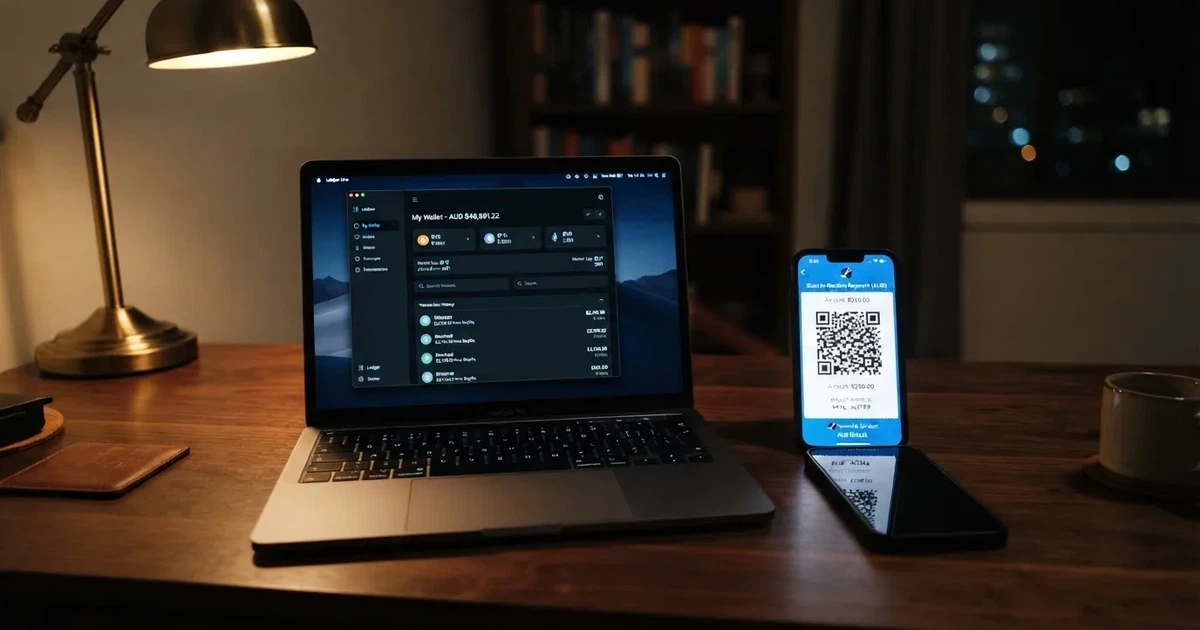
A page comparing Solana casinos for Australian readers starts in an awkward place: the product itself is prohibited. The Interactive Gambling Act 2001 makes it an offence to supply online casino games or online pokies to a person physically in Australia, and no state or territory issues a licence for it. What changes with a Solana deposit is the rail the money travels on, not the legal status of the site on the other end. Speed improves, transaction fees fall, the wallet on a phone handles the settlement — and the casino waiting at the other end still sits outside Australian law.
That is the comparison worth running, and the rest of this page runs it. Eleven offshore brands the Australian Communications and Media Authority has already named in formal warnings are laid out below, with the operator named in each warning and the date it was published. None is endorsed, and the list is not a ranking. The two Solana-specific topics — why the coin shows up on these sites at all, and what its use changes about fees and confirmation time — sit before the operator cards, so the reader can see what the comparison is actually comparing.
Table of Contents
- What a Solana casino is, and why the brand mix exists
- Solana itself, in numbers an Australian reader can use
- Why the speed claim does what the page says it does
- What an Australian player is actually comparing on a Solana casino page
- The offshore licence on the wall, and what it actually authorises
- Payment rails in and out, and the AUSTRAC layer nobody sees at the cashier
- What the ACMA has actually done about the brands on this page
- Why the offshore casino cannot be licensed for Australian players
- What the offshore casino cannot do for an Australian player
- How the ACMA blocking rate is changing, in numbers
- Operator reviews: the eleven brands, written as a comparison
- What a player should actually take from a comparison like this
- The responsible gaming frame
- Where the page stops
- Frequently asked questions
What a Solana casino is, and why the brand mix exists
The phrase covers two different things, and most marketing material blends them. There is the Solana network, a public blockchain launched in March 2020 that settles transactions in roughly 400 milliseconds and claims capacity for one million payments per second when its payment-channel scheme is used. There is the offshore online casino that accepts SOL as a deposit and pays withdrawals back in SOL, while running its games from a Curaçao or Kahnawà:ke licence and serving players from jurisdictions where online casino games are not themselves prohibited.

The brand mix exists because adding Solana to a cashier page is cheap. A casino already running a custodial wallet service for Bitcoin, Ethereum and Tether can add an SPL token address in a working afternoon; what costs more is the banking side, and Solana’s lower per-transaction fee makes small deposits economically viable. H2 Gambling Capital’s 2025 estimate put annual losses to illegal sites for Australians at around A$3.9 billion, with the legal share of gambling spend falling from 74 per cent in 2021 to 64 per cent. The eleven brands on this page sit inside that illegal share, and the ACMA’s blocking requests are aimed at the URLs that serve them.
For an Australian reader the practical difference between Solana and Bitcoin is not ideology. It is the time between pressing deposit and seeing the balance available to wager, the fee taken out of a small deposit, and the cost in attention of converting Australian dollars into something the casino will accept. The legal posture is identical in every case.
Solana itself, in numbers an Australian reader can use
The network reports record throughput in its own August 2026 communications, with around four billion dollars of tokenised real-world assets on-chain and growing stablecoin settlement. The headline capacity figure of one million payments per second refers to a payment-channel construction in which an agent’s spending authority is authorised once and then spent off-chain, so the million-per-second number is the upper bound of a particular routing design rather than a property of every transaction. The standard on-chain settlement window is in the high hundreds of milliseconds per slot, which is what a casino’s cashier draws on when it says “instant”.
The token, SOL, was issued at mainnet beta in March 2020 and has no fixed maximum supply. Solana’s documentation sets an initial annual inflation rate of eight per cent, disinflating by fifteen per cent each year until it stabilises at a long-term rate of one and a half per cent. That schedule matters for a player who holds SOL between sessions: the coins being paid out today are not the same scarce asset a Bitcoin holder sits on. Confirmation on a single transaction is sub-second in normal conditions; finality within the validator set follows in a few seconds.
The Australian tax treatment is the same as for any other crypto asset the Australian Taxation Office has classified as property. Swapping Australian dollars for SOL, holding SOL, swapping SOL for an alternative token, or spending SOL at a casino are all CGT events. If the asset has been held for more than twelve months at disposal, the fifty per cent CGT discount applies for now — the rules change from 1 July 2027, when indexation of the cost base replaces the flat discount and a thirty per cent minimum tax rate applies to net capital gains. Recreational gambling winnings are not assessable income and losses are not deductible; the ATO’s own pages state this plainly and a casino’s marketing page does not override them.
Why the speed claim does what the page says it does
A standard bank transfer for an Australian-licensed wagering account takes minutes via PayID or Osko when the rails are open, longer at night, and longer still across a long weekend. The first deposit at an offshore casino is more often the bottleneck: the site asks for a crypto deposit because it does not have an Australian merchant account, and the player is on the hook for whatever the exchange takes, plus the on-chain fee, plus the time both legs take.
This is where Solana shows up in comparisons. A Bitcoin transaction’s confirmation target is ten minutes on average, with no guarantee; a transaction can confirm in a few minutes or sit for an hour under fee pressure. A Solana transaction finalises in seconds, and the fee is small enough that a fifty-dollar deposit does not lose ten per cent of itself to network costs. Bitcoin Cash describes its own fees as under a cent and its confirmations in minutes; it is the comparison Solana is positioned against when a casino argues for SPL over an ERC-20 deposit.
The honest reading: the deposit step is fast on Solana, the casino’s own processing time still applies on the other side, and the conversion rate the casino quotes at the cashier is a separate number. A fast network does not save a player from a poor quote, and a slow network does not protect a player from a fair one. The cost of a transfer is what the page actually moves, and the next section reads it out.
What an Australian player is actually comparing on a Solana casino page
Three things, with a fourth that does the deciding. Fees, speed, and game selection are what most comparison pages name. The fourth is whether the operator accepts Australian customers at all, given the product prohibition under the Interactive Gambling Act 2001.
Fees are the smallest of the three by dollar amount and the easiest to overstate. A Solana transaction in normal network conditions costs fractions of a US cent. The fee that matters is the spread the casino takes on the SOL/AUD conversion, which is rarely disclosed on the cashier page and almost never disclosed per-transaction. Bitcoin Cash’s own marketing names sub-cent costs and minute-scale confirmations; Solana’s numbers are similar in shape, lower on the confirmation side, similar on the fee side. Bitcoin is slower on confirmation under normal fee conditions and materially more expensive per transaction. Ethereum depends on L1 versus L2, with L2 confirmations in seconds and fees in single-digit US cents when the L2 is uncongested.
Speed on the deposit side is genuinely different across the three. Bitcoin’s probabilistic ten-minute target is the slowest of the common options; Solana and the Ethereum L2s settle inside a few seconds; Bitcoin Cash sits between the two, aiming at ten-minute blocks but with lower fee pressure. The casino’s own internal processing time sits on top of that, and the better-run sites credit deposits on a single confirmation. The worst-run sites wait for a number of confirmations that protects them rather than the player.
Game selection is where every offshore casino looks the same until it doesn’t. The aggregator partnerships that license slots and live-dealer tables cover most of the same studios across all eleven brands on this page; the visible catalogue is the licensed studio list the operator has chosen to display. What separates them is the bonus structure attached, the wagering factor on that bonus, and whether the maximum cashout from a free-spin win is capped. Those numbers change the value of a deposit more than the deposit rail does.
The fourth item — whether the operator takes Australians at all — is the one that decides the page. None of the eleven brands below is licensed for online casino games in Australia. The ACMA has issued formal warnings over every one of them. Several display licences from Curaçao or other offshore regulators, and those licences do not legalise the supply of casino games to Australian residents. They legalise the supply of casino games in the licensing jurisdiction.
The offshore licence on the wall, and what it actually authorises
A Curaçao e-gaming licence does not authorise a casino to take bets from a person in Australia on a prohibited product. It authorises the casino to operate from Curaçao, or to be operated by a Curaçao-registered entity, under Curaçao’s regulatory regime. The same holds for Kahnawà:ke, Anjouan, the Isle of Man, and every other offshore licence an Australian player is likely to see. The Australian regime is built the other way around: it prohibits the supply, not the receipt, and the prohibitions apply whether or not the supplier holds an offshore licence.
The Australian Communications and Media Authority is the body that enforces that prohibition on the supply side. It investigates complaints, issues formal warnings naming the operator and the URL, and can direct Australian internet service providers to block offending sites. As of the ACMA’s published June 2026 round, 1,751 illegal gambling and affiliate marketing sites had been blocked since the first blocking request in November 2019, and more than 230 unlicensed services had left the Australian market since enforcement was strengthened in 2017. The most recently reported round asked ISPs to block twelve further sites — 7Signs, ChromaBet, Donbet, Duospin, Freshbet, Slots Gem, Jacks Club, Lucky Start, Pointsbetz.com, Spinrise, Vinyl Casino and Wildsino — under section 313 of the Telecommunications Act 1997.
The individual player is not the target. The Interactive Gambling Act 2001 criminalises the supply of prohibited interactive gambling services; it does not make it an offence for a resident of Australia to place a bet. That distinction is real, and it is also narrow. The offshore casino does not answer to an Australian regulator, an Australian dispute resolution body, or an Australian court if a withdrawal is refused, a bonus is voided for a stated breach of terms, or the site simply disappears with balances still on it. A blocked URL takes the balance with it.
Payment rails in and out, and the AUSTRAC layer nobody sees at the cashier
For Australian-licensed wagering, credit cards and credit-related products are banned as a payment method since 11 June 2024, with penalties of up to A$247,500 for an operator that breaches the rule. Digital currency is also banned on licensed wagering sites. Debit card, bank transfer, PayID or Osko, and BPAY are the routes left open. An offshore casino asking for a credit card or a crypto deposit is outside that regime and is not licensed to take Australian wagers.
The crypto side has its own Australian regulator. AUSTRAC, the Australian Transaction Reports and Analysis Centre, administers the Anti-Money Laundering and Counter-Terrorism Financing Act 2006 and requires any business providing digital currency exchange services to people in Australia to register as a Digital Currency Exchange (DCE) provider. Operating unregistered is a criminal offence. From 31 March 2026 the registration requirement was widened beyond crypto-to-fiat exchange to also cover crypto-to-crypto platforms, digital asset transferors, digital asset custody providers, and stablecoin issuers and distributors.
That widening is the relevant change for a Solana casino comparison. A player swapping SOL for an SPL stablecoin on an offshore exchange, or sending SOL through a mixer-style service, is now operating inside a more heavily regulated perimeter on the Australian side. The casino on the other end may not be. The asymmetry is the point: the Australian side gets more regulated, the offshore side does not, and the player sits across the seam.
The tax treatment is independent of the rail. Swapping SOL for AUD, swapping SOL for another token, or spending SOL at a casino is a CGT event for the holder, and the ATO treats crypto assets as property rather than as money or foreign currency. The fifty per cent CGT discount applies on assets held longer than twelve months at disposal. From 1 July 2027 the flat discount is replaced by CPI indexation of the cost base plus a thirty per cent minimum tax rate on net capital gains, so a player holding SOL for a stake-and-cashout cycle that spans more than a year needs to track the cost basis carefully. Recreational gambling winnings are not assessable income and losses are not deductible, except where the ATO treats the activity as a business. The casino’s own terms page will not include any of this.
What the ACMA has actually done about the brands on this page
The ACMA’s enforcement record is what makes a comparison possible at all. The agency publishes each formal warning with the operator named, the URL, and the date; the table below sets them out side by side. Every brand on this page has been the subject of a formal warning, several more than once. The table is not a ranking and not a recommendation; it is the record of what the regulator has done.
| Brand | ACMA action and date | Operator named by the ACMA | Solana support |
|---|---|---|---|
| RocketPlay | Formal warning, March 2026; earlier warning over Dama N.V. brand set, May 2022 | Pulsup Ltd (Rocketplay.com.au) | Not stated by operator in published terms |
| Level Up Casino | Formal warning, May 2022 | Dama N.V. | Not stated by operator in published terms |
| Woo Casino | Formal warning, March 2025 | Dama N.V. | Listed as accepted at some aggregator listings; the operator’s own page does not state SOL support |
| Spirit Casino | Formal warning, May 2025 | Dama N.V. | Not stated by operator in published terms |
| National Casino | Formal warning, July 2025 | Consolutetish S.R.L. | Listed as accepted at some aggregator listings; the operator’s own page does not state SOL support |
| Bizzo Casino | Formal warning, July 2025 (and a separate 2022 warning to a prior operator) | Consolutetish S.R.L. | Not stated by operator in published terms |
| Ignition Casino | Formal warning, July 2025 | Bamboo Media | Not stated by operator in published terms |
| Instant Casino | Formal warning, February 2025 | EOD Code SRL | Not stated by operator in published terms |
| Jackbit | Formal warning, April 2026 | Ryker B.V. | Not stated by operator in published terms |
| Casino Intense | Formal warning, April 2025 | Sterplay Holding Ltd | Not stated by operator in published terms |
| Sky Crown | Formal warning, September 2022 | Hollycorn N.V. | Not stated by operator in published terms |
The pattern across the table is one operator group holding multiple brands and reappearing under different names. Dama N.V. alone accounts for four of the eleven — Level Up, Woo, Spirit, and the earlier Dama N.V. warning over RocketPlay that was followed by the March 2026 warning to a new operator over the .com.au URL. Consolutetish S.R.L. accounts for two — National and Bizzo — with Bizzo carrying a separate 2022 history under TechSolutions Group. The remaining five sit under different operators. None of the eleven states Solana support on its own terms page; the support that does appear in the wider listings ecosystem is at third-party aggregators rather than at the operator’s cashier, which is where a player would have to rely on it.
Why the offshore casino cannot be licensed for Australian players
The legal frame for the comparison is short and has not changed in 2026. The Interactive Gambling Act 2001, as amended by the Interactive Gambling Amendment Act 2017, makes it an offence to provide a prohibited interactive gambling service to a customer physically in Australia. The prohibited services are online casino games, online pokies and in-play betting on a sporting event. Online wagering on a race or sporting event placed before the event is licensable, and is in practice licensed by the Northern Territory Racing and Wagering Commission for tax reasons — Sportsbet, Bet365 and Ladbrokes all sit under the NT regime, and the commission has no full-time staff and meets once a month in Darwin. Lotteries and keno round out what is licensable.
The Interactive Gambling Amendment (Gambling Reform) Bill 2026 passed Parliament on 19 August 2026. Its advertising and inducement measures commence on 1 January 2027, so it is law with a start date rather than in force at the time of writing. The provisions most relevant to the comparison — those touching inducements and sign-up offers — take effect from the new year, and an Australian reader looking at an offshore casino’s bonus offer today is reading it under the rules that existed before the amendment.
Minimum age is 18. An Australian resident on an offshore site is not prosecuted for placing a bet; the IGA targets the provider. That is the legal shape of the situation, and the practical shape — what recourse a player has if a withdrawal stalls — is the topic of the next section.
What the offshore casino cannot do for an Australian player
Three things disappear at the border. First, the Australian dispute resolution bodies — state and territory gambling regulators, the Australian Financial Complaints Authority where it has jurisdiction, the various ombudsman schemes — do not sit on the supplier side of an offshore casino. The casino’s own dispute process is the only process, with its own rules and its own escalation. Second, BetStop, the National Self-Exclusion Register, binds only Australian-licensed online and phone wagering services. An offshore casino is not connected to it; a self-excluded player can still open an account there. Third, the AUSTRAC perimeter sits over the exchange at the Australian end rather than the casino at the offshore end; a player who deposits via an unregistered exchange is exposed on the Australian side of the seam even if the casino is clean.
The practical consequences are mostly negative. A blocked URL can take an account balance with it; the ACMA’s blocking requests are directed at ISPs, and the site disappears in Australia without notice. A bonus voided for an alleged breach of terms — bonus abuse, multi-accounting, playing a restricted game with bonus funds — does not have to be appealed outside the casino’s own process. A withdrawal held for “verification” can be held indefinitely if the casino decides the verification has failed. None of this is hypothetical at the eleven brands above; it is the kind of complaint that drives a reader to a comparison page in the first place.
How the ACMA blocking rate is changing, in numbers
The blocking rate is the page’s key takeaway, and it falls out of two numbers in the published record. As of the ACMA’s June 2026 reporting, 1,751 sites had been blocked since the first blocking request in November 2019. That is 1,751 sites across roughly six and a half years, or an average of around 270 per year. The June 2026 round alone asked for twelve more, which is consistent with the per-round numbers the ACMA has been publishing since 2019.
The annual band, with the inputs research gives, sits roughly between two hundred and three hundred and fifty sites per year, with the cluster of rounds over the most recent two years at the higher end of that band. The exact figure for any single year depends on which rounds the ACMA groups together in its published tally; the page does not pretend to a precision the regulator does not publish itself.
The condition on the band is what matters: enforcement has been stepped up since 2017, the blocking mechanism under section 313 of the Telecommunications Act 1997 has been used consistently, and the offshore brand list has been re-populated faster than the ACMA has been able to retire it. The eleven brands on this page are a current cross-section, not a historical one.
Operator reviews: the eleven brands, written as a comparison
The brands are written up below in the order the ACMA’s published record puts them in, with the date of the formal warning, the operator the warning names, and what the page can responsibly say about each. Where the operator’s own page does not state Solana support, the brand is not described as accepting SOL; the reader is told what the published record says, and no more.
RocketPlay
RocketPlay is the only brand on this page with two formal warnings on its record: the earlier May 2022 warning to Dama N.V. over the brand and five others, and the March 2026 warning to Pulsup Ltd specifically over Rocketplay.com.au. The 2026 warning is the one that matters for a current reader — the operator has changed, the URL has changed, and the underlying licence on the wall is not an Australian one. The Dama N.V. brand set reappears under multiple warnings; the pattern is one operator group rotating brand names rather than exiting the Australian market. The verdict is plain: the ACMA has acted on this brand twice in four years, and the casino behind it has not been licensed for Australian players.
Level Up Casino
Level Up was named in the May 2022 warning to Dama N.V. alongside five other brands, including RocketPlay and Cobra Casino. The operator’s published terms at the time of writing do not state Solana support at the cashier; the brand has been on the ACMA’s record since the 2022 warning, and there has been no public follow-up indicating an Australian-facing licence has been issued. The verdict sits on the warning itself: a brand the ACMA named in 2022 is still on the market in 2026, and the legal status of the supply has not changed.
Woo Casino
Woo Casino was the subject of a March 2025 formal warning to Dama N.V. — the second Dama N.V. brand to be named by the ACMA after the 2022 round. The aggregator listings that circulate Woo Casino show Solana among the accepted coins; SOL support is not confirmed in its official terms, and the page treats the listing as a third-party claim rather than as the operator’s own confirmation. The warning is the most recent ACMA action on the brand. This brand is on the regulator’s record, which is the relevant signal for an Australian reader.
Spirit Casino
Spirit Casino was named in a May 2025 formal warning to Dama N.V., the third Dama N.V. brand to come under ACMA action in the most recent cluster. The operator’s own page does not state Solana support. The brand is newer on the ACMA’s record than the others under the same operator, and the most recent warning date is what an Australian reader is comparing against. The verdict follows the same line as Woo’s: the warning is the regulator’s own statement of what the supply is, and the licence on the wall does not change it.
National Casino
National Casino was the subject of a July 2025 formal warning to Consolutetish S.R.L., alongside Bizzo Casino. Some aggregator listings show National Casino as accepting Solana; the operator’s own terms page does not state SOL support. The brand had not been named in a prior ACMA warning as far as the published record shows, so the July 2025 warning is the start of the brand’s record on this page. The verdict rests on the same regulator action, with no Australian licence intervening to change the supply’s status.
Bizzo Casino
Bizzo Casino carries a layered record: a 2022 formal warning to TechSolutions (CY) Group Limited and TechSolutions Group N.V., and a July 2025 formal warning to Consolutetish S.R.L. Two different operators, the same brand name in the ACMA’s published record. The operator’s own terms page does not state Solana support. The pattern is the same one Dama N.V. exhibits — a brand cycling through operators, with each cycle drawing its own ACMA action. The verdict is the same: the regulator has acted on this brand twice, under two different corporate owners, and the legal status of the supply has not changed in between.
Ignition Casino
Ignition Casino was named in a July 2025 formal warning to Bamboo Media. The brand has not previously appeared in the ACMA’s published warnings in this cluster. The operator’s own page does not state Solana support; aggregator listings are mixed. The verdict is straightforward — a formal warning from the ACMA over an offshore operator supplying a prohibited product to Australians, with no Australian licence intervening.
Instant Casino
Instant Casino was the subject of a February 2025 formal warning to EOD Code SRL. The brand has been a regular subject of complaint pages on Australian-facing consumer forums, with the ACMA’s warning following a pattern the regulator has acted on across multiple operators. Solana support is not listed in the operator’s official terms. This warning is the primary takeaway for any Australian reader.
Jackbit
Jackbit was named in an April 2026 formal warning to Ryker B.V., alongside CasinOK. The brand is one of the most recent on this page, and the warning is the most current data point. Jackbit operates under a Curaçao licence and markets itself on speed of withdrawal and crypto rails; support for Solana is not confirmed in its cashier terms, and the ACMA’s action is the load-bearing fact for an Australian reader. The regulator’s published position is unaltered by any Australian licence.
Casino Intense
Casino Intense was the subject of an April 2025 formal warning to Sterplay Holding Ltd. The brand had not previously appeared on the ACMA’s record at the time of the warning. Solana is not mentioned in the operator’s terms. The regulator’s published action is the defining factor here, given the offshore operator offers a prohibited product to Australians with no intervening Australian licence.
Sky Crown
Sky Crown was named in a September 2022 formal warning to Hollycorn N.V., alongside Blue Leo Casino. The Hollycorn N.V. group has been a regular subject of formal warnings across the regulator’s published rounds, and Sky Crown is the older of the two warnings on the brand. The operator’s own terms page does not state Solana support. The verdict rests on the 2022 warning and the absence of any subsequent Australian licence.
What a player should actually take from a comparison like this
Three readings the comparison supports, and one reading it does not. The first reading is that the brand list on this page is a current sample of the ACMA’s enforcement activity, and a player who picks a brand off this list is choosing a brand the regulator has already acted on. The second reading is that Solana support, where it appears in aggregator listings, is a marketing claim rather than an operator-confirmed feature, and the cashier on the operator’s own page is where a player would actually see SOL accepted — most of the eleven brands on this page do not display it there. The third reading is that the legal posture does not change with the rail: depositing in SOL, ETH, BTC or AUD makes no difference to the Interactive Gambling Act’s prohibition on the supplier.
The reading the comparison does not support is that any one of these brands is a better or worse choice on the basis of the rail. A fast network and a low fee do not fix an offshore licence that does not authorise the supply; they do not give an Australian player recourse if a withdrawal is refused; they do not connect the site to BetStop or to an Australian dispute resolution body. The rail is a transaction cost line, not a regulatory shield.
The honest cost-benefit, for a reader who has decided to play anyway, is the rail plus the verification time the casino runs, plus the spread on the SOL/AUD conversion, plus the terms attached to any bonus. For a reader who has not decided, the comparison runs in the other direction: a prohibited product, an offshore operator, and no Australian recourse is a poor set of odds before the games are dealt.
The responsible gaming frame
The National Gambling Helpline is 1800 858 858, free and open twenty-four hours a day, with chat at Gambling Help Online. BetStop, the National Self-Exclusion Register, has been live since August 2023 and binds Australian-licensed online and phone wagering services; it does not bind an offshore casino, and a player who has self-excluded can still open an offshore account. The relevant Australian-licensed channel for a self-excluded player is the licensed wagering services that have signed on to the register; offshore operators are not on that list.
The state and territory gambling support services sit alongside the national line. The pages for Gambling Help Online, the state-based problem gambling services, and Lifeline are the right starting point for someone who feels their play has moved past what they intended it to be. An offshore casino is not part of any of those services and will not refer a player to them.
The combination of rail and reach is the relevant practical point. A Solana deposit is fast and cheap, and an offshore casino is reachable from an Australian IP address in the time it takes to type a URL. Both of those things lower the friction on a session a player might otherwise have skipped, and both of them sit outside the Australian player-protection regime. The friction is what an at-risk player needs more of, not less.
Where the page stops
The comparison above has been a comparison of public records, not a ranking of brands. The eleven operators named are the eleven operators the ACMA has acted against in the period the published warnings cover. None is recommended, none is rated, and none is presented as a better choice than the others on any axis the ACMA’s record does not measure. The legal frame for the supply — the Interactive Gambling Act 2001 and the prohibition on online casino games and online pokies in Australia — applies to all of them.
What Solana specifically changes is the deposit side: confirmation in seconds rather than minutes, fees in fractions of a cent rather than in dollars, and a wallet on a phone rather than a bank queue. What it does not change is the prohibition on the supply. An Australian player reading the comparison has to weight those two facts against each other, and the regulator’s published record is unambiguous about which side the weight falls on.
Frequently asked questions
Why would a casino specifically support Solana rather than just Bitcoin or Ethereum?
Lower per-transaction fees and faster settlement on small deposits. A casino already running a custodial wallet for Bitcoin and Ethereum can add an SPL token address with little marginal cost, and the operational saving on a fifty-dollar deposit — where a Bitcoin fee is a meaningful share and a Solana fee is not — is what the casino markets. The casino’s licence and the legal status of the supply to Australians do not change.
Does using Solana for deposits make transaction fees any different compared with other cryptocurrencies?
Yes, materially so for small deposits. A Solana transaction in normal network conditions costs fractions of a US cent, compared with several US dollars for a Bitcoin transaction at fee-pressure periods and typically single-digit US cents on an Ethereum L2. For a player making many small deposits the difference is the gap between a usable rail and an uneconomic one. Bitcoin Cash sits between the two on confirmation time and lower than both on fee.
Is depositing Solana into an offshore casino account something an Australian resident can lawfully do?
The Interactive Gambling Act 2001 prohibits the supply of online casino games to a person in Australia. It does not make it an offence for a resident to deposit. The offshore casino on the other side is operating outside Australian law, however, and gives no recourse under Australian consumer law if a withdrawal is refused. The legal risk sits with the operator, the practical risk sits with the player.
How does Solana’s transaction speed compare with a standard bank transfer for casino deposits?
A Solana transaction settles in seconds. A standard bank transfer via PayID or Osko on an Australian-licensed wagering site takes minutes during banking hours and longer outside them. The catch is that an Australian-licensed site cannot legally accept crypto, so the speed comparison only applies to offshore sites where the legal posture is the relevant fact. The fastest rail in the wrong place is not a free lunch.
What’s actually being compared on a Solana casino comparison page — fees, speed, or game selection?
Fees and speed on the deposit rail, game selection on the operator’s catalogue, and the operator’s licence on the wall. The first two are what Solana changes; the third is what makes the comparison look similar across the eleven brands on this page; the fourth is the load-bearing fact for an Australian reader and the one that is identical across all eleven.
Why do so many crypto casino comparisons single out Solana rather than covering all cryptocurrencies equally?
Because the comparison runs on transaction economics. Solana sits at the speed end of the crypto-rail range and at the low-fee end, so the comparison is sharper against Bitcoin and Ethereum than it would be across the broader crypto market. Bitcoin Cash is the closer comparator on fee, slower on confirmation. The single-coin framing is the marketing of the speed difference rather than a statement that other coins do not work.