
What a casino dice game actually costs an Australian player in 2026
The arithmetic behind a roll of the dice is older than the casino advertising it, and it does not move when a brand puts a welcome offer beside it. A craps Pass Line bet carries a 1.41% house edge. The Any Craps one-roll bet on the same table carries 11.11%. Both bets sit three feet apart on the same felt, paid at the same window, dealt by the same stickperson. What separates them is not luck, it is the math underneath, and that math is the entire reason this page exists.
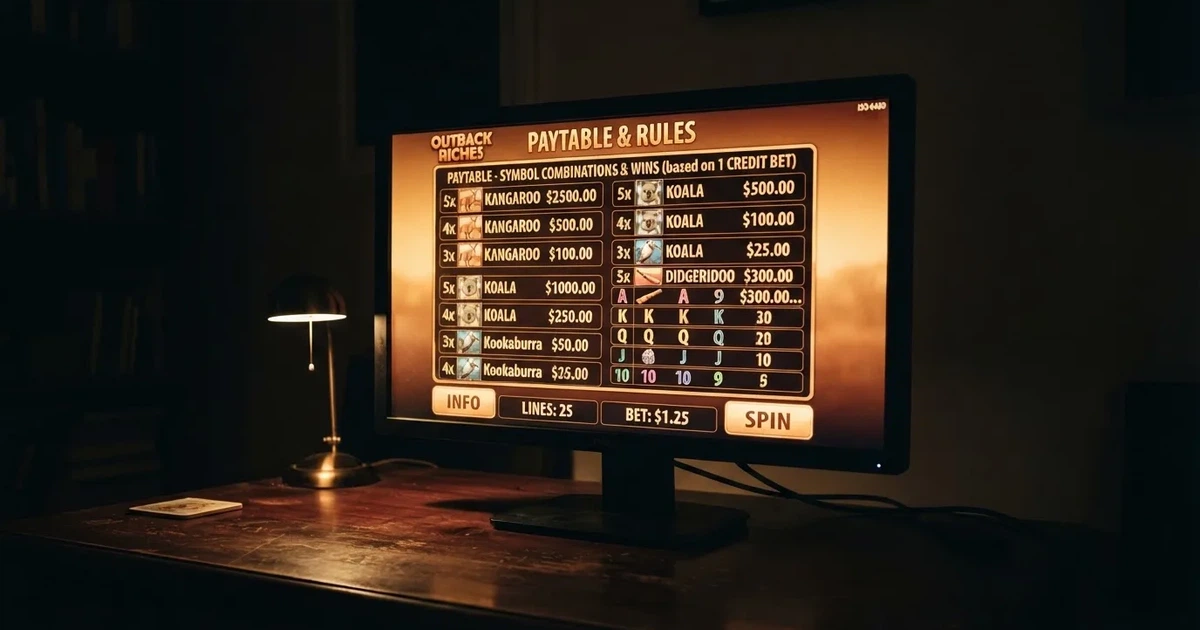
There is also a second cost, less visible and more decisive: whether the site accepting the bet is one a person in Australia is allowed to use at all. Online casino games, including any dice game marketed as a casino product, are prohibited under the Interactive Gambling Act 2001. They cannot be licensed anywhere in Australia. Every brand reviewed below has been the subject of a formal warning from the ACMA for offering exactly that prohibited service.
Data current as of 29 October 2026, licence and operator claims verified against the ACMA’s published register of formal warnings and blocking requests.
Craps and the bets that actually move the edge
Craps is the dice game Australians hear about most and play least. The table is laid out so a player can fire chips at twenty-six proposition bets without ever learning what any of them pay, and most of those proposition bets cost more than the player realises until the session is over. The bets worth taking are the line bets, and they cost less than almost anything else on a casino floor.

A Pass Line bet wins on a 7 or 11 on the come-out roll, loses on a 2, 3 or 12, and rides any other number until the point is made or missed. The house edge on Pass is 1.41%. A Come bet, identical in structure once a point is established, also runs 1.41%. The Don’t Pass line, betting against the shooter, carries a slightly lower 1.36%, and Don’t Come matches it. Take Odds behind any of these lines adds a bet at true odds with no house edge at all, which is why a craps player who sets a line and backs it with odds is doing the cheapest gambling on the floor.
Anything else on the layout costs more, often dramatically. The Any Craps bet, a single-roll wager on a 2, 3 or 12, runs 11.11% against the player. Hardways range from about 9% on a hard 6 or 8 up to roughly 13.9% on hard 4 or 10. Proposition bets on specific triples can climb past 16%. None of those numbers is hidden; Wizard of Odds publishes them openly. The catch is that the bets paying the loudest are the ones running the steepest edge, and a shooter on a streak pulls players toward them in exactly the moment the math argues against it.
Sic bo and the wide spread of its bets
Sic bo is the other dice game that surfaces in Australian casino libraries, and it is a different beast. Three dice, 216 equally likely combinations, 56 distinguishable outcomes, and a layout of bets whose house edges range from a workable 2.78% on the Big and Small wagers to 30.09% on specific triples under the harshest rulesets. The bet a player picks is the bet that determines what the session costs; the dice do not.

Sic bo arrived in Australia via Chinese immigration and the game’s name literally means “precious dice.” It has been played in Macau for centuries and on United States casino floors since the early twentieth century. What it shares with craps is the structure of its bets: a handful of low-edge wagers sitting beside a wall of high-edge proposition bets that pay more and lose faster. What it lacks is the line-and-odds architecture that lets a craps player cut the house edge toward zero; there is no equivalent in sic bo, and the best Big/Small bet still costs the player 2.78% per roll.
The practical reading is that anyone drawn to sic bo by the higher payouts on triples is paying roughly ten times the cost of a Big/Small wager to chase them. A session of 200 rolls at A$5 a wager on Big runs an expected loss of about A$27.80. The same session on a specific triple runs an expected loss closer to A$300 on the same dice. Both are estimates over many rolls, not predictions for any single session, but the spread between them is the point of the table.
Two-up and the game that is not a casino game
Two-up is the Australian dice game that is not really a casino product at all. It uses two coins, not dice, tossed from a flat board called a “kip” until they both land showing heads (the “odds”) or both tails (the “evens”). It evolved from the eighteenth-century English and Irish game “cross and pile” and came to Australia with the convict transport.
Two-up is illegal outside narrow exceptions. New South Wales permits it only on Anzac Day under the Gambling (Two-Up) Act 1998, played in RSL clubs and hotels under conditions the NSW regulator sets. Kalgoorlie in Western Australia hosts the country’s only year-round legal two-up school. Among licensed casinos, two-up was first legalised at the Hobart casino in 1973, and is now offered only at Crown Perth and Crown Melbourne. A person looking for a “casino dice game” with Australian roots will end up, more often than not, at a coin toss with a long history behind it.
Baccarat and the cheapest line bet after craps
Baccarat is not a dice game, but it lives in the same conversation because it sits on most Australian casino floors alongside craps and offers a similar low-edge line wager. The Banker bet runs 1.06%, the Player bet 1.24%, and the Tie bet 14.36%. Baccarat’s history is disputed: some accounts place it in nineteenth-century France, others trace it to fifteenth-century Italy under King Charles VIII. The variant played today, punto banco, was developed in Havana in the 1940s, with the casino banking both hands and playing them by fixed drawing rules.
Crown Melbourne offers three approved baccarat variants under Victorian Gambling and Casino Control Commission oversight: Traditional Baccarat, Crown Baccarat, and 2 to 1 Baccarat. The relevant statute is the Casino Control Act 1991 in Victoria, which requires the VGCCC to approve any table game rules before they are introduced at the Melbourne casino. The same regime, under section 66 of the NSW Casino Control Act 1992, applies in New South Wales. Baccarat’s hand-counting rule is straightforward: cards two through nine count at face value, ten and the face cards count as zero, aces count as one, and totals are taken modulo ten.
Blackjack and what optimal play actually costs
Blackjack rounds out the table-game conversation and carries the lowest house edge of any common casino game when the player uses optimal strategy. Under liberal Las Vegas Strip rules (dealer stands on soft 17, double on any two cards, double after split, resplit aces, late surrender) the edge is about 0.28%. Atlantic City rules push it to roughly 0.43%. The game’s name dates from the Klondike Gold Rush of 1896–99; its predecessor was the English vingt-un, and Miguel de Cervantes described a related game, veintiuno, around 1601–1602.
Established blackjack variants the casino floors carry include Spanish 21 (played without 10s but with player-favourable rules), Double Exposure (both dealer cards face up), Blackjack Switch (players swap cards between two hands) and Super Fun 21 (up to four splits). The VGCCC’s public log of approved changes to Crown Melbourne’s blackjack variants records the “Perfect Pairs” side bet being renamed to “Crown Pairs” on 23 December 2024, and the introduction of a “Free Bet” option with a new “Pot of Gold” side bet on 25 March 2024. Side bets in blackjack generally run a higher house edge than the main wager, often well above 5%, and a player treating them as part of the main bet is paying for the privilege of a louder payout.
The legal frame around an online dice game in Australia
The Interactive Gambling Act 2001, strengthened by the Interactive Gambling Amendment Act 2017, makes it an offence to provide online casino games to a person physically in Australia. No state or territory licenses them. What is licensable is wagering on races and sporting events placed before the event, lotteries, and keno — and in practice the licensing is done by the Northern Territory Racing and Wagering Commission, which regulates fifty-two of Australia’s online bookmakers including Sportsbet, Bet365 and Ladbrokes. The NTRWC has no full-time staff and meets once a month in Darwin.
The minimum age to use any licensed Australian wagering service is 18. The individual player is not prosecuted under the IGA; the law targets the provider. What that means in practice is that the offshore site offering a dice game to a person in Australia faces the consequence, not the punter who opens the account. The punter instead faces a different set of risks: no Australian consumer protection, no complaints body, no recourse if a withdrawal is refused, and the prospect that the site is blocked while a balance is still on it.
What the ACMA has actually done
The ACMA, the Australian Communications and Media Authority, investigates complaints, issues formal warnings, and directs Australian internet service providers to block illegal sites. The cumulative result, as of June 2026, was 1,751 illegal gambling and affiliate marketing websites blocked since the first blocking request in November 2019. More than 230 unlicensed gambling services have left the Australian market since enforcement was strengthened in 2017. A round reported on 26 June 2026 added twelve more names to the block list: 7Signs, ChromaBet, Donbet, Duospin, Freshbet, Slots Gem, Jacks Club, Lucky Start, Pointsbetz, Spinrise, Vinyl Casino and Wildsino.
The formal warnings the ACMA publishes are specific. They name the operator behind a brand and the date of the warning, and they sit on the ACMA’s website as a public record. H2 Gambling Capital’s 2025 report estimates that Australians lose about A$3.9 billion a year to illegal gambling sites, and that the share of gambling going through legal channels fell from 74% in 2021 to 64% — a ten-point slide over four years that tracks directly onto the volume of offshore advertising a person browsing from Australia sees.
How fast the block list has grown
The arithmetic here belongs to the page. The first blocking request was in November 2019. By June 2026 the cumulative count of blocked sites was 1,751. That works out to roughly 265 sites blocked per year over the eighty-two months from the first request to the June 2026 snapshot, or about twenty-two a month. Spread across the 230-plus services that have exited the Australian market since 2017, the rate is closer to twenty-five a year, and the gap between blocked and exited accounts for sites that remain accessible through some routes while blocked on others.
The band is the meaningful figure, not a single average. The first year of enforcement saw far fewer blocks than the rounds reported in 2024 and 2025, and the rate fluctuates with how many referrals the ACMA receives and how many ISPs comply within a given quarter. What does not fluctuate is the direction: the count has not gone backwards in any reporting round on record.
Payments, age and what a licensed site actually accepts
Credit cards, credit-related products and digital currency are banned as payment for licensed online wagering in Australia as of 11 June 2024, with penalties up to A$247,500 for operators that breach the rule. Legal deposit routes for a licensed Australian wagering service are debit card, bank transfer, PayID, Osko and BPAY. A site asking an Australian player for a credit card or a crypto deposit is operating outside the Australian rules; that, on its own, is a strong signal the site is not licensed for wagering in this country.
Where an Australian can actually play dice
Licensed Australian casino floors are a different matter. They are regulated by state and territory casino authorities — the VGCCC in Victoria, Liquor and Gaming NSW in New South Wales, the Office of the Tasmanian Liquor and Gaming Commission, and equivalent bodies elsewhere. The state acts require the regulator to approve the rules of any table game before it is offered. Dice games appear on these floors under that approval regime; online they do not.
The Crown complex in Melbourne, the Star in Sydney, Crown Perth, the Wrest Point and Country Club casinos in Tasmania, and the smaller state-based casinos each carry craps, sic bo and baccarat on their main gaming floors. Two-up is offered only at Crown Perth and Crown Melbourne, and only on the days and under the conditions the regulator approves. These floors are the legal channel for a person who wants to roll dice in Australia, and the house edges at the table are the ones published by Wizard of Odds for the relevant bets.
Responsible gambling and where to get help
A dice game carries an edge on every roll, and an Australian playing on a licensed floor can limit that exposure through the consumer protections built into the system. The National Self-Exclusion Register, BetStop, has been live since August 2023 and binds every Australian-licensed online and phone wagering service. An offshore site is not connected to it; a person who has registered with BetStop can still reach an offshore site and lose money there. The register only covers what it covers.
For people who need help now, the National Gambling Helpline is 1800 858 858, free, twenty-four hours a day, with chat available through Gambling Help Online. State-based services extend that with face-to-face counselling and financial advice. A person gambling on a licensed Australian casino floor can also ask the venue to bar them from entry; the casino is obliged to honour a barring request.
The ACMA’s formal warnings, brand by brand
Every operator below is named because the ACMA itself issued a formal warning over it for offering prohibited interactive gambling services to Australians. None is recommended as a place to play. The IGA prohibits the product, whatever licence the operator displays at the foot of its homepage, and an Australian player has no local consumer protection if a withdrawal stalls.
| Brand | ACMA action and date | Operator named by the ACMA | Subject support |
|---|---|---|---|
| RocketPlay | Formal warning March 2026; earlier Dama N.V. warning May 2022 | Pulsup Ltd (RocketPlay); earlier Dama N.V. | — |
| Level Up Casino | Formal warning May 2022 | Dama N.V. | BGaming lists the brand among its partners |
| Woo Casino | Formal warning March 2025 | Dama N.V. | — |
| Spirit Casino | Formal warning May 2025 | Dama N.V. | — |
| National Casino | Formal warning July 2025 | Consolutetish S.R.L. | Wikipedia mentions the brand in coverage of online casino operators |
| Bizzo Casino | Formal warning July 2025; earlier TechSolutions warning 2022 | Consolutetish S.R.L.; earlier TechSolutions | — |
| Ignition Casino | Formal warning July 2025 | Bamboo Media | — |
| Instant Casino | Formal warning February 2025 | EOD Code SRL | — |
| Jackbit | Formal warning April 2026 | Ryker B.V. | — |
| Casino Intense | Formal warning April 2025 | Sterplay Holding Ltd | Coverage in ABC reporting and the ACMA’s own register; listed at Crown Melbourne in background |
| Sky Crown | Formal warning September 2022 | Hollycorn N.V. | — |
RocketPlay
RocketPlay was warned by the ACMA in March 2026, with Pulsup Ltd named as the operator of RocketPlay. The same brand sits inside an earlier Dama N.V. warning from May 2022, which covered six casino brands including Rocketplay. The current operator under the ACMA’s register is Pulsup Ltd. There is no published evidence that RocketPlay offers an Australian licence for casino games, and the IGA’s prohibition applies to the product regardless of any offshore licence the site displays at the foot of its homepage. A punter who reaches RocketPlay from inside Australia is using a service the ACMA has formally warned twice. Verdict: the brand sits on the block list for a reason, and the second warning, fifteen months after the first, suggests the operator changed name rather than behaviour.
Level Up Casino
Level Up Casino was named in the Dama N.V. warning of May 2022. The brand is listed among BGaming’s partner operators, which is the extent of the verifiable subject support from a third-party listing rather than any operator-side claim. The same prohibition applies: no Australian licence is possible for the product the site sells. Verdict: the BGaming listing places the brand inside a recognisable studio network, which is a structural fact about how the brand sources its content, not a fact about whether it is lawful to use from Australia.
Woo Casino
Woo Casino was the subject of a Dama N.V. formal warning in March 2025, a separate round from the May 2022 warning that covered other Dama brands. The warning is the second the same operator group has received over Woo Casino alone, which indicates the ACMA treats the brand as a continuing matter rather than a one-off referral. Verdict: the warning record speaks for itself; the operator has had formal notice from the ACMA and continues to be reachable from Australia.
Spirit Casino
Spirit Casino was warned in May 2025, also under Dama N.V. The warning sits three months after the Woo Casino warning and uses the same operator name, which suggests the same compliance team is handling the ACMA correspondence across the group. There is no separate factual record beyond the ACMA’s own publication. Verdict: the brand is part of a pattern of warnings, not an isolated referral, and an Australian player encountering it is encountering a known warning subject.
National Casino
National Casino was warned in July 2025, with Consolutetish S.R.L. named as the operator. Wikipedia mentions the brand in coverage of online casino operators, which is the level of third-party listing the brand carries. The July 2025 warning is the first ACMA action specific to this operator entity, distinct from earlier warnings to other groups. Verdict: the warning is recent enough that the operator has had less time to demonstrate a change of behaviour than brands warned earlier; the underlying prohibition is unchanged.
Bizzo Casino
Bizzo Casino was warned in July 2025 under Consolutetish S.R.L., and was already the subject of a 2022 formal warning to TechSolutions (CY) Group Limited and TechSolutions Group N.V. Two warnings over four years to two different corporate entities associated with the same brand is a record an Australian player should weigh before opening an account. Verdict: the ACMA has returned to this brand, which is the most pointed indicator in the register that the warning was not treated as a final notice the first time.
Ignition Casino
Ignition Casino was warned in July 2025 under Bamboo Media. The brand carries no separate third-party listing that supports the subject the page covers, and the ACMA warning is the only specific factual record the page can attach to it. Verdict: the warning stands alone in the public record, and the prohibition applies regardless of any licence Ignition Casino displays elsewhere.
Instant Casino
Instant Casino was warned in February 2025 under EOD Code SRL. The warning is among the earlier entries in the 2025 round and pre-dates several of the Dama N.V. warnings issued later in the year. There is no subject-specific factual record beyond the ACMA publication. Verdict: the brand sits on a published warning, the IGA prohibition applies, and an Australian player who reaches it is on a site the regulator has already addressed.
Jackbit
Jackbit was warned in April 2026, with Ryker B.V. named as the operator. The warning is among the most recent in the register and pairs Jackbit with CasinOK under the same operator entity. Verdict: the warning is fresh, the ACMA has named the operator, and the prohibition is in force.
Casino Intense
Casino Intense was warned in April 2025 under Sterplay Holding Ltd. The brand carries third-party mentions in ABC reporting on the broader Australian offshore market, in the ACMA’s own register, and in background listings at Crown Melbourne, which is the level of verifiable mention the page can attach to it. Verdict: the brand is well documented in third-party coverage, and the ACMA warning sits on top of that coverage rather than replacing it.
Sky Crown
Sky Crown was warned under Hollycorn N.V., with the ACMA’s formal warning publication listing the brand alongside Blue Leo. The warning predates most of the other entries in this table by several years, which is the reason the brand sits at the bottom of the ordering — earlier warning, not lower consequence. Verdict: an older warning is not a closed matter, and the prohibition continues regardless of when the warning was issued.
Closing read on the numbers
The craps table carries an edge of 1.41% on the bet a sensible player makes, and 11.11% on the bet a noisy table invites. The sic bo layout spans from 2.78% on Big and Small to 30.09% on specific triples. The baccarat Banker bet runs 1.06%. Blackjack at optimal play runs 0.28% on the most liberal rule set. None of these edges is a secret, and none of them changes when a website wraps them in a welcome offer. What does change is whether the player is rolling on a licensed floor with approved rules and a regulator behind them, or on an offshore site the ACMA has already warned by name and may have already blocked. The arithmetic is the easy part of the comparison. The harder part is what the dice land on when a person in Australia tries to use the site at all.
Frequently asked questions
What is the house edge on a Pass Line bet in craps?
A Pass Line bet in craps carries a house edge of 1.41%. A Come bet, identical in structure once a point is established, runs the same 1.41%. Backing either line with Take Odds adds a wager at true odds with no house edge, which is why disciplined craps play centres on the line bets rather than the proposition bets laid out beside them.
Why does the Any Craps one-roll bet carry a much higher house edge than Pass Line?
Any Craps pays 7:1 on a roll of 2, 3 or 12 and loses on every other outcome. The true odds against winning on any single roll are far longer than 7:1, and the gap between true odds and the payout is the house edge of 11.11%. Pass Line resolves over multiple rolls once a point is established, which lets the bet settle closer to its true odds and compresses the edge.
Are dice games like craps offered on licensed Australian casino floors?
Craps and sic bo are both offered on licensed Australian casino floors under state casino control acts that require the regulator to approve the rules of any table game. Crown Melbourne, the Star Sydney, Crown Perth, and the Tasmanian casinos carry them. Two-up is offered only at Crown Perth and Crown Melbourne, on the days and under the conditions the regulator approves.
What’s the difference between a ‘right’ bettor and a ‘wrong’ bettor in craps?
A right bettor wagers on the Pass Line, betting with the shooter that a point will be made before a 7. A wrong bettor wagers on the Don’t Pass line, betting against the shooter. The Don’t Pass edge is 1.36% compared with Pass Line’s 1.41%, marginally lower because the don’t-pass bet wins when a 2 or 3 is rolled on the come-out and ties (rather than loses) on a 12 under the most common rules.
Can an online dice game legally be offered to someone based in Australia?
No. The Interactive Gambling Act 2001, strengthened by the 2017 amendments, prohibits the provision of online casino games, including dice games marketed as casino products, to a person physically in Australia. No state or territory licenses online casino games. What is licensed is wagering on races and sporting events placed before the event, lotteries and keno.
Do all casino dice games use the same house-edge structure as craps?
No. Sic bo uses three dice and runs a 2.78% house edge on the Big and Small wagers, climbing to 30.09% on specific triples under the harshest rulesets. The structure is similar in shape (a few low-edge bets beside a wall of high-edge proposition bets) but the absolute numbers and the volatility of the bets differ. Two-up, which uses two coins rather than dice, carries a different edge profile again and is regulated as a separate product.