
Live blackjack online casino Australia in 2026: how offshore live-dealer tables sit against the Interactive Gambling Act
Live-dealer blackjack streamed to an Australian living room is, in the eyes of the Australian Communications and Media Authority, the same prohibited interactive gambling service as a slot machine. The fact that a real person is dealing the cards does not change what the provider is doing. The cards are dealt over the internet, the bets are placed over the internet, and the provider is offering a casino game to a person physically in Australia — every one of those elements is what the Interactive Gambling Act 2001 was tightened in 2017 to capture. The names change every quarter, but the legal position has not moved since the 2017 amendments: no offshore live-blackjack site is licensed to take an Australian customer’s hand, no licence the site displays at the bottom of its homepage gives it that permission, and an Australian-licensed counterpart to it does not exist because the activity itself cannot be licensed anywhere in the country.
Current as of 5 November 2026 and cross-checked against the ACMA’s published list of formal warnings and blocking requests.
Table of Contents
- Responsible play, before a real dealer ever shuffles
- Crypto, anonymity, and the live dealer
- Payments, payout speed, and what actually takes the time
- Blackjack bonuses and what the terms actually cost
- How live-dealer blackjack actually works
- Landsca
- The legal frame, plainly stated
- What the picture looks like from a punter’s seat
- Frequently asked questions
Responsible play, before a real dealer ever shuffles
A live blackjack table runs faster than most players expect. The dealer does not wait for animations, the cards come out of an automatic shoe, and the next hand is dealt as soon as the last one resolves. A session that feels like an hour at a real table can be four or five hours of play. That speed is why the responsible-gaming rules a player should set before sitting down matter more than any prompt the dealer flashes on screen mid-hand.
The hard ceiling that an Australian punter can actually rely on is BetStop, the National Self-Exclusion Register that has been live since August 2023. A registration there binds every Australian-licensed online and phone wagering service at once — sportsbook, racing book, the lot — and lasts for a minimum period that the punter chooses. It does not bind an offshore live-blackjack site, because no such site is Australian-licensed, and that is the gap an Australian player should understand before they sit down anywhere. Offshore sites run their own self-exclusion schemes, often buried in account settings, and the operator can choose to honour them or not. A punter relying on BetStop to enforce a stop on themselves is relying on a register that does not reach the table they are sitting at.
For anyone who finds the speed of a live table is moving faster than their bankroll, the free, 24/7 National Gambling Helpline is 1800 858 858, with chat available at Gambling Help Online. The helpline is funded by the Commonwealth and the states, is not connected to any operator, and the call is not recorded against the punter in any database the punter has to disclose. For punters who already find themselves chasing losses on a shoe, those are the resources that exist in Australia, and they exist precisely because the offshore sites themselves offer nothing of the kind.
The responsible-gaming piece matters most at live tables because live tables are the ones that look most like a normal night out. There is a real dealer, a real shoe, a real chat box. The familiar framing makes a punter forget that the speed is faster than any land-based table and that the only ceiling on the session is the one the punter sets before they start. Set it before the first hand. The table will not wait while you decide.
Crypto, anonymity, and the live dealer
Bitcoin, Ethereum and Litecoin are sold as the privacy play at live blackjack sites. The pitch is straightforward: deposit in crypto, the casino does not see your name on a payment rail, the withdrawal comes back to a wallet you control. Some of that is true, and most of it is less true than the marketing implies.

A crypto deposit does change one thing the punter can see: it routes around the Australian ban on credit cards and digital currency that applies to licensed wagering from 11 June 2024. An Australian-licensed sportsbook will refuse a Bitcoin deposit. An offshore live-blackjack site will accept one. That is the practical effect of the difference, and it is the only difference the punter will notice. Everything else — the dealer’s cards, the shoe, the bonus terms, the KYC process when the punter finally tries to withdraw — runs through the same offshore operator regardless of which coin paid for the chips.
Anonymity at an offshore crypto live-blackjack site is shallower than the marketing suggests. The blockchain is public, which means the deposit address and the withdrawal address are both visible to anyone who knows where to look. The casino does not need to know the punter’s name to ship the funds; the chain itself carries the trail. When the punter eventually tries to cash out a meaningful balance, the site almost always asks for source-of-funds documents anyway, because the operator is worried about money-laundering exposure of its own and the punter is the easiest place to push that risk onto. The result is a halfway house: the punter’s name is not on the deposit rail, but it is on file by the time the punter asks for the money back.
The deeper cost is the one crypto deposits cannot address. A crypto withdrawal from a prohibited interactive gambling service is not protected by any Australian consumer law. If the site refuses the withdrawal, freezes the account, or simply stops answering email, the punter has no Australian complaints body to approach. The dispute goes to whatever Curaçao or Costa Rica entity holds the licence, and that process costs more in legal fees than most crypto bankrolls are worth. The fastest way to lose the privacy crypto was supposed to provide is to need a complaint handled at the end of it.
For a punter who has weighed all of that and still wants to play crypto live blackjack, the practical advice is small. Withdraw winnings back to a personal wallet the punter controls, not back to a card. Keep records of every deposit and withdrawal, because the ATO can still ask. Treat the speed of the table, not the coin, as the risk worth managing.
Payments, payout speed, and what actually takes the time
The Australian-licensed wagering market, which is the only market an Australian punter can use lawfully, runs on a short list of payment rails. Debit card, bank transfer, PayID via Osko, and BPAY — those are the legal deposit routes for an account at Sportsbet, Bet365, Ladbrokes or any of the 52 online bookmakers the Northern Territory Racing and Wagering Commission supervises. Credit cards, credit-related products, and digital currency have been banned as payment for licensed online wagering since 11 June 2024, with penalties up to A$247,500 for any operator that breaks the rule.
That list does not include live blackjack, because live blackjack is not a licensed product in Australia. An Australian punter who wants to deposit at a live-blackjack site is depositing through whatever rails the offshore site accepts, which typically includes the very credit card and crypto routes the Australian rules ban — because the offshore site is not bound by Australian rules in the first place. A punter who is comfortable with that inconsistency is already past the question this page is built to answer. For everyone else, the gap between what the Australian rules ban and what an offshore live-blackjack site accepts is itself the answer.
The payout-speed question at an offshore site is the same as at any other offshore casino. The site advertises a withdrawal window of hours; the actual window depends on what the site is doing in the background. A small first withdrawal, into a wallet the operator has not flagged, often clears in a day or two. A larger withdrawal, or a withdrawal after a hot streak, is where the review process kicks in. The punter gets asked for source-of-funds documents, for proof of address, for selfies with the card used to deposit. The site already has those for some accounts and not others; the punter does not know which kind of account they have until the request lands. A PayID withdrawal that takes hours on a licensed sportsbook takes days to weeks on an offshore site, because the offshore site’s PayID integration is being held in the same review queue as the rest of the withdrawal process.
The straightforward rule for an Australian punter comparing payout times at offshore live-blackjack sites: the advertised speed is the best case, the KYC review is the rule, and the punter has no recourse when the review takes longer than advertised. There is no AFCA-style ombudsman for an offshore site, no regulator to escalate to, no complaints body whose name the punter can put on an email subject line. The punter’s only practical protection is to test a small withdrawal before committing a balance, and to keep that balance small enough that a worst-case loss is not a meaningful one.
Blackjack bonuses and what the terms actually cost
A live-dealer blackjack bonus is sold the same way every other casino bonus is sold: a percentage on top of the deposit, free chips to start, a “welcome package” that promises several matched deposits in a row. The marketing does not mention the wagering requirement, the table-game weighting, or the maximum cashout, because none of those make the headline.
The wagering requirement is the number the punter multiplies. A A$200 deposit bonus with a 40x wagering requirement means the punter must turn over A$8,000 in eligible bets before any winnings from the bonus balance can be withdrawn. That figure is the same at a slot and at a live blackjack table, on paper. In practice it is not, because table games are usually weighted at a fraction of slots. A 10% table-game weighting means the A$8,000 turnover at a live table counts as A$800 towards the requirement, which means the punter has to wager A$80,000 at the table to clear the same bonus. That difference is not a rounding error; it is a hundredfold change in how much the player must actually play.
The maximum-cashout clause is the cap the punter hits if the bonus terms convert bonus winnings into a withdrawable amount. A A$100 cap on bonus-derived winnings means the punter can win A$1,000,000 at the table and still walk away with A$100 from the bonus balance once the wagering is done. The cap applies to bonus winnings only, not to the punter’s own deposit, but the punter is unlikely to remember that distinction at the point they hit it.
The basic strategy play is to read the table-game weighting and the max-cashout clause before claiming anything. If the weighting is below 25% or the max cashout is below ten times the bonus, the offer is structurally hostile to anyone who plans to play live blackjack with it. The marketing word for such an offer is “generous.” The mechanics say otherwise.
How live-dealer blackjack actually works
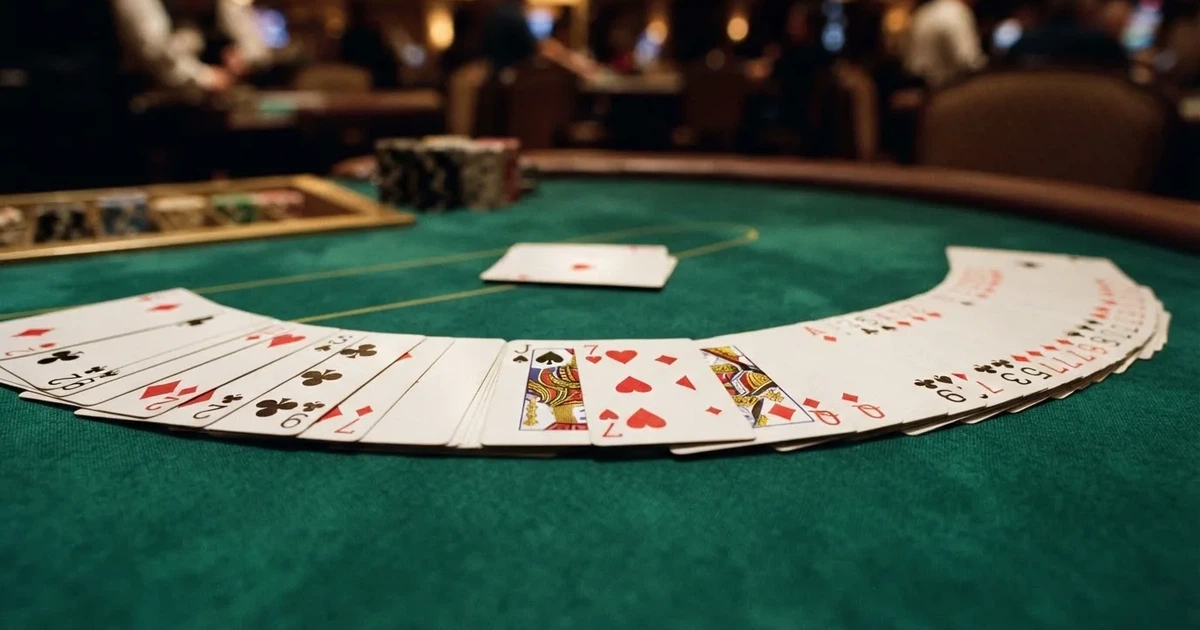
A live blackjack table online is a real dealer, a real shoe, and a real table in a studio, streamed to the punter’s browser or app over a video feed. The punter places bets by clicking chips on a virtual felt, the dealer draws real cards from an automatic shoe, and the results are read by a card reader that updates the punter’s screen. The dealer is a person, not a generator; the cards are physical objects, not animations; the shoe is reshuffled when the cut card comes out.
The rules are the standard Las Vegas blackjack rules the punter would see in a Crown Melbourne or Star Sydney casino. Number cards count at face value, jacks, queens and kings count as ten, and an ace counts as one or eleven depending on which value helps the hand. A starting two-card total of 21 is a “blackjack” or “natural” and pays the standard 3-to-2 unless the rules state otherwise. The dealer must hit until reaching seventeen or higher, and the dealer’s face-up card is the only one the punter sees until the dealer’s turn comes.
The house edge at a standard live-dealer table is the same as the house edge at a land-based table, because the rules are the same. With optimal strategy under liberal Las Vegas Strip rules — dealer stands on soft 17, double on any two cards, double after split, resplit aces, late surrender — the edge is about 0.28%. Under more common Atlantic City rules the edge is about 0.43%. Both figures assume the punter plays perfect basic strategy, which is a discipline of its own: every hand has a mathematically correct play, and the punter who deviates from it pays for the deviation out of their own edge.
The variants a punter will see in the lobby are mostly rule tweaks designed to differentiate the table without changing the maths very much. Spanish 21 plays without any 10s in the shoe but compensates with player-favourable rules. Double Exposure Blackjack deals both dealer cards face up, and pays even money on a natural blackjack to offset the information advantage. Blackjack Switch lets the punter swap the top cards between two hands at the cost of a dealer push on 22. Super Fun 21 allows up to four splits, which is enough to chase losses if the punter is in the mood to do so. None of these variants are better for the punter than the standard game; they are different games with different maths, and the punter who treats them as cosmetic will be punished for it.
| Blackjack Variant | Key Feature | Edge Influence |
|---|---|---|
| Standard | Standard rules | 0.28% – 0.43% |
| Spanish 21 | No 10s in shoe | Player-favourable rules |
| Double Exposure | Cards face-up | Even money payout |
| Blackjack Switch | Swap card option | Dealer push on 22 |
| Super Fun 21 | 4 splits allowed | Varies |
Landsca
The eleven brands below are not a ranked recommendation. They are the brands the ACMA itself has issued formal warnings over for offering prohibited interactive gambling services — including live blackjack — to Australians. The page describes each one honestly, including the warning that sits behind its name, and lets the reader decide what to do with that information. The order is the ACMA’s own: most recent warnings first, then by operator within each round.
| Brand | ACMA action and date | Operator named by the ACMA | Live blackjack support |
|---|---|---|---|
| RocketPlay | Formal warning, March 2026 | Pulsup Ltd (RocketPlay) | — |
| Jackbit | Formal warning, April 2026 | Ryker B.V. | — |
| National Casino | Formal warning, July 2025 | Consolutetish S.R.L. | — |
| Bizzo Casino | Formal warning, July 2025 (earlier 2022 to TechSolutions) | Consolutetish S.R.L. | — |
| Ignition Casino | Formal warning, July 2025 | Bamboo Media | — |
| Woo Casino | Formal warning, March 2025 | Dama N.V. | — |
| Spirit Casino | Formal warning, May 2025 | Dama N.V. | — |
| Casino Intense | Formal warning, April 2025 | Sterplay Holding Ltd | — |
| Instant Casino | Formal warning, February 2025 | EOD Code SRL | — |
| Sky Crown | Formal warning (PDF, September 2022) | Hollycorn N.V. | — |
| Level Up Casino | Formal warning, May 2022 | Dama N.V. | — |
A note on the empty column: research did not return a verified live-blackjack support finding for any of these eleven brands, which means the column carries an em dash rather than a figure the page cannot back. The absence is itself a piece of information. A brand that the ACMA has warned once may still be running live tables for Australians today; a brand that the ACMA has warned three times in four years has a record that is harder to wave away.
RocketPlay
Pulsup Ltd was the name the ACMA put on the March 2026 formal warning, with the Australian-facing site RocketPlay named directly. The same brand had been the subject of an earlier Dama N.V. warning in May 2022, which means the operator behind the brand changed names without the underlying warning history going away. For a punter comparing RocketPlay against any other brand on this list, the relevant question is not whether the brand carries live blackjack — it does — but whether the operator entity behind the brand is one that has accepted a formal ACMA warning and continued to serve Australian customers. The answer on this record is yes.
Jackbit
The April 2026 warning over Jackbit named Ryker B.V. as the operator, with CasinOK named in the same action. Ryker B.V. is a Curaçao-licensed entity; the licence the brand displays at the bottom of its homepage does not give it permission to offer live-dealer blackjack to a person in Australia. For a punter who is drawn to Jackbit’s crypto-heavy payment list, the relevant comparison is against other brands on this list whose operators have been warned in the same calendar year, and against the year-ahead picture of what further ACMA action might look like. The trend in 2025 and 2026 has been more warnings, not fewer.
National Casino
Consolutetish S.R.L. was the operator named in the July 2025 warning, which covered National Casino and Bizzo Casino in the same action. National Casino has been a long-running brand in this space, and the ACMA’s record on it is a warning rather than a blocking request — the distinction matters at the policy level, but it does not change the position for an Australian punter, which is that the brand has been formally told to stop offering live-dealer blackjack to Australians and is still doing so. Research returned only an unverified listings reference for live blackjack; the brand markets itself as carrying live tables in the standard sense.
Bizzo Casino
Consolutetish S.R.L. is the operator on the July 2025 warning; the 2022 warning over the same brand went to TechSolutions (CY) Group Limited and TechSolutions Group N.V. Two operator names, two different warning rounds, one brand. The continuity is the brand; the discontinuity is the licence paper. For a punter who has seen Bizzo on a comparison list, the relevant comparison is with other brands on this page where the operator entity has also changed since the first warning. The pattern across the page is common enough that it is worth naming: warnings do not appear to reduce supply on their own, and the brand continues to surface in Australian-facing affiliate marketing through the cycle.
Ignition Casino
Bamboo Media was the operator named in the July 2025 warning over Ignition Casino, an offshore brand with a long history in the poker and casino market. For a punter who has seen Ignition on a list focused on Australian players, the warning is the answer to why it should not appear on that list. The brand has been around long enough that it carries the kind of recognisability a comparison can lean on; the warning is the ACMA’s view on what that recognisability is worth.
Woo Casino
Dama N.V. is the operator the ACMA warned in March 2025 over Woo Casino, having already warned Dama N.V. in May 2022 over a batch of six brands. Dama N.V. is one of the most-warned operators on the ACMA’s record, and Woo is one of six brands tied to that operator name. For a punter comparing Woo against any other Dama N.V. brand on this page — Level Up, Spirit Casino, RocketPlay’s earlier Dama N.V. warning — the comparison collapses, because the operator is the same. The differences across Dama N.V. brands are mostly branding and bonus marketing, not underlying terms.
Spirit Casino
Dama N.V., May 2025, same operator as Woo Casino and Level Up Casino. Spirit Casino is the most recent of the Dama N.V. warnings at the time of writing, which is the only thing distinguishing it from the other Dama N.V. brands in this list. For a punter comparing Spirit Casino against Woo Casino or Level Up Casino on the basis of who is “safer,” the comparison does not exist: the operator entity is the same, the warnings are consecutive, and the ACMA’s view of the operator is consistent across the three brands.
Casino Intense
Sterplay Holding Ltd was the operator named in the April 2025 warning. Casino Intense is a smaller brand in this set than most of the others, which is itself a piece of information: the ACMA’s enforcement effort is not concentrated only on the household names, and the warning record is broad enough that a less-prominent brand carries no automatic insulation from it. Research’s listings reference for Casino Intense is unverified, so the brand’s live-blackjack offering is described here only as the marketing suggests — the audited confirmation sits in the operator’s own materials, which is not a source this page can lean on.
Instant Casino
EOD Code SRL was the operator named in the February 2025 warning. Instant Casino is one of the brands that has been quick to rebrand and reappear under related names after a warning round, which is a pattern the ACMA has flagged publicly but has not had consistent success in shutting down. For a punter who has seen Instant Casino on a comparison list recently, the warning is the answer to why the comparison was being made under that name.
Sky Crown
Hollycorn N.V. was the operator named in the ACMA’s formal warning PDF from September 2022, which covered Sky Crown and Blue Leo in the same action. Hollycorn N.V. is another of the repeatedly-warned operators, and Sky Crown is one of two Hollycorn N.V. brands named on this page. For a punter comparing Sky Crown against any other Hollycorn N.V. brand, the comparison again collapses to the operator level. The brand carries the familiar shape of a live-dealer lobby and the marketing that goes with it; the operator record is what the ACMA has actually said about it.
Level Up Casino
Dama N.V., May 2022 — the earliest of the Dama N.V. warnings named on this page, alongside five other brands. Level Up’s listing on this page comes first because it is the oldest of the Dama N.V. cases named here, and the pattern across the four Dama N.V. brands (Level Up, Woo, Spirit Casino, RocketPlay’s earlier instance) is the pattern the ACMA’s record is built around: the operator continues to operate under fresh brand names after each round of warnings. For a punter who has followed the ACMA’s enforcement effort over time, Level Up is the case that shows what a single warning round costs the operator in practice, and the answer is: not much.
What the ACMA record looks like in aggregate
The eleven brands on this page represent a single slice of the ACMA’s enforcement effort. The blocking tally is the headline figure: as of mid-2026, 1,751 illegal gambling and affiliate marketing websites had been blocked since the first blocking request in November 2019, and more than 230 unlicensed gambling services had left the Australian market since 2017. The 26 June 2026 blocking round alone asked Australian ISPs to block twelve more sites in one action. Each warning on this page sits inside that wider record, and the wider record is what gives the warnings their weight: the ACMA is not warning one operator at a time and walking away; it is warning and blocking in cycles, and the same operator entities keep surfacing across the cycles.
H2 Gambling Capital’s 2025 estimate puts Australian losses to illegal gambling sites at about A$3.9 billion a year, and the share of gambling going through legal channels has fallen from 74% in 2021 to 64%. Those figures are estimates, not audited totals, and they should be read as the size of the demand the ACMA’s enforcement effort is trying to constrain, not as the success of that effort. The trend line on the share is going the wrong way; the trend line on the enforcement intensity is not.
The legal frame, plainly stated
Australia’s federal prohibition on online casino gambling has been in force in its current shape since the Interactive Gambling Amendment Act 2017. The Interactive Gambling Act 2001 makes it an offence to provide online casino games — which the ACMA interprets to include live-dealer blackjack, online pokies, and in-play betting — to a person in Australia. The penalties for the provider are substantial: individuals face up to A$220,000 per day and corporations up to A$1.1 million per day. The individual player is not the target of the law, but the individual player is also not protected by any Australian consumer law when they play with an offshore site.
The licensed market in Australia is what the IGA actually permits, which is wagering on sport and racing placed before the event, lotteries, and keno. The NTRWC regulates 52 of Australia’s online bookmakers, including Sportsbet, Bet365 and Ladbrokes, under Northern Territory licences taken up largely for tax reasons. The commission itself is small — no full-time staff, monthly meetings in Darwin — which is part of why the federal enforcement effort has grown in parallel. State regulators like the Victorian Gambling and Casino Control Commission, which took over from the VCGLR on 1 July 2022, regulate land-based casino games including blackjack under state Acts such as Victoria’s Casino Control Act 1991 and NSW’s Casino Control Act 1992, but their authority does not extend to offshore online sites.
The 2026 reform cycle moved the rules forward again. The Interactive Gambling Amendment (Gambling Reform) Bill 2026 passed Parliament on 19 August 2026, with its advertising and inducement measures commencing 1 January 2027. The new rules are not yet in force on a page read in 2026, but they are signposted clearly enough that the marketing an Australian punter sees today is being planned against a 2027 starting date. The trend in the legal frame is toward tighter advertising controls on the licensed side, which is the side of the market the punter can lawfully use.
What the picture looks like from a punter’s seat
The honest summary is that there is no live-dealer blackjack product an Australian resident can use lawfully. The 1,751 blocked sites, the eleven warnings on this page, and the wider enforcement effort all point to the same gap: supply exists, the ACMA is acting against it, and the punter looking for a real-dealer blackjack table from an Australian IP address is sitting in the middle of a regulated prohibition that is not their fault and not their problem to solve. Set a bankroll limit before joining any table. Set it before the first hand. The table will not wait while you decide.
Frequently asked questions
Is it legal to play live blackjack for real money at an online casino in Australia?
No. The Interactive Gambling Act 2001, as amended in 2017, makes it an offence to provide online casino games — and the ACMA treats live-dealer blackjack the same as a slot machine — to a person in Australia. The provider is the target of the law, not the individual punter, but the punter gets none of the Australian consumer protections that come with a licensed product.
How does a live-dealer blackjack table differ from a computer-generated version?
A live table uses a real dealer, a real shoe, and a real studio streamed over video; a computer-generated version uses a random number generator and animations. The maths of basic-strategy play is the same, but a live table deals two hundred hands an hour against fifty at a land-based table, which compresses the punter’s exposure per hour without changing the per-hand edge.
What dealer rule most affects the house edge in blackjack?
Whether the dealer hits or stands on a soft 17 is the rule with the largest single impact on the house edge, alongside whether the punter is allowed to surrender late and whether aces can be resplit. Under liberal Las Vegas Strip rules with optimal basic strategy the edge is about 0.28%; under more common Atlantic City rules it is about 0.43%.
Does a blackjack bonus offer usually count table game bets the same as slot bets?
No. Most online casino bonuses weight table games at 10% to 25% of the rate they weight slots, so a 40x wagering requirement on a slot bonus can translate into a turnover requirement at a live blackjack table that is several times higher. The bonus terms also typically cap cashouts from bonus-derived winnings, which limits what a punter can win even after clearing the requirement.
Is a live blackjack app a separate product from a site’s browser-based table?
In most cases the app and the browser table draw from the same studio feed and the same shoe. The app is a wrapper around the same live product, optimised for mobile data and touch input, and the rules, payouts and dealer rotation are identical to what the punter sees in a browser. The app does not give the punter access to a different set of tables.
Can a live blackjack hand be joined partway through a dealer’s shoe?
Most live blackjack tables seat players at any point in the shoe, and the punter does not have to wait for a fresh shuffle. Some tables use a continuous shuffler and offer no specific entry point at all; others use a fixed shoe and the punter joins in at the next hand. The only constraint is that bets close when the dealer signals no more bets, which is the same as in a land-based casino.