
Real Money Casino Table Games in Australia: How the Odds, the Offshore Offers and the Law Sit Together in 2026
Data current as of 30 October 2026; verified against the ACMA’s published blocking and warning registers and the IGA 2001 as in force.
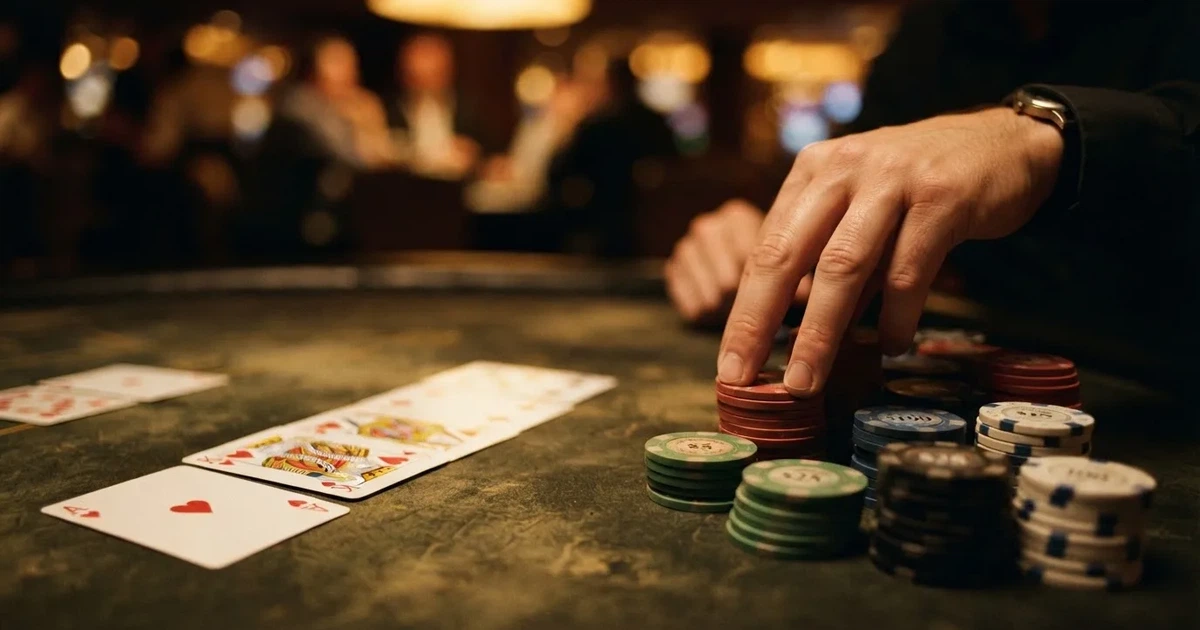
Something has gone sideways in the way Australians are steered toward real-money casino table games. The marketing words line up a long row of felt-green offers with the same odds a player would find at a licensed venue, but the legal ground beneath those offers has shifted in ways that are not on the front of the page. This article walks the row of games — blackjack, roulette, baccarat, craps and the wider table floor — in the plain detail the paytable already promises, then puts the offshore column next to the Australian law and reads what follows. The arithmetic belongs to the page, not the marketing: where a house edge sits, what a crypto rail really does to a withdrawal, and what an ACMA block means for a player with a balance still on the site.
Table of Contents
- Crypto and the Anonymity Claim Around Real-Money Table Games
- Blackjack, Roulette, Baccarat, Craps: The Paytable Detail the Games Actually Carry
- The Australian Brands the ACMA Has Acted Against
- The Legal Frame Australians Actually Sit Inside
- Player Protection, Self-Exclusion and the Limit the Law Actually Reaches
- Land-Based Venues: The Lawful Place Real-Money Table Games Are Played
- Operator Write-Ups: Where the Brand Sits Against the Subject
- What the Blocking Rate Says
- Frequently Asked Questions
Crypto and the Anonymity Claim Around Real-Money Table Games
Crypto table games are sold as a faster, cleaner version of the same games. The rail is genuinely different. A Bitcoin or stablecoin deposit lands in a wallet the casino controls inside minutes, the table game itself is unchanged, and a withdrawal can clear in under an hour on chains with low congestion. The marketing draws a straight line from “faster rails” to “better table games.” The page reads it differently.

The rail is not the licence. No Australian state or territory licenses an online casino to offer real-money table games, and a payment method does not become one either. The Interactive Gambling Act 2001 targets the provider, not the deposit method, and a USDT transfer or a Bitcoin on-chain payment does nothing to put an offshore operator inside the law. The 11 June 2024 ban on credit cards and digital currency as a payment method for licensed wagering in Australia makes the point on the rail itself: the legal wagering channel — sport and racing, before the event, through Northern Territory-licensed bookmakers — is the channel that has been closed to crypto, not the channel crypto has been opened to.
A crypto rail also shortens the consumer-protection chain. A bank transfer that hits an offshore account gives the bank a chargeback window, gives the card network a complaint route, and gives the player a paper trail an Australian dispute body can read. A crypto transfer does not. The chain runs from the player’s wallet to the casino’s wallet, often through a swap and a token transfer the player cannot reverse, and the only referee on the other end is the operator’s own terms. The faster settlement that the marketing puts forward is the same faster settlement that closes off the routes a player would otherwise have if a withdrawal is refused.
BetStop, the National Self-Exclusion Register that went live since August 2023, binds only Australian-licensed online and phone wagering services. A crypto casino licensed in Curaçao or Costa Rica is not on that register. A player who has self-excluded and then opens a crypto casino account is not in the breach they think they are: the self-exclusion does not reach the offshore site, and the offshore site does not enforce it. The Helpline at 1800 858 858 is free, 24/7, and the chat at Gambling Help Online does the work the wallet cannot.
Blackjack, Roulette, Baccarat, Craps: The Paytable Detail the Games Actually Carry
The cluster of games sold as “real-money casino table games” online is a tight handful, and the math on them is well known. The numbers below come from the standard published house edges and rule sets; the page transcribes them so the reader can see what the marketing describes.
Blackjack. A two-card total of 21 — the “blackjack” or “natural” — is the strongest hand; number cards count at their number, face cards count as 10, and an ace counts as 1 or 11. The first written reference to the game appears in Miguel de Cervantes’ work from the early seventeenth century, in Castile; the name “blackjack” itself dates from around 1899, with the Klondike Gold Rush of 1896–1899 credited for sticking the name on the variant. Under liberal Las Vegas Strip rules — dealer stands on soft 17, double on any two cards, double after split, resplit aces, late surrender — the house edge drops to 0.28%. Under Atlantic City rules it sits around 0.43%. With basic strategy a player loses on average less than 1% of action over the long run, which is the lowest house edge of any casino table game. Variants that soften the rules further include Spanish 21 (played without 10s), Double Exposure (both dealer cards face-up), Blackjack Switch (cards swapped between two hands) and Super Fun 21 (up to four splits).
Roulette. A wheel, a ball, a layout. The form has been played in close to its present shape since about 1796 in Paris, with the wheel itself often traced to a 1720 gaming device combined with the Italian game Biribi. The split that matters to a player is single-zero against double-zero. A single-zero wheel carries a house edge of 2.70% on every bet. A double-zero wheel carries 5.26%. The wheel looks the same at a glance; the math on every spin is nearly twice as expensive on the American layout.
Baccarat. Cards 2 through 9 count at face value, 10/J/Q/K count as zero, aces count as one, hand totals are taken modulo 10, and the casino banks the game at all times under the Punto Banco variant developed in Havana in the 1940s and dealt from a six- or eight-deck shoe. The Banker bet carries a house edge of 1.06%, the Player bet 1.24%, and the Tie bet 14.4% at an 8-to-1 payout — or 4.85% at a 9-to-1 payout. The Tie is the bet to read carefully: the payout changes the edge more than the player expects. Chemin de fer, the French “railway” variant, emerged from baccarat banque in the late nineteenth century and is named for being quicker to play than the original. Crown Melbourne currently offers three VGCCC-approved baccarat variants — Traditional Baccarat, Crown Baccarat and 2 to 1 Baccarat — under rules the Victorian regulator rules on.
Craps. Developed in the United States as a simplification of the English game Hazard, which Bernard de Marigny brought from London to New Orleans around 1805, with the simplified American version spreading through the country by the 1910s. The Pass line carries a house edge of 1.41%, which puts it close to baccarat’s Banker bet as a low-edge option. The side bets on the layout carry far higher edges: 5.56% on the Field bet, 16.67% on Any 7, and 11.11% on Hard 4 or Hard 10. A craps table that looks busy is not necessarily a good bet — most of the layout is paying for noise.
The wider floor — keno, the big-six wheel, the proposition bets the craps table attracts — runs higher. Keno carries a house edge of 25% to 29%, and the long tail of side bets across the table floor sits above 5% as a rule. The four games above are where a player gets something close to a fair shake; the long tail is where the house takes back what the four games gave.
The Australian Brands the ACMA Has Acted Against
The shelf of real-money table games in 2026 is, in practice, a shelf of offshore brands marketed to Australians. The Australian Communications and Media Authority has acted against every brand below. The product they offer — online casino games and online pokies — cannot be licensed in Australia under the Interactive Gambling Act 2001, whatever offshore licence the brand displays. The list is not a recommendation. It is the register the ACMA itself has published, read as the reader would read it.
| Brand | ACMA action and date | Operator named by the ACMA | Subject support |
|---|---|---|---|
| RocketPlay | Formal warning, March 2026; earlier Dama N.V. warning, May 2022 | Pulsup Ltd (Rocketplay.com.au); earlier Dama N.V. | — |
| Level Up Casino | Formal warning, May 2022 | Dama N.V. | listings-only (Bgaming.com) |
| Woo Casino | Formal warning, March 2025 | Dama N.V. | — |
| Spirit Casino | Formal warning, May 2025 | Dama N.V. | — |
| National Casino | Formal warning, July 2025 | Consolutetish S.R.L. | listings-only (en.wikipedia.org) |
| Bizzo Casino | Formal warning, July 2025; earlier TechSolutions warning, 2022 | Consolutetish S.R.L.; earlier TechSolutions (CY) Group Limited and TechSolutions Group N.V. | — |
| Ignition Casino | Formal warning, July 2025 | Bamboo Media | — |
| Instant Casino | Formal warning, February 2025 | EOD Code SRL | — |
| Jackbit | Formal warning, April 2026 | Ryker B.V. | — |
| Casino Intense | Formal warning, April 2025 | Sterplay Holding Ltd | listings-only (Abc.net.au, acma.gov.au, Crownmelbourne.com.au) |
| Sky Crown | Formal warning, September 2022 | Hollycorn N.V. | — |
The pattern reads itself before the table does. Dama N.V. alone is named across four brands — Level Up, RocketPlay (under an earlier warning), Woo Casino and Spirit Casino — across four separate ACMA actions. The operator behind the brand rotates faster than the brand name does, and the formal warning follows whichever corporate vehicle is hosting the site at the time. National Casino and Bizzo Casino share an operator too, in a July 2025 warning from Consolutetish S.R.L.; Bizzo had already been warned once before, in 2022, under a different corporate owner. The brands on this list are not the same companies they were when the marketing first ran.
The blocker cadence reads as well. The ACMA asked Australian ISPs to block 12 more illegal gambling sites in the round reported on 26 June 2026: 7Signs, ChromaBet, Donbet, Duospin, Freshbet, Slots Gem, Jacks Club, Lucky Start, Pointsbetz.com, Spinrise, Vinyl Casino and Wildsino. As of June 2026 the ACMA’s running total was 1,751 illegal gambling and affiliate marketing websites blocked since the first blocking request in November 2019 — roughly seven years of monthly block lists, each one a brand that was marketing to Australians a month earlier.
The arithmetic on the blocking rate provides the core insight here. The first blocking request went out in November 2019. By June 2026, the running total was 1,751 sites blocked. That is an average of roughly 218 sites a year over the seven years since, or about 18 a month. The months where the ACMA issues a single block request are typically when a publisher chases a single brand, while the rounds that catch twenty at once are clearing an entire operator cluster. The conclusion is straightforward: a brand that is not on the ACMA list this month is not “licensed in Australia”; it is simply not yet on the list. The register grows; it does not shrink.
The Legal Frame Australians Actually Sit Inside
Online casino is prohibited in Australia. The Interactive Gambling Act 2001, strengthened by the Interactive Gambling Amendment Act 2017, makes it an offence to provide online casino games, online pokies or in-play betting to a person physically in Australia. No state or territory licenses them. What is licensable is wagering on races and sport placed before the event, lotteries and keno — in practice licensed through the Northern Territory Racing and Wagering Commission, which regulates 52 of Australia’s online bookmakers including Sportsbet, Bet365 and Ladbrokes. The NTRWC has no full-time staff and meets once a month in Darwin; the de facto regulator of Australia’s largest wagering brands is, in practice, a part-time commission in a small capital.
The ACMA investigates, issues formal warnings, and directs ISPs to block illegal sites. The individual player is not prosecuted — the IGA targets the provider — but an offshore site gives the player no Australian consumer protection, no complaints body, and no recourse if a withdrawal is refused. The site can also be blocked with a balance still on it, which has happened. H2 Gambling Capital’s 2025 report puts the cost at A$3.9 billion a year flowing to illegal gambling sites, and the share of gambling going through legal channels has fallen from 74% in 2021 to 64%.
The payment frame moved on 11 June 2024. Credit cards, credit-related products and digital currency are now banned as a payment method for licensed online wagering in Australia, with penalties up to A$247,500 for an operator that takes one. The legal deposit routes for licensed wagering are debit card, bank transfer, PayID/Osko and BPAY. An offshore site that asks an Australian for a credit card or a crypto deposit is operating outside the Australian rules entirely; the ban sits on the legal side of the line, not on the offshore side.
The reform the page should know about is the Interactive Gambling Amendment (Gambling Reform) Bill 2026, which passed Parliament on 19 August 2026; its advertising and inducement measures commence 1 January 2027. Law with a start date, not yet in force on a 2026 page — but a clean signal of where the regulator is heading.
On tax: gambling winnings of a recreational player are not assessable income (section 6-5 ITAA 1997) and losses are not deductible, unless the person carries on a business of gambling. The ATO is the only authority worth quoting on the edge cases.
Player Protection, Self-Exclusion and the Limit the Law Actually Reaches
Player protection sits inside the licensed wagering channel and reaches only as far as that channel does. BetStop, the National Self-Exclusion Register, went live in August 2023 and binds Australian-licensed online and phone wagering services. A player registered with BetStop is closed out of those services for the period they choose. An offshore casino is not on the register. Self-exclusion is a tool of the licensed channel, not of the offshore one, and a player who has excluded and then opens an offshore account is not in a breach they think they are.
The support line is broader. The National Gambling Helpline at 1800 858 858 is free, runs 24/7, and routes to Gambling Help Online for the chat channel. The support does not require a licensed operator and does not require a player to have excluded anywhere. The line is open to a player who is still playing, a player who has stopped, and a family member worried about either.
A few limits the page should set out in full once, because they recur through the operator write-ups. Credit-card deposits, credit-related products and digital currency are not accepted by licensed Australian wagering services since 11 June 2024. Offshore sites are not bound by the ban and frequently accept all three. The offshore site is not bound by BetStop, not bound by the VGCCC’s game-rule approval regime, not bound by the NSW Casino Control Act 1992’s patron-access rules, and not bound by any of the deposit, advertising or inducement measures that take effect on 1 January 2027. The licensed channel and the offshore channel do not share a rulebook.
Land-Based Venues: The Lawful Place Real-Money Table Games Are Played
The lawful place an Australian finds real-money casino table games is the licensed pub, club and casino floor. Crown Melbourne and Crown Sydney run the largest table floors in the country, with The Star in Sydney and Treasury Brisbane and the Jupiters on the Gold Coast carrying the rest of the casino capacity; the state and territory regulators approve every game and every rule change before it goes on the felt. In Victoria the VGCCC, which replaced the VCGLR as the state’s casino regulator on 1 July 2022, must approve any table-game rules or changes before they are introduced under the Casino Control Act 1991, and it has ruled on amendments to baccarat, blackjack and roulette including new side bets. In NSW, Liquor & Gaming NSW — acting under delegation from the NSW Independent Casino Commission since 5 September 2022 — approves the games and rules played at the state’s two casinos; earlier approvals were issued by the Independent Liquor and Gaming Authority under the Casino Control Act 1992.
The rule that does the quiet work is section 66 of the NSW Casino Control Act 1992: a casino operator must not permit a game such as baccarat to be played unless the game and its rules are approved by the regulator, and the operator must make a copy of the approved rules available to patrons on request. The same logic runs through the VGCCC’s regime in Victoria and through the casino regulators in Queensland, the Northern Territory, the ACT and Tasmania. A player who walks into a Crown, Star or Treasury floor and asks for the house edge on the baccarat Banker bet can read the answer off the regulator-approved rule sheet. The same player on an offshore site reads the operator’s own marketing page and has no referee on the other end.
The pub and club floor carries a thinner version of the same point. Australia’s clubs and pubs run a large base of pokies, with table games largely concentrated in the casino venues; the licensed casino floor is where the table game proper — blackjack, roulette, baccarat, craps — sits in any volume.
Operator Write-Ups: Where the Brand Sits Against the Subject
The brands below are the ones the ACMA has named in a formal warning, in the order the register puts them. Each one sits on the same legal ground: the product they offer is prohibited in Australia under the IGA, and no licence the operator displays changes that. The page writes each one with what the ACMA’s register actually carries and what the page knows the operator does.
RocketPlay
The ACMA issued a formal warning over RocketPlay to Pulsup Ltd in March 2026, and to Dama N.V. — the operator behind the brand at the time — in May 2022. The same operator-owned group, under a different corporate vehicle, was warned for the same product offering to Australians nearly four years apart. The brand itself has stayed; the corporate shell behind it has not. No reliable subject-support data exists for RocketPlay’s table games; its inclusion here stems solely from the ACMA’s enforcement actions.
Level Up Casino
Dama N.V. was warned over Level Up Casino in May 2022, alongside five other brands — Bambet, Dazard, Wild Tornado and Cobra Casinos in the same warning. The brand is named by BGaming’s own listings as a partner that integrates the studio’s table-game content; that is what the listings say and nothing more. The ACMA’s grounds for warning Dama N.V. were the offering of prohibited online casino games to Australians, which is the same grounds that would apply to any offshore casino marketed into the country.
Woo Casino
The ACMA issued a further formal warning to Dama N.V. over Woo Casino in March 2025, after the May 2022 warning that already covered Dama N.V. brands. The corporate owner had not changed; the regulator had acted again. Woo Casino was on the second warning for the same product on the same target audience.
Spirit Casino
Spirit Casino carries the May 2025 formal warning to Dama N.V. as well, making it the third Dama N.V. brand on this list after the May 2022 and March 2025 rounds. The cluster of Dama N.V. brands on the register — Level Up, Woo, Spirit and the earlier RocketPlay warning — is itself a reading: a single operator group with multiple brand surfaces, each one warned separately. The brands look like a market; the operator behind them looks like one corporate vehicle.
National Casino
The ACMA named Consolutetish S.R.L. in its July 2025 warning over National Casino and Bizzo Casino. National Casino is named by Wikipedia’s listings as an online casino offering table games; the page transcribes that without endorsing it. The product on offer is prohibited in Australia under the IGA, and the brand remains listed despite the regulator’s intervention against the operator.
Bizzo Casino
Bizzo Casino carries a July 2025 warning from Consolutetish S.R.L. and an earlier 2022 warning from TechSolutions (CY) Group Limited and TechSolutions Group N.V. Two separate corporate owners, two separate ACMA actions, the same brand name on the same product. The page reads it as the clearest example on the list of a brand that has changed hands and changed regulators’ attention along with the change of hand, with the product offering unchanged across the transition.
Ignition Casino
The ACMA issued a formal warning to Bamboo Media over Ignition Casino in July 2025. Reliable subject-support data for Ignition Casino’s table games is unavailable; the brand is included here solely as a consequence of the ACMA’s formal warning.
Instant Casino
EOD Code SRL was named in the ACMA’s February 2025 warning over Instant Casino. There is no confirmed subject-support data for Instant Casino’s table game suite, and its appearance here reflects only the formal warning issued by the ACMA.
Jackbit
The ACMA issued a formal warning to Ryker B.V. over Jackbit and CasinOK in April 2026. Reliable details on Jackbit’s table-game support are missing, and the brand appears here strictly because it was the target of a formal ACMA warning.
Casino Intense
Sterplay Holding Ltd was named in the ACMA’s April 2025 warning over Casino Intense. ABC News, the ACMA’s own register and Crown Melbourne’s own site are the listings that name Casino Intense as an online casino offering table games to Australians, and the page transcribes that without endorsing it. This product is prohibited in Australia, and the operator’s record with the regulator is the sole reason for its mention.
Sky Crown
Hollycorn N.V. was the subject of a formal warning from the ACMA covering Sky Crown and Blue Leo, published as a formal-warning PDF in September 2022. Subject-support data for Sky Crown is unavailable, and its presence on this list is a direct outcome of the ACMA’s formal warning.
What the Blocking Rate Says
The arithmetic on the ACMA’s blocking cadence provides the perspective this shelf carries. The first blocking request went out in November 2019. The June 2026 running total was 1,751 sites blocked. Across the roughly seven years since, that is an average of about 218 sites a year, or 18 a month on the steady-state reading. The condition on the figure is the cadence of the ACMA’s published rounds: the months where the ACMA catches twenty at once are months where a single corporate vehicle is hosting multiple brand surfaces, and the months where the round catches only one or two are months where the brand count has thinned out under prior enforcement. The reading is a band, not a single figure: somewhere between the steady 18 a month the running total implies and the twenty-plus that a single round can clear when the ACMA catches an operator cluster.
The conclusion the page draws from the figure is that an Australian-facing player sees a market that is, on the regulator’s reading, being thinned at a steady rate. The list grows; the ACMA does not delist. A brand that is not on the list this month is not “licensed in Australia” — it is simply not yet on the list. The market the marketing describes is a moving target, and the ACMA’s register is a moving target that follows it.
Frequently Asked Questions
How does the house edge on blackjack compare with roulette or craps at a typical casino?
Blackjack under liberal Las Vegas Strip rules carries a house edge of 0.28%, the lowest of the common table games; craps’ Pass line runs 1.41%, baccarat’s Banker bet 1.06%, single-zero roulette 2.70% and double-zero roulette 5.26%. The craps side bets and the keno floor sit well above 5%. With basic strategy, blackjack loses on average under 1% of action, which is the lowest long-run loss rate of any casino table game.
Are live-dealer table games treated any differently under Australian law compared with RNG-based ones?
No. The Interactive Gambling Act 2001 prohibits the provision of online casino games to a person in Australia regardless of how the outcome is generated; the law targets the provider, not the medium. A live-dealer studio streamed from offshore is the same prohibited offering as an RNG-based game from the same operator. The licensing position does not change between the two formats.
What’s the difference between American and European roulette in terms of odds for the player?
European roulette uses a single zero and carries a house edge of 2.70% on every bet; American roulette adds a double zero and lifts the edge to 5.26% on most bets. The wheel and the layout look similar, but every spin is nearly twice as expensive on the American layout. The two formats are not interchangeable.
Do crypto casino table games use the same rules as a standard online table game, just with a different currency?
Yes. The table game is unchanged; the rail is a USDT or Bitcoin deposit and withdrawal instead of a card or bank transfer. The rail is faster, and the consumer-protection chain is shorter — no bank chargeback window, no card-network complaint route, no paper trail an Australian dispute body can read. The 11 June 2024 ban on digital currency for licensed Australian wagering is a rail rule, and it sits on the legal side of the line; an offshore crypto casino is outside the line.
Where can someone actually play real-money table games legally near them in Australia?
At a licensed casino — Crown Melbourne, Crown Sydney, The Star Sydney, Treasury Brisbane and Jupiters Gold Coast are the largest table floors — or at a licensed pub, club or smaller casino venue in their state or territory. State regulators approve every game and rule change before it goes on the felt: the VGCCC in Victoria under the Casino Control Act 1991, Liquor & Gaming NSW under delegation from the NSW Independent Casino Commission since 5 September 2022 under the Casino Control Act 1992, and the equivalent regulators in Queensland, the Northern Territory, the ACT and Tasmania. Online casino games, including table games, are not licensed anywhere in Australia.