
Casino sites that accept Amex in Australia: the price behind the payment-method badge
Current as of 4 November 2026, checked against the Australian Communications and Media Authority’s register of formal warnings and blocking actions.

A payment method on a casino site’s cashier page is not a licence to play. The same is true whether the page is a Curacao-issued brand the ACMA has named or a tab on a wallet app on a phone in Sydney. This page reads American Express as a payment method, the offshore brands that take it, and what the player actually pays — in time, in fees, and in recourse — for using it.
Table of Contents
- Where the Amex badge comes from in the first place
- What the cashier actually does with an Amex card
- The cost of the method itself
- The brands the ACMA has actually acted against
- The legal frame around the cashier page
- What responsible play at an Amex cashier looks like
- What the reader is actually paying for
- Frequently asked questions
Where the Amex badge comes from in the first place
American Express was set up as a freight-forwarding company in 1850 and started issuing charge cards on 1 October 1958. It still runs a tighter shop than Visa or Mastercard: the network is a three-party model rather than the four-party interchange model, with Amex issuing its own cards and processing its own transactions end to end. That history explains the only fact that matters at a cashier: Amex is selective about which merchants it works with, and it tends to charge merchants more than the open-loop networks do. The cost flows downhill.

The Reserve Bank of Australia reviewed card payment costs and surcharging in July 2025 and proposed removing surcharges on eftpos, Mastercard and Visa transactions, explicitly leaving American Express outside the scope of the proposed surcharge ban. The reason is the same one that explains the merchant price: Amex sits in a different commercial position to the open-loop networks, and the regulator has not extended the consumer-facing surcharge protection to it. A merchant who takes Amex can still pass a surcharge on to the customer, and many do.
What the cashier actually does with an Amex card
An Amex card behaves like any other card at an online casino cashier. The transaction is run against the card, the card’s issuing bank approves or declines, and the casino sees either a successful deposit or a refusal. From the cashier’s point of view there is nothing exotic about Amex — and from the cardholder’s point of view, that is the point where the bank gets a vote.
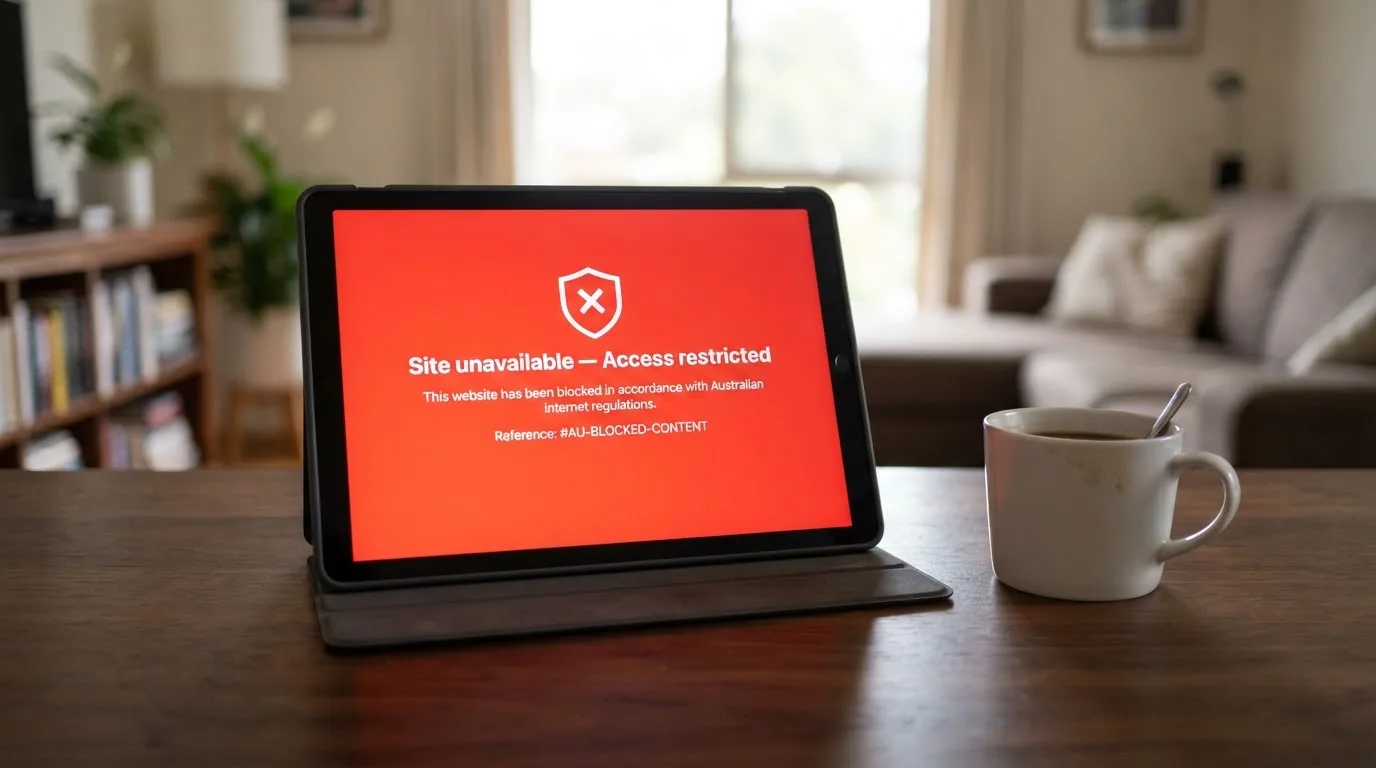
Westpac’s gambling block works at card level: it refuses authorisation of transactions registered under the merchant category code ‘Betting/Casino Gambling’ on eligible personal credit and debit cards. Commonwealth Bank lets customers apply a gambling lock to eligible cards via the CommBank app, which automatically blocks most gambling transactions, although the bank states it cannot guarantee every gambling-related purchase will be stopped. ANZ’s gambling block, activated in the ANZ app, also blocks gambling transactions made through a digital wallet such as Apple Pay on an eligible card. None of these blocks cares whether the card is Amex, Visa or Mastercard; they read the merchant category. A player who turns on the block cannot easily opt out one card and keep playing on another — the merchant category is the trigger, not the network.
Apple states that transaction limits and PIN requirements for Apple Pay purchases are set by the card issuer or merchant, not by Apple itself. Apple also confirms it does not charge fees to consumers for using Apple Pay in stores, online or in apps; any surcharge comes from the merchant’s own card-processing fees. Apple Pay, Google Pay and Samsung Pay together accounted for around 45% of all card payments in Australia by number at the end of 2025, which means a meaningful share of the Amex transactions a cashier sees actually arrive tokenised through a phone wallet.
Why a bank might kill the transaction anyway
Two reasons sit behind any refusal. The first is a hard rule. Under the Interactive Gambling Act 2001 as amended in 2023, Australian-licensed online wagering services cannot accept payment by credit card or other credit-related products. The restriction also constrains gambling use of linked digital wallets like Apple Pay. Amex’s charge card is a credit-related product under most people’s reading of the rule; even where the offshore site is not itself covered by the IGA, an Australian bank’s own policy on gambling MCCs is enough to decline it.
The second reason is the player’s own choice. Once a customer turns on ANZ’s gambling block, removing it again requires a 48-hour waiting period, and the bank warns that not all gambling transactions will be blocked and some non-gambling transactions might be blocked in error. Commonwealth Bank’s lock is the same shape: a toggle in the app, a 48-hour cooling-off to remove it, and an honest disclaimer that the bank is not promising completeness. The block is a blunt instrument and the bank will not pretend it is anything else.
The cost of the method itself
A method’s price to the reader is the sum of three things, and at an offshore casino Amex is rarely the cheapest line on any of them.
The first is the merchant surcharge. Offshore casinos that accept Amex typically pass on the higher merchant fee the network charges, and the RBA’s proposed surcharge cap does not apply. Two to three per cent of the deposit, sometimes higher, is common.
The second is the funding source. Amex is almost always a credit-related product, and the IGA’s credit-card ban covers licensed Australian wagering. An Australian bank that sees an MCC-coded gambling transaction on a credit card will decline it under its own policy regardless of the merchant. Many players end up using a debit card or a bank transfer through PayID or Osko instead — which is fine for the deposit, but it is not the Amex flow the cashier page advertised.
The third is the cash-out. Amex is one of the worst-supported methods for withdrawals at offshore casinos: most brands route the payout back to a bank transfer or, in the case of e-wallets, to the wallet the player used to deposit. A player who funds with Amex and tries to withdraw back to Amex is often told the withdrawal will go to a bank account in the player’s name — slower, more documentation, and not always free.
What settlement actually feels like
The card-side authorisation is fast. The settlement is what takes the time. Deposits usually land in the player’s casino balance inside minutes. Withdrawals are not Amex’s product to time; they are the casino’s.
The brands the ACMA has actually acted against
Online casino games and online pokies cannot be licensed anywhere in Australia. The Interactive Gambling Act 2001 makes it an offence to provide them to a person in Australia, and no state or territory issues that licence. What is licensed is wagering on races and sport placed before the event, lotteries and keno. The Northern Territory Racing and Wagering Commission regulates 52 of Australia’s online bookmakers — including Sportsbet, Bet365 and Ladbrokes — which are licensed in the Territory for tax reasons; the commission has no full-time staff and meets once a month in Darwin.
That frame is why every brand below has been on the receiving end of an ACMA formal warning. The list is not a ranking. It is not a recommendation. It is the ACMA’s own ledger of the operators it has publicly named for offering prohibited services to Australians, with the payment-method question answered by the listings each brand’s cashier page carries.
| Brand | ACMA action and date | Operator named by the ACMA | Subject support |
|---|---|---|---|
| RocketPlay | March 2026 (earlier Dama N.V., May 2022) | Pulsup Ltd | — |
| Level Up Casino | May 2022 | Dama N.V. | listings only — Westpac merchant-category guidance |
| Woo Casino | March 2025 | Dama N.V. | — |
| Spirit Casino | May 2025 | Dama N.V. | — |
| National Casino | July 2025 | Consolutetish S.R.L. | listings only — AUSTRAC and Wikipedia entries |
| Bizzo Casino | July 2025 (earlier TechSolutions, 2022) | Consolutetish S.R.L. | — |
| Ignition Casino | July 2025 | Bamboo Media | — |
| Instant Casino | February 2025 | EOD Code SRL | listings only — ecoPayz and PayID reference |
| Jackbit | April 2026 | Ryker B.V. | — |
| Casino Intense | April 2025 | Sterplay Holding Ltd | listings only — AUSTRAC, iTnews, NAB references |
| Sky Crown | September 2022 | Hollycorn N.V. | — |
Two structural points sit behind the table. The first is that the operator named by the ACMA is often the licence-holding entity behind several brands — Dama N.V. alone accounts for five of the rows in the ledger. The second is the date column: the ACMA’s formal warnings are not a one-off action. A warning from 2022 sits next to one from 2026, and a brand that received a warning in 2022 and again in 2025 has not been “fixed” by the regulator’s first letter. The ACMA moves on to ISP-level blocking, not to a second note.
Where the blocking arithmetic lives
The blocking arithmetic is the regulator’s clearest evidence that the formal-warning route is not enough on its own. The ACMA asked Australian internet service providers to block 12 more illegal gambling websites in a single round reported on 26 June 2026: 7Signs, ChromaBet, Donbet, Duospin, Freshbet, Slots Gem, Jacks Club, Lucky Start, Pointsbetz, Spinrise, Vinyl Casino and Wildsino. According to the ACMA as reported that month, a total of 1,751 illegal gambling and affiliate marketing websites had been blocked since the first blocking request in November 2019, and more than 230 unlicensed gambling services had left the Australian market since enforcement was strengthened in 2017.
The rate of blocking, against the rate at which new sites appear, shows a constant cycle. A blocking request every few weeks against an industry that stands up a new domain for the price of a domain registration is a containment exercise, not a solution: a brand that gets blocked today can reappear under a new name in a month. The arithmetic is a band, not a single figure, and the band tells the reader how much ground the regulator is actually able to hold between formal warning and rebrand.
The cost of that arithmetic to the reader is harder to see. A player whose balance sits on a brand whose domain has just been blocked can find the cashier URL dead without warning. The brand’s customer support is still there; the front door is not. None of that is the regulator’s problem to fix — the IGA targets the provider, not the player — but it is the player’s problem to live with.
The legal frame around the cashier page
The IGA targets the operator, not the player. The individual Australian using an offshore site is not prosecuted. What the player loses is the protection a licence would have given them: an Australian complaints body, an external dispute resolution scheme, recourse if a withdrawal is refused, and a guarantee that the game software is independently tested.
The Interactive Gambling Amendment (Gambling Reform) Bill 2026 passed Parliament on 19 August 2026; its advertising and inducement measures commence 1 January 2027. On a page read in 2026 the new law is passed but not yet in force. The credit-card ban on licensed Australian online wagering is already in force and has been since 11 June 2024, with penalties up to $247,500 for operators.
H2 Gambling Capital’s 2025 report estimates that Australians lose about A$3.9 billion a year to illegal gambling sites, and that the share of gambling going through legal channels fell from 74% in 2021 to 64%. That is the size of the market the ACMA is trying to contain, and it is the size of the market that an offshore Amex cashier page is competing for.
Payment routes that are legal, and the ones that are not
For a licensed Australian online wagering service, the legal deposit routes are debit card, bank transfer, PayID/Osko and BPAY. A site asking an Australian for a credit card or a crypto deposit is operating outside the Australian rules regardless of which payment-method logos it puts on the cashier page.
PayID-based instant transfers are available at over 100 Australian financial institutions, and paying to a PayID shows the name of the account holder before the transfer is sent. With Osko, a bank transfer between participating Australian banks arrives in under a minute, 24/7 including weekends, whether it is addressed to a BSB and account number or to a PayID. BPAY has operated in Australia since 1997, is available in the online banking of over 140 banks and financial institutions and is offered by over 95,000 businesses; it is run by Australian Payments Plus, the operator of PayID and Osko. APA Plus warns that being asked to transfer money to a PayID on an illegal gambling site almost certainly means a scam site.
Australia’s New Payments Platform became accessible to the public on 13 February 2018 and is owned by New Payments Platform Australia Ltd, a non-profit company whose 13 shareholders include the Reserve Bank of Australia and the country’s major banks. More than 25 million PayID identifiers had been registered on the platform as of April 2025. Participants must keep the platform’s monthly outages to no more than two minutes; in 2021 the ACCC authorised merging NPP Australia with BPAY and eftpos into a single company, Australian Payments Plus. AUSTRAC’s threshold-transaction-report rule, which requires reporting of transfers of A$10,000 or more, applies only to physical cash; ordinary electronic bank transfers are not subject to that per-transaction reporting requirement, regardless of the amount sent.
AUSTRAC is a regulator, not a consumer protection body. AUSTRAC’s guidance and threshold reporting does not entitle a player to a refund, and a casino that takes an Amex deposit from Australia is not covered by AUSTRAC’s rules any more than a casino that takes a Visa deposit from Australia is — AUSTRAC’s perimeter is the Australian reporting entity in the chain, not the offshore merchant. The same applies to the listings on the payment-method pages: the appearance of a PayID logo or an ecoPayz reference next to a brand name does not make the brand legal, it makes it reachable. That distinction is the part of this page that gets glossed over most often.
What responsible play at an Amex cashier looks like
BetStop, the National Self-Exclusion Register, has been live since August 2023 and binds only Australian-licensed online and phone wagering services. An offshore casino is not connected to it. A player who registers with BetStop and then opens an account at one of the brands above has not excluded themselves from anything.
The National Gambling Helpline is 1800 858 858, free, 24/7, with chat at Gambling Help Online. State and territory self-exclusion schemes cover land-based venues in their jurisdiction. The Westpac, CommBank and ANZ gambling blocks above are not self-exclusion schemes in the BetStop sense — they are transaction-level controls on a specific card, and they do not survive a change of card or a switch to a different bank.
A self-imposed deposit limit on an offshore site is the player’s own commitment to a setting the operator may not enforce. A bank-level gambling block is the closest thing to a hard rule, and even that carries the bank’s own disclaimer that not all gambling transactions will be blocked and some non-gambling transactions might be blocked in error.
What the reader is actually paying for
The price the reader pays is not the surcharge at the cashier. It is the sum of the surcharge, the time the withdrawal takes, the absence of an Australian complaints body, and the chance that the brand’s domain is blocked before the player has finished playing.
A method that is fast on the way in and slow on the way out, with no regulator behind it, is a method that costs the reader whether the player wins or loses. The Amex badge at the cashier is a marketing decision by an offshore operator who knows that an Australian cardholder with a credit limit is exactly the customer they want. The badge is not a quality mark, and the credit limit is not protection.
A player who has decided to use Amex at an offshore site anyway is paying the merchant fee, the time the cashier takes to push the withdrawal to a bank transfer instead, and the loss of any Australian recourse if the withdrawal stalls. The only way to take that cost off the table is to play with a licensed Australian wagering service on the methods the IGA allows, which is the only place an Australian player’s deposit is covered by an Australian rule.
Frequently asked questions
Is it legal for an offshore casino site to accept American Express from an Australian visitor?
No. Online casino games and online pokies cannot be licensed anywhere in Australia under the Interactive Gambling Act 2001, so any site offering them to an Australian is operating outside the Australian rules. The site is the target of the law, not the player; the player is the one without an Australian complaints body to call.
How quickly does an American Express transaction typically settle?
The card authorisation is fast — usually inside minutes. The settlement depends on the casino’s own cashier, not on Amex, and withdrawals from offshore brands almost never go back to the card: they are routed to a bank transfer or an e-wallet the casino controls.
Does using American Express offer any buyer protection if an offshore site refuses to pay out?
No meaningful protection in this setting. Amex’s chargeback process exists, but the issuing bank will decline a transaction at the MCC level before it ever reaches Amex; and a chargeback on an offshore gambling transaction is not a substitute for the Australian complaints and dispute-resolution scheme that an offshore site is not part of.
Can American Express be used to fund a licensed, land-based venue in Australia the same way it’s used online?
Yes, and that is the only Australian gambling setting where Amex is uncontroversial. A licensed Australian wagering service cannot accept credit cards under the Interactive Gambling Act 2001 as amended in 2023, so for online racing and sports betting the legal routes are debit card, bank transfer, PayID/Osko and BPAY — not Amex.
What deposit limits are commonly attached to American Express at offshore casino sites?
There is no consistent industry figure, and the limit set by the casino is only one of three constraints. The Australian bank’s own gambling-block policy on the merchant category code is the next, and the Amex card’s credit limit is the third. The tightest of the three is the one that bites, and the bank’s block is usually the tightest of the three.
Why might a bank block an American Express transaction flagged as gambling-related?
Because the bank’s block works at the merchant category code level. Westpac, Commonwealth Bank and ANZ all let a cardholder turn on a gambling block in their banking app, and the block refuses transactions registered under the ‘Betting/Casino Gambling’ merchant code regardless of which network — Amex, Visa or Mastercard — is on the card. The 48-hour waiting period to remove the ANZ block is a cooling-off designed to make the toggle a deliberate act rather than an impulse.