
Offshore casino sites that take Neosurf from Australian players
A punter who reaches for a Neosurf voucher is usually trying to keep a deposit out of a bank statement. The voucher works; the offshore casino it lands at is the part that does not. Under the Interactive Gambling Act 2001, no online casino may lawfully offer its games to a person in Australia, and that prohibition runs wider than any payment method, prepaid or otherwise. A page that lists “Neosurf casinos Australia” is therefore a list of offshore operators that have advertised the voucher and, in most cases, been the subject of a formal warning from the Australian Communications and Media Authority.
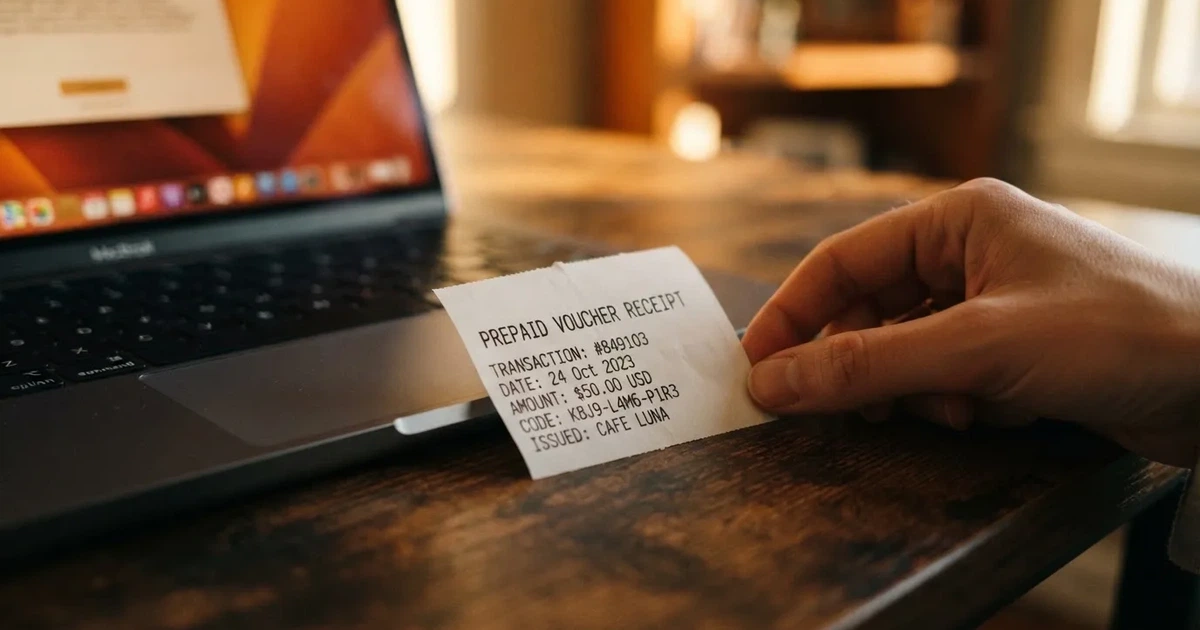
The practical reading is plain: the voucher clears on the way in, the operator is unlicensed under Australian law, and a withdrawal request still has to pass that operator’s own checks before it lands anywhere usable. What follows is a working account of how Neosurf behaves at those sites, what the ACMA has said about them, and what a player actually controls once the deposit is gone.
Currency and registration snapshot: data current as of 31 October 2026, cross-checked against the ACMA register of formal warnings and the Interactive Gambling Act 2001 as in force.
Table of Contents
- How a Neosurf deposit moves through an offshore casino
- What the ACMA has actually said about these brands
- The Interactive Gambling Act 2001, in plain terms
- Why the deposit method does not change the law
- How long a Neosurf withdrawal actually takes
- A second reading: what a bank block does and does not catch
- What the ACMA’s blocking round actually looks like, year by year
- Operator-by-operator read of the eleven warned brands
- What the deposit and withdrawal machinery actually looks like
- Responsible play in a market where the consumer protections are missing
- What the published material does not cover
- What a reader can actually do with this page
- Closing read on the eleven brands
- A note on the 2026 reform
- Frequently asked questions
How a Neosurf deposit moves through an offshore casino
Neosurf is a prepaid voucher. A player buys a printed voucher at a partner point of sale and pays online by entering its 10-digit code. The platform is run by Safe Voucher CH AG, and the vouchers themselves are sold in fixed denominations equivalent to roughly €10 through €150, with availability varying by country. There is no bank card in the path, no card number on the merchant’s side, and the casino receives the deposit without ever seeing a card account.
That is what the system does at the till. At an offshore casino, three further steps sit between the voucher code and a balance that can be wagered:
- the casino’s own cashier recognises Neosurf and produces a deposit form asking for the code;
- the casino may also ask the player to open or sign in to a myNeosurf account before the first deposit, so that the platform can carry out its own checks on the player behind the voucher;
- once the deposit clears, the balance appears in the casino wallet in the casino’s own currency, and any withdrawal the player later requests has to be moved off Neosurf and onto a separate method, because Neosurf’s own refund path charges a fee and demands full KYC identity verification before it will send money back to a bank account.
A practical point that follows: the deposit method and the withdrawal method are not the same conversation. Neosurf is built to take money in cheaply; it is not built to give it back cheaply, and offshore operators do not pretend otherwise. The voucher code goes in; the payout, if it ever comes, comes out somewhere else.
What the ACMA has actually said about these brands
Eleven brands have been called out by the ACMA in formal warnings over the past four years. The table below records the warning, the operator behind the brand on the date the ACMA wrote to it, and whether any source consulted for this page could confirm that the brand currently accepts Neosurf. Where no source could confirm it, the cell is left empty — a silence on the page is more useful than a guess.
| Brand | ACMA action and date | Operator named by the ACMA | Subject support |
|---|---|---|---|
| RocketPlay | Formal warning, March 2026 (earlier Dama N.V., May 2022) | Pulsup Ltd | — |
| Level Up Casino | Formal warning, May 2022 | Dama N.V. | listings only |
| Woo Casino | Formal warning, March 2025 | Dama N.V. | — |
| Spirit Casino | Formal warning, May 2025 | Dama N.V. | — |
| National Casino | Formal warning, July 2025 | Consolutetish S.R.L. | listings only |
| Bizzo Casino | Formal warning, July 2025 (earlier TechSolutions, 2022) | Consolutetish S.R.L. | — |
| Ignition Casino | Formal warning, July 2025 | Bamboo Media | — |
| Instant Casino | Formal warning, February 2025 | EOD Code SRL | listings only |
| Jackbit | Formal warning, April 2026 | Ryker B.V. | — |
| Casino Intense | Formal warning, April 2025 | Sterplay Holding Ltd | listings only |
| Sky Crown | Formal warning, September 2022 | Hollycorn N.V. | — |
A formal warning is not a prosecution. The ACMA writes to the operator behind the brand, names the service it considers to be a prohibited interactive gambling service, and gives the operator a chance to stop. Where the warning does not produce a result, the ACMA can ask Australian internet service providers to block the site at the network layer. As of June 2026, the ACMA reported that 1,751 illegal gambling and affiliate marketing websites had been blocked since the first blocking request in November 2019, and that more than 230 unlicensed gambling services had left the Australian market altogether since enforcement was strengthened in 2017. That is the regulator’s own ledger of what it has done about the problem, kept in public.
Two further points the table does not show, because they sit above the brand-by-brand line:
- the same operator name keeps appearing. Dama N.V. has been warned over six brands at once in May 2022, and warned again over Woo Casino in March 2025 and Spirit Casino in May 2025 — three separate letters to one operator about different brand skins. Consolutetish S.R.L. has been warned over two of them in a single July 2025 action. A reader who treats each brand as a separate business is treating skins as businesses;
- the brands themselves rotate. A player who took the May 2022 warning at face value could have moved to a brand the ACMA had not yet named. The ACMA’s own ledger moves at the speed of its investigations, not the speed of new skins appearing.
The Interactive Gambling Act 2001, in plain terms
The Interactive Gambling Act 2001 — the IGA — has been the frame for online gambling in Australia since 2001, and was strengthened by the Interactive Gambling Amendment Act 2017. As amended, it makes it an offence to provide online casino games, online pokies or in-play betting to a person physically in Australia. Wagering on races and sport placed before the event, lotteries and keno can be licensed; online casino games cannot. No state or territory issues a licence for them, because none is allowed to.
That prohibition has two consequences a Neosurf-using punter should understand before reading any further.
The first is that no brand on this page holds an Australian licence for the product it is selling. The licences some of them display — Curaçao, Anjouan, Kahnawake — are issued by jurisdictions that do not prohibit taking Australian players. They are not Australian licences, and they do not put the brand under Australian consumer law. A complaint to an Australian complaints body about a withheld withdrawal from one of these brands has nowhere to land; the operator has no obligation to answer it.
The second is that the IGA targets the provider, not the player. An Australian resident who opens an account at one of these brands is not personally prosecuted under the Act. What they lose, by playing at an unlicensed site, is the set of protections that come with a licence: a complaints body, a dispute resolution process, an enforceable requirement to pay out winnings, and the connection to BetStop, the National Self-Exclusion Register, that licensed Australian wagering services sit behind. The site can be blocked by an Australian ISP while the player still has a balance on it, and the player has no local recourse.
H2 Gambling Capital’s 2025 estimate puts Australian losses to illegal gambling sites at about A$3.9 billion a year, and reports the share of gambling going through legal channels falling from 74% in 2021 to 64%. The exact figures move year to year; the direction does not.
Why the deposit method does not change the law
It is tempting to think that because Neosurf is anonymous at the point of sale, an Australian using it falls outside the IGA’s reach. The IGA does not work that way. It targets the operator offering the service, and it covers all payment methods. A credit card, a debit card, a bank transfer, a crypto transfer and a prepaid voucher are all payment methods for the purposes of the Act, and the Act’s prohibition on offering the service to an Australian is the same for each of them.
There is also a separate, narrower prohibition that bites on licensed wagering rather than on the offshore casino itself: from 11 June 2024, Australian-licensed online wagering service providers have been banned by law from accepting credit cards, credit-linked digital wallets or digital currencies as payment, with ACMA-enforced penalties of up to A$247,500 for non-compliance. That rule applies to Australian-licensed bookmakers. It does not apply to an offshore casino, which is operating outside Australian law anyway. The reason it matters on this page is that an Australian punter who tries to use a credit card at an Australian-licensed bookmaker will be declined at the merchant category code, while the same card at an offshore casino will go through — and that gap is exactly the gap the IGA’s prohibition is built around.
A note on the bank side. Major Australian banks — NAB, Commonwealth Bank and Westpac — let credit and debit cardholders self-activate a gambling transaction block through their banking app, and the block is usually applied immediately once requested. ANZ’s gambling block covers transactions made through a digital wallet such as Apple Pay on an eligible card, and removing the block again requires a 48-hour waiting period. Westpac’s block works at card level, refusing authorisation on transactions registered under the merchant category code “Betting/Casino Gambling” on eligible personal credit and debit cards. These blocks do not stop a Neosurf deposit, because Neosurf is not a card transaction. They are part of the wider picture, not a substitute for the protections an Australian licence would bring.
How long a Neosurf withdrawal actually takes
The marketing language on these sites tends to call Neosurf an “instant” deposit method. The deposit is fast — the cashier recognises the code and the balance appears within seconds. The withdrawal story is slower, and a reader who treats the two as symmetric is reading the marketing rather than the mechanism.
Neosurf’s own refund path is built around the myNeosurf account. A myNeosurf account can be opened in minutes with no documents required at the start, but full KYC identity verification is required before any refund, and a 5% fee applies to refunds and withdrawals sent back to a bank account. The refund speed is therefore not a property of the voucher; it is a property of the myNeosurf verification queue and of the bank the refund is being sent to.
Offshore casinos generally do not pay out to Neosurf at all. Where they offer a Neosurf voucher as a deposit, they ask for a separate method — usually a bank transfer, an e-wallet or a cryptocurrency transfer — for the withdrawal. The settlement of that withdrawal is then bound by the casino’s own pending period and manual checks, which the ACMA’s published findings show are precisely the steps where withdrawals stall for Australian players at unlicensed sites. A player who reads “instant deposits” as “instant payouts” is reading the wrong column.
The cost of that asymmetry is not abstract. A 5% fee on a refund back to a bank account means that a player who deposits A$200 and wins A$300 will, on the way out, hand A$15 of those winnings to the platform if the refund is sent back through Neosurf. The alternative is to take the casino’s own chosen withdrawal method, on the casino’s own terms, with no Australian complaints body to approach if the withdrawal is refused or delayed.
A second reading: what a bank block does and does not catch
The bank-side gambling blocks are an Australian punter’s best tool, and they are partial. They catch transactions tagged with the gambling merchant category code at the card network. They do not catch prepaid voucher deposits, because there is no card in the path. They do not catch direct bank transfers, PayID transfers, BPAY payments or cryptocurrency transfers. They were designed to be applied at a layer that the card networks can see, and they do what they were designed to do at exactly that layer.
A practical consequence: a player who has turned on a gambling block at NAB, CBA, Westpac or ANZ, and who then funds an offshore casino account with Neosurf, is using a deposit channel that the bank cannot see. The block is still on, and still working at every card transaction the bank does see. The Neosurf path simply does not pass through the bank at all. That is the design feature of prepaid that makes it attractive to some players, and the same feature means a bank block does not extend to it.
What the ACMA’s blocking round actually looks like, year by year
The ACMA publishes a running total of blocked sites and a list of operators it has warned. Reading the totals as a rate, rather than as a snapshot, gives a sense of how the regulator’s enforcement is moving.
The first blocking request was lodged in November 2019. The total of blocked sites reported as of June 2026 was 1,751, including affiliate marketing pages. That works out at an average rate in the order of 260 sites per year over the six and a half years since the first blocking request, with the rate accelerating in the years after the 2017 strengthening. In the round reported on 26 June 2026 alone, the ACMA asked Australian ISPs to block 12 more sites: 7Signs, ChromaBet, Donbet, Duospin, Freshbet, Slots Gem, Jacks Club, Lucky Start, Pointsbetz.com, Spinrise, Vinyl Casino and Wildsino. The full blocking round, year by year, runs at a steady pace with periodic spikes when a particular operator’s brands are caught up together.
A second pair of figures puts the same regulator’s work against the market itself. More than 230 unlicensed gambling services have left the Australian market since 2017, on the ACMA’s own count. The H2 Gambling Capital 2025 estimate of A$3.9 billion a year in losses to illegal sites suggests that the regulator’s enforcement has not yet closed the gap. The arithmetic is the regulator’s, not this page’s; the gap is the point.
Operator-by-operator read of the eleven warned brands
What follows is what each brand in the table actually is, what the ACMA’s warning adds to that picture, and where the page’s data runs out. The entries cover all eleven brands in the order the ACMA has placed them, with the verdict at the end of each one being this page’s own judgement of what the brand is worth to a reader comparing options — not a recommendation, and not a suitability statement.
RocketPlay
The ACMA wrote to Pulsup Ltd over Rocketplay.com.au in March 2026. Dama N.V., which ran the brand earlier, had already been warned over it in May 2022. No consulted source confirmed that the brand currently accepts Neosurf; the page cannot say one way or the other. A reader looking for a brand with a single operator behind it will not find that here — the brand has had two operators in four years, and the ACMA’s correspondence has followed the operator rather than the skin.
Level Up Casino
The ACMA warned Dama N.V. over Level Up Casino as part of the May 2022 letter covering six brands at once. The brand has had no further formal warning in the ACMA’s published register to date, which means either that the warning produced a result, or that the regulator has not yet come back to it. One listing source mentioned the brand in a Neosurf context, but this page treats the detail with caution and classifies the brand as a listing-only entry.
Woo Casino
The ACMA warned Dama N.V. over Woo Casino in March 2025, a separate letter from the May 2022 batch. The brand sits with Spirit Casino on a 2025 re-warning to the same operator, which is what the regulator does when an earlier warning has not produced the result it wanted. No consulted source confirmed that Woo Casino currently accepts Neosurf.
Spirit Casino
The ACMA warned Dama N.V. over Spirit Casino in May 2025, three years after the May 2022 batch that covered Dama N.V.’s other brands. The gap between the two warnings tells its own story. Despite our review, no external data validates current Neosurf support at this site.
National Casino
The ACMA warned Consolutetish S.R.L. over National Casino in July 2025, in the same action that produced the warning to Bizzo Casino. Two listing sources linked the brand to Neosurf, yet firm confirmation remains elusive; we categorise the brand strictly as a listing-only inclusion.
Bizzo Casino
The ACMA warned Consolutetish S.R.L. over Bizzo Casino in July 2025. Bizzo had already been the subject of a 2022 formal warning to TechSolutions (CY) Group Limited and TechSolutions Group N.V., the operator behind the brand at that time. A second formal warning to a brand from a new operator is a regulator telling a new skin the same thing it told the old one. Our review found no verifiable evidence of active Neosurf support.
Ignition Casino
The ACMA warned Bamboo Media over Ignition Casino in July 2025. No consulted source confirmed current Neosurf support. The brand is the one most often associated with poker in the offshore market; its acceptance of casino games is the part that puts it on the ACMA’s list.
Instant Casino
The ACMA warned EOD Code SRL over Instant Casino in February 2025. While e-wallet and payments directories mention the brand alongside Neosurf, this does not serve as an active verification. Consequently, the entry remains a listing-only reference.
Jackbit
The ACMA warned Ryker B.V. over Jackbit in April 2026, in the same action as the warning over CasinOK. The brand has been named by the regulator in the most recent round of warnings covered by this page, alongside RocketPlay. We have been unable to find any independent validation of current Neosurf usage.
Casino Intense
The ACMA warned Sterplay Holding Ltd over Casino Intense in April 2025. Although four listing sources link the brand to payment contexts, we lack active confirmation of Neosurf acceptance, rendering it a listing-only reference for our purposes.
Sky Crown
The ACMA warned Hollycorn N.V. over Sky Crown (and Blue Leo) in September 2022, in the form of a published formal warning PDF. The brand has had no further formal warning to date in the ACMA’s published register. No consulted source confirmed current Neosurf support.
What the deposit and withdrawal machinery actually looks like
A reader who reads the brand list and decides to play anyway needs to know what the money is doing, in detail, because the marketing language on these sites does not survive contact with the cashier.
A Neosurf deposit goes from a printed voucher to a casino balance in three steps: the cashier page lists Neosurf among the deposit methods; the player enters the 10-digit code; the casino confirms the deposit and credits the balance. Each step is fast. The voucher denominations themselves — typically the equivalent of €10 to €150 — are the natural ceiling on the size of a single deposit, and the casino will accept multiple vouchers across separate deposits if the player wants to move more.
A Neosurf withdrawal, where it is offered at all, requires a separate myNeosurf account. The myNeosurf account can be opened for free with no documents at the start, but full KYC verification — the same kind of identity verification a bank requires — is needed before any refund, and a 5% fee applies to refunds sent back to a bank account. In practice, the casino’s own preferred withdrawal method will be a bank transfer, an e-wallet or a cryptocurrency transfer, and the player has no way to insist on Neosurf as the payout rail. The withdrawal speed is then bound by the casino’s own pending period, which is not under the player’s control.
The KYC step is the part the marketing copy tends to leave out. A player opening a myNeosurf account at the voucher stage gives up the anonymity that the voucher was supposed to provide: the platform’s own refund path demands identity documents, and the casino’s own cashier will demand them before a first withdrawal as well. The voucher protects the player’s bank statement, not the player’s identity.
Responsible play in a market where the consumer protections are missing
BetStop, the National Self-Exclusion Register, has been live since August 2023. It binds Australian-licensed online and phone wagering services, so a player who has registered with BetStop is excluded from every Australian-licensed bookmaker. It does not bind an offshore casino, because an offshore casino is not connected to the register. A player who has self-excluded through BetStop and then opens an account at an offshore site has not extended their exclusion to that site; they have moved outside it.
The National Gambling Helpline, 1800 858 858, is free, 24/7, and provides chat at Gambling Help Online. It is staffed for Australian residents regardless of which site they have been playing at, and it is the right first call for anyone who feels their play has moved past what they intended. The helpline’s advice is independent of any offshore operator.
Bank-side gambling blocks — NAB, CBA, Westpac, ANZ — cover card transactions but not prepaid vouchers, not direct bank transfers, not PayID transfers and not cryptocurrency transfers. They are an Australian punter’s strongest layer of card-side protection, and they are partial. A player who has turned on a bank-side block and who then uses Neosurf has chosen a deposit channel that the block does not see. The block stays on; it simply does not extend to that path.
The 2026 reform. The Interactive Gambling Amendment (Gambling Reform) Bill 2026 passed Parliament on 19 August 2026. Its advertising and inducement measures commence on 1 January 2027. It is a law with a start date that has not yet arrived at the time this page was written, and the rules a reader meets at an offshore casino today are the rules of the pre-reform IGA.
What the published material does not cover
A reader who has reached this page and is comparing options will notice that several pieces of information the brand pages advertise are not present here. The page does not list bonus amounts, because the only sources for them were affiliate marketing pages, and the ACMA’s own action against affiliate marketing in the same blocking round is the reason those sources cannot be relied on. The page does not quote payout times per brand, because no consulted source confirms a per-brand payout time that survives the ACMA’s own published findings on stalled withdrawals at these sites. The page does not name a wagering multiple or a maximum cashout, because research returned no specific number that can be carried forward without becoming a marketing claim in different words.
The honest version of those gaps is that the casino pages and the affiliate pages that quote them are not a reliable source for them. A reader who wants those numbers should ask the operator directly, on the operator’s own terms page, and should read the small print on the same page before taking any figure at face value.
What a reader can actually do with this page
Three takeaways a reader can act on without depositing a cent.
The first is that the voucher is not the problem. The voucher works. The Neosurf system delivers a deposit to an offshore casino’s cashier in seconds, and the deposit will be there when the player logs in. The problem is what sits on the other side of the deposit: an unlicensed operator, with no Australian complaints body behind it, no connection to BetStop, and no enforceable obligation to pay out.
The second is that the ACMA’s register is the public ledger a reader can check. Eleven brands on this page sit on that register, with formal warnings dated from May 2022 through April 2026. The register is updated as the regulator writes new letters, and a brand that is not on the register today can be on it tomorrow. The register is the source to check, not the brand’s own “licensed by” line.
The third is that the protection layers an Australian player is used to — BetStop, a card-side gambling block at the bank, an Australian complaints body — do not extend to these sites. A player who has decided to play at one of them has chosen to step outside the protections the Australian system offers. The bank-side block still works at the card transactions it can see; Neosurf is not one of them.
A reader comparing options, in other words, is comparing degrees of exposure to an unregulated operator rather than choosing between regulated ones. The eleven brands above differ from each other on the date of their warning and on the operator named in it. They do not differ on the legal status of the offer.
Closing read on the eleven brands
A page that lists eleven brands the ACMA has warned is not a ranking and not a recommendation. The order is the ACMA’s own, by date of most recent action. Within that order, three brands — RocketPlay, Jackbit and Woo Casino — sit on warnings dated 2025 or 2026, which is to say the regulator’s most recent published correspondence. Three more — Level Up Casino, Sky Crown and Bizzo Casino — have had warnings from earlier years that have not yet produced a second letter from the regulator. The remaining five sit in between.
A reader who treats recency of warning as a signal about current conduct will treat the 2025 and 2026 letters as the more serious. A reader who treats the absence of a follow-up letter as a signal will treat the earlier letters as resolved. The ACMA’s own register supports neither reading cleanly, because the regulator writes warnings when its investigations reach a conclusion, not on a fixed schedule, and a brand with no current warning may simply not have been investigated recently. The honest version is that the regulator’s published register is a list of brands the regulator has acted against, not a list of brands that are safe.
The verdict that closes this section is not on any one brand. It is on the set: eleven offshore operators, each the subject of a formal warning from Australia’s communications regulator, none of them holding an Australian licence for the product they sell, and the only differences between them being the date of the regulator’s most recent letter and the operator name on it. A reader looking for a brand to trust will not find that on this page, because no brand on this page is one a regulator has cleared.
A note on the 2026 reform
The Interactive Gambling Amendment (Gambling Reform) Bill 2026 passed Parliament on 19 August 2026, and its advertising and inducement measures commence on 1 January 2027. At the time this page was written, the bill has been passed but its commencement date has not arrived. A reader who reaches this page in early 2026 is reading under the pre-reform IGA; a reader who reaches the same page after 1 January 2027 is reading under the reformed version. The brand list and the ACMA’s register do not change at the commencement date; the rules around advertising and inducement do. A reader who wants the rule as it applies at the moment they are reading should check the current version of the IGA directly.
Frequently asked questions
Is it legal for an online casino to accept Neosurf from a player in Australia?
No. Under the Interactive Gambling Act 2001, no online casino may lawfully offer its games to a person in Australia, regardless of the payment method. Neosurf is one of several payment methods the prohibition covers, and a credit card, a debit card, a bank transfer and a crypto transfer are all in the same position.
What is the smallest deposit a Neosurf casino site usually asks for?
Neosurf vouchers are typically sold in denominations equivalent to €10 to €150, with availability varying by country. The casino’s own minimum deposit is usually set at the lowest voucher denomination, so A$15 to A$20 is a typical floor for a single deposit at these sites.
Does a Neosurf withdrawal clear any faster than a card withdrawal at these sites?
Generally no. Offshore casinos tend to ask for a separate method — usually a bank transfer, e-wallet or crypto transfer — for withdrawals, and the casino’s own pending period and manual checks apply regardless of the deposit method used on the way in.
Can Neosurf be used at every offshore pokies-style site, or only some of them?
Only at sites that have integrated Neosurf into their cashier. Listings and affiliate pages mention the brand at several of the operators covered here, but the page has confirmation only at the level of those listings, and the operator’s own cashier is the place to check before depositing.
Does depositing with Neosurf add an extra fee at these casino sites?
Neosurf’s own fees apply on the refund path: a 5% fee applies to refunds and withdrawals sent back to a bank account from a myNeosurf account, and full KYC identity verification is required before any refund. The casino may add its own fees on either path.
What should a player do if a Neosurf deposit does not appear in a casino account?
Check the voucher code first — a single mistyped digit will reject the deposit at the cashier. If the code is correct and the balance has not appeared, the casino’s own support is the next step; the myNeosurf platform can confirm whether the voucher was redeemed. The voucher is single-use, so a player who suspects a double-redemption should keep the unused voucher code secure.