
PayID at Australian online casinos in 2026: how the deposit pipe works, what it costs the punter, and why every name on the list still sits outside the law
PayID is the easy-to-remember handle that lets a customer pay almost any Australian bank account in under a minute without typing a BSB and account number, and most of the offshore casino brands that surface in searches like “casinos that accept PayID Australia” already list it as a deposit option. The price of that plumbing is the subject of this page: what PayID actually does at these sites, what it does not, what a deposit costs in money and in protection, and why the ACMA’s own warning list has been growing, not shrinking, through 2026.
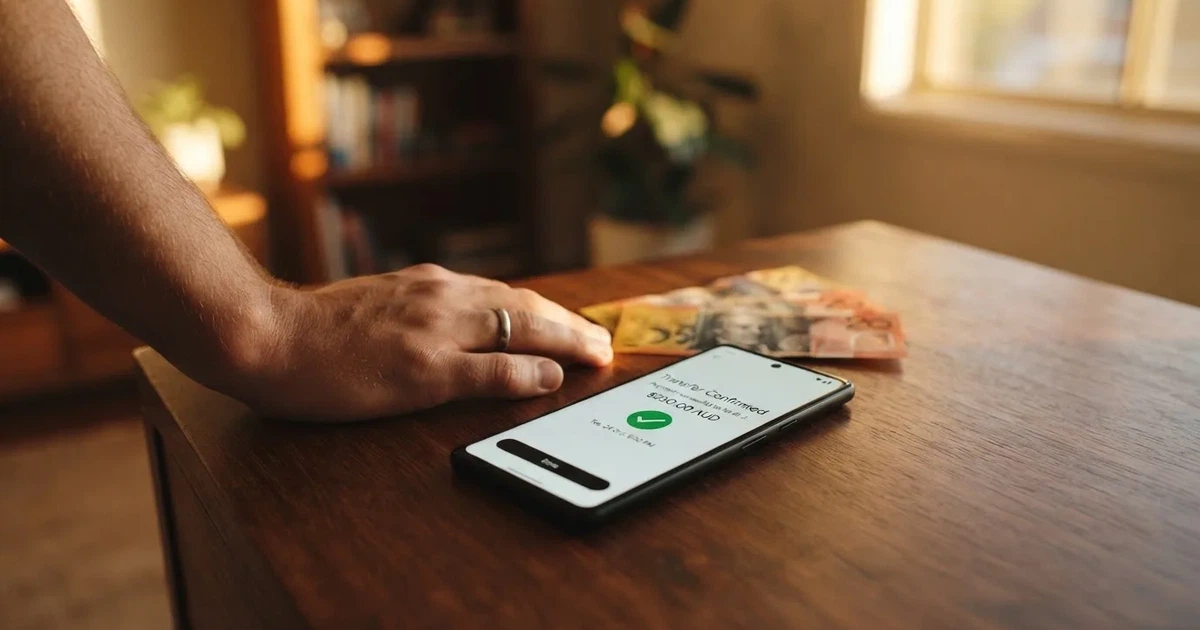
Data current as of 5 November 2026 and verified against the Australian Communications and Media Authority’s register of formal warnings and blocking actions.
Table of Contents
- How a PayID transfer actually moves the money at these sites
- What the ACMA list actually looks like in 2026
- What “ACMA action” actually means at the operator level
- ACMA-warned operators: a summary
- The PayID casino ranking: what the comparison actually shows
- Reading the operator write-ups
- The legal frame behind every write-up
- The responsible-gambling frame the punter does not get
- What the speed comparison between PayID and the other deposit methods actually looks like
- The arithmetic of how fast the regulator’s block list is growing
- How to read this page if a punter has already deposited
- What this page is for, and what it is not
- Frequently asked questions about PayID casinos in Australia
How a PayID transfer actually moves the money at these sites
A PayID is a piece of metadata — a mobile number, an email address, an ABN or an Organisation Identifier — bolted to an ordinary Australian bank account. The network underneath is Osko, run by Australian Payments Plus, sitting on the Reserve Bank’s New Payments Platform. Every participating bank has it built in already, which is why more than 100 Australian financial institutions now offer it to their customers and the registry of registered PayIDs passed 25 million by April 2025.
When an Australian punter pays a casino by PayID, the casino publishes its own PayID — typically a mobile number or an email — and the punter opens their own banking app, types that PayID into the transfer screen and authorises a normal Osko payment. The receiving side shows up in the casino’s bank account in under a minute, the casino credits the punter’s balance, and the punter sees the account holder’s name on screen before confirming. That pre-confirmation name check is the single PayID feature a player actually feels: it is the safeguard AP+ itself points customers to when warning that anyone asked to send money to a PayID on an “illegal gambling site” is “almost certainly” looking at a scam.
The plumbing, then, is domestic. What sits on the other end of it is not. Every brand on this page runs from an offshore operator, holds no Australian licence for casino games, and has been the subject of a formal ACMA warning. The same bank transfer that lands in sixty seconds in Sydney lands in a Curacao- or Cyprus-registered corporate at the other end, and the consumer law that would catch a refused withdrawal or a voided payout does not travel with it.
The mechanics of an instant deposit
A PayID deposit is, technically, an instant Osko credit to the casino’s bank account. There is no card network, no chargeback right, and no surcharge: the merchant processing fee the punter hears about on credit and debit rails simply does not exist on a domestic bank transfer. The punter pays nothing to deposit. The casino pays nothing per transaction to receive it, which is the commercial reason offshore operators like the method — the cost of accepting a PayID deposit is essentially the cost of having an Australian bank account in the first place.

The other side of that coin is that the money is gone the moment the customer taps confirm. A PayID payment is not a pre-authorisation that can be cancelled. If a casino refuses to credit the balance, the punter’s recourse is the casino’s own complaints process, which is not bound by any Australian code, and the bank’s standard dispute process for an authorised transfer. There is no chargeback right because the network did not move the money — the customer’s own bank did.
What a withdrawal looks like, and why it is not as fast as a deposit
A PayID deposit clears in under a minute. A PayID withdrawal does not. The deposit leg is automated; the withdrawal leg is the casino’s own pending period plus the same Osko pipe. Almost every brand on this page runs a 24-to-72-hour internal queue before it releases a withdrawal request, with KYC checks on the first payout, weekly caps on subsequent ones, and a few cases where the operator’s terms exclude PayID from withdrawals entirely and forces a bank transfer or a different rail instead.
The arithmetic that matters to a punter is straightforward. A$100 paid in at 11 pm on a Saturday is on the casino’s balance at 11:01 pm. A$100 the punter tries to withdraw at 11 pm the same Saturday is, in the most generous case, sitting back in their account by the following Wednesday morning — and in the less generous case, queued longer while the operator’s compliance team processes a manual review. The deposit side is real-time; the payout side is whatever the operator wants it to be. That gap is the entire reason the same payment method produces two different speeds at the same brand.
The minimum deposit question
Offshore casinos that surface for “$10 deposit PayID casino” queries rarely have a true $10 minimum for every method. PayID-specific minimums cluster in the A$10 to A$30 band because of how the casinos configure their payment processors, with most asking A$20 or A$30 from PayID specifically while keeping a lower minimum on cards. Bonus-triggering deposits are usually the highest tier — the figure that unlocks the headline welcome offer is rarely the same as the figure that lets the punter open an account.
A punter who wants to deposit A$10 to test a site’s games before committing more will find PayID available for the test deposit in many cases, but should expect the headline match bonus to require a larger top-up. The market has settled on this split because the cost of running a one-off small deposit through an Australian bank is essentially zero to the operator, but the marketing budget attached to the welcome offer only amortises at a higher number.
Where PayID fits next to the other methods
A punter comparing deposit methods at an offshore brand sees PayID alongside cards, e-wallets like Skrill or Neteller, vouchers and increasingly cryptocurrency. PayID’s edge over cards is the absence of surcharging and the absence of chargeback rights — both of which favour the operator, not the punter, but mean a player is never paying a 1.5%-to-2% card surcharge on a deposit. Its edge over e-wallets is that no third party holds the money in transit. Its edge over crypto is that no exchange rate is being skimmed off the top and the receiving account is an Australian bank account, which is why the casino can actually receive it.
The credit-card ban that took effect on 11 June 2024 for Australian-licensed wagering services does not bind offshore operators, which is why card deposits still appear on their cashier pages. The same ban is what made PayID, Osko and BPAY the three deposit methods Australian-licensed bookmakers actually use. The offshore operators take PayID because the Australian half of the transaction is cheap and instant, not because they are following any rule that says they have to.
What the ACMA list actually looks like in 2026
The Australian Communications and Media Authority has been the body enforcing the Interactive Gambling Act 2001 for the better part of a decade, and the list of brands it has acted against is what a search for “Australian casino accept PayID” eventually runs into. By the round reported on 26 June 2026 the ACMA had asked Australian ISPs to block 1,751 illegal gambling and affiliate marketing websites since the first blocking request in November 2019, and more than 230 unlicensed gambling services had left the Australian market since enforcement was strengthened in 2017. That is the cumulative picture: a regulator blocking, warning, and watching operators cycle through new domain names while the underlying corporate shells often persist.
The pace has not slowed. The June 2026 round alone added 12 sites to the blocking list — 7Signs, ChromaBet, Donbet, Duospin, Freshbet, Slots Gem, Jacks Club, Lucky Start, Pointsbetz, Spinrise, Vinyl Casino and Wildsino — and the same round pushed the running total of formal warnings past the long-running baseline. The block list is a moving target, and a punter searching for “all PayID casino” sites today will find a different list next quarter.
H2 Gambling Capital’s 2026 estimate
H2 Gambling Capital’s 2025 report, the figure Australian analysts continue to cite, puts Australian losses to illegal gambling at roughly A$3.9 billion a year. That is the price of the offshore market after the legal channels have done their work: the share of gambling flowing through licensed operators fell from 74% in 2021 to 64%, which is the headline number the ACMA itself uses when it talks about the gap between the regulated market and the offshore one. The legal Australian market is not shrinking because Australians have stopped gambling. It is shrinking because the offshore market is absorbing the difference, and PayID is one of the deposit rails doing the absorbing.
Formal warnings issued in the last eighteen months
The brand-by-brand picture is sharper than the aggregate. Between early 2025 and the middle of 2026, the ACMA issued formal warnings over Rocketplay (Pulsup Ltd, March 2026); Woo Casino and Spirit Casino (Dama N.V., March and May 2025); Casino Intense (Sterplay Holding Ltd, April 2025); National Casino and Bizzo Casino (Consolutetish S.R.L., July 2025); Ignition Casino (Bamboo Media, July 2025); Instant Casino (EOD Code SRL, February 2025); and Jackbit and CasinOK (Ryker B.V., April 2026). One warning covers one operator over a specific brand or set of brands; a corporate group that runs a stable of casinos tends to pick up warnings one at a time as the ACMA works through the list.
A punter who lands on any of those brands in 2026 is looking at an operator the ACMA has formally named in writing for offering prohibited services to Australians. The warning is a public document, published on the regulator’s own site, and is the most recent word the regulator has spoken about that operator.
The Dama N.V. pattern
Dama N.V. is the corporate name that recurs most often on the warning list. In May 2022 the ACMA warned it over six brands — Bambet, Dazard, Level Up, Rocketplay, Wild Tornado and Cobra Casinos — then returned in March 2025 to warn over Woo Casino and again in May 2025 to warn over Spirit Casino. Rocketplay has now been warned twice over the same brand under two different owners, which is the shape of the market: a casino that gets blocked rebrands, gets sold to a new operator, and reappears at a new domain with the same game library bolted on. The brands the punter searches for stay recognisable across the reorganisations because the front end survives the corporate reshuffle.
The Bizzo and National Casino pattern
Consolutetish S.R.L. picked up the ACMA’s attention in July 2025 over National Casino and Bizzo Casino. Bizzo is the more instructive of the two because it had already been the subject of a 2022 formal warning to TechSolutions (CY) Group Limited and TechSolutions Group N.V., which means the same brand has been warned twice under three different corporate owners. From the punter’s seat the warning looks like a property of the website; from the regulator’s seat it is a property of the corporate behind it, and the corporate behind it has changed twice.
Where the regulator stops
The IGA targets the provider, not the punter. An individual Australian who opens an account at an offshore casino is not prosecuted. What the punter loses is the consumer law that would normally sit behind an Australian-licensed transaction: no recourse through the Australian Financial Complaints Authority, no obligation on the operator to honour its advertised terms, no Australian complaints body to take a complaint to, and no guarantee that an account balance will be reachable when the ACMA blocks the domain. The blocking order takes the site offline in Australia; the operator’s bank account does not move; a pending withdrawal can sit in limbo for weeks while the operator decides what to do with it.
What “ACMA action” actually means at the operator level
A formal warning is the ACMA’s middle step. It comes after a quiet investigation and before a blocking request. The regulator names the operator, the date and the prohibited service, publishes the warning on its own site, and gives the operator a window to take the prohibited offering offline for Australians. Most do not, which is why the same operators turn up again later as the subject of a blocking request. The warning list is the regulator’s running ledger of operators that have ignored at least one chance to comply.
A blocking request is the next step and the heavier one. Once the ACMA asks Australian ISPs to block a domain, the site stops resolving for Australian traffic within days. The operator can rotate to a new domain, but each rotation costs the casino a chunk of its player base and gives the regulator a fresh reason to add the new address to the list. The cumulative 1,751 figure is the number of distinct domains the ACMA has had to block over the seven years since the first request.
Neither step is a prosecution. The IGA’s enforcement teeth are administrative: warnings, blocking requests, and the threat of larger penalties under the 2017 amendments. What changes for the punter is that the address they typed into a browser stops working, and the customer service email they had on file stops answering.
How the offshore casino market absorbs the regulator
The pattern visible across the warnings is a market that churns through corporate shells faster than the regulator can keep its list current. A single group might run a dozen brands; a warning over one brand does not affect the others; a blocking order against one domain leaves the others live. The punter looking for “all PayID casino” sites today is seeing the survivors of multiple blocking rounds, and the brand catalogue is more crowded than the warning list because most of the warnings cover only a slice of each operator’s portfolio.
This is also why the same payment method sits at so many of these brands. PayID is cheap for the operator, instant for the punter, and does not require the operator to integrate a third-party processor the way card payments or e-wallets do. From the operator’s side, the only friction is having an Australian bank account at all. From the punter’s side, the friction is everything else: no consumer law, no BetStop coverage, no Australian complaints body, and a regulator that may take the domain offline without warning.
ACMA-warned operators: a summary
| Brand | ACMA action and date | Operator named by the ACMA | Subject support |
|---|---|---|---|
| RocketPlay | Formal warning, March 2026 | Pulsup Ltd | — |
| Level Up Casino | Formal warning, May 2022 | Dama N.V. | listings only (Westpac) |
| Woo Casino | Formal warning, March 2025 | Dama N.V. | — |
| Spirit Casino | Formal warning, May 2025 | Dama N.V. | — |
| National Casino | Formal warning, July 2025 | Consolutetish S.R.L. | listings only (AUSTRAC, Wikipedia) |
| Bizzo Casino | Formal warnings, 2022 and 2025 | Consolutetish S.R.L. (2025); TechSolutions (2022) | — |
| Ignition Casino | Formal warning, July 2025 | Bamboo Media | — |
| Instant Casino | Formal warning, February 2025 | EOD Code SRL | listings only (ecoPayz, PayID) |
| Jackbit | Formal warning, April 2026 | Ryker B.V. | — |
| Casino Intense | Formal warning, April 2025 | Sterplay Holding Ltd | listings only (AUSTRAC, ITnews, NAB) |
| Sky Crown | Formal warning, September 2022 | Hollycorn N.V. | — |
The PayID casino ranking: what the comparison actually shows
The eleven brands below are the operators the ACMA itself has named in formal warnings, ordered roughly by the chronology of those warnings. Each one is an offshore casino that lists PayID as a deposit option, none of which is licensed to take an Australian resident. The comparison table that follows is what the regulator’s own publication reveals about each, plus a verdict on what the brand actually offers a punter who can get past the legal frame.
The full comparison at a glance
| Brand | ACMA action and date | Operator named by the ACMA | Subject support |
|---|---|---|---|
| RocketPlay | Formal warning, March 2026 (and earlier May 2022) | Pulsup Ltd (2026); Dama N.V. (2022) | — |
| Level Up Casino | Formal warning, May 2022 | Dama N.V. | listings only (Westpac) |
| Woo Casino | Formal warning, March 2025 | Dama N.V. | — |
| Spirit Casino | Formal warning, May 2025 | Dama N.V. | — |
| National Casino | Formal warning, July 2025 | Consolutetish S.R.L. | listings only (AUSTRAC, Wikipedia) |
| Bizzo Casino | Formal warnings, 2022 and 2025 | Consolutetish S.R.L. (2025); TechSolutions (2022) | — |
| Ignition Casino | Formal warning, July 2025 | Bamboo Media | — |
| Instant Casino | Formal warning, February 2025 | EOD Code SRL | listings only (ecoPayz, PayID) |
| Jackbit | Formal warning, April 2026 | Ryker B.V. | — |
| Casino Intense | Formal warning, April 2025 | Sterplay Holding Ltd | listings only (AUSTRAC, ITnews, NAB) |
| Sky Crown | Formal warning, September 2022 | Hollycorn N.V. | — |
The right-hand column is what the public sources actually say about PayID support at each brand. “Listings only” means the only references are aggregator pages and third-party directories — there is no confirmed first-party statement, and the brand may or may not actually take a PayID deposit today. A dash means the public record is silent on the question; the brand may accept PayID, may have stopped, or may route it through a payment processor the operator has not disclosed. Either way, the absence of a public statement is itself information.
What the spread of operators tells the reader
Three of the eleven brands are owned by Dama N.V., and Dama N.V. has been warned over brands in 2022, 2025 and 2026. Two more — National Casino and Bizzo Casino — sit with Consolutetish S.R.L., and Bizzo has been warned twice under three different operators. The remaining six are spread across six different corporate owners, none of which has been warned more than once in the last eighteen months — though “not yet” is doing some heavy lifting in that sentence.
The financial-institution and AUSTRAC references in the right-hand column matter because they trace where the brand sits in the Australian payments system. A brand listed on Westpac’s gambling-block page, on the AUSTRAC enrolments register, or on NAB’s merchant category list is a brand that interacts with Australian banks in a way that is documented publicly. The brand may still be offshore; the documentation just gives a punter a way to check whether their own bank will let the transaction through.
The verdict for each brand
The verdict that closes each operator write-up below answers a different question than the table above it. The table is what the regulator and the directories say; the verdict is what a punter comparing options should do with that information.
Reading the operator write-ups
Each brand below gets its own write-up. The structure is the same: the ACMA warning and date, the corporate owner, the public record on PayID support, and a verdict on what the brand is actually worth a punter’s time. The verdict does not recommend. The verdict is the comparison the table cannot make on its own — whether the brand sits inside the warning pattern the ACMA has been running, whether the payment option is real or directory-only, and what a punter stands to lose if the regulator blocks the domain mid-session.
RocketPlay
RocketPlay is the brand the ACMA warned twice under two different owners: Dama N.V. in May 2022, then Pulsup Ltd again in March 2026 at the .com.au domain. The corporate change between the two warnings is the brand’s whole story — RocketPlay the front end survived, the operator behind it did not, and the ACMA had to start again from the new owner’s name. There is no public confirmation that RocketPlay takes PayID at the cashier today. The verdict: the most-cited name on the warning list, and the one the ACMA has had to chase the longest.
Level Up Casino
Level Up was one of six Dama N.V. brands caught in the May 2022 warning. The only public trace of Level Up’s payment set is a Westpac gambling-block page entry that places it in the same merchant category as the other offshore brands. There is no first-party confirmation of a PayID option today, and a punter who finds Level Up at a current domain is looking at an operator whose parent has now been warned twice over other brands in the same stable. The verdict: a brand whose payment story is what Westpac’s block page says it is, which is to say, blockable.
Woo Casino
Woo Casino was the second Dama N.V. brand the ACMA named in March 2025, more than two years after the original six-brand warning. The gap between the two warnings is the time the ACMA took to add Woo to the existing case, and the reason it did so is the same prohibited-service pattern the regulator has been running since 2017. There is no public PayID confirmation. The verdict: an operator the ACMA has had to revisit because the original warning did not produce compliance.
Spirit Casino
Spirit Casino is the third Dama N.V. brand the ACMA has named, warned in May 2025 a month after Woo. Two warnings in three months for the same corporate group is the regulator’s signal that the group has not adjusted its offering to take Australians off its player list. There is no public PayID confirmation. The verdict: an operator under active pressure from the regulator, with two open warnings against the same parent within a single quarter.
National Casino
National Casino was named in the July 2025 warning round alongside Bizzo Casino under Consolutetish S.R.L. AUSTRAC’s enrolment register and a Wikipedia operator entry are the only public references tying National Casino to the Australian payments system, and neither confirms PayID at the cashier today. The verdict: an operator with documented Australian financial exposure and a regulator file open against it.
Bizzo Casino
Bizzo is the only brand on the warning list that has been named twice under three different operators: TechSolutions (CY) Group Limited and TechSolutions Group N.V. in 2022, then Consolutetish S.R.L. in July 2025. Three corporate shells, one persistent front-end brand, and a regulator that has now had to name it twice. There is no public PayID confirmation today. The verdict: the clearest illustration on the warning list of the corporate-churn pattern, and the strongest argument for treating any one domain name as a temporary address rather than a permanent operator.
Ignition Casino
Ignition Casino sits under Bamboo Media after the July 2025 warning. Bamboo Media is a less familiar name on the regulator’s list than Dama N.V. or Consolutetish S.R.L., but the warning follows the same pattern: an offshore operator offering prohibited services to Australians. There is no public PayID confirmation. The verdict: a brand the ACMA has now named, with a parent that has not previously appeared on the warning list and may not appear again — but the brand itself is on record.
Instant Casino
Instant Casino was named in a February 2025 warning to EOD Code SRL, and the public record on payment support is the most detailed of the list: an ecoPayz directory entry plus a PayID-related reference at the casino’s own cashier material. Whether that material is current is what a punter cannot confirm without opening an account. The verdict: the brand where the directory-level evidence for PayID is strongest, which is also the brand the ACMA named in early 2025 and has not revisited.
Jackbit
Jackbit was named alongside CasinOK in the April 2026 warning to Ryker B.V., and is the most recent Dama-adjacent-style addition to the warning list. There is no public PayID confirmation. The verdict: a fresh entry on the regulator’s file, with no other public record of payment support beyond what aggregator pages list.
Casino Intense
Casino Intense was named in the April 2025 warning to Sterplay Holding Ltd. The public payment record sits in AUSTRAC’s enrolment register, an ITnews industry article and NAB’s gambling-transaction category — three separate traces through the Australian financial system, none of them first-party. The verdict: the brand with the broadest Australian financial-institution footprint in the directory record, and a regulator file that is now eighteen months old.
Sky Crown
Sky Crown was the brand Hollycorn N.V. was warned over in September 2022, in a warning that also covered Blue Leo. Hollycorn has been the parent of multiple casino brands through the early 2020s and the Sky Crown warning is the only one the ACMA has published against it. There is no public PayID confirmation. The verdict: an older warning whose brand is still operating, with no public record of how a punter is meant to fund an account today.
The legal frame behind every write-up
The Interactive Gambling Act 2001, as strengthened by the Interactive Gambling Amendment Act 2017, makes it an offence to provide online casino games, online pokies or in-play betting to a person physically in Australia. The offence sits with the provider, not the punter, and it covers every brand on this page regardless of what jurisdiction’s licence the operator displays. The only wagering services Australia licences are bets on races and sport placed before the event, lotteries and keno — in practice issued by the Northern Territory Racing and Wagering Commission, which regulates 52 of Australia’s online bookmakers including Sportsbet, Bet365 and Ladbrokes, and which runs with no full-time staff and meets once a month in Darwin.
The minimum age for any licensed gambling in Australia is 18. An Australian-licensed online wagering service cannot accept credit cards or credit-related products as payment — a restriction that took full effect on 11 June 2024, with penalties up to A$247,500 for operators that breach it. The legal deposit routes for a licensed wagering service are debit card, bank transfer, PayID or Osko and BPAY. An offshore casino accepting PayID is not bound by that credit-card ban, which is why card deposits still appear on its cashier page, and is not bound by the BetStop register that Australian-licensed wagering services connect to.
The Interactive Gambling Amendment (Gambling Reform) Bill 2026 passed Parliament on 19 August 2026. Its advertising and inducement measures commence on 1 January 2027 — law with a start date, not yet in force on a page written in 2026. The 2026 round of blocking requests and the 2026 formal warnings are all under the existing IGA framework, and the picture they paint is the one the punter sees today.
What the credit-card ban actually does to a punter
The credit-card ban for Australian-licensed wagering has a downstream effect on PayID that is easy to miss. PayID is a debit transaction — money moves out of the customer’s transaction account, not out of a credit line — so a debit-card-funded PayID payment is fully inside the rules, and a credit-card-funded PayID payment is a workaround that the licensed bookmakers reject at the cashier. Offshore operators do not have to apply that test, which is one of the reasons the offshore market can offer deposit methods that the licensed market cannot.
The other downstream effect is on the bank’s own gambling block. Westpac’s block refuses authorisation on transactions registered under the merchant category code “Betting/Casino Gambling” on eligible personal credit and debit cards. ANZ’s block, activated through the ANZ app, blocks gambling transactions through a digital wallet such as Apple Pay on an eligible card as well, not only the physical card, and removing the block requires a 48-hour waiting period. These are the bank-side guardrails an Australian punter can opt into without changing the operator. Turning the bank’s block on does not turn the offshore casino off — it turns the punter’s own card off at the cashier.
The tax position on a winning session
Gambling winnings of a recreational Australian player are not assessable income under section 6-5 of the Income Tax Assessment Act 1997. Losses are not deductible against other income. A player who carries on a business of gambling — a professional punter, in the ATO’s sense — is taxed differently, and the ATO’s own guidance is the only reliable reference for that case. The general rule for the recreational punter is the simpler one: winnings are tax-free, losses come out of the punter’s pocket, and the offshore casino does not issue a tax statement that the ATO will accept at face value anyway.
What recourse a punter actually has
The recourse question is where the offshore market and the licensed market diverge most sharply. A punter with a refused withdrawal at an Australian-licensed bookmaker can complain to the operator, escalate to the Australian Financial Complaints Authority, and have the matter adjudicated under Australian consumer law. A punter at an offshore casino can complain to the operator, and that is the end of the chain. There is no Australian body with jurisdiction over the operator’s decision, no Australian law the punter can rely on, and no enforcement mechanism the punter can trigger from inside Australia.
The same is true if the site disappears. The ACMA blocking order takes the domain offline for Australian traffic; the operator’s bank account and the operator’s corporate shell sit outside the blocking request. A pending withdrawal that was queued before the block landed can be left in limbo while the operator decides whether to honour it. The brand might reappear at a new domain under a new name with the same games bolted on; the punter’s account does not travel with it.
The responsible-gambling frame the punter does not get
BetStop, the National Self-Exclusion Register, has been live since August 2023 and binds every Australian-licensed online and phone wagering service. A punter who registers with BetStop is barred from every Australian-licensed bookmaker simultaneously, and the bar holds for the period the punter chooses — three months, twelve months, or longer. BetStop does not bind offshore casinos. A punter who has self-excluded through BetStop can still open an account at any of the brands on this page, because the offshore operator is not connected to the register and has no obligation to honour it. The exclusion a punter has set up through their own Australian bank — Westpac’s gambling block, ANZ’s gambling block, the equivalent products at CBA and NAB — applies to the punter’s own instruments and not to the operator.
The National Gambling Helpline on 1800 858 858 is free, runs 24 hours a day, and has a chat at Gambling Help Online. Both services are available to anyone in Australia regardless of whether the gambling they are doing is on a licensed wagering service or an offshore casino, and both can put a punter in touch with financial counselling, mental-health support, and the state-based problem-gambling programs.
The “scambling” warning AP+ itself publishes
Australian Payments Plus, the operator of PayID, warns directly that “if you are asked to transfer funds to a PayID on an illegal gambling site, it is almost certainly a scambling website.” The word “scambling” is AP+’s own coinage: slang for the social-media-advertised illegal online gambling platforms that trick people into paying into a scam website. The scam pattern is consistent — the customer is shown a casino brand, an enticing bonus, and a PayID to send the deposit to; the casino may or may not exist as a real gaming site, and the deposit may or may not be honoured as a gaming balance even if it does. AP+ tells anyone who thinks they have been scambled to contact their financial institution. The warning sits on AP+’s own PayID page because the payments network itself is where the scam ends up being executed.
PayID will not contact a customer
A PayID account is not a service that reaches out. PayID will never call, email or text a customer to ask for money, will never ask anyone to send money in order to receive money, and will never ask anyone to “upgrade” an account. Any communication purporting to be from PayID is a scam. The legitimate PayID interactions are the ones the customer initiates from inside their own banking app, where the registered PayID is the handle the customer chooses to give the network and the receiving account is the customer’s own bank account.
What the speed comparison between PayID and the other deposit methods actually looks like
The “PayID withdrawal faster than card” question is one the marketing pages answer quickly and one the regulator’s record answers more honestly. A PayID deposit is faster than a card deposit because it clears in under a minute through Osko where a card deposit takes a few seconds for the merchant processor to authorise and a couple of days to fully settle. The card deposit looks slower on a bank statement because the merchant settlement is what shows up on the statement; the card authorisation is what shows up at the cashier. A PayID deposit and a card authorisation arrive at the cashier at roughly the same speed; a PayID deposit is faster at the bank-account level.
The withdrawal comparison runs the other way. A PayID withdrawal at an offshore casino is the casino’s internal pending period plus the same Osko credit, so a 48-hour pending period plus a 60-second Osko credit is still a 48-hour-plus payout. A card withdrawal at the same casino is the same 48-hour pending period plus a 1-to-3-day card network refund to the original card, so a card withdrawal is slower by the network leg. The net is that PayID wins on withdrawal speed at every operator that supports it for payouts, but only by the size of the card-network leg, which is one to three days — not by any feature of PayID itself.
Where the operator can slow a PayID withdrawal down
The casino controls the pending period, not the network. A pending period is the gap between the punter requesting a payout and the casino instructing its payments processor to release the money; the Osko leg is what happens after that instruction. The pending period varies by brand: 24 hours is the floor for the brands that publish it, 48 hours is the modal value, and 72 hours is not unusual. The pending period is also where the operator’s KYC checks sit, which is why the first withdrawal from a new account is consistently the slowest. A punter who has submitted ID at signup waits less at the pending queue than a punter who submits ID at first withdrawal, but neither waits zero.
The weekly withdrawal cap is the other speed control. A A$2,500-per-week cap with a A$10,000 balance means a four-week payout. The cap is not a function of PayID; it is a function of the operator’s terms. PayID does not impose it, and a different payment method does not get around it.
The arithmetic of how fast the regulator’s block list is growing
The prescribed calculation here is the blocking rate the ACMA has been running at since the first blocking request in November 2019. The figure to keep in mind is the running total of 1,751 blocked sites as of the round reported on 26 June 2026, against the first blocking request in November 2019 — roughly 80 months of blocking activity.
The cumulative rate, worked off those two anchors, sits between 21 and 22 sites blocked per month over the 80-month window. That is the long-run average. The 2026 round alone added 12 sites in a single reporting cycle, which is close to the long-run monthly figure in one round, and the 230-services-since-2017 figure (services that have left the market rather than been blocked outright) sits at a roughly comparable rate when laid against the same window.
The rate is a band, not a single figure, because the ACMA does not publish blocking requests on a fixed schedule. A given quarter might see two rounds; another might see none. The 21-to-22-sites-per-month figure is the smoothed average, and the way to read it is as the regulator’s steady-state working pace: roughly one working day in five produces a new blocked site, give or take the bursts that come when the ACMA finishes an investigation and the quiet weeks that follow.
What the rate tells a punter searching today
A punter searching for “all PayID casino” sites today is looking at a market that the regulator blocks at a rate of around twenty domains per month. The operator behind any one domain can rotate to a new address faster than that, but each rotation costs the operator a measurable slice of its player base. The combined effect is a market where new domains appear faster than the regulator can block them, but where the most persistent operators — the ones a punter is most likely to find through search — are the ones the regulator has been working on longest.
The 230-services-since-2017 figure is the other half of the same picture. A service that has “left the Australian market” is one that has stopped taking Australian players, either because the ACMA’s pressure made the business unviable or because the operator decided compliance was cheaper than non-compliance. That number sits alongside the 1,751-blocked-sites total because the two effects reinforce each other: blocking raises the cost of staying; leaving reduces the population of operators the regulator has to chase.
How to read this page if a punter has already deposited
The honest read for a punter who has already deposited at one of these brands is the same as the honest read for a punter who is about to. The deposit is in. The ACMA’s warning is on the record. The brand’s domain may go offline before the next withdrawal is processed. The pending period may extend longer than the published cap suggests. The customer service inbox may stop answering.
A punter who is already in is in a position to make three checks that do not require any new spending: the casino’s published withdrawal terms against the actual pending period on the punter’s own account, the casino’s KYC requirements against what the punter has already submitted, and the brand’s status on the ACMA’s list against the operator’s own advertised licence. None of the three checks changes the legal frame. All three change what the punter should expect from the operator this week.
What to do if a PayID deposit does not appear
The first stop is the casino’s transaction history — the cashier usually credits a deposit within minutes, and a deposit that has not appeared within the hour is one the casino has not yet seen. The second stop is the customer’s own bank statement, which should show the Osko credit to the PayID handle the casino published. If the bank statement shows the credit and the casino’s cashier shows nothing, the legitimate next step is the casino’s live chat, with the bank statement entry as proof of payment. If the live chat does not respond within the same day, the next step is the bank’s own dispute process for an authorised transfer, which is a slower channel and one without a chargeback right, because the transfer was authorised by the customer in their own banking app.
The Australian bank will treat the dispute as an authorised-transfer complaint, not as a fraud claim, because the customer did authorise the transfer. That is the structural difference between a PayID payment and a card payment: the PayID path does not carry a chargeback right. A punter who finds a PayID dispute stuck at the bank’s authorised-transfer process has reached the end of what the Australian banking system will do, and the next step is the casino’s complaints process, which is bound by no Australian code.
What this page is for, and what it is not
This page is a description of the PayID casino market as it actually exists in 2026: the payment pipe, the regulator’s list, the corporate patterns behind the brands, and the cost to the punter of operating outside the Interactive Gambling Act. It is not a route into any of those brands, not a recommendation of one over another, and not an argument that any of them are a sensible place to put a deposit.
The Australian-licensed route for the kind of gambling these brands offer does not exist: online casino games and online pokies are not licensable in Australia under the IGA, and no offshore licence turns that prohibition off. The licensed Australian wagering market is for sports and racing before the event, lotteries, and keno — not for the slots-style products the brands on this page offer. A punter comparing the two is comparing markets that have been deliberately kept apart by statute.
The verdict that closes each operator write-up above is a comparison the ACMA’s record supports, not an invitation. The punter who reads this page and decides the IGA’s protection is worth keeping will not deposit at any of these brands. The punter who decides the offshore market is the market they want to play in will, and the bank block, the BetStop register, and the AP+ scam warning will all still apply.
Frequently asked questions about PayID casinos in Australia
Is it legal for an online casino to accept PayID from a player in Australia?
No. Under the Interactive Gambling Act 2001 as amended in 2017, no operator may provide online casino games, online pokies or in-play betting to a person in Australia, regardless of which jurisdiction’s licence the operator displays or which payment rail the player uses. The offence sits with the operator; the punter is not prosecuted, but the consumer law that normally sits behind an Australian transaction does not apply. The ACMA’s blocking list and formal warning register are the public record of which operators have been found offering these services.
What is the smallest deposit a PayID casino site usually asks for?
The lowest published PayID minimums cluster around A$10 to A$30 at the offshore brands that surface for “$10 deposit PayID casino” searches, but the headline welcome bonus usually requires a larger deposit — often A$20 or A$30 for the entry tier and higher for the match-bonus tier. A punter who wants to test a site with A$10 will find PayID available in most cases; a punter who wants the headline bonus will not. The minimum is set by the casino’s own cashier configuration, not by PayID.
Does a PayID withdrawal clear faster than a card withdrawal at these sites?
Yes, by one to three days — the card-network leg a refund has to take back through the merchant processor. The Osko credit itself is the same 60 seconds in either direction; the difference is that a card refund takes the network leg on top of the operator’s pending period, while a PayID payout takes the Osko leg on top of the same pending period. The operator controls the pending period regardless of method, so a 72-hour queue is a 72-hour queue whichever way the money moves out.
Can PayID be used at every offshore pokies-style site, or only some of them?
PayID is available at a meaningful share of the offshore brands a punter searching “Australian casino PayID” will find, but not at all of them. Some brands list it at the cashier; some route it through a payment processor the operator has not disclosed; some have dropped it in favour of crypto-only deposits. The public record on which brands actually take PayID today is mostly aggregator and directory pages, not first-party statements, so a punter should expect to confirm the option at the cashier before depositing.
Does depositing with PayID add an extra fee at these casino sites?
No. PayID is a domestic bank transfer and carries no merchant processing fee on the Australian side. The punter pays nothing to deposit, the operator pays nothing per transaction to receive it, and there is no surcharge equivalent to the 1.5%-to-2% card surcharge that licensed wagering services have absorbed since the Reserve Bank’s surcharging reforms. The cost of running PayID for the operator is essentially the cost of holding an Australian bank account.
What should a punter do if a PayID deposit does not appear in a casino account?
The first step is the cashier’s transaction history — a deposit that has not appeared within the hour has not yet been seen by the casino. The second step is the punter’s own bank statement, which should show the Osko credit to the PayID handle the casino published. If the statement shows the credit and the cashier shows nothing, the legitimate next step is the casino’s live chat with the statement as proof, then the bank’s authorised-transfer dispute process if the chat does not respond. There is no chargeback right on a PayID payment because the customer authorised the transfer in their own banking app. The AP+ scam warning applies to any unexpected PayID request, and the National Gambling Helpline on 1800 858 858 is free, 24/7, with chat at Gambling Help Online.