
PayPal at Australian-facing online casinos: the wallet, the law, and the bill
The promise is plain enough. A familiar wallet, a small minimum, a fast payout. The reality for an Australian player sitting in front of one of these sites is more tangled, and the tangle is the whole point of this page. PayPal does move money, but the Interactive Gambling Act 2001 does not move with it: no Australian licence covers online casino games or online pokies, so every site pitching PayPal to an Australian address is pitching a service that cannot be licensed here. The ACMA has spent the last several years issuing formal warnings to the operators behind those pitches, asking ISPs to block their domains, and naming them in public notices. The wallet in the deposit box is the last thing that matters; the regime the site sits inside is the first.
Currency and licence checks were last verified against the ACMA’s published formal warning register on 31 October 2026.
Table of Contents
- Settlements and stakes: what a PayPal deposit actually does at one of these sites
- What the comparison actually shows: eleven brands the ACMA has acted against
- Fundamentals: what a PayPal-funded account does and does not add
- Prohibition and the regulator’s record: what the ACMA has actually done
- Responsible play: what the safeguards do, and what they do not reach
- The rails the marketing does not talk about
- What the wallet question costs the player
- The arithmetic the page can actually run
- What this page is, and is not, for
- Frequently asked questions
Settlements and stakes: what a PayPal deposit actually does at one of these sites
A PayPal deposit is, in mechanical terms, a few mouse-clicks and a wallet balance falling by the same number. Behind that surface the mechanics split into three layers that any comparison has to keep apart.
The first is the wallet itself. PayPal is a reporting entity under Australia’s anti-money-laundering and counter-terrorism-financing law, sitting in the same AUSTRAC-regulated population as banks, casinos, remittance providers and digital-currency exchanges. An international funds transfer instruction (IFTI) into or out of Australia through PayPal is reported to AUSTRAC within ten business days. AUSTRAC once accepted an enforceable undertaking from PayPal Australia over shortcomings in its international-funds-transfer systems; that undertaking was later finalised after a two-year remediation plan, and the closure is on AUSTRAC’s record. None of this is gambling-specific — the controls are the same ones PayPal runs for online retail — but it is what gives a PayPal transaction its traceable paper trail, and the trace is the reason a wallet-funded account is, in one narrow sense, more accountable than an anonymous crypto deposit.
The second is PayPal’s own Acceptable Use Policy. Gambling — including casino games, sports betting, horse or greyhound racing, fantasy sports and lottery tickets — is permitted by PayPal “if the operator and customers are located exclusively in jurisdictions where such activities are permitted by law”. The same policy separately restricts cryptocurrency and other digital representations of value, including virtual in-game currencies. Because online casino games are prohibited for people in Australia, an offshore casino serving Australians does not, on its face, meet PayPal’s own jurisdictional condition. That is policy text, not Australian statute, and PayPal’s enforcement of it against merchants is uneven in practice — but the line is drawn and published, and it sits there.
The third is the casino’s own processing. The PayPal button is the visible edge of a stack that includes the casino’s payments team, its KYC checks, its withdrawal review queue, and its own transaction limits. A PayPal transaction at one of these sites still waits on the casino’s own review before settlement reaches an Australian account. That waiting time is the practical gap between “PayPal is fast” and “PayPal got the money there in time for the weekend”: PayPal can deliver in seconds, the casino can take a working day or several before it releases.
The minimum deposit on most of these sites tends to settle around A$10 — small enough to look like a low-friction entry, large enough that the casino still has something to chase if the player wins. Withdrawal minimums typically sit higher. Payout speed is more variable than deposit speed, because the casino sits in the middle. None of this is unique to PayPal, but PayPal is the wallet the marketing leans on hardest, so the timing difference between PayPal-as-marketed and PayPal-as-actually-cleared is the one worth keeping in mind.
What the comparison actually shows: eleven brands the ACMA has acted against
The list below is not a ranking and not a recommendation. Each brand is here because the ACMA itself issued a formal warning over it for offering prohibited interactive gambling services to people in Australia. The same legal point applies to every brand on the list, regardless of which company owns it, which licence it displays in its footer, or which wallet it accepts at the cashier. Where research carries a PayPal-specific signal for a brand, it is noted; where it carries none, the column is honest about that and the brand is judged on what the regulator and the wallet’s own policy say, not on what an affiliate page might claim.
Summary of ACMA action
| Brand | ACMA action and date | Operator named by the ACMA | PayPal support |
|---|---|---|---|
| RocketPlay | Formal warning, March 2026; earlier Dama N.V. action in May 2022 | Pulsup Ltd (RocketPlay) | — |
| Level Up Casino | Formal warning, May 2022 | Dama N.V. | Listings reference PayPal on Westpac’s gambling-block merchant category |
| Woo Casino | Formal warning, March 2025 | Dama N.V. | — |
| Spirit Casino | Formal warning, May 2025 | Dama N.V. | — |
| National Casino | Formal warning, July 2025 | Consolutetish S.R.L. | AUSTRAC and reference sources list PayPal as a payment method |
| Bizzo Casino | Formal warning, July 2025; earlier 2022 warning to TechSolutions | Consolutetish S.R.L. | — |
| Ignition Casino | Formal warning, July 2025 | Bamboo Media | — |
| Instant Casino | Formal warning, February 2025 | EOD Code SRL | EcoPayz and PayID listed as alternatives to PayPal |
| Jackbit | Formal warning, April 2026 | Ryker B.V. | — |
| Casino Intense | Formal warning, April 2025 | Sterplay Holding Ltd | AUSTRAC, ITnews and NAB sources list PayPal as a payment method |
| Sky Crown | Formal warning (September 2022 PDF on ACMA register) | Hollycorn N.V. | — |
The single column that varies is the last. Of the eleven, three have a PayPal reference sitting in a published listings source — Level Up Casino via Westpac’s merchant category list, National Casino via AUSTRAC’s record and reference sources, Casino Intense via the same kind of reference — and one more, Instant Casino, lists PayID and EcoPayz as alternative rails rather than PayPal itself. The remaining seven carry no PayPal-specific signal in the consulted set. They are still on the list because the ACMA action is the same kind of action, the prohibition is the same prohibition, and the wallet question is the same wallet question. A brand that does not advertise PayPal is not a brand that is safer to fund from an Australian bank account; it is just a brand whose wallet story the marketing has not bothered to tell.
What the table cannot do is rank these by safety, because none of them is licensed to take an Australian deposit. The wallet support is a marketing feature, not a safety feature. The ACMA action is the same shape of action across the whole list — a formal warning under the Interactive Gambling Act 2001 — and the dates cluster between May 2022 and April 2026, which is the shape of an enforcement regime running at a steady pace rather than a one-off sweep.
RocketPlay
Pulsup Ltd received a formal ACMA warning in March 2026 over RocketPlay, on top of an earlier May 2022 warning to Dama N.V. that named RocketPlay among six brands. The two warnings, three years and an operator name apart, point at a brand that has moved between ownership while continuing to serve the Australian market. The PayPal question has no specific answer in the consulted research; the regulatory question has, and it is the same answer the law gives every brand on this page. RocketPlay suits a reader who is weighing the ACMA’s enforcement record against the marketing, and finding the record the more durable of the two.
Level Up Casino
Dama N.V. took the May 2022 warning that covered Level Up alongside Bambet, Dazard, Rocketplay, Wild Tornado and Cobra Casinos. The brand has PayPal listed in the Westpac merchant category code set the bank’s gambling block operates against — which is, in its own odd way, a confirmation that Level Up has at some point processed PayPal transactions that Westpac’s card-level block attempted to refuse. For a reader who uses Westpac and has the gambling block on, the relevant point is that the block fires on the card, not on the wallet; a PayPal-funded deposit can still reach the merchant if the underlying card is not blocked.
Woo Casino
The ACMA warned Dama N.V. over Woo Casino in March 2025 — a second warning tied to the same operator after the May 2022 batch, which is the operational signature of an enforcement regime that finds its warnings are not being heeded. No PayPal-specific signal sits in the consulted research. The regulatory picture is the one the table already shows; the operator picture is that Dama N.V. is the named party on a long sequence of ACMA actions, and Woo Casino is one of them.
Spirit Casino
Dama N.V. received a further ACMA warning in May 2025, this time over Spirit Casino. The May 2025 action is a third warning to the same operator in three years (May 2022, March 2025, May 2025), which is the cleanest available signal that the warning mechanism is not changing the operator’s behaviour at the Australian end. PayPal support carries no data point in the consulted set. The verdict on the brand is the same verdict the regulator’s pattern of action suggests: a warning that did not move the operator off the market, followed by another warning.
National Casino
Consolutetish S.R.L. took a July 2025 warning covering National Casino and Bizzo Casino in the same notice. AUSTRAC and the reference sources the warning sits beside list PayPal as a payment method at the brand, which is the strongest PayPal-specific signal on the table. For a reader weighing the brand’s wallet convenience against the regulator’s action, the convenience is real and the action is also real, and the page does not have to choose between them; the reader does.
Bizzo Casino
The July 2025 warning to Consolutetish S.R.L. covered Bizzo alongside National Casino, and the brand had already been the subject of a 2022 formal warning to TechSolutions (CY) Group Limited and TechSolutions Group N.V. Two warnings, two operators, the same brand — the kind of pattern that says the ACMA’s name-and-shame mechanism has limits when the operator simply re-shells. PayPal support carries no specific data point in the consulted research.
Ignition Casino
Bamboo Media received the ACMA’s July 2025 warning over Ignition Casino. The brand carries no PayPal-specific data point in the consulted set. The relevant reading of the brand is the regulatory one: an offshore casino operating in the Australian market, named by the regulator, and offering services that cannot be licensed in Australia.
Instant Casino
EOD Code SRL was warned in February 2025 over Instant Casino. The brand’s alternative-rail signal is unusual on this list: EcoPayz and PayID appear as payment methods, with PayPal itself not advertised at the cashier. For an Australian reader, PayID is interesting because it ties the deposit to a real bank account and a real account-holder name, which is the layer of traceability that an anonymous wallet or a crypto deposit does not carry. The regulatory picture does not change with the rail.
Jackbit
Ryker B.V. received the ACMA’s April 2026 warning over Jackbit and CasinOK. No PayPal-specific signal sits in the consulted research for either brand. Jackbit’s read is the same read as the rest of the table: the wallet question is the marketing question, and the regulator’s question is the one that does not change with the wallet.
Casino Intense
Sterplay Holding Ltd was the named party on the ACMA’s April 2025 warning over Casino Intense. The brand carries a PayPal listing across AUSTRAC, ITnews and NAB sources, which is the second-strongest wallet-specific signal on the table. For a reader cross-checking the brand against Australian banking sources, the appearance of PayPal across multiple Australian institutional references is what the consulted research has to offer.
Sky Crown
Hollycorn N.V. is the named operator on the ACMA’s formal warning over Sky Crown and Blue Leo, published in a September 2022 PDF on the regulator’s site. The warning is the oldest on the table by a margin, and it is still on the register; that is what an unresolved ACMA warning looks like years later. PayPal support carries no specific data point in the consulted research.
Fundamentals: what a PayPal-funded account does and does not add
The wallet itself is the part the marketing handles well, so it is worth being specific about what it does not handle. PayPal is a payments rail, not a consumer protection scheme for gambling. The protections PayPal offers its buyers — chargebacks, dispute resolution, transaction monitoring — were designed for retail purchases and for the AUSTRAC-controlled environment PayPal sits inside. A buyer who disputes a casino transaction is asking PayPal to adjudicate a transaction PayPal’s own Acceptable Use Policy says should not be happening from an Australian account. That does not mean the dispute fails; it means the dispute is being run against the policy PayPal published, and the published policy is on the merchant’s side of the line.
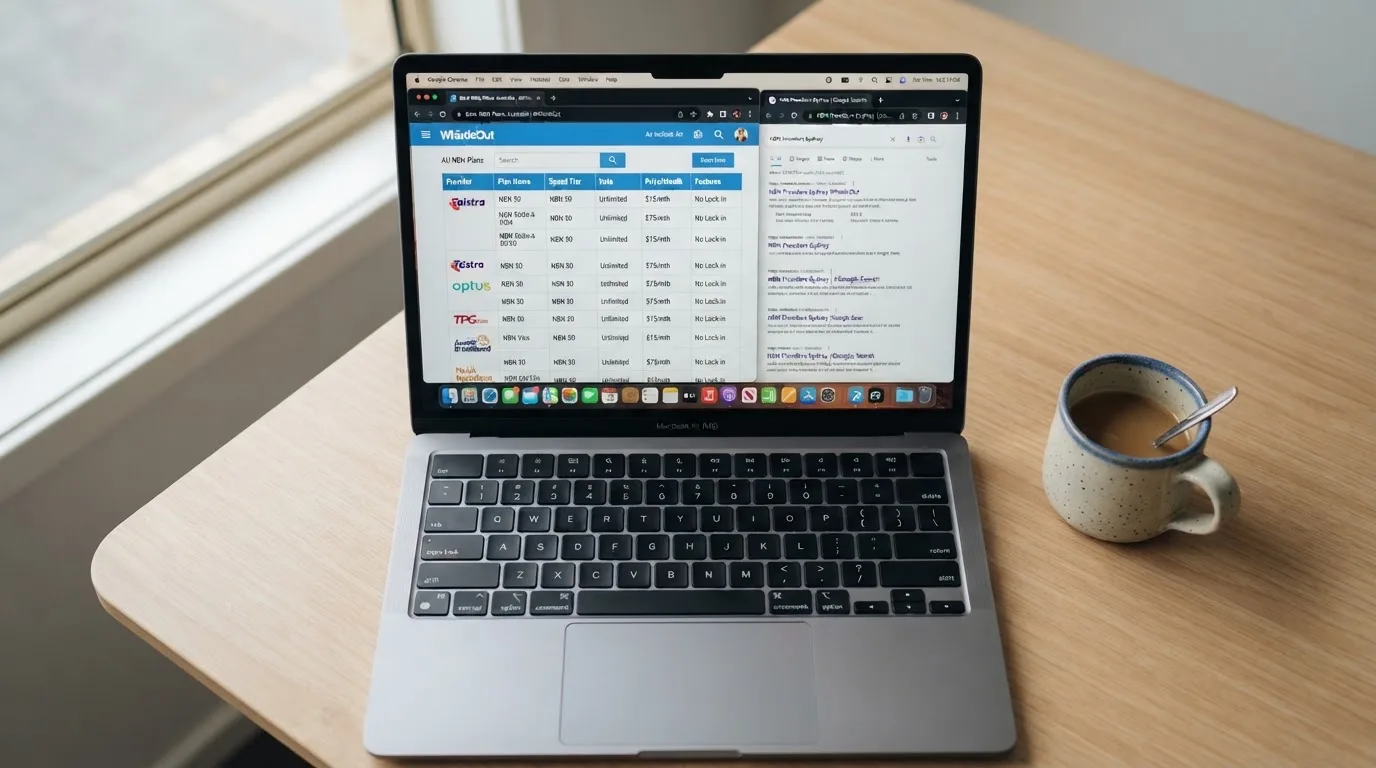
The bank side is more interesting and less advertised. Westpac’s gambling block works at card level: it refuses authorisation of transactions registered under the merchant category code “Betting/Casino Gambling” on eligible personal credit and debit cards. ANZ’s gambling transaction block, activated in the ANZ app, blocks gambling transactions made through a digital wallet such as Apple Pay on an eligible card, not just the physical card, and once turned on it cannot be removed again for 48 hours. Apple Pay itself does not charge fees to consumers, and Apple states that transaction limits and PIN requirements for Apple Pay purchases are set by the card issuer or merchant, not by Apple. None of these blocks are PayPal-specific; they fire on the underlying card. A PayPal-funded deposit runs against the card the PayPal wallet is backed by, so a blocked card blocks the wallet in turn. The wallet is a layer on top of the card; it is not a layer below it.
What the wallet does add, on its own merits, is speed on the deposit side and a familiar interface. By the end of 2025, Apple Pay, Google Pay and Samsung Pay transactions collectively accounted for around 45% of all card payments in Australia by number — a figure that says Australian consumers are already comfortable with wallet-based payments in retail. The same habit does not transfer cleanly to online casino deposits, partly because of the IGA, partly because of PayPal’s own Acceptable Use Policy, and partly because the casino sits in the middle of the timing. PayPal settles the deposit instantly; the casino processes the withdrawal on its own clock.
What the wallet does not add is a regulatory shield. A PayPal-funded account at an offshore casino gives the player no Australian consumer protection, no complaints body, and no recourse if the withdrawal is refused. BetStop — the National Self-Exclusion Register, live since August 2023 — binds only Australian-licensed online and phone wagering services, and an offshore casino is not connected to it. The National Gambling Helpline (1800 858 858, free, 24/7, with chat at Gambling Help Online) is the Australian-facing support line regardless of which wallet or which site is in play, and it is the line that connects a player to help even when the casino itself does not.
Prohibition and the regulator’s record: what the ACMA has actually done
The Interactive Gambling Act 2001, strengthened by the Interactive Gambling Amendment Act 2017, makes it an offence to provide online casino games, online pokies or in-play betting to a person in Australia. No state or territory licenses those products. What is licensable is wagering on races and sport placed before the event, lotteries and keno — in practice licensed by the Northern Territory, through the Northern Territory Racing and Wagering Commission. The NTRWC regulates 52 of Australia’s online bookmakers, including Sportsbet, Bet365 and Ladbrokes, which are licensed in the Territory for tax reasons; the commission has no full-time staff and meets once a month in Darwin. Bookmakers are the licensable case. Online casinos are the prohibited case. The two are not the same product and not the same regime, and confusing them is the first mistake the marketing makes.
The ACMA is the enforcement body. It investigates, issues formal warnings, and directs Australian internet service providers to block illegal sites. According to the ACMA as reported in June 2026, a total of 1,751 illegal gambling and affiliate marketing websites had been blocked since the first blocking request in November 2019, and more than 230 unlicensed gambling services had left the Australian market since enforcement was strengthened in 2017. In a round reported on 26 June 2026, the ACMA asked ISPs to block a further 12 sites: 7Signs, ChromaBet, Donbet, Duospin, Freshbet, Slots Gem, Jacks Club, Lucky Start, Pointsbetz, Spinrise, Vinyl Casino and Wildsino. The blocking rate is the operative statistic, and it is the calculation the page can run from the consulted numbers.
The blocking rate, against the cumulative count published in June 2026, sits in a band of roughly 220 to 290 new blocks per year over the seven years between the first blocking request in November 2019 and the June 2026 figure. The condition is the kind that matters for a calculated estimate: the band assumes that blocks accumulated at a roughly constant pace across the period, which is the simplest reading of “since November 2019” but is not the only reading. Enforcement rounds have come in waves — a clutch of formal warnings followed by a clutch of ISP blocking requests — so the underlying rate is more lumpy than the band suggests. The 26 June 2026 round alone added 12 sites, which is the kind of step that shows up as a spike in any single year.
The ACMA’s formal warning register is the public face of the regime. The warnings named in the table above are the ones the consulted research carries, but they are not the only ones; the register is the authoritative source and it grows. The pattern matters more than any single entry: the same operator name appearing on multiple warnings (Dama N.V. on at least three, TechSolutions on an earlier one for Bizzo, Hollycorn N.V. on the Sky Crown warning) is the shape of an enforcement regime that runs into the limits of warnings as a tool, because a warning is not a blocking request and a blocked site can be re-launched under a new name.
H2 Gambling Capital’s 2025 report estimates that Australians lose about A$3.9 billion a year to illegal gambling sites, and that the share of gambling going through legal channels fell from 74% in 2021 to 64%. The loss figure is the cost side; the channel share is the migration side. A wallet that lets the deposit feel like a retail transaction does not change either figure, and an offshore casino that accepts PayPal is part of the loss figure, not part of the legal-channel share.
Responsible play: what the safeguards do, and what they do not reach
The Australian-facing safeguards are three-layered, and each layer has a limit.
The first layer is the bank’s own block. Westpac’s gambling block and ANZ’s gambling transaction block fire at the card level on the merchant category code for betting and casino gambling. They are opt-in, they are free, and they are imperfect: ANZ warns that not all gambling transactions will be blocked and some non-gambling transactions might be blocked in error. They are also card-level, which means a wallet funded from an unblocked card can still reach the merchant. The block is a speed bump on the deposit rail, not a wall around the player’s account.
The second layer is the regulator’s. The ACMA can block the site, name the operator, and warn the public. It cannot refund the player’s balance, arbitrate the player’s complaint, or force the operator to pay out. A player whose withdrawal is refused at an offshore casino has no Australian complaints body to take the complaint to; the operator’s own terms are the terms in force.
The third layer is the player’s own. BetStop, the National Self-Exclusion Register, binds Australian-licensed online and phone wagering services. An offshore casino is not connected to BetStop, which means a self-exclusion through BetStop does not stop the player from opening an account at an offshore site. The National Gambling Helpline (1800 858 858, free, 24/7, with chat at Gambling Help Online) is the human end of the third layer; it is reachable regardless of which wallet or which site the player is using, and it is the line that connects a player to help even when the safeguards at the bank and at the regulator do not reach.
The 2026 reform context is one further piece of the picture. The Interactive Gambling Amendment (Gambling Reform) Bill 2026 passed Parliament on 19 August 2026; its advertising and inducement measures commence 1 January 2027. That is law with a start date, not law in force on a page read in the current year, and the audit reads the date as written.
The rails the marketing does not talk about
The marketing frame is the wallet. The operational frame is the rail, and the rail for an Australian player is shorter than the marketing suggests.
PayID and Osko are the closest thing to a same-speed alternative. Paying to a PayID shows the name of the account holder before the transfer is sent, and AP+ warns that being asked to transfer money to a PayID on an illegal gambling site almost certainly means a scam site. With Osko, a bank transfer between participating Australian banks arrives in under a minute, 24/7 including weekends, whether it is addressed to a BSB and account number or to a PayID. PayID-based instant transfers are available at over 100 Australian financial institutions, and more than 25 million PayID identifiers had been registered on Australia’s New Payments Platform as of April 2025. Australia’s New Payments Platform became accessible to the public on 13 February 2018 and is owned by New Payments Platform Australia Ltd, a non-profit company whose 13 shareholders include the Reserve Bank of Australia and the country’s major banks. Participants must keep the platform’s monthly outages to no more than two minutes; in 2021 the ACCC authorised merging NPP Australia with BPAY and eftpos into a single company, Australian Payments Plus.
The relevance of PayID and Osko for this page is not that they are alternatives a reader should switch to; it is that they are the rails a licensed Australian wagering service uses, and the rails an offshore casino cannot lawfully use to take an Australian credit-card-funded deposit. Under the Interactive Gambling Act 2001 as amended in 2023, Australian-licensed online wagering services cannot accept payment by credit card or other credit-related products, a restriction that also constrains gambling use of linked digital wallets like Apple Pay. Credit cards, credit-related products and digital currency are banned as payment for licensed online wagering since 11 June 2024, with penalties up to A$247,500 for operators. Legal deposit routes for licensed wagering are debit card, bank transfer, PayID/Osko and BPAY. A site asking an Australian for a credit card or a crypto deposit is operating outside the Australian rules.
American Express sits slightly outside this frame. American Express was established in 1850 as a freight-forwarding company and later became a card issuer, launching its first charge card on 1 October 1958; unlike Visa or Mastercard’s four-party network, Amex traditionally issues cards and processes transactions itself as a three-party scheme. The Reserve Bank of Australia’s July 2025 review proposes removing surcharges only on eftpos, Mastercard and Visa card transactions, explicitly leaving American Express outside the scope of the proposed surcharge ban. Surcharge rules are not gambling rules, but they are the rules that decide what the merchant pays to accept the card, and they are the rules the merchant passes on if it passes them on at all.
What the wallet question costs the player
A PayPal deposit is a low-friction entry point. That is the marketing line. The cost line is in the parts the marketing does not print.
The first cost is the legal one. No Australian licence covers online casino games or online pokies, so every deposit at one of these sites is a deposit at a service the ACMA has the power to block, the operator has the power to refuse to pay out, and the player has no Australian complaints body to appeal to. The ACMA’s June 2026 blocking round named twelve sites in one notice. A player whose site is on a future round wakes up to a blocked domain and a balance still on the operator’s books.
The second cost is the rail one. A PayPal-funded deposit runs through PayPal’s IFTI reporting to AUSTRAC, which is the cost of traceability rather than the cost of friction. The friction sits on the withdrawal side, where the casino’s own processing time governs when the money actually arrives. The marketing says PayPal is fast; the operator’s queue says otherwise. A player who funds with PayPal because the wallet is fast has paid for the wallet’s speed on the deposit and waited for the operator’s speed on the withdrawal.
The third cost is the consumer-protection one. PayPal’s Acceptable Use Policy says gambling is permitted “if the operator and customers are located exclusively in jurisdictions where such activities are permitted by law”. A player disputing a transaction is disputing it inside PayPal’s published policy. The dispute may still succeed; the policy is on the merchant’s side, not against the player, but the policy is published.
The fourth cost is the responsible-play one. BetStop does not reach an offshore site, the bank’s gambling block fires on the card not the wallet, and the ACMA’s block removes the site not the balance. The wallet is the visible surface; the safeguard surface is underneath it and is partial.
The arithmetic the page can actually run
The blocking rate is the calculation the prescribed inputs make available. The running total of blocked sites as of the ACMA’s June 2026 report is 1,751, and the first blocking request was in November 2019. The arithmetic is a band, not a single figure: roughly 220 to 290 new blocks per year over the seven years between November 2019 and the June 2026 figure, on the assumption that blocks accumulated at a roughly constant pace across the period. The condition is the kind that makes the band honest: enforcement rounds come in waves rather than at a steady pace, and the 26 June 2026 round alone added 12 sites, which is the kind of step that would show up as a spike in any single year. Read as a steady rate, the band gives the rough annual pace; read as a wavier underlying process, the band is the floor.
These calculations are not per-player figures. This page does not feature bonus terms, which are out of scope for a page focused on payment methods and the regulatory environment. There are no house-edge or RTP figures here. The value lies in the blocking-rate band, the ACMA’s formal-warning register, and the comparison between PayPal’s policy and the law.
What this page is, and is not, for
This page is for a reader who has seen a casino pitch with PayPal in the deposit list, who wants to know what the wallet actually does at one of these sites, and who wants the regulatory picture in the same place as the wallet picture. The page’s value is in the comparison between PayPal’s own Acceptable Use Policy and the Interactive Gambling Act 2001, in the ACMA’s blocking total and the warnings that lead up to it, and in the eleven named brands with their respective operator names and warning dates.
This page is not for a reader looking for a safe place to play online casino games in Australia. There is no such place under Australian law. The real licensed options are land-based casinos and state-regulated club and pub pokies. The wallet the marketing pitches is not the regulatory regime the player sits inside, and a comparison that loses sight of that comparison is a comparison that has lost the plot.
Frequently asked questions
Is it legal for an online casino to accept PayPal from a player in Australia?
No. Under the Interactive Gambling Act 2001 it is an offence to provide online casino games, online pokies or in-play betting to a person in Australia, and no state or territory licenses those products. A site accepting PayPal from an Australian player is operating outside that regime.
Does PayPal allow its service to be used for online casino deposits at all?
PayPal’s Acceptable Use Policy permits gambling only “if the operator and customers are located exclusively in jurisdictions where such activities are permitted by law”. An offshore casino serving Australian players does not, on PayPal’s own published wording, meet that condition.
What is the smallest PayPal deposit a casino site usually accepts?
The minimum deposit on most of these sites tends to settle around A$10, small enough to look like a low-friction entry and large enough that the casino still has something at stake. Withdrawal minimums typically sit higher.
How long does a PayPal withdrawal usually take to clear at these sites?
PayPal itself settles in seconds, but the casino sits in the middle of the timing. A PayPal transaction at one of these sites still waits on the casino’s own review before settlement reaches an Australian account, and that waiting time is the practical gap between PayPal-as-marketed and PayPal-as-actually-cleared.
Is a PayPal-funded casino account any more secure than one funded by card?
The wallet adds a familiar interface and an AUSTRAC-traceable paper trail on the deposit side, but the consumer protections PayPal offers its buyers were designed for retail purchases and do not transfer cleanly to a casino transaction. The bank-side gambling blocks (Westpac, ANZ) fire at the card level, which a PayPal wallet sits on top of rather than around.
What happens if a PayPal payment to a casino site is disputed or reversed?
A buyer dispute is a dispute inside PayPal’s published Acceptable Use Policy, which says gambling is permitted only in jurisdictions where it is legal. The dispute may succeed; the policy is on the merchant’s side, and a player who wins the dispute has won it against the operator the policy names.