
Paying for online pokies with PayID in Australia — what the “instant” claim actually delivers
There is no licensed Australian online pokies operator. The product on every “PayID pokies” page a punter finds through a search engine is offered by an offshore company, takes deposits through a PayID that resolves to an Australian bank account, and sits outside any regime a player can complain to. The transfer itself is fast — that part of the marketing is genuinely true — and the slow reckoning is everything else: a balance that can be cut off by a blocking notice, an account holder’s name shown on screen before a cent is sent, and a regulator that has now issued formal warnings over more than a dozen offshore brands specifically because they were found marketing to Australians.
Data current as of 5 November 2026, verified against the ACMA’s published register of formal warnings and blocking requests.
Table of Contents
- How PayID actually settles
- The legal frame around a PayID deposit to a pokies site
- The banks’ own gambling blocks and what they actually stop
- What the ACMA has actually done about PayID-marketed offshore brands
- The blocking rate the ACMA has run
- What the “trusted PayID pokies” wording really does
- The honest limits of a PayID deposit at an offshore casino
- What an Australian player actually has
- Looking after yourself
- Frequently Asked Questions
How PayID actually settles
PayID is an address, not a payment method. The address — a mobile number, an email, an ABN or an Organisation Identifier — is linked by the customer to one of their bank accounts, and the actual transfer still travels through the customer’s bank as an Osko payment on the New Payments Platform. The Reserve Bank of Australia oversees NPP, and the Fast Settlement Service that backs it runs close to real time, twenty-four hours a day. That is the plumbing every “instant PayID” promise is built on, and the plumbing is genuine: over 100 Australian financial institutions now expose PayID inside their online banking, and as of April 2025 more than 25 million PayIDs were registered across the country.

Osko by the operator’s own measure settles in under a minute, weekends included, whether the transfer is addressed to a BSB and account number or to a PayID. That minute is from the payer’s bank releasing the funds to the recipient’s bank crediting them, and it is the number the offshore casino leans on in its marketing. What the marketing rarely adds is the second half of the transaction — the receiving side. A casino running on PayID still has to reconcile the deposit against its own ledger, screen it against anti-fraud and anti-money-laundering rules, and assign it to a player account. That reconciliation step is what determines whether the bank’s “instant” becomes the punter’s “instant”, and it is also the step the casino, not the bank, controls.
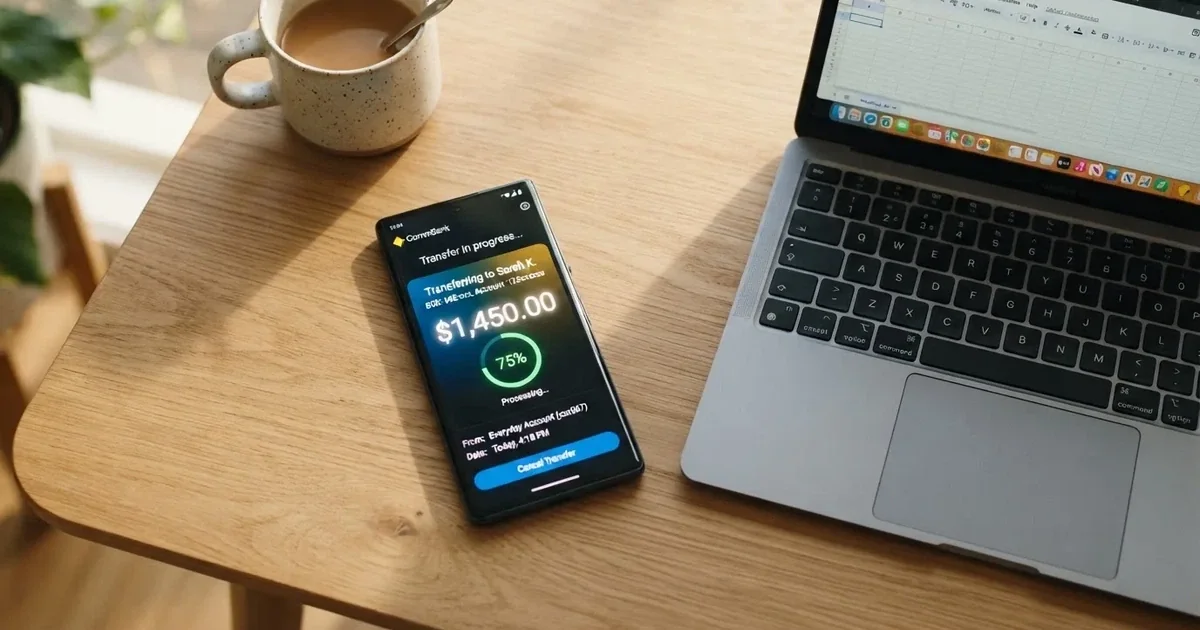
There is one design feature that distinguishes PayID from a normal bank transfer for a punter. When a payment goes out to a PayID, the payer’s banking app shows the name of the account holder linked to that PayID before the transfer is confirmed. The screen is a check. It is the check that protects against mistaken payments, and it is the same check that flags illegal gambling. Australian Payments Plus, which operates PayID, is blunt about this: a request to transfer money to a PayID on an illegal gambling site almost certainly means the site is a scam. Punters will see the name behind the PayID on their own screens; they are then making the choice to send the money in full view of what the screen has just told them.
PayID itself will never contact a customer. It never asks anyone to send money in order to receive money, and it never asks anyone to “upgrade” an account. Messages claiming to be from PayID are scams, and AP+ makes that explicit on its own pages.
The legal frame around a PayID deposit to a pokies site
Online casino games, including online pokies, cannot be licensed anywhere in Australia. The Interactive Gambling Act 2001, strengthened by the Interactive Gambling Amendment Act 2017, makes it an offence to provide those products to a person physically in Australia, and no state or territory issues licences for them. What is licensed in Australia is wagering on races and sporting events placed before the event, lotteries and keno. The bookmakers that take pre-event bets on sport — Sportsbet, Bet365, Ladbrokes among them — are licensed by the Northern Territory Racing and Wagering Commission, a body that, by the ABC’s account in April 2026, has no full-time staff and meets once a month in Darwin. It regulates 52 online bookmakers for tax and conduct reasons, not because anyone in Australia runs licensed online pokies.
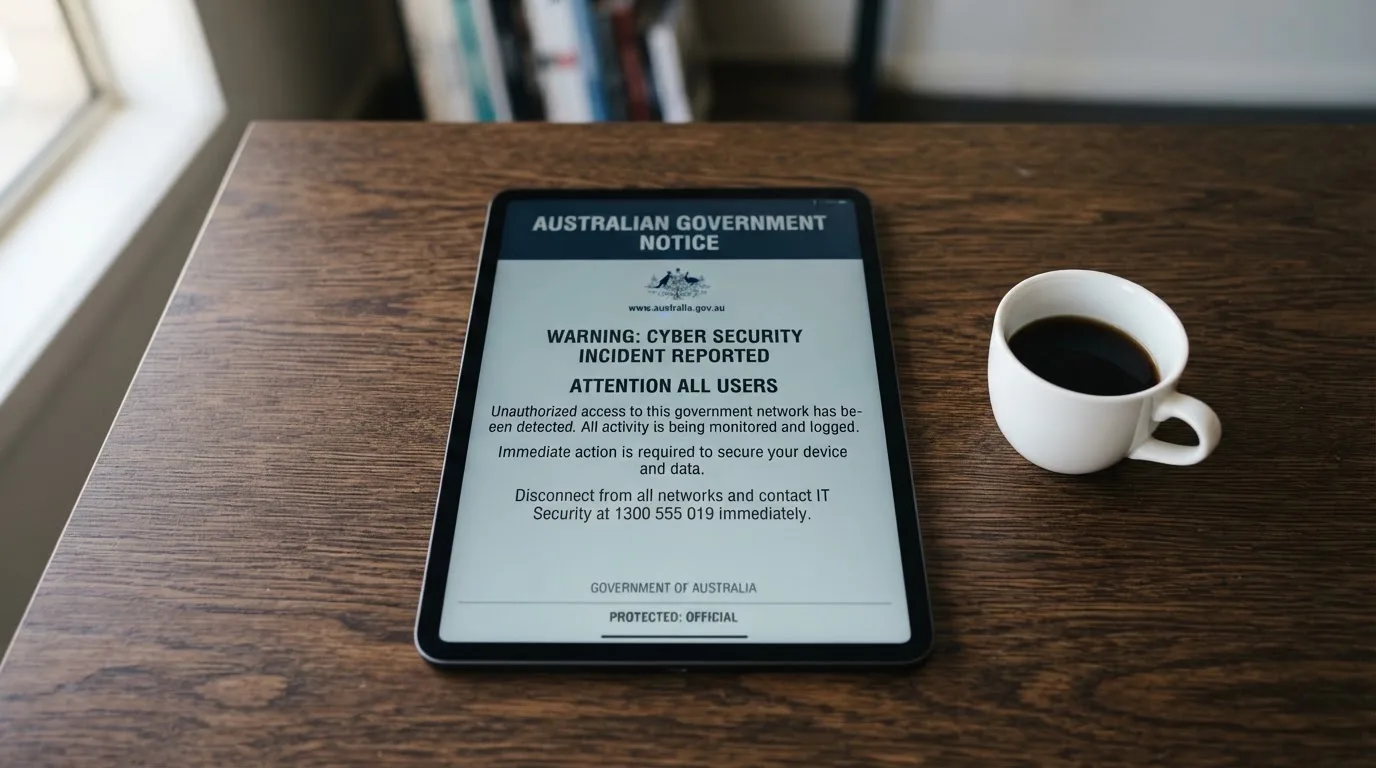
Enforcement sits with the ACMA. The ACMA investigates, issues formal warnings, and asks Australian internet service providers to block offending websites. As of June 2026 the ACMA had asked ISPs to block 1,751 illegal gambling and affiliate marketing websites since the first blocking request in November 2019, and more than 230 unlicensed gambling services had left the Australian market since enforcement was stepped up in 2017. In the round reported on 26 June 2026 the ACMA asked ISPs to block a further twelve websites: 7Signs, ChromaBet, Donbet, Duospin, Freshbet, Slots Gem, Jacks Club, Lucky Start, Pointsbetz, Spinrise, Vinyl Casino and Wildsino.
The individual punter is not prosecuted. The IGA targets the provider, and the offshore casino sits beyond the reach of the regulator. There is no Australian complaints body, no local recourse if a withdrawal is refused, and no guarantee that a balance will survive a blocking notice. H2 Gambling Capital estimated in 2025 that Australians lose about A$3.9 billion a year to illegal gambling sites, and that the share of gambling going through legal channels fell from 74 per cent in 2021 to 64 per cent. The legal channel is shrinking because the illegal channel is growing, and PayID is part of why — it is too easy for an offshore operator to publish an ABN-shaped PayID and look legitimate.
What a casino licence on the wall actually means here
Every offshore pokies site that markets to Australians displays a licence. The licence is real, in the sense that an authority in Curaçao, Cyprus or another jurisdiction has issued a number. It is not a licence to take bets from a person in Australia — no Australian authority issues one — and it does not connect the operator to BetStop, the National Self-Exclusion Register that has been live since August 2023. The register binds Australian-licensed online and phone wagering services. An offshore casino is not connected to it.
The protection the punter actually gets from the offshore licence is the protection the issuing jurisdiction chooses to give. That is not the protection an Australian punter is reading the licence wall to find.
Where the payment method cuts in
Under the Interactive Gambling Act as amended in 2023, Australian-licensed online wagering services cannot accept credit cards or other credit-related products, and since 11 June 2024 that ban extends to digital currency. Legal deposit routes for licensed wagering are debit card, bank transfer, PayID/Osko and BPAY. A site asking an Australian for a credit card or for a crypto deposit is operating outside the Australian rules in that respect alone — never mind the product underneath.
The credit-card ban also constrains how PayID is used in the legal channel: the underlying card or account has to be a debit-style facility, not a credit line, and a bank’s own gambling block sits on top of that.
The banks’ own gambling blocks and what they actually stop
The big four Australian banks have introduced card-level gambling blocks, and Westpac’s block refuses authorisation of any transaction registered under the merchant category code “Betting/Casino Gambling” on eligible personal credit and debit cards. The block is at the card, not the PayID — but a PayID is just a way of addressing a bank account, and the same restrictions apply on the underlying card when a PayID transfer comes off a debit card. ANZ’s version, activated in the ANZ app, also blocks gambling transactions made through a digital wallet such as Apple Pay on the same eligible card, not only the physical card. Once ANZ’s block is turned on, removing it again requires a 48-hour waiting period, and the bank warns that not every gambling transaction will be blocked and some non-gambling transactions may be blocked in error.
By the end of 2025 Apple Pay, Google Pay and Samsung Pay transactions collectively accounted for around 45 per cent of all card payments in Australia by number. The mobile-wallet share matters because it is the share that has to be re-routed through PayID where the card is blocked. The mobile wallet spends a tokenised debit card. If that debit card is blocked at merchant-category-code level, the wallet will not save it. The punter who switches to PayID, having been refused at the wallet, is not defeating a bank block — they are using a different rail from the same bank account the block sits on.
Apple Pay, surcharges and what the punter is not paying for
Apple does not charge consumers for using Apple Pay in stores, online or in apps; any surcharge comes from the merchant’s own card-processing fees, and not from Apple. Apple’s published material on limits is also clear that transaction limits and PIN requirements for Apple Pay purchases are set by the card issuer or merchant, not by Apple itself. So the limits a punter sees at a casino are the casino’s limits, set on top of a network the punter is not paying a separate fee to use.
The Reserve Bank of Australia’s July 2025 review proposes removing surcharges only on eftpos, Mastercard and Visa transactions, and explicitly leaves American Express outside the proposed surcharge ban. Amex runs as a three-party scheme — issuer, processor and network under one roof — which is why it sits in a separate regulatory bracket. None of that matters to a pokies deposit; what it matters for is the punter’s everyday card choices, and the merchant surcharges they will or will not be paying at the checkout.
PayID as the rail the offshore casino prefers
The offshore casino’s marketing pushes PayID because it works for Australian-funded deposits in seconds, because every major Australian bank exposes it, and because the casino can publish an Australian-looking PayID and collect funds into a local-currency account before the funds have been cleared back to the operator’s home jurisdiction. The “instant” claim is real at the network layer. The casino’s reconciliation of that transfer, the AML screen on the deposit, the assignment of the funds to a player account and the bonus eligibility attached to that first deposit — all of that is the casino’s own time, and is the part where a punter waits.
There is no PayID-issued certificate a punter can verify before depositing. PayID is the address; the operator behind the address is whoever set it up at a particular bank, and the only check the punter gets is the name displayed in the banking app at the moment of payment. If the name on the screen does not match the brand the punter thought they were paying, the punter cancels the transfer. If it does match, the punter has sent money to that name, and the rest is the casino’s terms.
What the ACMA has actually done about PayID-marketed offshore brands
The ACMA does not publish a “PayID pokies” list. It publishes formal warnings under the Interactive Gambling Act against named operators over named brands, and it asks ISPs to block websites it has investigated. The two streams overlap, and they cover the bulk of the brands a punter searching for “PayID pokies” will encounter.
Eleven brands in the featured set carry a published ACMA formal warning. Each is an offshore operator. Each was warned specifically for offering interactive gambling services to Australians, which is the prohibited product class. The licence on the wall of any of these sites, whatever jurisdiction issued it, does not change that classification.
| Brand | ACMA action and date | Operator named by the ACMA | Subject support |
|---|---|---|---|
| RocketPlay | Formal warning, March 2026 | Pulsup Ltd | — |
| Level Up Casino | Formal warning, May 2022 | Dama N.V. | Westpac gambling-block reference only |
| Woo Casino | Formal warning, March 2025 | Dama N.V. | — |
| Spirit Casino | Formal warning, May 2025 | Dama N.V. | — |
| National Casino | Formal warning, July 2025 | Consolutetish S.R.L. | AUSTRAC and Wikipedia listings only |
| Bizzo Casino | Formal warning, July 2025; earlier 2022 | Consolutetish S.R.L. (2025); TechSolutions (2022) | — |
| Ignition Casino | Formal warning, July 2025 | Bamboo Media | — |
| Instant Casino | Formal warning, February 2025 | EOD Code SRL | ecoPayz and PayID listings only |
| Jackbit | Formal warning, April 2026 | Ryker B.V. | — |
| Casino Intense | Formal warning, April 2025 | Sterplay Holding Ltd | AUSTRAC, iTnews and NAB listings only |
| Sky Crown | Formal warning, September 2022 | Hollycorn N.V. | — |
The table is not a ranking. The order is the order the ACMA’s published register carries, not a recommendation. The “operator named by the ACMA” column is the corporate entity the warning was issued to, which is the entity the regulator found responsible for the Australian-facing product — and it is often a different name from the brand on the casino’s homepage, because the offshore sector consolidates brands under one parent licence.
A handful of operators appear more than once. Dama N.V. took a 2022 warning covering six brands, then a March 2025 warning over Woo Casino and a May 2025 warning over Spirit Casino. Bizzo Casino had already been warned in 2022 against TechSolutions Group N.V., then re-warned in 2025 against Consolutetish S.R.L. The repetition is the ACMA’s own record, not a duplicate row. Where the regulator has named the same operator twice, the punter reading the brand licence wall is looking at a parent that has now been told twice.
The blocking rate the ACMA has run
The arithmetic the page closes on is a rate: how many sites the ACMA has asked ISPs to block per month of active enforcement, from the date of the first blocking request.
Inputs from the fact bank: a total of 1,751 websites blocked since the first blocking request in November 2019; the most recent blocking round covered twelve sites and was reported on 26 June 2026. From November 2019 to June 2026 is roughly 80 months. Divide the running total by the elapsed months and the rate lands in the band of roughly 22 blocked sites per month, with a condition — the rate is an average across years of enforcement, not a steady monthly count, and individual rounds have ranged from one site to several dozen. The shape of the regulator’s work is closer to a series of pulses than a steady drip, but the band is the number a reader can carry away: the ACMA has been removing offshore-facing sites at a pace of more than one Australian-facing gambling website per business day across the years it has been doing this.
RocketPlay — first ACMA action March 2026
The brand is operated by Pulsup Ltd and was the subject of a formal ACMA warning published in March 2026 for offering prohibited interactive gambling services to Australians. RocketPlay carries no Australian licence — none of the brands in this table do — and its marketing claim of “instant PayID deposits” inherits the offshore classification the warning is about. PayID support for the brand is not confirmed against any independent Australian payments source; the only data points are the ACMA warning and the brand’s own marketing. RocketPlay’s verdict in this comparison: the most recent ACMA action in the set, and the reason it sits at the top.
Level Up Casino — ACMA warning against Dama N.V., May 2022
Level Up Casino was named in the May 2022 Dama N.V. warning that covered six brands at once. Dama N.V. has since picked up two further warnings over Woo Casino and Spirit Casino in 2025, so the parent the regulator named in 2022 has accumulated three published warnings over four years. The brand is referenced in Westpac’s published material on card-level gambling blocks; that reference is a banking-side denial of the transaction, not an endorsement of the brand. Level Up’s verdict: the parent the ACMA named in 2022 is the same parent the ACMA named again in 2025.
Woo Casino — ACMA warning against Dama N.V., March 2025
A March 2025 ACMA warning against Dama N.V. covered Woo Casino specifically, three years after the parent’s first published warning. The brand sits on the same operator as Level Up Casino and Spirit Casino, and the regulator’s most recent contact with the parent is fresh on the file. PayID support for Woo Casino is not confirmed against any Australian payments source. Woo Casino’s verdict: a brand under a parent the ACMA has now contacted three times.
Spirit Casino — ACMA warning against Dama N.V., May 2025
Spirit Casino was named in a May 2025 ACMA warning against Dama N.V., the third Dama N.V. warning in four years. Spirit Casino is the most recent Dama N.V. brand to be added to the regulator’s register. PayID support is not confirmed against any Australian payments source. Spirit Casino’s verdict: the freshest of the Dama N.V. trio.
National Casino — ACMA warning against Consolutetish S.R.L., July 2025
National Casino was named in the July 2025 ACMA warning against Consolutetish S.R.L., the same operator named in the same round over Bizzo Casino. AUSTRAC and Wikipedia carry public listings of the brand; that is the only Australian-side paper trail. The licence on the wall is offshore and does not extend to Australian customers. National Casino’s verdict: named alongside Bizzo in the same warning, on the same parent.
Bizzo Casino — ACMA warning against Consolutetish S.R.L., July 2025; earlier TechSolutions, 2022
Bizzo Casino carries two published warnings on the ACMA register: one against TechSolutions (CY) Group Limited and TechSolutions Group N.V. in 2022, and one against Consolutetish S.R.L. in July 2025. A brand with two ACMA warnings on the same Australian-facing product, against two different parents, is a brand whose marketing has reached the regulator twice. PayID support for Bizzo is not confirmed against any Australian payments source. Bizzo Casino’s verdict: the only brand in this set to appear twice under different parents in the ACMA register.
Ignition Casino — ACMA warning against Bamboo Media, July 2025
Ignition Casino was named in a July 2025 ACMA warning against Bamboo Media, in the same round that named National Casino and Bizzo Casino. Bamboo Media is the parent the regulator identified; the brand sits on a separate operator from the Dama N.V. cluster. PayID support for Ignition Casino is not confirmed against any Australian payments source. Ignition Casino’s verdict: part of the July 2025 warning round, on a parent that is not in the Dama N.V. family.
Instant Casino — ACMA warning against EOD Code SRL, February 2025
Instant Casino was named in a February 2025 ACMA warning against EOD Code SRL. The brand is one of two in this set whose public listings mention PayID directly; ecoPayz, a payment-method directory, lists the brand, and PayID’s own directory page is a generic Australia-wide reference rather than a brand endorsement. Instant Casino’s verdict: the only brand in this set whose public payments-side listings include PayID as a method — and that is a listings reference, not a regulator endorsement.
Jackbit — ACMA warning against Ryker B.V., April 2026
Jackbit was named in an April 2026 ACMA warning against Ryker B.V., alongside CasinOK in the same round. PayID support for Jackbit is not confirmed against any Australian payments source. Jackbit’s verdict: named alongside CasinOK in the same warning round.
Casino Intense — ACMA warning against Sterplay Holding Ltd, April 2025
Casino Intense was named in an April 2025 ACMA warning against Sterplay Holding Ltd. The brand carries public listings across AUSTRAC, iTnews and NAB; those listings are about the brand being mentioned in Australian press and payments directories, not about any Australian licence. Casino Intense’s verdict: the brand carries the most Australian-side listings of any operator in this set, and is still operating offshore.
Sky Crown — ACMA warning against Hollycorn N.V., September 2022
Sky Crown was named in a September 2022 ACMA warning against Hollycorn N.V. alongside the operator’s Blue Leo casino. PayID support for Sky Crown is not confirmed against any Australian payments source. Sky Crown’s verdict: the longest-standing warning on the register, dating back four years, and one of two Hollycorn brands the regulator has named.
What the “trusted PayID pokies” wording really does
A pokies site that calls itself “trusted” is making a marketing claim that has no Australian statutory basis. The Interactive Gambling Act treats the product as prohibited, which means there is no Australian trust framework for offshore pokies to be licensed into. There is no Australian complaints process the punter can route a dispute through if the offshore casino refuses a withdrawal, because the regulator that would handle that complaint has no jurisdiction over the operator. There is no compensation scheme, no ombudsman, no external dispute resolution body that binds the offshore operator.
What the punter is buying with the word “trusted” is the casino’s own statement that the casino is trustworthy. The actual paper trail in the Australian context is the ACMA register — and the ACMA register for the brands in the featured set is a list of formal warnings, not endorsements. A punter who relies on the casino’s own self-description is reading the casino’s own marketing.
“Instant PayID” vs the bank’s actual settlement time
“Instant PayID” and the bank’s actual settlement time are not the same number. The bank’s settlement time is Osko, and Osko by AP+’s description settles in under a minute, twenty-four hours a day, including weekends. The casino’s “instant PayID” is Osko plus the casino’s own reconciliation, which is where the punter waits. There is no public benchmark for that reconciliation step, because it is the casino’s own ledger work and it varies brand to brand. The punter reading a casino page that says “instant PayID deposits” is reading what the casino says about itself; the punter reading AP+’s Osko page is reading what the network says about itself. Both numbers are real, and they are measuring different things.
What “no deposit bonus” does on a PayID pokies page
“No deposit bonus” is the marketing claim that a punter can claim a bonus without first making a deposit. The PayID angle is the one the page brings: where the bonus does require a deposit, PayID is the rail the casino will steer the punter toward because PayID settles at the network in under a minute. The bonus itself is the casino’s own contract. The punter accepting the bonus accepts the wagering requirements, the game weighting, the maximum cashout and the bonus-abuse terms the casino attaches. None of those terms are set by PayID, and none of them are enforceable through the Australian regulator.
What a blocking notice means for a balance
A blocking notice from the ACMA cuts the website at the Australian ISP level. The punter who still has a balance on the offshore casino at that moment is holding a balance with an operator whose website has just been blocked in Australia. The casino may continue to operate in other jurisdictions; the punter’s ability to reach the casino from Australia may be cut. The casino’s terms typically reserve the right to forfeit balances in circumstances the casino defines — the punter reading those terms before depositing is the punter who knows what the casino can do.
The honest limits of a PayID deposit at an offshore casino
The punter who decides to deposit anyway should know three things before the first transfer.
The name on the screen matters. The PayID transfer shows the account-holder name in the banking app. That name is the only check before the money leaves. If the name does not match the brand, the punter cancels the transfer; AP+’s own scam guidance treats mismatches as the standard scam pattern.
The casino’s reconciliation time is the casino’s, not the bank’s. A PayID transfer clears at the network in under a minute. The casino may then take hours to credit the player account, because AML and bonus-eligibility checks sit between the bank crediting the funds and the punter seeing them in the casino wallet.
A balance can be cut off by an ACMA blocking notice, and the casino’s own terms may forfeit that balance. The punter reading the bonus terms, the maximum-cashout terms, the dormant-account terms and the jurisdiction clauses is the punter who knows what they have agreed to before they have agreed to it.
What an Australian player actually has
The legal channels in Australia are wagering on races and sporting events placed before the event, lotteries and keno — licensed at state and territory level, with the bulk of online bookmakers licensed in the Northern Territory. The licensed bookmakers do not offer online pokies. BetStop, the National Self-Exclusion Register, binds those licensed services and lets a punter exclude themselves in one step. The National Gambling Helpline is 1800 858 858, free, twenty-four hours a day, with chat at Gambling Help Online. Those are the channels the regulator backs, and the channels a punter who wants protection can use.
PayID is fine as a rail for any of those legal channels where it is offered. The transfer will settle in under a minute, twenty-four hours a day. The product on the other end will not be online pokies, because online pokies cannot be licensed in Australia. The punter chasing “PayID pokies” is chasing an offshore product that settles instantly at the network and slowly at every other step.
Looking after yourself
Anyone who feels their gambling is moving faster than they want it to can call the National Gambling Helpline on 1800 858 858, free and twenty-four hours a day, or use the chat at Gambling Help Online. BetStop, the National Self-Exclusion Register, lets a person exclude themselves from every Australian-licensed online and phone wagering service in one step. The register has been live since August 2023. An offshore casino is not connected to BetStop, which is one of the reasons an offshore casino is not the same product as a licensed Australian wagering service.
The Interactive Gambling Amendment (Gambling Reform) Bill 2026 passed Parliament on 19 August 2026. Its advertising and inducement measures commence on 1 January 2027. It is law with a start date, not a regime that is yet in force on a 2026 page.
Gambling winnings of a recreational player are not assessable income under section 6-5 of the ITAA 1997, and losses are not deductible, unless the person carries on a business of gambling — a model only, and the standard caveat is to check with the ATO before treating either side as settled.
Frequently Asked Questions
Why do so many pokies sites advertise PayID specifically?
Because PayID settles at the network in under a minute through Osko, and every major Australian bank exposes it inside online banking. The speed is genuine, the address layer is Australian, and the operator can publish an Australian-looking PayID that resolves to a local account. That is exactly why AP+ also warns that a request to send money to a PayID on an illegal gambling site almost certainly means a scam site.
Is a “trusted” PayID pokies site any safer than one without that label?
No. Online pokies cannot be licensed in Australia, so the licence wall is an offshore one and the word “trusted” is the casino’s own marketing. The actual paper trail is the ACMA register, and every brand in the featured set carries a formal warning from the regulator.
Can an Australian legally use PayID to fund an offshore pokies account?
The Interactive Gambling Act targets the provider, not the individual player. Using PayID to send money to an offshore casino is not a prosecution risk for the player; the player-protection risk is that no Australian regulator covers the offshore operator if a withdrawal is refused or a balance is forfeit.
How does an “instant PayID” claim compare with real Osko settlement times?
Osko settles in under a minute at the network, twenty-four hours a day. The “instant PayID” the casino advertises is Osko plus the casino’s own reconciliation, AML and bonus-eligibility work, which is the part the casino controls and the punter waits on.
What is the difference between “payid pokies” and “online pokies payid” as search terms?
They are the same product from the searcher’s side: an offshore pokies site that takes PayID. The word order tells the page nothing the product does not, and the regulatory position is identical under either phrasing.
What should someone check about a site before trusting its claim to be licensed for PayID pokies?
The name on the screen in the banking app at the moment of payment. That name is the account-holder linked to the PayID, and it is the check the punter gets before the money leaves. If the name does not match the brand, the punter cancels the transfer.