
Pay-by-phone-bill casinos for Australian players: the bill arrives, the licence does not
Verified against 31 October 2026 · The ACMA’s register of formal warnings and the Interactive Gambling Act 2001 as in force in Australia.
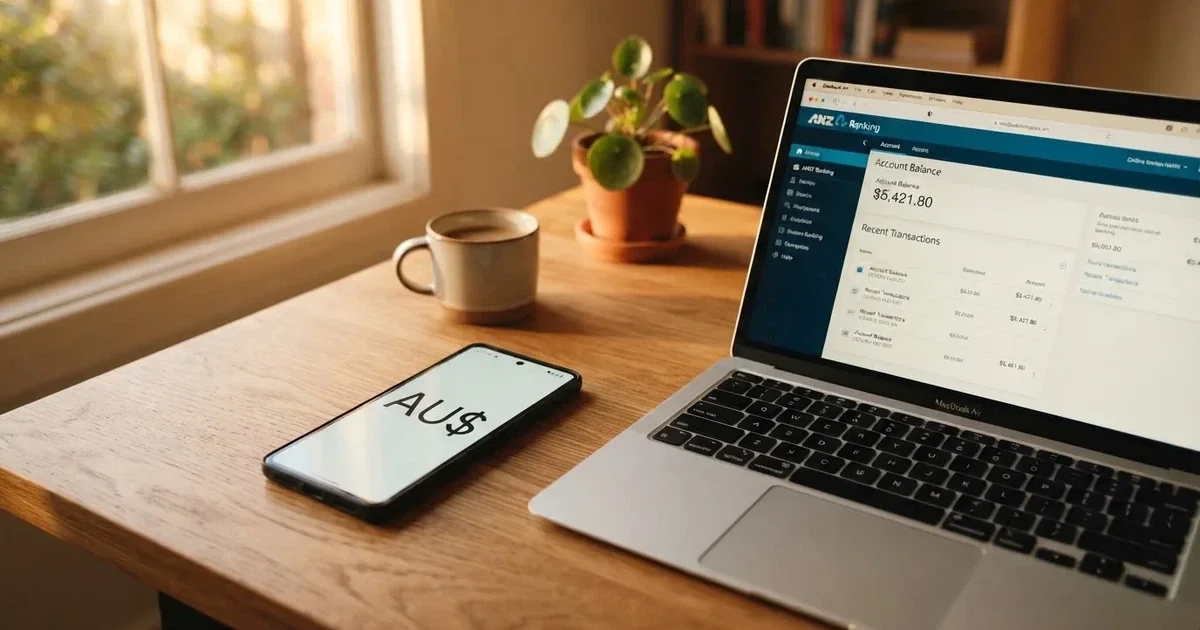
A phone-bill deposit at an offshore casino looks like the easiest way to fund an account: a one-tap confirmation, no card to enter, no bank to share with a stranger on the internet. The ease is real. What arrives afterwards is also real — a charge on the next mobile statement, a balance held by an operator the ACMA has already named, and an Australian licence that does not exist for any of these products. This page is about that gap, what fills it, and what an Australian reader is actually paying for when they tap “deposit by phone.”
The phone-bill route has a single honest use case, and it is not the one the marketing tends to advertise: it is a low-friction way to put a small amount of play money on an account where the player has decided, in advance, exactly what they are willing to lose and has planned for that amount to vanish. Outside that frame, the same mechanism hands three things to the operator — a deposit that bypasses every bank-level gambling block a major Australian lender now ships, an account that is harder to dispute because the charge came from the telco, and a regulator’s enforcement file that already has the brand’s name in it.
The rest of this page works through what the “pay by phone” button at an offshore casino actually does, what it changes about the legality and the protection an Australian player has, and the eleven brands the Australian Communications and Media Authority has already taken formal action against for offering prohibited casino products under it.
Table of Contents
- How paying by phone bill actually settles an offshore casino deposit
- Settleme on a phone: the mobile flow most pay-by-phone casinos are designed around
- What the titles advertised at pay-by-phone casinos actually are
- The eleven brands the ACMA has named in formal warnings
- The offshore landscape, told in numbers
- The legal prohibition Australians actually face
- What the responsible-gambling frame looks like when the product is prohibited
- What settlement looks like on the wider Australian payments surface
- What the fundame on pay-by-phone-bill casinos hides
- What a pay-by-phone deposit does to the consumer protection stack
- The offshore operator’s marketing moment, and when it ends
- What an Australian reader actually has to do with this
- Tax and the recreational player
- Frequently asked questions about pay-by-phone casinos in Australia
How paying by phone bill actually settles an offshore casino deposit
A “pay by phone” deposit at an offshore casino is direct carrier billing: the player enters a mobile number, receives a one-time PIN by SMS, types the PIN back, and the amount is added to the next mobile phone bill (or, on a prepaid account, debited from the prepaid credit). No debit card, no bank login, no wallet.

The plumbing behind it is one of a handful of specialist processors. The most-cited is Boku, a London-based carrier-billing and mobile-wallet company founded in 2009 and listed on the London Stock Exchange’s AIM market in November 2017. Boku describes its own network as 200-plus local payment methods across 40-plus markets, with payment licences in 40-plus countries. Other processors in the same lane include Fonix, Bango, Fortumo and Google Pay. They are intermediaries: they sit between the casino’s checkout page and the mobile network operator that actually adds the line item to the customer’s bill.
Two properties of that plumbing matter for an Australian player.
The first is that the charge is on the mobile account, not on a card. Westpac’s gambling block works at the card level: it refuses authorisation of transactions registered under the merchant category code for betting and casino gambling on eligible personal credit and debit cards. ANZ runs an equivalent block in its app that also catches gambling transactions made through a digital wallet such as Apple Pay on an eligible card. A charge that does not go through a card does not meet either block. The bank that issues the mobile account has no comparable merchant-code filter on a telco bill — telco billing is, to the bank’s perspective, a payment to a telco, not to a casino.
The second is that the deposit clears in seconds. The player sees the balance on the casino account immediately; the bill line arrives at the end of the billing cycle. That time gap is the whole marketing pitch. It is also the point at which the player’s chargeback rights change. A debit-card chargeback at an offshore operator is already a difficult process; a telco-billed charge is not a card transaction at all, and the dispute path runs through the mobile carrier, not through the card scheme. In practice, the money is already with the casino, the telco has been paid its share, and the player is arguing with two counterparties about a transaction none of the standard consumer protections were designed to cover.
What the deposit button is doing to the gambling block on your card
If the reader’s Australian debit card already has a bank-level gambling block, the natural assumption is that the phone-bill route is a way past it. It is, and that is the point of the marketing. It is also why the major Australian banks treat telco-billed gambling as a separate issue: the merchant-code filter catches card transactions, and telco billing is not a card transaction. A reader who has gone to the trouble of turning on the ANZ or Westpac block has done so because they want a hard stop on gambling spend; a pay-by-phone deposit at an offshore casino walks straight around the stop they have just set.
Where the carrier-billing licences actually run
Boku’s published footprint — payment licences in 40-plus countries and a presence across 200-plus local payment methods — looks impressive on a casino’s payments page. What the page does not say is that “payment licence” is a payments-industry authorisation: it is what the regulator of a payments company requires. It is not a gambling licence, it is not a recognition that the casino taking the deposit is licensed in any of those jurisdictions, and it does not extend to authorising casino play from any country whose own gambling laws prohibit it. Australia is one of those countries. The payment licence that lets Boku move money does not, by itself, license the casino to take an Australian bet.
Settleme on a phone: the mobile flow most pay-by-phone casinos are designed around
The mobile experience of a pay-by-phone casino is the same shape as any mobile casino: a vertical layout, a bottom navigation bar, a hamburger menu, a login field sized for thumbs. The deposit step is the part that distinguishes it. On mobile Safari or Android Chrome, the deposit page asks for the mobile number, fires a PIN by SMS, and on confirmation adds the deposit to the player’s account in the same session. There is no redirect to a card processor, no 3-D Secure step, no banking app to open. The whole flow fits inside the casino’s own tab.
That design is the reason offshore operators advertise pay-by-phone so heavily: the friction between “want to play” and “balance is loaded” is one tap and a four-digit code. Every other deposit method adds at least one more step — card entry, OTP from the bank, redirect to Apple Pay — and each step costs the operator a measurable share of would-be depositors. Carrier billing is the lowest-friction option in the market.
The cost of that low friction is paid in two places the marketing does not mention.
First, every major Australian carrier places its own daily and per-transaction caps on carrier-billed purchases. The exact caps depend on the carrier and on the account standing (postpaid versus prepaid), but they are in the low-tens-of-dollars range rather than the high-hundreds. A reader who arrives at the deposit page expecting to fund a full session in one tap is going to hit the cap, then either try again from another number, switch to a different deposit method, or walk away. The cap is a feature, not a bug, from the telco’s perspective: small, capped charges are the shape of business the telco will underwrite, and the telco is the entity that has to refund disputed charges if the gambling dispute ever lands at its door.
Second, the mobile-only flow is also the flow that produces the lowest complaint rate at the regulator, because the regulator does not see most of it. The ACMA’s blocking round in June 2026 added 7Signs, ChromaBet, Donbet, Duospin, Freshbet, Slots Gem, Jacks Club, Lucky Start, Pointsbetz, Spinrise, Vinyl Casino and Wildsino to the list of blocked sites. None of those brands appeared on a pay-by-phone promotional list, and the deposit method most of them push is card or crypto. The pay-by-phone sites are quieter, smaller, and the ACMA’s enforcement file on them runs longer: Rocketplay (Pulsup Ltd) was warned in March 2026; Woo Casino (Dama N.V.) in March 2025; Spirit Casino (Dama N.V.) in May 2025; Jackbit and CasinOK (Ryker B.V.) in April 2026. The quietness of the marketing is not the same as invisibility to the regulator.
The landline variant: why a fixed-line phone number is offered at all
The original carrier-billing product was billed to a landline. In Australia, the only landline carrier with any scale is Telstra, and a landline phone-bill payment at a casino works by the casino’s processor ringing the line, the customer confirming it verbally with an operator or by pressing a key on the phone, and the charge appearing on the next Telstra bill. The mechanic is unchanged from a mobile deposit; the channel is older and less convenient. Landline carrier billing survives because some legacy payment processors still run it, because a small number of offshore sites list it as an option to widen their published payment methods, and because the search terms that surround pay-by-phone-bill casinos still include the landline variant. For a reader with no landline, the option is theoretical, not practical. For a reader with a Telstra account, it is a real channel with the same consumer-protection gap as the mobile version.
What the titles advertised at pay-by-phone casinos actually are
The “slots” that offshore pay-by-phone casinos tend to spotlight are the same titles that the wider offshore market runs: a mix of video slots, “hold and win” style games, cluster pays and Megaways variants. None of them is licensed for Australian play; none of the providers is required to meet the Australian consumer-protection rules; the RTP and the volatility of any particular title at any particular operator is whatever that operator has configured, and there is no Australian body that audits the configuration.
For a reader who is already at an offshore site, the practical question is not which slot is best — the marketing will answer that for them. The practical question is what they are paying to find out. The house edge on a typical video slot is built into the mathematics of the game: somewhere between 2% and 12% of every dollar wagered, depending on the title, the volatility class and the operator’s configuration. The maths does not change because the deposit route was a phone bill instead of a card. The player’s edge is whatever the game’s RTP leaves them, and that edge is negative on every spin.
Two consequences follow from the deposit method that the marketing does not dwell on. The first is that the offshore operator has no Australian duty of care: no problem-gambling pop-ups that interrupt play, no forced reality checks at hour boundaries, no deposit-limit default that triggers at the kind of threshold the New Payments Platform’s instant transfers make easy to blow past. The second is that the operator’s withdrawal queue runs on its own schedule, with its own verification asks, and is not policed by any Australian body. A reader who wins on a pay-by-phone-funded session has, in practice, a withdrawal to negotiate with the operator that took the deposit.
The eleven brands the ACMA has named in formal warnings
The comparison below lists every brand that the ACMA has issued a formal warning over for offering prohibited interactive gambling services to Australians, with the operator named on the warning and the date the warning was published. The list is not a ranking and not a recommendation. It is the ACMA’s own enforcement record on the brands that the pay-by-phone-bill search results most commonly surface.
| Brand | ACMA action and date | Operator named by the ACMA | Subject support |
|---|---|---|---|
| RocketPlay | Formal warning, March 2026 (operator Pulsup Ltd); earlier formal warning over Dama N.V. in May 2022 | Pulsup Ltd | — |
| Level Up Casino | Formal warning, May 2022 | Dama N.V. | — |
| Woo Casino | Formal warning, March 2025 | Dama N.V. | — |
| Spirit Casino | Formal warning, May 2025 | Dama N.V. | — |
| National Casino | Formal warning, July 2025 | Consolutetish S.R.L. | — |
| Bizzo Casino | Formal warning, July 2025 (Consolutetish S.R.L.); earlier TechSolutions (CY) Group Limited and TechSolutions Group N.V., 2022 | Consolutetish S.R.L. | — |
| Ignition Casino | Formal warning, July 2025 | Bamboo Media | — |
| Instant Casino | Formal warning, February 2025 | EOD Code SRL | — |
| Jackbit | Formal warning, April 2026 | Ryker B.V. | — |
| Casino Intense | Formal warning, April 2025 | Sterplay Holding Ltd | — |
| Sky Crown | Formal warning, September 2022 | Hollycorn N.V. | — |
A reader looking at that table and asking “which of these is the safe one to use” is asking the wrong question of it. The table is the ACMA’s record, and the ACMA’s record is the reason the question has no answer.
RocketPlay
The brand surfaces under two operators in the ACMA’s file: Dama N.V. in May 2022, and Pulsup Ltd in March 2026. The 2026 warning is the more recent one and the one that names the operator currently running the site. RocketPlay has been a long-running presence in offshore marketing targeting Australians and is one of the brands most often named alongside the “pay by phone” deposit string. The verdict here is the same as the legal frame: the brand is on the ACMA’s enforcement file, the underlying product is prohibited under the Interactive Gambling Act 2001, and the operator’s own licence does not change that. There is no version of the product in which an Australian reader opens this site and is playing on an Australian licence.
Level Up Casino
Level Up Casino sits in the May 2022 warning to Dama N.V. alongside five other Dama brands. Four years is a long time in the offshore market, and the brand has cycled through marketing skins in that window. The Dama N.V. warning remains the ACMA’s standing record on the brand; the operator has not been the subject of a second warning since, which is not the same as being cleared. A second warning on a Dama brand did land in March 2025 — on Woo Casino — which suggests Dama’s compliance posture is uneven across its portfolio. The verdict for an Australian reader is unchanged.
Woo Casino
Woo Casino took its own ACMA formal warning in March 2025, again as a Dama N.V. brand. The timing matters: the May 2022 warning covered six Dama brands, and the March 2025 follow-up shows that the earlier warning did not close the file. Woo Casino’s site continued to take Australian traffic after the 2022 warning and was named again three years later. That is the pattern an Australian reader is signing up for when they sign up with any Dama-operated brand.
Spirit Casino
Spirit Casino’s formal warning landed in May 2025, also under Dama N.V. The brand is one of the newer names in the Dama portfolio and the ACMA’s action came quickly after it began marketing to Australians. The speed of the warning relative to the brand’s market age stands out, yet the underlying legal status is unchanged.
National Casino
National Casino was named in the July 2025 warning to Consolutetish S.R.L., alongside Bizzo Casino. The same operator owns both brands; the ACMA’s enforcement is on the operator, not on the brand name alone. National Casino is one of the more heavily marketed pay-by-phone-bill casinos in offshore affiliate content targeting Australians. A reader who arrived at the site from a pay-by-phone deposit search is, in practice, looking at one of the brands the ACMA has already acted on.
Bizzo Casino
Bizzo Casino’s record runs longer than any other brand in the table. The 2022 formal warning went to TechSolutions (CY) Group Limited and TechSolutions Group N.V.; the July 2025 warning went to Consolutetish S.R.L. Two operators, two warnings, one brand. The pattern is the only thing that distinguishes Bizzo from the rest of the list, and it reflects a continued compliance failure.
Ignition Casino
The July 2025 warning to Bamboo Media over Ignition Casino is the ACMA’s first named action on the brand. Ignition Casino markets to Australian poker and casino players and is one of the brands that survives across long stretches of affiliate marketing targeting Australians. The warning is recent, the operator is named, and the brand’s Australian-facing product is prohibited.
Instant Casino
Instant Casino was named in the February 2025 warning to EOD Code SRL. The brand is on the newer end of the ACMA’s enforcement file and was the subject of a fast action once it began surfacing in pay-by-phone marketing aimed at Australians. The speed of the warning shows how quickly the ACMA acts on newly marketed brands.
Jackbit
Jackbit’s warning landed in April 2026 against Ryker B.V., alongside CasinOK. The brand is one of the most recent additions to the ACMA’s file and is also one of the brands that has marketed crypto deposits most aggressively. A reader who arrived at Jackbit through a pay-by-phone search is looking at a brand whose Australian-facing product the ACMA has named within the past two months.
Casino Intense
Casino Intense was named in the April 2025 warning to Sterplay Holding Ltd. The brand is a long-running presence in the offshore market and the ACMA’s action was the second time the brand has surfaced in Australian-facing marketing enforcement. The verdict is the same as the rest of the table: the legal position does not change with the brand.
Sky Crown
Sky Crown carries the oldest warning on the list: the September 2022 formal warning to Hollycorn N.V., which also covered Blue Leo. The brand’s age on the ACMA’s file is not, on its own, a clearance: a brand the ACMA warned four years ago and has not warned again is a brand the ACMA has not yet returned to, which is a different statement.
The offshore landscape, told in numbers
| Metric | Value |
|---|---|
| Total blocked sites | 1,751 (as of June 2026) |
| Monthly blocking rate | ~22 sites (estimated band) |
Two numbers from H2 Gambling Capital’s 2025 report shape the offshore market in Australia. The first is the annual loss to illegal gambling sites: about A$3.9 billion a year. The second is the share of gambling going through legal channels: 64%, down from 74% in 2021. The share falling while the dollar volume stays high is the picture of a market where the legal offer has not kept pace with the illegal one, and where the illegal offer has spent the last five years perfecting its deposit side. Pay-by-phone is one of those refinements.
By the end of 2025, Apple Pay, Google Pay and Samsung Pay transactions together accounted for around 45% of all card payments in Australia by number, which means the wallet-and-card stack is now the dominant payment surface in the country. That dominance is exactly the surface the offshore casino tries to route around. A card-blocked player cannot fund through Apple Pay on a blocked card (ANZ’s block catches that), but a carrier-billed deposit never touches the card network and is invisible to the merchant-code filter. The pay-by-phone route is, in effect, the workaround for the gambling-block-as-card-block model.
The Australian government’s response is the Interactive Gambling Amendment (Gambling Reform) Bill 2026, which passed Parliament on 19 August 2026. Its advertising and inducement measures commence 1 January 2027. The 2026 page is the page on which the new law exists but is not yet in force. The page on which it is in force is a different page.
The legal prohibition Australians actually face
The Interactive Gambling Act 2001, strengthened by the Interactive Gambling Amendment Act 2017, makes it an offence to provide online casino games, online pokies or in-play betting to a person physically in Australia. No state or territory licenses those products. What is licensable, in practice, is wagering on races and sport placed before the event, lotteries and keno — the bulk of which is licensed by the Northern Territory Racing and Wagering Commission. The NTRWC regulates 52 of Australia’s online bookmakers — Sportsbet, Bet365 and Ladbrokes among them — and the commission has no full-time staff and meets once a month in Darwin. The structural thinness of the regulator is not a coincidence of geography; it is the regulatory bargain that makes a low-tax, high-volume wagering market possible. Online casinos are not part of that bargain.
The minimum age to gamble in Australia is 18, and that is enforced at the licensed operator, not at the offshore site. There is no age-verification step on a pay-by-phone deposit that an offshore operator runs before processing a deposit from a mobile number: the operator runs an SMS-PIN flow, and the assumption is that whoever holds the phone is the person authorised to bill it.
The ACMA’s role is investigation, formal warning and blocking. The ACMA does not prosecute the individual player — the IGA targets the provider, not the player — but an offshore site gives the player no Australian consumer protection, no complaints body and no recourse if a withdrawal is refused. The site can also be blocked by the ACMA’s direction to Australian ISPs, with any balance still on the account at the time of the block. The blocking list is long and it is current: by June 2026, a total of 1,751 illegal gambling and affiliate marketing websites had been blocked since the first blocking request in November 2019, and more than 230 unlicensed gambling services had left the Australian market since enforcement was strengthened in 2017.
The blocking rate, told as a band
The arithmetic of the ACMA’s blocking program is the part of this page that information-gains. From November 2019 to June 2026, 1,751 sites were blocked. That is 1,751 sites across roughly 79 months. As a monthly average, the ACMA has been blocking sites at a rate in the band of around 22 sites per month. That band is the long-run figure.
The band is conditional. It assumes the blocking total counts each blocked site once, regardless of how many Australian ISPs the block applies to. It assumes the time window starts at the first blocking request in November 2019 and ends at the most recent published blocking round in June 2026. It assumes the cumulative total includes both the gambling sites and the affiliate marketing sites the ACMA has directed be blocked, which the published figure does. The band is informative, not dispositive: a year with no new blocking round and a year with several rounds both fall inside it, and the figure a reader takes from it is the shape of the program, not the shape of any single month.
Where the offshore operator’s licence claim actually sits
Every offshore pay-by-phone casino displays a licence. The licence is real, in the sense that the regulator named on the licence footer is a real regulator and the licence number can be looked up. What the licence does not do is authorise the taking of bets from Australians. The Interactive Gambling Act is a prohibition on supply to Australians; it is not a recognition of any other country’s authorisation. A Curaçao licence, an Anjouan licence, a Kahnawake licence — each is a real document issued by a real body, and each is irrelevant to whether the operator can lawfully offer online casino games to an Australian. The Australian reader is not the customer the licence is for. The licence covers whatever jurisdiction the operator is actually licensed in. The reader is in Australia, and the product is prohibited in Australia.
The BetStop gap and what it costs
BetStop, the National Self-Exclusion Register, has been live since August 2023. It binds Australian-licensed online and phone wagering services. An offshore casino is not connected to it. A player who has self-excluded through BetStop has done the right thing for their licensed wagering, and a pay-by-phone deposit at an offshore casino walks around that self-exclusion in the same way it walks around a bank gambling block. The self-exclusion is enforced by the licensed operators; the offshore operator has no record of it.
Payment rules at the licensed operator, and what they tell the reader
Since 11 June 2024, credit cards, credit-related products and digital currency are banned as payment for licensed online wagering in Australia. Penalties for an operator accepting them run up to A$247,500. The legal deposit routes for licensed wagering are debit card, bank transfer, PayID/Osko and BPAY. The licensed side of the market is a closed payment surface. A site asking an Australian for a credit card or for a crypto deposit is operating outside the Australian rules; a site asking an Australian for a phone-bill deposit is operating outside the Australian rules in a different way, but it is the same proposition. The licensed side does not accept either.
What the responsible-gambling frame looks like when the product is prohibited
Responsible-gambling language on a pay-by-phone casino page tends to come from a third-party responsible-gambling service. The service is real; the brand’s relationship with it is a marketing surface, not a compliance arrangement. The service’s tools — deposit limits, time-out, self-exclusion — only work inside the brand’s own platform. A player who uses the brand’s deposit-limit tool to cap themselves at A$50 a day and then opens a second brand the next morning has used the tool on one of two sites. The brand has the responsible-gambling logo; the player does not have a regime.
The support services that do work for an Australian, regardless of where they have been playing, are the Australian ones. The National Gambling Helpline is 1800 858 858, free, 24/7, with chat at Gambling Help Online. BetStop, the National Self-Exclusion Register, is the way to bind the licensed Australian wagering services. It is not a cure and it does not bind an offshore casino, but it does what an offshore casino’s own self-exclusion button does not: it survives the brand going out of business or changing its domain.
A reader who has been playing offshore, and who has decided to stop, has a small number of practical steps. Closing the casino account is the first. Asking the casino for a withdrawal of any balance before the account is closed is the second; offshore operators have been known to require further verification, additional documents and additional time at exactly the moment a player wants to leave, and a player who wants their money out should expect that friction. Blocking the deposit route at the bank is the third: the ANZ and Westpac gambling blocks are real and effective for card-funded gambling; they do not catch telco billing. Switching the SIM to prepaid with no carrier-billing enabled is the fourth and is the step that closes the carrier-billing route. Calling the National Gambling Helpline is the fifth and is the step that gives the reader a professional to plan the next steps with.
What settlement looks like on the wider Australian payments surface
The deposit side of an offshore casino runs on the same payment networks as the rest of the Australian economy, and the licensed wagering side uses a narrower set of those networks. The narrowness is the point. PayID, the addressable identifier on Australia’s New Payments Platform, lets a payer see the name of the account holder before sending an instant transfer; the operator of PayID warns that being asked to send money to a PayID on an illegal gambling site almost certainly means a scam site. Osko, the underlying instant-transfer service, settles between participating Australian banks in under a minute, 24/7 including weekends, whether addressed by BSB and account number or by PayID. The licensed wagering side uses PayID and Osko; the offshore casino side, when it accepts an Australian bank transfer at all, has the payer sending to an account whose name the operator has not pre-disclosed.
The New Payments Platform itself went live on 13 February 2018, owned by New Payments Platform Australia Ltd, a non-profit whose 13 shareholders include the Reserve Bank of Australia and the major banks. By April 2025, more than 25 million PayID identifiers had been registered on it. PayID is now available at over 100 Australian financial institutions. The platform’s monthly outages are capped at two minutes — the reliability is the value proposition. For an Australian reader, the same payments infrastructure that makes a phone-billed offshore deposit quick is also the infrastructure the licensed wagering side uses to settle a debit-card or PayID deposit. The licensed side uses it lawfully; the offshore side uses the same surface and the speed is identical, but the consumer protection is not.
BPAY is the older bill-payment surface: a payer enters a Biller Code and a Customer Reference Number in their own online banking. It is one of the legal deposit routes for licensed wagering and is not, in practice, a route used by offshore casinos targeting Australians. The reason is structural: BPAY is a bill-payment rail designed for known Australian billers, and an offshore operator is not an Australian biller.
AUSTRAC’s threshold-transaction-report rule, which requires reporting of transfers of A$10,000 or more, applies only to physical cash. Ordinary electronic bank transfers are not subject to that per-transaction reporting requirement, regardless of the amount sent. The A$10,000 figure is sometimes quoted as if it triggered some reporting on a bank transfer; it does not. The threshold is for cash.
What the fundame on pay-by-phone-bill casinos hides
The marketing language around pay-by-phone casinos leans on three phrases. The first is “instant” — the deposit is instant, which is true at the operator’s end and irrelevant at the regulator’s end. The second is “secure” — the deposit is secure in the sense that no card number is exposed to the casino, which is also true and is also the source of the chargeback problem. The third is “no credit check” — the deposit does not require a credit check, which is a real feature of carrier billing and the feature that makes the product attractive to players a bank would otherwise block from gambling.
The three phrases add up to a deposit method designed for the player the licensed side has just made harder to serve: the card-blocked player, the self-excluded player who has not used BetStop, the player who wants their gambling spend invisible to their partner’s joint-account statement. None of those players is the customer the regulator had in mind when it drafted the prohibition, and none of them is a customer the licensed wagering side is set up to serve. The pay-by-phone deposit is, in effect, the deposit method for the gap in the regulated market. The gap is what makes the product; the gap is also why the regulator’s enforcement file is full of brands that sell into it.
What a pay-by-phone deposit does to the consumer protection stack
The Australian consumer’s normal protection stack on a disputed transaction runs through the bank and through the card scheme. The bank has chargeback rights; the card scheme has its own dispute resolution; the ePayments Code binds the bank in its handling of the dispute. A telco-billed charge sits outside that stack. The dispute path runs through the mobile carrier, and the mobile carrier’s dispute process is built around handset purchases, app-store subscriptions and roaming charges, not around gambling deposits to an offshore operator.
A reader who has used a bank gambling block and then made a pay-by-phone deposit has removed the protection the block was set up to provide. The block did its job; the deposit route walked around it. The reader who has not used a bank gambling block and who funds an offshore casino through their phone bill has chosen a deposit route that leaves the bank out of the loop on purpose.
The offshore operator’s marketing moment, and when it ends
The Interactive Gambling Amendment (Gambling Reform) Bill 2026 passed Parliament on 19 August 2026. Its advertising and inducement measures commence 1 January 2027. On this page — a 2026 page — the new law is law with a start date, not law in force. The inducement measures are the parts that will reshape the offshore casino’s marketing channel in Australia: the affiliate sites, the bonus codes, the deposit-method pages that name pay-by-phone as a feature. None of that is in force in 2026; the marketing still runs as it has run. The reader on this page is a reader on whom the change has not yet landed.
The page on which the inducement measures are in force will be a different page. The offshore brands on it will be the brands that survived the channel change, and the ACMA’s blocking list will be the list of the brands that did not. The pay-by-phone marketing pitch will, at that point, be less visible in the affiliate channel — and the brands still advertising it will be the brands the ACMA’s enforcement file has not yet caught up with.
What an Australian reader actually has to do with this
The reader who arrived at this page from a “pay by phone casino Australia” search has three honest options. The first is to stop at the legal position: online casino is prohibited in Australia, the deposit method does not change that, and the brand’s licence is not an Australian licence. The second is to use the licensed wagering side for the products it actually licenses — racing and sport, lotteries and keno — and to use PayID, Osko, BPAY or a debit card to fund. The third is to recognise that the impulse the pay-by-phone deposit is designed to capture is the impulse a player has already decided to manage, and to manage it before the next deposit rather than after.
What the page does not recommend is an offshore casino. The brands in the table above are not recommendations; they are the ACMA’s own enforcement record, and they are named so the reader can see the enforcement record before they make the next decision. The decision is the reader’s, and the decision is best made with the regulation already on the page.
Tax and the recreational player
Gambling winnings of a recreational player are not assessable income in Australia (section 6-5 ITAA 1997) and losses are not deductible, unless the person carries on a business of gambling. The reader who treats gambling as recreation pays no tax on a win and gets no deduction for a loss. The reader who treats gambling as a business has a different set of obligations and a different ATO conversation. The phrase “check with the ATO” is the honest advice: the rule is a rule, the edge cases are not on this page.
Frequently asked questions about pay-by-phone casinos in Australia
How does paying by phone bill actually work as a deposit method at a casino?
A pay-by-phone casino deposit is direct carrier billing. The player enters a mobile number at the casino’s checkout, receives a one-time PIN by SMS, types the PIN back, and the deposit is added to the casino balance in the same session while the charge is added to the next mobile phone bill. The processor behind the flow — typically Boku, Fonix, Bango or a similar carrier-billing specialist — sits between the casino and the mobile network operator that actually carries the charge.
Does carrier billing make a casino any more legitimate for Australian players?
No. Carrier billing is a payment method, not a gambling licence. The Interactive Gambling Act 2001 prohibits the supply of online casino games to Australians regardless of how the deposit is funded. An offshore operator’s licence — Curaçao, Anjouan, Kahnawake, anywhere — does not authorise the operator to take Australian bets. A deposit method that is legitimate in one market does not make a prohibited product legitimate in another.
Is depositing via a mobile phone bill to an offshore casino something an Australian resident can lawfully do?
The IGA targets the provider, not the individual player, so the player is not prosecuted for making the deposit. The player is, however, exposed to every consumer-protection gap that comes with dealing with an unlicensed provider: no Australian complaints body, no enforced dispute resolution, no guarantee that the operator will pay out a win, and a regulator who can direct Australian ISPs to block the site with any balance still on the account.
What’s the difference between ‘pay by phone bill’ and ‘pay by mobile phone’ as far as the casino is concerned?
In practice, the two phrases describe the same flow. “Pay by phone bill” usually means the charge goes onto the customer’s next bill (a postpaid mobile account); “pay by mobile phone” is the broader phrase that includes both bill-on-postpaid and debit-on-prepaid. The casino’s deposit page uses whichever phrase its processor’s marketing kit prefers; the underlying mechanism — SMS PIN, charge via the mobile carrier, balance added in seconds — is the same.
Why would a landline phone bill payment option even be offered for online slots?
The landline variant is a holdover from the earliest carrier-billing products, when fixed lines were the only carrier channel. A handful of offshore processors still run the landline flow, and a small number of offshore casinos list it as an option to widen their published payment methods. For an Australian reader without a Telstra landline, the option is theoretical. For a reader with a Telstra account, it is a real channel with the same consumer-protection gap as the mobile version.
What happens if a phone-bill casino charge shows up on someone else’s mobile account?
The mobile account holder is the one whose name is on the bill, and the dispute is with the mobile carrier. The casino has no direct relationship with the person whose phone was used; the charge was authorised by the PIN sent to that phone. The account holder can ask the carrier to reverse the charge, but the dispute path is the carrier’s standard telco-billing dispute process, which is built around handsets and roaming charges rather than gambling deposits. The balance at the casino is, in practice, separate from the bill dispute, and recovering it requires a separate conversation with the operator.