
PayID Pokies No Deposit Bonus Australia: What the Reader Is Actually Paying For
Every few months an Australian punter types something close to “payid pokies no deposit bonus” into a search bar and lands on a page that promises free credit, an instant payout, and zero risk to chase. The wording is interchangeable from one operator to the next. The legal position underneath it is not, and never has been. The combination costs the reader in three connected ways — the bonus conditions, the offshore rail, and the gap with Australian law — and the ACMA has spent the last several years formally warning the operators that advertise it.

Current as of 7 November 2026: checked against the ACMA register of blocking requests and the Interactive Gambling Act 2001, the standards the figures below were verified against.
Table of Contents
- How Settlements Move When PayID Is in the Loop
- Why “Top 10” Comparisons of These Sites Don’t Really Rank Anything
- What “No Deposit Bonus” Promises and What It Actually Costs
- The Prohibition on Online Casinos in Australia
- Where to Turn If the Gambling Has Already Crossed a Line
- The Landscape of Operators the ACMA Has Formally Documented
- Common Deposit Methods for Licensed Wagering
- Working the Numbers: The ACMA’s Blocking Rate
- Frequently Asked Questions
How Settlements Move When PayID Is in the Loop
PayID sits in a different category from most of the other names an offshore casino throws at a deposit page. It is not a wallet, not a prepaid voucher, and not a card brand. It is an addressing layer that Australian Payments Plus (AP+) runs on top of the New Payments Platform, and the bank account it points at is the customer’s own. PayID is an easy-to-remember identifier — a mobile number, an email address, an ABN or an Organisation Identifier — that resolves to a bank account the customer already holds.
The mechanics are simple enough that they tend to get glossed over in the marketing. The customer enters the PayID in their own banking app, the app displays the name of the account holder, and the customer confirms. Once confirmed, the transfer moves through the NPP and lands at the receiving bank in close to real time, twenty-four hours a day, including weekends and public holidays. Osko, the NPP product name for these transfers, is the bit that handles the speed. PayID is the bit that handles the address.
The scale of the system is the part the offshore marketing pages usually skip. PayID is offered by over 100 Australian financial institutions and is built into their online banking as a default feature rather than as an opt-in add-on. As of April 2025, more than 25 million PayIDs were registered across the country. The Reserve Bank of Australia is the regulator and overseer of the New Payments Platform that PayID runs on, and the same institution owns and operates the Fast Settlement Service that closes out each NPP transaction individually in close to real time, twenty-four hours a day.
This is the machinery an offshore casino is borrowing when its deposit page says “PayID”. It is fast, it is widespread, and it is the reason AP+ itself has put a public warning on the same page that explains how PayID works.
The check the bank runs before the money moves
The single most important step in a PayID transfer is one the offshore casino’s marketing never advertises. When the payer enters a PayID, the banking app retrieves the name registered against that PayID and shows the name on the confirmation screen. The transfer does not go through until the payer has seen the recipient name and accepted it. This is the same check that protects against mistaken payments and against the invoice-style scams AP+ has been warning about since the system launched.
The offshore casino’s name on a PayID will not match anything the punter has seen before. The recipient is an Australian or overseas company that the punter has no prior relationship with. A punter who reads the confirmation screen will see the mismatch and has the option to cancel before any funds leave their account. AP+ is direct about what usually follows when a PayID points at a gambling operator: “If you are asked to transfer funds to a PayID on an illegal gambling site, it is almost certainly a scambling website.”
That warning is the cost the punter pays first. It lands before a dollar moves, before any bonus terms apply, and before any wagering requirement kicks in. The punter who skips the screen pays a different cost, and that one starts on the next page.
What “instant” actually means, and where it stops
Osko, the NPP product that handles PayID transfers, delivers funds between participating Australian banks in under a minute, twenty-four hours a day, seven days a week. That is the round trip from one Australian bank account to another. It is not the round trip from an Australian bank account to an offshore casino.
The offshore casino does not run on the NPP. It runs on its own payment processor, often in a jurisdiction whose banking hours do not align with the customer’s, and the casino chooses when to release the funds once they have arrived. The “instant withdrawal” claim on a no-deposit bonus page is borrowed from the speed of the rail PayID rides on. Whether the receiving end of that rail moves at the same speed is up to the operator.
The punter does not see the gap until withdrawal time. By then the bonus has been played, the wagering requirement has been met or not met, the maximum cashout has been applied, and the operator’s payment team is the only thing standing between the request and the money.
A piece of vocabulary worth knowing
AP+ uses a word the punter will not have seen in mainstream Australian English: scambling. It is the term for illegal online gambling platforms advertised on social media and messaging apps that route the customer to a scam website rather than to a licensed casino. The combination of a PayID deposit page and a no-deposit bonus is exactly the pattern AP+ is describing on its own scam-alert page. AP+ also tells anyone who thinks they have been scambled to contact their financial institution directly. PayID itself, the page notes, will never contact a customer, and any email or text message claiming to be from PayID is itself a scam. PayID never asks anyone to send money in order to receive money or to “upgrade” an account.
Why “Top 10” Comparisons of These Sites Don’t Really Rank Anything
Search the phrase “payid pokies no deposit bonus” in quotation marks and the page that comes back will look like a list. Eleven names, star ratings, a column for the bonus, a column for the wagering multiple, a column for the payout time. The visual grammar is the same one a comparison site uses for a licensed product, where every offer has been verified against a regulator. The content underneath is not.
No Australian regulator publishes offer terms for these operators. No state or territory gaming commission inspects their random number generators. No ADR body sits between the punter and the operator when a withdrawal stalls. The numbers on the comparison page come from the affiliate sites themselves, from each operator’s marketing team, or from an aggregator that has copied the marketing down to the comma. None of them are independently verified.
The ACMA does publish its own record of which operators it has acted against. That record is the only public, regulator-sourced comparison that exists for this corner of the market. It is not a ranking. It is a list of formal warnings, ordered by date, each tied to a specific operator and a specific legal entity. The rest of what the comparison pages present is not sourced to anything a regulator has signed off on.
A punter who reads the comparison page for offer terms will find a table that says one operator pays out in twelve hours and another in forty-eight. The same punter reading the ACMA record will find that both operators were the subject of formal warnings under the Interactive Gambling Act 2001 for providing prohibited interactive gambling services to Australians. The two readings describe different businesses, and the difference is the gap between the marketing copy and the regulatory frame.
Where affiliate pages get their numbers
Affiliate marketing is the pipeline that fills the comparison pages. An affiliate signs up to an offshore operator’s partner programme, receives a unique tracking link, and is paid a commission — typically a share of the player’s first-deposit losses, sometimes a flat fee per acquisition — for every player who signs up through the link. The comparison page is the affiliate’s shop window. The offer terms the page displays are the same ones the operator gives every affiliate, with the same boilerplate wagering requirement and the same boilerplate payout time.
The structure rewards louder pages, not more accurate ones. An affiliate whose page lists more operators and bigger bonuses ranks higher in search results and earns more commissions. The accuracy of the offer terms is not the variable that determines whether the page earns its commission. The punter who clicks through to the operator’s sign-up page has no way to know which affiliate sent them, and no way to know whether the offer terms the affiliate displayed are the same terms the operator is currently running.
The two different comparison frames
There are two comparison frames a reader can apply to this corner of the market, and they return different lists.
The first is the marketing frame. It sorts operators by speed of payout, size of welcome bonus, and width of game library. The lists in this frame change weekly as affiliates update their pages. They are useful for one thing: showing what each operator is currently claiming about itself.
The second is the regulatory frame. It sorts operators by the date and seriousness of the ACMA’s last action against them. The lists in this frame are short, slow-moving, and written by the regulator rather than by the affiliate. They are useful for a different thing: showing which operators are licensed to take Australian customers, which is none of the ones named in either list.
The punter who compares the two frames sees the same names in both. The frame does not change the operator. It changes what the comparison shows.
What “No Deposit Bonus” Promises and What It Actually Costs
The phrase “no deposit bonus” is one of the older pieces of marketing language in offshore online gambling. It is a small credit, often issued as free spins on a named pokie, applied to a new account without the customer making a deposit first. The headline framing — “no deposit required” — is what the punter sees first, and it is also the framing that costs the most once the fine print is read.
The credit is not a gift. It is a marketing spend with conditions attached, and the conditions are the part of the offer that decides what the bonus actually costs the punter who claims it. Three of those conditions show up across most of the offers that pair a no-deposit bonus with PayID, and they sit underneath the headline in the order a punter meets them.
The first is the wagering requirement. The bonus credit has to be played through a stated multiple before any winnings become withdrawable. The higher the multiple, the more of the bonus’s headline value is converted into play on the operator’s platform. The punter meets the requirement by spinning or wagering at the operator’s chosen game set, and the operator’s platform collects the house edge on every spin along the way.
The second is the maximum cashout. Even after the wagering is met, the offer usually caps how much of the bonus-derived winnings can be withdrawn. The cap is set by the operator. The punter’s screen reads one balance while the operator’s terms reduce it to another, and the reduction happens at the moment of withdrawal, when the bonus has already been played.
The third is the game restrictions. Not every game contributes the full percentage to the wagering requirement, and some games are excluded entirely. Table games are often weighted at a fraction of the slot contribution. A punter who plays a restricted game forfeits the bonus-derived balance outright, and a punter who plays a low-weight game burns the bonus without moving the wagering counter at the same rate.
The cost of the bonus to the punter is the time spent meeting the wagering requirement on a game set the operator has chosen, on a platform the operator controls, against a maximum cashout the operator has set. The “no deposit” label removes the entry cost. It does not remove the play cost.
Why PayID is named on this page at all
PayID is a fast, well-trusted, Australian-native rail for moving real money. The offshore operator that puts PayID on its deposit page is borrowing that trust. The “instant withdrawal” framing that follows is borrowed from the speed of the NPP, not from anything the operator has done.
The punter who follows the marketing into a no-deposit bonus page sees two things stacked together: a free credit and a fast payout rail. The credit comes with the conditions above. The rail comes with the AP+ warning, the offshore operator, and the legal frame that sits between this section and the next. Neither side of the page is free.
The label on the page says the deposit is free. The rest of the offer is not. The play required to clear the wagering requirement, the cashout cap applied at the moment of withdrawal, and the games the operator has chosen to include or exclude are the costs that hide behind the headline. The cost is paid in time, in money, or in both, and the punter who reads only the headline has agreed to all of it.
What happens after the bonus runs out
The no-deposit bonus is the entry point. Once the bonus credit has been played, the wagering requirement met (or not met), and the cashout cap applied, the punter is still on the operator’s site. The same deposit page that offered PayID for the bonus round is now offering PayID for the punter’s own money. The rail that took the bonus-funded play to the operator is the same rail that takes the punter’s deposit on the next round.
The marketing handoff is the moment the offer stops costing the operator and starts costing the punter. The bonus was a marketing spend; the deposit is the operator’s actual revenue. PayID on the deposit page is what makes the handoff feel as frictionless as the bonus round did, and the absence of any Australian consumer protection is what makes the handoff irreversible.
The Prohibition on Online Casinos in Australia
The legal frame around every operator on every comparison page is the same, and it is short enough to state in one paragraph.
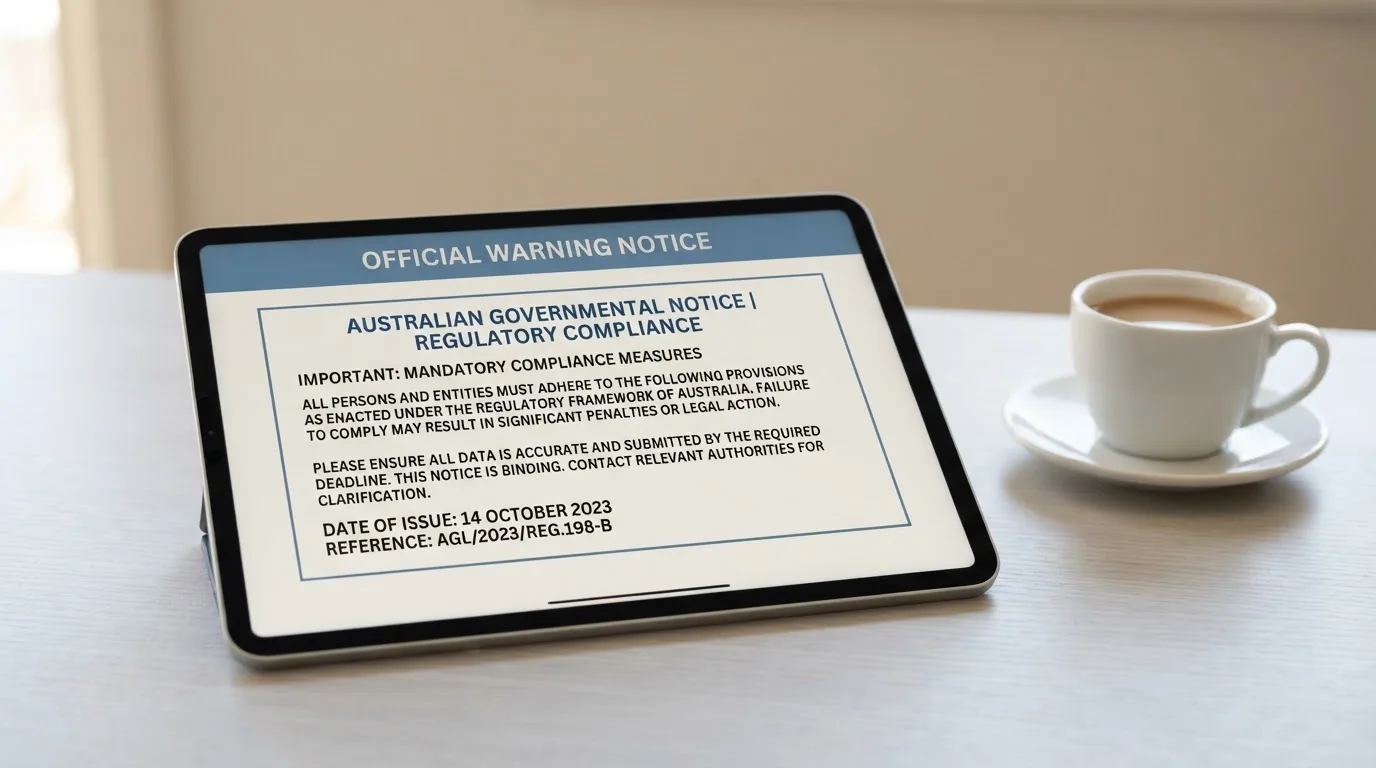
The Interactive Gambling Act 2001 (IGA), strengthened by the Interactive Gambling Amendment Act 2017, makes it an offence to provide online casino games, online pokies or in-play betting to a person physically in Australia. No state or territory licenses these services. What is licensable is wagering on racing and sport placed before the event, lotteries, and keno — in practice licensed by the Northern Territory Racing and Wagering Commission, which regulates 52 of Australia’s online bookmakers (including Sportsbet, Bet365 and Ladbrokes) for tax reasons, runs on a small staff, and meets once a month in Darwin. Minimum age is 18.
The IGA targets the provider, not the individual player. An Australian punter who opens an account with an offshore casino is not prosecuted. They are also not protected. There is no Australian consumer protection, no Australian complaints body, no Australian recourse if the offshore operator refuses to pay. The balance on the account can be lost if the site is blocked with money still on it. The punter’s bank may refuse the transaction at the card level before any of this starts.
The Australian Communications and Media Authority is the body that investigates, issues formal warnings, and asks Australian ISPs to block illegal services. The ACMA’s June 2026 reporting set the running totals: 1,751 illegal gambling and affiliate marketing websites blocked since the first blocking request in November 2019, and more than 230 unlicensed gambling services having left the Australian market since enforcement was strengthened in 2017. The June 2026 round itself added another twelve names: 7Signs, ChromaBet, Donbet, Duospin, Freshbet, Slots Gem, Jacks Club, Lucky Start, Pointsbetz, Spinrise, Vinyl Casino and Wildsino.
The number of operators on a comparison page is not the number of operators offering a licensable service. It is the number that have not yet been blocked, warned, or have not yet chosen to leave.
What the ACMA’s formal warning actually means
A formal warning is a written notice to a specific legal entity, identifying a specific website or brand, stating that the ACMA considers the service to contravene the IGA. It is published on the ACMA’s website with the entity name, the brand name, and the date. It does not require a court order. It does not require the operator to respond. It does, however, give the ACMA the standing to ask ISPs to block the service if the operator continues.
Across the operators a comparison page lists, the ACMA has issued warnings to most of them. The pattern repeats: the operator rebrands, registers a new domain, opens under a different company name, and the cycle restarts. The warnings detailed in the operator section that follows are the public record of that cycle, and the cycle is what the ACMA’s blocking total is counting.
Payment rules inside the legal frame
Under the IGA as amended in 2023, Australian-licensed online wagering services cannot accept credit cards or other credit-related products as payment. Penalties for breaching the credit-card ban reach A$247,500 per operator. Legal deposit routes for licensed wagering are debit card, bank transfer, PayID/Osko and BPAY. Cryptocurrency is also off the list. A site asking an Australian customer for a credit card or a crypto deposit is not operating inside the Australian rules.
The same legal frame shapes how PayID-linked bank transfers can be used. PayID is permitted for licensed wagering. It is not, and cannot be, permitted for prohibited interactive gambling services. The operator that puts PayID on its deposit page is using a rail designed for legitimate commerce to route funds to an illegitimate destination.
Apple Pay, Google Pay and Samsung Pay collectively accounted for around 45% of all card payments in Australia by number at the end of 2025, which is why the credit-card ban matters for digital wallets as well as physical cards. A punter who is blocked at the card level on the physical card but pays through a wallet on the same card has not bypassed the block. The wallet transaction still carries the card’s BIN and is declined at the same point.
The reform Parliament has on the table
The Interactive Gambling Amendment (Gambling Reform) Bill 2026 passed both houses of Parliament on 19 August 2026. Its advertising and inducement measures commence on 1 January 2027. Until that date the bill is law but not yet in force, and its inducement provisions — the ones aimed at the marketing language on the very comparison pages a reader might be looking at — are not yet binding.
In 2026 the bill is treated here as a near-term change rather than a current rule. A punter reading this material in early 2027 will be reading it under a different inducement regime than a punter reading it now, and the marketing language on those comparison pages will be the part that changes first.
What the winnings side looks like
Gambling winnings of a recreational player are not assessable income in Australia (section 6-5 ITAA 1997), and losses are not deductible. The exception is a person who carries on a business of gambling, which is a narrower case than the comparison page implies. The tax side is rarely the cost the punter notices first, but it sits in the same place as the legal side: the Australian rules assume an Australian operator, and the offshore operator is not the one the rules were written for.
Where to Turn If the Gambling Has Already Crossed a Line
The responsible-gaming shelf exists for the punter who has already moved past comparison. It is not a marketing channel for any operator on this page, and none of the offshore brands detailed below are connected to it.
BetStop, the National Self-Exclusion Register, has been live since August 2023. It binds every Australian-licensed online and phone wagering service. An offshore casino is not connected to it; an Australian punter who has excluded themselves from licensed wagering can still open an account at an offshore operator. Excluding through BetStop closes the legal channels. It does not close the illegal ones.
The National Gambling Helpline is 1800 858 858, free and twenty-four hours a day, with chat also available through Gambling Help Online. The helpline is federally funded and is independent of every operator named on this page. Gambling Help Online also handles web-chat and email referrals for people who would rather write than talk.
What the Australian banks do at the card level
Several Australian banks now let the customer block gambling transactions directly, without going through the punter’s account at any operator.
Westpac’s gambling block works at card level. It refuses authorisation of transactions registered under the merchant category code “Betting/Casino Gambling” on eligible personal credit and debit cards. The block is set by the customer in their banking app, and once on it operates on every transaction the card attempts at any merchant carrying that category code. The bank declines the transaction at the merchant-code level; the punter’s account is not debited.
ANZ’s gambling block, also activated in the ANZ app, also blocks gambling transactions made through a digital wallet such as Apple Pay on an eligible card, not just the physical card. Once turned on, removing the block again requires a 48-hour waiting period. The bank itself warns that not every gambling transaction will be blocked, and some non-gambling transactions might be blocked in error.
Both blocks operate at the point of authorisation, before the punter reaches the offshore site. They are the closest thing the Australian retail-banking system has to a hard wall between the punter and the offshore operator. They are also optional, set per-customer, and only as good as the merchant category code the offshore operator is registered under. A block on Westpac does not extend to an ANZ card, and vice versa.
Around 45% of all card payments in Australia by number went through Apple Pay, Google Pay or Samsung Pay by the end of 2025, which is why the digital-wallet extension on the ANZ block matters: a card-level block that ignores the wallet only catches the half of transactions that still go through the physical card. The ANZ model — block the underlying card, not just the plastic — is the closer fit to how cards are actually used today.
What responsible gaming does not do for offshore sites
The deposit ceilings, mandatory breaks, time-out periods, and per-spin stake caps in Australian responsible-gaming frameworks apply to Australian-licensed operators. An offshore casino runs on its own house rules, and those rules are the only limits the punter has once the deposit page has loaded. A punter who has set a weekly deposit limit at Sportsbet has not set one at an offshore casino, and the offshore casino has no obligation to mirror the limit.
The result is that the responsible-gaming infrastructure Australian regulation has spent a decade building applies only to the operators it licenses. The operators named on this page are not licensed, and the infrastructure does not reach them. The BetStop exclusion, the deposit limit, the activity statement — none of it touches the offshore page.
The Landscape of Operators the ACMA Has Formally Documented
The table below is the public ACMA record, not a ranking, not a recommendation, and not an offer comparison. Each row is an operator the ACMA itself has warned under the IGA for offering prohibited interactive gambling services to Australians. The “Subject support” column is the only place research carried any indication of a payment-method listing for the operator, and where no listing was found the cell is left as a dash.
| Brand | ACMA action and date | Operator named by the ACMA | Subject support |
|---|---|---|---|
| RocketPlay | Formal warning, March 2026; earlier Dama N.V., May 2022 | Pulsup Ltd | — |
| Level Up Casino | Formal warning, May 2022 | Dama N.V. | Westpac gambling block listing |
| Woo Casino | Formal warning, March 2025 | Dama N.V. | — |
| Spirit Casino | Formal warning, May 2025 | Dama N.V. | — |
| National Casino | Formal warning, July 2025 | Consolutetish S.R.L. | AUSTRAC and Wikipedia listings |
| Bizzo Casino | Formal warning, July 2025; earlier TechSolutions, 2022 | Consolutetish S.R.L. | — |
| Ignition Casino | Formal warning, July 2025 | Bamboo Media | — |
| Instant Casino | Formal warning, February 2025 | EOD Code SRL | ecoPayz and PayID listings |
| Jackbit | Formal warning, April 2026 | Ryker B.V. | — |
| Casino Intense | Formal warning, April 2025 | Sterplay Holding Ltd | AUSTRAC, ITNews and NAB listings |
| Sky Crown | Formal warning (Hollycorn N.V., PDF published September 2022) | Hollycorn N.V. | — |
No Australian state or territory licenses any of these brands for online casino games. Where a brand carries a Curaçao, Anjouan, Kahnawake or Costa Rica licence displayed in its footer, that licence does not authorise the service to take Australian customers for prohibited interactive gambling services, and the ACMA’s action does not depend on the licence displayed.
Common Deposit Methods for Licensed Wagering
| Payment Method | Availability | Notes |
|---|---|---|
| PayID/Osko | High | Instant transfers between participating banks. |
| Bank Transfer | High | Traditional processing, slightly slower than PayID. |
| BPAY | High | Standard bill payment method in Australia. |
| Debit Card | High | Widely accepted, instant deposit. |
Rocketplay was the subject of an ACMA formal warning to Pulsup Ltd in March 2026. The same brand had previously been on the receiving end of a May 2022 warning to Dama N.V., which at that time covered Rocketplay alongside five other casino brands. A re-warning under a new operating entity is the most common shape on this list. It is also the most informative one, because it tells the punter that Rocketplay has cycled through two legal structures without changing what it offers Australians. The Rocketplay that appears in the ACMA’s 2026 record is the same offer the ACMA warned about in 2022, restated under a new corporate name. The punter who arrives via an affiliate link is arriving at a service the regulator has been warning for four years.
Level Up Casino: A Dama N.V. Brand on Westpac’s Block List
In May 2022 the ACMA warned Dama N.V. over Level Up Casino alongside Bambet, Dazard, Rocketplay, Wild Tornado and Cobra Casinos. Westpac’s gambling-block documentation lists Level Up Casino as a merchant category entry that the bank’s block catches, which is the practical effect of the warning at the bank-customer level: a Westpac customer with the gambling block on does not get a declined transaction screen and an explanation. They get the transaction refused before any funds move. Level Up’s position under Australian law has not changed since the 2022 warning, and the Westpac listing is the bank’s recognition of that position.
Woo Casino: Dama N.V.’s 2025 Follow-Up Warning
A March 2025 ACMA warning to Dama N.V. names Woo Casino specifically, three years after the same operator was caught up in the 2022 six-brand sweep. Woo Casino does not appear in any of the merchant-code listings that research turned up, which is consistent with a smaller footprint than the Dama N.V. group average rather than with a clean Australian position. The 2022 sweep and the 2025 follow-up are two entries for the same legal entity, and Woo Casino is on the receiving end of both.
Spirit Casino: The Freshest of Dama N.V.’s Australian-Facing Brands
Spirit Casino joined Dama N.V.’s warning record in May 2025, two months after Woo Casino’s. The Dama N.V. group is the most frequently warned operator on this list, with four separate ACMA actions across its brands: the 2022 six-brand batch, the Woo Casino warning, the Spirit Casino warning, and the original Rocketplay entry. Spirit Casino’s appearance on the ACMA’s record is the freshest reminder that a single holding-company structure can run multiple brands against the same regulator finding. None of the four Dama N.V. brands is licensed in Australia, and the May 2025 warning is the most recent statement of that position.
National Casino: The July 2025 Consolutetish Warning’s First Brand
National Casino and Bizzo Casino were named together in the ACMA’s July 2025 warning to Consolutetish S.R.L. AUSTRAC’s reporting and the English-language Wikipedia entry on the operator are the public-record mentions research carried. Neither is an offer, neither is an endorsement, and neither changes the ACMA’s July 2025 finding. A National Casino page that promises a no-deposit bonus is making the same promise the operator made before the ACMA acted. The ACMA acted on the same structure the bonus page points at, and the structure is unchanged.
Bizzo Casino: Twice Warned, Twice Rebranded
Bizzo Casino carries two ACMA warnings: the July 2025 notice to Consolutetish S.R.L. and an earlier 2022 warning to TechSolutions (CY) Group Limited and TechSolutions Group N.V. Two warnings, three years apart, under two different legal-entity names, for the same brand. The pattern across the operators on this list is re-registration under a new entity when the ACMA warns the old one, and Bizzo Casino is the most visible example of the cycle. The Australian position has not changed across the rebrandings.
Ignition Casino: A Poker-Focused Brand on the ACMA’s 2025 List
Bamboo Media was the operator named in the ACMA’s July 2025 formal warning over Ignition Casino. Ignition Casino’s marketing has historically focused on the Australian and US poker market, and the ACMA’s action sits in the same July 2025 batch that covered National Casino and Bizzo Casino. The punter searching for a no-deposit bonus at Ignition Casino will find affiliate pages that present the offer without any reference to the ACMA’s standing position. The standing position is the ACMA’s warning, and the warning is what the punter’s search should be returning instead of the bonus claim.
Instant Casino: A PayID-Listed Operator with an EOD Code SRL Warning
EOD Code SRL was the recipient of the ACMA’s February 2025 warning over Instant Casino. EcoPayz and PayID both carry merchant entries that name Instant Casino, which is the kind of listing the comparison page would describe as a “PayID-friendly casino” — a label that conflates a payment-rail listing with an Australian licence. The Instant Casino listing on PayID’s ecosystem tells the punter that Instant Casino has a PayID at which to receive funds. It does not tell the punter that Instant Casino is licensed to take those funds from an Australian customer. The ACMA’s February 2025 warning is the licensing position, and the listing on PayID is not a counter-argument to it.
Jackbit: The Newest Ryker B.V. Brand on the ACMA List
Ryker B.V. received the ACMA’s April 2026 warning over Jackbit and CasinOK together. Jackbit is one of the newer entries on this list and the ACMA’s action against it is among the most recent. Jackbit does not appear in any of the merchant-code listings that research turned up, which is consistent with a smaller footprint rather than with a clean Australian position. The ACMA’s action is the relevant fact and the action is current as of April 2026. The punter who clicks through to Jackbit from an affiliate page is clicking through to an operator the regulator named five months before the page was loaded.
Casino Intense — A Fundamental Repeat on Three Australian Lists
Sterplay Holding Ltd was the operator the ACMA warned in April 2025 over Casino Intense. AUSTRAC’s reporting, ITNews’s coverage and NAB’s merchant-code documentation each name Casino Intense as a listed entity in the same year. The casino’s Australian position is not a borderline case. It is a brand the ACMA has named, an Australian bank has coded, and an Australian journalist has covered within twelve months of one another. AUSTRAC, ITNews and NAB are not endorsements. They are mentions, and the mention that decides the offer is the ACMA’s.

Sky Crown: A Hollycorn N.V. Brand, Warned Since 2022
Hollycorn N.V.’s formal warning was published in PDF form in September 2022 and covers Sky Crown alongside Blue Leo. Hollycorn N.V. is the operator of record for both brands, and the warning identifies both on the same document. Sky Crown does not appear in the merchant-code listings research turned up, which leaves the ACMA’s own document as the most current Australian-relevant fact on this operator. The offer has not been relicensed in the time since.
Working the Numbers: The ACMA’s Blocking Rate
The 1,751 blocked sites reported in the June 2026 ACMA round, set against the first blocking request in November 2019, give the rate at which the ACMA has been removing illegal services from Australian reach.
The period from November 2019 to June 2026 is six years and seven months, or roughly 6.6 years. Dividing 1,751 by 6.6 produces an average of around 265 blocked sites per year across the period — a band that runs from roughly 250 sites a year when the period is rounded up to seven full years, to around 270 sites a year when rounded down to six and a half.
That is the long-run average. It smooths over how uneven the actual pace has been. The June 2026 round itself removed twelve sites in a single batch; other rounds have been smaller, and some quarters have carried no new rounds at all. The 265-per-year figure is the average cost the ACMA has been paying to keep illegal services off Australian screens, and it is also the average pace at which new illegal services have been entering the pipeline to replace the ones removed.
H2 Gambling Capital’s 2025 estimate puts Australian losses to illegal gambling sites at about A$3.9 billion a year, and reports that the share of gambling going through legal channels fell from 74 per cent in 2021 to 64 per cent in the most recent year. The blocking rate is the supply-side response. The loss figure is the demand-side reality. The two numbers moving in opposite directions is the gap the Australian regulatory frame is trying to close, and the gap is the reason the 2026 reform bill is sitting in Parliament’s commencement pipeline.
Frequently Asked Questions
Does pairing ‘PayID’ with a no-deposit bonus claim mean anything different to an ordinary no-deposit pokies offer?
The PayID label identifies the payment rail the offer would use. It does not change the regulatory status of the offer, the wagering requirement attached to it, the maximum cashout, or the absence of an Australian licence on the operator running it. The no-deposit half carries the same conditions any other no-deposit bonus carries, and the offshore position is unchanged.
How fast would a PayID withdrawal move if a no-deposit bonus win were ever actually paid out?
Osko transfers between participating Australian banks settle in under a minute, 24/7. The receiving end is the offshore operator, and the operator decides when to release the funds. “Instant” describes the rail; whether the operator uses it at that speed is a question the punter cannot answer before the bonus has been played.
Is a PayID no-deposit bonus offer from an offshore pokies site something an Australian can lawfully accept?
No. The Interactive Gambling Act 2001, as strengthened in 2017, prohibits the provision of online casino games and online pokies to a person in Australia. No state or territory licenses them. The individual player is not prosecuted, but no Australian consumer law protects the player if the operator refuses to pay.
What’s the usual cap on withdrawing winnings from a PayID pokies no-deposit bonus?
A maximum cashout cap is one of the recurring conditions on these offers, with the operator setting a fixed ceiling on bonus-derived winnings. The cap varies by operator and is the part of the offer the punter reads first when their balance exceeds it. Higher figures on comparison pages are the operator’s own marketing, not a verified figure.
Why would a site need PayID at all if the bonus itself requires no deposit?
PayID on the deposit page is borrowed credibility. The offshore operator puts a trusted Australian rail on its deposit page so the punter’s bank screen shows a familiar name. The no-deposit bonus is the entry point. Once played, the punter is on the deposit page for the next round, and the rail is already there.