
Big jackpot pokies for Australian players — what the law actually allows
The phrase “best online casinos with big jackpot pokies” promises a list. Australia does not have one to give. The Interactive Gambling Act 2001 prohibits offering online casino games — pokies included — to anyone in Australia, and no state or territory licences them. A reader who arrived here looking for a casino to join is owed that sentence first, before any shortlist or comparison. The rest of this page walks through what is real around big jackpot pokies for Australians in 2026: the law that bans the online product, the regulator that enforces it, the offshore brands the regulator has acted against, and the legal alternatives — licensed pokies venues, land-based casinos, and the self-exclusion register that does bind Australian-licensed operators.
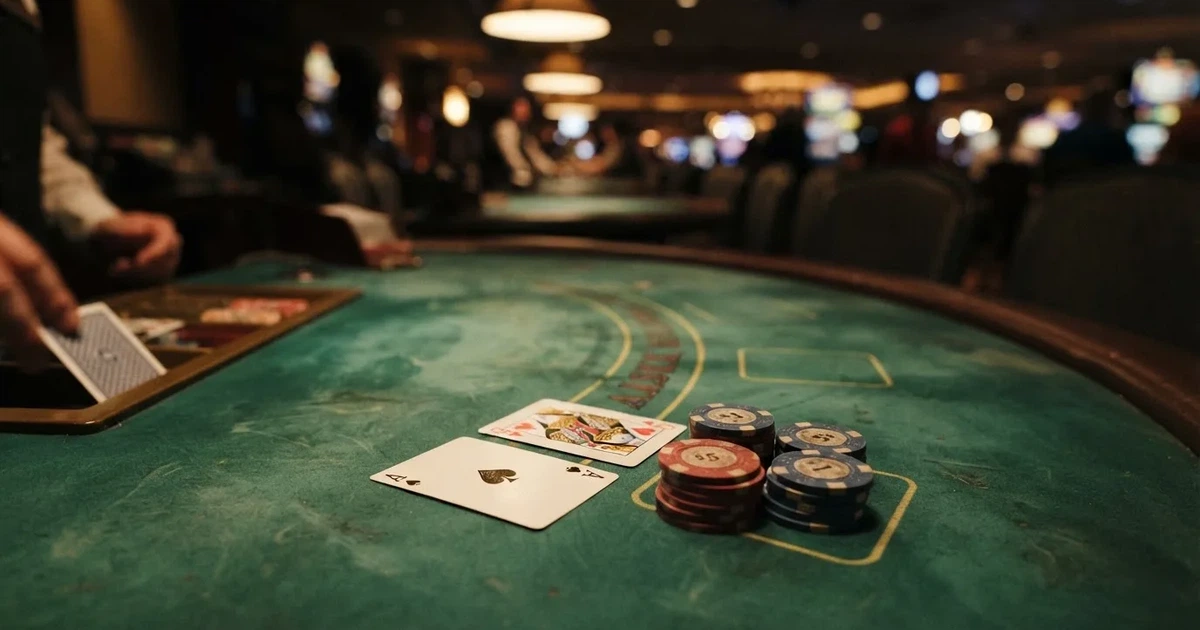
Currency and licence check: data current as of 8 November 2026; operator claims verified against the Australian Communications and Media Authority (ACMA) register of formal warnings and the Interactive Gambling Act 2001 as amended.
Table of Contents
- Why there is no clean shortlist of “best” online casinos for jackpot pokies in Australia
- How a big jackpot pokie actually works
- The biggest online jackpot on record, and why the figure matters
- What “fixed jackpot” means in the same sentence as “progressive”
- The Australian legal frame for jackpot pokies, plain
- The ACMA’s blocking record and the blocking-rate calculation
- The offshore brands the ACMA has acted against — a plain table
- RocketPlay — what the ACMA record actually says
- Level Up Casino — what the ACMA record actually says
- Woo Casino and Spirit Casino — the second Dama N.V. wave
- National Casino and Bizzo Casino — the Consolutetish and TechSolutions pair
- Ignition Casino — Bamboo Media’s Australian-facing product
- Instant Casino — the February 2025 warning
- Jackbit — the April 2026 Ryker B.V. warning
- Casino Intense — the Sterplay Holding warning
- Sky Crown — Hollycorn N.V.’s Australian-facing brands
- What “subject support” actually means across this set
- What an Australian reader can do legally for big jackpot pokies
- The maths of a jackpot pokie session, plainly
- What the offshore “best online casino” list actually delivers
- Where the ACMA’s enforcement is going in 2026
- Practical takeaways for an Australian reader
- Frequently asked questions
Why there is no clean shortlist of “best” online casinos for jackpot pokies in Australia
The honest answer to the reader’s question is that the Australian market for online casinos does not exist as a legal market. The Interactive Gambling Act 2001, tightened by the Interactive Gambling Amendment Act 2017, makes it an offence to provide online casino games or online pokies to a person physically in Australia. No Australian jurisdiction — not New South Wales, not Victoria, not the Northern Territory — issues a licence for the product. The Northern Territory Racing and Wagering Commission (NTRWC) regulates around 52 online bookmakers (Sportsbet, Bet365, Ladbrokes among them), but only for racing and sports wagering placed before the event; the commission has no full-time staff and meets monthly in Darwin.

The commercial effect is that every brand an Australian reader meets by searching “online casino” is operating offshore. Some carry a Curaçao or Kahnawake licence that has no Australian recognition. Some display no licence at all. The Australian Communications and Media Authority treats them all the same way: it investigates, issues formal warnings, and asks Australian internet service providers to block the sites. The individual player is not the target of prosecution under the IGA — the law aims at the provider — but the player gets none of the consumer protections an Australian-licensed bookmaker has to offer. No complaints body, no local recourse if a withdrawal is refused, and a balance held offshore can be locked away behind a block the regulator imposes at the network level.
A page that nevertheless lined up an offshore shortlist and called it “best” would be doing three things at once: advertising unlicensed operators to Australians, describing offers whose terms the page has no way to verify, and asking the reader to take a real-money risk on a product the reader’s own law says should not be offered to them. This page takes a different route. It maps what the ACMA has done — eleven offshore brands named in formal warnings in the past four years — and explains, brand by brand, what the regulator’s action actually means. The reader who lands here weighing whether to sign up gets the ACMA record first, then the mechanics of a big jackpot pokie, then the legal alternatives that do exist.
How a big jackpot pokie actually works
A “jackpot pokie” is a pokie machine that carries a prize pool above the paytable’s regular line wins. The two structures that matter are fixed jackpots and progressive jackpots. A fixed jackpot pays the same advertised amount regardless of how long the machine has been running. A progressive jackpot grows with each losing wager until someone wins it, then resets to a preset minimum and starts climbing again. Progressives can be local (linked across machines in one venue) or wide-area (linked across many venues, often across state borders), and the wide-area pools are the ones that produce the eight-figure sums this guide discusses.
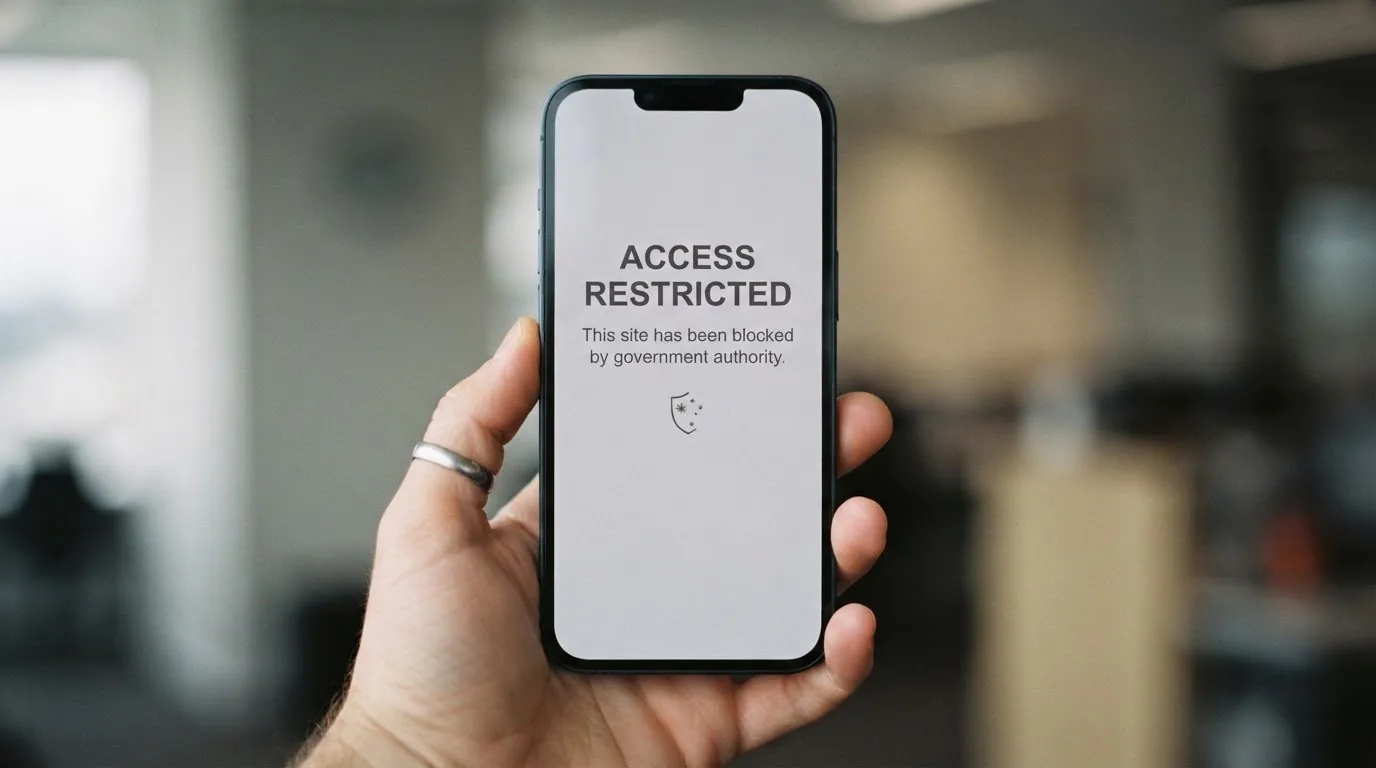
The mechanics of a wide-area progressive have a few moving parts that are worth knowing, because they shape how the pool behaves:
- Seed amount. When a progressive is won, it resets to a minimum value set by the operator or the network. A $1 million seed is typical on a Mega Moolah-style game; on lower-tier games it can be as low as $500 or $1,000.
- Contribution rate. A small percentage of each wager — usually well under 1% — is added to the pool. This is the slice that makes the jackpot climb. The rest of each wager funds the regular game and the house edge.
- Trigger condition. Most wide-area progressives award the top prize on a specific symbol combination that lands randomly after any spin; the player cannot choose to “buy” the jackpot spin. A separate class — the must-hit-by progressive — has a random number generator that sets the exact payout amount inside a preset range (say, $1,000 to $3,000) the moment the previous jackpot is won, and the prize drops within a deadline rather than on a symbol combination.
- Wide-area vs. local. A wide-area progressive linked across hundreds of venues accumulates faster because more wagers feed it per minute. A local progressive at a single venue accumulates slower but starts paying more frequently.
Progressive jackpots were first introduced in large casinos in 1986, and the first Megabucks progressive slot machine — International Game Technology’s product — paid out its inaugural jackpot of $4,988,842.17 on 1 February 1987. The format has been climbing since. The record for an online slot jackpot sits at €19,430,723.60, won on 27 April 2021 by a player in Belgium on Microgaming’s “Absolootly Mad: Mega Moolah” at Napoleon Sports & Casino. Games Global, the business that now carries the Mega Moolah series after the Microgaming rebranding, has since reported later wins of £11.5 million and £13.5 million.
The relevant fact for an Australian reader is structural: a progressive’s size is a function of how many wagers feed it and how long it has gone unclaimed. The biggest pools accumulate on games linked across the widest networks, which is why offshore sites and land-based mega-resorts both list the same handful of titles at the top.
The biggest online jackpot on record, and why the figure matters
The headline figure — €19.43 million — is worth sitting with for a moment. It came from a single spin on a $0.50 or $1 stake range on a wide-area progressive, not from a max-bet bonus round. It is also a record that has stood since 2021, which tells the reader something about how rarely the very largest pools drop. Mega Moolah and its sister games have produced seven-figure and eight-figure payouts more frequently than the absolute record, but the headline pool behaves like a long-tail lottery: the longer it goes without dropping, the larger the next win tends to be, because the contribution rate keeps adding to it.
The reason this matters for a reader comparing jackpot pokies is that the advertised pool size on a game’s lobby screen is not a guaranteed payout. It is the current accumulated balance at the moment the page loaded. By the time a player wagers, the number has moved. By the time the player has spun a hundred times, it has moved more. The marketing copy tends to read as “this is what you can win”, which the reader should read as “this is what is currently in the pool, and it will be either higher or lower by the time the symbols stop.”
A second distinction worth keeping in mind: certain progressive jackpots, including some video poker and Caribbean Stud Poker variants, can grow large enough to push the game’s theoretical return above 100% — a positive-expectation bet for a player who can identify the exact threshold. The break-even point is hard to calculate for slot machines because reel layouts are not published, so the reader cannot reverse-engineer the figure from the paytable alone. The practical effect is that the threshold exists in theory and rarely in practice.
What “fixed jackpot” means in the same sentence as “progressive”
A fixed jackpot pokie carries a top prize set in the paytable and unchanged by play volume. The biggest Australian-style games on licensed floors often run fixed jackpots on the major symbol combinations — five of a kind on the top symbol, or a bonus-game ceiling — and pay in the low-to-mid five figures. Progressive games are where the eight-figure pools live, but the trade-off is volatility: a fixed jackpot pays regularly, a progressive pays rarely, and the regular-pokie base game on a progressive is usually tuned tighter so that the contribution to the pool has somewhere to come from.
A reader choosing between the two is choosing between frequency and size. A fixed jackpot is the better comparison for a session that has to produce something to show for itself. A progressive is the better comparison for a session that is, frankly, a lottery ticket with a long expected wait. Neither is the better comparison for a reader’s bankroll — both are built on a house edge that compounds with every spin, and the jackpot is the rare payout, not the typical one.
The Australian legal frame for jackpot pokies, plain
Three layers of law and one enforcement layer shape what an Australian reader can actually do:
- The Interactive Gambling Act 2001 (IGA) prohibits the supply of online casino games, online pokies and in-play betting to a person in Australia. What is licensed under Australian law is wagering on racing and sporting events placed before the event, lotteries and keno.
- The Interactive Gambling Amendment Act 2017 strengthened the original Act and gave the ACMA the powers it now uses: formal warnings to operators, civil penalty proceedings, and the ability to direct Australian ISPs to block illegal sites.
- State and territory casino control acts regulate land-based casino games in person. The NSW Casino Control Act 1992 requires that a casino operator not permit a game such as baccarat to be played unless the regulator has approved the game and its rules; in Victoria, the Victorian Gambling and Casino Control Commission (VGCCC) approves any rule change for table games at the Melbourne casino before it goes live.
- The ACMA enforces the IGA. It has issued formal warnings, asked ISPs to block sites, and published the operator name and the date of each action in a public register.
The minimum age across Australian gambling law is 18. Recreational player winnings are not assessable income and losses are not deductible under section 6-5 of the Income Tax Assessment Act 1997, unless the person is carrying on a business of gambling — a category that recreational players do not fall into.
The ACMA’s blocking record and the blocking-rate calculation
The single number that measures how seriously the regulator treats offshore casino sites aimed at Australians is the running total of blocked sites. As of the ACMA report dated 26 June 2026, a total of 1,751 illegal gambling and affiliate marketing websites had been blocked since the first blocking request in November 2019 — a span of roughly six and a half years. More than 230 unlicensed gambling services had left the Australian market since enforcement was strengthened in 2017.
The blocking rate over the full enforcement window sits at roughly 265 blocked sites per year averaged from the November 2019 first request through to the June 2026 report. The same arithmetic, run only over the post-strengthening years from 2017 to mid-2026, gives a looser band of roughly 195 blocked sites per year. The reason the two bands differ is that the 2017 strengthening predates the first formal blocking request by two years; the later figure is a truer picture of the IGA-era pace.
The 26 June 2026 round alone added 12 more sites to the block list — 7Signs, ChromaBet, Donbet, Duospin, Freshbet, Slots Gem, Jacks Club, Lucky Start, Pointsbetz, Spinrise, Vinyl Casino and Wildsino. A 12-site round is consistent with the average and is not an outlier. The pace has not slowed.
For a reader weighing whether to sign up with one of these brands, the calculation is the headline: a regulator that has asked ISPs to block 1,751 illegal sites in six and a half years is not performing a token exercise. Every blocked site is one that was accessible to Australians and offering prohibited services. The reader’s own ISP — Telstra, Optus, TPG, iiNet — enforces the blocks at the DNS level, so a player can wake up to find a balance at an offshore site made inaccessible from Australia without warning.
The offshore brands the ACMA has acted against — a plain table
The brands below are not a recommendation. Each has been the subject of a formal warning from the ACMA for offering prohibited online gambling services to Australians. The table records the brand, the regulator’s action and date, and the operating company the regulator named.
| Brand | ACMA action and date | Operator named by the ACMA | Subject support |
|---|---|---|---|
| RocketPlay | Formal warning, March 2026 (earlier warning to Dama N.V. in May 2022) | Pulsup Ltd | — |
| Level Up Casino | Formal warning, May 2022 | Dama N.V. | listings only (Bgaming) |
| Woo Casino | Formal warning, March 2025 | Dama N.V. | — |
| Spirit Casino | Formal warning, May 2025 | Dama N.V. | — |
| National Casino | Formal warning, July 2025 | Consolutetish S.R.L. | listings only (en.wikipedia.org) |
| Bizzo Casino | Formal warning, July 2025 (earlier warning to TechSolutions in 2022) | Consolutetish S.R.L. | — |
| Ignition Casino | Formal warning, July 2025 | Bamboo Media | — |
| Instant Casino | Formal warning, February 2025 | EOD Code SRL | — |
| Jackbit | Formal warning, April 2026 | Ryker B.V. | — |
| Casino Intense | Formal warning, April 2025 | Sterplay Holding Ltd | listings only (ABC, ACMA, Crown Melbourne) |
| Sky Crown | Formal warning, September 2022 | Hollycorn N.V. | — |
A reader scanning the table should take three things from it. First, the operators named are mostly Curaçao-registered companies, and one or two are based in other jurisdictions with limited Australian reach. The Dama N.V. entry appears four times across different brands, which is a feature of how Curaçao-incorporated operators run multi-brand portfolios under a single parent company. Second, the dates cluster between February 2025 and April 2026, with a small tail of older 2022 entries. The ACMA’s pace has been steady through this period, and a brand warned in 2025 is still being warned against now. Third, the “subject support” column has only three entries with any data, because the research sources for game availability on these brands are listing pages rather than primary brand statements — and a listing page is what it is. The empty cells are not the operator’s own claims; they are the absence of primary-source confirmation in the consulted material.
RocketPlay — what the ACMA record actually says
RocketPlay was the subject of a formal ACMA warning in March 2026, issued to Pulsup Ltd over the RocketPlay service. It had earlier been the subject of a May 2022 warning to Dama N.V. as one of six brands in the same enforcement action. Two warnings in roughly four years means the brand has been on the regulator’s radar for the better part of half a decade. The site displays a Curaçao licence; that licence has no Australian recognition. An Australian reader signing up with RocketPlay takes a real-money position on a product the ACMA has twice told the operator is prohibited, on infrastructure the ACMA has asked ISPs to block. The verdict for an Australian reader is straightforward: the regulator’s two warnings, taken together, are a stronger signal than the licence badge on the lobby page.
Level Up Casino — what the ACMA record actually says
Level Up Casino was named in the same May 2022 Dama N.V. action as RocketPlay, along with Bambet, Dazard, Wild Tornado and Cobra Casinos. The Dama N.V. cluster is the largest single multi-brand enforcement action in the ACMA’s published register, and Level Up was part of it. Game availability on the brand is documented by listing pages on Bgaming — a game provider’s distribution record rather than the operator’s own statement, which is what the listings-only marker in the table reflects. This operator is on the regulator’s record from a specific enforcement action, the licence it displays is not an Australian one, and signing up places the reader on the wrong side of the IGA.
Woo Casino and Spirit Casino — the second Dama N.V. wave
In March 2025 the ACMA issued a further formal warning to Dama N.V. over Woo Casino, and in May 2025 the regulator did the same over Spirit Casino. Both came three years after the original 2022 Dama N.V. action, which means the operator continued to offer prohibited services to Australians across at least two more brands after the first warning, and the ACMA returned to the same parent company twice. The pattern — one parent, several brands, repeated enforcement — is consistent across the rest of the table. The verdict for an Australian reader is unchanged: the regulator’s record names the operator, dates the action, and gives the brand a place in the public register of formal warnings.
National Casino and Bizzo Casino — the Consolutetish and TechSolutions pair
National Casino and Bizzo Casino were both named in a July 2025 formal warning to Consolutetish S.R.L. Bizzo Casino had earlier been the subject of a 2022 formal warning to TechSolutions (CY) Group Limited and TechSolutions Group N.V. Two operators, two warnings, one brand — the same pattern as the Dama N.V. cluster, just with different parent companies. Game availability on National Casino is documented by listing pages on en.wikipedia.org, which is a third-party record rather than an operator statement. This brand follows the standard ACMA enforcement pattern, and the licence it displays is not Australian.
Ignition Casino — Bamboo Media’s Australian-facing product
In July 2025 the ACMA issued a formal warning to Bamboo Media over Ignition Casino. Ignition is best known in the Australian reader’s orbit as a brand associated with poker and casino games, and the warning landed as part of the same July 2025 enforcement round that covered National Casino and Bizzo. The site displays an offshore licence and accepts Australian players without restriction. The verdict for an Australian reader is the regulator’s record, plainly: Bamboo Media is the named operator, July 2025 is the date, and the product is prohibited under the IGA.
Instant Casino — the February 2025 warning
In February 2025 the ACMA issued a formal warning to EOD Code SRL over Instant Casino. The brand has marketed aggressively through affiliate networks as a fast-payout, low-friction casino, and the regulator’s action landed early in the 2025 enforcement round. The verdict for an Australian reader is the same as the rest of the cluster: the regulator named the operator, dated the action, and asked ISPs to block the site.
Jackbit — the April 2026 Ryker B.V. warning
In April 2026 the ACMA issued a formal warning to Ryker B.V. over Jackbit and CasinOK. The action is the most recent on the table and brings the cluster up to date through the ACMA’s mid-2026 enforcement record. Jackbit is a Curaçao-incorporated brand, and the verdict for an Australian reader follows the same shape: the regulator’s record is the source, the licence displayed is not Australian, and the reader’s ISP enforces the block at the DNS level.
Casino Intense — the Sterplay Holding warning
In April 2025 the ACMA issued a formal warning to Sterplay Holding Ltd over Casino Intense. The brand has appeared in cross-references across Australian media coverage of the ACMA’s enforcement record, including reporting on ABC and the regulator’s own publications on the ACMA website. The Crown Melbourne cross-reference is the land-based Melbourne casino’s site, which appears in the consulted material on Australian casino regulation rather than as a Casino Intense endorsement. The verdict for an Australian reader is the same shape as the rest of the cluster: the brand is named, dated, and on the regulator’s register.
Sky Crown — Hollycorn N.V.’s Australian-facing brands
The ACMA issued a formal warning to Hollycorn N.V. over its Sky Crown and Blue Leo casino services, published in September 2022. Hollycorn N.V. is a Curaçao-registered operator that runs several brands in parallel — the warning covered Sky Crown and Blue Leo together, and the pattern matches the Dama N.V. cluster in shape if not in date. The verdict for an Australian reader is the regulator’s record: the operator is named, the date is September 2022, and the licence displayed is not Australian.
What “subject support” actually means across this set
Three of the eleven brands carry a listings-only marker — Level Up Casino, National Casino, and Casino Intense — meaning the consulted material has a third-party listing of the brand’s games rather than the brand’s own statement. The other eight carry no data at all on subject support. A reader who wants to know whether a particular pokie is on a particular brand’s lobby has to go to the brand itself and read the lobby — and an Australian reader doing so is already on the wrong side of the IGA. The empty cells in the column are an honest record of what the consulted material does and does not carry, and they are not the operator’s own facts.
What an Australian reader can do legally for big jackpot pokies
The legal alternatives are narrower than they might seem, but they exist, and they are the answer to the reader’s underlying question — where can an Australian play a big jackpot pokie without breaking the IGA?
Licensed pokies venues. Australian clubs and pubs operate pokie machines under state and territory gaming machine permits, and a number of them carry wide-area progressives linked across networks. The licensed venues are regulated at the state level — by Liquor & Gaming NSW in New South Wales, by the VGCCC in Victoria, by the Office of Liquor and Gaming Regulation in Queensland, and by equivalent bodies in each other jurisdiction. A reader who wants to play a jackpot pokie in person can do so at a licensed venue with an 18+ age check on entry.
Land-based casinos. Crown Melbourne, The Star Sydney, The Star Gold Coast, Crown Perth, Sky City Adelaide and the casino floor at Country Club Launceston in Tasmania all operate approved table games and pokie machines under their state casino control acts. Big-jackpot pokie machines are part of the licensed floor at each. The casino control acts require regulators to approve every game and every rule change before it goes live — the NSW Casino Control Act 1992 makes this explicit, and the VGCCC maintains a public log of approved changes, including the December 2024 renaming of Crown Melbourne’s “Perfect Pairs” side bet to “Crown Pairs” and the March 2024 introduction of a “Free Bet” option with a new “Pot of Gold” side bet on blackjack variants.
Sports and racing wagering, online, with an Australian-licensed bookmaker. The NTRWC-regulated online bookmakers — Sportsbet, Bet365, Ladbrokes and the other 49 or so licensees — take wagers on racing and sport before the event. They do not offer online casino games or online pokies; the licence does not extend to the product. A reader who wants to bet online with an Australian-regulated operator has this category, and this category alone, in the legal frame.
BetStop — the National Self-Exclusion Register. Live since August 2023, BetStop lets a person exclude themselves from every Australian-licensed online and phone wagering service in one registration. The register binds only Australian-licensed operators — an offshore casino is not connected to it — so a self-exclusion through BetStop does not stop an offshore casino from accepting a deposit. For readers who want to step back from wagering, BetStop is the tool that does what it says it does, and the National Gambling Helpline on 1800 858 858 (free, 24/7, with chat at Gambling Help Online) is the front door for self-exclusion and for advice on a gambling problem.
The credit-card and crypto ban. Since 11 June 2024, credit cards, credit-related products and digital currency have been banned as a payment route for licensed online wagering in Australia; penalties for operators that breach the rule reach A$247,500. The legal deposit routes for licensed wagering are debit card, bank transfer, PayID/Osko and BPAY. A reader who lands on a site asking for a credit card or a crypto deposit is on a site that is not operating under the Australian rules, full stop.
The maths of a jackpot pokie session, plainly
A session on a jackpot pokie is, underneath the marketing, an exercise in expected value. Two numbers govern every spin: the return to player (RTP), which is the long-run percentage of each wager the game returns to players across all outcomes including the jackpot, and the house edge, which is 1 − RTP. A pokie with a 96% RTP has a 4% house edge; for every A$100 wagered across a long enough sample, the player receives A$96 back and the house keeps A$4.
The progressive changes the calculation in one specific way. A small slice of each wager — the contribution rate — is diverted to the jackpot pool rather than to the game’s regular return. The base game is therefore tuned slightly tighter to fund the contribution. The RTP figure that a game publishes is the figure that already accounts for the contribution; it is not added to it on top. A reader who looks at a 92% RTP on a wide-area progressive and a 96% RTP on a fixed-jackpot game of similar theme is not comparing apples to apples — the progressive’s RTP is lower because some of each wager is going to the pool.
A session of, say, 1,000 spins at A$1 per spin on a 96% RTP game has an expected loss of 1,000 × A$1 × 0.04 = A$40. The same session on a 92% RTP progressive has an expected loss of A$80. The expected-loss figure is statistical — an average over many sessions, not a guaranteed outcome for any single player — and a single session of 1,000 spins can produce anything from a small loss to a jackpot-sized win.
The relevant discipline for a reader is to treat the advertised jackpot pool as a rare payout and the house edge as the default outcome. The progressive does not change the house edge enough to make the game a fair bet; it changes the distribution of outcomes, putting most of the long-run return into a tail event that most players will never see.
What the offshore “best online casino” list actually delivers
The offshore sites that an Australian reader meets via affiliate pages present a uniform pattern: a Curaçao or Kahnawake licence badge, a multi-thousand-game lobby, a welcome package of deposit bonuses and free spins, and a “fast payout” claim. What the page does not usually show is the ACMA record — the formal warning, the date, the operating company, and the fact that the brand has been on the regulator’s register at least once. The research in this page records eleven such brands; the affiliate pages that link to them tend to omit that record.
The reader’s working test, applied to any offshore brand offering jackpot pokies to Australians, is three questions:
- Is the brand on the ACMA’s register of formal warnings? The register is public. If the brand is on it, the regulator has already told the operator that what it is doing is prohibited.
- Does the site accept a payment route the Australian rules have banned since 11 June 2024? A site asking for a credit card or a crypto deposit is not operating under the Australian rules.
- Is the brand connected to BetStop? A site that is not connected to the National Self-Exclusion Register is not bound by an Australian self-exclusion.
A “no” on any of the three is enough to place the brand outside the Australian frame. A “yes” on all three would be unusual, because BetStop binds only Australian-licensed wagering services and no Australian-licensed operator offers online casino games.
Where the ACMA’s enforcement is going in 2026
The Interactive Gambling Amendment (Gambling Reform) Bill 2026 passed Parliament on 19 August 2026, and its advertising and inducement measures commence on 1 January 2027. The page is written before that commencement, so the new advertising rules are law with a start date, not yet in force. The reform does not change the IGA’s prohibition on the supply of online casino games; it tightens what Australian-licensed wagering operators can say in advertising and what inducements they can offer. The offshore casino question is unchanged by the reform: an offshore casino aimed at Australians is still operating outside the Australian frame, and the ACMA’s blocking and warning powers continue to apply.
Practical takeaways for an Australian reader
A reader who arrived at this page from a search for “best online casinos with big jackpot pokies” is owed a few honest sentences:
- There is no Australian-licensed online casino offering jackpot pokies, because no Australian jurisdiction licences the product.
- The offshore brands that do offer the product to Australians are the brands the ACMA has acted against, repeatedly, since 2017. The eleven brands in the table above are a sample, not an exhaustive list; the regulator’s full register is the source.
- The legal place to play a jackpot pokie in Australia is a licensed venue or a land-based casino, where the games and the rules are approved by the state regulator. Online, the legal wagering product is racing and sport before the event, with an Australian-licensed bookmaker.
- The consumer protections an Australian reader expects — a complaints body, a local recourse route, a self-exclusion register that binds the operator — do not exist for an offshore casino. BetStop binds only Australian-licensed wagering services. The National Gambling Helpline on 1800 858 858 is the right front door for a gambling problem, regardless of which platform the problem sits on.
- The 1,751 blocked sites figure is not a marketing line; it is the ACMA’s running total as of 26 June 2026, averaged across roughly 265 blocked sites per year since the first blocking request in November 2019. The pace has not slowed.
Frequently asked questions
What is the largest jackpot ever recorded on an online slot?
The record online slot jackpot is €19,430,723.60, won on 27 April 2021 by a player in Belgium at Napoleon Sports & Casino on Microgaming’s “Absolootly Mad: Mega Moolah”. Games Global, the business that now distributes the Mega Moolah progressive jackpot series, has reported later wins of £11.5 million and £13.5 million. Wide-area progressives linked across the largest networks produce the biggest payouts, and the headline figure has stood since 2021.
How does a progressive jackpot pokie differ from a fixed-prize one?
A fixed jackpot pokie pays the same advertised top prize regardless of play volume. A progressive jackpot pokie has a prize pool that grows with each losing wager — a small contribution from every spin is added to the pool — until someone wins it, after which it resets to a preset seed amount and starts climbing again. Progressive pools can be linked locally within one venue or across a wide area spanning many venues, and the wide-area pools accumulate fastest because more wagers feed them per minute. The trade-off for the bigger pool is volatility: the progressive pays rarely, and the base game is tuned slightly tighter to fund the contribution.
Is it legal for an online casino to offer jackpot pokies to Australians?
No. The Interactive Gambling Act 2001, strengthened by the Interactive Gambling Amendment Act 2017, makes it an offence to provide online casino games or online pokies to a person in Australia, and no state or territory issues a licence for the product. The Australian Communications and Media Authority enforces the prohibition through formal warnings to operators and by directing Australian internet service providers to block illegal sites. An offshore casino offering jackpot pokies to Australians is operating outside the Australian frame, and the licence it displays — typically Curaçao or Kahnawake — has no Australian recognition.
Can a free version of a jackpot pokie show the real jackpot total?
No. A free-play or demo version of a jackpot pokie runs on a simulated balance and does not connect to the live wide-area progressive network. The jackpot total displayed in a free version is either a static promotional figure or a simulated counter, not the actual pool feeding the real-money game. The real pool is the one funded by real wagers from players on the connected network, and it moves with every spin. A reader who wants the live figure has to look at the real-money lobby of a connected venue, not a demo.
Are jackpot-style pokies common on licensed Australian club and pub floors?
Yes. Australian clubs and pubs operate pokie machines under state and territory gaming machine permits, and wide-area progressives linked across networks are part of the licensed product on many floors. The games and the rules are approved by the state regulator — Liquor & Gaming NSW in New South Wales, the Victorian Gambling and Casino Control Commission in Victoria, and equivalent bodies elsewhere. Land-based casinos — Crown Melbourne, The Star Sydney, The Star Gold Coast, Crown Perth, Sky City Adelaide, Country Club Launceston — also operate jackpot pokie machines on their approved floors, and the casino control acts require the regulator to approve every game and every rule change before it goes live.
What determines how quickly a progressive jackpot grows?
Three factors. First, the contribution rate — the percentage of each wager diverted to the pool, usually well under 1%. Second, the volume of wagers feeding the pool, which is highest on wide-area networks linked across many venues. Third, how long the jackpot has gone unclaimed since the last reset. The longer a progressive goes without dropping, the larger the next win tends to be, because the contribution rate keeps adding to the running total. A wide-area progressive that has gone unclaimed for several months will display a substantially larger figure than one that was won the week before.