
Playson slots in Australia: the licensed venues, the offshore marketing, and the regulator between them
A slot studio called Playson produces HTML5 casino titles that appear on hundreds of offshore gambling sites. In Australia, those same titles sit behind a wall of national law. The Interactive Gambling Act 2001 makes it an offence to provide online casino games or online pokies to a person physically in Australia. No state or territory licenses the product. The Australian Communications and Media Authority has spent the last seven years chasing the operators who ignore that fact. Understanding what Playson actually is, where its games can be played legally, and why the ACMA keeps naming names is the starting point for any reader thinking about this corner of the market.
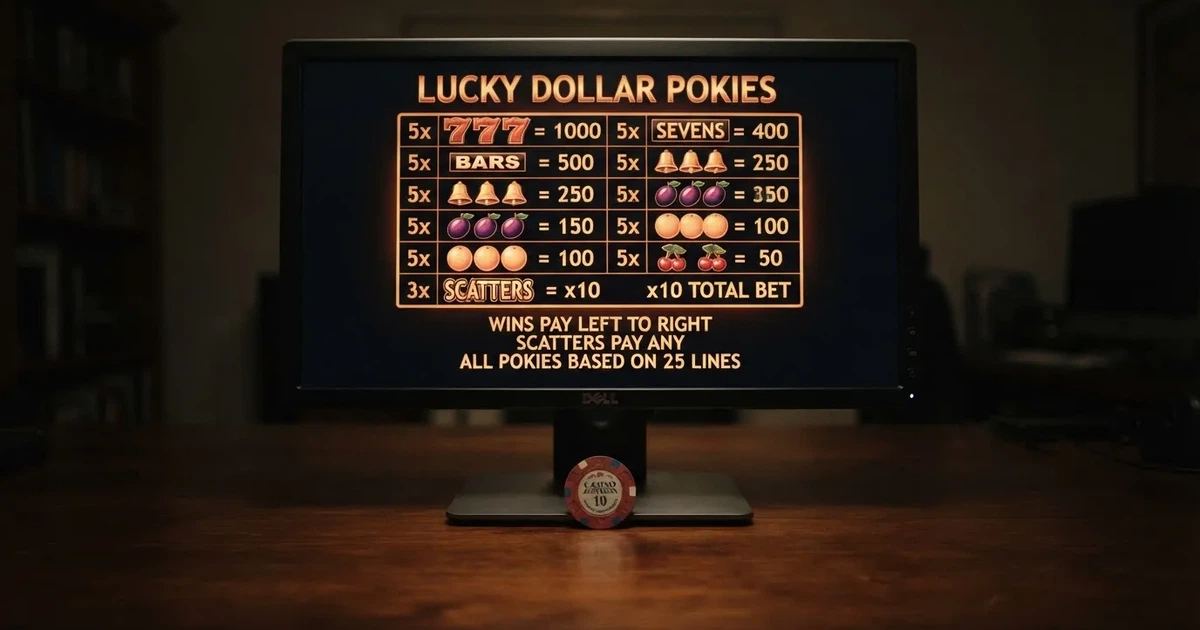
The data behind this page was checked against the ACMA’s public register as of 8 November 2026.
Table of Contents
- Responsible gambling and what an Australian player is actually entitled to
- Payments, payout speed, and what offshore sites accept that licensed ones do not
- Bonus offers, free spins, and what the headline figure actually costs
- Mobile play, apps, and how Playson titles behave on a phone
- Playson itself, the studios whose work Playson resembles, and the licensed Australian venues where equivalent machines live
- The top of the ACMA’s enforcement list — and what the pattern says
- How the ACMA’s blocking programme stacks up over time
- Why the offshore sites keep marketing Playson to Australians anyway
- Onshore alternatives that do not require an offshore account
- Legal status, the credit-card ban, and what a 2026 reader needs to know
- Playson in context: how the offshore slot supply works
- Frequently asked questions
Responsible gambling and what an Australian player is actually entitled to
A Playson title encountered on an offshore site is one the ACMA has, in most cases, already taken a position on. The enforcement history runs from 2017 onward, and the consequences for the player who funds an account there are concrete.

BetStop, the National Self-Exclusion Register, went live in August 2023 and binds every Australian-licensed online and phone wagering service. An offshore site is not connected to it. A punter who has self-excluded and then opens an Ignition Casino or a RocketPlay account will not be stopped, traced or contacted. The register does exactly what its scope says, and its scope stops at the Australian-licensed perimeter.
Gambling Help Online runs the National Gambling Helpline on 1800 858 858 — free, twenty-four hours a day, with a chat option. The service is funded for any Australian resident regardless of where they have been playing. The first call costs nothing, the conversation is confidential, and it does not require the caller to have played at a licensed venue. For readers outside the largest metropolitan areas, the same number routes to state and territory counsellors familiar with the local clubs and pubs where the licensed pokies sit.
What the support system cannot do is retrieve a balance from a blocked site. Players across the ACMA blocking rounds have written in to say exactly that — a withdrawal request was sitting open when their operator’s domain went dark. There is no complaints body for unlicensed offshore gambling. The only path to a recovered balance is the operator honouring it before the block lands, which is a race the regulator usually wins.
Payments, payout speed, and what offshore sites accept that licensed ones do not
Playson titles played offshore are paid for with whatever instruments the offshore operator is set up to take. A consistent pattern across the ACMA’s enforcement record is that those instruments include credit cards and crypto. Both are banned for Australian-licensed wagering. The credit-card ban took effect on 11 June 2024, with penalties for licensed operators of up to A$247,500.
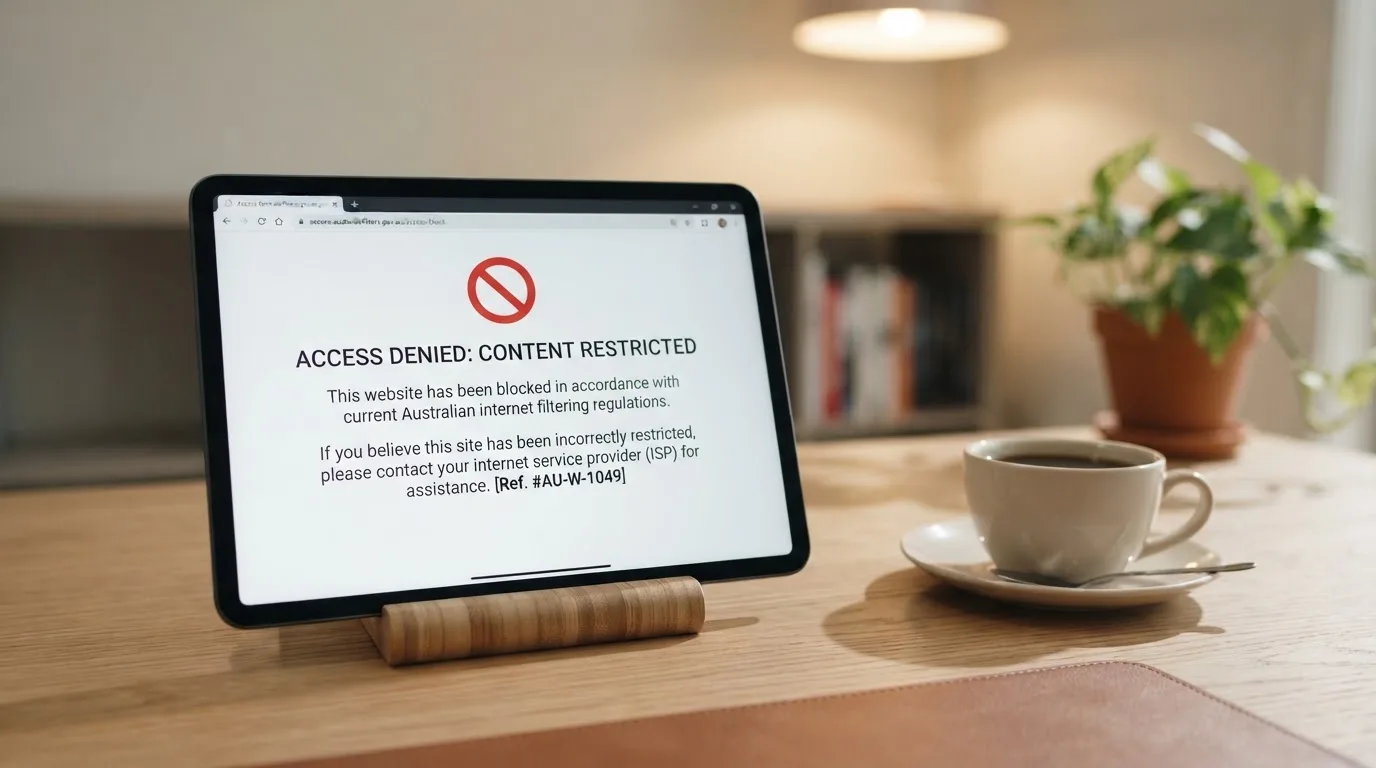
A licensed Australian wagering service takes debit cards, bank transfers, PayID, Osko and BPAY. PayID clears in seconds; BPAY settles overnight; debit-card deposits post immediately. Withdrawals on those rails run from same-day to three business days depending on the operator’s own processing window. None of that protection exists offshore. A withdrawal request on a Curacao-licensed site is a request to the operator alone, processed on whatever terms the operator has set, with no Australian body to escalate to if it stalls.
The payout speed question — a common one in Playson-casino comparison searches — collapses to a different question when the casino is unlicensed in Australia. Speed stops being the metric that matters. Whether the money arrives at all becomes the metric.
Bonus offers, free spins, and what the headline figure actually costs
Playson-branded slot titles are routinely promoted with deposit bonuses, free-spin bundles and no-deposit chips. The headline figure is the number a reader sees first; the wagering multiple is the number the reader eventually pays.
A 100% match on a A$200 deposit at a 40x wagering multiple asks for A$8,000 of turnover before any winnings can be withdrawn. Played through a slot with a 96% return, that is an expected loss of about A$320 — larger than the deposit itself. Free-spin winnings typically carry their own wagering requirement, often higher than the deposit bonus, and almost always a maximum cashout cap that turns a big theoretical win into a small real one.
The no-deposit bonus — the offer that costs nothing to claim — is the most expensive one in practice. A A$10 no-deposit chip at 60x on slots, with a A$50 max cashout, has an expected cost to the player near A$24 if played through and a ceiling on what the player can ever walk away with. The arithmetic is not hidden; it is just not on the landing page.
In Australia, every one of these offers is wrapped around an unlicensed product. The Interactive Gambling Act does not let a licensed venue market a free-spin package attached to an online pokie to an Australian resident, because the licensed venue cannot offer the pokie online in the first place.
Mobile play, apps, and how Playson titles behave on a phone
Playson builds in HTML5, which means a Playson slot loads in any modern mobile browser without a download. The studio’s own site demos its titles in a phone-shaped frame. Load times are short; touch controls work; the games scale to the screen. None of that is the constraint.
The constraint is the wrapper. A browser-based Playson slot on an Australian-licensed site does not exist, because the licensed site does not offer online pokies. A Playson slot on an offshore site plays perfectly well on a phone, and the offshore operator will often sell that smoothness as a feature in its marketing. The browser is not the issue; the licence status of the venue running it is.
The other mobile question — a dedicated iGaming app from a licensed Australian venue — does not have a Playson answer. State and territory regulators license venue-based gaming machines, not mobile casino apps. The licensed Australian product a punter installs on a phone is a wagering app for racing or sport, with a Playson slot nowhere on it.
Playson itself, the studios whose work Playson resembles, and the licensed Australian venues where equivalent machines live
Playson Limited is a Maltese-registered B2B gaming supplier that holds a UK Gambling Commission remote gambling software licence, in force since 1 July 2015, and a remote casino licence under the same account since 14 April 2016. The company operates from 12 Tigne Place in Sliema. The UK licences allow Playson to supply software to operators regulated by the UKGC; they do not authorise any of those operators to accept Australian players.
The studio’s work sits in a broader category of HTML5 slot suppliers whose games appear together on the same offshore aggregators. BGaming, operating from Valletta under a Malta Gaming Authority Critical Gaming Supply Licence issued in March 2021, has more than 250 certified titles including proprietary mechanics such as TRUEWAYS, MultiDice X and Merge UP. Betsoft, founded in 2006, lists a catalogue above 200 RNG games — slots, table games, video poker — and publishes per-game RTPs and volatility tags. 1spin4win, founded in 2021 and headquartered in Curaçao, reports a portfolio above 190 online slots built for low-bandwidth connections, with more than a thousand operator partnerships. None of these studios holds an Australian online casino licence, because none can.
The licensed Australian venues that carry slot-style gaming machines are pubs, clubs, casinos and — in some states — hotels, operating under state and territory approvals. Aristocrat Leisure, headquartered at North Ryde in Sydney and listed on the ASX under the ticker ALL, is the largest gambling-machine manufacturer in Australia and the second-largest slot-machine manufacturer worldwide. Its online arms are Product Madness (social games) and Aristocrat Interactive (regulated real-money online, formed in April 2024 from the Anaxi unit combined with NeoGames, Aspire Global, BtoBet and Pariplay). Aristocrat Interactive supplies to regulated online markets; it does not target Australia, where the IGA closes that door.
A reader who likes the look of a Playson slot on an offshore demo is choosing between an unlawful offshore site and a state-regulated venue running Aristocrat, IGT and similar machines under local rules. Those are the two legal paths.
The top of the ACMA’s enforcement list — and what the pattern says
The list below is not a recommendation. It is a record. Each entry names a brand the ACMA has formally warned for offering prohibited online casino services to Australians. The pattern is the subject of this section, not the brands themselves.
| Brand | ACMA action and date | Operator named by the ACMA | Subject support |
|---|---|---|---|
| RocketPlay | Formal warning — March 2026; earlier warning to Dama N.V., May 2022 | Pulsup Ltd (RocketPlay); Dama N.V. | — |
| Level Up Casino | Formal warning — May 2022 | Dama N.V. | listings-only (Wazdan) |
| Woo Casino | Formal warning — March 2025 | Dama N.V. | — |
| Spirit Casino | Formal warning — May 2025 | Dama N.V. | — |
| National Casino | Formal warning — July 2025 | Consolutetish S.R.L. | listings-only (Betsoft, en.wikipedia.org, Pragmatic Play) |
| Bizzo Casino | Formal warning — July 2025; earlier warning to TechSolutions, 2022 | Consolutetish S.R.L.; TechSolutions (CY) Group Limited and TechSolutions Group N.V. | — |
| Ignition Casino | Formal warning — July 2025 | Bamboo Media | — |
| Instant Casino | Formal warning — February 2025 | EOD Code SRL | — |
| Jackbit | Formal warning — April 2026 | Ryker B.V. | — |
| Casino Intense | Formal warning — April 2025 | Sterplay Holding Ltd | listings-only (1spin4win, en.wikipedia.org, gamblingcommission.gov.uk) |
| Sky Crown | Formal warning — September 2022 | Hollycorn N.V. | — |
Dama N.V. is the operator that recurs. Six brands on the wider ACMA record — Bambet, Dazard, Level Up, Rocketplay, Wild Tornado and Cobra Casinos — were the subject of a single May 2022 warning, and the company has since surfaced again with Woo Casino in March 2025 and Spirit Casino in May 2025. Re-warning a parent company suggests the warning is not, on its own, the deterrent regulators want it to be. A formal ACMA warning is a regulatory step that precedes an internet-service-provider blocking request; it is not, in itself, a shutdown.
TechSolutions is the other operator with a repeat presence: Bizzo Casino was warned through TechSolutions in 2022 and again through Consolutetish S.R.L. in 2025. Rebranding or reincorporating does not reset the regulator’s interest; the brand name and the corporate name are tracked separately.
What the table does not carry — and what an honest comparison cannot supply — is a recommendation. Each of these brands advertises Playson-branded or similar slot content. None can lawfully serve an Australian. The block-rate calculation in the next section gives the scale of the regulator’s response across the wider market.
How the ACMA’s blocking programme stacks up over time
The ACMA’s enforcement stack is cumulative. From the first blocking request in November 2019 to June 2026, the authority had asked Australian internet service providers to block 1,751 illegal gambling and affiliate marketing websites, and more than 230 unlicensed gambling services had left the Australian market since enforcement was strengthened in 2017.
Spread across roughly six and a half years, that is an average blocking rate of around 270 sites per year — though the annual figures are not even. The June 2026 round alone named twelve domains: 7Signs, ChromaBet, Donbet, Duospin, Freshbet, Slots Gem, Jacks Club, Lucky Start, Pointsbetz, Spinrise, Vinyl Casino and Wildsino. A single round covering twelve sites is now routine.
H2 Gambling Capital’s 2025 estimate puts Australian losses to illegal gambling at roughly A$3.9 billion a year, with the share of gambling going through legal channels falling from 74% in 2021 to 64%. The implication is not that the ACMA’s blocking programme has failed; the implication is that blocking chases supply rather than demand, and the demand keeps finding new supply. Each blocking round is measured in domains; each new domain reaches the same Australian audience within hours.
For a reader choosing between a blocked site and a licensed alternative, the practical cost of the offshore path is not just the chance of a frozen withdrawal. It is also the probability that the domain in the bookmark will be unreachable on the next attempt to log in.
Why the offshore sites keep marketing Playson to Australians anyway
Playson is a popular studio; its slots are visible; affiliate marketers earn commission on first deposits; offshore operators compete for that commission. The economics of the affiliate channel do not care where the player is sitting. An Australian IP address that loads a Playson slot on a Curacao-licensed site is, from the affiliate’s perspective, indistinguishable from a German or Brazilian one.
The Interactive Gambling Act targets the provider, not the player. There is no Australian offence in being an Australian who played on an offshore site. That legal asymmetry is what the offshore industry depends on. The regulator’s response is to make the supply side expensive — warnings, blocking requests, civil penalties, the credit-card ban — without ever reaching the demand side at all. The Playson slot is the visible hook; the affiliate payout is the invisible engine.
The other reason is timing. The Interactive Gambling Amendment (Gambling Reform) Bill 2026 passed Parliament on 19 August 2026, with its advertising and inducement measures commencing on 1 January 2027. Until those measures are in force, the legal perimeter is the one in place since 2017. Offshore operators have a known window and are using it.
Onshore alternatives that do not require an offshore account
An Australian who wants slot-style gaming on a regulated product has three options, and each one sits inside Australian law.
State and territory venues are the first. Every state and territory regulates its own pubs, clubs and casinos, with gaming machines approved by the local authority. Aristocrat, IGT and Konami are the dominant manufacturers in this segment. The number of machines per venue, the maximum stake and the operating hours are all set locally. A player in New South Wales, Victoria or Queensland has a licensed venue within a short drive; a player in the Northern Territory has the same, on a smaller market.
Lotteries and keno are the second. Licensed in every jurisdiction, sold through newsagents and digital channels where allowed, and explicitly outside the IGA’s online casino prohibition. Tattersall’s, the Lott and the state-licensed equivalents operate under their own regulatory frameworks.
Pre-event wagering on racing and sport is the third. Licensed by the Northern Territory Racing and Wagering Commission in most cases — that commission regulates fifty-two of Australia’s online bookmakers including Sportsbet, Bet365 and Ladbrokes, and despite its load meets only once a month in Darwin. The Northern Territory licence is, in practice, a tax arrangement as much as a regulatory one; the consumer protections the punter relies on are the national ones (BetStop, the credit-card ban, the Gambling Help Online support line).
None of these licensed products is a Playson slot. Each is a regulated alternative that does not require an offshore account, a crypto deposit or a balance sitting on a domain the ACMA can block.
Legal status, the credit-card ban, and what a 2026 reader needs to know
The Interactive Gambling Act 2001 is the centre of the framework. The 2017 amendment closed the loophole that had allowed some online wagering products to be offered from offshore, and made the prohibition explicit for online casino games and online pokies. Online wagering on racing and sport placed before the event remains licensable; in-play online betting does not. Lotteries and keno are regulated at state level and are not interactive gambling services for the purposes of the Act.
The minimum age for any Australian-licensed gambling product is eighteen. The licensed venues enforce it at the door; the licensed wagering operators enforce it at signup. An offshore Playson site will often ask for a date of birth but will not verify it against an Australian document database.
On payments, the credit-card and credit-related product ban for licensed online wagering commenced on 11 June 2024. Digital currency is also banned as a deposit method for licensed wagering. The licensed rails are debit card, bank transfer, PayID, Osko and BPAY. An offshore Playson site asking for a credit card or a Bitcoin deposit is, by definition, operating outside the Australian framework — even where the site itself displays a Curaçao or Malta licence that does not extend to Australian residents.
On tax, recreational gambling winnings are not assessable income under section 6-5 of the ITAA 1997, and losses are not deductible. A punter whose hobby produces a net loss for the year has nothing to declare; a business of gambling is a different matter, and the Australian Taxation Office is the body that decides which side of the line a reader sits on.
On reform, the 2026 amendments to the Interactive Gambling Act commence on 1 January 2027. The provisions on advertising and inducements are not yet in force at the time of writing. An inducement offered today is governed by the framework that has been in place since 2017.
Playson in context: how the offshore slot supply works
Playson is one supplier among several whose HTML5 catalogues are aggregated by the same platform providers and reach the same offshore operators. BGaming’s TRUEWAYS mechanic, with up to 262,144 ways to win, is the kind of feature that does not exist on a licensed Australian machine because the licensed machine does not offer online casino play in the first place. Betsoft publishes RTPs and volatility tags per game — Good Girl Bad Girl 2 at 96.22% with “Very High” volatility, The Slotfather at 95.69% with “Medium” — alongside the studio’s RNG certifications from Quinel and Gaming Labs International. 1spin4win reports a portfolio of more than 190 slots, a partnership count above a thousand, and a 46% growth in total bet sum in the first half of 2025 against the first half of 2024.
These figures tell the reader what the offshore supply looks like, not what is available in Australia. The studios hold Maltese, Curaçao or UK licences that allow them to supply software; the operators carrying that software hold licences that do not allow them to accept Australian residents. The Playson title on the Australian player’s screen is the visible product of a supply chain that ends in a domain the ACMA can block.
For comparison, Aristocrat Leisure — the largest gambling-machine manufacturer in Australia — reported 2025 revenue of A$6.30 billion, normalised net profit after tax and amortisation of A$1.55 billion, and 7,400 employees. Its US$1 billion acquisition of NeoGames closed in April 2024. Its US$3.7 billion bid for Playtech was rejected by Playtech shareholders in 2021. Aristocrat is the Australian-facing version of what the offshore slot industry looks like from the inside: regulated, profitable, and firmly outside Australia’s online casino perimeter.
Frequently asked questions
Is Playson legally available to players in Australia?
No. The Interactive Gambling Act 2001 prohibits the supply of online casino games and online pokies to a person in Australia. Playson holds UK and Maltese licences that allow it to supply software to regulated operators, but no Australian-licensed operator offers Playson slots because no Australian licence covers online casino games. The Playson slot on an offshore site is, by definition, unlawful supply.
What kinds of games does Playson make?
Playson builds HTML5 video slots and a small number of table and specialty titles for online operators. Its catalogue is slot-led and is licensed to offshore operators through B2B agreements. Playson does not publish venue-based gaming machines and does not hold an Australian approval for any product.
Are Playson games offered at land-based venues in Australia?
No licensed Australian venue is approved to host a Playson slot. The licensed machines in Australian pubs, clubs and casinos are manufactured by Aristocrat, IGT, Konami and similar companies. A Playson slot encountered in Australia is on an offshore site accessed from Australian premises.
How can Australians check whether a Playson title is fair before ever considering play?
The short answer is that the question is academic, because no Australian-licensed venue offers Playson slots. For readers who nevertheless want to understand a studio’s compliance posture: Playson holds UK Gambling Commission licences that have been active since 2015 and 2016, which the UKGC’s public register will display in full. Independent testing houses such as Quinel, Gaming Labs International and BMM Testlabs publish certification records for individual titles. None of those certifications authorises supply to Australian residents.
Why do offshore sites keep advertising Playson games to Australian visitors?
The affiliate channel pays commission on first deposits. Offshore operators and the affiliate marketers who promote them have an economic incentive to reach every internet user they can, including Australians. The Interactive Gambling Act does not penalise the Australian player; the cost of non-compliance falls on the offshore operator, and operators accept that cost because the Australian audience is large enough to make it worthwhile.
What should an Australian do if they see a Playson game promoted by an unlicensed site?
The first step is to recognise that the offer is unlawful under the Interactive Gambling Act 2001. The second is to consider whether the licensed alternative — a state-regulated venue, a lottery product, a licensed wagering account — meets the underlying need. The third is to report the site to the ACMA, which maintains a public register of formal warnings and uses reports to inform its blocking requests. The Gambling Help Online service at 1800 858 858 is available for any reader whose gambling has moved beyond what they intended, regardless of where they have been playing.